
How to Propagate Fig Trees From Dormant Cuttings
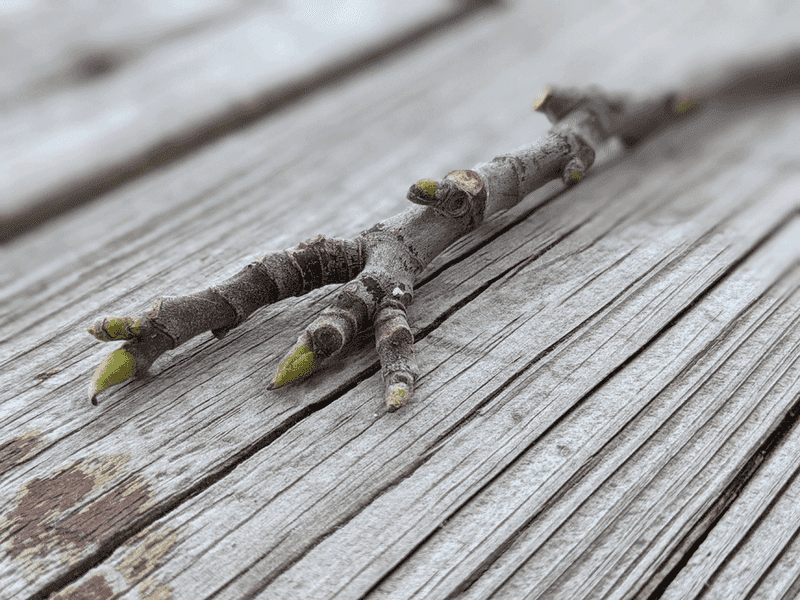
Your fig tree can give you free baby plants, and all it takes is a few pieces of pruned wood. The trick is knowing when the tree is truly asleep and how to treat the cuttings once you snip them.
Some will root and some will not, and that is normal. Here is how to give every cutting a fair shot.
Wait for local dormancy, not a calendar date
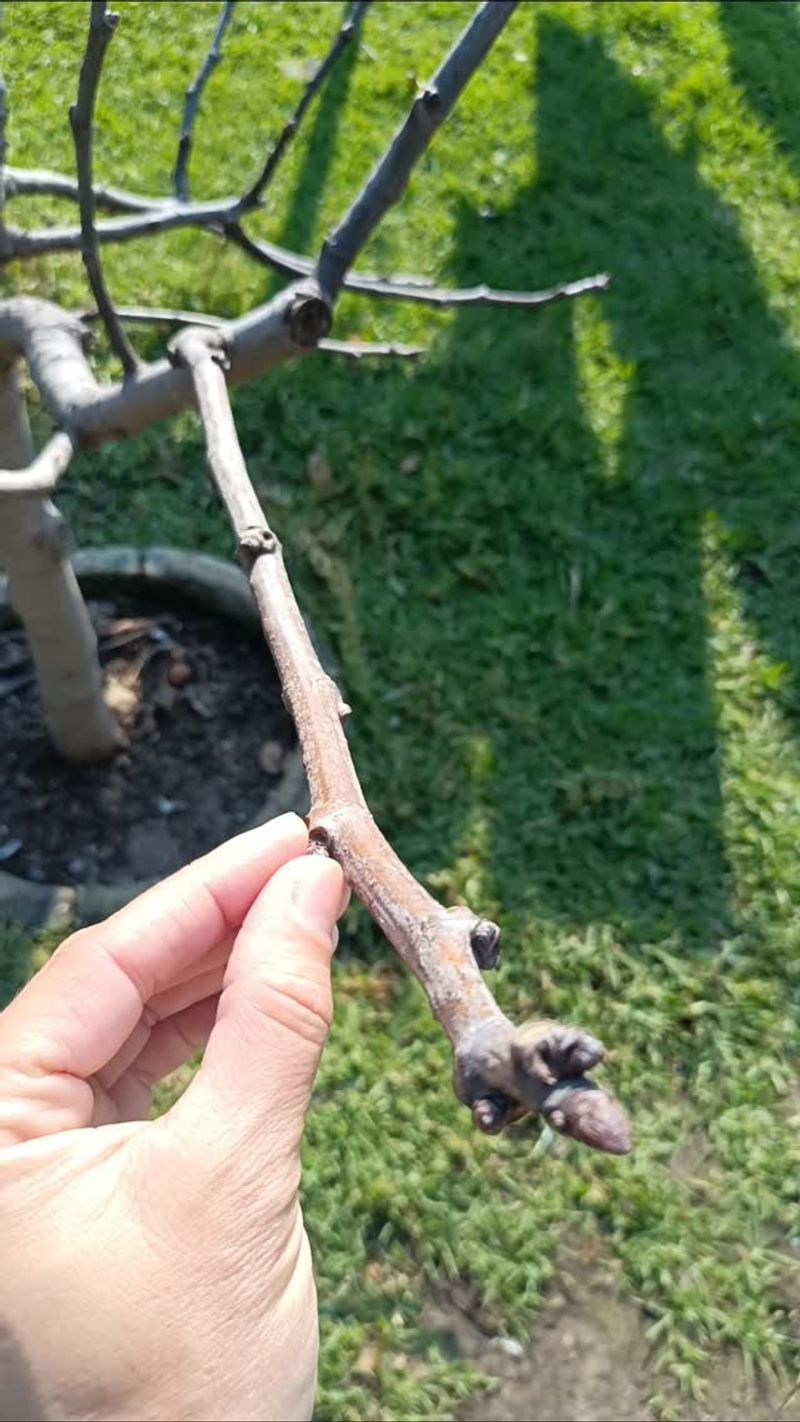
Plenty of gardeners see fall leaves dropping and feel the urge to grab the pruners. Hold off for a moment.
Taking cuttings from a dormant fig is a well-established way to try making new plants, but the right window depends on where you live and what your tree is doing.
Extension advice is not uniform. Rutgers Cooperative Extension describes using dormant or semidormant cuttings.
Oregon State Extension points to winter, and University of Georgia guidance leans toward late February for its region.
Connecticut growers face their own timing questions, which the Connecticut Agricultural Experiment Station covers in its fig overwintering and propagation sheet. The takeaway is simple: fall is not the best moment everywhere.
A good sign is a tree that has dropped its leaves and stopped pushing new growth. A mild snap of weather can fool a fig, so watch the tree rather than the date.
If a hard freeze is heading your way, check how your area’s guidance handles that.
Plan on taking several cuttings, since not every one will succeed. Still, nobody can honestly promise a dozen rooted plants, or roots by spring.
Treat the first round as a low-cost experiment and you will be pleasantly surprised more often than disappointed.
Choose and prepare suitable cuttings
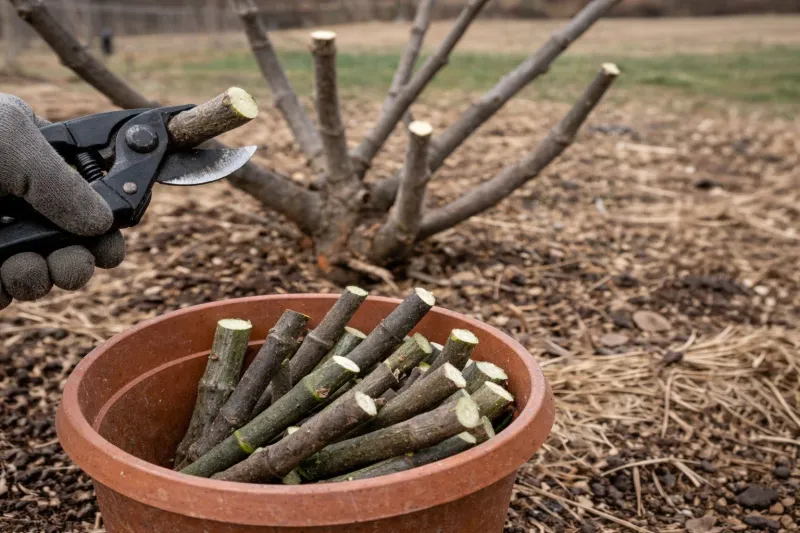
Look for wood that is vigorous and mature, the kind that grew well last season and feels firm. Skip thin, spindly twigs and anything that looks damaged.
Healthy wood has stored energy that a cutting needs while it works on making roots.
Size advice varies, so think in ranges. Rutgers suggests about 9 inches long and pencil thickness up to three quarters of an inch.
Georgia recommends 8 to 10 inches, while UF/IFAS gives about 6 inches and under an inch across. Any piece in that general zone is a reasonable try.
Make the bottom cut just below a node, the bump where a leaf or bud attached. Because top and bottom look alike once the leaves are gone, keep track of the base.
Many gardeners cut the base at an angle and the top straight across, or tie a bit of yarn around the bottom end.
Fig sap deserves respect. The milky latex can irritate skin, and DermNet documents that effect.
A published case report also describes a skin reaction after sap exposure and sunlight.
Severe reactions are not the usual outcome, but a little care goes a long way. Wear gloves and long sleeves, avoid touching your face, and keep sap away from your eyes.
If sap lands on your skin, wash it off with soap and water.
Start with a moist, porous rooting medium
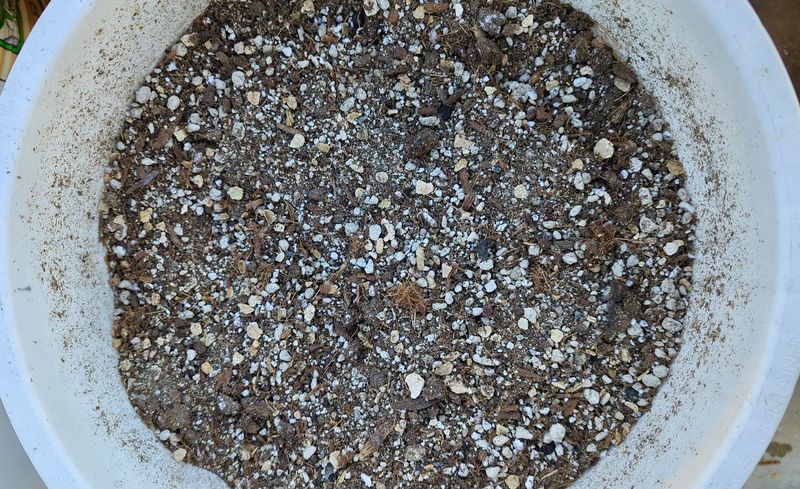
A pot of moist, loose, well-drained medium is the best-supported place to start. UF/IFAS recommends moist perlite or another porous medium.
The goal is air around the stem as well as moisture.
Bury at least half of each cutting. Roots can form along the buried section, so more wood below the surface gives them more places to start.
Leave a couple of buds above the medium, and check that the base end points down.
Moist does not mean soggy. A waterlogged mix pushes out air, and a cutting sitting in muck may rot before it roots.
Squeeze a handful: it should feel damp like a wrung-out sponge, with no water dripping out.
You may wonder which mix is best. A controlled fig study found better early root and shoot growth with hardwood cuttings in a peat-perlite blend than in the other media tested.
That study used one Brown Turkey-derived cultivar in a greenhouse, so it cannot predict how your cuttings will do at home.
Think of it as a useful hint rather than a rule. A peat and perlite blend is a sensible choice, and plain perlite works too, per UF/IFAS.
Label your pots with the date and variety, then check the moisture every few days.
Treat water rooting as an less-established alternative
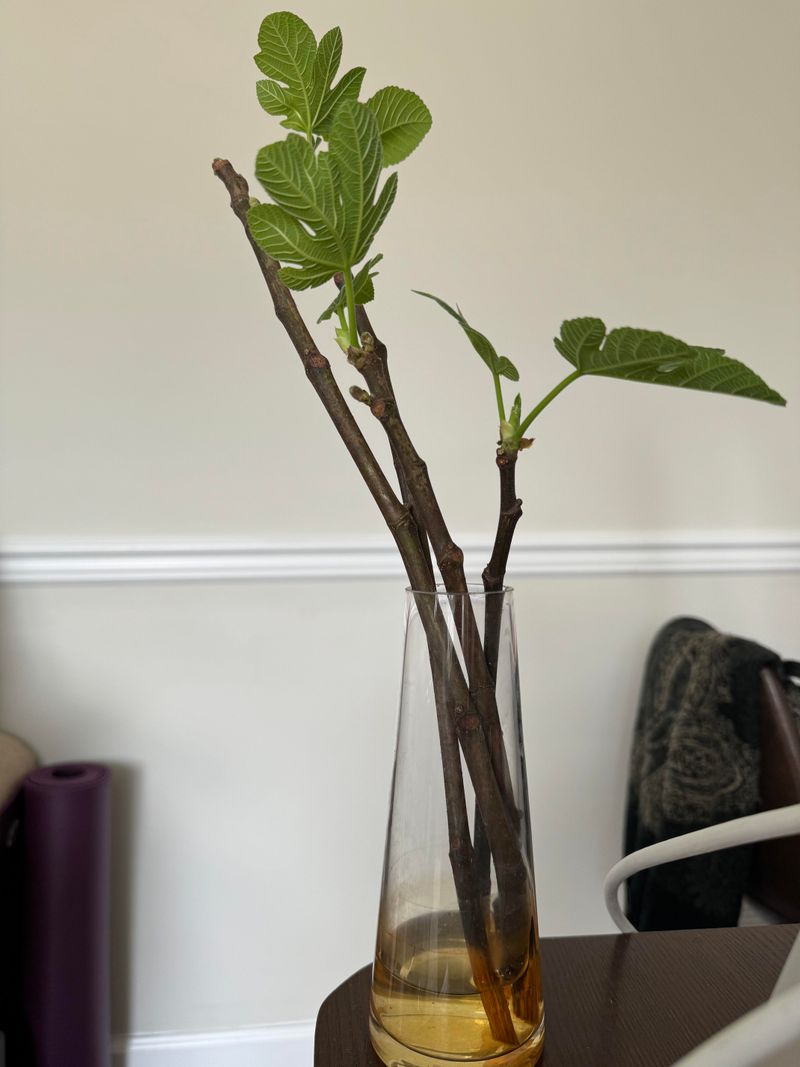
Plenty of gardeners love the idea of watching roots grow through a glass jar. It is easy to see why the idea is popular with people who already root houseplants that way.
With dormant fig wood, though, the picture is less clear.
The sources reviewed for this article describe rooting in media such as perlite, sand, or potting mix. UF/IFAS points to moist perlite or another porous medium, and the Connecticut Agricultural Experiment Station also covers propagation in medium.
None of them shows that water works just as dependably for dormant hardwood cuttings.
That does not mean a jar can never work. It means nobody has shown it to be equal, so treat it as a backyard experiment.
If you are curious, keep it separate from your main batch.
A smart approach is to put most of your cuttings in a porous medium and try water with just one or two spares. That way a failed experiment costs you almost nothing.
Skip any step-by-step water recipe or promised timeline you find online, since the evidence behind them is thin.
Maintain moisture and protect young plants from cold
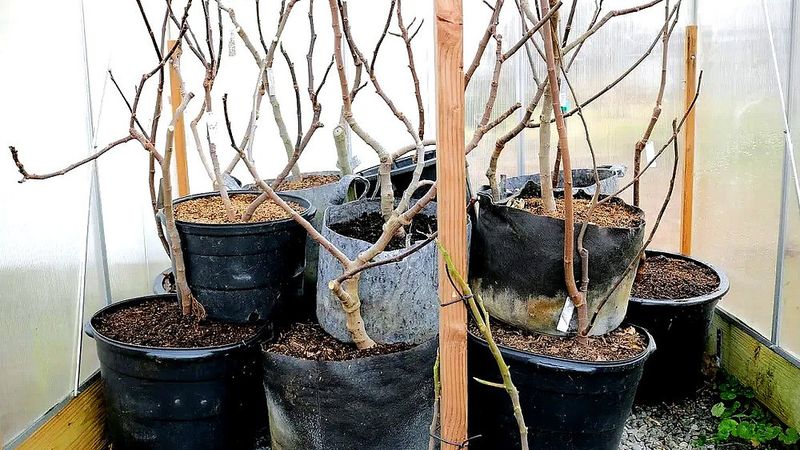
Once the cuttings are potted, the job becomes steady, low-key care. Check the medium often and water when the top begins to dry, aiming for evenly damp rather than wet.
Small pots dry out quickly, while cool weather slows water use, so adjust to what you see.
Cold is the other worry. Rutgers advises protecting young plants from low-temperature injury, and young figs are more tender than an established tree.
There is no single temperature or setup that suits every yard, so base your plan on your own winters.
A garage, a sheltered porch, or a cold frame might suit one gardener, while another needs a bright indoor spot. Move pots out of the harshest weather and watch for a cold snap in the forecast.
Wet, freezing pots are a bigger risk than cool, dry ones.
Variety matters too. Alabama Extension recommends hardy varieties in colder areas, so if winters are tough where you live, pick cutting wood from a cold-tolerant tree.
Timing the move outdoors is a local call. Wait until your area’s last hard frost has passed, and bring plants out gradually for a few hours at a time.
If spring weather swings back and forth, keep the pots flexible and ready to shuffle.
Check for roots before counting a cutting as a new plant
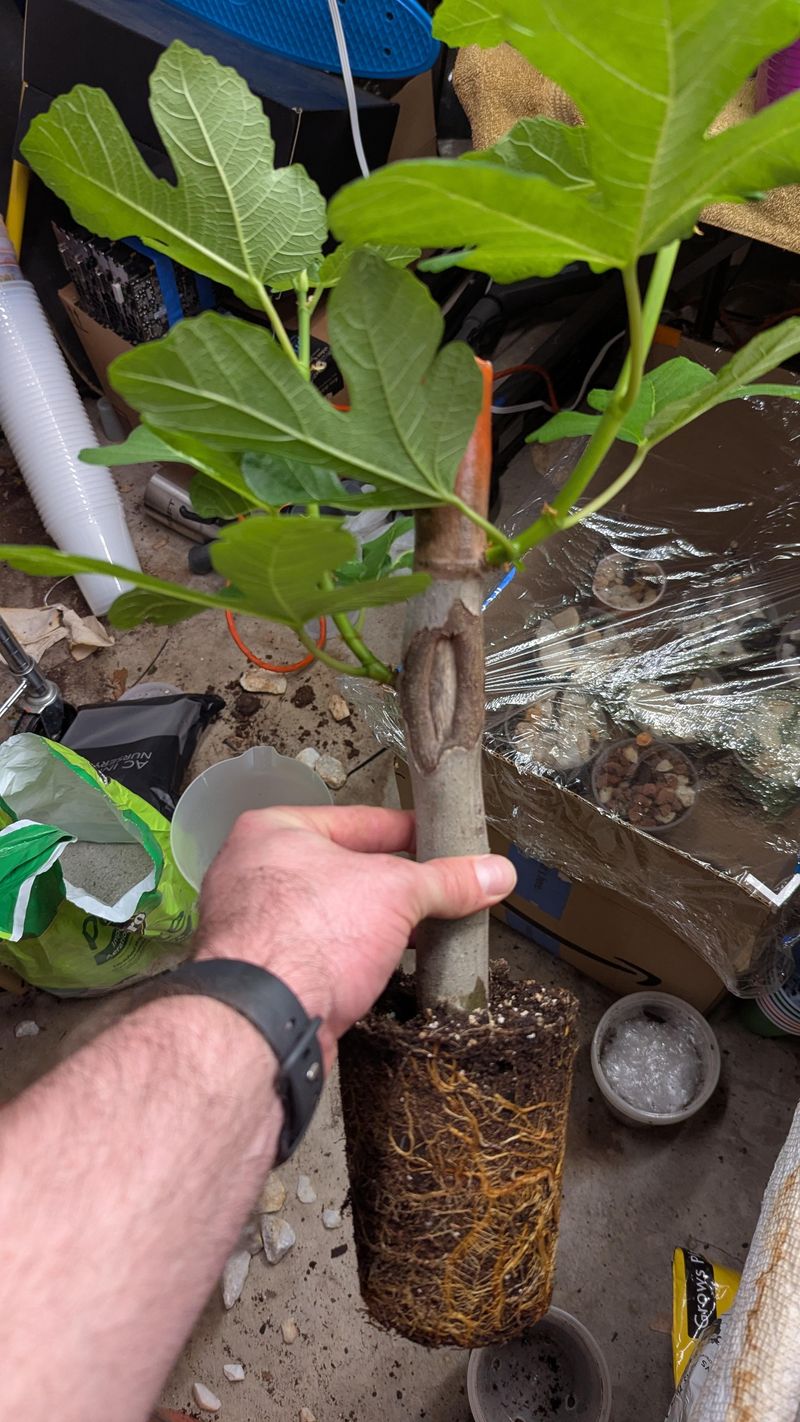
Green leaves feel like a victory, but they can be misleading. Alabama Extension cautions that a cutting can produce several leaves while having few or no roots.
Stored energy in the wood can power a burst of growth that fades if roots never form.
The fig propagation study measured roots as well as shoots for a reason. Both matter, and leafy tops tell only half the story.
So how do you check? Wait for signs of established root growth before you pot up or plant out.
Roots poking from drainage holes are one clue, and a gentle tug that meets resistance is another. For a closer look, tip a pot out and peek, then slide it back with little disturbance.
A cutting that wilts or collapses after leafing out may have run out of stored energy without roots. Do not toss it too fast, though, because some are just slow.
Stay patient and keep the medium damp.
Planting out should follow the same local-conditions rule from Rutgers, with cold protection in mind. Dormant cuttings are a cheap way to try for new figs.
Count your plants when you can see the roots.