
Hummingbirds Notice More Than Nectar – Here’s The Surprising Reason They Stopped Coming To Your Yard
You filled the feeder, hung it in the same spot, and waited – but the hummingbirds stopped showing up. Before you assume they moved on for good, consider that something subtler might be at work. A growing body of research suggests hummingbirds pick up on more than just the sugar water you offer, and the real explanation for a quiet feeder is often hiding in plain sight.
A quiet feeder is not proof that the hummingbirds are gone
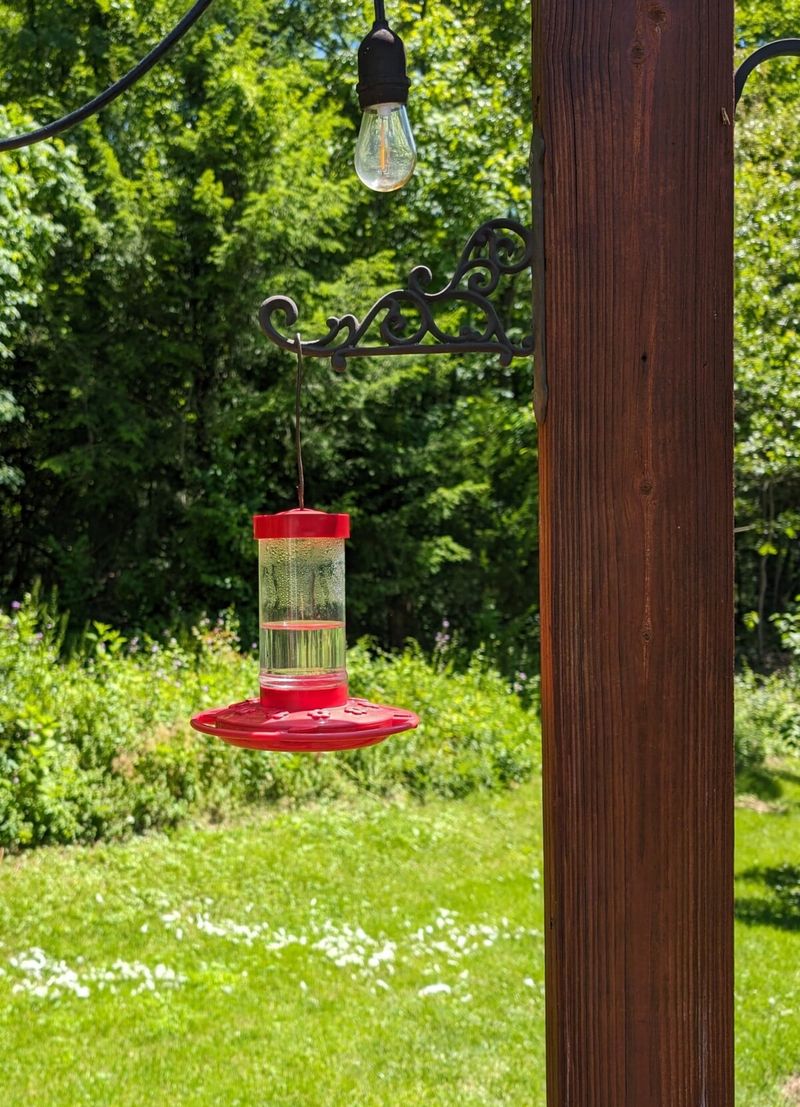
Fewer hummingbirds at the feeder can feel like a mystery, but the feeder itself is only one small window into what the birds are actually doing. Cornell Lab of Ornithology notes that a drop in feeder visits does not reliably indicate a drop in the local hummingbird population. The birds may simply be feeding somewhere else, defending a different territory, or passing through on an altered route.
Nesting is one of the most common reasons a feeder goes quiet mid-season. A female busy incubating eggs or tending nestlings may spend long stretches away from any feeder, foraging in tighter loops around the nest site. Cornell’s midsummer guide points out that females can disappear from view for days while still living in the same yard.
Seasonal timing adds another layer of complexity. A mid-July slowdown in New England is not the same situation as one in coastal California, where species like Anna’s Hummingbird may remain year-round. Broad-tailed Hummingbirds, common in western mountain states, follow their own timing that does not match eastern ruby-throated patterns. Assuming migration is always the cause can send you looking in the wrong direction.
A useful first step is to ask three separate questions: Did something change about the feeder? Did something change in the yard? Or did the birds simply shift their routine? Working through those three angles methodically will get you much further than guessing.
Keep the feeder clean and filled while you investigate, because a hummingbird that passes through and finds fresh nectar is far more likely to stay than one that finds an empty or neglected station.
Hummingbirds can detect more than sugar water
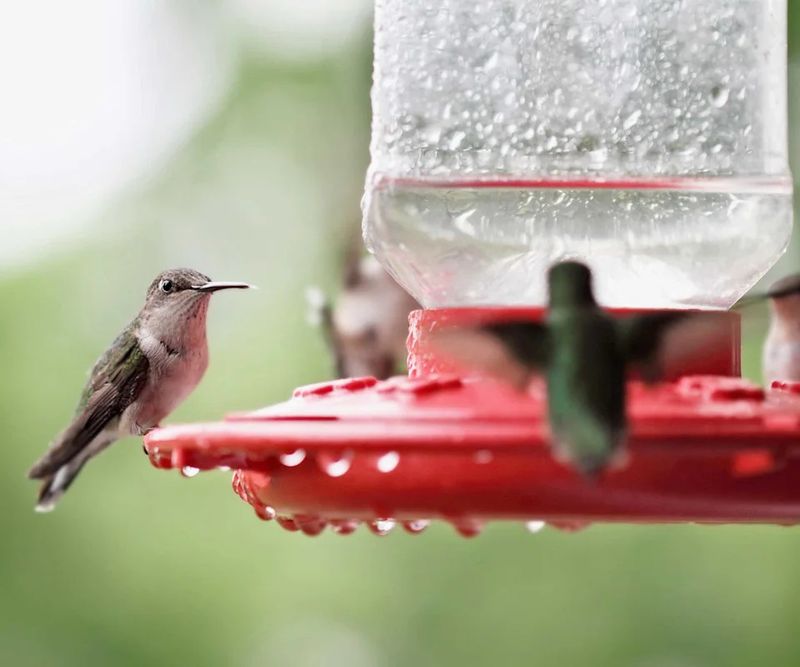
For years, the conventional wisdom held that hummingbirds navigate almost entirely by sight, zeroing in on red flowers and bright feeders with little use of smell. That picture turns out to be incomplete. While hummingbirds do rely heavily on vision, earlier anatomical research noting relatively small olfactory bulbs was not the final word on the subject.
A 2021 peer-reviewed study changed how researchers think about this. Working with both wild and captive hummingbirds, scientists found that the birds avoided feeders carrying defensive chemicals released by wood ants and aggregation pheromones associated with Argentine ants. That controlled experiment demonstrated that hummingbirds can use insect-related chemical information when deciding whether a food source is worth approaching. The finding is striking because it adds a sensory dimension most backyard observers never consider.
What the study does not show is equally worth knowing. The research tested specific chemicals under controlled conditions – it did not survey household feeders, test every ant species, or document backyard disappearances in the wild. Not every feeder with a few ants will necessarily trigger avoidance, and ordinary garden smells like fertilizer, peppermint, or coffee grounds are not supported by this research as general causes of feeder abandonment. The evidence is specific: certain insect-associated chemical cues, under the conditions tested, made feeders less appealing.
The practical takeaway is to think of chemical cues from ants as one possible factor worth checking, not a guaranteed explanation for every quiet feeder. Hummingbirds are perceptive creatures, and understanding that perception goes beyond color vision opens up a more honest investigation of what might be happening in your yard.
Ants and wasps leave practical clues at the feeder
Armed with the knowledge that ant-associated chemicals may reduce feeder appeal, the logical next move is a close physical inspection rather than a search for mysterious garden odors. Pull the feeder down and look carefully at the hanger, the cap, and the feeding ports. A visible trail of ants moving up the hook or across the base is a clear sign that the feeder has become an insect food source – and possibly a source of the chemical signals the 2021 study documented.
Leaks and drips are the most common reason ants find a feeder in the first place. Sugar water pooling at the base or seeping from a cracked port creates exactly the kind of scent trail that draws insects. Cornell’s feeder guidance recommends fixing or replacing a leaking feeder before trying any other ant-control measure. Moving the feeder to a new location can also disrupt established ant trails, since the insects rely on chemical pathways to return to a food source.
A water-filled ant moat – a small cup that hangs above the feeder and stays filled with plain water – creates a physical barrier ants cannot cross. This is one of the safest and most effective tools available. Cornell’s pest-management advice specifically warns against petroleum jelly, cooking oil, or other sticky substances applied near feeding ports or the hanger, because these can soil feathers and contaminate the nectar birds drink.
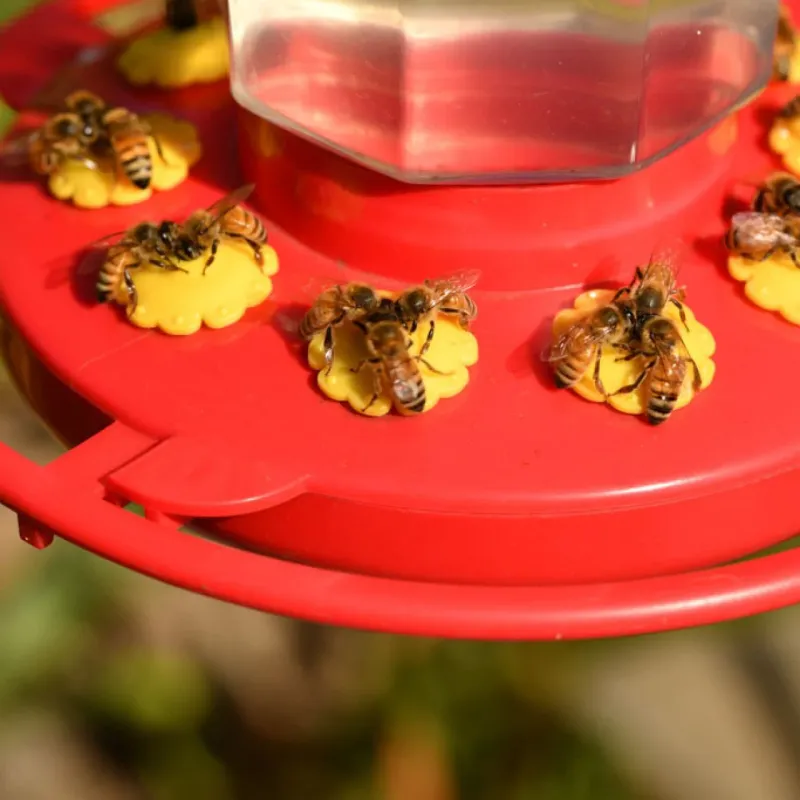
Bees and wasps present a related problem. A feeder crowded with yellow jackets will discourage even a bold hummingbird. Trying a saucer-style feeder, whose shallow reservoir sits below the ports and is harder for insects to reach, can reduce bee activity. Temporarily removing the feeder for a day or two can also break the insects’ search pattern before you rehang it in a slightly different spot.
None of these tactics guarantee instant results, but each one addresses a real, observable problem you can check for today.
Fresh nectar protects the invitation you are offering
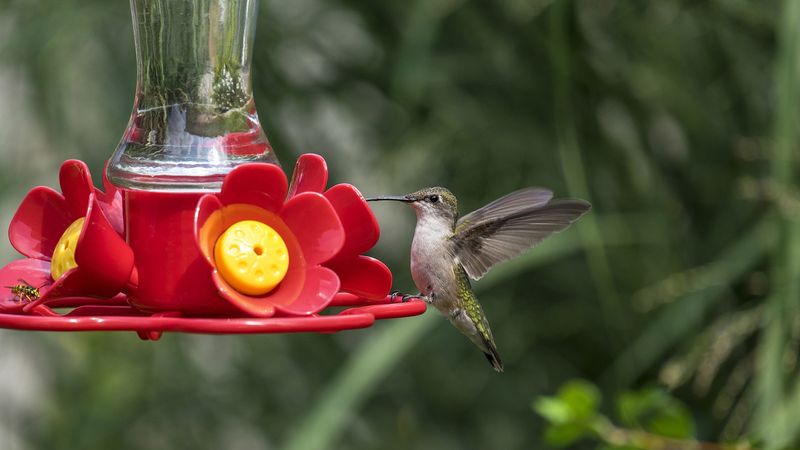
Even a feeder free of ants and wasps can drive hummingbirds away if the nectar inside has gone bad. Sugar water ferments and grows mold surprisingly fast, especially during summer heat, and birds that sample spoiled nectar tend not to return. University of New Hampshire Extension lists mold and fermentation as documented risks of neglected feeders, and recommends cleaning the feeder every time you refill it, not just when you notice discoloration.
Cleaning means more than a quick rinse. Use a bottle brush to scrub the reservoir and reach the feeding ports, then rinse thoroughly with clean water before adding fresh nectar. Follow the feeder manufacturer’s instructions for any parts that can be taken apart. A feeder that looks clean on the outside can still harbor mold inside narrow tubes or under rubber gaskets.
Replacement timing matters as much as cleaning. Replace nectar every three to five days in moderate weather, and more often when temperatures climb. Clemson Extension recommends replacing nectar daily when temperatures exceed 90 degrees F, because heat accelerates both fermentation and mold growth. If the nectar looks cloudy or smells off before the three-day mark, discard it immediately.
The recipe itself is straightforward. Penn State Extension recommends one part refined white sugar dissolved in four parts water – a quarter cup of sugar per cup of water is a convenient starting ratio. Honey, brown sugar, molasses, and artificial sweeteners are all unsafe substitutes; honey in particular can support harmful fungal growth. Audubon’s feeder FAQ also advises skipping red food dye entirely.
Red parts on the feeder are sufficient to catch a hummingbird’s eye, and natural floral nectar is clear – the dye adds nothing the birds need.
The birds may be choosing natural food over the feeder
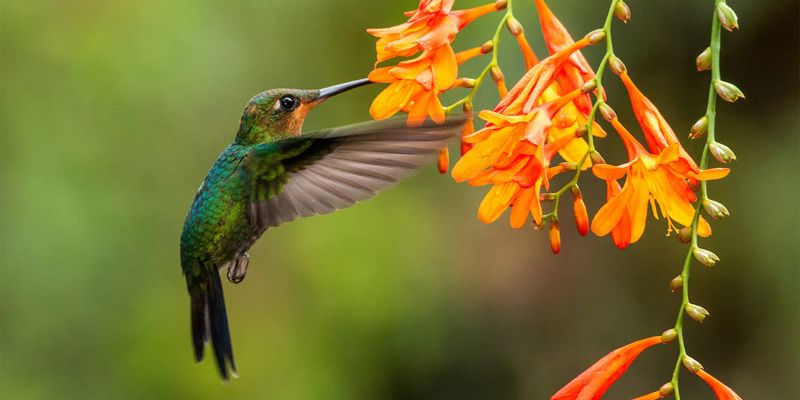
A feeder that sits untouched while the garden is buzzing with activity is often delivering good news rather than bad. Hummingbirds are not pure nectar drinkers – small insects and spiders make up a critical part of their diet, providing the protein and fat that sugar water cannot supply. Cornell’s midsummer resource notes that females feeding nestlings have especially high insect needs, and may spend much of the day hunting among foliage rather than visiting a feeder at all.
Penn State Extension confirms that hummingbirds actively glean insects from leaves, bark, and spider webs, and will hawk flying insects in mid-air. When a yard’s insect population peaks in midsummer, the feeder may simply become less necessary. A strong bloom of native flowers offers both nectar and the insects that flowers attract, pulling birds deeper into the garden and away from the easy-to-watch feeder station.
This shift is worth distinguishing from a true decline. Cornell’s broader feeder-visit guide points out that hummingbirds may be present in the yard but simply not visible from the usual vantage point. Walking through the garden slowly and watching flowering plants, not just the feeder, often reveals birds that were there all along.
Seasonal movement is a real factor too, but timing varies considerably by species and region. Cornell’s migration-feeding piece is clear that keeping a feeder available does not delay or prevent normal migration – biological cues like day length drive that process, not the presence of a sugar-water station. Leaving the feeder up and clean while observing the yard more broadly is a safe and low-effort way to gather information before drawing any conclusions.
One territorial bird can make a busy yard look empty
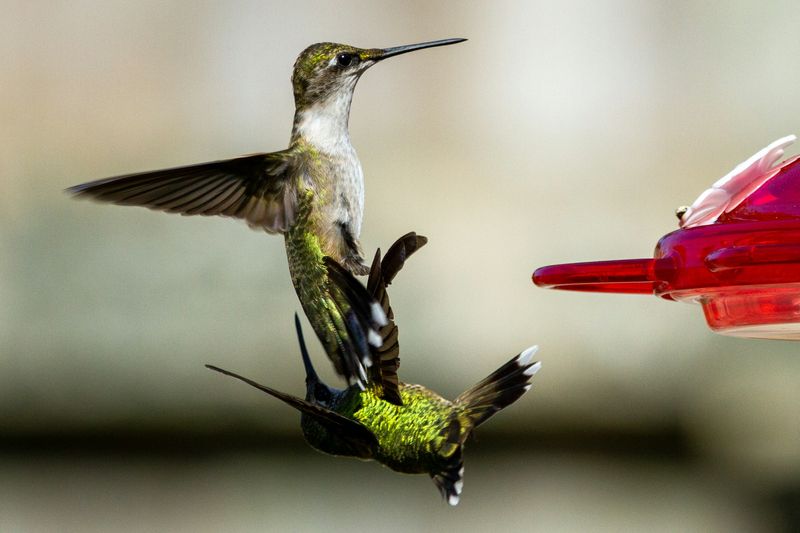
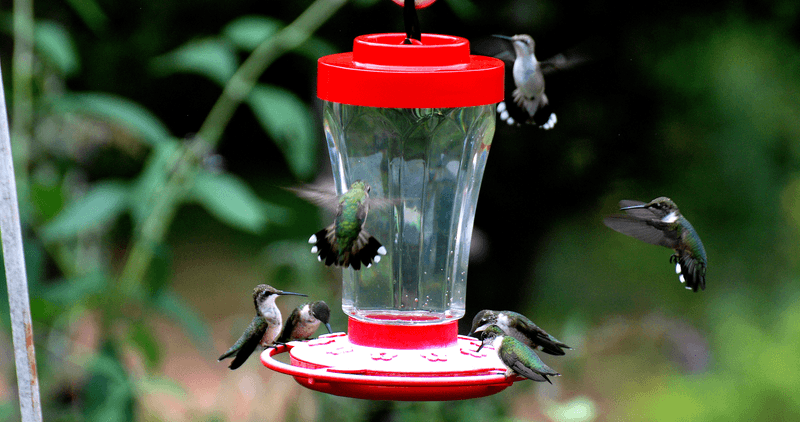
Sometimes the problem is not a missing hummingbird but a very present one. Male hummingbirds are notoriously aggressive defenders of food sources, and a single dominant bird will chase away rivals repeatedly, sometimes spending more energy on patrol than on feeding. Cornell’s piece on hummingbird aggression explains that this territorial behavior is a normal survival strategy – a bird that controls a reliable nectar source gains a significant energy advantage, even if the defense costs effort.
The clue to watch for is repeated chasing. If you see one bird buzzing another away from the feeder, or notice a single hummingbird perching nearby and launching at any approaching visitor, territorial exclusion is likely the cause of reduced activity rather than any problem with the nectar, the feeder, or the yard. The nectar may be perfectly fresh and the feeder spotless, yet other birds simply cannot get close enough to use it.
The practical response is to reduce the dominant bird’s ability to control the entire food supply. Penn State Extension recommends placing several small feeders in separated locations – ideally out of sight of one another – so no single bird can guard all of them at once. A second feeder around the corner of the house, or on the opposite side of the yard, gives subordinate birds a place to feed without triggering a chase. Adding feeders does not guarantee more total hummingbirds will appear, but it does give the birds that are already present a fair chance to feed without constant conflict.
A hummingbird-friendly yard offers more than one feeder
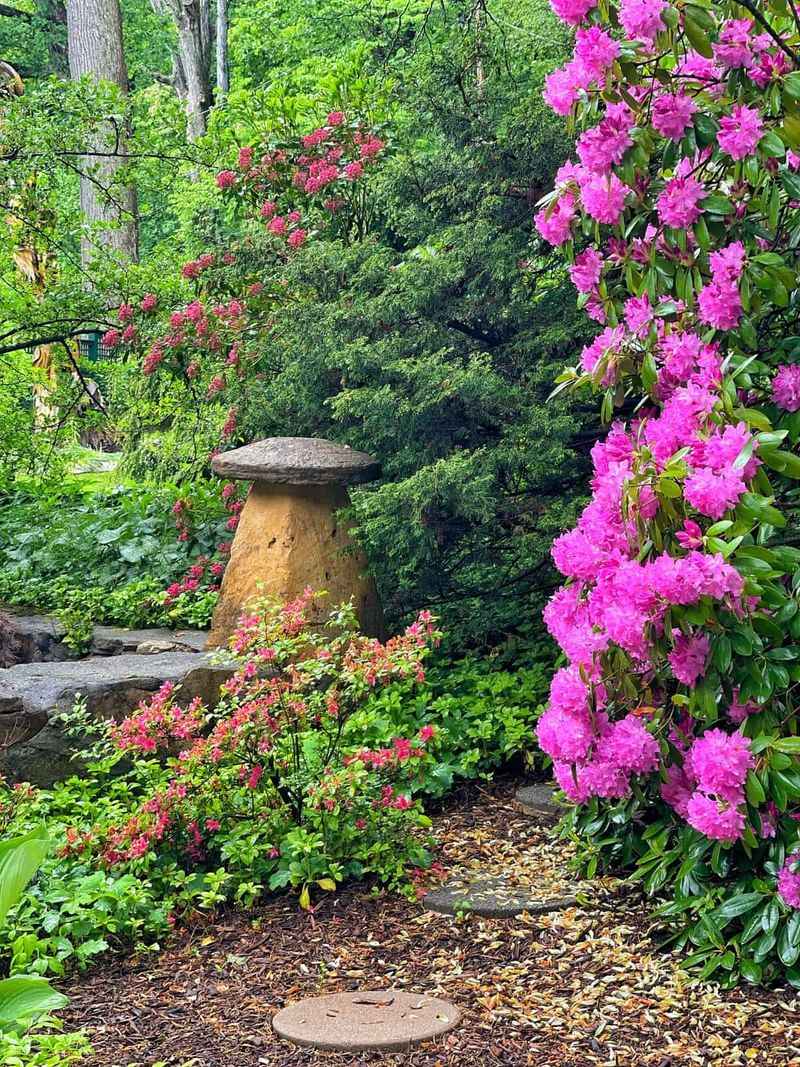
A single feeder is a starting point, not a complete habitat. Hummingbirds need nectar, protein-rich insects, cover from predators, and safe nesting sites – and a yard that provides all four will hold birds more reliably than one that relies on a sugar-water station alone. USDA Forest Service guidance on attracting hummingbirds emphasizes planting a diverse mix of preferably native flowering species that bloom at staggered times across the season, so nectar is available from spring through fall rather than only during one peak window.
Shrubs and trees serve a purpose beyond aesthetics. Hummingbirds perch to rest, preen, and watch for rivals, and dense vegetation gives them safe spots to do all three. Penn State Extension notes that cover also provides nesting habitat, which is especially important for females who build small cup nests on sheltered branches. A yard stripped down to lawn and a single feeder offers very little of what a bird needs between feeding visits.
Pesticide use deserves a direct look. Insecticides reduce the small arthropods hummingbirds depend on for protein, and herbicides can eliminate flowering plants that supply both nectar and insect habitat. Reducing or eliminating pesticide applications in areas where hummingbirds forage protects both the birds and the food web they depend on.
Cats are a recognized threat that often goes unaddressed. Keeping domestic cats indoors or physically preventing their access to garden areas where hummingbirds feed and perch is one of the most direct protective steps a yard owner can take. Finally, if you place a feeder near a window, Audubon’s collision-prevention guidance notes that very close placement can reduce collision momentum, but exterior window markings, screens, or cords are still needed to lower the actual risk. Cornell’s bird-safety recommendations reinforce that glass treatment remains important regardless of feeder distance.
Treat the disappearance as a clue, not a verdict
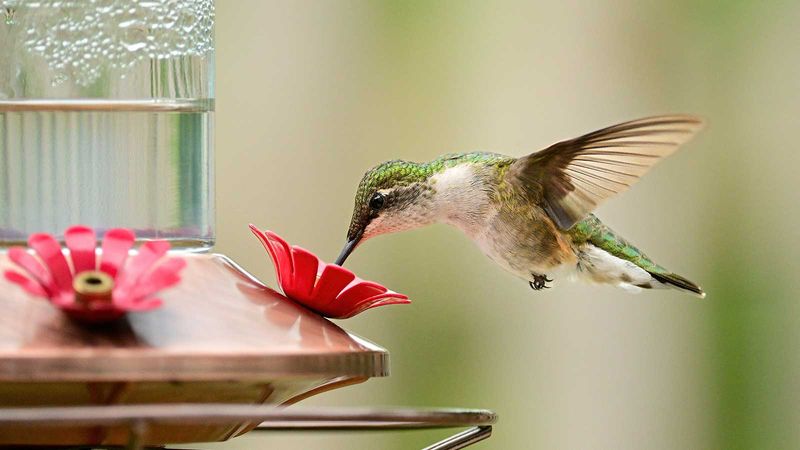
A quiet feeder is an invitation to look more carefully, not a reason to panic or make sweeping changes. Start with the basics: check for ant trails, insect crowding at the ports, and any signs of leaks or drips. Discard old nectar, scrub the feeder, and refill it with the correct one-part sugar to four-parts water solution. Then watch the yard broadly, not just the feeder, for signs of nesting activity, territorial chasing, or birds feeding among flowering plants.
Cornell’s feeder-worry guide frames this well: a count of feeder visits is not a population census. Birds can be present, healthy, and active in a yard while barely touching the feeder. The 2021 ant-odor research adds a genuinely new angle – hummingbirds can pick up on some insect-related chemical cues – but it does not resolve every quiet-feeder mystery on its own.
The most honest answer is that several factors can combine at once: a nesting female, a territorial male, a bloom of native flowers, and an ant trail on the hanger could all be happening in the same week. Improving both the feeder and the surrounding habitat addresses more possibilities than any single fix can. The birds have their own routines, and a yard that keeps offering fresh nectar, clean water, insects, flowers, and cover gives them every reason to include it in theirs.