
If Neat Rows Of Tiny Holes Dot Your Tree Bark, A Sapsucker Is The Likely Driller
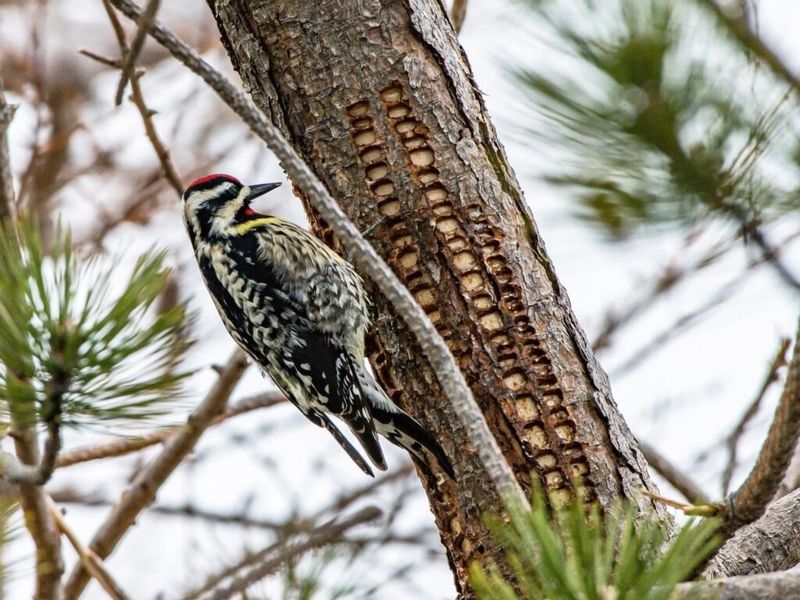
You walk past your maple or birch and notice tidy lines of small holes, spaced like stitches. They look planned, and in a way they are.
Most often, a sapsucker is the bird behind them, and knowing what that means can save you from worry or from the wrong fix.
Neat rows point to sapsucker feeding wells
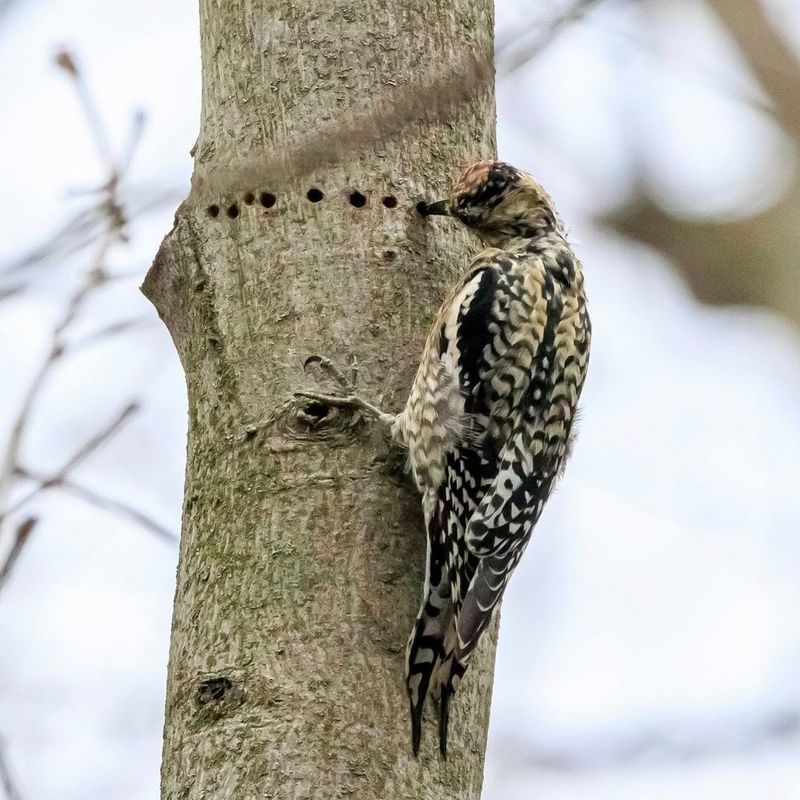
Picture the scene: you lean in toward your tree trunk and see small, round holes lined up in tidy horizontal rows or bands. That pattern is the classic sign of sapsucker feeding wells, and it is the best clue you have.
Random scattered holes tell a different story, but neat, repeated lines in living bark most likely point to a sapsucker.
Likely is the key word. The pattern suggests the type of bird, but it cannot prove which bird, or which species, did the drilling.
Location matters here. Cornell Lab of Ornithology links the Yellow-bellied Sapsucker to the eastern part of the country.
Farther west, the Red-breasted Sapsucker and the Red-naped Sapsucker also make wells. Unless you know which species lives in your area, treat the species as an open question.
Other holes can look different. On Oregon ash, for example, Oregon State Extension notes that sapsucker wells usually sit in characteristic rows and are larger than the D-shaped exit holes of emerald ash borer.
If your holes are scattered, D-shaped, or paired with a clearly declining tree, do not assume the bird explains everything. Look closely before you decide.
Sapsuckers make wells for sap and insects
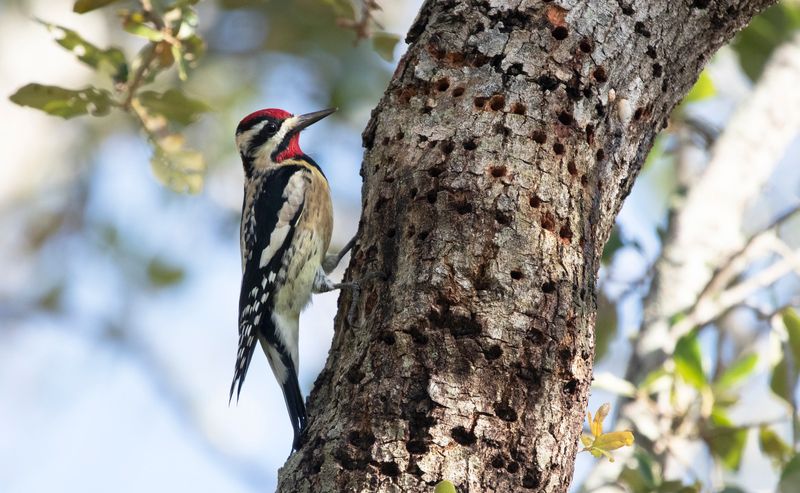
Why drill so many tiny holes? Sapsuckers are woodpeckers that drink sap and also eat the insects that get drawn to it.
The wells work like a small, self-serve cafe on the trunk.
According to Cornell Lab of Ornithology, some wells are shallow and the bird keeps them going so sap continues to flow. That is why you may see a bird return to the same tree day after day, tending its rows.
New lines or bands can also show up over time, sometimes near older marks. Finding a second or third band does not mean the tree is doomed.
It also does not mean a single bird made every hole, since more than one bird can visit the same tree.
A practical check is to look for fresh sap, which looks wet and shiny, versus dry, darkened older holes. Fresh sap tells you feeding is happening now.
Dry, weathered holes suggest the bird may have moved on.
Holes alone do not tell you whether the tree is sick
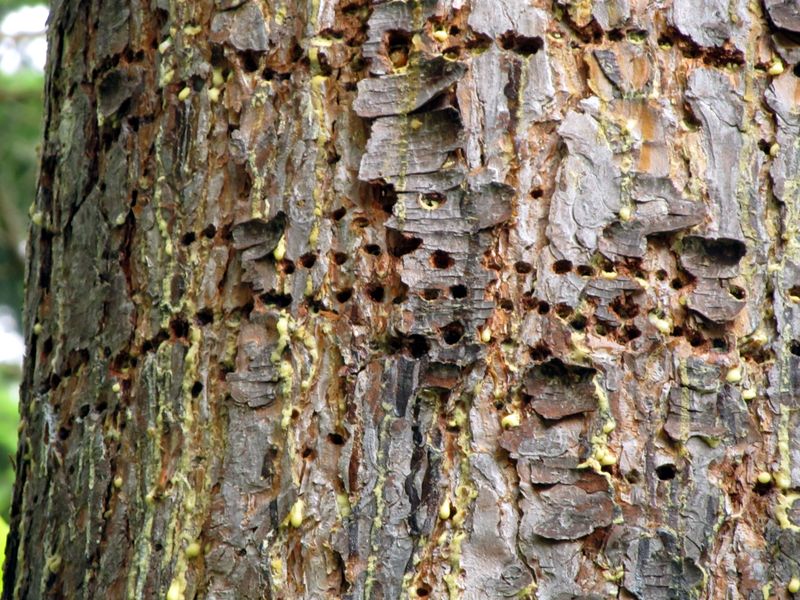
Many trees shrug off some sapsucker feeding. Still, extensive or repeated injury can slow growth and cause dieback, and severe feeding has sometimes helped kill trees.
Penn State Extension describes this range of outcomes.
What happens depends on the tree species and on how much damage there is and where it sits. Research backs this up.
A USDA Forest Service study found that damage varies with tree species and season, and a Journal of Forestry study documented serious harm to crown-released yellow birch under particular conditions. Neither gives a number of holes that is safe for your yard tree, so no honest hole count exists.
Did the bird pick a sick tree? The answer is mixed.
Cornell says Yellow-bellied Sapsuckers tend to choose sick or wounded trees, and a study in The Auk found lower health scores among selected sap trees. Yet another study found vigorous dominant yellow birches were fed on more often than weaker ones.
The practical meaning is simple. Holes by themselves cannot diagnose a tree’s health, and they cannot show whether decline came before or after the feeding.
Judge the whole tree instead. Check for a full leaf canopy, new growth, dead branches, and cracks or leaning.
Hummingbirds may visit the wells for food
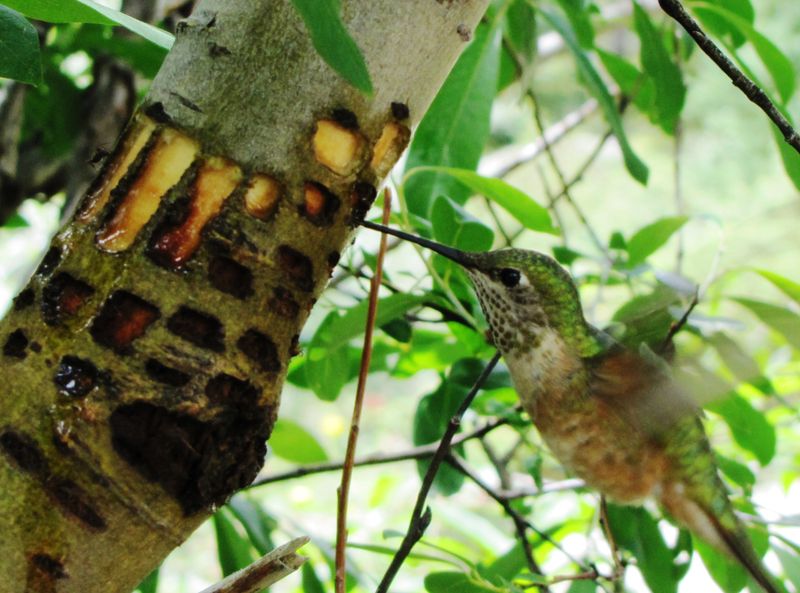
Here is a bonus reveal: the wells can feed other birds. Hummingbirds may stop at sapsucker wells to sip sap and catch the small insects stuck there.
It is a neat bit of backyard teamwork, though not a guarantee.
Not every hummingbird depends on these wells, and plenty of them never touch one. Flowers and feeders remain important food sources in most yards.
Think of wells as one more place hummingbirds may find a meal.
The relationship is not always friendly either. Cornell Lab of Ornithology notes that sapsuckers sometimes chase other birds away from their wells.
Cornell also gives a timing example for Ruby-throated Hummingbirds in parts of Canada, where wells can matter during migration. That example is tied to a place and season, so do not stretch it to every hummingbird in the country.
If you watch your tree in spring, you might spot a visitor or two, which is a fun reason to keep a pair of binoculars handy.
Protect a valued tree without sealing the holes
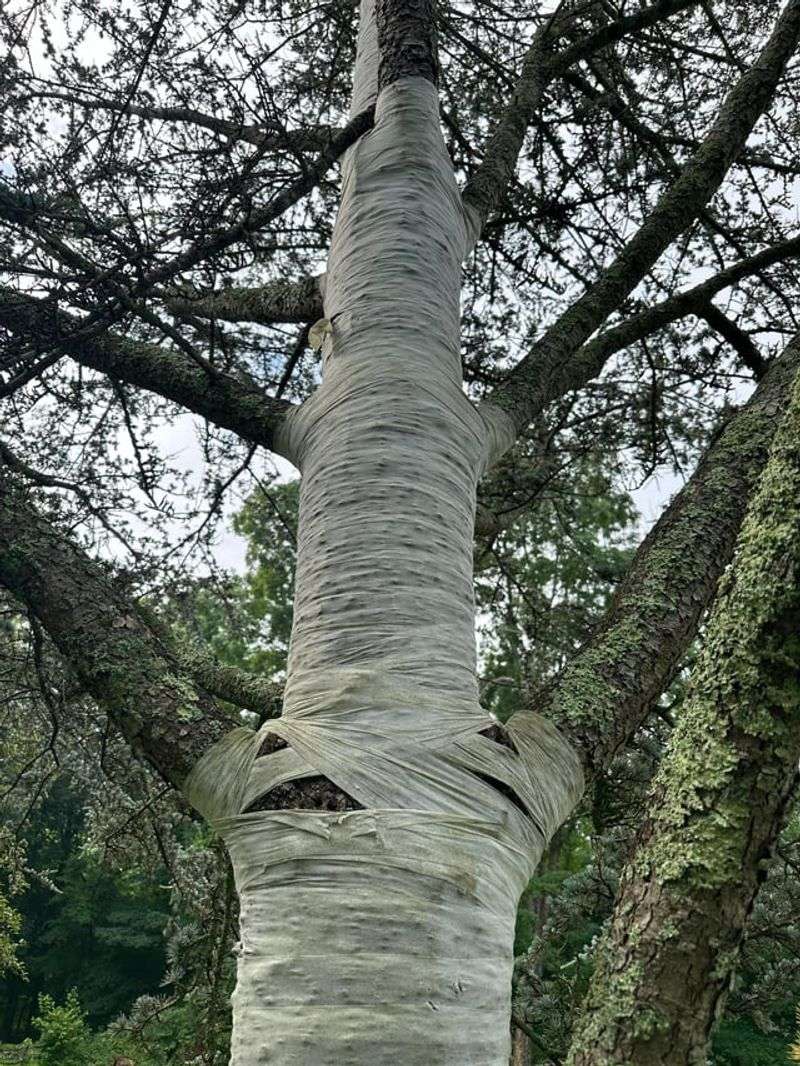
If fresh feeding keeps going on a tree you especially want to protect, start small. Temporary trunk wrapping is one possible deterrent.
Penn State Extension suggests burlap or heavy cloth, and says to remove it after the birds move on.
Treat the wrap as exclusion, not as bandaging. It may discourage further feeding, but it is no guarantee and does nothing to heal bark.
In a small controlled study, burlap and commercial trunk wrap prevented feeding on the covered parts of 15 sugar maples in North Carolina. That result may not apply to every tree, region, or sapsucker species, and the authors noted reports that western sapsuckers may not be deterred by burlap.
Skip the paint, plugs, sealants, and permanent coverings. Iowa State Extension says these do not help bark heal and may interfere with recovery.
Instead, monitor the tree through the seasons. If you see decline or structural problems, call a certified arborist for an assessment.
Finally, leave the bird alone. Sapsuckers are protected migratory birds, and the U.S.
Fish and Wildlife Service says the Migratory Bird Treaty Act prohibits taking them without authorization. The federal protected-species list includes four sapsucker species.
Do not harm or capture them.
Treat the rows as a clue, not a verdict
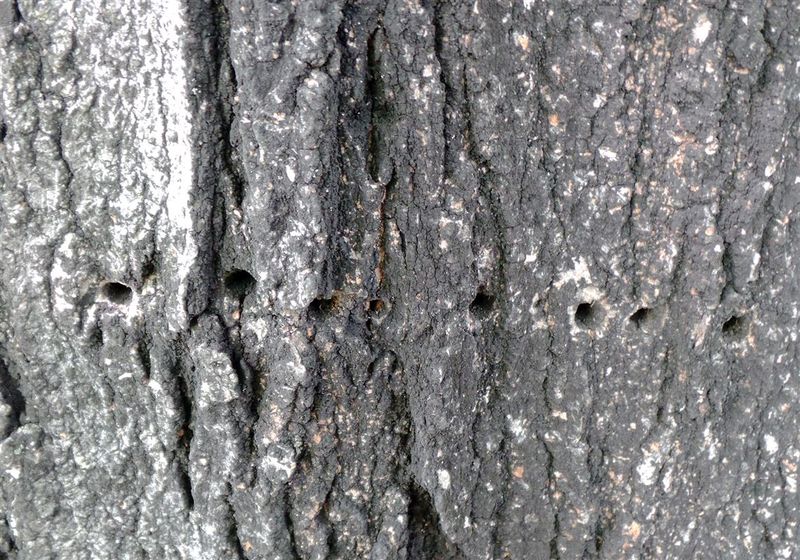
So, who drilled your tree? Tidy rows most likely point to a sapsucker, but they cannot name the exact bird or decide the tree’s fate.
Walk around the trunk, check the leaves and branches, and keep an eye on any fresh feeding, as Penn State Extension and Iowa State Extension both suggest.
Those little stitches are a note from a visitor, not a sentence for your tree.