
If Squirrels Keep Stealing Your Ripening Tomatoes, These Smells Send Them Looking Elsewhere
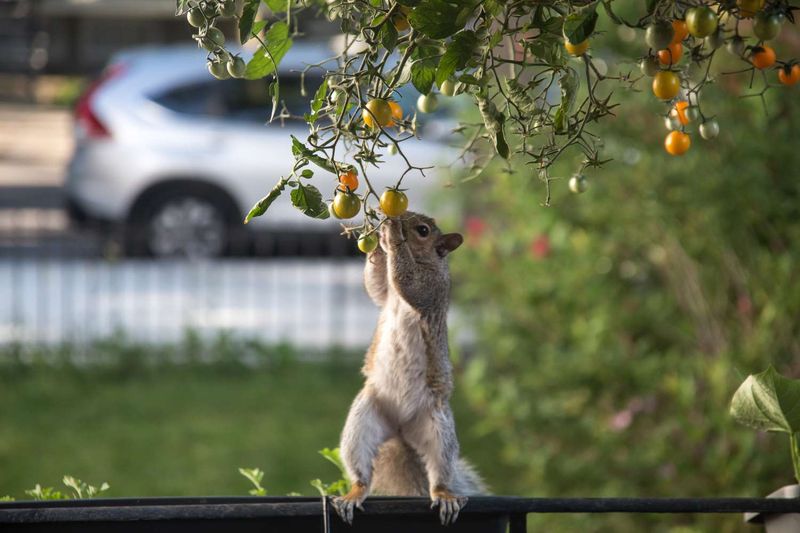
Every August, a lot of backyard gardeners walk out to their tomato patch and find a half-eaten fruit sitting in the dirt, still a day away from perfect. Squirrels are often the culprit, and losing tomatoes right before harvest is one of the most frustrating things that can happen in a home garden. The good news is that there are real steps you can take to protect your crop, though some popular smell-based tricks work better in theory than in practice. This article sorts out what the evidence actually shows and puts the most dependable defenses first.
First, confirm that squirrels are causing the damage
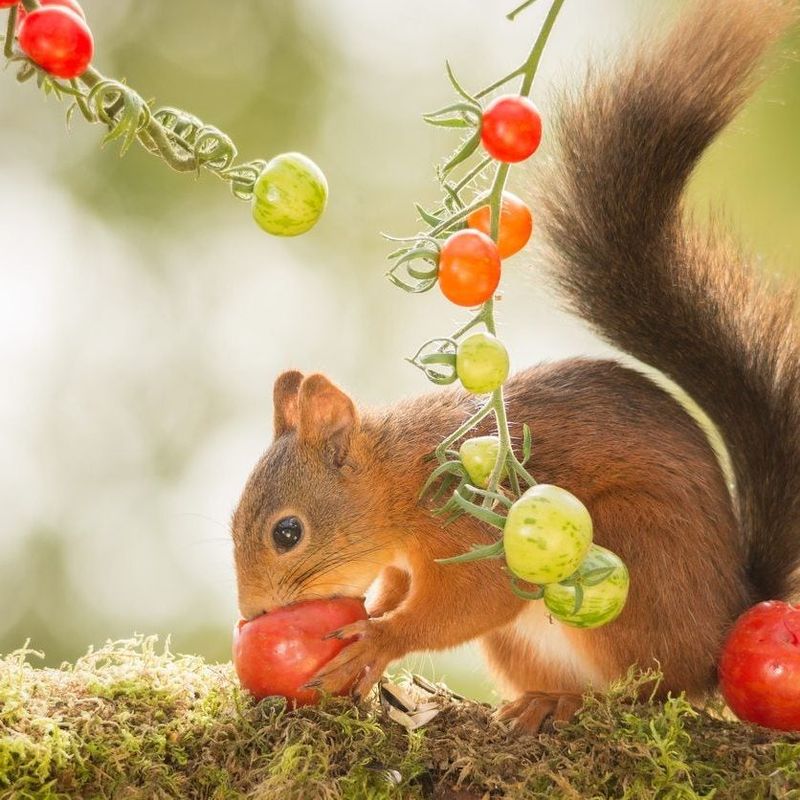
Before you set out any deterrent or barrier, take a close look at the damage itself. A squirrel bite leaves a distinct mark: the fruit is usually partially eaten, often with the skin peeled back and the flesh scooped out in ragged chunks. You may find the tomato still on the plant with a large piece missing, or you may find it knocked to the ground nearby, chewed on one side.
Birds peck smaller, shallower holes and tend to go after the skin rather than digging into the flesh. Slugs and snails leave irregular, shallow surface damage along with a silvery slime trail. Caterpillars chew through leaves and occasionally fruit but rarely take a single large bite. Disease problems such as blossom-end rot or cracking come from the inside out and show no tooth or beak marks at all.
Rabbits can reach low-hanging fruit and tend to leave clean, angled cuts on stems and foliage, as Penn State Extension’s cottontail rabbit guidance describes. Ground squirrels and chipmunks may approach from soil level and sometimes dig near plant roots, while tree squirrels typically arrive from above, dropping down from a fence, roof, overhanging branch, or nearby structure.
That approach route matters a lot when you are choosing a barrier or repellent. A cage designed to block an animal coming from below may have a gap at the top that a tree squirrel can exploit in seconds. Penn State Extension’s tree-squirrel resource notes that tree squirrels are documented garden pests capable of damaging tomatoes and other vegetable crops, and their aerial routes make them a different challenge than ground-dwelling animals.
Spend a morning watching the garden if you are not sure what is responsible. Knowing the actual animal stops you from wasting time and money on the wrong solution entirely.
What the evidence says about predator odors
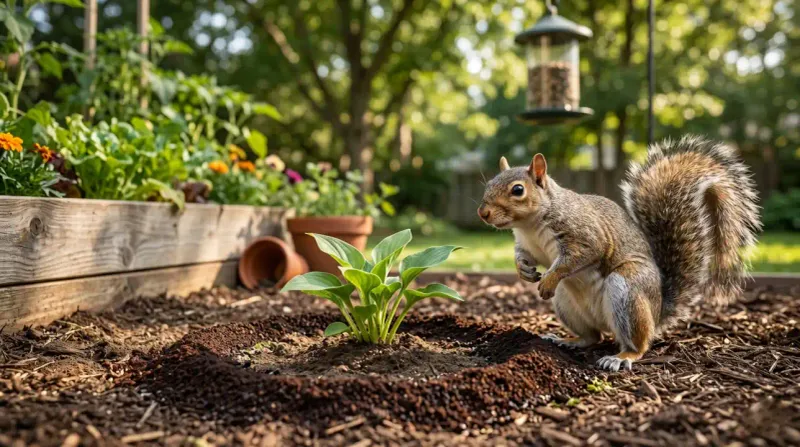
The headline on articles like this one promises a lot, and it is worth slowing down to look at what research actually found. One peer-reviewed study tested whether red-fox and raccoon odors would reduce gray squirrel feeding on butternuts in a field setting. The squirrels did reduce their feeding activity at scent-treated sites, but the researchers described the result as preliminary and called for more investigation before drawing firm conclusions. The study did not test tomatoes, did not run across a full growing season, and did not establish that predator odors provide dependable or lasting protection for a vegetable garden.
That study, published through the University of South-Eastern Norway’s open archive, is the most relevant smell-based evidence available for gray squirrels. It is worth knowing about, but it does not justify treating predator odor as a reliable crop-protection tool. Think of it as a possible short-term experiment rather than a proven solution.
Other popular smell-based recommendations, including peppermint oil, citrus peels, essential oils, basil, marigolds, and mint planted as companions, do not have dependable squirrel-specific research behind them. University of Minnesota Extension’s companion-planting guidance cautions that many plant-deterrent claims are overstated and do not hold up consistently under real garden conditions.
Soap bars, dryer sheets, human hair, ultrasonic devices, and scarecrows fall into a similar category. UMN Extension’s deer and rabbit management resource describes these approaches as temporary and inconsistent at best. Squirrels, especially those that live near suburban homes and have become comfortable around humans, tend to habituate to novel stimuli fairly quickly.
If you want to try a predator-scent product, go ahead with modest expectations and treat it as one small layer of a broader plan, not the centerpiece of your tomato defense.
Capsaicin deters through contact rather than scent
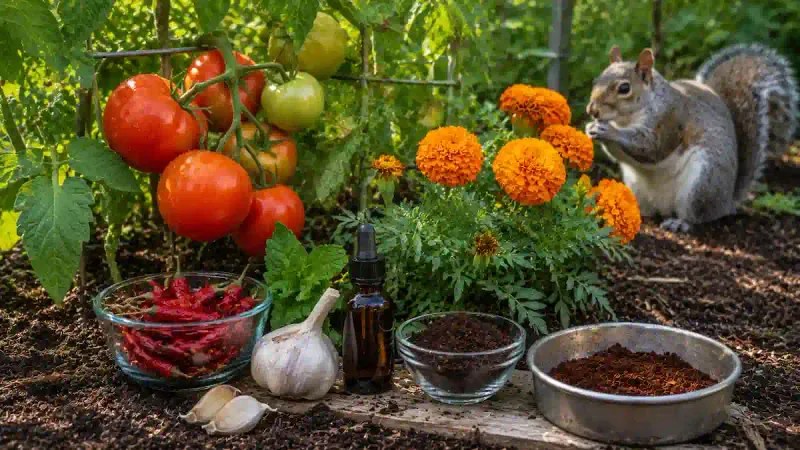
Capsaicin, the compound that makes hot peppers hot, is the best-supported repellent concept for gray squirrels, but it works very differently from the smell-based premise in the headline. Squirrels do not smell capsaicin from a distance and decide to leave. The aversion happens when they contact or taste treated material and experience irritation or pain. That distinction matters when you are deciding how and where to apply it.
Bird-feeder trials published through the University of Nebraska-Lincoln found that gray squirrels avoided capsaicin-treated seed. Those studies treated the food itself, not the surrounding area, and they were conducted in controlled settings with birdseed, not with ripening tomatoes sprayed by a home gardener. Applying that finding directly to a homemade cayenne spray on your garden plants is a stretch the research does not support.
Several variables can reduce how well capsaicin works in practice. Food availability is a big one: a squirrel with plenty of other options may simply move on, while a hungry or persistent animal may push through the irritation to get at a ripe tomato. Habituation is another factor, as squirrels can learn over time that a treated area is safe once the initial deterrent effect fades. Rain washes sprays off quickly, and high summer heat can concentrate ingredients in ways that may damage foliage or fruit.
Weather and formulation both affect how long any capsaicin product stays active on a plant. A spray applied in the morning may be largely gone by evening after a heavy rain, which means repeated applications are often necessary to maintain even a partial deterrent effect. That reapplication burden adds up over a long ripening window.
The honest takeaway is that capsaicin-based products are worth considering as a supplemental tool, but they are not a scent barrier that keeps squirrels away from the garden. They work best as part of a layered approach that starts with physical exclusion.
Check the product label before treating a food crop
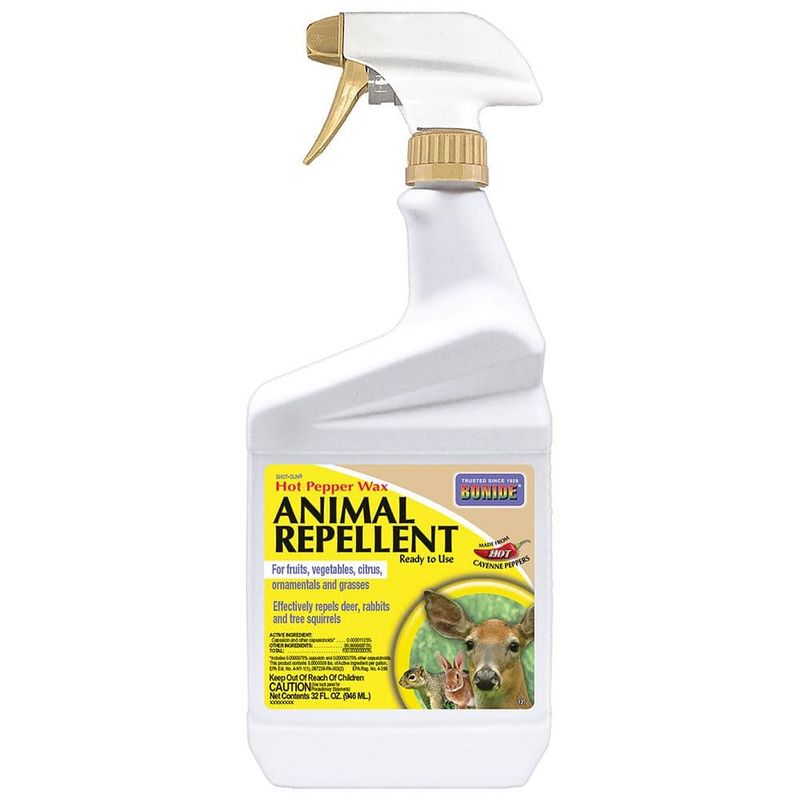
One of the most common mistakes home gardeners make is reaching for a bottle of hot sauce or mixing up a cayenne-water spray and dousing their tomato plants with it. Homemade mixtures have no validated concentration, no tested harvest interval, no residue data, and no plant-safety testing. You have no way to know whether the mixture is safe to eat after it dries on the skin of a tomato, or whether it will cause leaf scorch in hot weather.
Commercial repellents are a different category, but they still require careful reading before use. Penn State Extension’s tree-squirrel guidance notes that some capsaicin-based products are labeled only for use before edible fruit is present or after harvest, which means they may not be legal to apply to tomatoes that are already sizing up and turning color. Do not assume that a product labeled for fruit trees or vegetable gardens covers every stage of crop development.
When you evaluate a commercial repellent, look for five things on the current label: the target pest listed by name, the crop category that includes tomatoes or vegetables, the application timing relative to fruit set and harvest, the required interval between the last application and harvest, and the reapplication schedule. If any of those details are missing or unclear, contact the manufacturer or your local extension office before applying the product to food crops.
Rain and heat reduce performance for most spray repellents. Colorado State University Extension advises testing a small area of foliage first when using capsaicin products on plants, to check for phytotoxicity before treating the whole garden. Follow the product’s specific directions for that test, not a general rule from a website.
The legal side of this is not a formality. The EPA states clearly that pesticide labels are legally enforceable documents, and that using a product in a way that contradicts the label is unlawful under federal law. State requirements may add additional restrictions. The label on the product you are holding right now, not an older version or a gardening blog post, is the controlling document.
If a label has been updated since you last used the product, the new version governs your application.
Mothballs and moth flakes are sometimes mentioned as squirrel deterrents. Do not use them near edible crops, children, or pets. Wildlife-damage management guidance warns that naphthalene fumes can cause severe distress and that this use is not appropriate for food gardens under any circumstances.
Build a barrier squirrels cannot lift or bypass
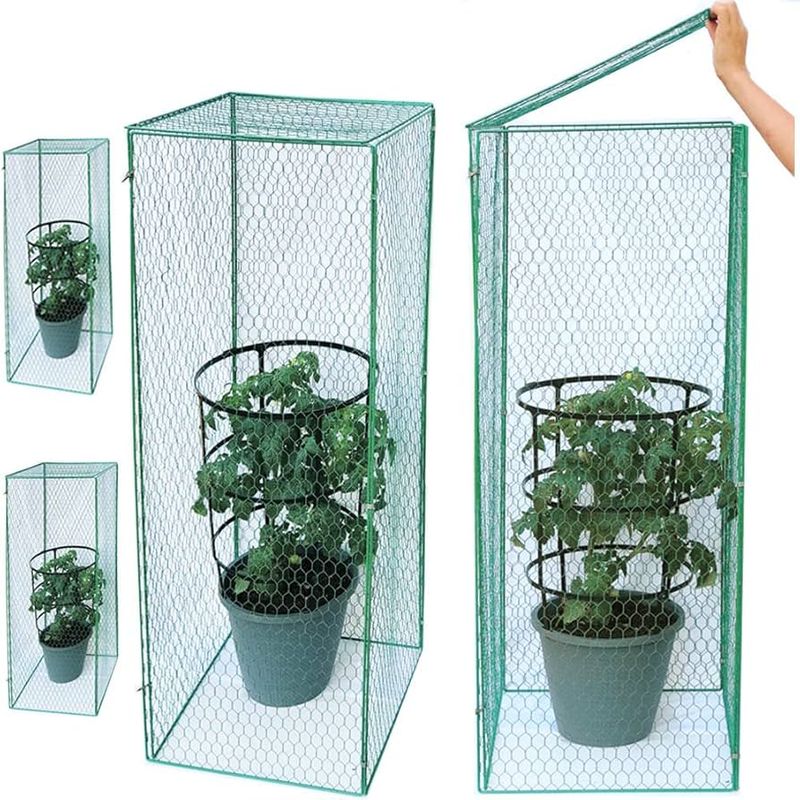
Physical exclusion is the most dependable protection available for ripening tomatoes, and extension specialists consistently recommend it over repellents as the primary line of defense. The concept is straightforward: surround the plants with a structure that squirrels cannot get through, under, or around. Executing it well takes a little planning, but the results hold up better than any spray or scent.
A rigid frame covered with hardware cloth or welded wire mesh with openings no larger than one inch gives squirrels no easy entry point. Chicken wire is softer and easier to push through or chew, so the heavier-gauge options are worth the extra cost. Wisconsin Horticulture Extension specialists describe physical barriers as the most reliable approach for raised vegetable beds, while acknowledging that complete exclusion can be difficult to achieve in practice.
The bottom edge of the cage matters as much as the sides and top. Squirrels can push under a loosely draped net or lift a cage that is not anchored to the bed frame or soil. Secure the bottom edge with stakes, clips, or by fastening it directly to the raised bed walls. For in-ground plots, pin the mesh to the ground with landscape staples around the perimeter.
Approach routes from above are the main vulnerability for tree squirrels, which can drop from overhanging branches, fences, or rooflines onto a plant that has only side protection. The Internet Center for Wildlife Damage Management’s tree-squirrel resource emphasizes that barriers must account for the animal’s aerial approach. A cage without a secure top cover is an open invitation.
Ventilation and heat are real concerns when you enclose plants in a tight structure during summer. A cage made of open wire mesh allows airflow and avoids the overheating risk that solid row covers can create. UNH Extension’s row-cover guidance notes that covers used during flowering may reduce insect access, but that concern applies mainly to solid fabric covers rather than open wire cages. Tomatoes are self-fertile and pollinate through wind and vibration, so an open wire structure generally does not interfere with fruit set the way a tight fabric cover might.
Check the cage daily during hot spells, and make sure the design allows you to open it easily for harvesting and inspection.
Reduce the time ripe fruit remains exposed
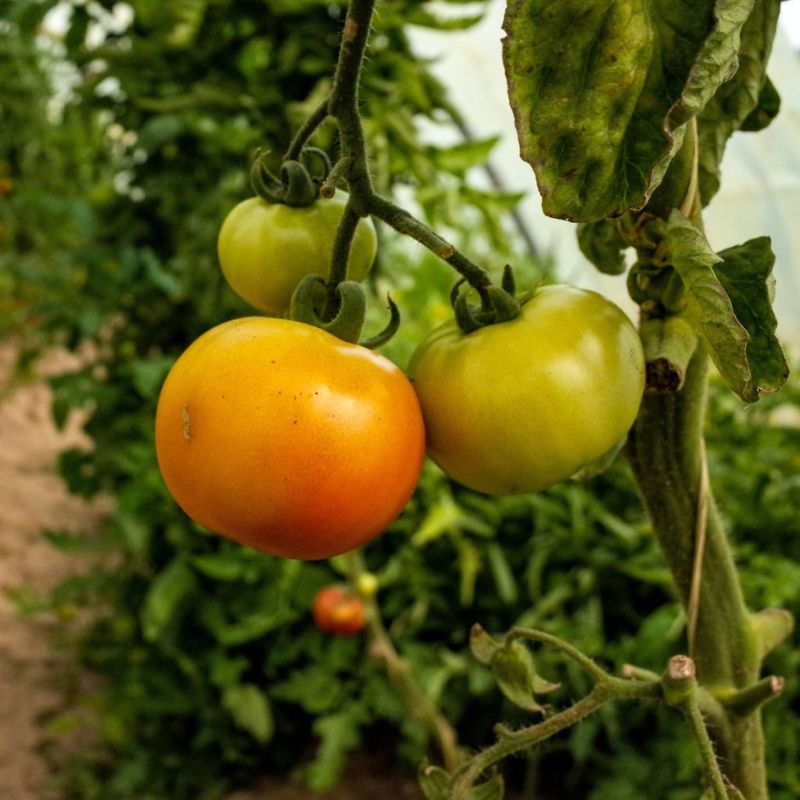
A cage does most of the heavy lifting, but managing how long ripe fruit stays on the vine adds another layer of protection that costs nothing extra. Squirrels are opportunists, and a tomato that has been red and fragrant for several days is far more likely to attract attention than one that is just starting to turn color.
Harvesting at the mature-green or first-blush stage is a practical way to shorten that window. OSU Extension confirms that tomatoes can be harvested at mature-green, semi-ripe, or fully ripe stages and ripened off the plant under suitable temperature conditions, typically between 60 and 70 degrees Fahrenheit indoors. The flavor develops well when the tomato has already reached physiological maturity on the vine, even if the skin has not yet fully colored. This approach works best for large-fruited varieties; cherry tomatoes are more forgiving about being left on the plant a little longer.
Plant supports play a supporting role in this strategy, though not the way some gardeners assume. OSU Extension notes that stakes, cages, and trellises keep fruit off the soil and make plants easier to inspect and harvest, which helps you spot a ripening tomato before a squirrel does. A well-staked plant also makes it easier to install a cage or netting around the fruit zone. Staking alone, however, does nothing to stop a squirrel that has already spotted the tomato from a fence post ten feet away.
UMN Extension’s integrated pest approach frames these steps the same way: each layer reduces risk, and combining them produces better results than relying on any single tactic. Check the garden every morning during peak ripening season and pull anything that is close enough to finish indoors.
Use odors only as a limited backup
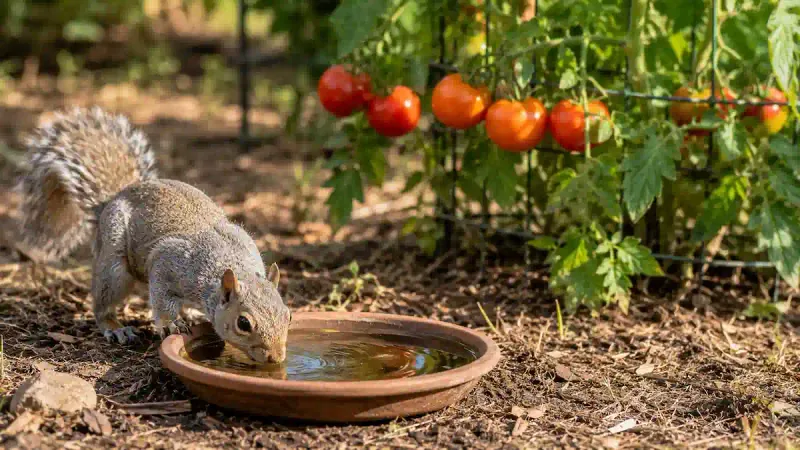
Putting everything together gives you a clear order of priorities. Start by confirming the animal is actually a tree squirrel, not a bird, rabbit, ground squirrel, or chipmunk, because the right fix depends on the right diagnosis. Then install a securely fastened cage or mesh enclosure that covers the top and has its edges pinned down so the animal cannot lift or push underneath it. Harvest fruit at the mature-green or first-blush stage whenever that is practical, to reduce how long attractive ripe tomatoes remain exposed.
Odor-based tactics, including commercial predator-scent products, come after those steps as optional, short-term supplements. UMN Extension recommends treating repellents as one layer of a broader strategy, not as a stand-alone fix, because rain and habituation can erase their effect quickly. Wildlife damage management guidance echoes that point and specifically warns against mothballs near food gardens, children, or pets. Mothballs are not a safe or appropriate garden remedy regardless of what older sources may suggest.
If you try a commercial repellent, verify the label covers your crop and situation, rotate products if you use them across multiple weeks, and keep in mind that Penn State Extension notes capsaicin effectiveness drops when other food sources are plentiful. A well-fed suburban squirrel may not be impressed. The barrier is the plan; the repellent is the hedge. Get the cage right first, and you may find you need very little else to bring your tomatoes in safely.