
If You Bury A Single Bucket Flush With The Ground, Here’s The Self-Running Wildlife Pond That Shows Up Within Weeks
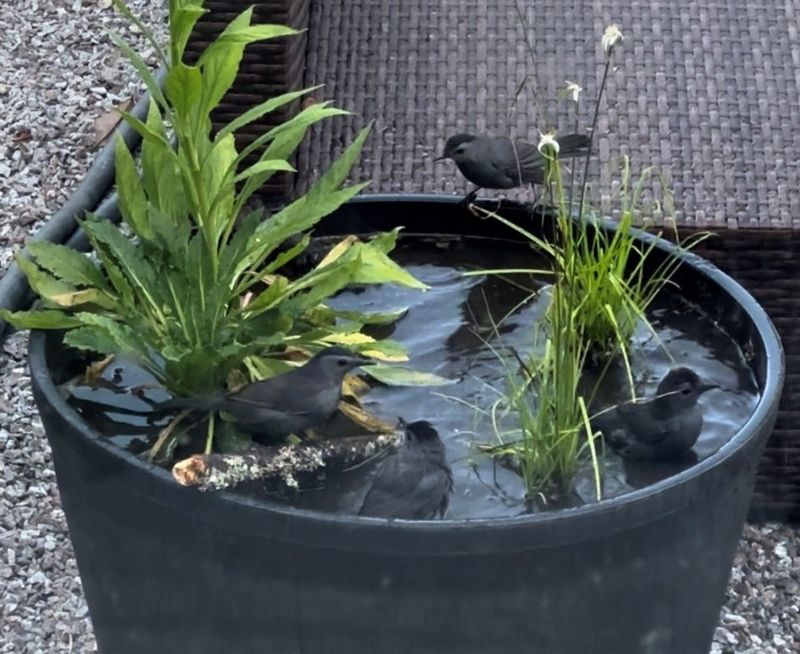
Burying a bucket in your backyard and filling it with water sounds like a surprisingly simple way to help local wildlife, and in some cases it really can make a difference. A small container set into the ground may attract thirsty insects, offer a cool resting spot for a passing toad, or host a tiny community of aquatic invertebrates.
What it almost certainly will not do is run itself or guarantee frogs and dragonflies within days. Understanding what a buried bucket can and cannot realistically offer helps you build something genuinely useful rather than something that disappoints or causes harm.
A buried bucket can offer habitat without becoming a pond ecosystem
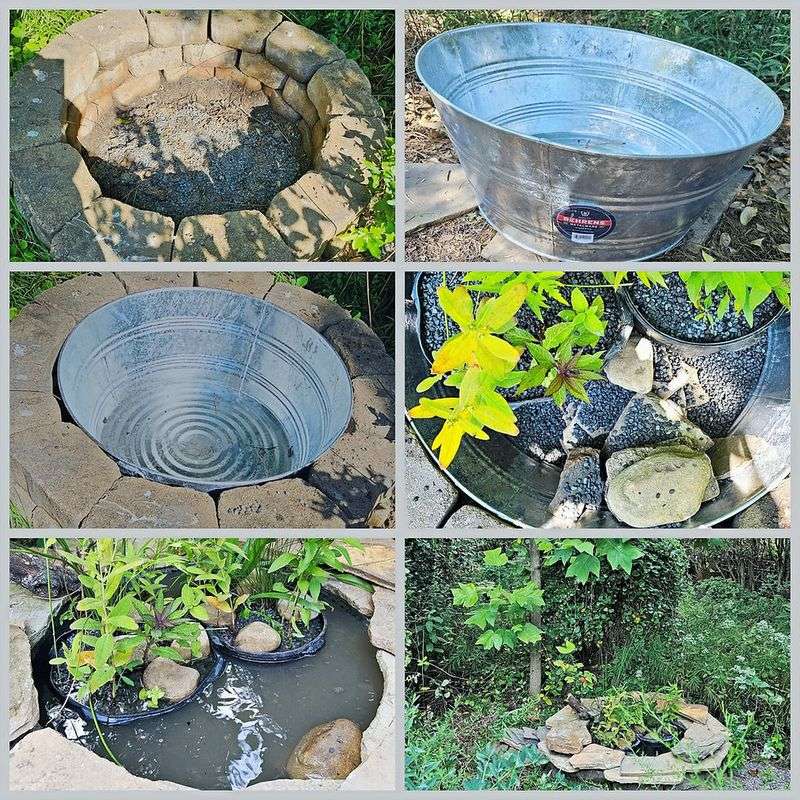
Social media posts and gardening blogs sometimes describe a buried bucket as a self-running wildlife pond that fills up with frogs, dragonflies, and toads almost overnight. The reality is more modest and still worth pursuing.
A water-filled container set into the soil can function as a very small artificial aquatic habitat, and some insects may discover it without any help from you.
What the science does not support is a guaranteed complete food web on a days-to-weeks timetable. Research on container aquatic habitats shows that small, enclosed water bodies are especially vulnerable to drying, overheating, oxygen swings, and rapid changes in water quality, all of which limit how rich a community they can support.
A bucket’s volume is simply too small and too unstable to reliably replicate what a constructed pond does.
Larger artificial ponds tell a more encouraging story. A USGS study of small constructed ponds found that they could support at least ten amphibian species, but reproductive success depended on water quality, vegetation, the absence of predatory fish, and the surrounding landscape.
A bucket meets none of those conditions automatically.
There is also a meaningful difference between an animal visiting a water feature and one actually breeding there. A toad may hop to the rim for a drink or a cool rest on a warm evening without ever depositing eggs.
A dragonfly may hover above the surface and move on. Visiting, using the water for moisture or shelter, and completing a full reproductive cycle are three very different outcomes, and only the first is likely with a container this size.
None of that makes a buried bucket worthless. Offering any clean water source in a dry suburban yard has real value for thirsty insects and passing wildlife.
The honest framing is that a bucket may support a small invertebrate community or occasional visitors, not that it will become a self-sustaining pond.
Choose a site that supports wildlife access and clean water
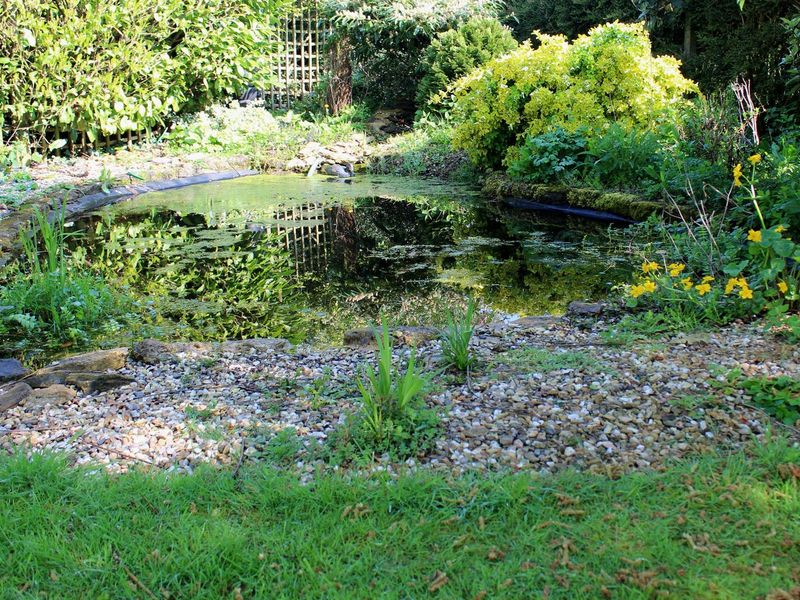
Where you place the bucket matters almost as much as how you build it. Wildlife, especially amphibians, do not travel randomly.
They follow moisture corridors, move along sheltered edges, and tend to stay close to places they already know. Oregon State University extension guidance recommends locating a backyard pond within roughly half a mile of an existing pond or wetland that already supports breeding amphibians, along with an undisturbed travel corridor between the two.
If your yard backs up to a wooded edge, a drainage swale, or a neighbor’s rain garden, those are your best placement zones. A bucket sitting in the middle of a mowed, sun-baked lawn with no surrounding cover offers water but little else.
Amphibians need moist ground, leaf litter, and shade to move safely between a water source and their resting spots on land.
Proximity to existing habitat improves the opportunity for visits, but it cannot guarantee colonization. Season matters too.
Most frog and toad species breed in spring and early summer in the United States, so a bucket installed in August may sit unnoticed by amphibians until the following year. Urban barriers such as roads, buildings, and large expanses of pavement can slow or prevent arrival entirely, even when a wetland is technically nearby.
Washington Department of Fish and Wildlife notes that habitat fragmentation is one of the leading pressures on amphibian populations.
Water quality at the chosen site is equally important. Keep the container away from downslope runoff paths where lawn fertilizers, herbicides, or road chemicals can wash in after a rain.
EPA guidance on pesticide drift points out that chemicals can move through air and water well beyond the area where they were applied, which means even a neighbor’s lawn treatment can affect a nearby container. Penn State Extension specifically advises keeping runoff away from wildlife water features to prevent contamination.
A shaded spot under a deciduous tree or along a shrub border often meets several goals at once: it reduces evaporation, keeps water cooler, and provides the terrestrial cover that amphibians need just outside the water’s edge.
Build a safe entrance and a reliable way out
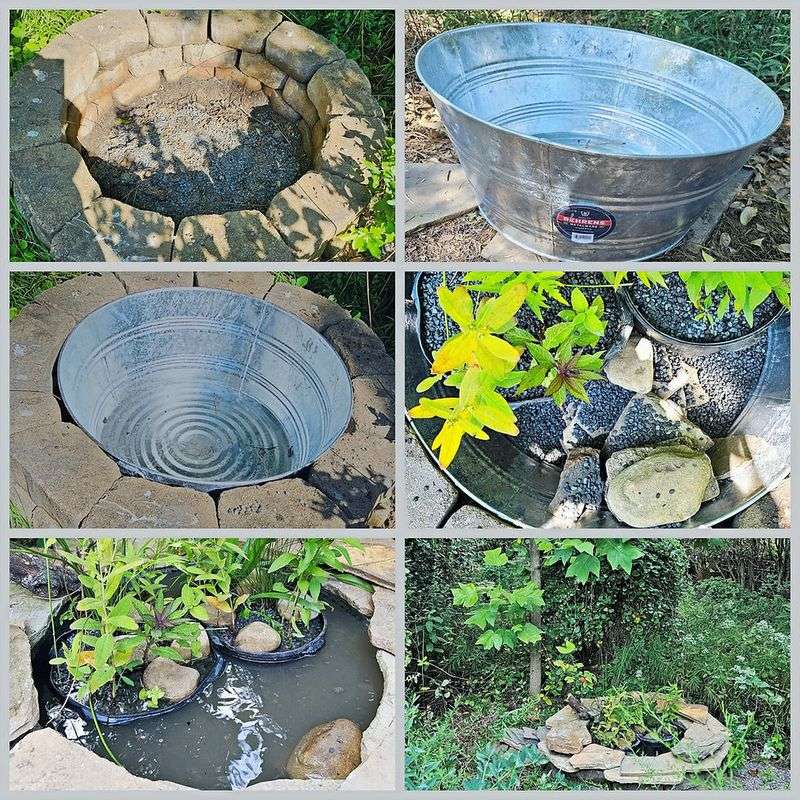
Getting the physical setup right is where most buried-bucket projects succeed or fail. Start with the container itself.
Use a clean, food-grade or otherwise non-toxic bucket that has never held pesticides, solvents, motor oil, or other chemicals. Residue from those substances can persist even after rinsing and can poison the very animals you are trying to help.
Set the bucket into a hole so that its rim sits at or just slightly above ground level. This flush or near-flush position allows ground-dwelling animals, including toads, beetles, and small mammals, to approach the water without having to scale a vertical wall.
Dig the hole snugly so the sides of the bucket are supported by soil and the container cannot tip when an animal steps on the rim.
The single most important feature you can add is a reliable escape route. Research on animals trapped in artificial water bodies documents that steep-sided containers can strand amphibians, small mammals, and invertebrates that enter but cannot climb out.
A rough stick or branch wedged diagonally from the waterline to the rim gives trapped animals traction to climb. A flat stone ramp or a sloped layer of gravel works as well.
The surface needs to be textured, not smooth, so wet feet can grip it.
Michigan DNR guidance on attracting frogs and toads also recommends providing shallow edges and nearby terrestrial cover such as rocks, logs, and dense low plants so amphibians have somewhere safe to rest after leaving the water. If the bucket is too deep to allow shallow water near the edge, consider adding a layer of gravel or a flat stone shelf inside that reduces the depth in one section.
Human safety requires equal attention. The U.S.
Consumer Product Safety Commission identifies five-gallon buckets as serious drowning hazards for young children, even when only partially filled. A buried bucket is especially dangerous because a toddler who falls in face-first cannot push up from the soft soil around the rim.
Place this feature in a fenced area, a back corner of the yard behind a locked gate, or another location that young children genuinely cannot reach without adult supervision. Penn State Extension similarly cautions that even small water features pose risks to young children and recommends thoughtful siting.
Wildlife access and child safety are not in conflict if you plan the location carefully before you dig.
Prepare the water and let local wildlife arrive on its own
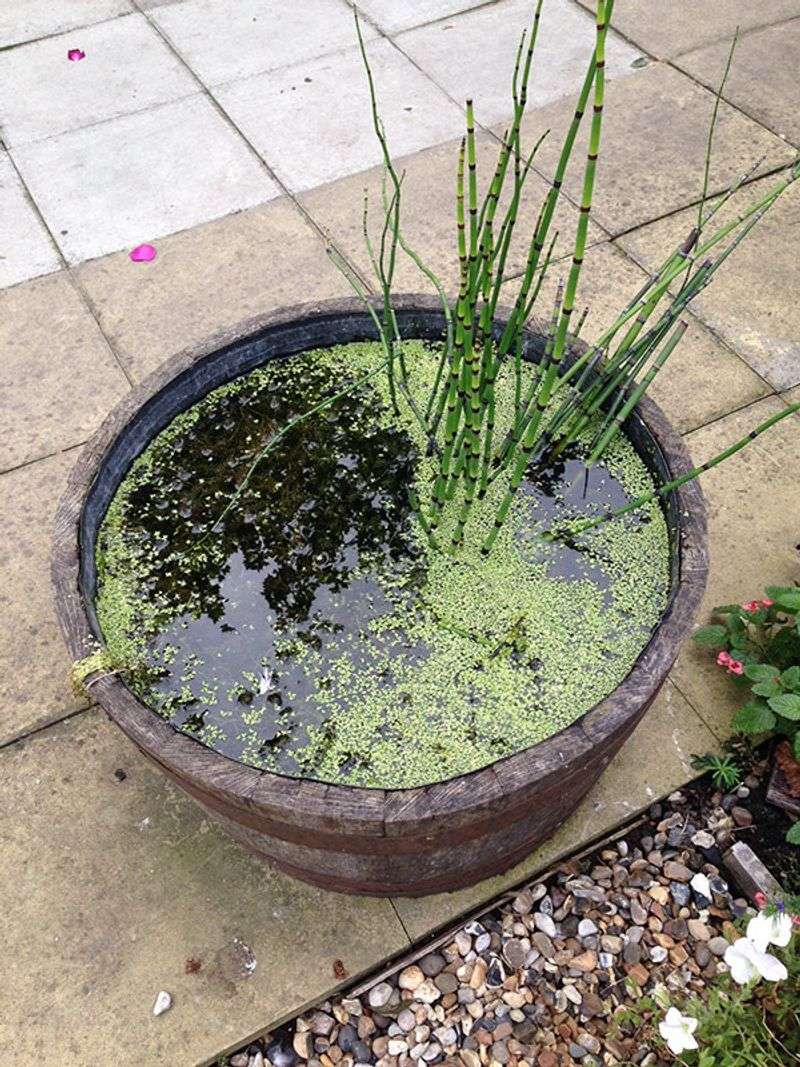
Filling the bucket correctly matters more than most guides admit. Tap water in the United States is treated with chlorine or chloramine to make it safe for people, but those same chemicals can stress or harm aquatic invertebrates and amphibians.
Oregon State University extension guidance recommends either allowing treated water to sit for several days before reintroducing pond organisms, or using an appropriate dechlorinator. Simply letting water stand is effective for chlorine but may not be sufficient for chloramine, which does not off-gas as readily.
Check with your local water utility to find out which treatment your area uses, then choose your preparation method accordingly.
Rainwater collected in a clean barrel is another good option if you have one, since it avoids municipal treatment chemicals entirely. Avoid water from a roof with asphalt shingles treated with algaecides, or from gutters that drain near treated wood, painted surfaces, or areas where pesticides are applied.
Once the water is ready, let wildlife find the feature on its own schedule. The temptation to speed things up by adding tadpoles, frog eggs, aquatic plants, or a scoop of water from a nearby pond is understandable, but it carries real risks.
The U.S. Fish and Wildlife Service warns that chytrid fungus, a pathogen responsible for catastrophic amphibian declines worldwide, spreads through the movement of infected animals and contaminated water.
FWS Protect Your Waters guidance asks people not to move water, mud, plants, or animals between water bodies for exactly this reason.
Transferring organisms may also violate state wildlife regulations. Penn State’s vernal pond guidance notes that collecting or moving amphibians and their eggs is restricted in many states, so what feels like a helpful boost could create a legal problem.
Aquatic or marginal plants placed around the rim in pots can add shade and structure without requiring any transfers from natural waterways. They are a genuine enhancement, but they are not a shortcut to instant wildlife.
The animals that eventually show up will be the ones already living in your neighborhood, arriving on their own timeline.
Expect visitors on different schedules—and possible non-arrivals
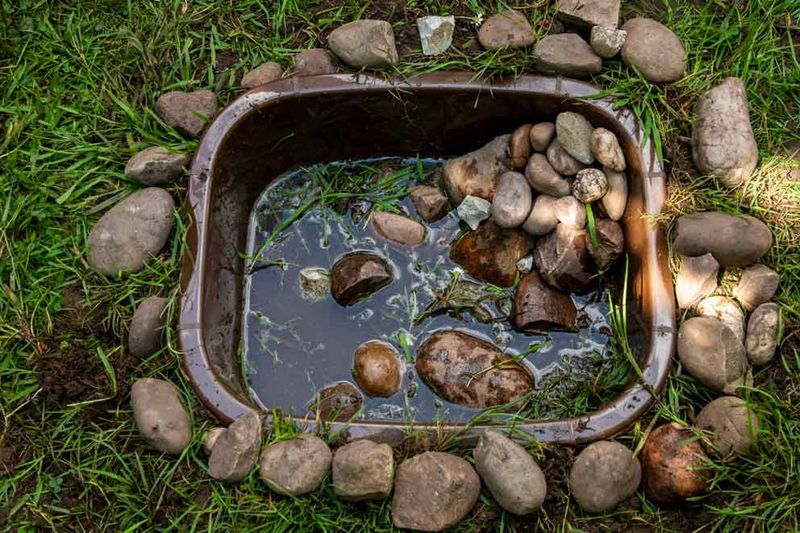
Flying insects tend to find new water sources faster than almost anything else. Water striders, midges, and various beetles can appear within days of a container being filled, carried in by wind or their own searching behavior.
That early activity is real, but it is a far cry from a functioning food web.
Amphibian arrival follows a completely different timeline and depends on factors outside your control. Oregon State University’s pond habitat guidance states that amphibian colonization in urban or suburban settings can take one to several years even when conditions look favorable, and some yards may never see breeding amphibians at all.
Regional species composition matters enormously. A yard in the Mid-Atlantic region has access to different frog and toad communities than one in the Pacific Northwest or the Gulf Coast, and the species present in your area may or may not find a bucket-sized feature appealing for breeding.
Toads and tree frogs may use the water for moisture, cooling, or feeding on insects near the surface without ever depositing eggs. That kind of use is still ecologically meaningful, but it is not the same as successful reproduction.
A complete amphibian life cycle, from egg to tadpole to juvenile, requires water that persists long enough for development to finish. Massachusetts vernal pool guidance notes that even naturally temporary pools must hold water for a minimum period to support successful breeding, and USDA Forest Service research on temporary aquatic habitats confirms that containers that dry too quickly can kill eggs or larvae before they mature.
A bucket in a sunny spot during a dry summer may empty faster than tadpoles can develop.
Dragonflies and damselflies are worth separating clearly. They are related but different insects with different habitat requirements.
Xerces Society guidance on odonate pond habitat estimates a minimum viable dragonfly pond area of about 43 square feet, while noting that some damselflies and smaller odonates may use smaller water bodies. An adult dragonfly may perch on a stick near your bucket and hunt insects in the area, but that is a visit, not colonization.
Reliable dragonfly breeding requires aquatic vegetation, stable water, and enough space for larvae to develop over months.
A seven-season study of restored wetlands in North Carolina found that amphibian species richness approached a stable level within about two years, but those were constructed ponds in a landscape already rich with amphibian populations. A backyard bucket in a fragmented suburban setting starts from a very different baseline, and patience measured in seasons rather than weeks is a more realistic mindset.
Check the container instead of calling it self-running
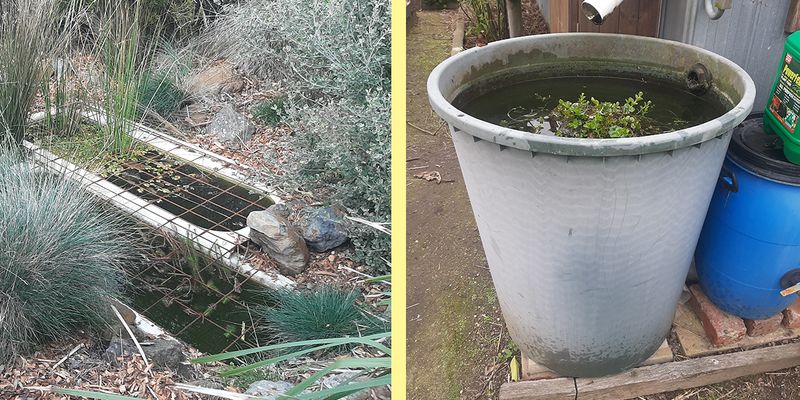
A buried bucket needs regular attention precisely because its small volume makes every problem worse and faster. Heat, drought, a single contamination event, or a week of neglect can turn clean, clear water into something murky, foul-smelling, or actively harmful to the animals you hoped to attract.
Plan to check the container at least once a week during warm months.
During each check, look at the water level first. A bucket can lose several inches to evaporation in a hot week, and a small animal that fell in when the water was high may be stranded on a ledge when the level drops.
Top up with prepared water as needed. While you are there, check for foul odors, which suggest low oxygen or decomposing organic matter, and remove any large debris such as fallen leaves that are breaking down rapidly.
Research on container aquatic communities shows that small enclosed water bodies are frequently dominated by mosquito larvae and detritivores rather than the diverse invertebrate communities found in larger ponds. Mosquitoes can complete a life cycle in as little as a week in warm, still water, which makes a neglected bucket a neighborhood mosquito source rather than a wildlife asset.
Dragonflies do eat mosquitoes, but they also eat many other small insects, and a visiting dragonfly will not reliably patrol your bucket. Research on dragonfly predation in aquatic habitats shows that dragonfly larvae alter the composition of invertebrate communities broadly, not just mosquito populations.
University of Maryland entomology research reinforces that dragonflies cannot be counted on as a mosquito-control strategy for a small container.
CDC guidance on home mosquito control recommends emptying, scrubbing, turning over, or covering water-holding containers every week to interrupt the mosquito breeding cycle. For a deliberately maintained wildlife habitat that you do not want to empty repeatedly, Illinois Extension identifies Bti (Bacillus thuringiensis israelensis) as an option labeled for mosquito control that is described as safe for people, pets, fish, and wildlife when used according to the product label.
Always follow label directions and any local mosquito-control guidance before applying any product to a wildlife habitat. Illinois Extension’s container garden guidance also notes that excess algae can signal nutrient buildup and should be removed when it covers most of the water surface, though a thin layer of algae is normal and can support microinvertebrates.
A quick weekly walk-by takes only a few minutes and keeps the feature functional, safe, and genuinely useful rather than a liability.
Choose the bucket for observation, not guaranteed breeding
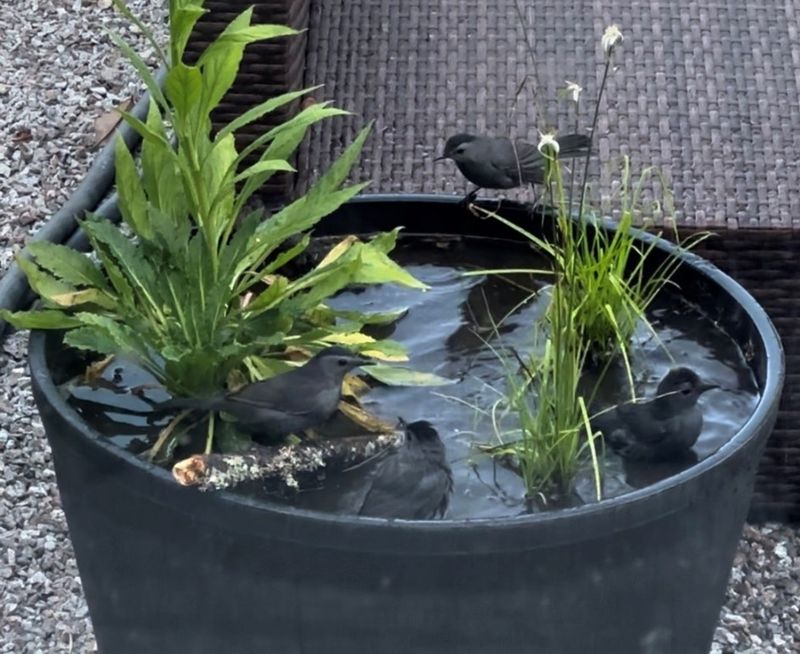
A buried bucket water feature is a reasonable project for a gardener who wants a low-cost way to offer insects and passing wildlife a resource, and who is prepared to check it regularly. Go in with that expectation and you will likely find it rewarding.
A water beetle exploring the surface, a toad pausing at the rim on a humid night, or a thin film of algae hosting microscopic life are all genuine ecological outcomes worth appreciating.
If your actual goal is reliable amphibian breeding habitat, a larger, better-designed pond is the right tool. USGS research on constructed ponds found that reproductive success for amphibians was tied to water persistence, vegetation, and the absence of fish, all conditions easier to achieve in a pond with more volume and stable edges.
Penn State Extension recommends at least some shallow, gently sloping edges and surrounding terrestrial cover as baseline features for a wildlife pond, which a bucket can only partially replicate.
Before you commit, run through the essential checklist: a clean, non-toxic container; a textured escape ramp from waterline to rim; prepared, dechlorinated water; a placement that avoids runoff and pesticide drift; no transfers of organisms or water from natural sources; a plan for weekly mosquito monitoring; and a location that children cannot access unsupervised. Pond maintenance guidance from Penn State underscores that even small water features benefit from a consistent care schedule.
The most honest outcome to expect is occasional visits and a modest community of invertebrates. That is not a failure.
A small, well-managed water source in a dry suburban yard is a genuine contribution to local wildlife, even if it never hosts a complete food web or a chorus of breeding frogs.