
If You Grow Tomatoes, Here’s The One Plant You Should Never Set Too Close To Them
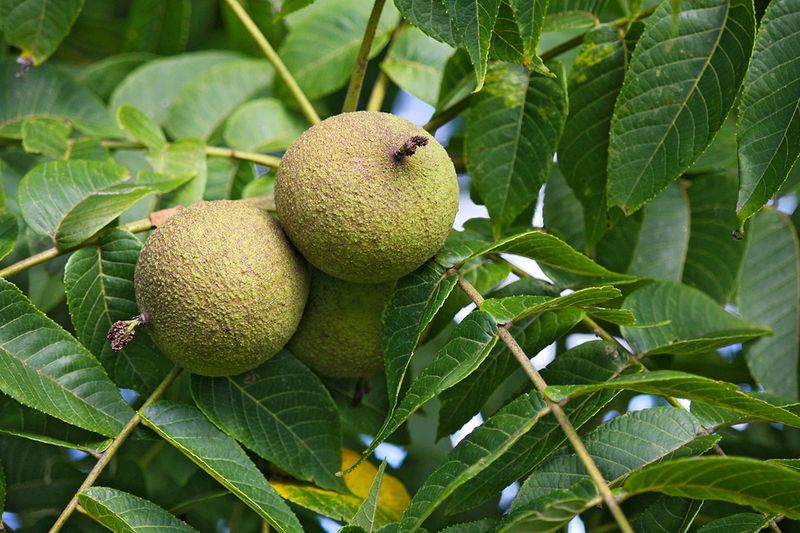
Most tomato growers blame themselves when their plants start wilting and yellowing for no obvious reason. But sometimes the problem is not what you are doing wrong – it is what is growing nearby.
One specific tree, common in many US backyards, can quietly stress or even kill your tomato plants through its roots and fallen debris. Knowing which tree to watch for can save you a full season of frustration.
The strongest documented risk is a black walnut tree
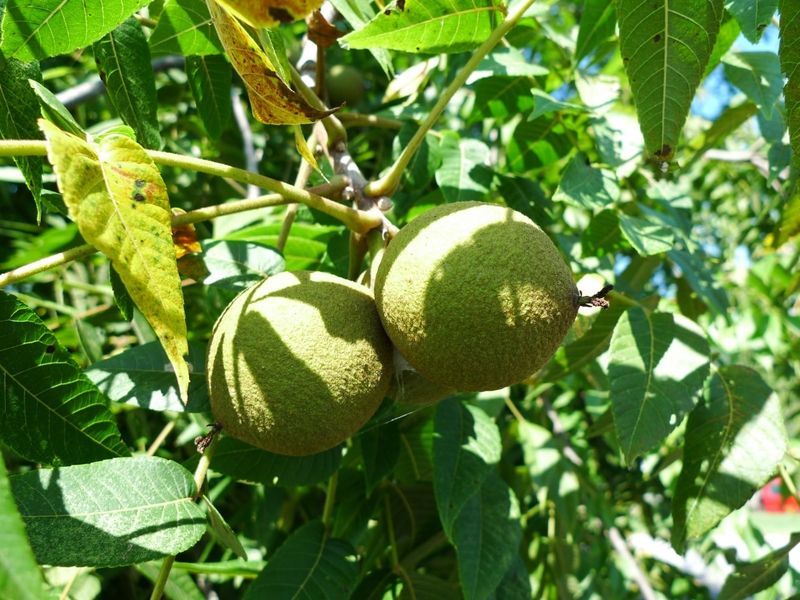
Black walnut (Juglans nigra) is the plant most strongly linked to tomato failure by university horticulture programs across the country. Unlike a bad companion herb or a crowding vegetable, this is a full-sized tree – and the concern is not just about shade or competition.
Michigan State University Extension guidance on growing vegetables near black walnuts specifically advises keeping tomatoes away from black walnut trees and their root zones, citing the tree’s documented potential to harm susceptible plants.
The title of this article says “never,” and that word deserves a little honest unpacking. No single distance or rule applies to every yard.
The real concern is about exposure to the tree’s roots and the debris it drops – leaves, nut hulls, bark, and decaying wood – rather than some invisible force radiating from the trunk. Tomatoes do not die simply because a walnut exists somewhere on the property.
Proximity, root contact, and debris accumulation are what create the actual risk.
Extension services treat this as a siting problem, not a mystery. If you can place your tomato bed well away from a black walnut’s likely root zone and keep walnut material out of the soil, you reduce the risk considerably.
That said, no distance comes with a guarantee, because root spread, tree age, soil type, and drainage all vary from yard to yard. The practical takeaway is to treat a nearby black walnut as a red flag worth acting on, not a death sentence for every plant in the area.
Juglone exposure depends on roots, debris, and soil conditions
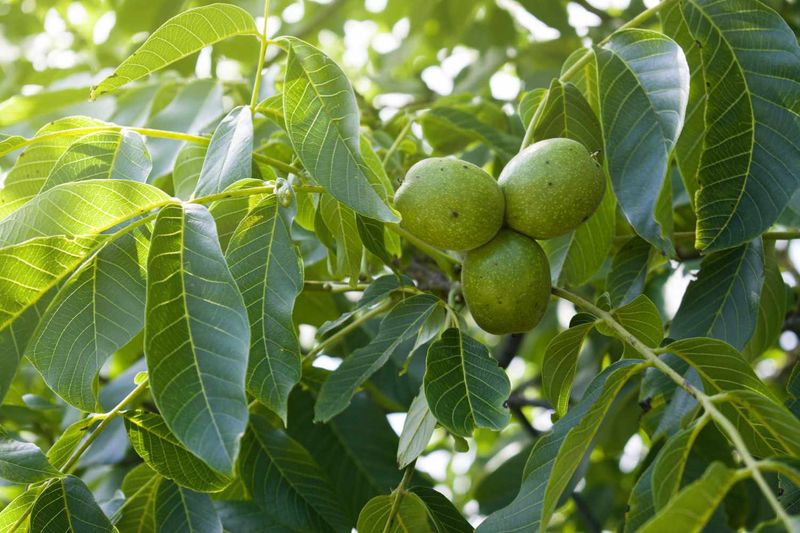
Black walnut produces a compound called juglone, and it shows up throughout the tree – in the roots, leaves, bark, wood, fruit, and especially the nut hulls. University of New Hampshire Extension explains that roots and nut hulls are the most significant sources around garden areas, because they make direct contact with soil where your plants are growing.
Exposure is not as simple as standing under the canopy. How much juglone actually reaches plant roots depends on site conditions that vary widely.
Soil moisture, drainage quality, organic matter content, and microbial activity all influence how juglone moves through the soil and how long it persists. A well-drained, biologically active soil may break down juglone more quickly than a compacted, waterlogged one.
Penn State Extension notes that highly sensitive plants can be affected beyond the dripline, but that proximity to the canopy alone does not tell the whole story.
Tomatoes are among the vegetables most sensitive to juglone exposure. Iowa State University Extension lists tomatoes alongside peppers, eggplant, and potatoes as particularly susceptible.
Symptoms can range from leaf yellowing and wilting to twisted or puckered growth, poor development, and plant death in serious cases.
Here is the honest scientific footnote worth knowing: much of the classic research on juglone toxicity comes from field observations or laboratory studies using concentrations that may not match what typical garden soils actually contain. A peer-reviewed review of black walnut allelopathy found that the strength of the field evidence is not fully settled.
Extension recommendations remain precautionary and practical – they are not a guarantee that every tomato near a walnut will fail, but they reflect a real and documented risk pattern worth taking seriously.
Symptoms can suggest a problem but cannot prove its cause
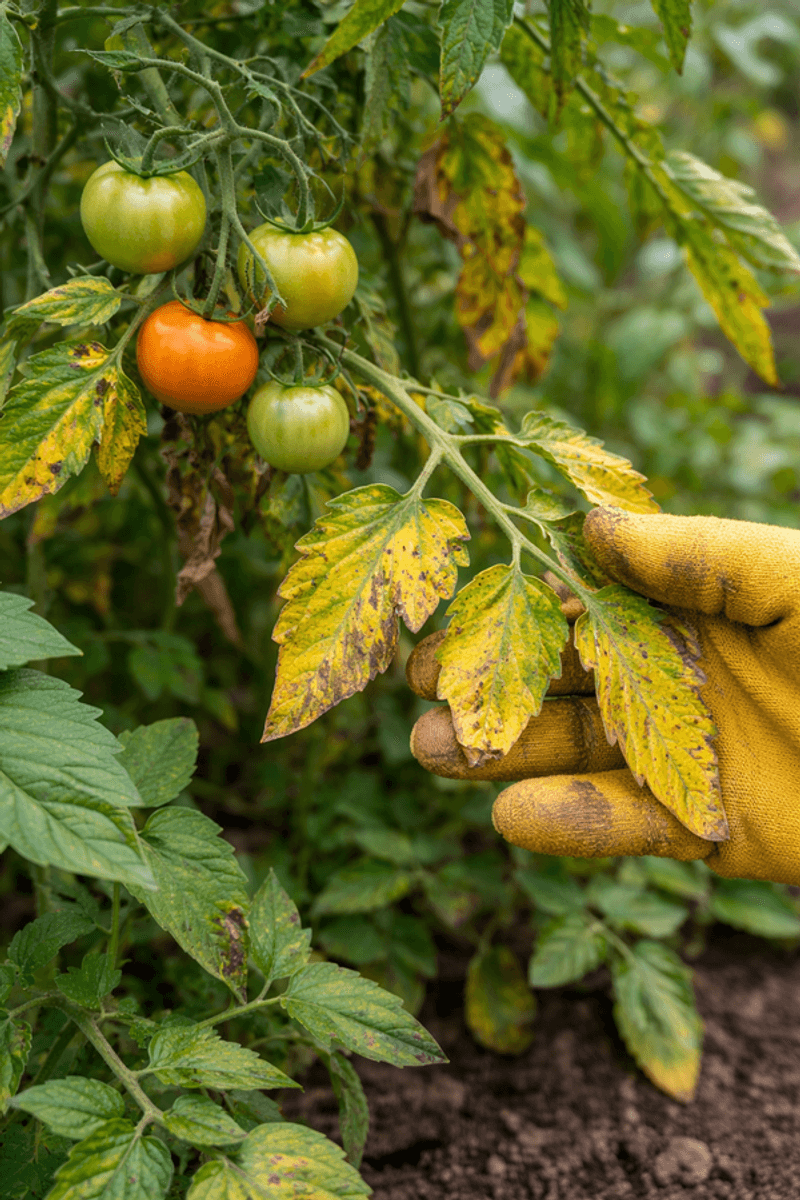
Wilting, yellowing leaves, stunted growth, twisted or puckered foliage, and a plant that simply refuses to thrive – these are the signs most often associated with walnut-related tomato stress. Iowa State University Extension describes these symptoms in the context of juglone sensitivity, and they can appear gradually or relatively quickly depending on exposure.
The problem is that none of these symptoms point exclusively to a walnut. Drought stress, inconsistent watering, heavy shade, poor air circulation, compacted soil, and root competition from any large tree can produce nearly identical results.
Tomato diseases – including early blight, Fusarium wilt, and Verticillium wilt – cause similar yellowing and collapse. Herbicide drift, which can happen even when you have not applied anything yourself, is another frequent cause of twisted, puckered, or distorted tomato leaves.
Extension diagnostic guidance consistently recommends checking multiple causes before concluding that a walnut is responsible. Before pointing at the tree, ask yourself: Are the plants getting at least six to eight hours of direct sun?
Has watering been consistent? Is the soil draining properly?
Are neighboring plants – not just tomatoes – also struggling? A problem that affects only the tomatoes while nearby beans or squash look healthy may point toward disease or variety sensitivity rather than a tree-wide soil issue.
Penn State Extension’s tomato disease guide lists numerous common causes of wilting and yellowing that have nothing to do with nearby trees. Use walnut proximity as a clue worth investigating, not a verdict.
Ruling out the more common culprits first makes any remaining conclusion about juglone far more defensible.
Choose the farthest practical site outside the root zone
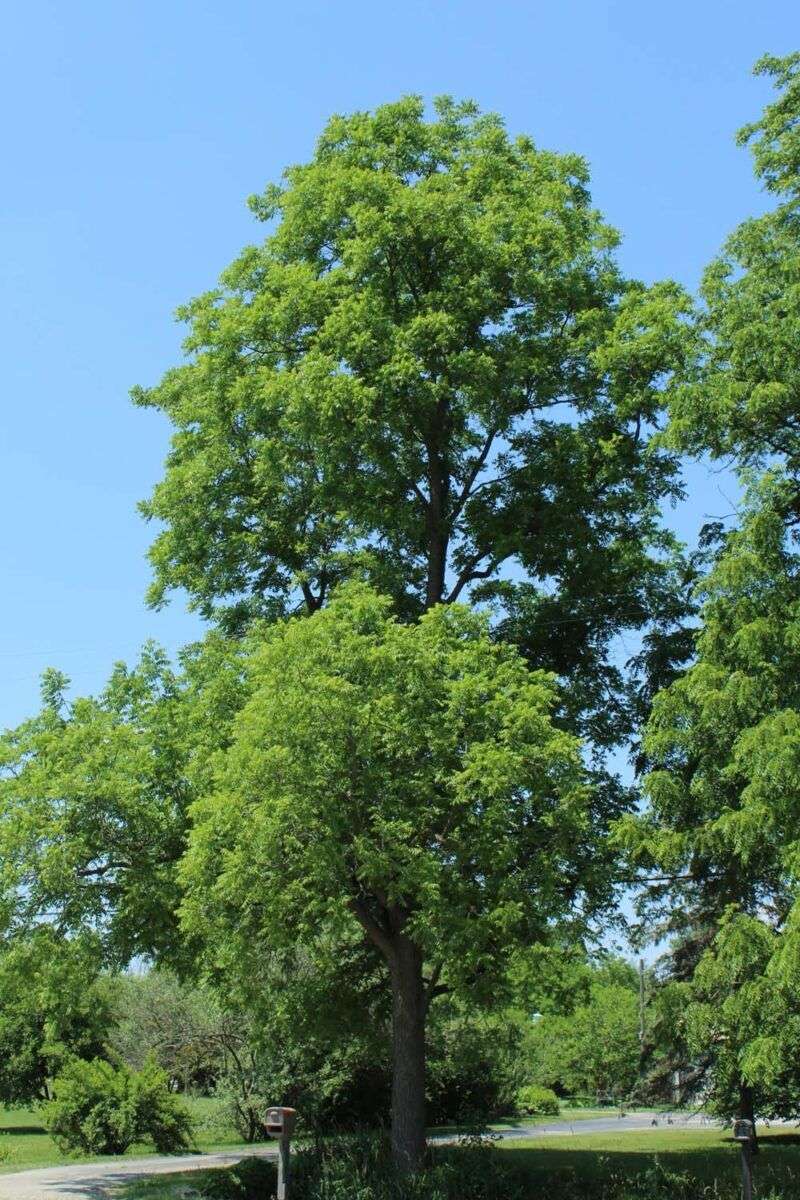
Picking the right spot before you plant is far easier than trying to rescue a struggling tomato bed mid-season. When a black walnut is on or near your property, the goal is to place your tomato garden as far from the tree’s likely root zone as practical – keeping in mind that “practical” looks different in every yard.
University of Wisconsin Horticulture Extension describes a mature black walnut’s potentially affected zone as roughly 50 to 60 feet from the trunk in some cases, while other sources suggest walnut roots can extend two to three times the crown radius. Neither figure is a guaranteed cutoff.
Root spread depends on tree age, canopy size, soil type, drainage, and other site-specific factors that vary from one property to the next. A young tree has a smaller footprint than a mature one, but both can have roots reaching well beyond what you might expect from looking at the canopy.
Penn State Extension reinforces that distance alone cannot guarantee safety, especially when debris can travel – blown by wind, moved by rain, or carried on tools and shoes. A tomato bed 60 feet from the trunk can still receive walnut leaves and hulls during fall, and those materials introduce the same compounds into the soil.
When choosing a site, favor an area that gets full sun, has good drainage, and sits upwind or uphill from any walnut on the property when possible. The farther away from the tree’s root zone you can get, the lower the risk.
Treat any distance figure as a rough planning guide and combine it with debris management rather than relying on it alone to keep your tomatoes safe.
Remove walnut debris and keep it out of tomato mulch
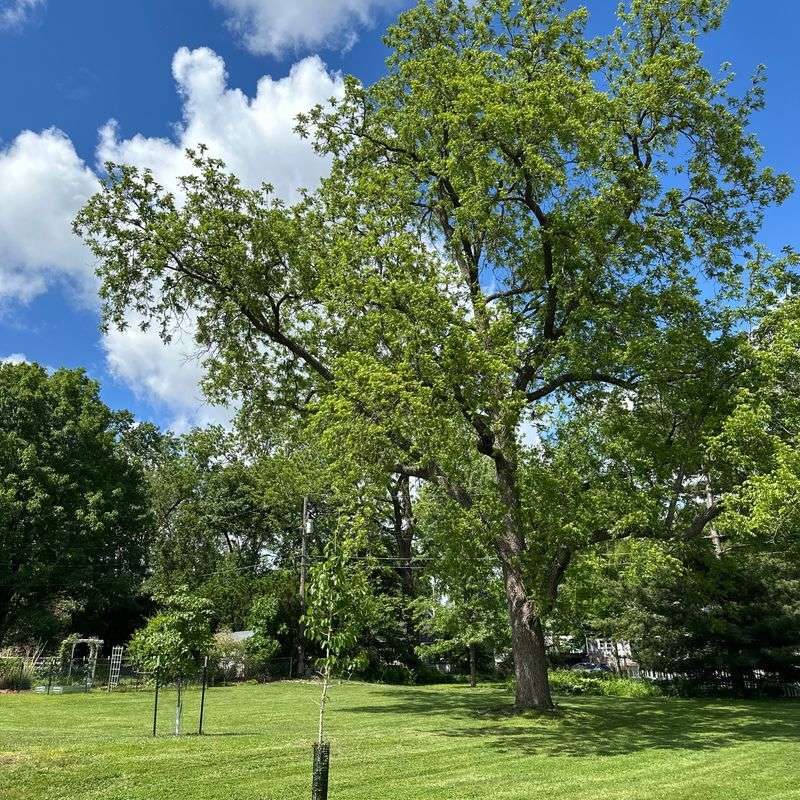
Fallen walnut leaves, nut hulls, bark fragments, and rotting wood can deposit juglone directly into your garden soil, even when the tree itself is not immediately overhead. Cleaning up that debris is one of the most direct steps you can take to lower the risk in any bed that sits within range of a black walnut.
Rake and remove walnut leaves and hulls from your growing area throughout the season, and especially after the heavy nut drop in late summer and fall. Do not compost them for use in tomato beds either – the decomposition process does not reliably break down juglone quickly enough to make walnut material safe for susceptible plants.
Michigan State University Extension specifically advises against using walnut leaves, hulls, bark, sawdust, or wood chips as mulch around tomatoes or other sensitive vegetables.
This matters more than many gardeners realize. A neighbor’s walnut tree, a tree at the edge of the property, or even a tree that was removed years ago can still contribute debris via wind and water flow.
Check your mulch source carefully if you buy bulk wood chips or shredded bark locally – walnut material can end up in mixed loads without obvious labeling.
Debris removal is a meaningful preventive step, but it works best as part of a broader strategy. If walnut roots are already present in the soil under your bed, keeping the surface clean reduces ongoing input but does not undo existing root contact.
Combine debris management with smart siting and, if needed, a properly isolated raised bed for the most complete approach.
A raised bed works only when roots cannot enter

Raised beds come up in almost every conversation about gardening near black walnuts, and they can genuinely help – but only under specific conditions. Simply building a bed above ground level does not stop walnut roots.
Roots follow water and nutrients, and they will grow upward into a raised bed if nothing physically blocks them.
For a raised bed to reduce juglone risk, it needs a root barrier at the bottom: a heavy-duty landscape fabric or solid liner that prevents walnut roots from entering from below. The bed must also be filled entirely with clean soil or a purchased growing mix that has no walnut material in it.
Michigan State University Extension recommends this approach as a risk-reduction option for gardeners who cannot relocate their beds, while noting that the barrier and clean fill are essential parts of making it work.
Penn State Extension adds that even a well-constructed raised bed requires ongoing vigilance about debris. Walnut leaves and hulls falling into the bed from above will reintroduce the problem over time, so covering or netting the bed during nut season or removing debris promptly matters just as much as the physical barrier below.
A properly set-up raised bed is a reasonable workaround when moving the entire garden is not an option. Treat it as a risk-reduction tool rather than a complete solution, and combine it with the debris management and siting steps described in the surrounding sections for the best outcome.
Old walnut roots can keep the site risky after removal
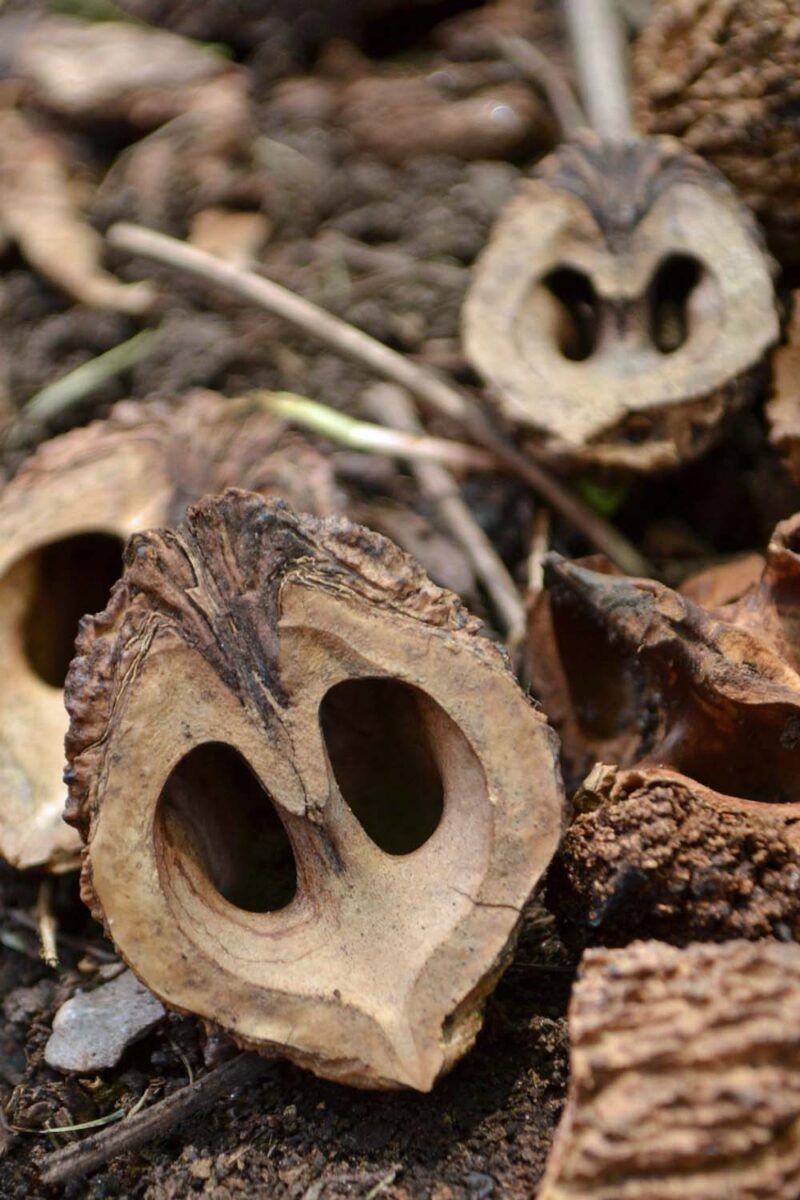
Cutting down a black walnut feels like a decisive fix, and it does eventually help. The catch is that the roots left behind do not stop releasing compounds the moment the tree comes down.
As those roots decay, they can continue exposing nearby soil to juglone and related material – sometimes for years, depending on how much root mass remains and how quickly the site breaks it down.
Kansas State University Extension’s walnut wilt guidance recommends waiting at least two years after removing a black walnut before planting tomatoes in the same area. That two-year window is specific guidance from one source, not a universal guarantee.
Persistence at any given site depends on the size of the remaining root system, soil conditions, temperature, moisture, and microbial activity. Some sites may be fine sooner; others may take longer.
If you have had a walnut removed and are eager to plant tomatoes nearby, the safest approach is still to use a different location when one is available. If the removed walnut’s former root zone is the only viable spot, waiting and then testing with a lower-stakes crop first gives you more information before committing your tomatoes.
Michigan State Extension notes that soil contamination can persist after removal, reinforcing that tree removal is the beginning of a recovery process rather than an instant reset. Patience is the most practical tool at this stage.
Most companion-planting warnings need more qualification
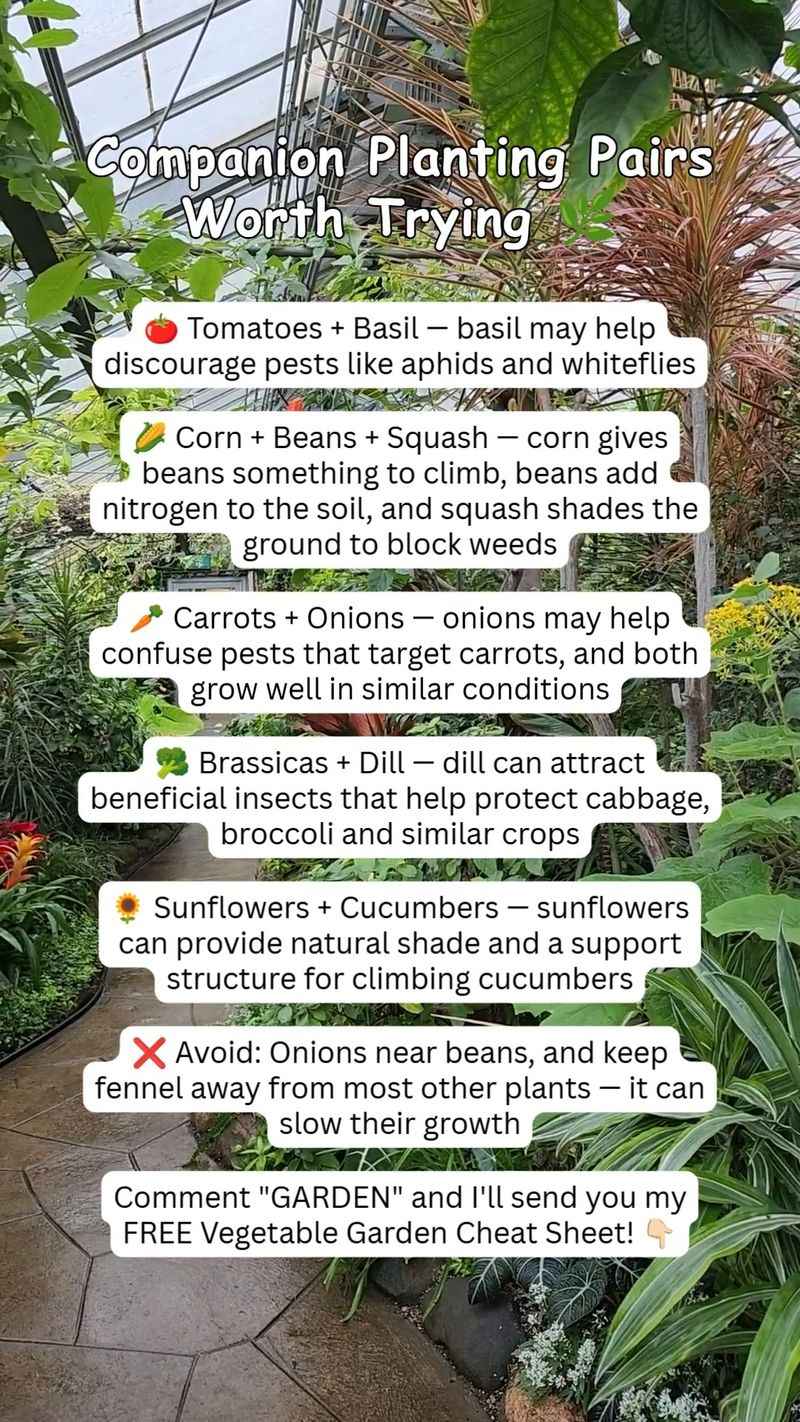
Black walnut stands apart from most companion-planting warnings because it has a specific, biologically plausible mechanism – juglone – and consistent Extension-level documentation behind it. Many other “never plant near tomatoes” claims do not clear that bar.
Illinois Extension points out that garden-scale companion planting has limited research behind it and that results depend heavily on soil, geography, pest pressure, disease history, and garden setup.
Fennel is one of the most frequently cited tomato enemies online, but the evidence for a universal negative effect is much thinner than the evidence for black walnut. Extension charts repeat the recommendation, and some growers do report problems, but no broadly applicable field study establishes that fennel will reliably stunt or kill tomatoes in a typical backyard.
One recent intercropping study actually included fennel among aromatic partners tested with tomatoes. Treat it with reasonable spacing rather than panic.
Corn is a different kind of concern. Utah State University Extension advises keeping tomatoes, peppers, and eggplant away from corn after it silks, because the corn earworm and tomato fruitworm are the same insect.
That is a pest-management consideration, not evidence that corn chemically harms tomatoes.
Basil gets the opposite treatment – often promoted as a guaranteed flavor booster and pest repellent when planted next to tomatoes. Penn State Extension describes mechanisms by which basil may help mask tomatoes from some pests, but stops well short of promising bigger harvests or better flavor.
Cabbage-family crops near tomatoes raise spacing and disease-rotation concerns, not documented chemical incompatibility. Colorado State University’s companion planting coverage reflects this more nuanced view as well.
Start tomatoes in the safest practical location
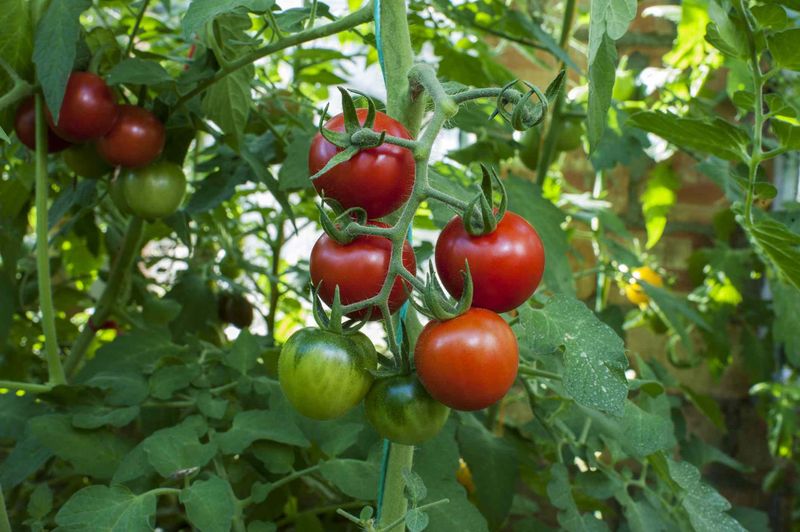
Putting all of this together comes down to a few clear priorities. Place your tomato bed as far from any black walnut’s likely root zone as your yard allows.
Keep walnut leaves, hulls, and bark out of the bed and out of your mulch. If relocating the bed is not realistic, build a properly lined raised bed with a root barrier and clean fill – and still manage debris from above.
After a walnut removal, wait before planting tomatoes in that spot rather than assuming the soil is immediately ready. Michigan State University Extension and Extension diagnostic resources both support checking the full picture before concluding that a walnut is the cause of any tomato problem.
Shade, drought, disease, and root competition can all look like juglone injury.
A black walnut nearby is a risk factor worth taking seriously – not a guarantee of failure, but a real reason to plan carefully. Spotting one before you plant is far better than puzzling over a wilting crop all summer.