
If You Plant Marigolds Beside Your Vegetables, Here’s The Invisible Poison Their Roots Pump Into The Soil To Kill Nematodes
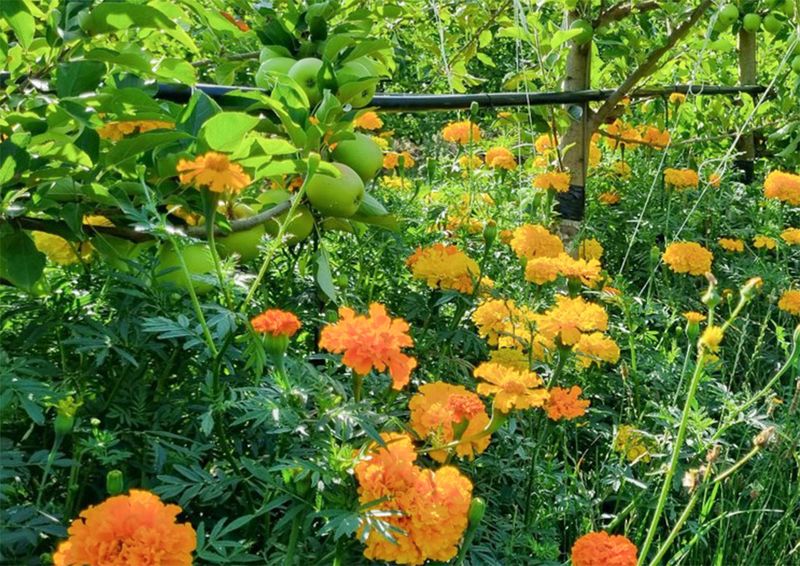
Marigolds have a quiet reputation as the workhorses of the vegetable garden, and part of that reputation involves a claim that their roots release a hidden chemical that kills nematodes attacking nearby plants. The story is partly true, but the popular version skips over some important details that can lead gardeners to rely on a tactic that may not actually protect their crops.
Understanding what marigolds genuinely can and cannot do underground gives you a much better shot at actually solving a nematode problem.
Marigolds may suppress some nematodes—but not with a guaranteed poison zone
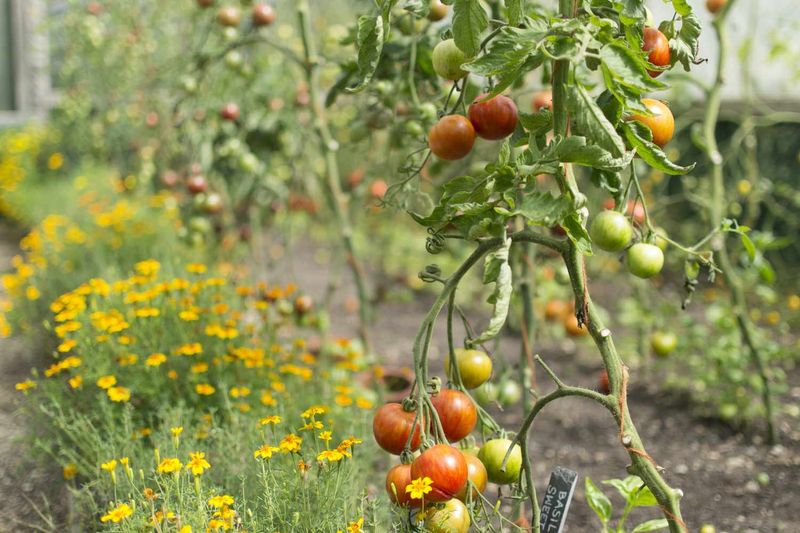
Somewhere between folk wisdom and garden-center marketing, marigolds picked up a reputation as nematode killers that protect every vegetable growing near them. The reality is more specific and, in some ways, more interesting.
UF/IFAS guidance on marigolds for nematode management confirms that certain Tagetes marigolds, especially selected French marigold cultivars, can suppress certain plant-parasitic nematodes, particularly some root-knot nematode species in the genus Meloidogyne. That is genuinely useful.
But the words “certain” and “some” are doing real work in that sentence.
Plant-parasitic nematodes are microscopic roundworms that feed on plant roots. Root-knot nematodes are among the most damaging to backyard vegetables like tomatoes, peppers, and cucurbits.
When marigolds suppress these pests, they reduce population levels rather than wiping them out entirely. Suppression is not eradication, and the difference matters when you are deciding whether to stake a tomato crop on it.
The piece of the story that does not hold up is the idea that a marigold border planted beside susceptible vegetables reliably protects those neighboring plants. Interplanting marigolds around vegetables generally produces inconsistent or absent effects, according to a review of marigold cover-crop research in Applied Soil Ecology.
Nematodes can still find and reproduce on the vegetable roots growing right next to the marigolds, because proximity alone does not create a protective chemical barrier around neighboring plants.
The better-supported approach uses marigolds as a dense cover crop grown in the same bed before vegetables are planted, not as a decorative companion ring around an existing crop. That method, the timing behind it, and its real limits are worth understanding before you depend on any marigold strategy.
What marigold-root chemistry shows—and what it does not prove
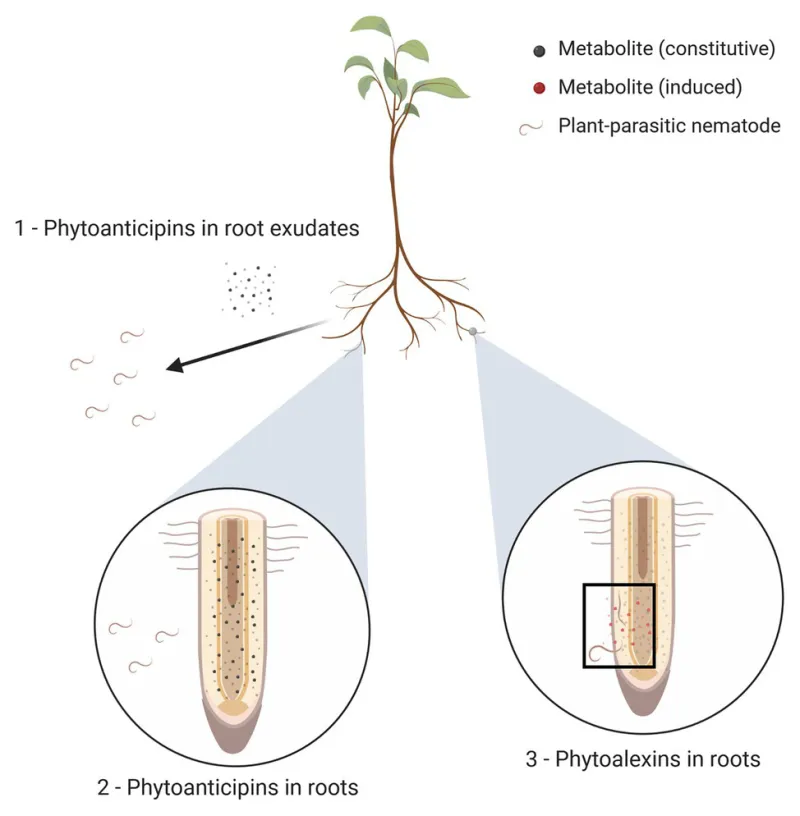
Alpha-terthienyl is the compound most often cited when people describe marigolds as chemical warriors underground. It is a naturally occurring thiophene compound found in the roots of several Tagetes species, and it does have real nematicidal activity.
Research published in the Journal of Biological Chemistry shows that alpha-terthienyl’s toxic effects are linked to photoactivation, meaning the compound interacts with near-ultraviolet light to generate reactive oxygen species that damage biological membranes. In laboratory conditions, that process can kill nematodes.
Laboratory conditions, though, are not a backyard bed. Soil is a complex, light-blocking medium, and the photoactivation mechanism that works in controlled settings may behave very differently when alpha-terthienyl is released into dark, heterogeneous soil.
Treating a test-tube result as proof that garden marigolds create a lethal underground zone overstates what the chemistry actually tells us.
There is also more than one possible explanation for why marigolds reduce nematode populations in the field, and alpha-terthienyl is not the only candidate. The Applied Soil Ecology review identifies several mechanisms that researchers have proposed: marigolds acting as poor or non-host plants so nematodes cannot complete their life cycle, root exudates other than alpha-terthienyl affecting nematode behavior, changes in the soil microbial community that make conditions less favorable for nematodes, and the physical disruption of nematode populations by plant residues worked into the soil.
Any one of these, or some combination of them, could be responsible for field results. Researchers have not settled on a single explanation, which means gardeners should think of marigolds as a plant with several possible tools rather than a single chemical weapon.
The honest picture is that marigold roots produce biologically active compounds and may alter the soil environment in ways that reduce certain nematode populations, but the exact mechanism in any given garden bed is not fully predictable from laboratory chemistry alone.
The marigold cultivar and nematode species matter
Picking up any marigold at a garden center and expecting it to suppress nematodes is a bit like grabbing any random antibiotic and expecting it to cure any infection. The match between the specific marigold and the specific nematode determines whether anything useful happens.
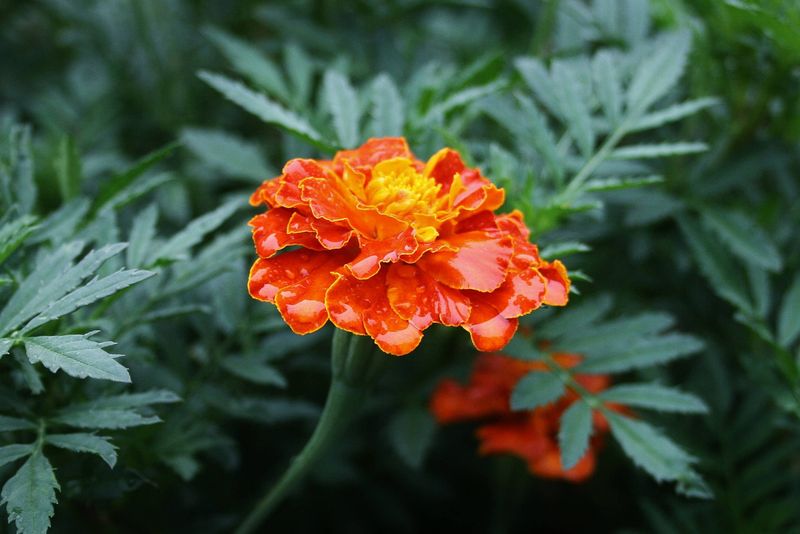
UF/IFAS research on Tagetes for nematode management consistently points to selected French marigolds, Tagetes patula, as the most reliably supported candidates, but even within that species, cultivar performance varies substantially.
A cultivar that suppresses Meloidogyne incognita, one common root-knot species, may perform quite differently against M. arenaria, M. javanica, or M. hapla. Greenhouse studies by Ploeg on marigolds and four root-knot nematode species found that the effectiveness of particular Tagetes cultivars depended heavily on which nematode species was present.
A cultivar described as resistant in one trial may be susceptible in another if the nematode species differs. That means knowing which root-knot species is in your soil is not just a nerdy detail; it actually affects whether the marigold you choose will do anything at all.
French marigolds, African marigolds (Tagetes erecta), and signet marigolds (Tagetes tenuifolia) are not interchangeable for this purpose. The published UF/IFAS fact sheet notes that African marigolds have shown less consistent suppression in research, and signet marigolds have even less evidence behind them for nematode control.
A retail plant tag that says “marigold” tells you almost nothing about whether that plant will affect the nematodes in your soil.
One more complication worth knowing: marigolds are not universally hostile to all plant-parasitic nematodes. Some Tagetes species can actually serve as hosts for or even increase populations of other nematode types, including certain stubby-root, sting, spiral, or reniform nematodes.
Growing the wrong marigold in a bed with the wrong nematode problem could make things worse rather than better, which is a strong reason to identify the pest before choosing a tactic.
Why planting marigolds beside vegetables usually falls short

Ringing your tomatoes or peppers with a cheerful border of marigolds is one of the most common companion-planting strategies in backyard vegetable gardening. The appeal makes sense visually and emotionally, and the idea that those flowers are quietly protecting the vegetables from underground attackers is genuinely satisfying.
The problem is that the evidence for this specific setup is thin and inconsistent.
UF/IFAS extension guidance notes that interplanting marigolds beside susceptible vegetables generally produces unreliable or absent effects on nematode populations in the vegetable roots. The core reason is straightforward: when a susceptible vegetable is growing right there in the same bed, nematodes do not need to pass through a marigold root to find a host.
They can move through soil and infect the vegetable roots regardless of what is planted nearby. The marigolds and the tomatoes are sharing space, but the nematodes are still finding the tomatoes.
Some studies conducted in pots or tightly controlled experimental plots have found suppression when marigolds and susceptible crops were grown together. Those results are real, but the Applied Soil Ecology review of marigold cover-crop research points out that experimental design, soil volume limits in containers, planting density ratios, and the controlled absence of weeds can all inflate the apparent benefit compared to what happens in a typical mixed garden bed.
A pot experiment with a 1:1 ratio of marigolds to vegetables is not the same as a garden row with a few marigolds tucked in at the ends.
Proximity alone does not create dependable protection. Even if marigold roots are releasing compounds or behaving as poor hosts for certain nematodes, the susceptible vegetable’s roots remain fully available for nematode reproduction.
A nematode population can continue to build on the vegetable even while the marigolds nearby offer some local interference. The tactic that does have better support involves removing the vegetable crop from the equation entirely during the marigold phase, which is the logic behind using them as a preplant cover crop instead.
Use marigolds as a dense, weed-free cover crop before vegetables
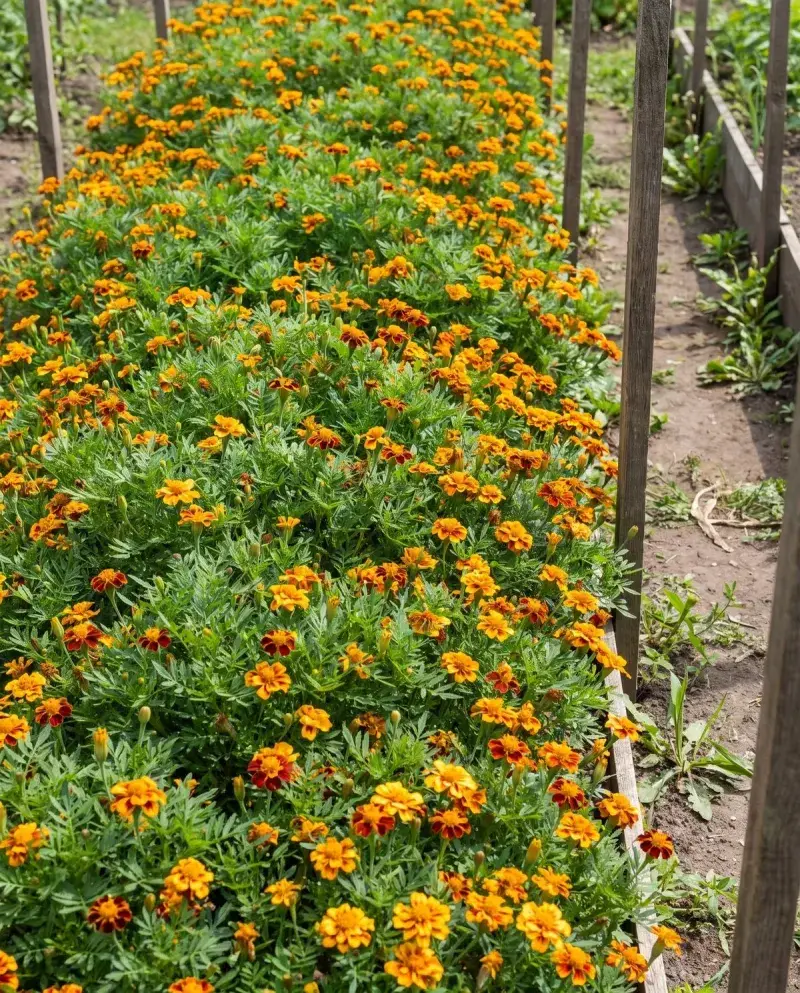
The marigold strategy with the strongest research backing looks quite different from the companion-planting border most gardeners picture. Instead of surrounding vegetables with marigolds, you grow marigolds in the place where vegetables will eventually go, before the vegetables go in.
That shift in approach changes what the marigolds are being asked to do and gives them a much better chance of actually doing it.
UF/IFAS guidance on using Tagetes for nematode management recommends planting suitable marigold cultivars densely across the entire bed where the later vegetable crop will grow, starting at least two months before you intend to plant vegetables. Dense planting matters because sparse marigolds leave soil gaps where nematodes can persist without encountering marigold roots.
Thin stands have less effect than full coverage, and partial coverage can produce partial results at best.
Keeping that cover crop weed-free is not optional. UF/IFAS nematode management guidance for vegetable gardens explains that weeds growing among the marigolds can serve as alternate hosts for plant-parasitic nematodes, which would allow nematode populations to maintain or rebuild even while the marigolds are present.
Pulling weeds throughout the cover-crop period is part of the method, not an afterthought.
USDA Agricultural Research Service work on cover crops in rotation to suppress nematodes and Oklahoma State University Extension cultural control guidance both frame this kind of cover-crop rotation as a cultural practice that can reduce pest pressure before a susceptible crop goes in, rather than a treatment that eliminates the problem permanently. After the cover crop period, the marigolds are incorporated or removed according to your extension program’s recommendations before you plant vegetables.
What you get from this method is temporary suppression, not a clean slate. Nematode populations can rebuild once susceptible vegetables are growing, especially if conditions favor the pest.
Severe infestations may not drop enough from a marigold cover crop alone to protect the next vegetable planting, which is why this tactic works best as part of a broader plan rather than as the only response to a serious nematode problem.
Confirm nematodes before blaming them for sick plants
A wilting tomato on a hot afternoon, yellowing pepper leaves, stunted cucumbers that never seem to thrive – these symptoms feel like a nematode problem when you have just read about nematodes, but they are also the calling card of drought stress, compacted soil, nutrient deficiencies, drainage problems, fungal diseases, and several other root disorders that have nothing to do with nematodes. Treating for nematodes when the actual problem is something else wastes time, effort, and money, and may delay finding the real cause.
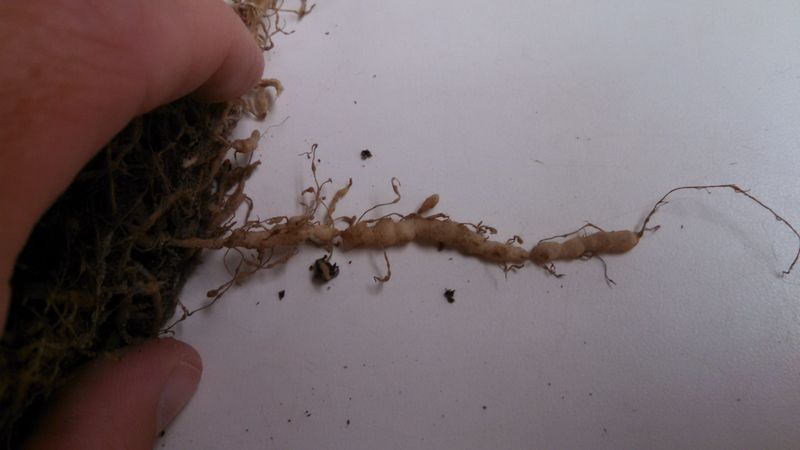
UC IPM guidance on root-knot nematodes describes the characteristic sign that separates root-knot nematode damage from most other causes: true galls or knots on the roots themselves. These are swellings embedded in the root tissue, not surface deposits or rot.
To check, gently dig up a plant showing symptoms, wash the roots, and look for lumpy, irregular swellings along the root system. Beads of soil stuck to roots or normal root nodules from nitrogen-fixing bacteria are not the same thing, so look closely.
Visual inspection of roots is a useful first step, but a soil-and-root nematode assay from a laboratory gives you a much more reliable answer. University of Nevada, Reno Extension guidance on root-knot nematodes explains that laboratory testing can identify which nematode species are present and at what population levels, information that actually guides your choice of management tactic.
Many university extension services and some commercial labs offer this testing for a modest fee.
Reaching for marigolds as a cure for vague plant decline skips the diagnostic step entirely. Marigolds cannot fix drought stress, correct a pH problem, or address a fungal pathogen.
Knowing what you are actually dealing with before committing to a management strategy is the step that makes every other decision more likely to work.
Build marigolds into a broader management plan
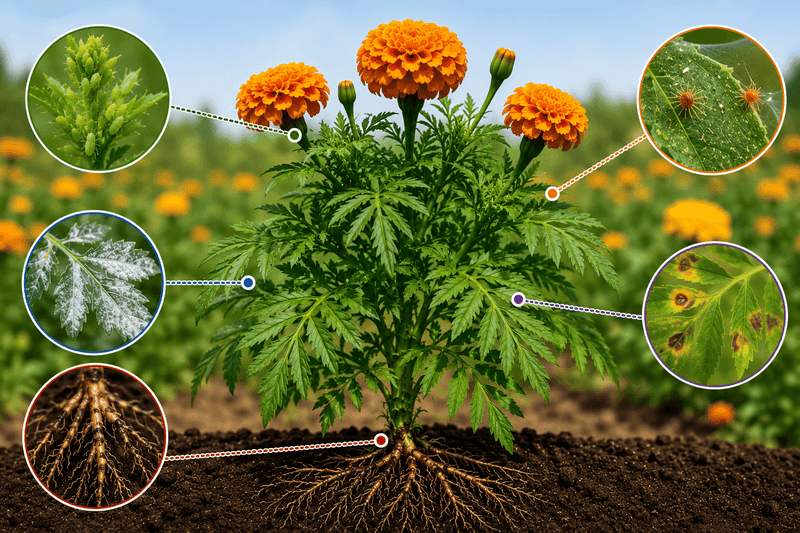
Marigolds work best when they are one tool in a toolbox rather than the whole toolbox. After confirming a plant-parasitic nematode problem through root inspection and ideally a soil assay, the practical decision comes down to whether conditions are right for marigolds to contribute meaningfully, and what else can run alongside them.
Start by identifying the nematode species if possible. UF/IFAS marigold nematode management guidance makes clear that cultivar selection and species match matter, so knowing whether you have Meloidogyne incognita or another species helps you choose a marigold cultivar with some evidence behind it for your specific pest.
Then plan a dense, weed-free preplant cover crop in the bed rather than a decorative border around vegetables already in the ground.
Pair the cover crop approach with other practices that have solid extension support. Resistant vegetable cultivars are among the most reliable tools available for root-knot nematode management, and many tomato varieties carry the N gene that confers resistance to common Meloidogyne species.
UC IPM nematode management guidance also highlights sanitation – removing and disposing of infected roots rather than composting them – and appropriate crop rotation as practices that reduce nematode carryover between seasons.
Soil solarization is another option for gardeners in regions with enough summer sun. UF/IFAS vegetable garden nematode management guidance describes solarization as covering prepared, moist soil with clear plastic for at least four to six weeks during the hottest part of the season.
It works best in full sun and can reduce nematode populations in the upper soil layers, but it also affects beneficial soil organisms, so it is not a neutral intervention.
Marigolds may reduce certain nematode populations under the right conditions, but they cannot guarantee a healthy crop or permanently eliminate the pest from your soil. The gardeners who get the most out of marigolds treat them as a timed, targeted rotation tactic – useful, specific, and honest about its limits.
That combination of realistic expectations and layered practices is what actually protects a vegetable bed season after season.