
If You Toss Sweet Potato Vine Leaves, Here’s The Quiet Job Those Greens Do On Your Plate
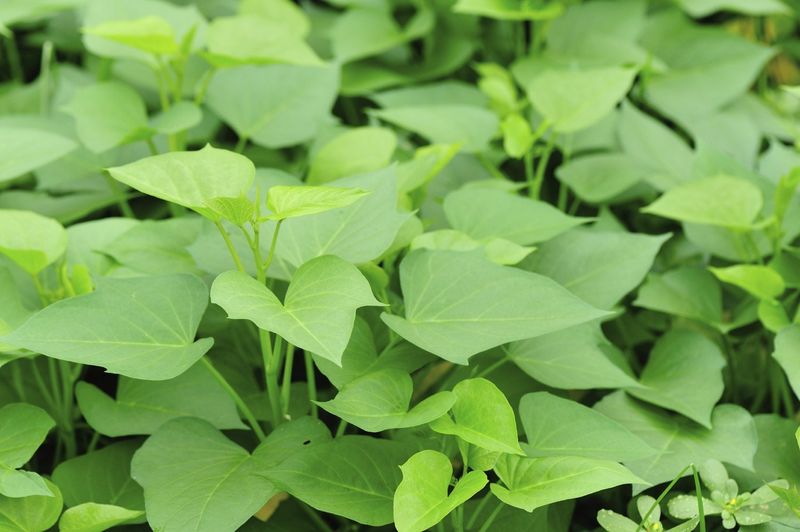
Most backyard gardeners trim sweet potato vines and toss those leafy cuttings straight into the compost bin without a second thought. Those same greens, though, have fed families across Africa, Asia, and the Caribbean for generations.
The plant you are growing for its roots is also quietly offering you a bonus crop of edible leaves, and understanding what they actually do on a plate, and how to take them without shortchanging your root harvest, makes the whole plant a better deal.
The sweet potato vine is not Irish potato foliage
Plenty of gardeners have heard a version of the same warning: potato leaves are toxic, so keep those vines out of the kitchen. The problem with that warning is that it mixes up two plants that share a common name but belong to entirely different botanical families.
Sweet potato, Ipomoea batatasSolanum tuberosum, is a member of the morning-glory family. Irish potato, , is a nightshade.
Their foliage is not interchangeable, and the caution that applies to one does not carry over to the other.
Washington State University’s sweet potato production guide identifies the young leaves, shoots, and vine tips of Ipomoea batatas as edible, and extension programs at the University of Maryland, UC Davis, and Penn State echo that guidance. The University of Maryland’s home-garden resource goes further, describing the leaves as suitable for salads and sauteing, much like spinach.
None of these sources treat Irish potato foliage as a comparable green.
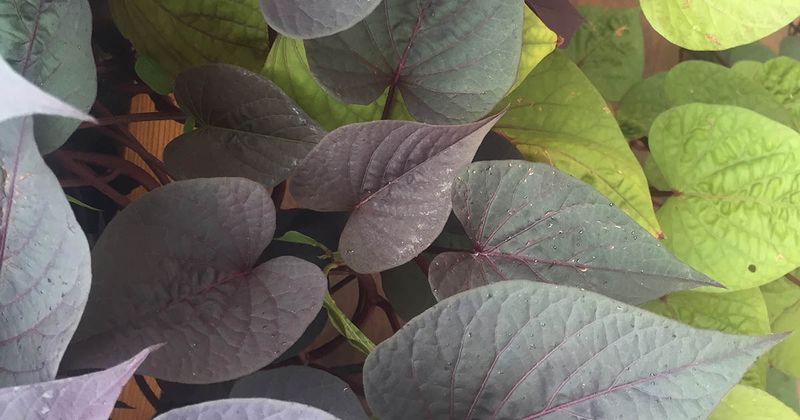
Correct identification is the starting point for everything else in this article. Young sweet potato leaves are typically heart-shaped or lobed, and the vines trail along the ground or climb a trellis in a way that looks nothing like a potato plant’s upright, compound-leafed stems.
If you planted Ipomoea batatas yourself and you know what variety it is, that is a solid foundation. Do not eat unidentified leaves just because they look leafy and familiar.
Even within the right species, the plant’s pesticide history and growing conditions matter, and those questions come later. Start with the name on the seed packet or transplant tag, confirm the plant is sweet potato, and the rest of the decision becomes much more straightforward.
What the greens add to a meal
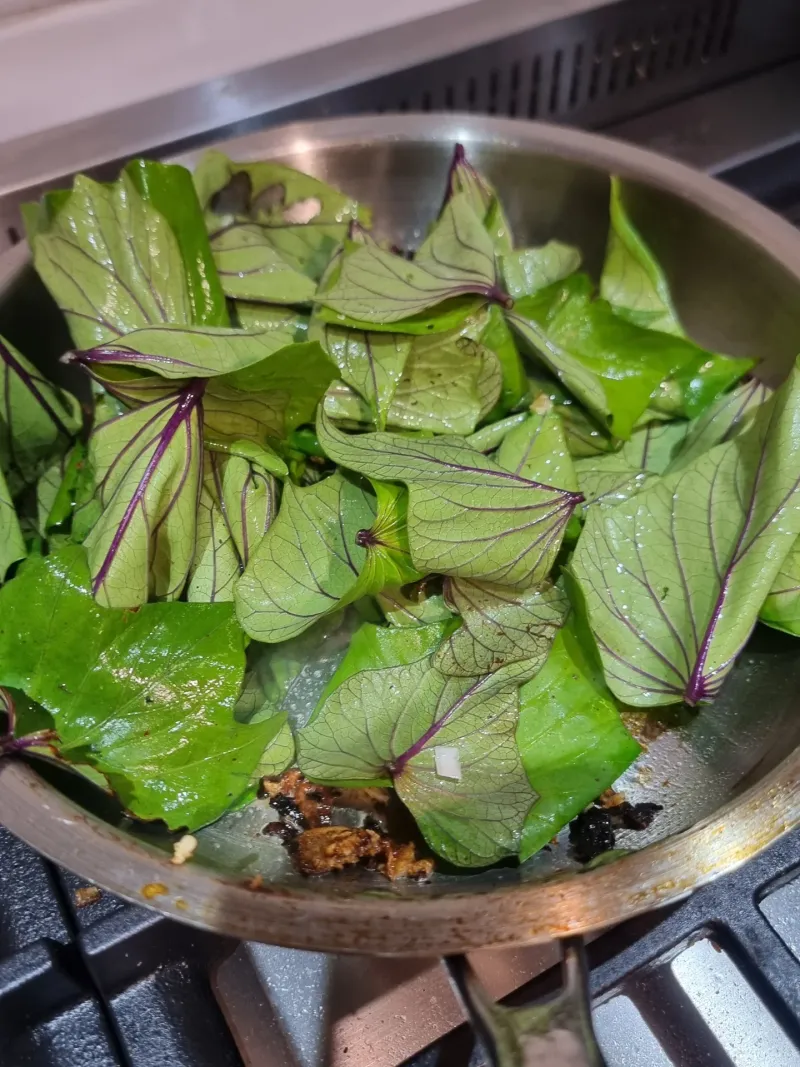
Think of sweet potato leaves as a spinach stand-in that also happens to grow in your backyard. The greens contribute vitamins, minerals, dietary fiber, and carotenoids, the pigment compounds that give many orange and yellow vegetables their color but are also present in green leaves.
Published analyses have found calcium, iron, and vitamin C among the minerals and vitamins reported in the leaves, though the exact amounts shift depending on which cultivar you grow, how mature the leaves are at harvest, your soil and climate, and whether the values were measured fresh or after drying.
UC Davis’s sweet potato leaves nutrition overview describes the greens as a source of carotenoids and other nutrients, while noting that values vary across studies. That variation is worth keeping in mind whenever you see a specific number attached to a serving of sweet potato leaves.
No single figure applies to every garden.
The leaves also contain polyphenolic compounds, a broad category of plant chemicals that includes flavonoids and phenolic acids. Laboratory studies have found antioxidant and other biological activity associated with these compounds, and a 2021 review published in PMC summarizes that research while explicitly noting the need for more well-designed human trials before any therapeutic conclusions can be drawn.
A 2010 study on sweet potato leaf polyphenols similarly documented antioxidant activity in laboratory settings without establishing disease-prevention effects in people.
What that means practically: the greens add real food value to a meal, the kind that comes from eating a range of vegetables. They are not a proven treatment for any condition, and a more recent review reinforces that the human clinical evidence remains limited.
Treat them as a vegetable, not a supplement, and they fit naturally alongside other leafy greens in a balanced plate.
How much foliage can the root crop spare?
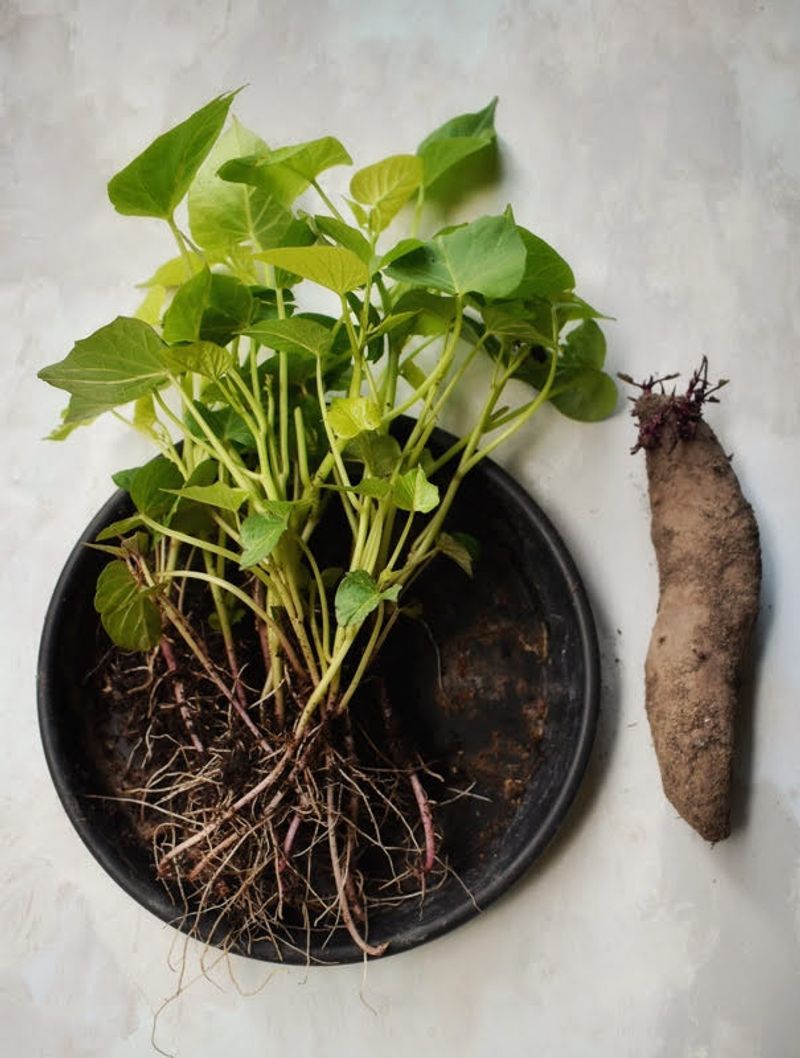
Edible does not mean unlimited. Every leaf on a sweet potato vine is a solar panel, capturing sunlight and converting it into the energy the plant sends down to swell the storage roots underground.
Remove too many of those leaves too often, and the roots pay the price. Gardeners who want both a leaf harvest and a respectable root harvest need to think about that tradeoff before picking up the shears.
Washington State University’s sweet potato greens guide reports on a 2023-2024 trial conducted at the Mount Vernon research station in western Washington. In that trial, repeatedly removing all vine tips during the middle of the growing season reduced storage-root yields by 47% to 61% compared with plants that were not defoliated.
Those are large numbers. WSU is clear that the trial was location-specific and unpublished, so it would be a mistake to treat 47-61% as a universal yield-loss guarantee for every garden in every climate.
What the data do communicate, clearly, is that aggressive and repeated defoliation is a real risk to root production, not a theoretical one.
UC Davis extension guidance recommends beginning leaf harvest around 45 to 90 days after planting and limiting it to once or twice per month, with an explicit caution that overly frequent harvesting can reduce root growth. The University of the District of Columbia’s sweet potato greens fact sheet also distinguishes between growing primarily for greens versus growing primarily for roots, treating them as different production goals that call for different management strategies.
If your main goal at season’s end is a good root harvest, think of the leaves as a modest bonus crop. Take a little, leave a lot, and give the plant time to recover between harvests.
The next section covers exactly how to do that in practice.
Harvest young tips without stripping the plant
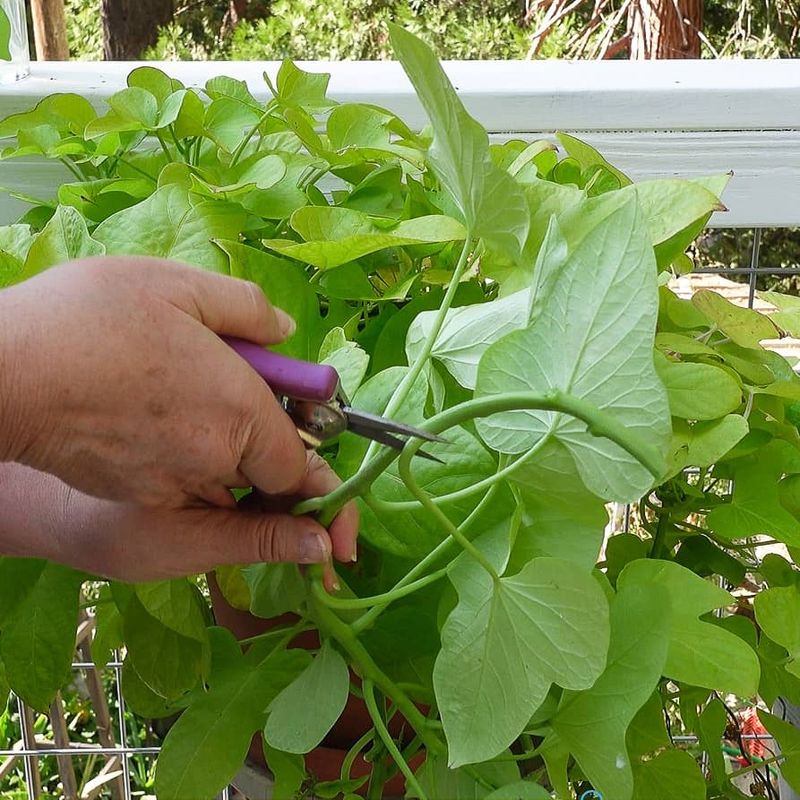
Young leaves, tender shoots, and vine tips are the parts worth picking. As the plant matures, older leaves and stems get tougher and more fibrous, making them less pleasant to eat and harder to cook down into something appealing.
Focusing on the newest growth at the end of each vine solves both problems at once: you get the most tender material, and you are taking the smallest possible bite out of the plant’s photosynthetic capacity.
WSU’s sweet potato greens guide describes a practical cutting method for its western Washington conditions: snip about 4 to 6 inches from the end of vines that are at least 12 inches long, and then wait for new tips to regrow before harvesting again, which in its trial conditions took roughly two weeks. Those numbers reflect a specific location and growing season.
Your garden in Georgia or Minnesota or Oregon will behave differently depending on temperature, day length, soil, and rainfall. Use WSU’s method as a starting framework, not a rigid schedule that applies everywhere.
For gardeners also growing for roots, the conservative approach is to take only a few tender tips or a small number of fully formed young leaves per harvest session. Leave the main vine and the bulk of the foliage completely untouched.
UC Davis’s nutrition overview supports harvesting young leaves and shoots while preserving enough foliage for the plant to continue photosynthesizing effectively. The key habit to build is restraint: harvest a handful, step back, and let the plant grow back before you return.
A vine that has been lightly pruned at the tips will often branch and produce more growing points over time, which can actually make future harvests easier. That is a side benefit, not a guaranteed outcome, but it is one more reason to favor light, repeated harvesting over a single heavy cutting session.
Wash the leaves, then choose your cooking goal
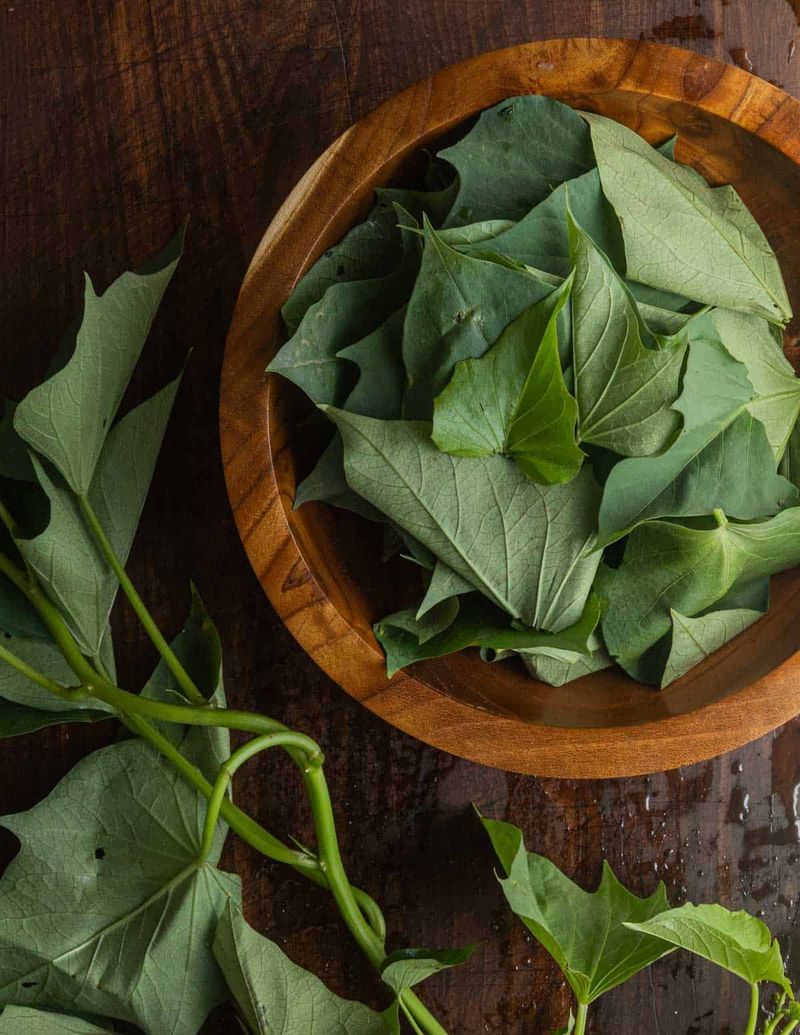
Before any sweet potato leaf reaches a pan or a bowl, it needs a rinse under running water. Rub each leaf gently with your fingers, turn it over to get both sides, and let the water carry away soil, dust, and any surface residue.
FDA guidance on produce safety is specific on one point: skip the soap, skip the dish detergent, and skip commercial produce washes. None of those are approved for use on food, and they can leave residues of their own.
Running water and a gentle hand are the right tools.
One thing washing cannot fix is a problem that happened before the leaves reached your sink. FDA’s tips for cleaning fruits and vegetables make clear that rinsing does not correct pesticide misuse, and it certainly cannot undo a plant misidentification.
Those are issues to resolve before you harvest, not after.
Once the leaves are clean, the cooking decision depends on what you are trying to accomplish. Sauteing, steaming, blanching, boiling, and stir-frying are all documented preparation methods.
UC Davis’s overview recommends brief heat treatment for improved texture and nutrient availability, and the University of Maryland’s home-garden guide suggests sauteing as a straightforward approach. Brief cooking makes the leaves more tender and easier to eat, which is a culinary goal.
Reducing the risk from harmful bacteria is a different goal, and it calls for thorough cooking rather than a quick wilt in the pan. Research on sweet potato leaf processing has examined how various cooking methods affect nutrient and antinutrient levels, confirming that method and duration both matter.
A brief saute may be all you need for texture, but do not assume that a quick treatment guarantees pathogen reduction. When in doubt, cook the leaves more thoroughly rather than less.
Ornamental vines require a pesticide check
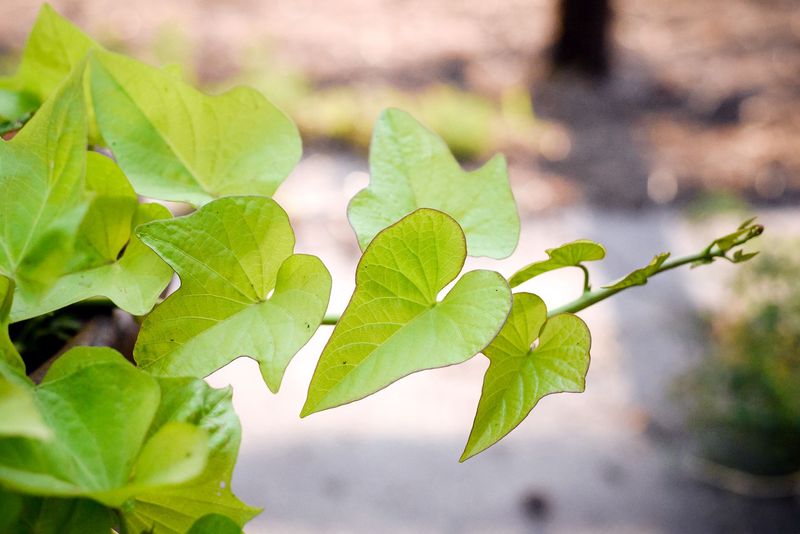
Ornamental sweet potato vines, the trailing plants sold in garden centers for their striking purple, chartreuse, or bronze foliage, are botanically the same species as the food crop: Ipomoea batatas. That shared identity leads some gardeners to assume that ornamental vines are automatically safe to eat.
The assumption skips over two separate questions that need separate answers.
The first question is culinary quality. Iowa State University Extension’s FAQ on ornamental sweet potatoes notes that ornamental cultivars were selected for their appearance, not their flavor or texture, and the eating quality can be noticeably different from food varieties.
NC State Extension’s ornamental sweet potato profile similarly focuses on the plant’s landscape value rather than its edibility. Neither source establishes that every ornamental cultivar should be treated as a kitchen vegetable.
The second question is pesticide history, and this one carries more weight. Nursery plants are often treated with pesticides before or after they arrive at the garden center.
A product labeled for use on ornamental plants is not automatically approved for food-crop use. EPA guidance on pesticide labeling is clear: the label defines permitted use sites, and a product must be labeled for the specific crop or an applicable food-crop group before it can legally be used on food plants.
If a nursery ornamental was treated with a product that covers ornamentals but not edible crops, eating those leaves is not covered by the product’s registered use.
Before eating leaves from any ornamental vine, confirm the full pesticide treatment history. Verify that every product used was labeled for the crop or an applicable food-crop use, that it was applied exactly according to label directions, and that any required preharvest interval has passed.
If any part of that history is unknown or unverifiable, the safer decision is not to eat the leaves from that plant. Growing your own food-crop sweet potato from a named culinary variety, and tracking what you apply to it yourself, removes most of that uncertainty.
Treat oxalate as a qualification, not a scare story
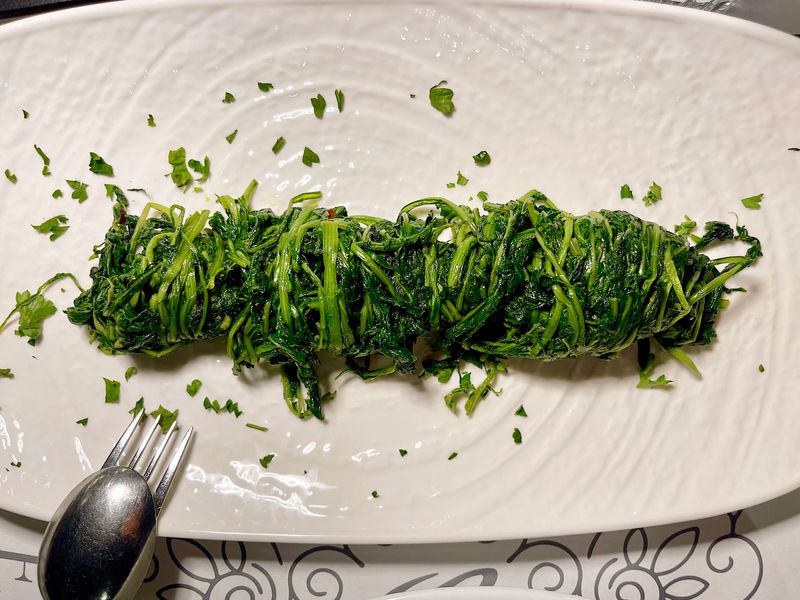
Sweet potato leaves can contain oxalates, naturally occurring compounds found in many common vegetables including spinach, chard, and beet greens. For most people eating a varied diet, the oxalate content of sweet potato leaves is not a reason to avoid them.
The caution applies more specifically to people who have a history of calcium-oxalate kidney stones or who have been told by a clinician to limit their oxalate intake. Those individuals should ask their doctor or a registered dietitian about whether and how much to eat, rather than relying on a general serving guideline from an article.
Reported oxalate levels in sweet potato leaves vary considerably across studies and cultivars. A recent analysis of sweet potato leaf composition and a broader review of antinutrients in sweet potato both show that the numbers shift depending on the variety, the age of the leaf, and how the values were measured.
That variability is exactly why no single safe serving size applies across every garden and every cultivar.
Some gardeners assume that blanching removes oxalates reliably. A study examining processing effects on sweet potato leaf antinutrients found that blanching reduced some compounds but did not significantly lower oxalic acid across most treatments.
Research on cooking methods and sweet potato leaf composition confirms that outcomes depend on the specific method, duration, and variety involved. Blanching can change the nutritional profile of the leaves in useful ways, but treating it as a guaranteed oxalate-removal step overstates what the evidence shows.
Cook the leaves because it improves their texture and flavor, not because it solves an oxalate problem.
Let the leaves do a quiet job on the plate
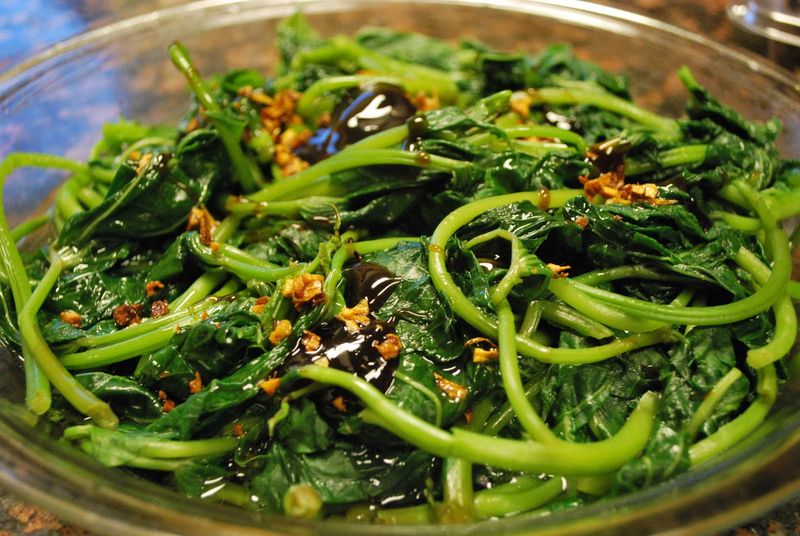
Sweet potato leaves are not a miracle vegetable, and they are not a reason to strip your vines bare every week. They are a practical bonus: an edible, spinach-like green that grows on a plant you are already tending, asking nothing extra except a little restraint at harvest time.
Three conditions make the practice worth doing. First, positively identify the plant as Ipomoea batatas and know its pesticide history before you eat a single leaf.
Second, harvest lightly when storage roots are your main goal: take young tips, leave the bulk of the foliage intact, and follow the kind of conservative schedule that WSU’s greens guide describes for its region. Third, rinse the leaves under running water, cook them to the texture you want, and understand that thorough cooking is the relevant step for reducing microbial risk.
Add them to a saute pan with garlic, drop them into a soup, or blanch them as a quick side. The plant was already doing something useful underground.
Turns out it was offering something above ground the whole time, too.