
If You Water Your Tomatoes At The Wrong Time, Here’s The Simple Routine That Doubles Your Yield
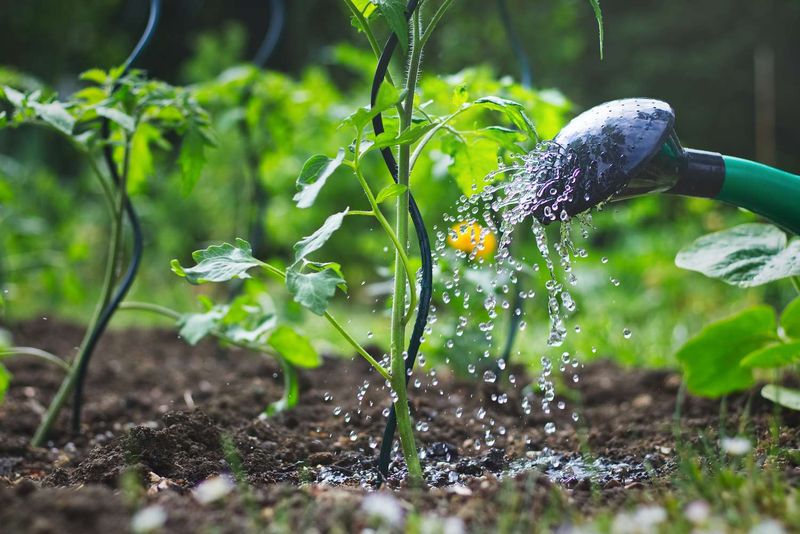
Cracked tomatoes and stalled growth are two of the most frustrating things a backyard grower can face, especially when you’ve been putting in real effort all season. Most advice points at the clock, but the bigger problem is usually what happens to the soil between waterings.
Understanding that difference can help you build a simple routine that keeps your tomatoes steadier and healthier from flower to harvest.
The real mistake is the dry-out-and-flood cycle
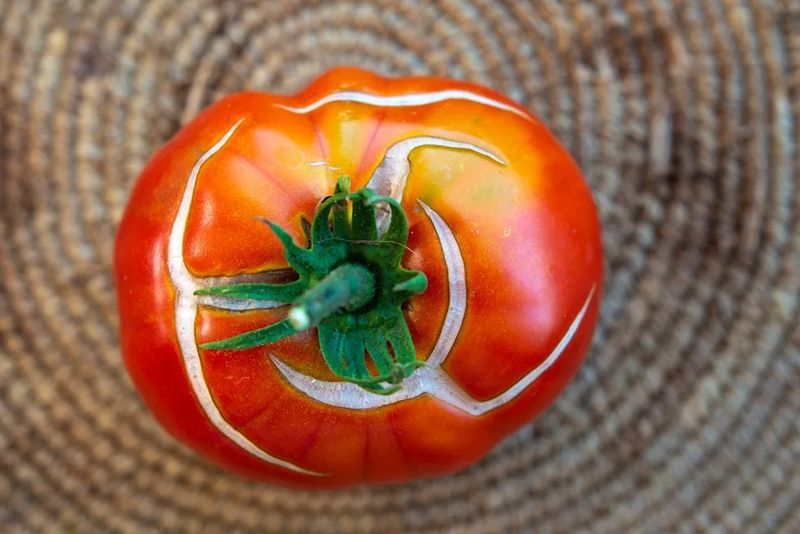
Forget the clock for a moment. The pattern that causes most cracked tomatoes in backyard gardens is not watering at a particular hour – it is letting the root zone go very dry and then flooding it with a heavy irrigation session or a sudden rainstorm.
When a ripening tomato absorbs a large surge of water after a dry spell, the fruit flesh can expand faster than the skin can stretch, splitting open in radial lines from the stem or in concentric rings around the shoulders.
University of Minnesota Extension’s tomato disorders guide and Iowa State Extension’s cracking FAQ both point to rapid changes in water availability as the primary driver of fruit splitting, not a specific time on the clock. The fruit’s skin simply cannot keep up with a sudden growth surge after a period of drought stress.
Other factors stack on top of this. UC ANR’s fruit cracking resource notes that heat, direct sun exposure, fruit maturity, and reduced canopy cover all raise cracking risk.
Penn State Extension adds that cultivar genetics play a real role too – some varieties are simply more prone to splitting than others, regardless of how carefully you water.
The governing principle for this entire article is steady root-zone moisture. Keeping the soil consistently moist, rather than swinging between bone dry and waterlogged, gives ripening fruit a stable supply of water so it grows at a more even pace.
Watering time matters at the margins, but it is this dry-out-and-flood cycle that does the most damage in most backyard gardens.
Morning helps, but the clock is not the culprit
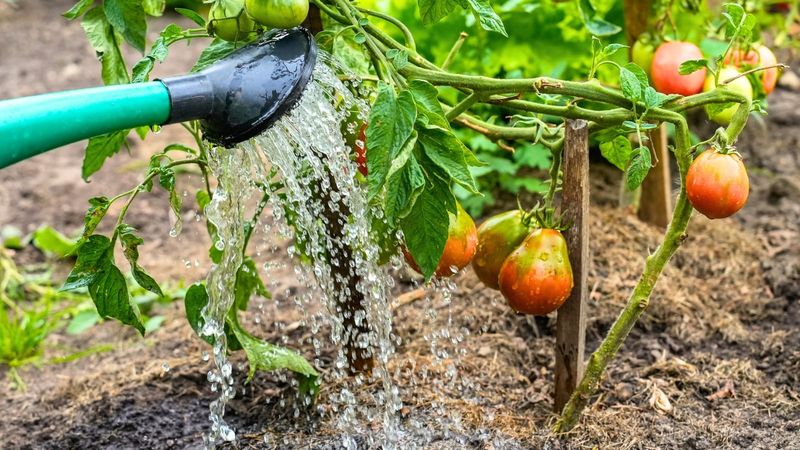
Morning watering earns its good reputation for practical reasons. Cooler air temperatures mean less water is lost to evaporation before it reaches the root zone, and if your hose or sprinkler wets the foliage, the leaves have several hours of daylight warmth ahead to dry off.
University of Illinois Extension’s vegetable garden handout suggests watering roughly between 5 and 9 a.m. when using overhead irrigation, largely because of these evaporation and drying advantages.
Midday watering is less efficient – a larger share of the water can evaporate before soaking in – but it is not catastrophic if that is the only window you have. Late-day overhead watering is worth avoiding as a routine because wet foliage that stays damp overnight can favor foliar diseases.
That said, the risk comes from prolonged leaf wetness, not from the hour itself. If you use drip irrigation or a soaker hose that keeps water at soil level, the time of day matters much less.
Here is where the clock-based advice goes wrong: University of Minnesota Extension is clear that a plant actively wilting or suffering heat stress should be watered when it needs water, not held off until the next morning. Delaying necessary irrigation to stick to a schedule can worsen stress and compound the dry-out problem that causes cracking in the first place.
Morning is a sensible default, and UMN’s hot-weather gardening guidance reinforces it during heat spells. But the bigger job is keeping the root zone consistently moist – the hour you water is a secondary detail compared to whether you water consistently enough to avoid big swings in soil moisture.
Let the soil decide when tomatoes need water
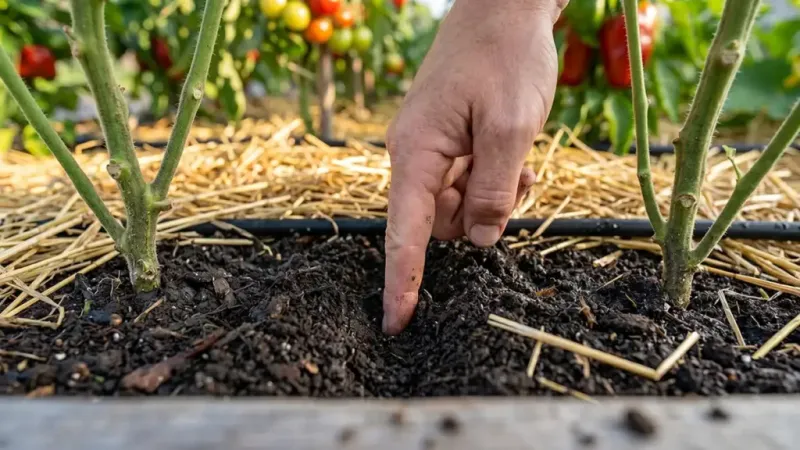
A rigid watering calendar is one of the easiest ways to end up in a dry-out-and-flood pattern. The soil itself is a far more reliable guide.
Before reaching for the hose, push a finger or a small trowel about 2 inches below the surface near the base of the plant. University of Minnesota Extension recommends this finger-test approach: if the soil at that depth feels dry, it is time to water; if it still feels moist, you can wait.
About 1 inch of water per week, including rainfall, is a widely cited starting point for in-ground vegetable gardens. Colorado State University Extension’s vegetable irrigation guide and Utah State University’s tomato guide both use this figure as a general reference.
Treat it as a starting estimate, not a fixed prescription.
Several variables can push your actual need well above or below that figure. Sandy soil drains quickly and dries out faster, so it typically needs more frequent watering than heavy clay.
During a heat wave with strong winds, moisture can leave the root zone much faster than during a mild week. UMN’s hot-weather guidance notes that plants can need significantly more water during extreme heat, and that checking the soil daily becomes more important than following any set schedule.
Containers and raised beds dry out faster than in-ground plots because they have smaller soil volumes and often better drainage. A tomato in a 5-gallon pot on a sunny patio may need water every day in midsummer, while the same variety in a deeply prepared garden bed might go two or three days between waterings.
Plant size matters too – a large, heavily fruiting plant pulls more moisture from the soil than a young transplant. The finger test cuts through all of these variables and gives you the actual answer for your specific setup.
A slow root-zone soak creates steadier moisture
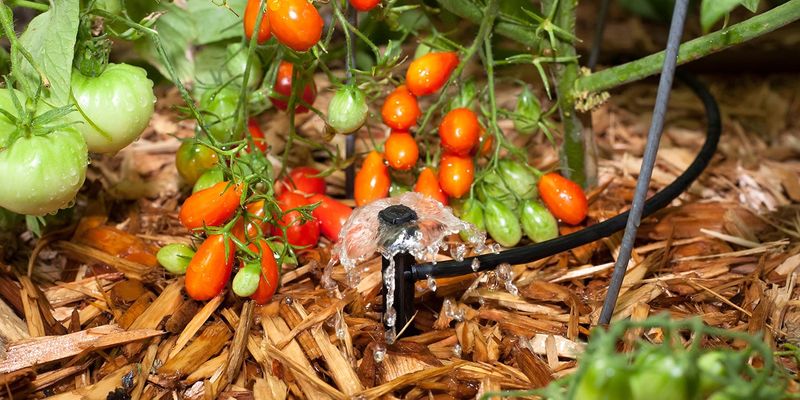
How you apply water matters as much as when you apply it. Shallow, frequent sprinkles encourage roots to stay near the surface, which makes plants more vulnerable to drying out quickly between waterings.
A better approach is to apply water slowly and directly at the soil surface, letting it penetrate deeply into the root zone rather than running off or evaporating.
Oregon State University Extension’s water-wise irrigation guide recommends wetting the root zone to approximately 8 to 10 inches deep for established tomatoes. Reaching that depth with a single slow application, rather than multiple quick passes, encourages roots to grow deeper where soil moisture stays more stable.
Colorado State Extension’s vegetable irrigation resource reinforces slow, deep application as the method most likely to maintain consistent root-zone moisture.
Drip irrigation and soaker hoses are the most practical tools for this. Both deliver water directly to the soil surface with minimal foliage wetting and very little evaporation loss.
A slow trickle from a hose held at soil level works too if drip equipment is not available. University of Minnesota Extension’s vegetable irrigation strategies page also cautions against routinely wetting tomato foliage, because prolonged leaf wetness can favor disease development.
The interval between deep soaks should be determined by the soil-moisture check described in the previous section, not by a fixed number of days. Fast-draining sandy soil, containers with limited volume, plants in extreme heat, and tomatoes with restricted root space may all need more frequent applications even when each session is deep and thorough.
The goal is stable moisture at root depth, and the method has to flex to match your specific conditions.
Use mulch to moderate soil moisture
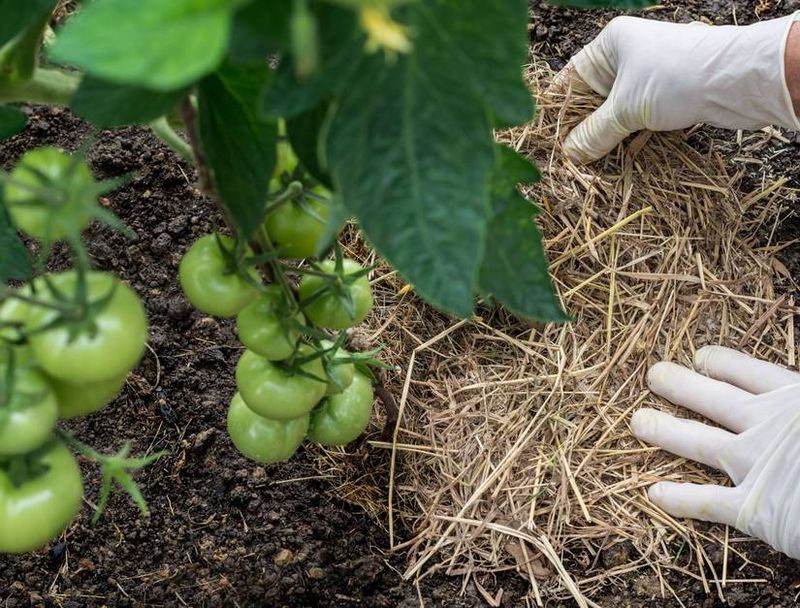
Mulch does a specific job that nothing else in this routine replicates: it slows evaporation from the soil surface and helps buffer the swings in moisture that happen between watering sessions and rain events. A 2- to 3-inch layer of straw, shredded leaves, or wood chips spread around the base of each plant can make a measurable difference in how long the root zone stays moist after a watering.
University of Minnesota Extension’s tomato disorders guide and UC ANR’s fruit cracking resource both recommend mulching as a practical step for reducing the moisture fluctuations that contribute to cracking. Colorado State Extension’s tomato growing guide echoes this, noting mulch as a key tool for maintaining consistent soil conditions through summer heat.
Place the mulch around the plant, but leave a small gap of a few inches between the mulch and the stem. Piling mulch tightly against the stem can trap moisture there and create conditions for rot or disease at the base of the plant.
Spread it outward to cover the area where the roots are actively growing, generally out to the drip line of the foliage.
Mulch supports the routine, but it cannot fix underlying problems. Poor drainage, chronic overwatering, or a severe drought will overwhelm what mulch can do.
Think of it as a buffer that makes your watering sessions more effective and extends the time between them, not as a substitute for consistent irrigation and soil-moisture monitoring.
Protect fruit with healthy leaf cover
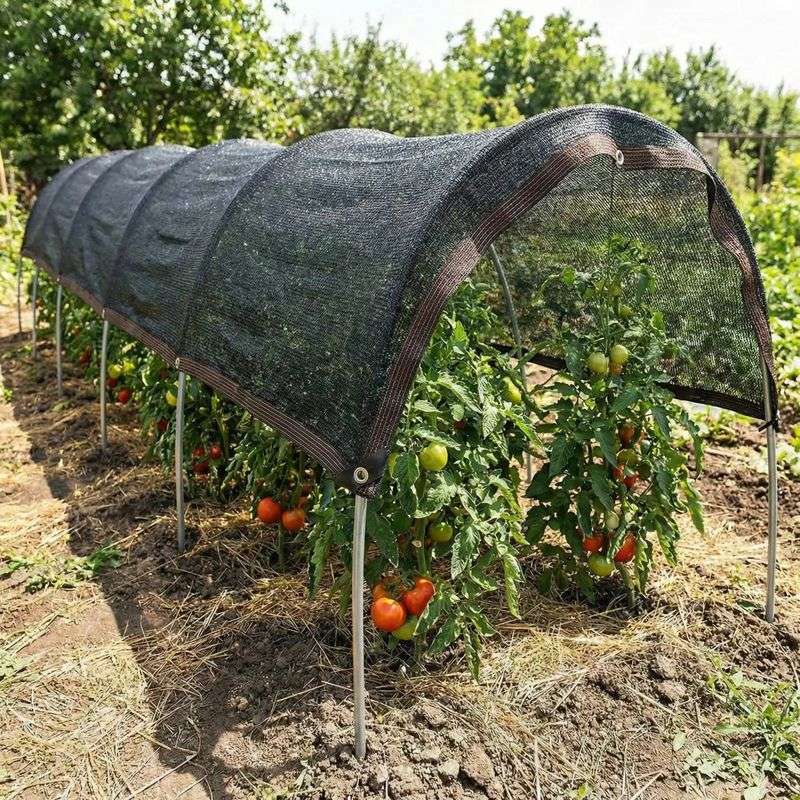
Canopy management is a separate topic from soil-moisture management, but it affects cracking risk in its own way. A tomato plant with healthy leaf cover shades its developing fruit from direct sunlight and high air temperatures, both of which can raise fruit surface temperature and increase the likelihood of cracking and heat-related skin damage.
This is a different mechanism from what mulch does at the soil level.
Penn State Extension’s cracking guide and UC ANR’s resource on fruit cracks both identify direct sun exposure and high fruit temperature as contributing factors to splitting. University of Missouri IPM’s tomato cracking overview notes that losing canopy cover, whether from pruning, disease, or pest damage, can suddenly expose fruit that was previously shaded and increase cracking risk.
Avoid heavy or aggressive pruning during the peak of summer heat, especially if your plants are carrying a lot of nearly ripe fruit. Removing too many leaves at once can shift fruit from shade to full sun exposure in a single session.
If you do prune, do it gradually and focus on removing dead or diseased material first.
Leaf cover and mulch work together but should not be confused. Mulch moderates soil moisture by reducing evaporation from the ground.
Leaf cover reduces the heat and sunlight load on the fruit itself. Both contribute to a lower cracking risk, but through distinctly different pathways, and managing one does not substitute for the other.
Steadier watering can support yield without promising a doubled harvest
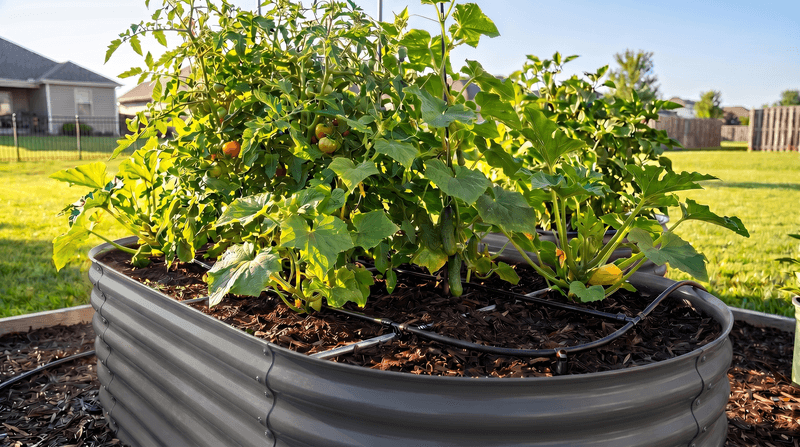
The headline that brought you here deserves a straight answer: no reliable evidence supports the claim that changing your watering time alone doubles backyard tomato yield. That is an overstatement, and publishing it without correction would set up a lot of growers for disappointment.
What the evidence does support is more useful and more honest.
Stable water availability throughout the season can reduce cracking, limit water stress during critical growth stages, and help plants maintain more consistent production. University of Minnesota Extension’s vegetable irrigation strategies resource emphasizes that consistent moisture is especially important during flowering, fruit set, fruit enlargement, and maturation – the periods when water stress or sudden surges do the most damage.
Research on irrigation scheduling does show yield benefits in controlled and commercial growing systems. A study published in Agricultural Water Management and a follow-up irrigation frequency study in the same journal both found yield responses to irrigation management in greenhouse and commercial tomato systems.
Those results come from controlled conditions with precise inputs – they do not translate directly into a guaranteed twofold increase for a backyard plot with variable soil, weather, and cultivar.
Yield in any garden depends on cultivar choice, soil health, temperature, pollination success, nutrition, pest and disease pressure, and the overall growing system. Colorado State Extension’s irrigation guide also notes that excess water can reduce quality, leach nutrients from the root zone, and contribute to root problems – while water deficits can reduce both fruit size and total production.
More water is not automatically better; steady, calibrated moisture is the target. Getting that right can meaningfully reduce preventable losses, even if it cannot promise a doubled harvest.
Read the symptom before changing the watering plan
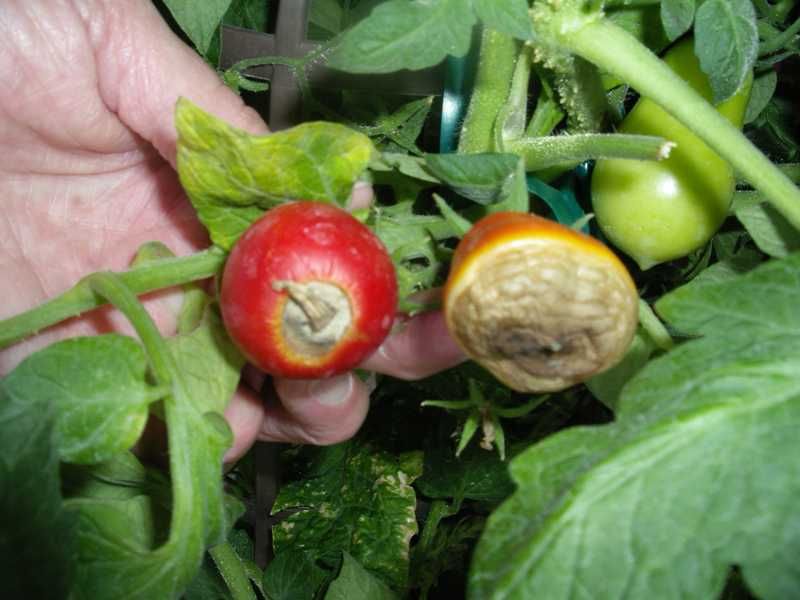
Not every tomato problem has the same solution, and reaching for the hose before reading the symptom carefully can make some problems worse. Cracking, blossom-end rot, blossom drop, heat-related wilting, and disease-related wilt are four distinct conditions that look alarming in different ways and respond to different interventions.
Fruit cracking, as covered throughout this article, is primarily linked to rapid changes in water availability combined with heat, direct sun, fruit maturity, and cultivar susceptibility. University of Minnesota Extension’s tomato fruit crack diagnostic tool and Iowa State Extension’s cracking FAQ both confirm that large-fruited varieties and many heirlooms are genetically more prone to splitting.
Even a perfect watering routine cannot eliminate every crack in a susceptible cultivar, especially after a heavy rain.
Blossom-end rot shows up as a dark, leathery patch on the bottom of the fruit. University of Minnesota Extension’s tomato disorders guide explains that disrupted water movement and fluctuating soil moisture interfere with calcium uptake into the fruit – the soil may actually contain adequate calcium.
Calcium sprays or soil amendments are not a guaranteed fix if inconsistent watering remains the underlying cause.
Blossom drop is a different story entirely. Heat is a major driver: tomatoes often stop setting fruit when daytime temperatures stay above roughly 90 degrees Fahrenheit or nighttime temperatures stay above 70.
UMN’s heat gardening article notes that a tomato can also wilt temporarily during extreme heat even when the soil is moist – that wilting is a heat response, not a thirst signal. Colorado State Extension’s tomato guide adds that disease-related wilt, caused by pathogens like Fusarium or Verticillium, will not improve after irrigation.
UMN’s vegetable irrigation strategies page reinforces that watering alone cannot restore production when heat or disease is the limiting factor. Diagnosing the actual problem before adjusting your routine saves time and protects the plants.
Start with a moisture check, not a timer
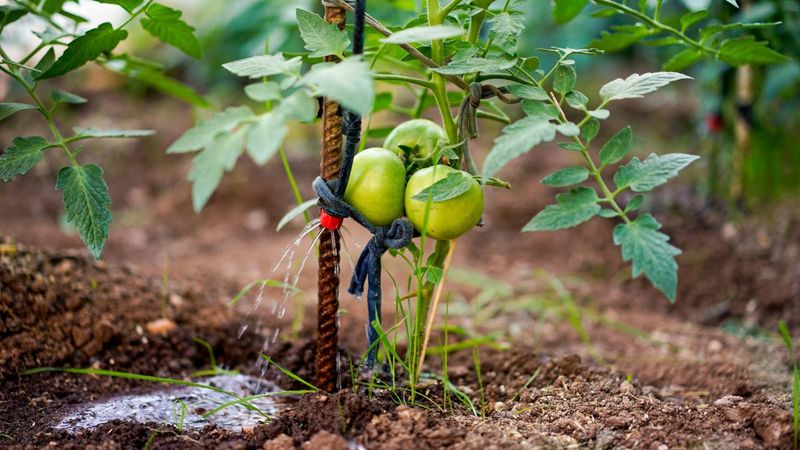
A practical routine does not require a timer, a rain gauge, or expensive equipment. Push a finger about 2 inches into the soil near the base of the plant.
If it feels dry at that depth, water now. If it still feels moist, check again the next day.
University of Minnesota Extension recommends exactly this approach as a reliable starting point for any vegetable garden.
When you do water, do it in the morning when practical, apply it slowly at the soil surface using a soaker hose or drip line, and aim for enough volume to wet the root zone thoroughly rather than just dampening the top inch. Oregon State University Extension’s water-wise guide and UMN’s tomato disorders resource both support slow, deep, root-zone irrigation as the most effective method for keeping moisture steady.
Add a layer of mulch around each plant to reduce evaporation and extend the time between sessions.
Adjust the frequency to match your soil, your containers, and the weather – more often in sandy soil or heat, less often in heavy soil after a cool rainy stretch. Monitor plants closely through heat waves and after heavy rain, since both can push moisture levels to extremes quickly.
The goal of this routine is a steadier root zone, which can reduce preventable cracking and water stress. A consistent moisture check each morning is a better guide than any fixed schedule.