
If Your Amaryllis Sends Up Leaves But Skips The Flower Stalk, Here Are 11 Reasons And The Reset Each One Needs
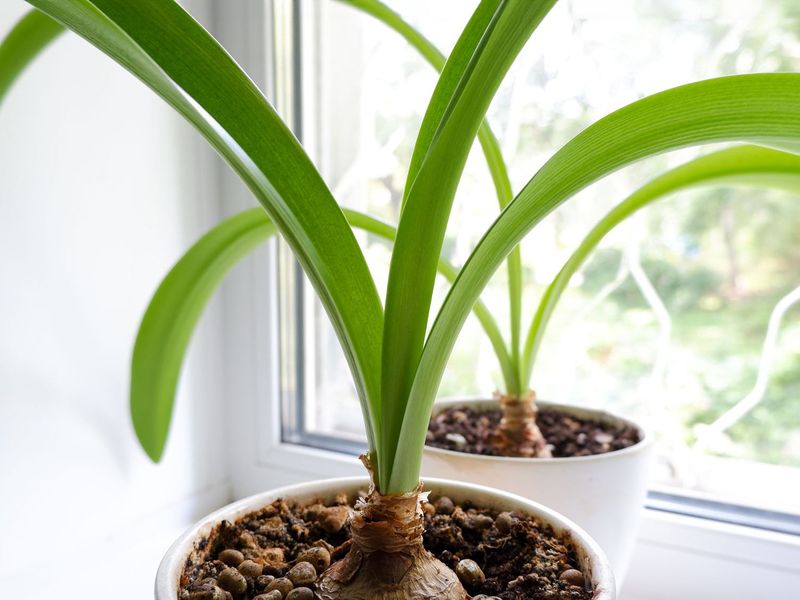
You planted your amaryllis expecting those big, showy trumpet blooms, but all you got was a fountain of green leaves and no flower stalk in sight. It is a common letdown, and the good news is that it almost always comes down to something fixable.
Below are 11 reasons your bulb might be skipping the flowers, along with the exact reset each one needs. Match the symptom to your plant and you can get it back on track for the next bloom.
1. Insufficient or Mismatched Dormancy Period
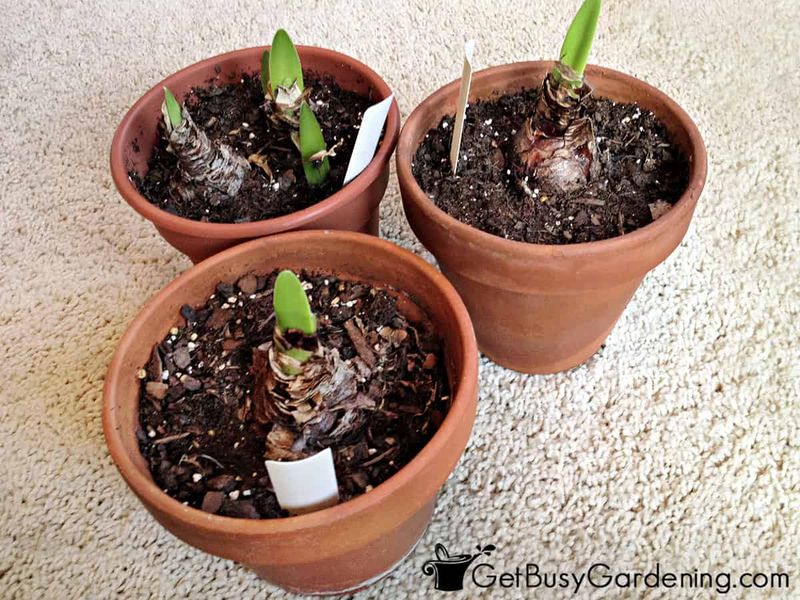
Here is the biggest secret behind a leaf-only amaryllis: the bulb never got its rest. Amaryllis need a real nap before they can set flower buds, and skipping that cool, dry sleep leaves the plant stuck in leaf mode.
Around mid-August or September, slowly stop watering and feeding so the foliage yellows and dies back on its own. Once the leaves are done, snip them off and tuck the potted bulb somewhere cool, dark, and dry, like a basement or garage, where temperatures stay between 40 and 55 degrees Fahrenheit.
Give it a solid 8 to 12 weeks of this rest. After that, repot in fresh soil if needed, water thoroughly once, and move it to a warmer spot around 60 to 65 degrees with bright, indirect light to wake it up.
That single reset fixes more bloom-shy amaryllis than anything else.
2. Lack of Sufficient Light During Active Growth
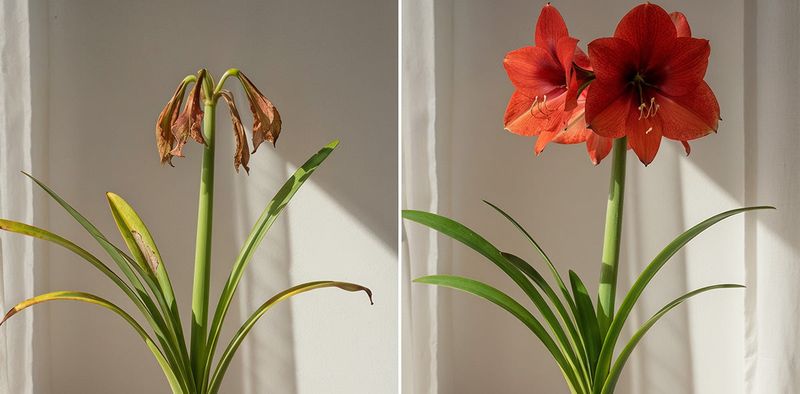
A shady windowsill can quietly starve your amaryllis of the energy it needs to bloom. Without enough light, the bulb pumps out leaves but never banks the fuel required to push up a flower stalk.
During the active growing months, park your plant where it soaks up at least six hours of bright, indirect sun each day, such as a south or west-facing window. Once frost danger passes in spring, you can even move the pot outdoors to a sheltered spot, easing it into morning sun while shielding it from harsh afternoon rays.
Give the pot a quarter turn every few days so growth stays even and any future stalk grows straight instead of leaning toward the glass.
3. Insufficient Energy Reserves in the Bulb
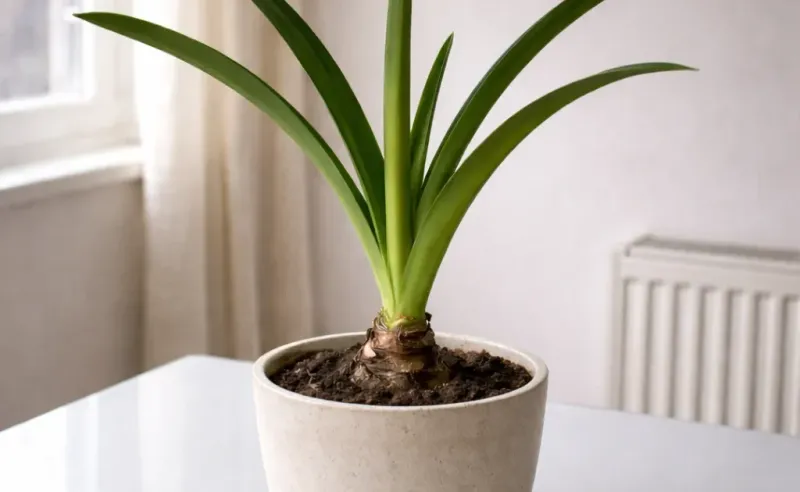
Think of the bulb as a battery. The flowers run entirely on carbohydrates the plant stored the season before, so if that battery ran low, you get leaves and nothing more.
Do not rush to cut anything back. Let those leaves keep growing, because they are the factory refilling the bulb’s reserves.
Water consistently and feed regularly through spring and summer with a balanced or high-phosphorus liquid fertilizer. Give it a full season of steady care and the bulb can rebuild enough stored energy to reward you with a stalk next time around.
4. Overwatering or Poor Drainage
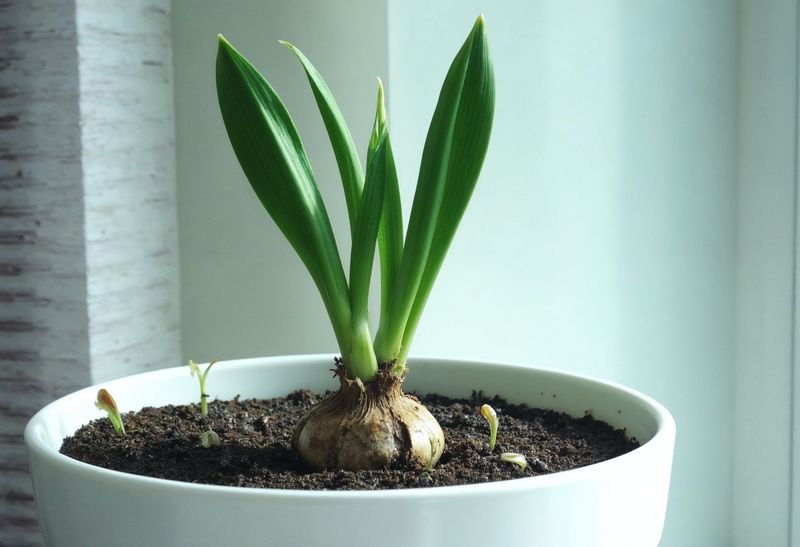
Soggy soil is a silent bloom killer. When water lingers around the roots, they start to rot, and a weakened bulb simply cannot muster a flower stalk.
Start with a pot that has real drainage holes and a loose, well-draining mix. Right after planting, water only sparingly until you see new growth pushing up.
Once the plant is actively growing, wait until the top inch or two of soil feels dry before watering again, and always let the excess drain fully. Never leave the pot sitting in a saucer of standing water, since that is exactly the wet-feet situation the bulb hates.
5. Too Much Nitrogen Fertilizer
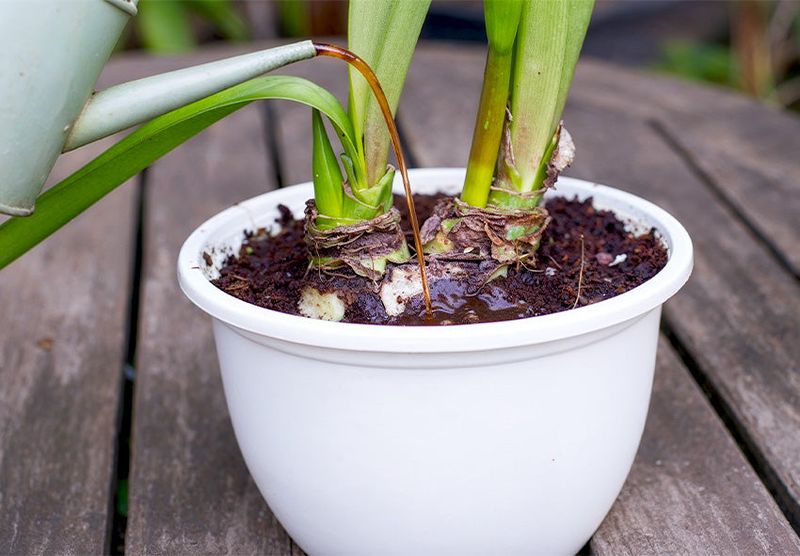
Feeding your amaryllis the wrong menu can backfire in a leafy way. Nitrogen is great for green growth, but too much of it tells the plant to keep making foliage instead of flowers.
Switch to a balanced feed or, better yet, one that leans high in phosphorus, the middle number in the N-P-K ratio. Look for a bloom booster style formula like 5-10-10 or 0-10-10, and steer clear of lawn fertilizers loaded with nitrogen.
Feed every two to four weeks while the plant is actively growing, then stop completely once dormancy begins. The right ratio nudges the bulb toward blooms instead of just leaves.
6. Small or Immature Bulb
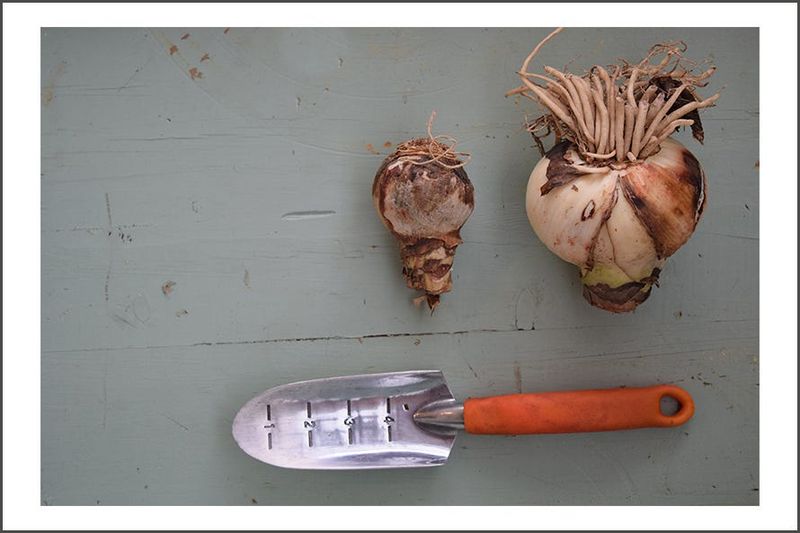
Size really does matter with amaryllis. A young or undersized bulb often puts all its effort into simply growing bigger, leaving no spare energy for a flower stalk.
Did you know the largest bulbs can send up two or even three stalks in a single season? That is why choosing the biggest, firmest bulb you can find pays off with more reliable blooms.
If you are working with a smaller bulb, keep giving it steady light, water, and feeding all season long so it can bulk up. Be patient, because it may take a year or two of good care before a little bulb reaches flowering size.
7. Bulb Planted Too Deeply

Burying an amaryllis like a tulip is a classic mistake. When the bulb sits too far under the soil, it struggles to launch a flower stalk.
The fix is refreshingly simple. Set the bulb so that roughly the top third pokes up above the soil line, shoulders and neck out in the open.
Pair that with a pot that drains well, and you have removed one of the easiest-to-overlook roadblocks to blooming.
8. Old, Depleted, or Unhealthy Bulb
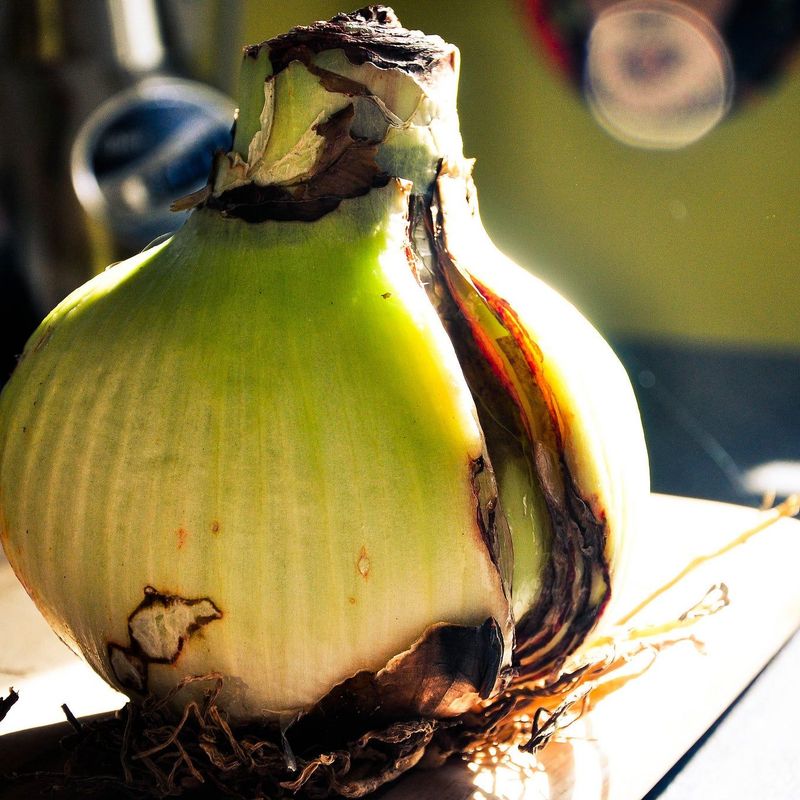
Sometimes the trouble is the bulb itself. After years of blooming, or after a bout of rot or fungus, a bulb can simply run out of steam and stop producing flowers.
Before you plant, give any bulb a squeeze and a good look. A healthy one feels firm and dry, with no mold, mushiness, or visible decay.
If your current bulb feels soft or spongy, it may already be rotting and can be tough to rescue. For the ones still in good shape, consistent care season after season keeps them strong enough to flower again.
9. Stress from Frequent Transplanting or Oversized Pot
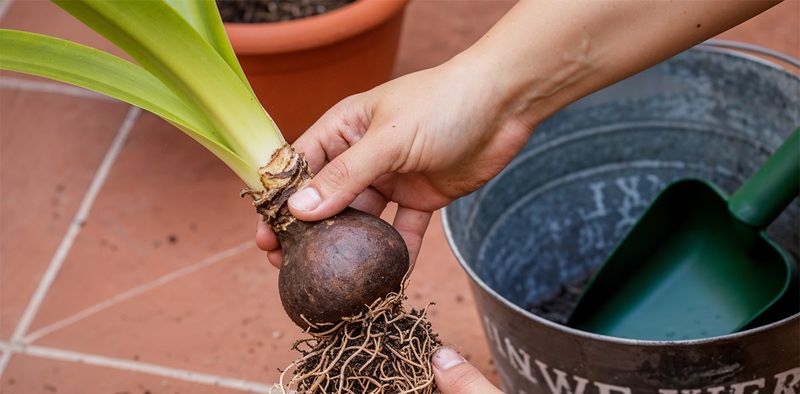
Amaryllis are homebodies that actually like being a little cramped. Repotting them too often, or dropping them into a giant pot, sends their energy into growing roots instead of flowers.
Resist the urge to upgrade the container every year. Repot only once every three to four years, ideally right after the dormant period.
When you do move it, choose a pot just one to two inches wider than the fattest part of the bulb, with drainage holes of course. That snug fit keeps the plant focused on blooming.
10. Incorrect Temperatures During Growth or Dormancy
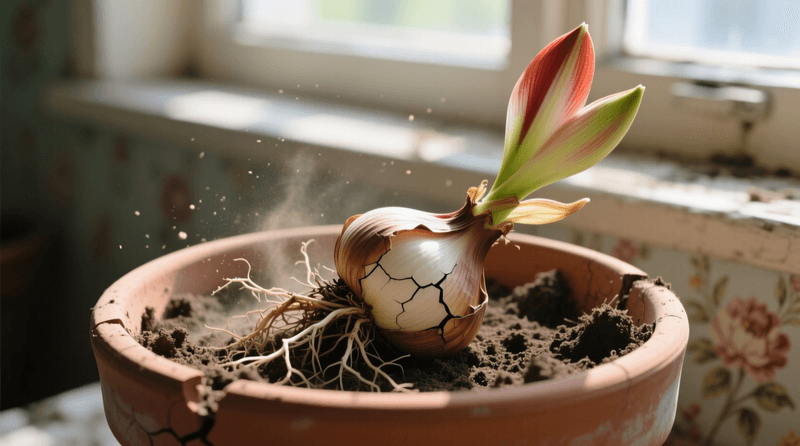
Temperature is the quiet dial that flips an amaryllis between resting and blooming. If dormancy is too warm or the growing spot is too chilly, the bulb gets confused and skips the stalk.
For the rest period, make sure the bulb genuinely feels cool, somewhere in the 40 to 55 degree Fahrenheit range, for the full stretch of weeks it needs.
Then, during active growth, keep it comfortable in ordinary room warmth of about 65 to 75 degrees. Hitting both temperature targets is what convinces the bulb it is time to flower.
11. Premature Cutting of Foliage
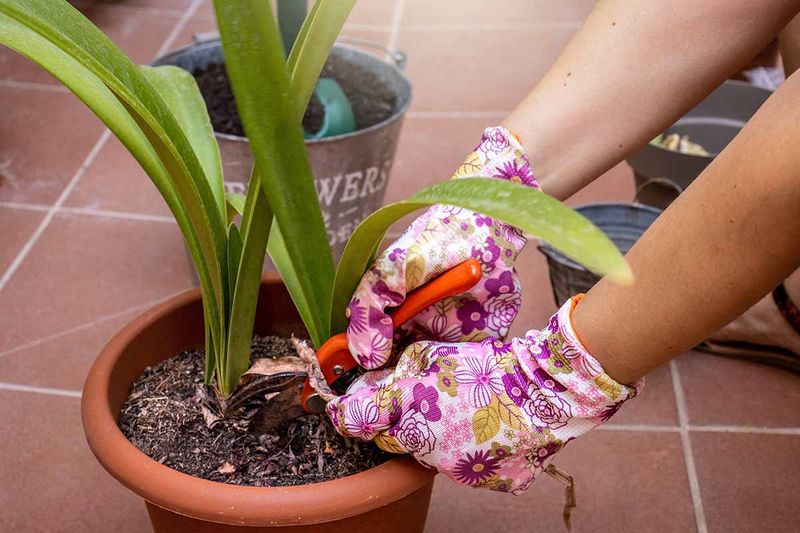
Snipping those green leaves the moment the blooms fade feels tidy, but it robs the bulb of its next flower show. The leaves keep working long after the flowers are gone, soaking up light and stashing energy for the following season.
When the flowers wilt, cut back only the flower stalk and leave every healthy leaf in place. Keep the plant in bright, indirect light with regular watering and feeding.
Let the foliage grow freely until it naturally yellows and flops in late summer or early fall. That yellowing is your cue that the bulb has finished recharging and is ready to rest, not a signal to grab the scissors early.