
If Your Backyard Feeds Robins But Never Cardinals, These Berry Shrubs Give Them A Reason To Stay All Fall
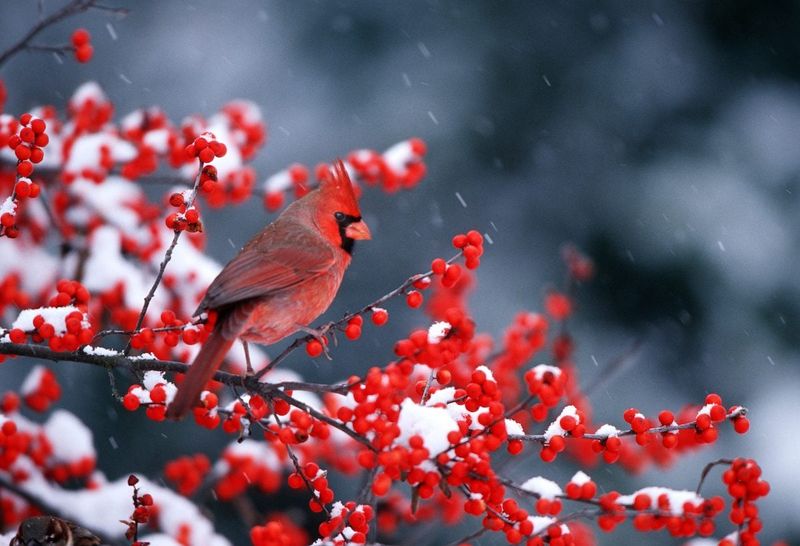
Robins will happily raid your yard for worms and berries, but cardinals need a special kind of invitation to stick around. The secret is planting shrubs that hold onto their fruit deep into fall, giving those bright red birds a reason to stay instead of moving on. Below you will find eight berry-producing shrubs that work well in US backyards and keep the buffet open when the weather turns cool. Pick a couple that fit your space, and you might finally spot a cardinal at your window all season long.
1. Winterberry Holly (Ilex verticillata)
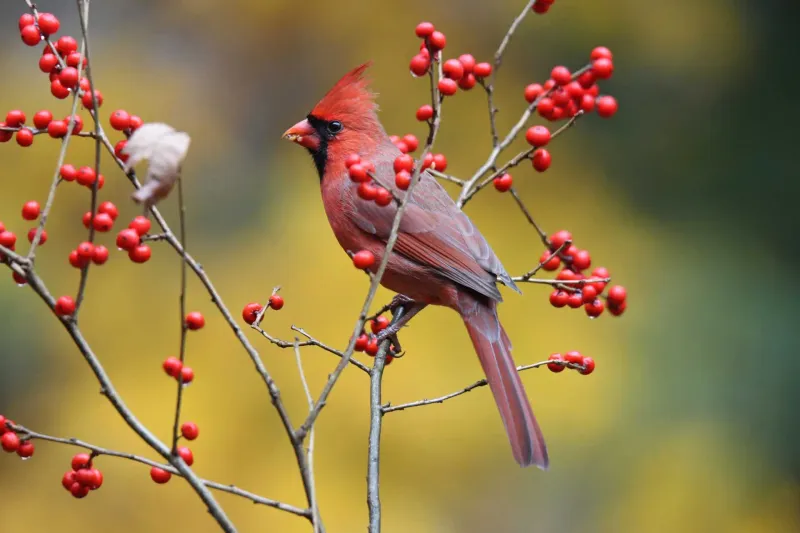
Picture a bare branch in November glowing with hundreds of glossy scarlet berries against a gray sky. That is winterberry holly showing off, and cardinals notice the color from a surprising distance.
Unlike its evergreen cousins, this native holly drops its leaves in fall, which leaves the fruit fully exposed and easy for birds to spot. The berries cling to the stems long after most other food has vanished, so hungry cardinals treat the shrub like a reliable winter pantry.
One thing to know before you buy: winterberry needs both a male and a female plant nearby to produce fruit. Plant one male for every three to five females and you will get a heavy crop. It loves damp soil and full sun, making it a smart pick for that soggy low spot where nothing else thrives.
Fun bit of history: colonial Americans called it black alder and used the twigs in folk remedies, but the birds always had the better idea about what those berries were for.
2. American Beautyberry (Callicarpa americana)
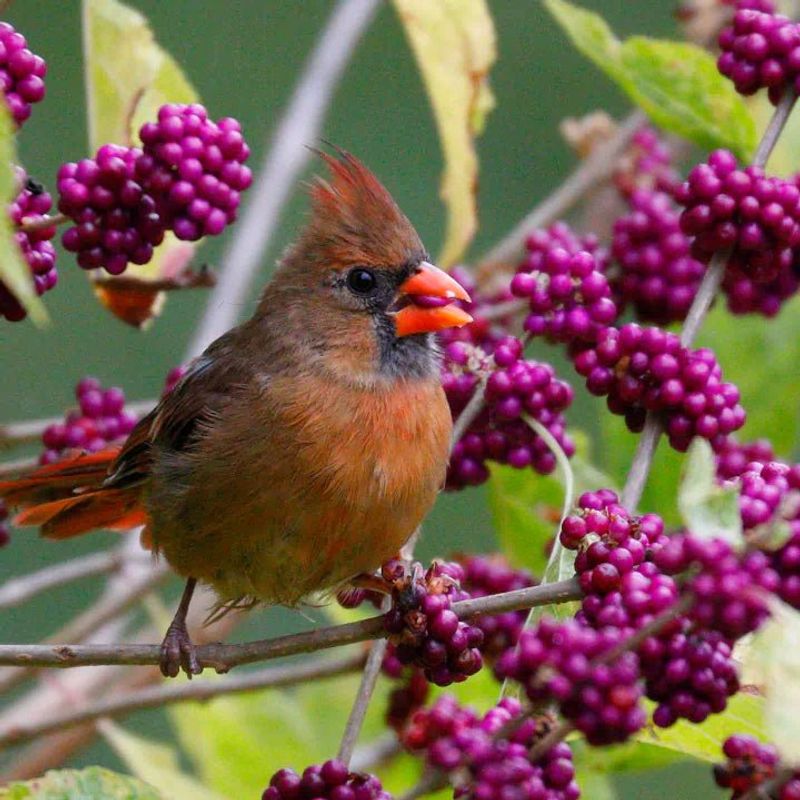
No other backyard shrub wears the exact shade of electric purple that American beautyberry does in autumn. The clusters wrap around the stems like beaded bracelets, and once you see them you understand why the name stuck.
Native across the southeastern United States, this shrub thrives in the heat and shrugs off spells of drought once it settles in. The fruit ripens in late summer and hangs on through fall, giving cardinals a steady supply right when they are scouting for a place to spend the cooler months.
Gardeners love it for another reason too. Crushed beautyberry leaves have long been rubbed on skin as a homemade bug repellent, and researchers have looked into the compounds inside them that may help deter mosquitoes.
Give it a spot with partial sun and room to spread, then cut it back hard in early spring. It flowers and fruits on new growth, so a good haircut only makes the purple show more spectacular the following fall.
3. Northern Bayberry (Myrica pensylvanica)
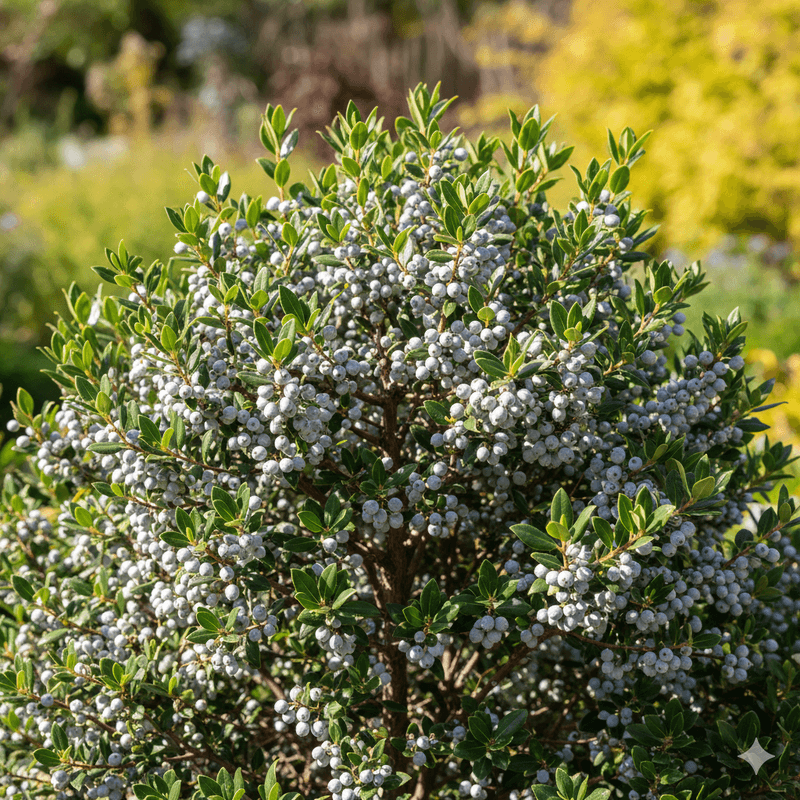
Some shrubs earn their keep by surviving where nothing else will, and northern bayberry is that stubborn survivor. Salt spray, sandy soil, and coastal wind barely faze it, so it holds a spot in yards from New England down the Atlantic coast.
The waxy gray-blue berries are the real draw for cardinals. They are packed with fat, which is exactly the high-energy fuel a bird needs going into colder weather, and they stay on the branches well past the first frost.
Here is a charming footnote: those same waxy berries were once boiled down by early settlers to make fragrant bayberry candles, a tradition still tied to holiday folklore today. The birds, meanwhile, prefer to eat the wax straight off the stem.
Bayberry fixes nitrogen in the soil, which means it can improve poor ground around it as it grows. Plant a small thicket of them and you build a windbreak, a food source, and a cardinal magnet all at once.
4. Serviceberry (Amelanchier)
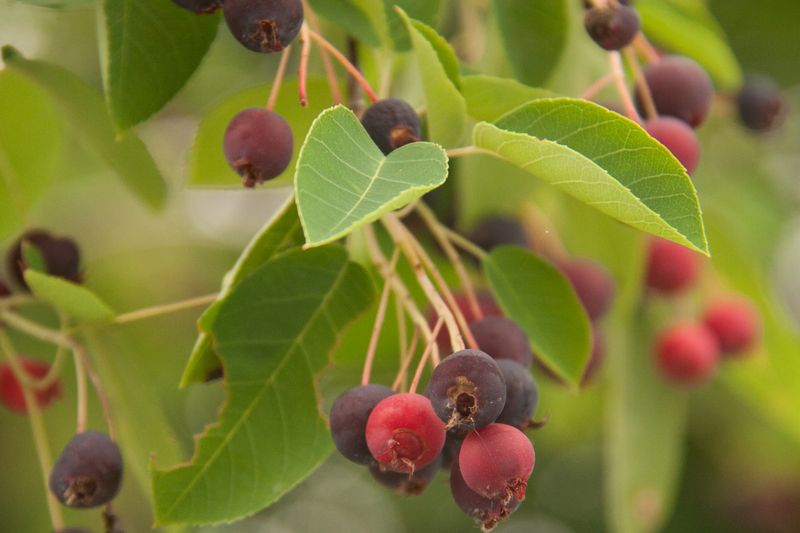
Ask any songbird lover which shrub does double duty best, and serviceberry lands near the top of the list. It hands out sweet blue fruit in early summer, then closes the year with a blaze of orange and red foliage that lights up the whole yard.
Cardinals adore the berries, which taste a lot like blueberries and disappear fast once they ripen. While the fruit peaks in summer, the shrub becomes a familiar landmark, and cardinals often circle back through fall to check the branches and forage nearby cover.
Serviceberry grows across most of the continental US and adapts to both sun and part shade. You can keep it as a tidy multi-stem shrub or let it stretch into a small tree, whichever suits your space.
Old-timers called it shadbush because it bloomed when the shad fish ran upstream each spring. Plant one and you get a living calendar that marks the seasons for you and the birds alike.
5. Chokeberry (Aronia)
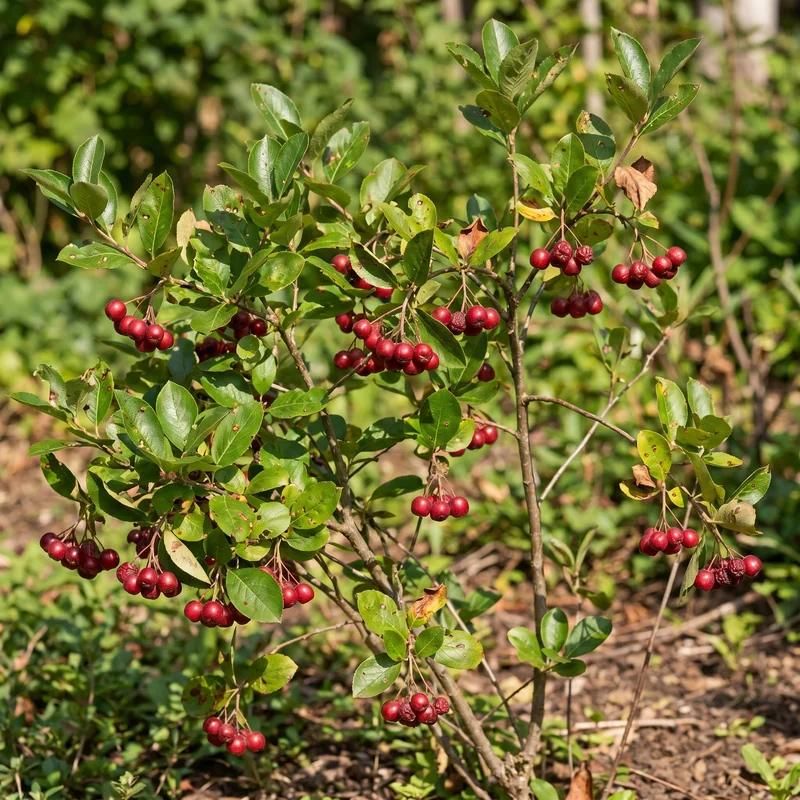
Do not let the grim name scare you off, because chokeberry is one of the most forgiving shrubs a gardener can plant. It tolerates wet feet, dry spells, and just about any soil you throw at it, all while pumping out clusters of dark berries.
The fruit is high in antioxidants, which is why people juice it, but the birds have a different plan. Chokeberries are tart and firm enough that they hang on the branch late into fall, and cardinals return to them once the softer, sweeter fruits elsewhere are long gone.
Red chokeberry and black chokeberry both deliver, though the red type keeps its berries visible longest. In autumn the leaves turn a fiery crimson, so the whole shrub becomes a beacon for anything with wings.
Native to eastern North America, aronia asks for almost nothing in return. Give it sun, step back, and let it feed your cardinals through the leanest weeks of the season.
6. Viburnum (Arrowwood and Nannyberry)
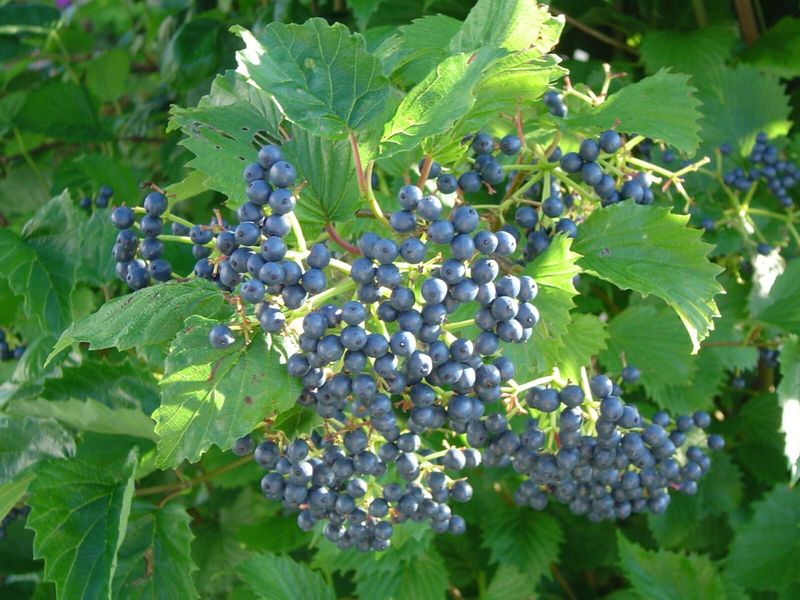
Few shrub families give you as many choices as viburnum, and cardinals are grateful for the variety. Arrowwood and nannyberry are two standouts that produce clusters of blue-black fruit birds keep coming back for.
What sets viburnum apart is the structure it adds to a yard. The dense branching gives cardinals safe cover to duck into, and cardinals feel far more comfortable feeding near a spot where they can hide from a passing hawk.
The berries ripen in late summer and persist into fall, and some cling stubbornly into winter after they soften and sweeten from repeated frosts. That slow ripening spreads the food supply out over weeks instead of days.
Native Americans once used the straight young shoots of arrowwood viburnum to make arrow shafts, which is exactly how the plant got its common name. Plant a couple of different viburnums and you gain shelter, seasonal color, and a fruit crop that keeps giving.
7. Elderberry (Sambucus canadensis)
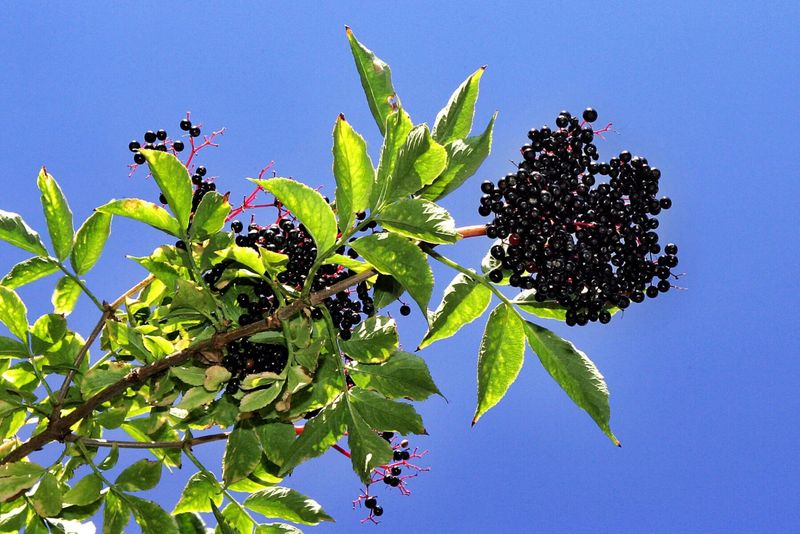
Come August, an elderberry bush droops under the weight of glossy dark clusters, and the birds throw a party. Cardinals, robins, and dozens of other species descend on the fruit almost as soon as it darkens.
Because elderberry fruits so heavily, there is plenty to go around even during the busy migration season. The shrub grows fast, sometimes several feet in a single year, so it fills an empty corner and starts feeding wildlife quicker than most.
People harvest elderberries too, turning them into syrups and jams once the fruit is cooked, since the raw berries and stems are not meant to be eaten straight. Leave a generous share on the plant, though, and the cardinals will thank you well into fall.
It likes moist soil and full to partial sun, and it happily colonizes damp ditches and stream edges. Plant it where the ground stays a little wet and it will reward you with year after year of fruit.
8. Dogwood (Red-Osier and Gray)
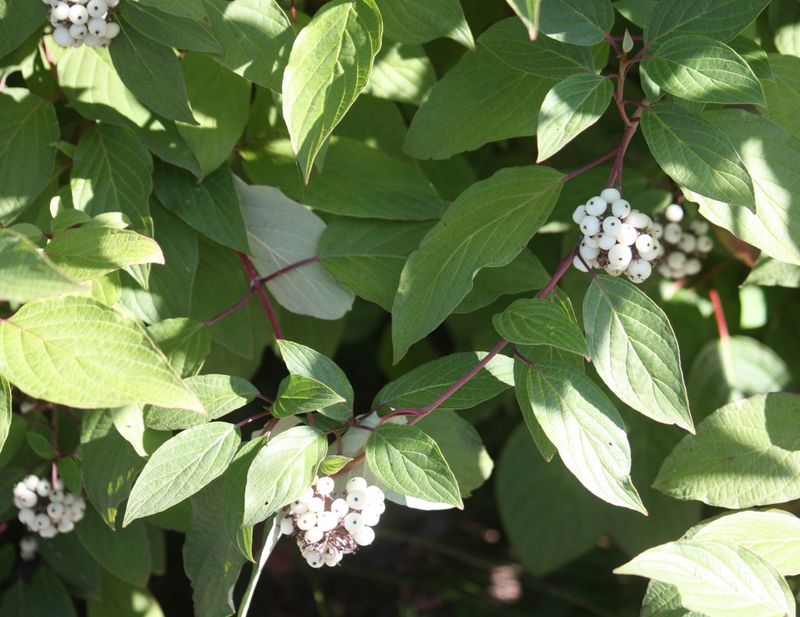
Bright red winter stems make red-osier dogwood a showpiece long after the leaves fall, but the fruit is what pulls cardinals in. Both red-osier and gray dogwood set small white berries on colorful little stalks that birds strip quickly.
The fruit is loaded with fat and ripens from late summer into fall, timing that lines up perfectly with a cardinal’s need to bulk up before cold weather. Gray dogwood in particular holds its berries on cheerful reddish-pink pedicels, so even after the birds eat the fruit the shrub stays decorative.
Dogwoods spread by suckering, forming loose thickets that give birds both a food source and a tangle of protective cover in one planting. That combination is exactly what convinces a cautious cardinal to linger rather than pass through.
These shrubs shine in damp, sunny spots and need little fuss once established. Cut a third of the oldest stems each spring and you keep those winter stems glowing their brightest.