
If Your Basil Sits On The Windowsill, Here’s The 3-Foot Defense Zone It Quietly Throws Around Your Tomatoes
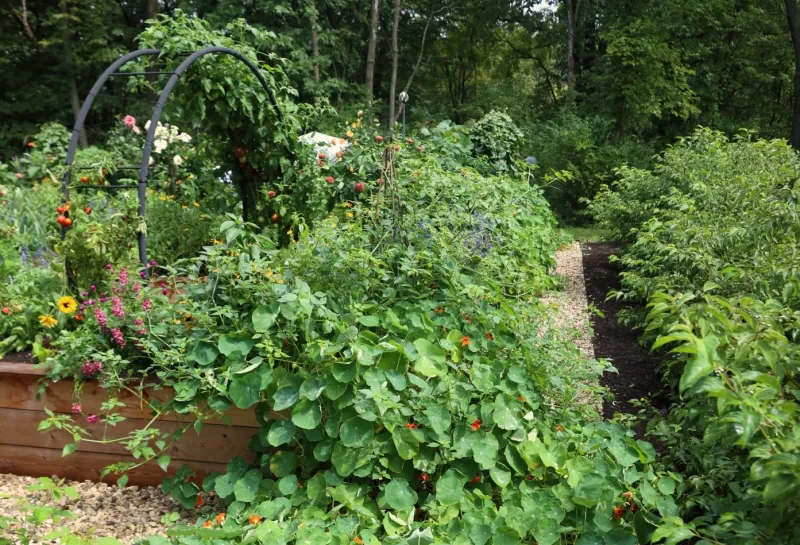
A popular gardening rumor says that a pot of basil on your windowsill quietly protects nearby tomatoes from pests within a three-foot zone. Before you rearrange your kitchen herbs expecting a force field around your garden beds, it’s worth knowing what research actually shows.
The truth is more useful than the rumor, and it starts with understanding where that three-foot number really came from.
The Three Feet Is Spacing Advice, Not a Defense Zone
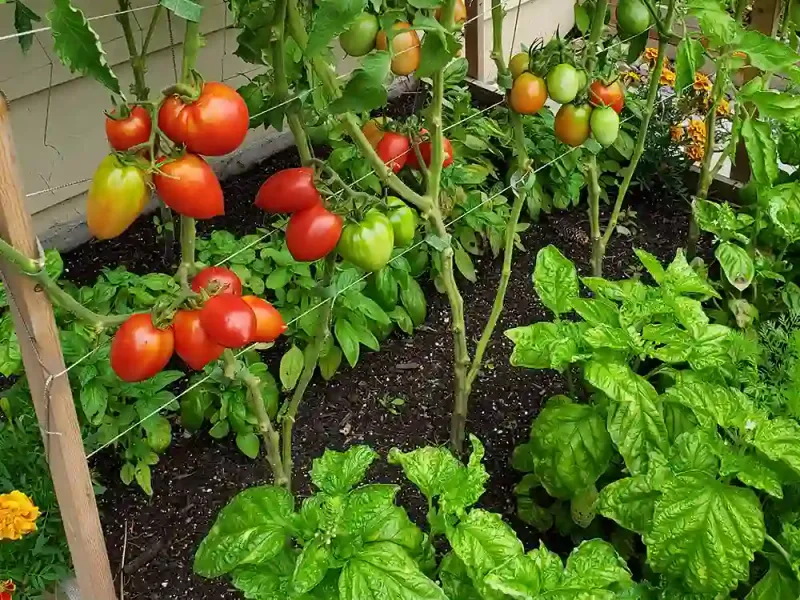
Somewhere along the line, a sensible horticulture tip got transformed into something it was never meant to be. The Herb Society of America’s basil guide does mention roughly three feet as a planting distance between basil and tomatoes, but the reason is purely practical: tomato plants are tall and leafy, and if basil grows too close, the tomato canopy shades it out and restricts the airflow basil needs to stay healthy.
That’s a spacing tip about keeping basil alive, not a measured radius at which pest protection begins.
The same guide goes further, noting that popular claims about basil repelling insects or improving tomato flavor are “more folklore than science.” That’s a direct quote from a respected horticultural organization, and it’s a useful reality check. There is no established pest-defense perimeter around basil plants, and no source in the published research assigns a specific distance at which protection kicks in or fades out.
The windowsill version of this claim is even harder to support. The idea that a basil plant sitting indoors could protect outdoor tomatoes through a window, across a room, or at any fixed distance has not been tested by any research found on this topic.
The studies that do show interesting results with basil and tomatoes involve the plants growing physically together in the same bed, row, or field plot.
That does not mean basil is useless near tomatoes. Field research on basil intercropped with tomatoes has found some meaningful effects on certain pest insects, and those findings are worth understanding.
The key word is “intercropped” – meaning planted together outdoors, not stationed on a kitchen sill several feet away. The question worth asking is not whether your windowsill basil is working, but whether basil planted beside your tomatoes might actually do something useful.
What Tomato-and-Basil Studies Actually Found
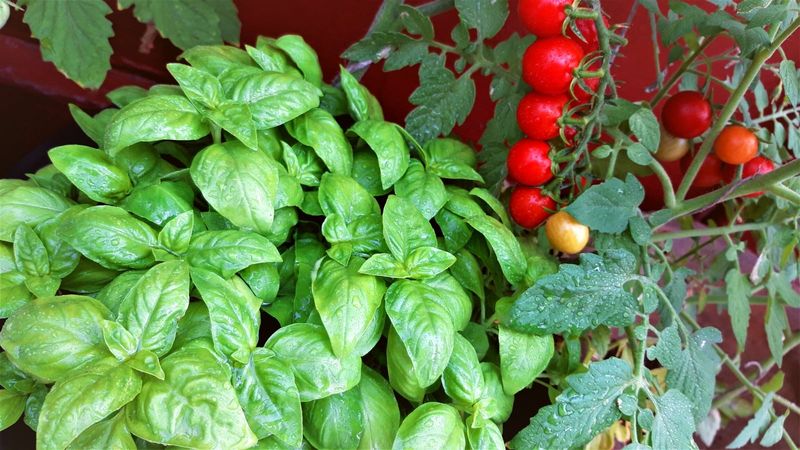
A 2017 field and laboratory study published in Entomologia Experimentalis et Applicata tested what happened when Greek basil grew alongside tomatoes. That study found fewer adult whiteflies on tomatoes intercropped with Greek basil, reporting a roughly 79% reduction in adult whitefly counts compared to tomato-only plots.
That number sounds striking, and it is – but it comes from one study, one basil variety, one tomato system, one whitefly species, and a specific set of field conditions. Treating it as a guaranteed result for every backyard would be a mistake.
A separate randomized study examined tomatoes grown with basil under different arrangements, including rows of basil intercropped with tomato plants and, in some treatments, agronet insect-exclusion covers placed over the beds. That MDPI Agronomy study reported reduced whitefly infestation in basil treatments, with the strongest results coming from combinations of intercropped basil and physical netting.
The netting itself played a significant role, which means the basil-alone effect in that study is harder to isolate. Backyard gardeners rarely use commercial agronet covers, so the results do not translate cleanly to a typical home garden.
On the other side of the ledger, garden-scale research found something quite different. A study evaluating popular companion planting claims found no measurable reduction in tomato pests when basil was grown alongside tomatoes at garden scale.
That outcome matters because it reflects conditions much closer to what most home gardeners actually have: modest plant numbers, mixed growing conditions, and variable pest pressure.
Taken together, the research suggests a possible, context-dependent effect rather than a reliable protective outcome. The evidence is most interesting for whiteflies under field conditions where basil and tomatoes grow side by side.
Beyond that specific situation, the picture gets murky fast.
Basil May Disrupt How Certain Insects Find Tomatoes
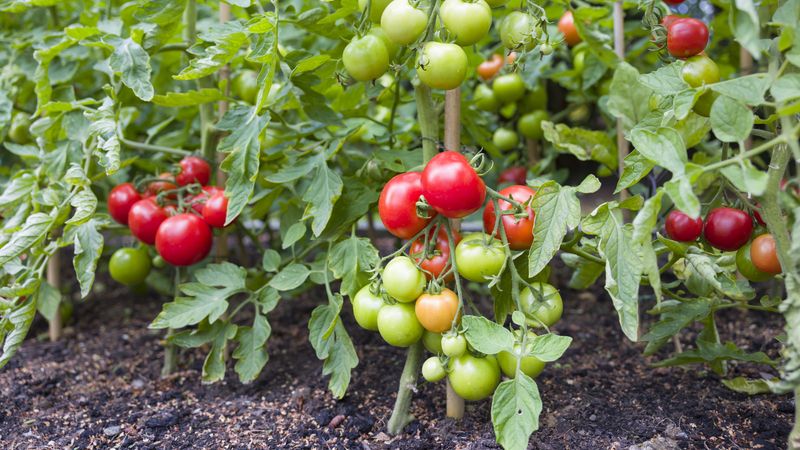
Aromatic plants like basil carry volatile chemical compounds that can interfere with how insects navigate toward a host plant. Penn State Extension explains that these aromatic compounds can disrupt both visual and chemical cues that insects rely on to locate the plants they feed or lay eggs on.
Basil specifically has been associated with masking tomato plants from thrips and with altering egg-laying behavior in some moth pests. These are not blanket repellent effects – they are pest-specific interactions that happen under particular conditions.
The whitefly research adds another layer to this picture. Rather than simply driving whiteflies away from the area, basil may work partly by being more attractive to adult whiteflies than tomato plants are.
The 2017 study on Greek basil and Bemisia tabaci found that tomato plants combined with basil were less attractive to adult whiteflies in behavioral tests, suggesting that basil’s presence changed how whiteflies made host-selection decisions. Whether that change happens because whiteflies are confused, masked from the tomato scent, or simply prefer basil is still an open question in the research.
The MDPI companion cropping study also interpreted basil as potentially serving as a more attractive landing site for whiteflies, drawing them away from tomatoes rather than repelling them from the whole area. If that interpretation holds, the mechanism is diversion rather than a scent barrier radiating outward in all directions.
A diversion effect requires basil to be physically present among the tomatoes, close enough for insects to encounter it during their search.
None of these mechanisms produce a measured bubble of protection around a plant. Scent compounds disperse, dilute, and interact with wind, temperature, and surrounding vegetation in ways that resist being mapped onto a fixed radius.
Thinking of basil as a possible host-finding disruptor for specific insects is more accurate than imagining it as a silent force field.
Grow Basil Among Tomatoes, Not Across the Room
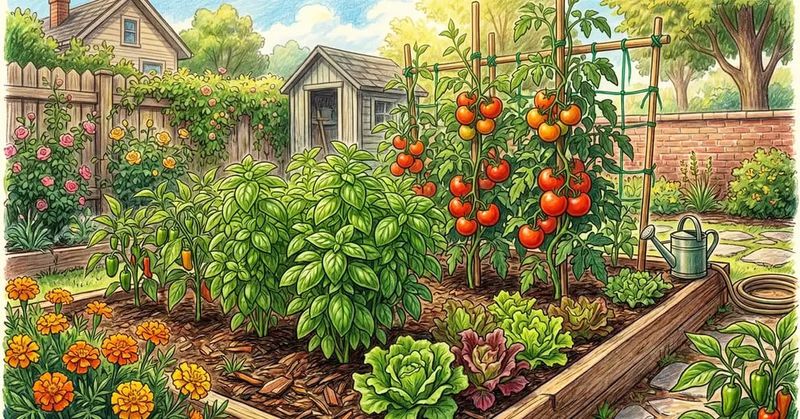
Putting basil to work as a possible companion plant means getting it into the ground next to your tomatoes, not leaving it on a countertop and hoping the scent carries through a wall. University of Maryland Extension describes companion planting arrangements such as alternating basil and tomato plants within a row, which keeps the plants in close physical proximity throughout the growing season.
Before setting up that arrangement, it’s worth thinking through each plant’s mature size so the tomatoes do not end up shading out the basil once they grow tall.
Basil has specific needs that can conflict with crowded or poorly planned beds. University of Maryland Extension’s basil growing guide recommends at least six hours of direct sunlight daily, good airflow, and well-drained soil.
Crowding basil plants too tightly raises humidity around the foliage, which increases the risk of fungal disease. Keeping the soil consistently wet makes the problem worse.
Spacing plants sensibly and watering at the base rather than overhead gives basil the best chance of staying healthy enough to contribute anything useful to the garden.
Moisture and nutrient competition are also worth planning around. Basil and tomatoes both prefer warm conditions and reasonable fertility, but tomatoes are heavy feeders with extensive root systems.
Planting basil directly at the base of a large tomato plant may put the basil at a disadvantage. A little distance within the same bed, rather than a tight cluster, lets both plants access what they need without one overwhelming the other.
Treat the pairing as a sensible garden experiment rather than a proven formula. You may notice less pest activity on tomatoes that grow alongside basil, or you may not.
Either outcome gives you useful information about your specific garden, your local pest population, and whether the arrangement is worth repeating next season.
The Possible Benefit Depends on the Pest and the Garden
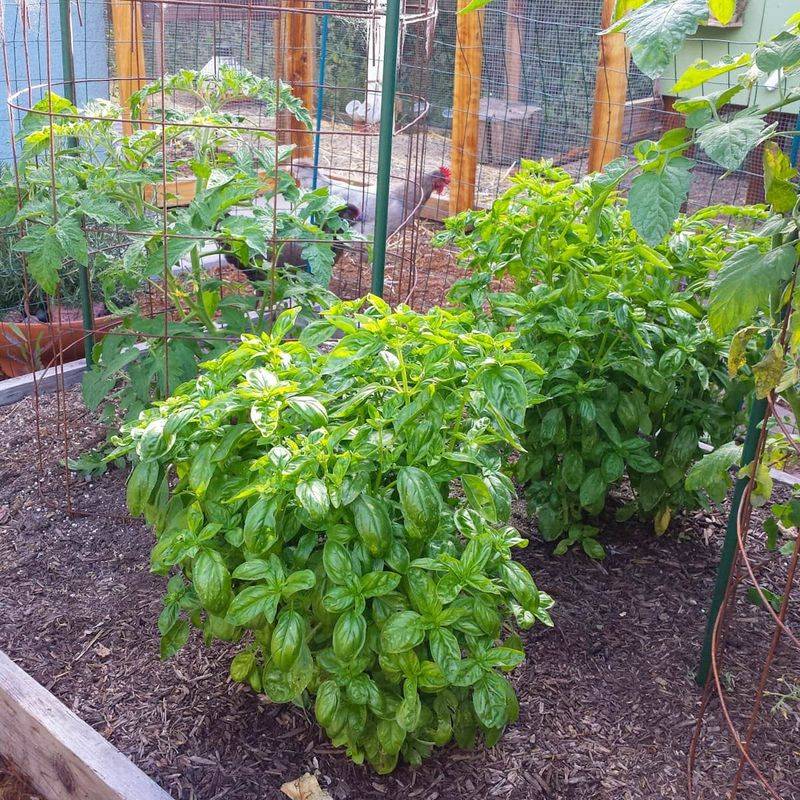
Whitefly interactions and certain thrips or moth behaviors represent the best-supported area of basil’s possible influence on tomato pests. Outside of those specific cases, the evidence gets thin quickly.
Hornworms, aphids, spider mites, stink bugs, tomato fruitworms, and the various fungal and bacterial diseases that can affect tomatoes are not reliably deterred by basil. Penn State Extension notes that basil has been associated with masking tomatoes from thrips and some moth pests, but that list does not extend to every creature that might damage your crop.
Research results from controlled field studies, commercial greenhouses, or plots equipped with insect-exclusion netting may not transfer to a typical backyard. The MDPI study on agronet covers and companion cropping found its strongest whitefly reductions in treatments that combined basil rows with physical netting, not in open beds with basil alone.
Basil variety, tomato variety, how densely both crops are planted, local weather patterns, airflow through the garden, surrounding vegetation, and the size of the pest population in your area can all push results in different directions.
Oregon State University Extension points out that many strong-scent companion planting claims lack sufficient research support to be stated as reliable outcomes. That does not mean companion planting is worthless, but it does mean gardeners should hold the expectations loosely and keep doing the basics that actually protect tomatoes regardless of what grows beside them.
Adequate spacing, consistent sunlight, appropriate watering, sturdy support structures, and regular sanitation – removing dead leaves and fallen fruit – do more dependable work than any companion plant. Healthy, well-maintained basil is a reasonable addition to a tomato bed, but it functions as one small piece of a larger pest-management picture, not as a standalone solution.
Keep Scouting for Problems Basil Cannot Solve
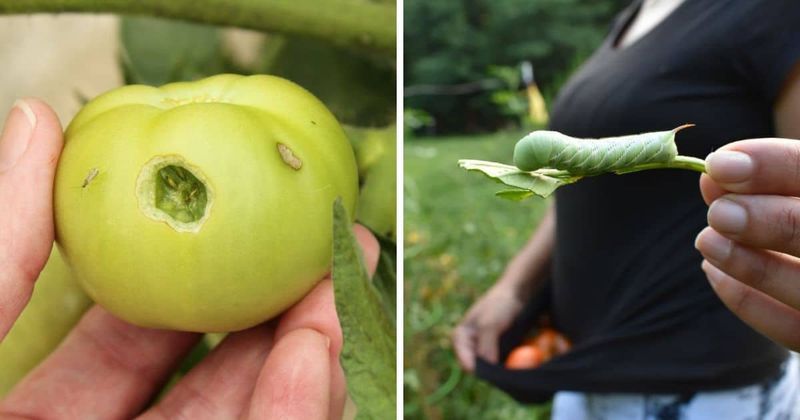
Finding damage on your tomatoes calls for a specific response: figure out what caused it before deciding what to do about it. Basil’s presence does not change that sequence, and it should not lead you to skip the inspection step.
Different pests require different responses, and treating for the wrong one wastes time, money, and sometimes harms beneficial insects in the process.
Hornworms are a good example of why scouting matters. University of Minnesota Extension recommends inspecting tomato plants at least twice a week during the periods when hornworms are active, typically midsummer through early fall.
Hand-picking is usually sufficient for home garden populations – drop the caterpillars into soapy water or relocate them well away from the garden. One important exception: if you find a hornworm covered in small white oval structures that look like rice grains, leave it alone.
Those are the cocoons of braconid wasps, a parasitoid that naturally controls hornworm populations. Removing that hornworm destroys a natural ally.
Beyond hornworms, a practical pest-management approach informed by EPA’s integrated pest management principles involves several connected decisions rather than a fixed checklist. Start by identifying the pest accurately – misidentification leads to wrong treatments.
Monitor how many individuals you’re seeing and whether the population is growing. Decide whether the level of damage actually warrants action, since some pest presence is normal and tolerable.
When control is needed, start with prevention and physical methods: row covers, hand removal, targeted traps. Reserve pesticide use for situations where those approaches are not sufficient.
When a pesticide does seem necessary, read the label carefully before buying. Confirm that tomatoes are listed as a target crop, that the specific pest is listed, and that you can observe the required interval between application and harvest.
The label is legally binding and practically essential. Choosing a product without checking those details risks crop damage, ineffective treatment, or residues on food you plan to eat.
Treat Basil as a Helpful Neighbor, Not a Force Field
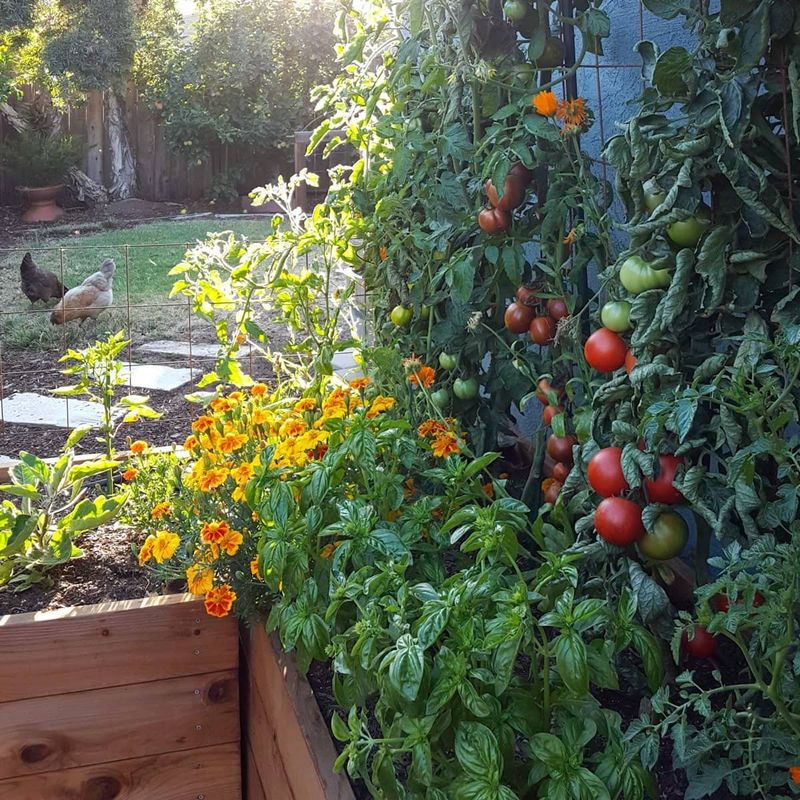
Planting basil near your tomatoes is a reasonable gardening choice when both crops have what they need to thrive: enough direct sun, sensible spacing, good airflow, and soil that drains well. Under those conditions, you might notice somewhat less pressure from whiteflies or certain other pests, especially if your garden tends to have those insects.
That is a worthwhile possibility, not a promise.
What the evidence does not support is a three-foot defense zone, a claim that nearby vegetables become invisible to insects, or the idea that basil covers protection from every pest that might visit your tomatoes. Keeping basil healthy and understanding which pest interactions have some research backing puts you in a much better position than believing the folklore version of the story.
The most dependable habit you can build is regular inspection. Checking plants frequently, identifying what you find, judging whether the damage level warrants action, and choosing a proportionate response will protect your tomatoes far more reliably than any companion plant alone.
Pest management grounded in observation and good judgment is the real force field around your garden. Basil is just a pleasant, occasionally useful neighbor growing alongside it.