
If Your Beds Feel Bare Right Now, Here Are 13 Flowering Oxalis Varieties That Carpet Them In Color

Bare garden beds can make even a proud gardener feel like something went wrong, but the fix is often easier than you think. Oxalis, sometimes called shamrock or wood sorrel, spreads into a low carpet of leaves and cheerful blooms that fill empty gaps fast.
Many types come back year after year and ask for very little in return. Here are 13 flowering Oxalis varieties that turn a patchy bed into a blanket of color.
1. Oxalis triangularis (Purple Shamrock)
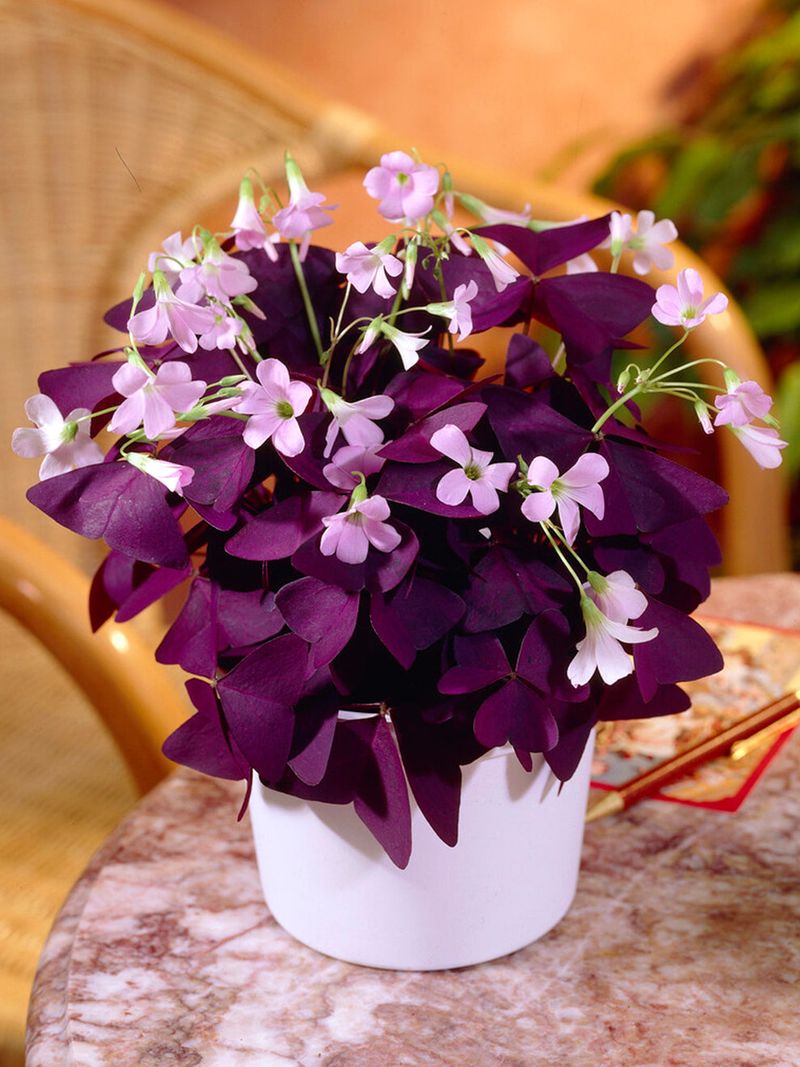
Few plants pull off drama the way Purple Shamrock does, with leaves so dark they look almost black in the right light. The triangular foliage folds up like little umbrellas at night and opens again when the sun comes up, which is oddly fun to watch.
Soft purple to pale pink flowers float above the leaves, giving you a gentle contrast against all that moody color. It grows in tidy clumps rather than running wild, so it stays where you plant it.
Outdoors it handles USDA Zones 7 through 10, and cultivars like ‘Atropurpurea’ and ‘Charmed Wine’ push the color even richer. If your bed needs a bold anchor instead of another green filler, this is the one to reach for.
2. Oxalis tetraphylla ‘Iron Cross’ (Good Luck Plant)
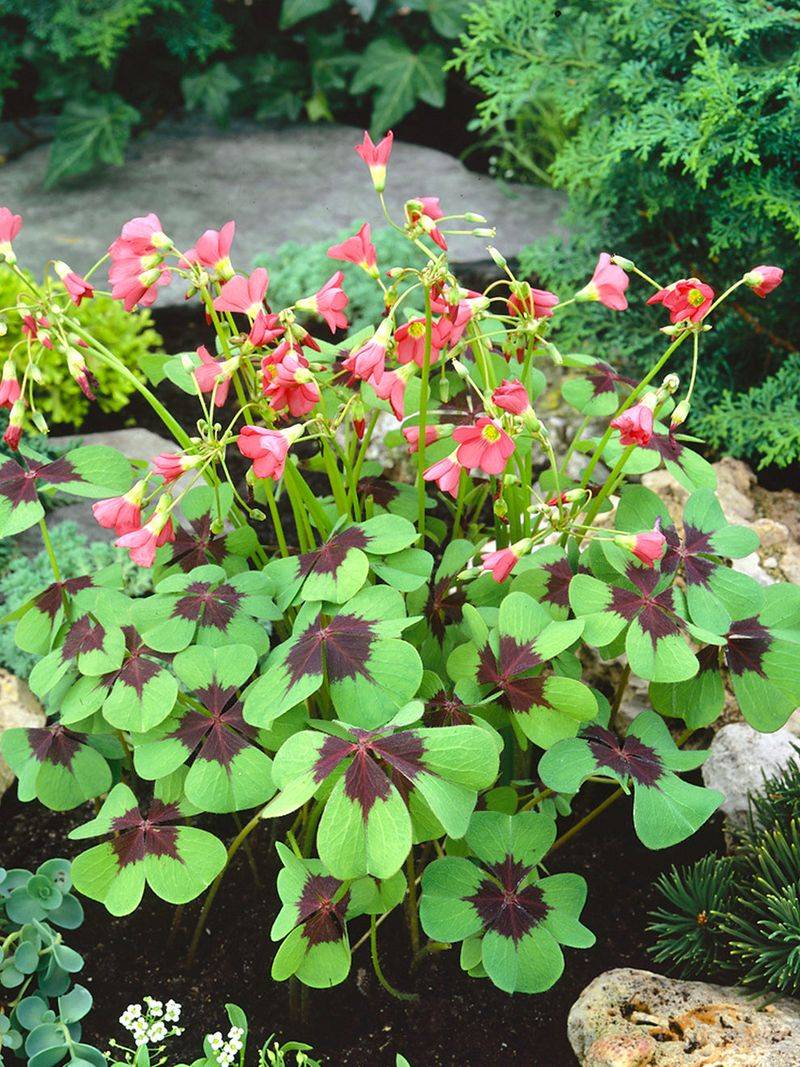
Legend gave this one its nickname, since the four-parted leaves look like the lucky clovers people search for in lawns. Each bright green leaf carries a bold burgundy or plum cross right in the center, almost like someone painted it on.
From early summer into fall, pink to carmine red trumpet flowers rise above the foliage and keep the show going for months. It clumps politely and does not take over, which makes it a friendly choice for edging.
Gardeners in Zones 7 through 9 can use it as a neat ground cover along paths or the front of a bed. It brings a little charm and a little folklore to any bare corner.
3. Oxalis adenophylla (Silver Shamrock)
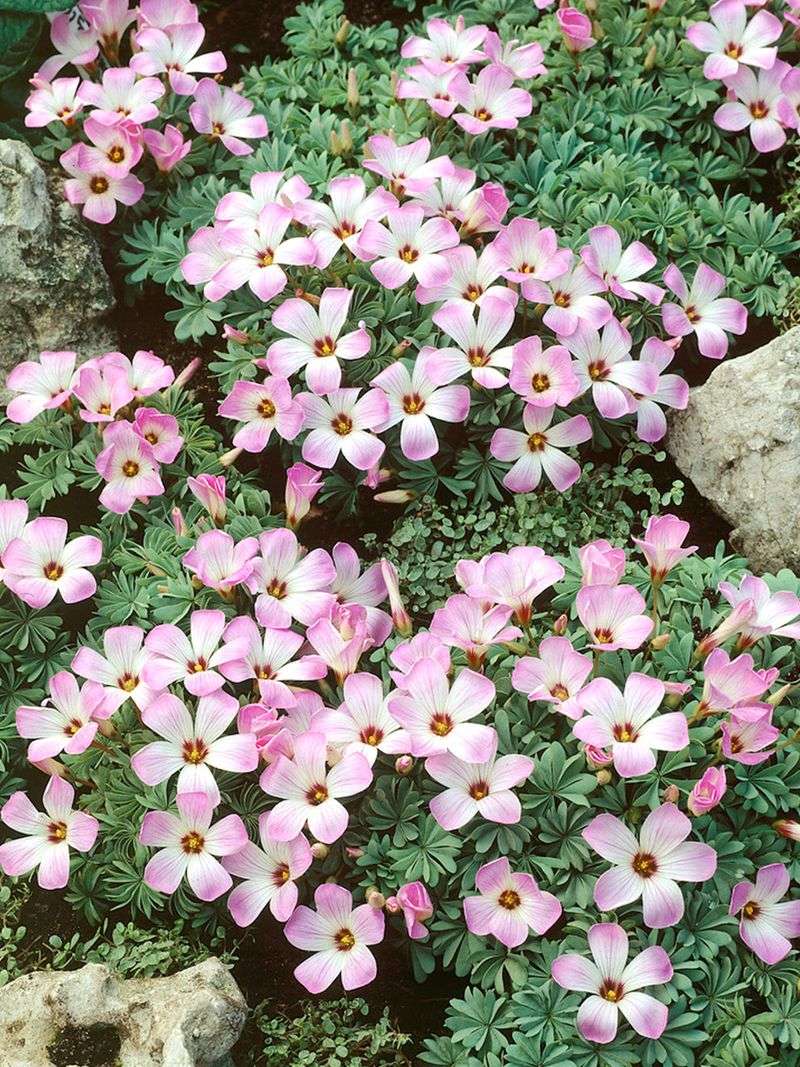
Silver Shamrock stands apart the moment you spot its foliage, which reads more silvery-gray than green. The leaves are finely cut and almost pleated, giving the plant a cool, frosted look that plays nicely against warmer flowers nearby.
In late spring to early summer, it covers itself in showy pink to lilac blooms, often with a dark purple eye that draws you in. The plants thicken into dense little mounds over time.
Hardy across a wide range from Zones 4 to 9, it handles colder gardens better than many of its cousins. Use it to soften the edges of a rock garden or brighten a spot that needs something with texture.
4. Oxalis brasiliensis (Brazilian Woodsorrel)
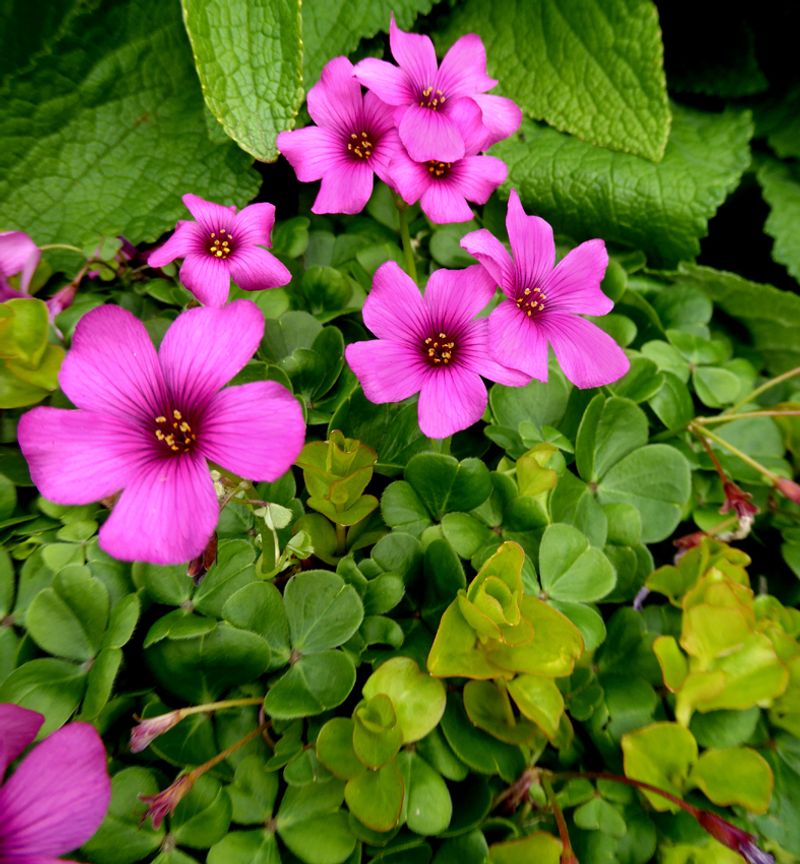
Coming from South America, Brazilian Woodsorrel brings that fresh, clover-green look people love, only tidier. It stays low and clumps together, forming a soft mat that reads as intentional rather than weedy.
The flowers are the real payoff here, glowing pink to purple and shaped like little funnels that seem to catch the light. They arrive from late spring into early summer, right when many beds are still waking up.
Hardy in Zones 8 through 11, it works beautifully as a perennial ground cover in warmer gardens. Tuck it around taller plants and it will quietly knit the whole planting together.
5. Oxalis versicolor (Candy Cane Sorrel)
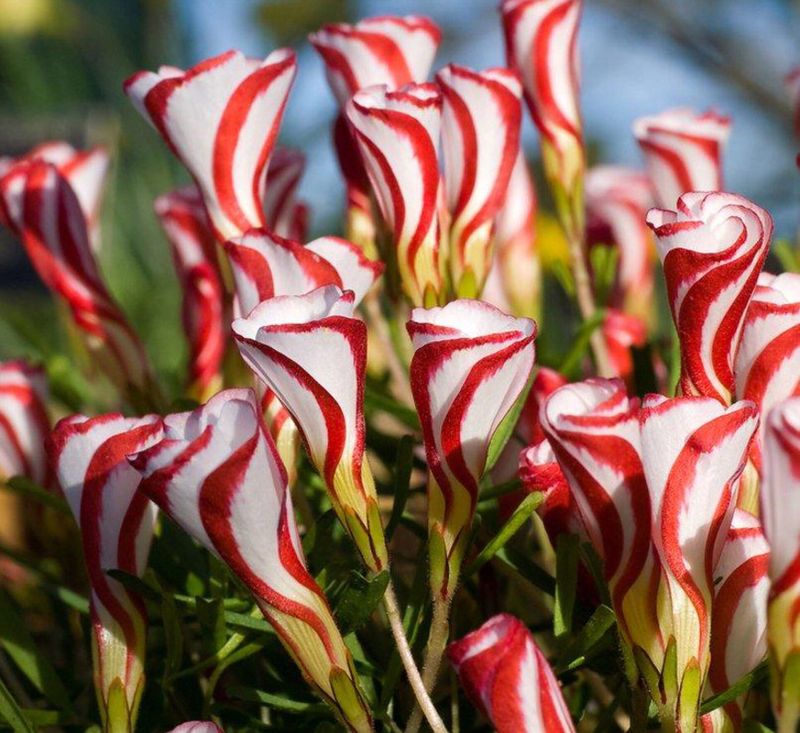
Kids and adults alike do a double take at Candy Cane Sorrel, and for good reason. The tightly furled buds show off red and white stripes that look exactly like tiny peppermint candies twisted shut.
When the sun coaxes them open, the flowers reveal crisp white petals rimmed in crimson, blooming from midsummer into fall. A dense mound of light green leaves sits underneath to set them off.
Hardy to about Zone 7, it rewards a sunny spot with a long, playful display. If you want a conversation starter that also fills space, this whimsical little plant delivers.
6. Oxalis violacea (Violet Woodsorrel)
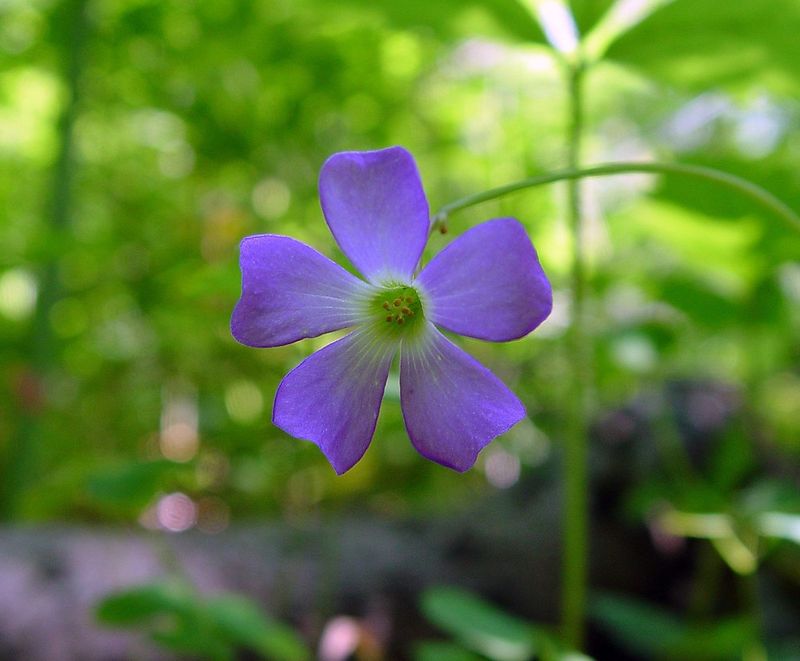
Native plant fans, this one is for you, since Violet Woodsorrel grows wild across much of the United States. The gray-green leaves often carry a purplish tint on their undersides, adding a subtle depth up close.
Come spring, lavender to purplish-pink flowers open above the foliage, and you may even catch pink or white forms. Some plants surprise you with a second flush of bloom in the fall.
Because it spreads slowly through deciduous shade, it colonizes bare ground without bullying its neighbors. Plant it under trees where lawn refuses to grow and let it fill in on its own schedule.
7. Oxalis purpurea

Talk about variety in a single species, because Oxalis purpurea shows up in purple, violet, rose, salmon, and clean white. Almost every flower carries a bright yellow throat that makes the colors pop even more.
The leaves may be green or blushed with purple underneath, so the foliage keeps things interesting between blooms. Given room, it naturalizes into a wide carpet, especially in dreamy pink and mauve tones.
It performs as a perennial in Zones 9 and 10, spreading enough to blanket a bare stretch of soil. For gardeners who want maximum color from one easygoing plant, this is a smart pick.
8. Oxalis vulcanicola ‘Copper Glow’ (Golden Oxalis)
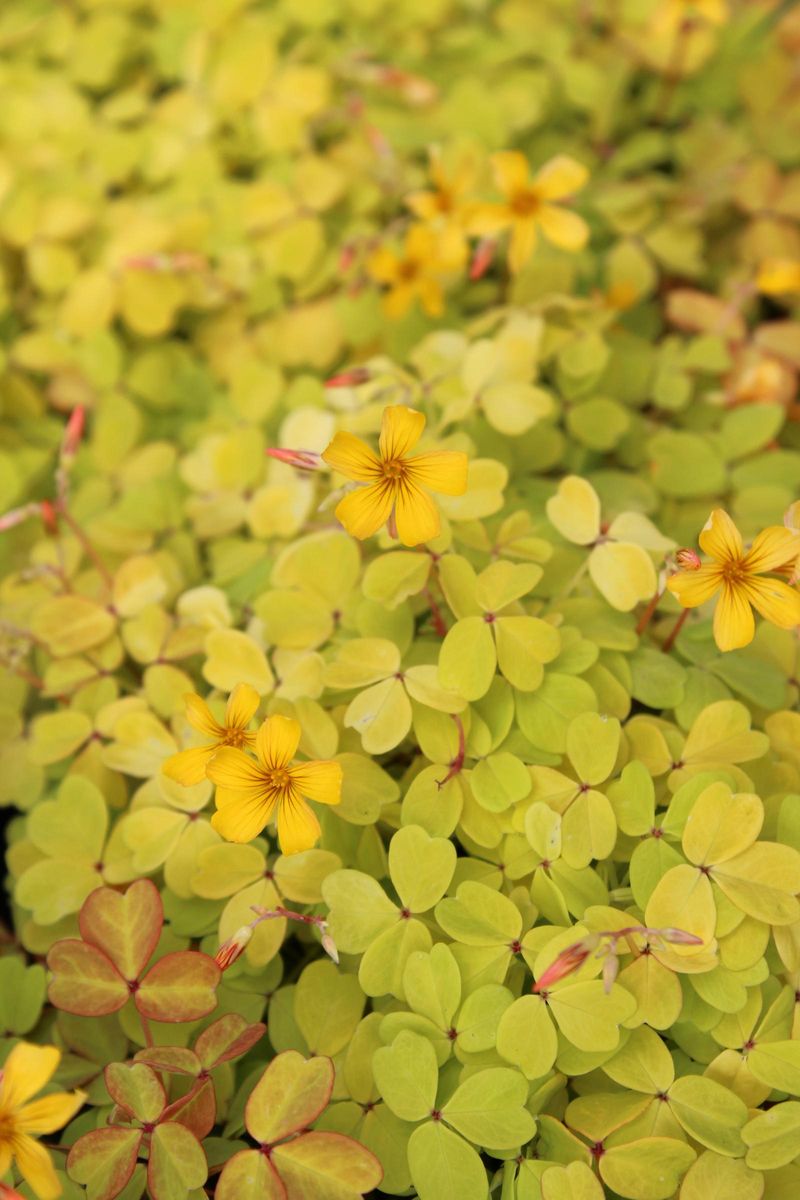
Sunshine seems to live inside ‘Copper Glow’, whose foliage glows a warm golden-yellow that lights up shady corners. The trailing habit lets it spill and creep, softening edges wherever it lands.
Small, cheerful yellow flowers dot the leaves and echo the color of the foliage, keeping everything bright and coordinated. It looks just as good tumbling over a container as it does covering ground.
Sometimes labeled Oxalis spiralis vulcanicola, it is the variety to grab when you want glow rather than contrast. Pair it with darker plants and watch the whole bed brighten up.
9. Oxalis versicolor ‘Autumn Pink’
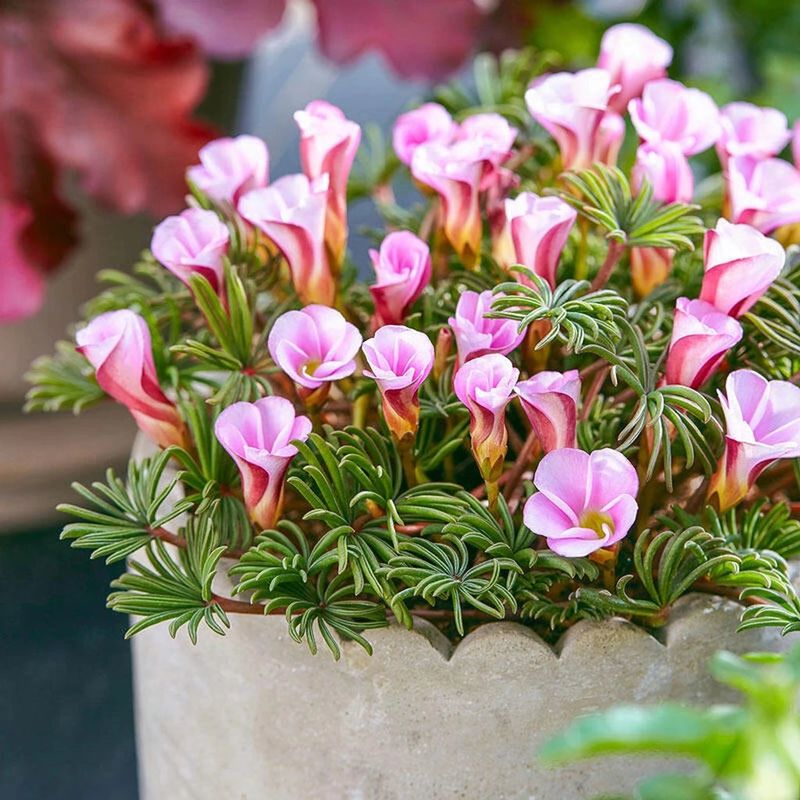
For gardeners chasing color into the cooler months, ‘Autumn Pink’ keeps blooming when others have quit. It is a Candy Cane Sorrel cultivar, but the twist here leans warm and romantic instead of crisp red and white.
The furled buds swirl in soft red and pink, giving off a candy-store charm with a cozier palette. Flowering runs from July right up until the first frosts nip the garden.
That late timing makes it valuable for filling gaps as summer fades and beds start to thin out. If your fall garden feels a little sleepy, this one gently wakes it back up.
10. Oxalis versicolor ‘Golden Cape’
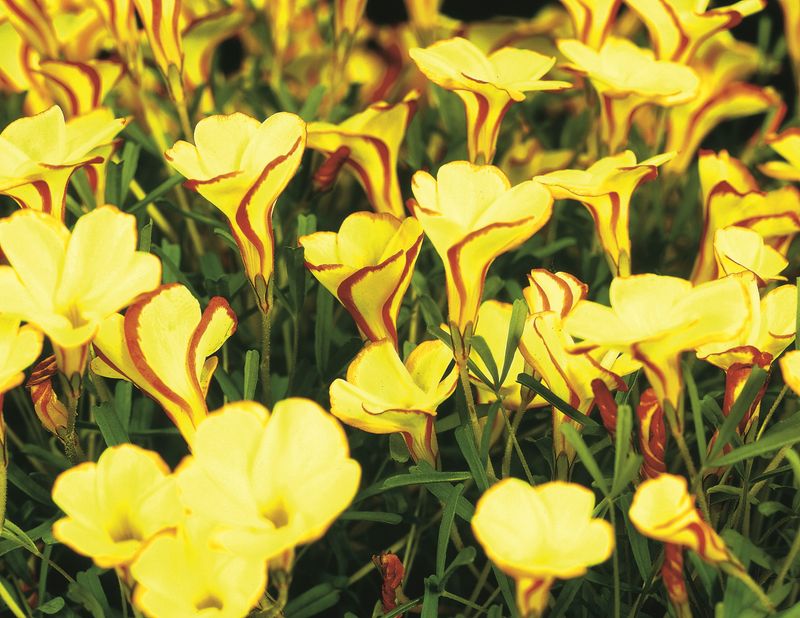
Bold color lovers will gravitate to ‘Golden Cape’, another Candy Cane Sorrel with a sunnier personality. Instead of the classic red and white, its spiraled buds mix vibrant red with cheerful yellow.
The effect is bright and almost tropical, like a little burst of warmth tucked into the front of a bed. When the flowers open in the sun, the contrast really sings.
Use it where you want energy and a jolt of brightness rather than something soft and subtle. Grouped in a sunny pocket, it turns a plain patch into a genuine focal point.
11. Oxalis articulata (Pink Sorrel)
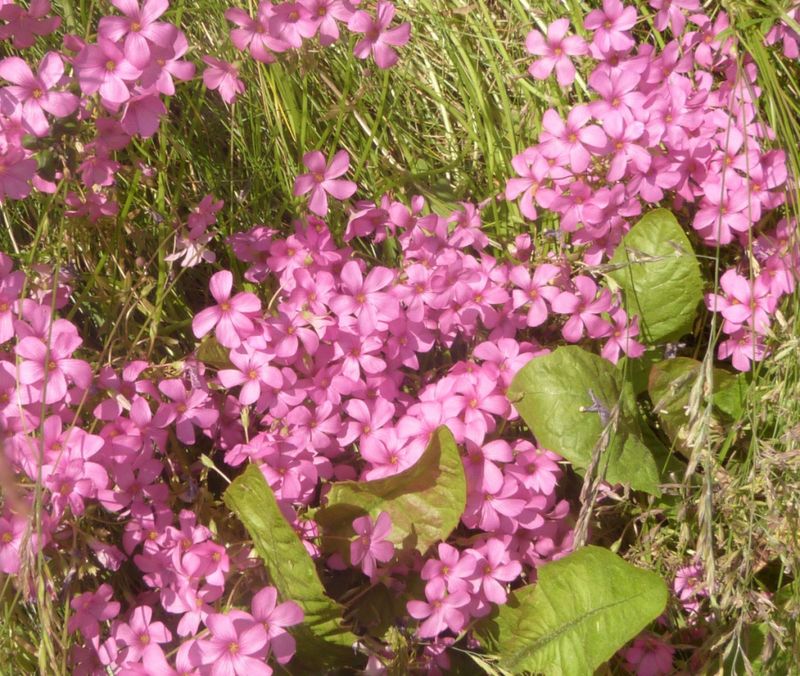
If you want dependable color that just keeps coming, Pink Sorrel is hard to beat. It throws up generous clusters of pink to rosy-purple blooms above tidy, clover-like green leaves.
What sets it apart is stamina, since the flowers can appear from spring all the way through fall in the right spot. That long run means fewer bare weeks and more months of steady color.
Given a little room, it spreads into a solid ground cover that fills space without much fuss. For a bed that needs to look full and cared for over a long season, this is a workhorse worth planting.
12. Oxalis obtusa
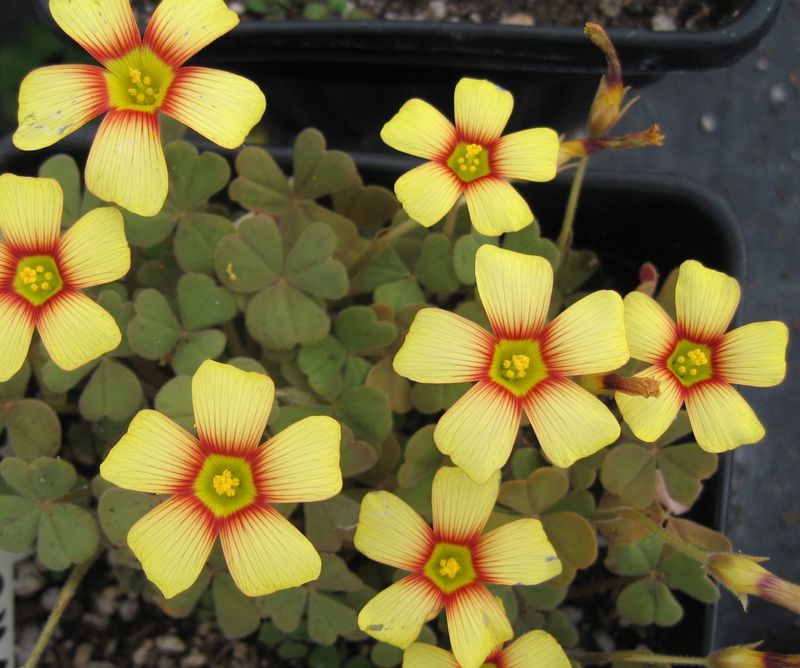
Collectors adore Oxalis obtusa because you never quite know which color you will get. The blooms range across yellow, orange, pink, red, and white, and many carry contrasting eyes or fine veining that reward a close look.
The plants stay low and neat, forming small clumps of clover-like leaves that keep the whole thing looking tidy. That compact size makes it perfect for the front row or a small pocket of soil.
With so many color forms out there, you can mix a few and create a patchwork of surprises. It is a playful choice for gardeners who like a little variety in one small footprint.
13. Oxalis regnellii (False Shamrock)
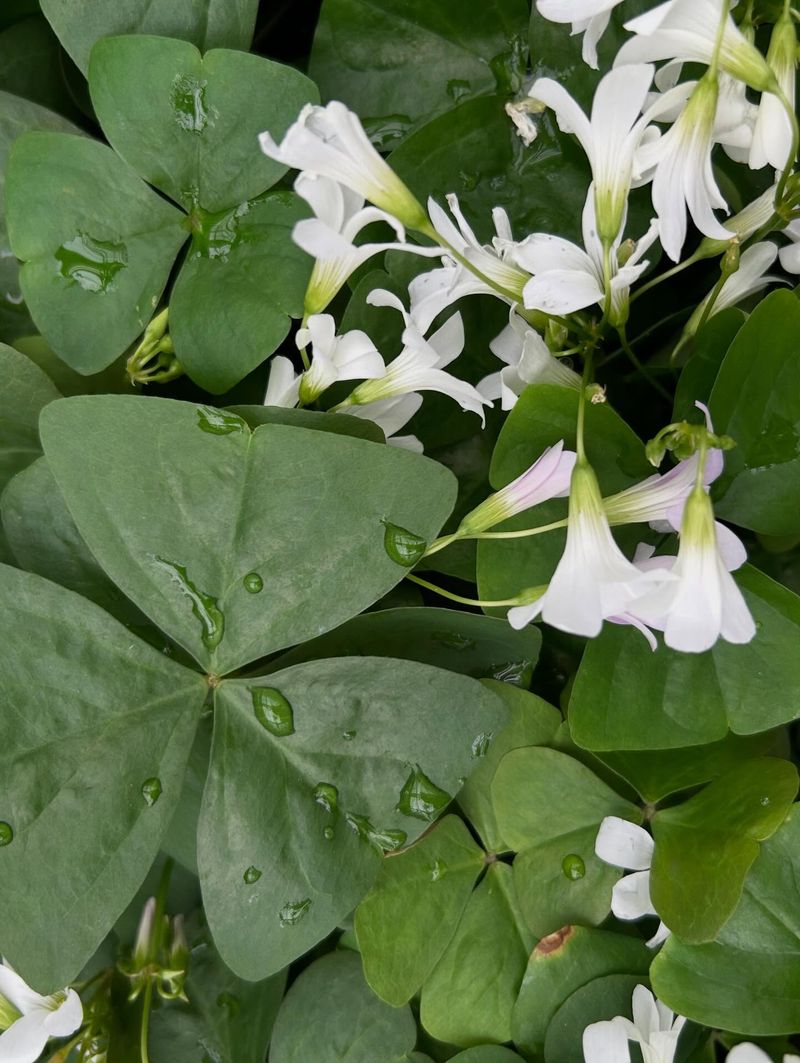
Sometimes the quietest plant in the list is the one you keep coming back to, and False Shamrock fits that role. A close relative of the purple triangularis, it keeps its leaves fresh green and lets the flowers do the talking.
Delicate white blooms rise on slender stems above the clover-shaped foliage, giving a clean, calming look. That soft palette makes it easy to slip in beside almost any color scheme.
Hardy outdoors in Zones 6 through 11, it also doubles as a cheerful houseplant when the weather turns. If your bed needs a gentle, bright filler rather than a bold statement, this understated shamrock earns its spot.