
If Your Christmas Cactus Skips Its Winter Blooms, Here’s The One Fall Habit That Gets It Flowering
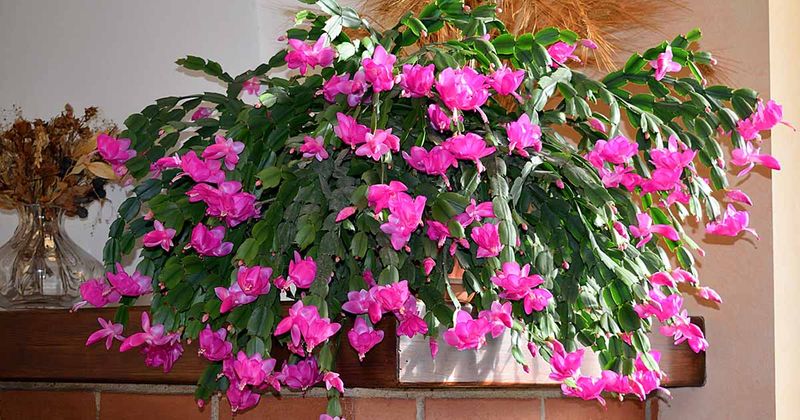
Your holiday cactus sat in the window all year, looked perfectly healthy, and then refused to produce a single bud come December. You are not alone, and the plant is probably not broken.
For many holiday cacti, whether they bloom or not comes down to what happens in fall, weeks before any flower bud is visible. Understanding that window, and what you can do during it, gives you the best realistic shot at a blooming plant this winter.
The fall window helps determine when buds begin
Expecting a quick December fix when your holiday cactus has produced no buds is understandable, but the biology does not work that way. Flower buds on these plants do not appear overnight.
University of Connecticut Extension guidance notes that four to eight weeks of fall treatment may be needed before buds become visible, which means the preparation window opens well before December arrives.
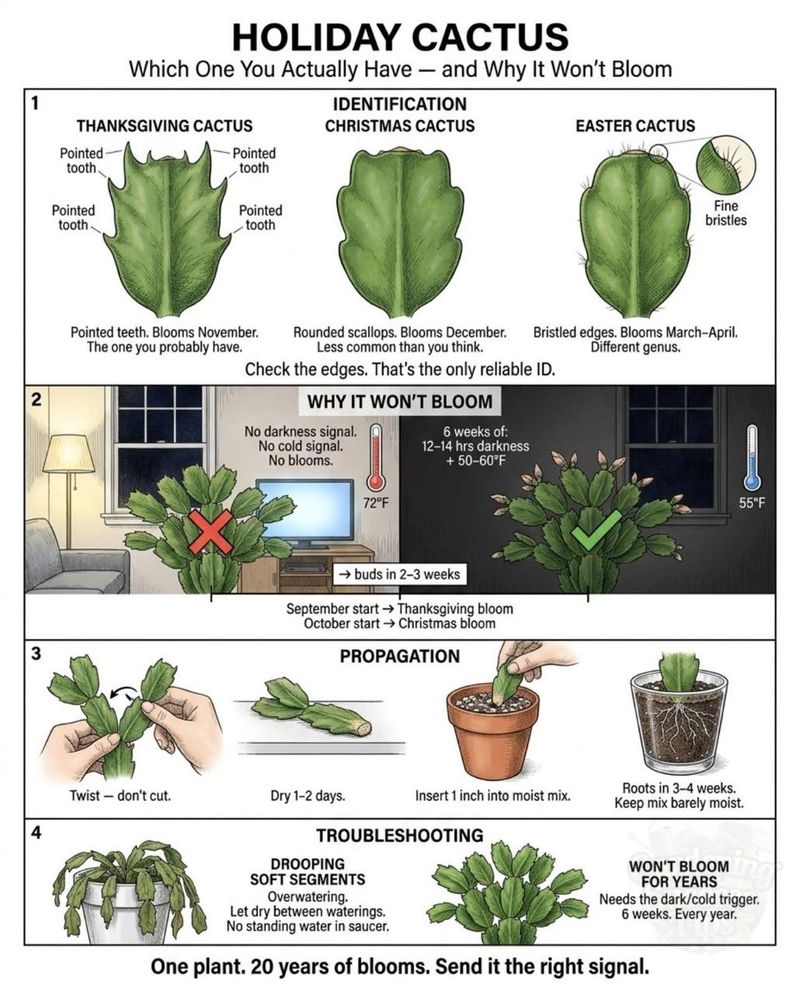
Common starting points vary by plant type. Thanksgiving cactus is often started around September 1, while true Christmas cactus is more commonly started around October 1.
Those are approximate examples, not fixed deadlines, and cultivar differences, plant health, and local conditions all shift the timing.
Here is a detail that trips up a lot of plant owners: many plants sold at garden centers under the label “Christmas cactus” are actually Thanksgiving cacti or hybrids between the two. Iowa State University Extension explains that Thanksgiving cactus typically blooms earlier, often around November, while true Christmas cactus generally blooms later in the season.
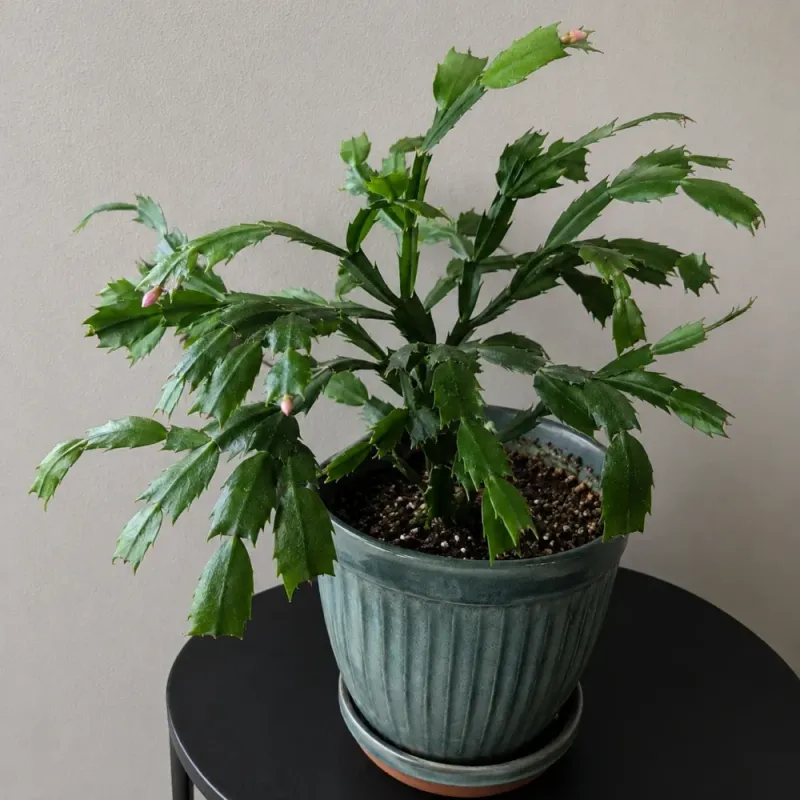
Stem shape offers a useful clue. Thanksgiving cactus has pointed, claw-like projections along the edges of each stem segment, while true Christmas cactus has smoother, rounded or scalloped margins.
NC State Extension notes that hybrids can show features somewhere between the two, so the identification is not always clean.
A plant that blooms in November is not failing. It may simply be a Thanksgiving cactus doing exactly what it is supposed to do.
Knowing which plant you have helps you set realistic expectations and time your fall routine more accurately.
Long, uninterrupted nights can help initiate flowers
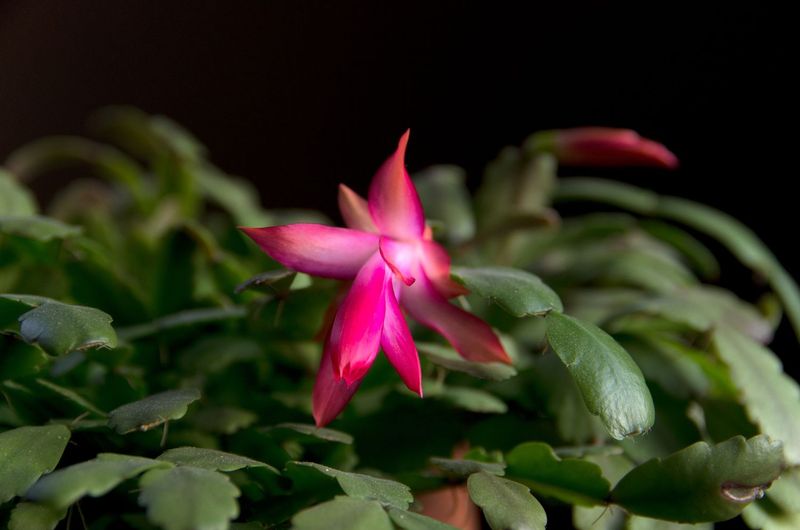
Many Schlumbergera cultivars respond to the length of the night, not the length of the day. When fall nights grow long enough and remain uninterrupted, they can signal the plant to shift from producing stems to forming flower buds.
Iowa State University Extension describes this photoperiod response and notes that some cultivars can also flower in response to cool temperatures, even without strict darkness treatment.
A practical starting target for most home growers is roughly 12 to 14 hours of complete darkness each night for about four to six weeks. That said, recommendations across extension sources and cultivars range wider.
Some sources or specific cultivars may call for approximately 14 to 16 hours of darkness, and treatment periods can extend to eight weeks depending on the plant and conditions. Treating 12 to 14 hours and four to six weeks as a starting point rather than a universal rule gives you flexibility to adjust.
Complete darkness means exactly that. A generally dim room, a lamp left on across the hallway, light from a kitchen, or brightness coming through a nearby window can all interrupt the required night period.
NC State Extension confirms that artificial light during the dark period can disrupt bud initiation, so the distinction between “dim” and “dark” matters in practice.
Temperature adds another layer. Some cultivars can flower when held around 55 degrees Fahrenheit in fall regardless of day length, which means darkness is not biologically required for every plant on the market.
Still, controlling the nightly dark period is the simplest variable most home growers can adjust without specialized equipment, so it is a reasonable first step to try.
Build a dependable dark-night routine at home
Two methods work reliably for most home setups. The first is to find a room that gets bright light during the day but becomes genuinely dark after sundown without any artificial light turned on.
A spare bedroom with no nightstand lamp, a sunroom that goes fully dark, or a similar space can work well if it stays consistently dark for the full nightly interval.
The second method is to move the plant to a dark closet each evening and return it to a bright spot every morning. UF/IFAS Extension Bay County describes this closet approach as a practical way to deliver the required dark period at home.
The key is that the darkness must be continuous throughout the nightly interval, not just occasional or partial.
Consistency across the entire treatment window matters more than perfection on any single night. Pick a schedule you can actually stick to, whether that means moving the plant at the same time each evening or simply choosing a room that handles the darkness passively.
University of Connecticut Extension emphasizes that a reliable routine throughout the treatment period supports bud formation better than an inconsistent one.
One approach to avoid is covering the plant with a sealed bag, box, or other improvised cover that traps heat or restricts airflow. A cover that overheats the plant, damages stems, or makes it easy to forget routine watering creates more problems than it solves.
Closet placement or a naturally dark room sidesteps those risks without requiring any special materials. After the nightly dark period ends, return the plant to a spot with bright, indirect light so it can continue photosynthesizing during the day.
Cool fall temperatures also affect flowering
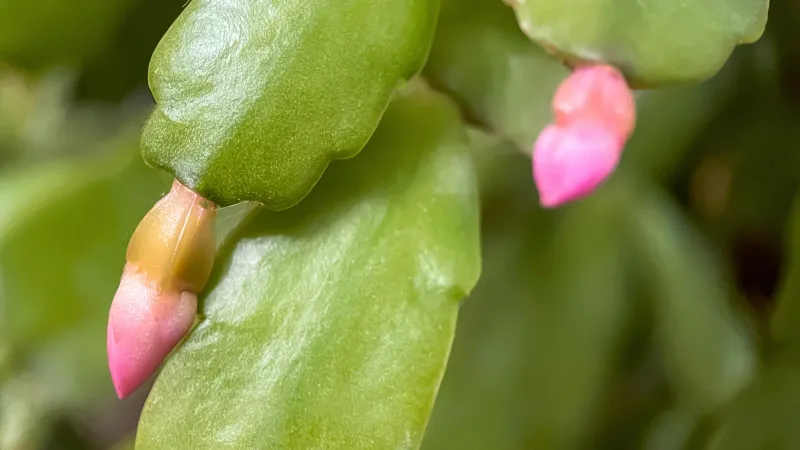
Darkness alone does not tell the whole story. Temperature is a separate and sometimes partly substituting factor that affects whether a holiday cactus forms buds in fall.
Treating it as an afterthought can undermine an otherwise solid dark-night routine.
A practical cool-night range from extension guidance is approximately 55 to 65 degrees Fahrenheit, with somewhat warmer temperatures during the day. Iowa State University Extension notes that some cultivars may flower when held around 55 degrees Fahrenheit in fall regardless of day length, which makes temperature a complement to darkness rather than simply a background condition that strengthens it.
Warmth above roughly 70 degrees Fahrenheit can inhibit flowering in some conditions, so a plant sitting near a heating vent or in a consistently warm interior room may struggle to set buds even if the dark-night routine is on track. On the other end, temperatures below about 50 degrees Fahrenheit can damage the plant or contribute to bud drop.
NC State Extension places these limits in the context of overall Schlumbergera care.
“Cooler” does not mean “as cold as possible.” The goal is a stable, moderately cool environment, not a dramatic temperature drop. A spot near a drafty window, an exterior door, or an air conditioning vent can swing temperatures in ways that stress the plant rather than helping it.
Choose a location where the temperature stays reasonably steady within that cool-but-safe range throughout the treatment window.
Sudden temperature shifts are among the most common reasons buds drop after they form, so stability matters as much as the actual number on the thermometer.
Steady moisture and placement protect developing buds
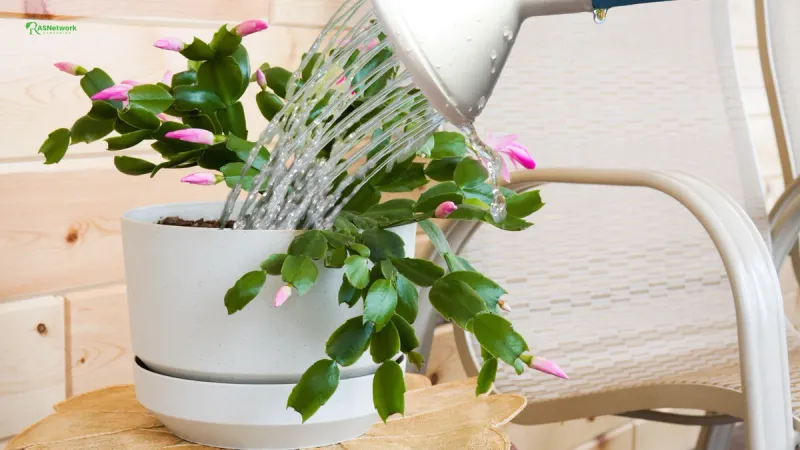
Holiday cacti are tropical or epiphytic plants, not desert cacti. They come from humid, subtropical environments and need consistent moisture and good drainage, not the bone-dry conditions that suit a saguaro.
Stopping water entirely to force flowers is not only unnecessary but can actively harm bud formation.
NC State Extension describes Schlumbergera as preferring well-drained soil with appropriate moisture rather than prolonged dryness. Water thoroughly when the top of the soil feels dry, then let all excess water drain completely before the pot sits in any standing water.
Swinging between severe drought and heavy soaking puts stress on the plant at exactly the wrong time.
Waterlogged soil creates a different problem. University of Minnesota Extension connects poor drainage and overwatering with root rot, which can cause wilting, weak growth, and poor flowering even when everything else in the care routine looks fine.
A pot with drainage holes and a well-draining mix is not optional.
Placement matters just as much as watering during the bud-formation period. Moving the plant from spot to spot, exposing it to drafts from open doors, placing it near heating vents, or making abrupt light changes are all associated with premature bud drop, according to University of Connecticut Extension.
Pick a stable location and leave the plant there.
Fertilizer is worth a brief mention, though extension recommendations are not uniform. University of Georgia Cooperative Extension and other sources generally suggest avoiding heavy feeding once buds are forming.
Fertilizer is not the primary trigger for flowering, and pushing growth with heavy nutrition at the wrong time can work against the process rather than helping it.
After buds form, protect them instead of chasing a date
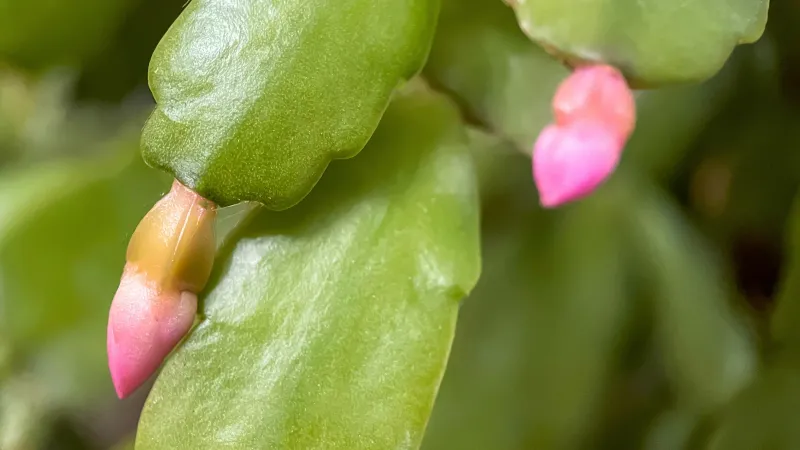
Once flower buds are visible on the stem tips, the care priority shifts. Illinois Extension states that day and night length no longer affect flowering once buds are set, so continuing to move the plant in and out of a dark closet serves no purpose at that stage.
The job now is to keep the plant stable and protect what it has already started building.
Bud drop in the final weeks before bloom is one of the most frustrating outcomes for plant owners. Environmental stress is the most common explanation: sudden temperature changes, a blast of cold air from an opening door, dry heat from a vent, a move to a new spot, or a sharp swing in watering can all cause buds to fall before they open.
Not every case of bud drop has a single identifiable cause, but removing obvious stressors gives the buds the best chance of surviving to bloom.
Realistic expectations also matter here. UF/IFAS Extension Bay County notes that commercial growers manipulate light and temperature to make plants bloom precisely for retail holidays, so the date a store-bought plant flowered at the nursery does not reliably predict when it will bloom on your windowsill at home.
Species, hybrid status, cultivar characteristics, and the forcing history from the grower all affect bloom timing. A plant that opens its flowers before Christmas or a few weeks after is not defective.
Iowa State University Extension reinforces that many plants sold as Christmas cactus are Thanksgiving cacti or hybrids, so earlier-than-expected blooming often reflects plant identity rather than a care failure.
Use long fall nights as a helpful starting point
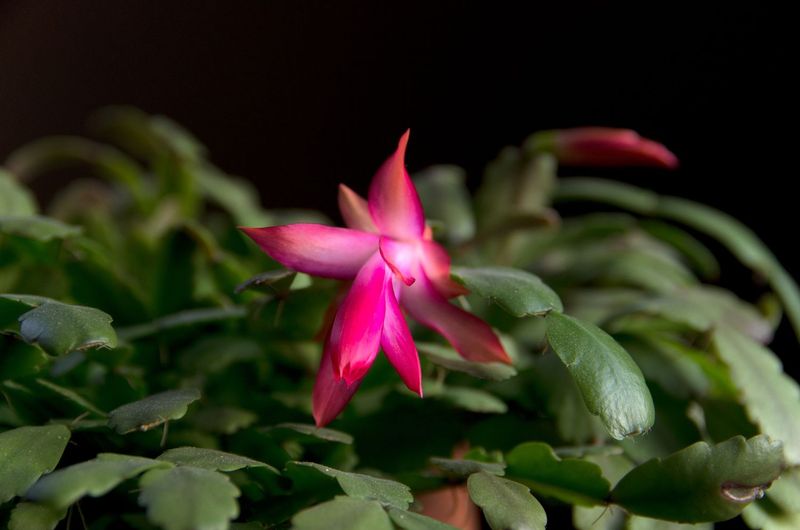
Putting this all together comes down to a simple sequence rather than a promise. Start by identifying your plant as accurately as you can using stem shape as a guide, then begin the fall routine during the appropriate window – roughly September for Thanksgiving cactus and October for Christmas cactus, adjusted for your specific plant and conditions.
Give the plant bright daytime light and a reliable nightly dark period of roughly 12 to 14 hours for several weeks. Keep in mind that some cultivars or sources call for up to 14 to 16 hours and four to eight weeks, so treat the shorter range as a starting point and extend it if buds have not begun to appear.
Iowa State University Extension and University of Connecticut Extension both support this range as a practical framework for home growers.
Safe, cool fall temperatures and steady moisture matter alongside darkness. None of these factors works in isolation, and no single routine can guarantee that every cultivar blooms on a specific date.
Once buds appear, shift your focus entirely to stable conditions rather than continuing to adjust the schedule. A plant that blooms in late November or early January is still a success – the routine can encourage flowering, and that is a realistic and worthwhile goal.