
If Your Climbing Roses Grow Long Canes But Barely Bloom, Here Are 13 Easy Rescues That Bring The Flowers Back
Your climbing rose shot up tall canes all spring, yet you can count the flowers on one hand. That lopsided look usually means the plant is putting its energy into growing, not blooming.
The good news is that most causes are simple to spot and easy to fix without buying much. Here are 13 rescues that can help your climber trade bare canes for a wall of roses.
1. Bend the Canes Sideways
Picture sap as water flowing uphill. When a climbing rose cane points straight at the sky, nearly all that energy rushes to the tip, so you get a few flowers way up top and bare stems below.
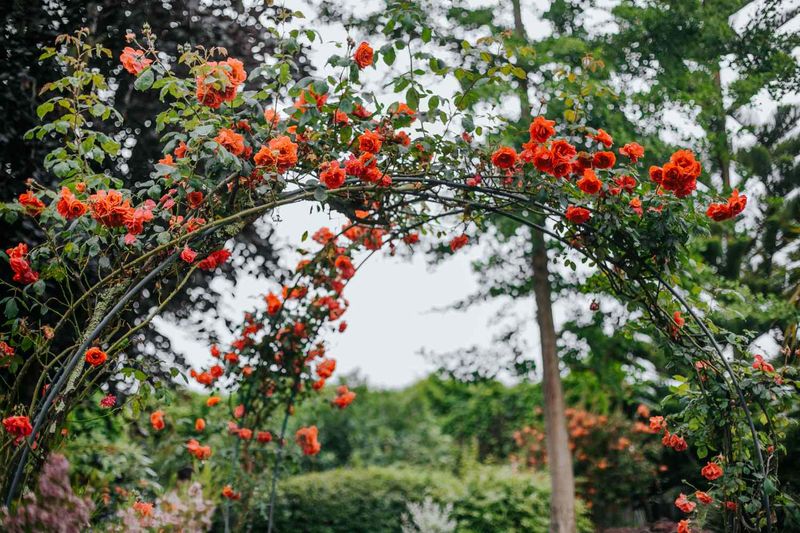
Gardeners call this apical dominance, and bending is the cure. Gently guide your main canes to a 45 to 90 degree angle along a fence, trellis, or wires.
Almost every bud along the cane then wakes up and sends out a short side shoot, and those side shoots are where the flowers form.
Work slowly with young, flexible canes, ideally in spring or fall when they bend easily. Fan them out like the ribs of an umbrella instead of bunching them together.
This single change is often the biggest bloom booster on the whole list.
2. Tie Canes with Soft, Roomy Ties
Once you bend a cane, it needs to stay put. A gust of wind can snap it back upright, and all your careful training goes to waste.
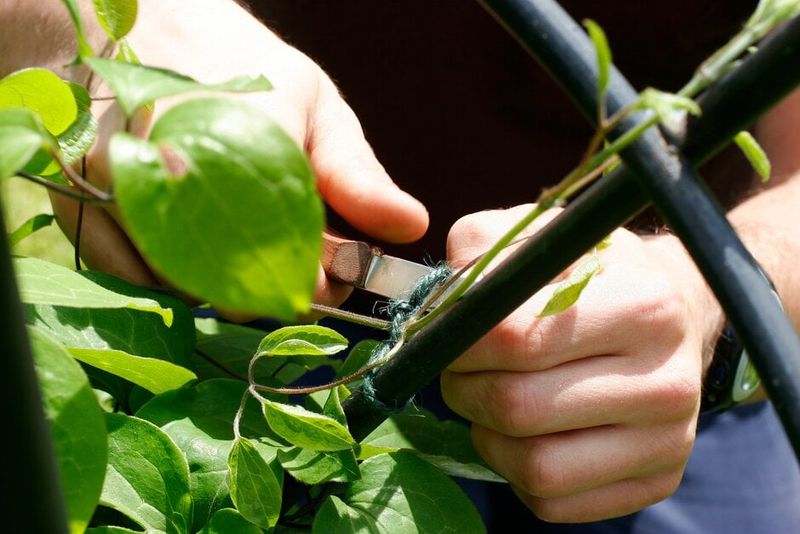
Reach for soft jute twine, garden string, or stretchy plant ties. Loop them in a loose figure eight so the cane sits snug but still has room to thicken over the season.
Wire and tight zip ties can cut into the bark and choke the flow of water to your future blooms.
Check your ties every month or two during summer. If one looks tight, snip it off and retie it a little looser.
It takes five minutes and keeps the whole framework healthy.
3. Prune at the Right Time for Your Rose
More than a few gardeners have given their climbers a tidy haircut in late winter, only to wonder why no flowers showed up. The culprit was the calendar, not the plant.
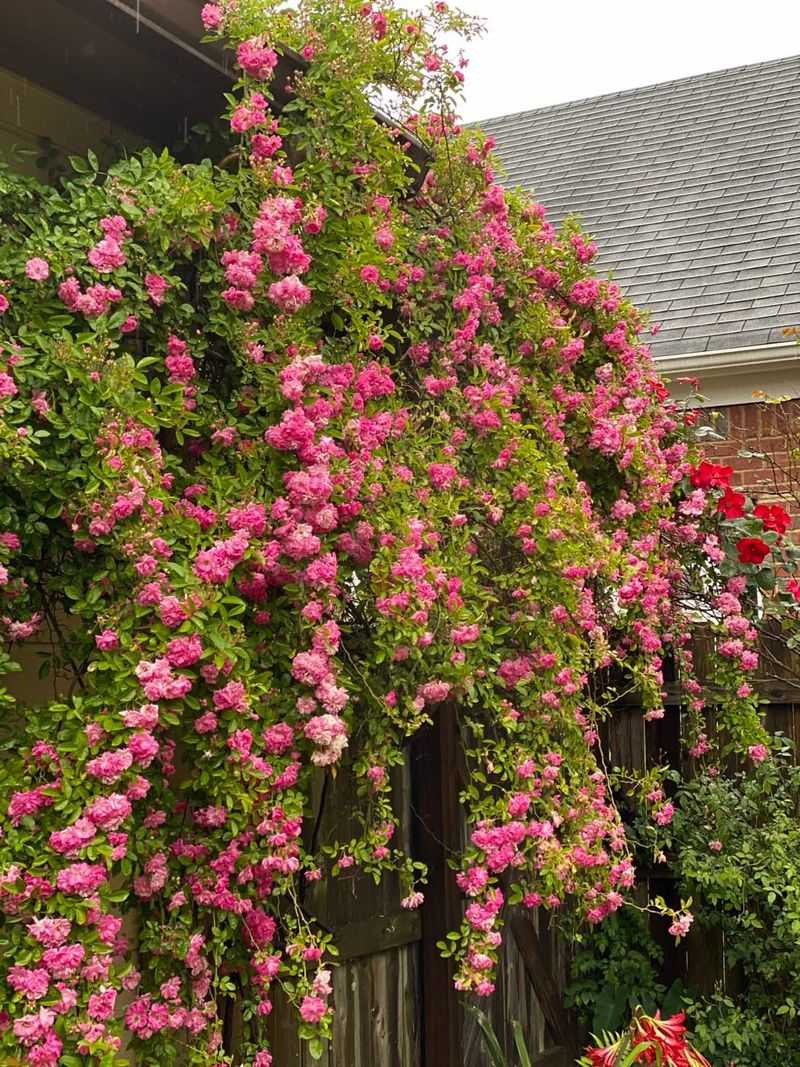
Many climbing roses bloom on older wood. If your rose flowers just once a year, prune right after that bloom fades in early summer.
Cutting it in winter removes the very stems that would have flowered.
Repeat-blooming climbers are more forgiving. Trim them in late winter, roughly December through February depending on your zone, before new growth starts.
Cut flowered side shoots back by about two-thirds and leave the long main canes mostly alone.
4. Find Out Whether It Blooms Once or Repeats

Sometimes a rose is not broken at all. It is simply doing exactly what it was bred to do.
Some climbers, especially older ramblers, put on one huge show in late spring or early summer and then rest. If you expected flowers all season, that quiet stretch can feel like failure.
Check your plant tag, receipt, or the nursery website to learn which type you own.
Fun fact: many repeat-blooming roses owe that trait to China roses brought to Europe in the late 1700s. Knowing your rose’s family tree sets fair expectations and tells you when to prune.
5. Give It Six or More Hours of Sun

Roses are sun worshippers, plain and simple. Flowers take a lot of fuel, and sunlight is how the plant makes it.
Most climbing roses need at least six hours of direct sun a day to bloom well. With less, the plant focuses on stretching and making leaves, which explains those long, reaching canes.
Spend one day checking your rose each hour and note when shade creeps in.
Morning sun is ideal because it dries dew fast and is gentler than harsh afternoon heat. If your spot is too shady, moving a younger climber in fall or early spring can make a world of difference.
6. Clear Away Shade Stealers
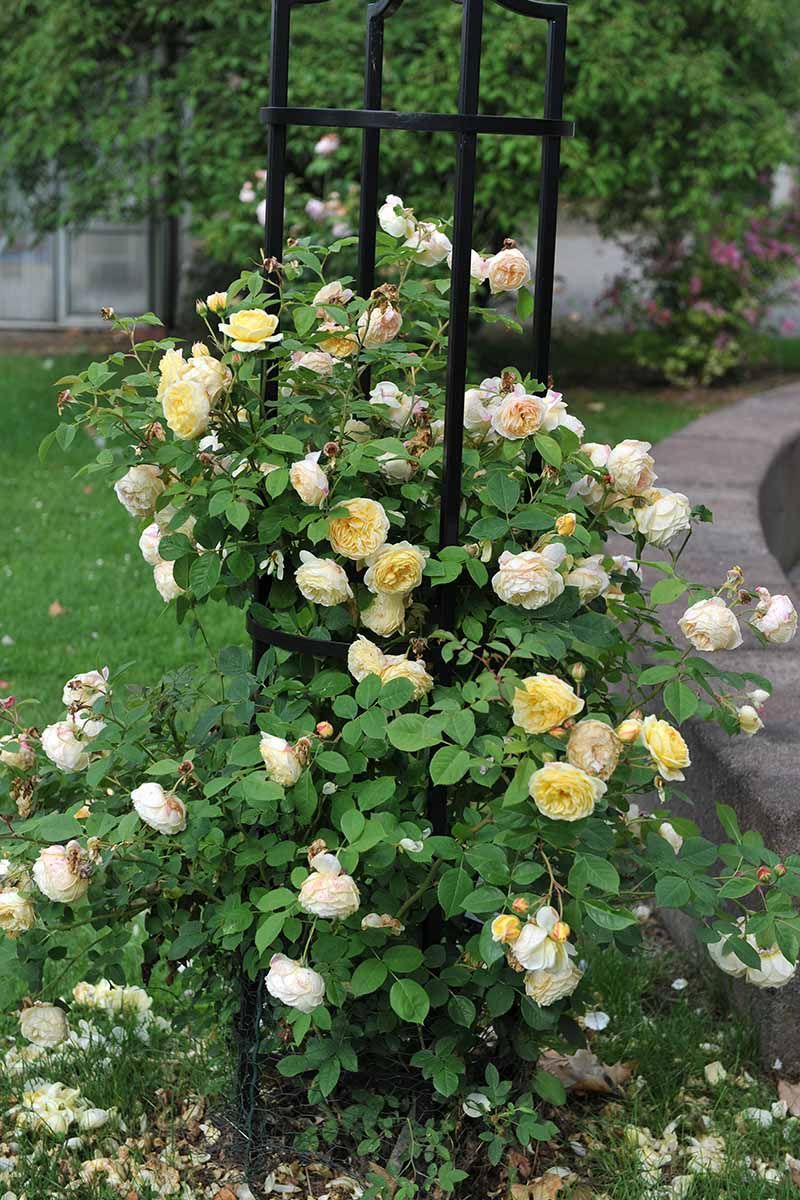
Trees grow. Shrubs fill out.
A spot that got blazing sun five years ago might now sit under a maple canopy without you noticing.
Look up and around your rose. Trim low tree limbs, cut back pushy shrubs, and give the climber some elbow room.
Even an extra hour or two of light can nudge a sulky rose back into flowering.
Opening the area also improves airflow, which helps leaves stay dry and healthier. That is two wins from one afternoon with the loppers.
7. Cut Back on High-Nitrogen Fertilizer
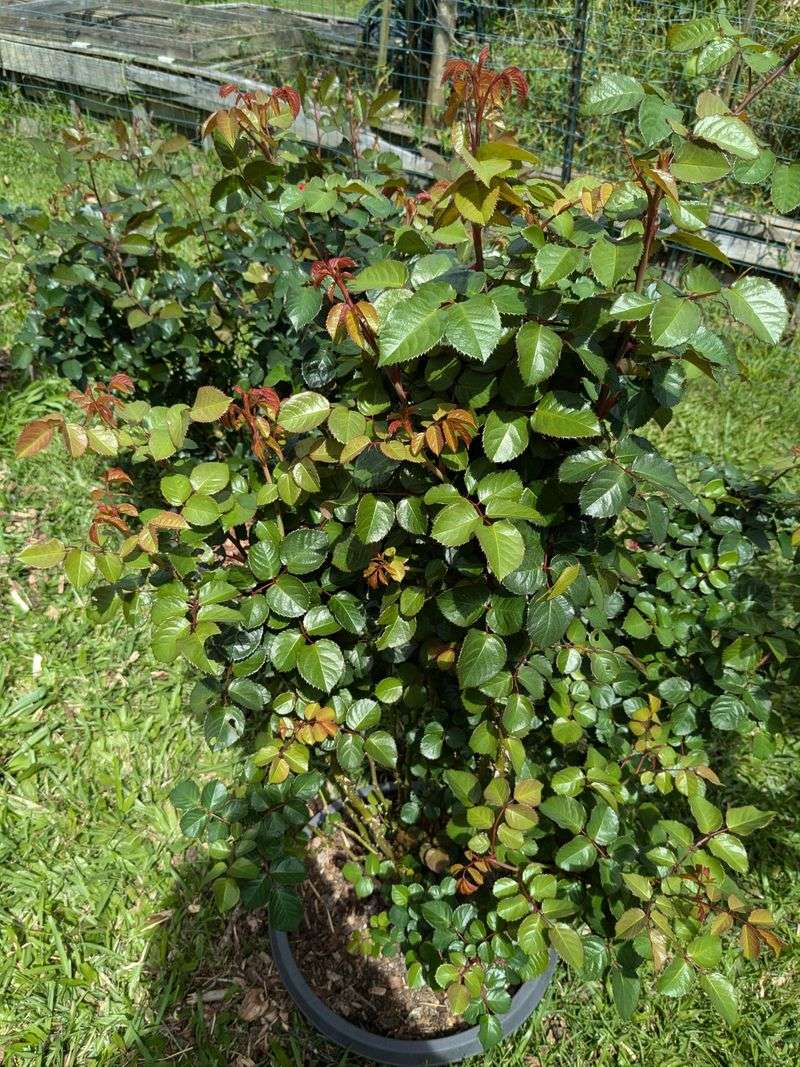
Lush, dark green leaves and thick canes might look like success. With roses, though, that jungle of foliage often means too much nitrogen.
Nitrogen feeds leaves and stems, while phosphorus supports blooms. Lawn fertilizer drifting onto the bed is a sneaky source, so keep that spreader away from your roses.
Switch to a rose food with a little more phosphorus, feed in early spring, and again after each bloom flush.
Stop high-nitrogen feeding around mid-August. Late feeding pushes soft growth that winter cold can easily damage.
Some gardeners also like alfalfa meal as a gentle organic boost that may encourage stronger growth and blooms.
8. Water Deep at the Roots

A quick sprinkle from the hose feels helpful. Sadly, it mostly wets the surface and the leaves, not the deep roots that matter.
Aim for 1 to 2 inches of water per week, counting rain. Mature climbers may drink up to about 4 gallons a week in hot summer weather.
Water slowly at the base with a soaker hose or a slow trickle so it sinks deep.
Before watering, poke a finger an inch or two into the soil. Dry means water, damp means wait.
Soggy ground stresses roses just like drought does.
9. Switch to Morning Watering
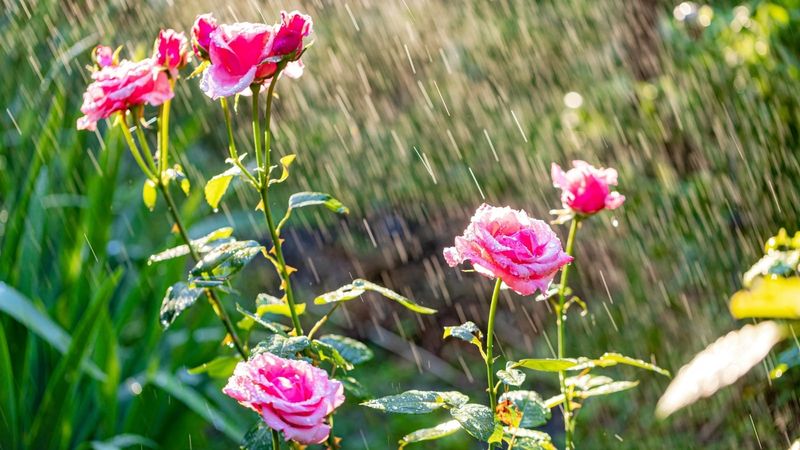
Timing matters as much as amount. Water splashed on leaves at night sits there for hours, and fungi love that damp darkness.
Black spot and powdery mildew can strip leaves, and a rose losing its leaves has less energy for flowers. Water early in the morning so any splashes dry quickly in the sun.
Keep the spray low and aim at the soil, not the foliage.
It is a tiny habit shift that costs nothing. Over a summer, healthier leaves usually mean more buds.
10. Deadhead Faded Flowers
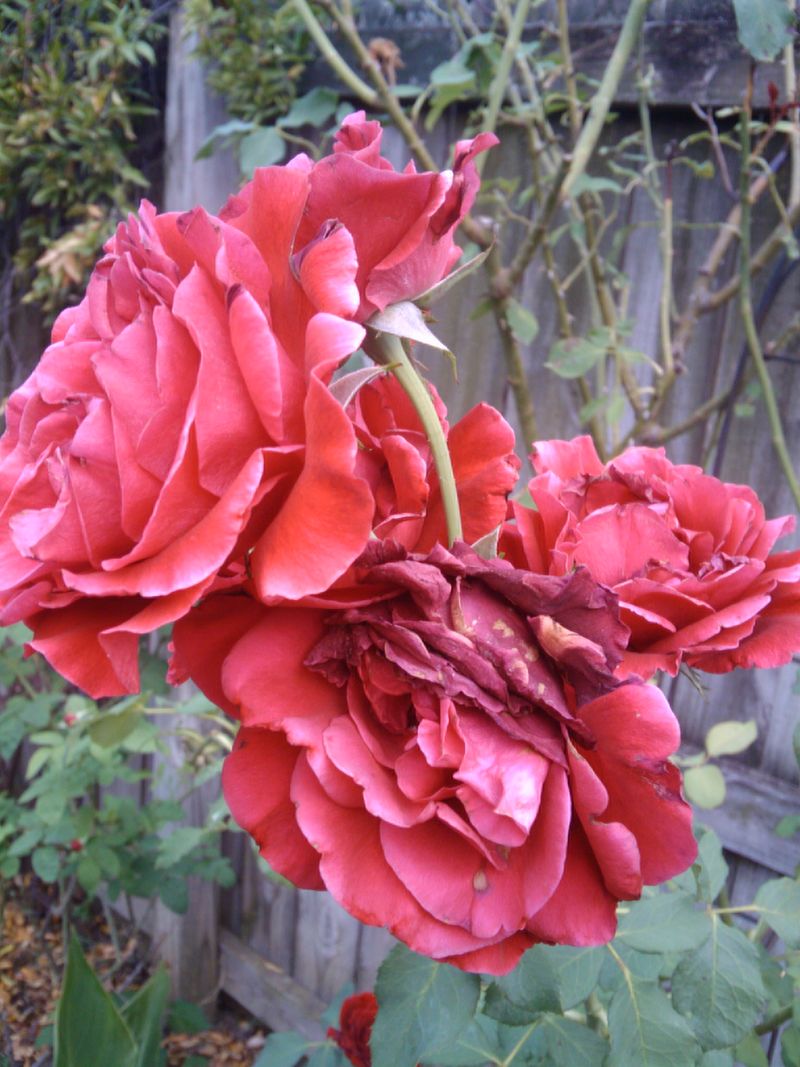
Once a rose sets seed hips, it may figure its job is done for the year. Deadheading tricks repeat bloomers into trying again.
Snip off spent flowers as they fade. Cut the stem back to an outward-facing bud just above a leaf with five or seven leaflets.
That is where a strong new flowering shoot is most likely to appear.
Skip this for once-blooming types if you enjoy their colorful fall hips. For repeaters, a weekly stroll with pruners can keep fresh flushes coming into fall.
11. Thin Out Weak and Crowded Canes
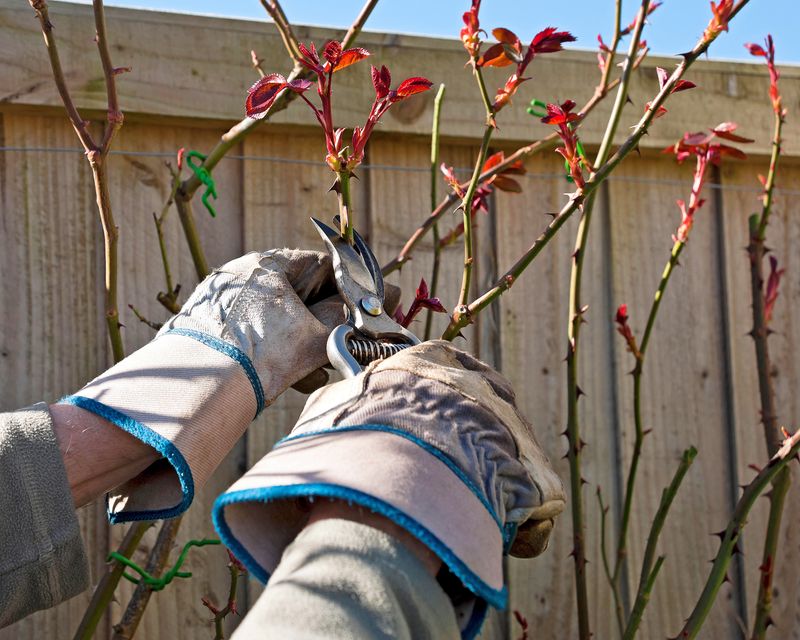
Too many canes is like too many cooks. Energy gets spread thin, and nobody makes dinner.
Remove dead, damaged, and pencil-thin stems during your regular pruning. On an old, tangled climber, take out one or two of the oldest woody canes at the base each year to make room for vigorous new ones.
Keep a handful of strong main canes spaced apart.
Better spacing lets sun reach more buds and lets air move through. The plant rewards you with fewer stems but far more flowers.
12. Test Your Soil pH
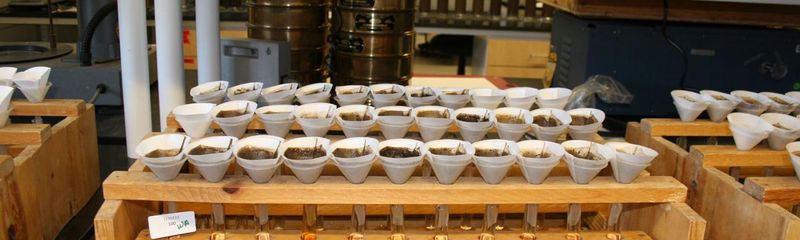
You can feed a rose perfectly and still see poor blooms if the soil is locking nutrients away. pH is often the hidden reason.
Roses prefer slightly acidic soil, around 6.0 to 6.5. Outside that range, roots struggle to absorb nutrients that are already in the ground.
A simple test from your local extension office costs little and tells you both pH and nutrient levels.
Follow the test’s recommendations for amendments rather than guessing. Changes take time, so test once and adjust gradually.
13. Remove Rootstock Suckers and Check for Pests
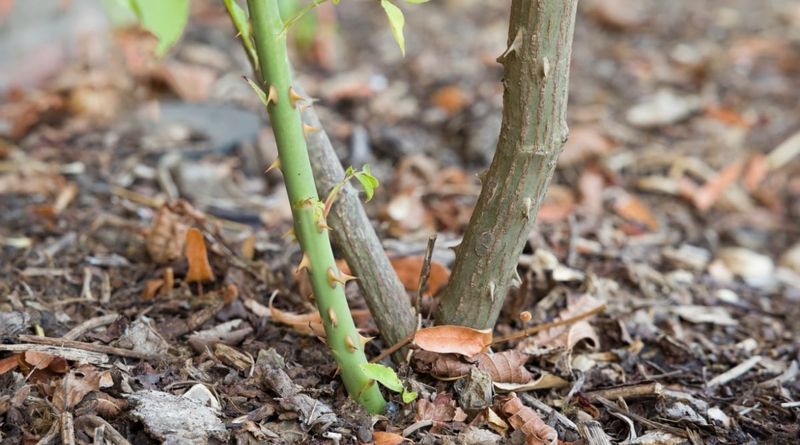
Here is a sneaky one. Many climbers are grafted onto tough rootstock, and if the top part suffers in a hard winter, that rootstock can take over with long, vigorous canes that rarely bloom.
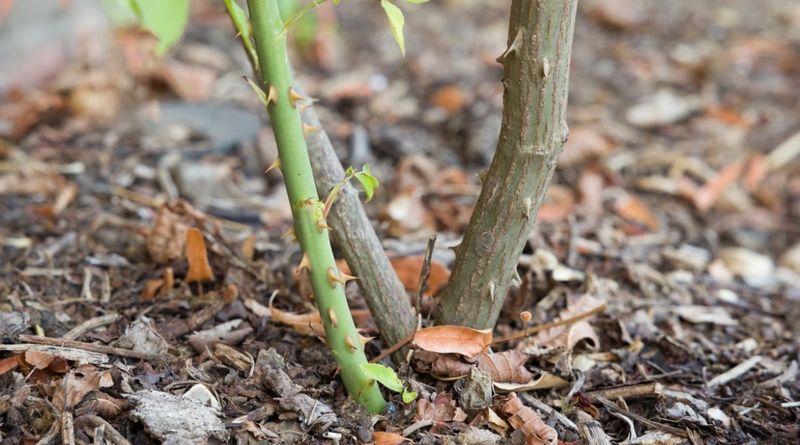
Look at the knobby graft union near the soil. Shoots coming from below it, often with different-looking leaves, are suckers.
Dig down and tear them off at the source, since cutting at ground level invites regrowth.
While you are down there, check leaves for aphids, scale, and disease spots. A strong spray of water can knock off aphids, and insecticidal soap may help with heavier outbreaks.
And if your rose is newly planted, give it two to three years to settle in before judging its blooms.