
If Your Hydrangea Flowers Are Browning Before Their Time, Here Are 8 Reasons They’re Fading (And The Fix For Each)
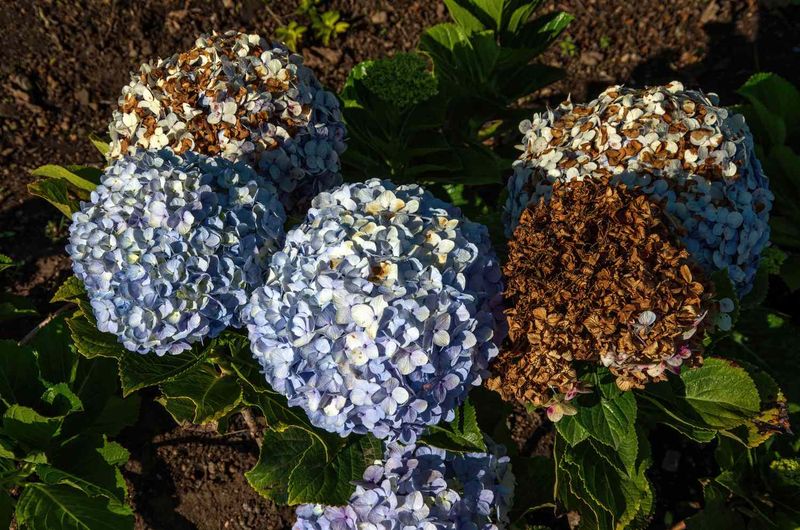
Nothing stings quite like watching your hydrangea blooms turn crispy and brown when they should still be showing off. The good news is that early browning usually points to a fixable problem, not a doomed plant.
Most of the time your hydrangea is just stressed and trying to tell you something. Here are eight common reasons those flowers are fading fast, plus a simple fix for each one you can try today.
1. Not Enough Water (Drought Stress)
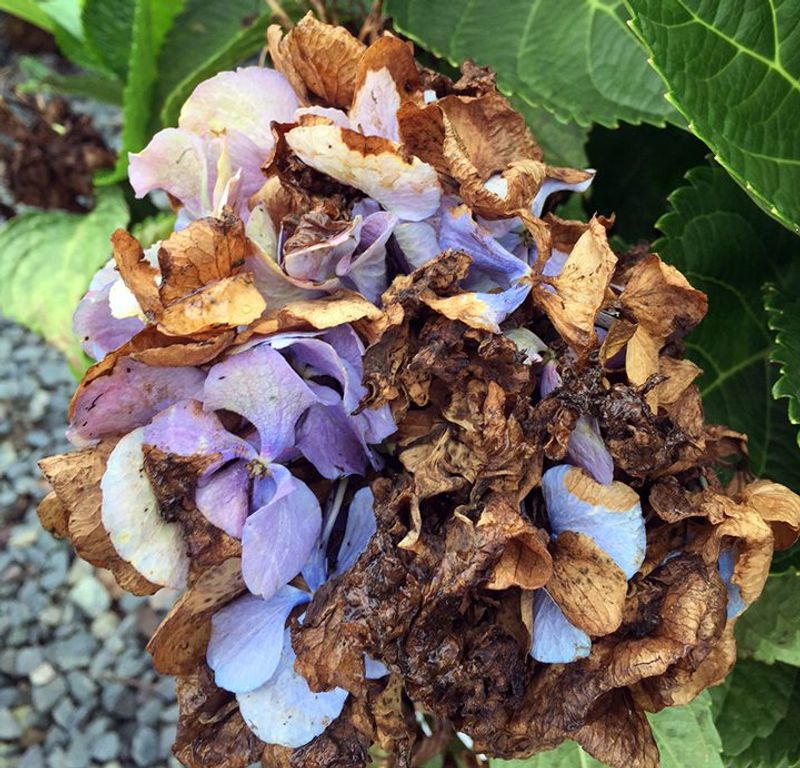
Hydrangeas practically drink like they are always thirsty, and skimping on water is the number one reason blooms crisp up early. During a hot stretch, a plant that goes dry will droop first, then the flower edges and leaf tips turn brown and papery from the tips inward.
The name itself is a clue. “Hydra” means water, so these shrubs really do live up to their reputation for needing a steady drink.
The fix is consistency. Aim for about an inch of water per week, and more when temperatures spike.
Water deeply at the base so moisture actually reaches the roots, instead of giving light daily sprinkles that only dampen the surface and evaporate.
2. Too Much Sun (Heat Stress or Sun Scorch)
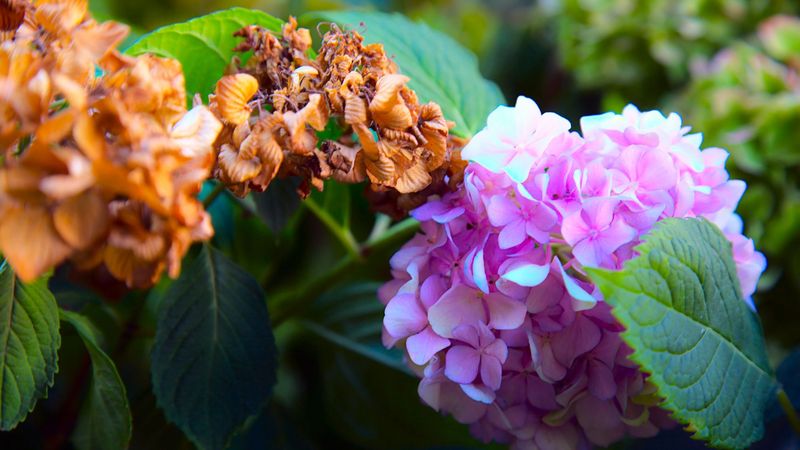
Picture the softest petals in your yard getting blasted by harsh afternoon sun for hours. Mopheads and lacecaps have delicate blooms that scorch fast when the midday and afternoon rays hit them, especially during a heatwave.
You will notice the color draining out of the flowers first, followed by crispy, browned edges that seem to appear almost overnight.
Give sensitive varieties some afternoon shade during the hottest part of the day. Potted hydrangeas can simply be moved to a cooler, shadier spot.
For plants in the ground, tuck them near taller companions that cast shade, or drape a temporary shade cloth over them until the heat breaks.
3. Too Much Water (Overwatering)
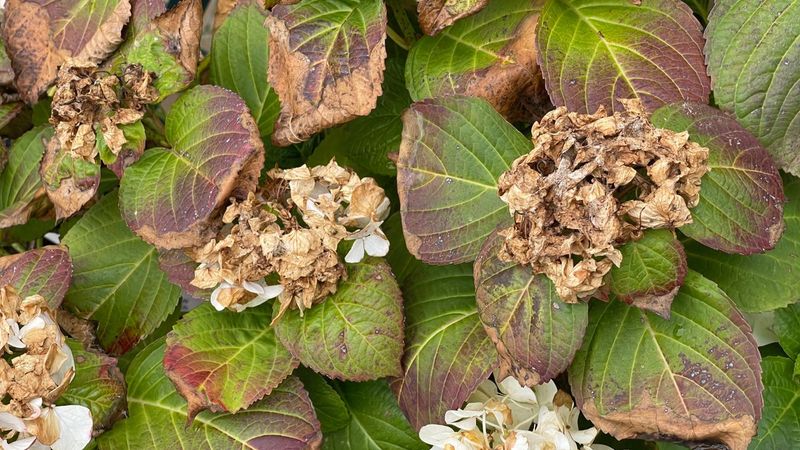
Yes, you can love your hydrangea a little too much with the hose. Even these water-lovers hate having their feet stuck in soggy, muddy soil around the clock.
When roots stay waterlogged, smaller flowers start browning while the leaves turn yellow and drop. Soil that feels like mud rather than a damp sponge is your biggest warning sign.
If you suspect this, stop watering right away and let the soil dry out before you reach for the hose again. Moist but not swampy is the target.
Poke a finger a couple inches into the soil each time, and only water when it feels dry down there.
4. Fertilizer Burn
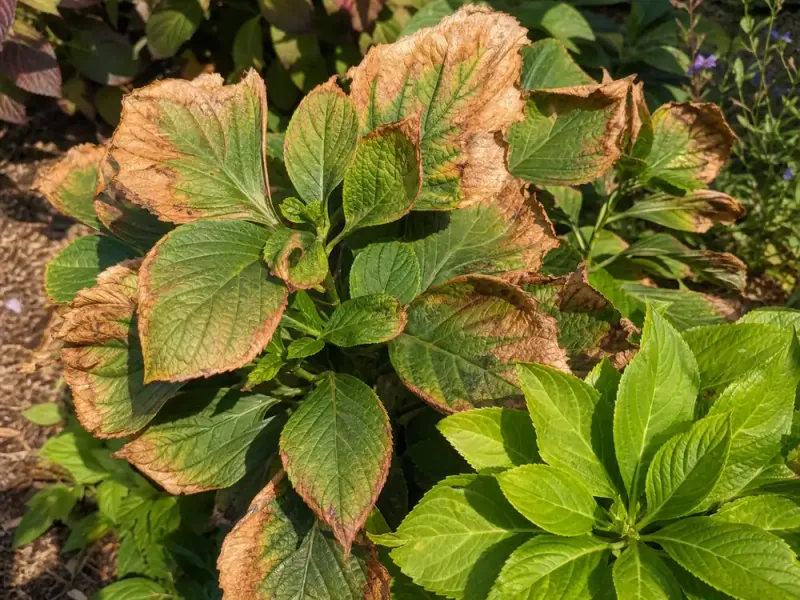
Sometimes trying to help your plant thrive can backfire in a hurry. Dumping too much synthetic fertilizer on the soil, especially when the roots are dry, causes a salt buildup that literally scorches leaf edges and browns the blooms.
The same thing can happen with too much aluminum sulfate, the stuff gardeners use to nudge flowers bluer. Applied heavily to a dry plant, it burns instead of beautifies.
To recover, flush the extra salts out by watering the plant deeply and slowly. Going forward, always soak your hydrangea before and after feeding it.
Stick with a balanced, slow-release fertilizer and follow the label, usually just once or twice across the whole growing season.
5. Water Splashing on Flowers
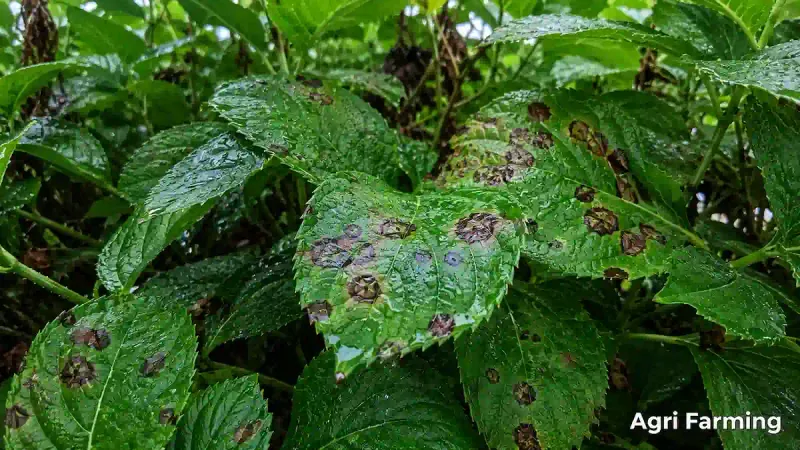
Here is a sneaky one that hides in plain sight during your watering routine. When you spray water right onto the leaves and blooms, you create a damp, cozy home for fungal troubles like leaf spot.
That fungus shows up as brown spots scattered across both the foliage and the flowers, spreading if the leaves stay wet.
Switch to watering at the base with a watering wand or soaker hose so the flowers and leaves stay dry. Morning is the best time, since any stray splashes dry off quickly once the sun is up.
Snip away any already-infected leaves to keep the fungus from hopping to the rest of the plant.
6. Pest Infestation
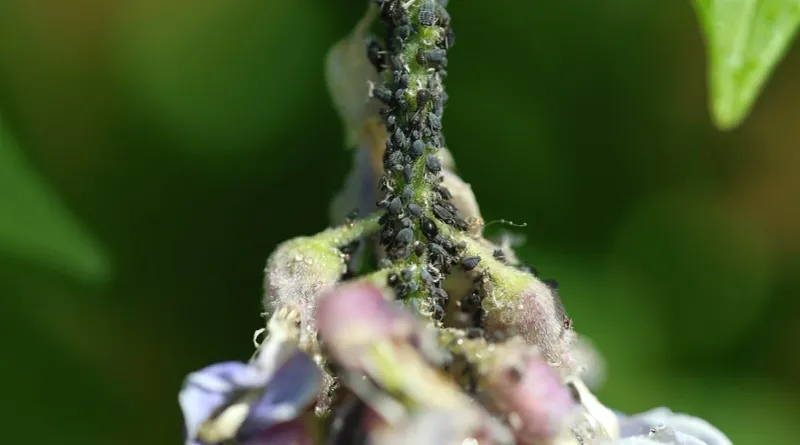
Tiny troublemakers can be draining your hydrangea while you barely notice. Aphids and spider mites sip the sap and nutrients right out of the plant, leaving it weak, wilted, and prone to premature browning on both flowers and leaves.
Look closely and you might spot sticky residue left behind by aphids, or fine webbing that gives spider mites away. Regular check-ups catch these guys before they multiply.
A firm blast from the garden hose knocks most aphids loose. For a stubborn colony that keeps coming back, an insecticidal soap or a neem oil spray can help bring the population under control without harsh chemicals.
7. Natural Fading (End of Season)
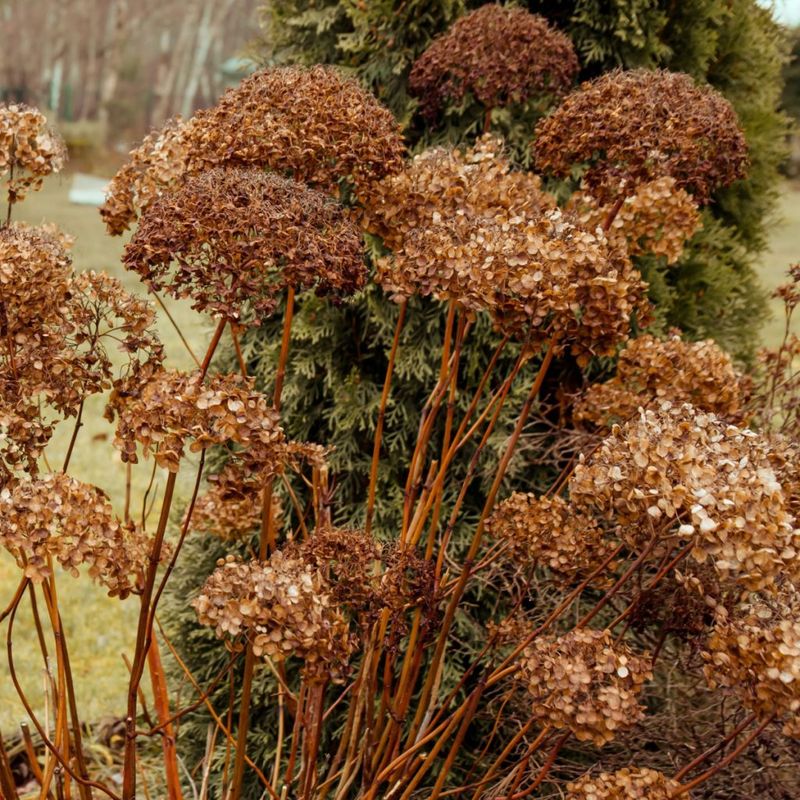
Before you panic, know that some browning is just your hydrangea growing up. As the flowers mature, they naturally shift from bright, showy colors into softer greens, burgundies, and antique rose tones.
By late summer and into fall, this drying and browning is simply the plant winding down its blooming season. It is a normal part of the life cycle, not a cry for help.
Nothing needs fixing here, though you can deadhead the spent brown blooms if you want a tidier look. For reblooming varieties, clipping just below where the browned flower meets the stem can sometimes coax out a fresh flush of blooms.
Many gardeners actually love these vintage-toned flowers for dried arrangements.
8. Cold Damage (Late Frost)
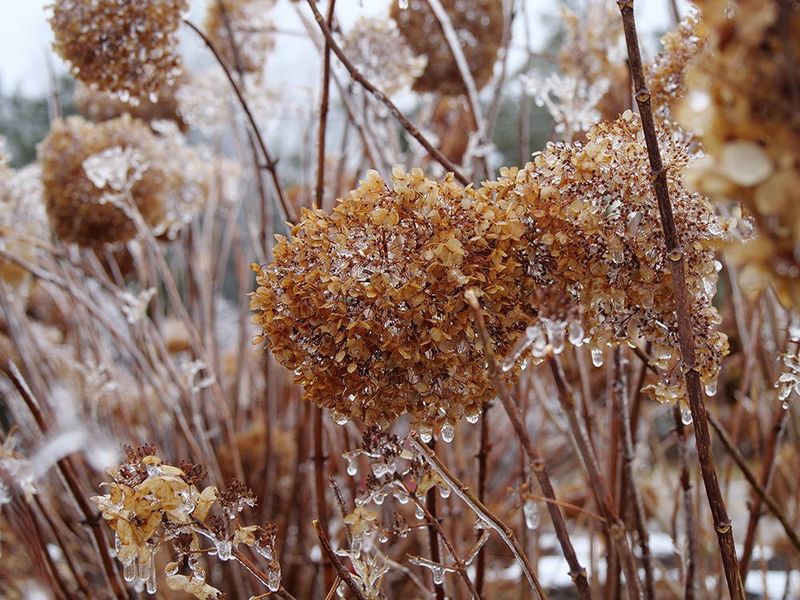
Spring can play cruel tricks just when your hydrangea is waking up. A surprise late frost, arriving after new growth and flower buds have emerged, can badly damage that tender fresh tissue.
The aftermath shows up as leaves, stems, or buds turning purple, red, black, or crispy brown, almost like they got singed overnight.
When a late frost is in the forecast, cover the new growth with breathable winter fleece or jute bags for the night. If damage has already happened, resist the urge to prune right away.
Wait until late spring when healthy new growth is clearly visible, then trim only the obviously dead or damaged wood back to a healthy bud or set of leaves.