
If Your Hydrangeas Bloom Weak And Sparse, Here’s Exactly When And How To Feed Them For Fuller Flowers
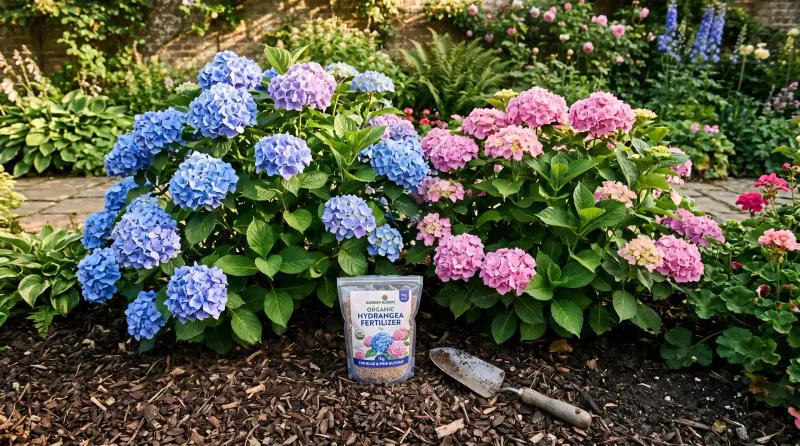
Walking out to your hydrangea and finding a handful of sad, small flower clusters instead of the full, lush display you expected is genuinely frustrating. The good news is that sparse blooming usually has a fixable cause, though fertilizer is only one possibility on a longer list.
Understanding what your specific plant actually needs, before reaching for a bag of fertilizer, is what separates a thriving shrub from one that keeps disappointing you season after season.
Sparse flowers do not automatically mean your hydrangea needs fertilizer
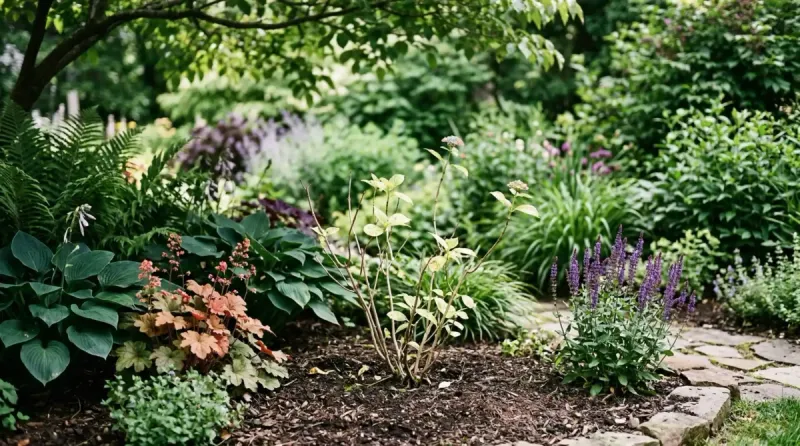
Walking up to a hydrangea with only a few limp flower clusters is easy to misread as a hunger problem. Low soil fertility can play a role in weak flowering, but Washington State University Extension’s hydrangea failure-to-bloom guide lists mistimed pruning, winter or late-frost damage, excessive shade, drought, and excessive nitrogen as the causes extension educators see far more often than nutrient deficiency.
Fertilizer is worth considering, but only after you have ruled out those more common problems.
One clue that actually points toward too much fertilizer rather than too little: unusually vigorous, dark-green stems and leaves paired with very few flowers. University of Maryland Extension explains that excess nitrogen redirects the plant’s energy into leafy growth at the expense of blooms.
If your hydrangea looks lush and healthy but barely flowers, adding more fertilizer could make the situation worse, not better.
Plant age matters, too. A hydrangea installed last season or the one before may simply be spending most of its resources on root development.
Sparse flowering during the first year or two in the ground is normal for many types and does not signal a deficiency that fertilizer can correct.
Iowa State University Extension reinforces this broader view, noting that flower failure in hydrangeas almost always traces back to conditions other than soil nutrition. The working rule, then, is to inspect the plant and its growing situation carefully before opening a bag of fertilizer.
Check pruning history, recent weather, light levels, soil moisture, and how long the plant has been in the ground. That inspection, not a reflexive feeding, is the right first move.
Use spring growth as a starting point, not a universal date
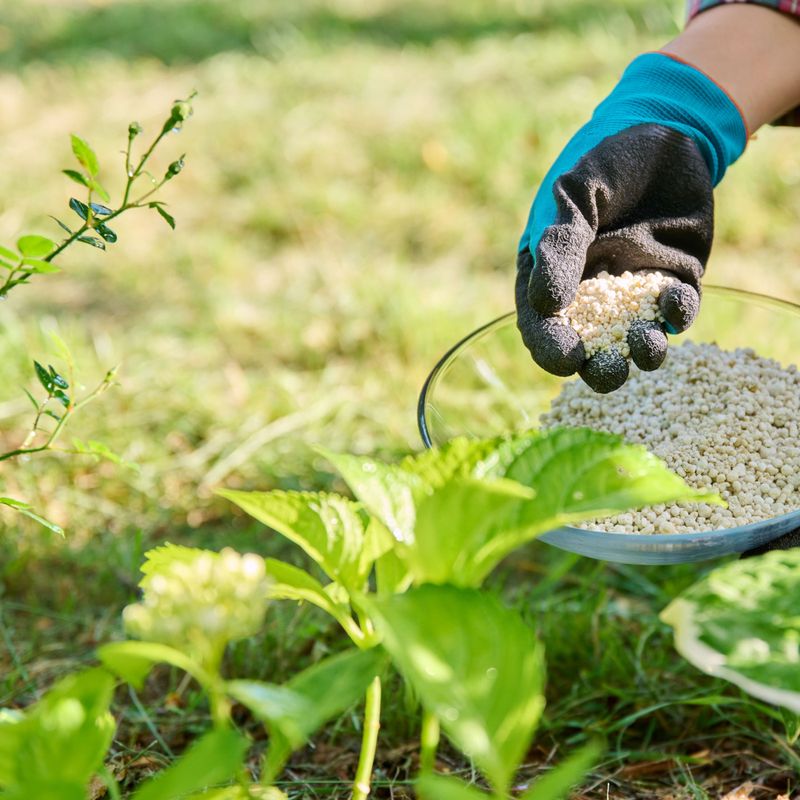
Fertilizer timing for hydrangeas does not follow one national calendar date, and any advice that claims otherwise oversimplifies a genuinely variable situation. A more defensible general guideline, supported by Virginia Cooperative Extension’s guidance on home shrubs and trees, is to apply fertilizer after active spring growth begins or around bud break, when roots are actively absorbing water and nutrients and shoots are expanding.
Feeding before the plant is actively growing offers little benefit and can leave fertilizer sitting in the soil where it may leach away or cause salt buildup.
Some established hydrangeas can handle a second light application in late spring or midsummer without harm. University of Connecticut Extension recommends a slow-release 5-10-10 formulation applied in late spring and again in midsummer, while advising gardeners to stop feeding after August 15.
That August cutoff is UConn’s region-specific guidance, not a universal rule, and your local cooperative extension office may suggest a slightly different end date based on your climate and the first expected frost in your area.
Hydrangea type shifts the timing picture further. Alabama Cooperative Extension outlines schedules that differ by species: bigleaf hydrangeas may receive several light applications through the growing season, panicle and oakleaf types may benefit from applications in April and June, and smooth hydrangeas may actually need one late-winter application rather than waiting for spring growth.
Those differences reflect real biological variation between types and regional growing conditions, and they illustrate why copying a neighbor’s feeding schedule without knowing your hydrangea’s species can lead to poor results.
Late-season feeding, especially with a high-nitrogen product, is worth avoiding regardless of type. Pushing tender new growth late in the year reduces the plant’s ability to harden off before winter, which can increase the risk of cold damage to stems and, in old-wood types, to the very buds that would have produced next season’s flowers.
When uncertain, follow the product label and your local extension recommendation rather than a generic online calendar.
Let testing inform the feeding decision
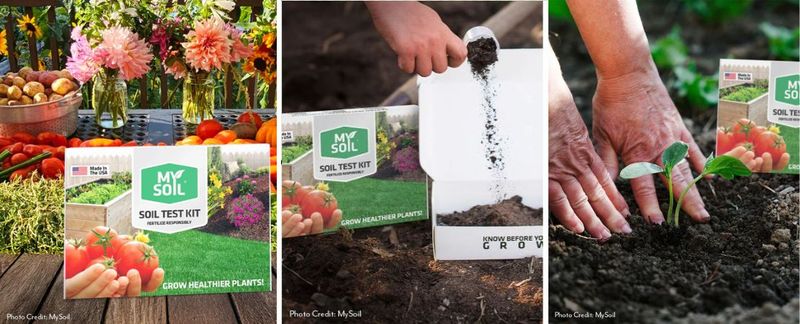
A soil test is the clearest way to find out whether low fertility is actually contributing to sparse flowering, because it can distinguish a genuine nutrient shortage from a soil pH problem that looks similar on the surface. UConn Extension recommends testing before adding fertilizer or attempting to adjust pH, pointing out that testing helps prevent unnecessary phosphorus or nitrogen applications that can accumulate in the soil, injure plants, or contribute to water runoff.
Most state cooperative extension offices process soil samples for a modest fee and return results with specific amendment recommendations for your region.
That said, a soil test cannot replace the broader plant assessment described in the previous section. Even a test showing adequate fertility does not explain sparse flowers if the real problem is old-wood buds killed by a late frost, a pruning cut made at the wrong time of year, or a planting location that gets only three hours of sun per day.
Think of testing as a valuable tool for one part of the diagnosis, not the whole answer.
Fertilizer timing and flower-color management are separate decisions, and mixing them up leads to product choices that do not actually address the problem at hand. Soil pH influences flower color mainly in bigleaf and mountain hydrangeas; smooth, panicle, and oakleaf types, along with most white-flowered cultivars, do not respond to pH shifts in the same way.
UMass Amherst Extension and Alabama Extension both caution that phosphorus-heavy bloom boosters are not a universal way to increase the number of flowers on any hydrangea. High phosphorus is tied to color manipulation in certain cultivars, not to reliably producing more blooms across all types, and excess phosphorus can build up in soil over time.
When feeding is justified by your diagnosis or by a local extension recommendation for your hydrangea type, a balanced or general-purpose fertilizer is a safer starting point than a specialized bloom formula. Extension recommendations across multiple states range from balanced products to lower-nitrogen formulations, and the right rate depends on plant size, soil fertility, product concentration, and type.
Follow the label rather than assuming more product equals more flowers.
Apply only the labeled amount across the root zone
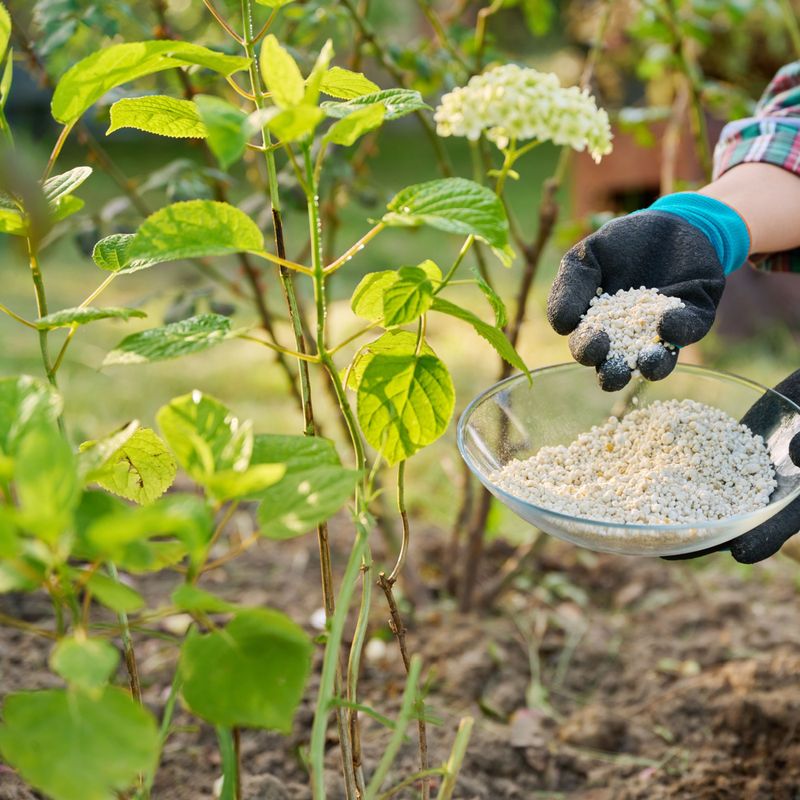
Even when fertilizer is the right call, how you apply it matters as much as what you choose. The product label is the authoritative guide for rate, placement, and watering requirements, and following it is not optional.
UMass Amherst Extension advises spreading granular fertilizer over the root-zone area rather than piling it against the stems, where concentrated salts can scorch bark and damage the crown of the plant. The root zone generally extends out to the drip line or beyond, so spreading the product in a wide band gives the roots the best chance to absorb it evenly.
Water is the other half of a safe application. NC State Extension’s fertilizing guide for trees and shrubs makes clear that fertilizer salts can injure roots when soil moisture is inadequate, and that plants cannot safely use nutrients without sufficient water moving through the root system.
If the label calls for watering in after application, do it thoroughly rather than relying on the next rain.
Moisture also determines whether it is safe to fertilize at all. A hydrangea that is wilting or showing obvious drought stress should be watered deeply and allowed to recover before any fertilizer is applied.
UConn Extension notes that hydrangeas generally need about one inch of water per week under normal conditions and up to two inches during hot, dry weather, with deep watering at the base preferred over frequent shallow watering. Feeding a stressed plant does not speed recovery; it adds a salt load to an already struggling root system and can deepen the injury rather than relieve it.
Check buds, pruning, light, and water before blaming the soil
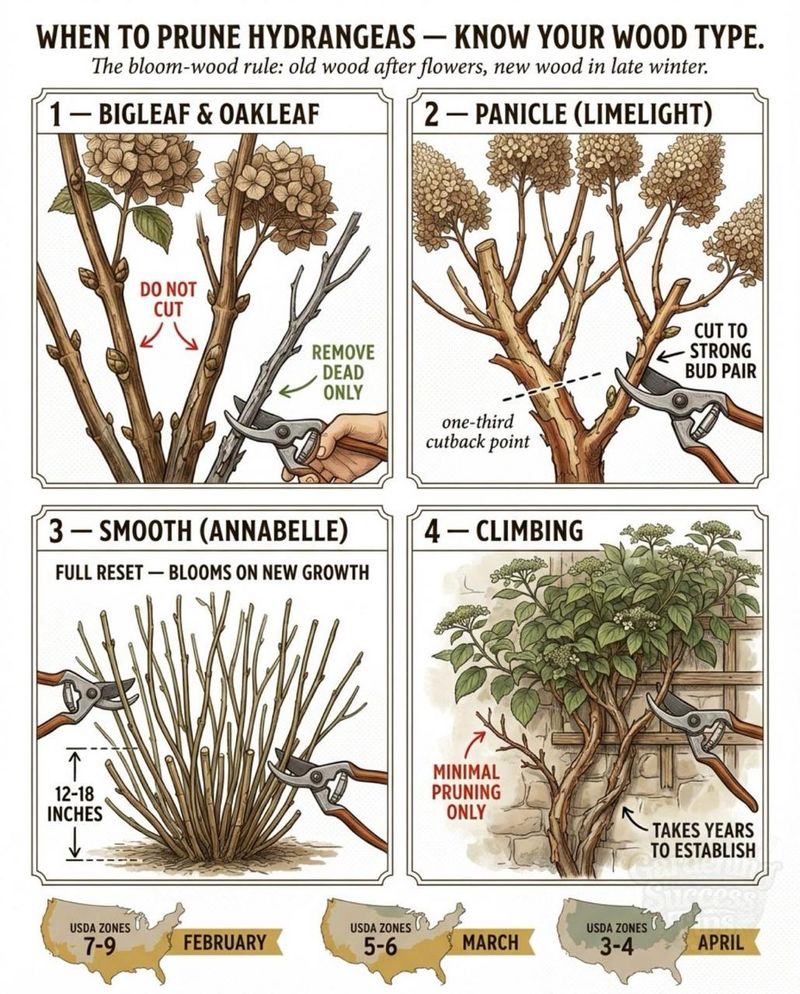
Before concluding that soil fertility is the issue, work through a short checklist of nonfertility causes, because most sparse-bloom problems trace back to one of them. Start with hydrangea type and pruning history, since these two factors alone account for a large share of flowering failures.
WSU Extension’s failure-to-bloom guide explains that bigleaf and oakleaf hydrangeas generally flower on old wood, meaning the buds for next season’s flowers form on stems produced the previous year. Pruning those stems in fall, winter, or early spring removes the buds before they ever open, and no amount of fertilizer can recreate them during the current season.
Smooth hydrangeas and panicle hydrangeas flower on new wood grown in the current season, which makes them more forgiving of pruning errors, but poorly timed or excessively heavy cuts can still delay or reduce flowering even in these types. Knowing which type you have is a prerequisite for understanding whether your pruning calendar is working for or against the plant.
Light is the next check. Too much shade reduces flowering in most hydrangeas, while intense afternoon sun can cause wilting and stress in bigleaf types that prefer morning light with afternoon shelter.
Panicle hydrangeas generally tolerate more sun than other types and may actually perform better in a sunnier spot. If the plant has been gradually shaded out by a growing tree or fence, relocating it may do more for bloom quantity than any fertilizer program.
Moisture and plant age round out the checklist. Consistent wilting during bud development can reduce the number of flowers a plant sets, and continual drought stress across multiple seasons can compound the problem.
UConn Extension emphasizes that deep, consistent watering at the base supports the steady moisture hydrangeas need. For newly planted shrubs, Iowa State University Extension notes that some types, including oakleaf and climbing hydrangeas, may take two to three years to bloom reliably as they establish root systems.
Sparse flowers during that window are a normal part of establishment, not a sign that the plant needs feeding.
Expect the correction to help future growth, not replace lost flowers
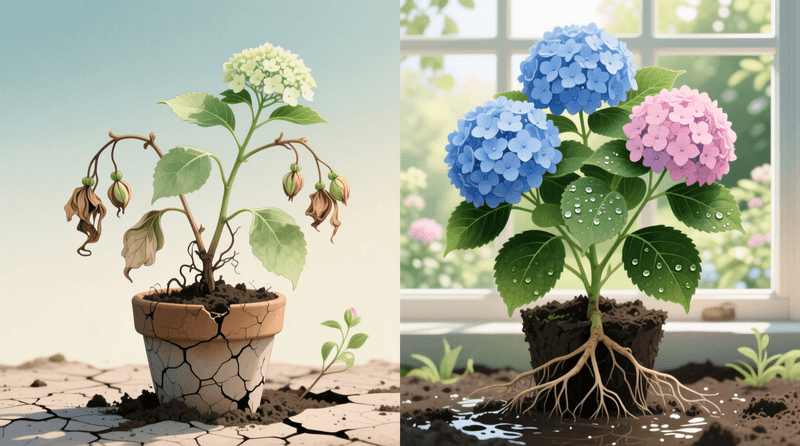
Correcting a genuine fertility problem can support healthier growth and improved flowering over the coming seasons, but the timeline matters. If a hydrangea lost its old-wood flower buds to pruning, a hard freeze, winter injury, deer browsing, or a prolonged dry spell, feeding the plant this spring will not bring those buds back.
The buds are gone, and the current season’s bloom display is already set by conditions that existed months earlier.
Reblooming cultivars such as ‘Endless Summer’ and ‘Let’s Dance’ are often marketed as a solution to this problem because they can set flower buds on both old and new wood, giving them a second chance to bloom even after old-wood buds are lost. Iowa State University Extension cautions that reblooming status does not make a cultivar immune to poor conditions, winter injury, inadequate light, or improper care.
Calling a plant a rebloom variety is not a guarantee of abundant flowers every year.
Florist hydrangeas, the potted bigleaf types sold as gifts or indoor plants, present a specific challenge outdoors. Penn State Extension explains that many of these plants are greenhouse-produced varieties with limited winter hardiness in much of the United States.
When planted outside, their flower buds often freeze over winter, leaving the plant leafy but bloomless the following summer. In that case, sparse flowering reflects winter damage to old-wood buds, and WSU Extension confirms that fertilizer cannot restore what cold has already removed.
Addressing the root cause, whether that means protecting buds over winter, selecting a hardier cultivar, or adjusting pruning timing, is what actually moves the needle on bloom quality over time.
Follow a diagnosis-first feeding checklist
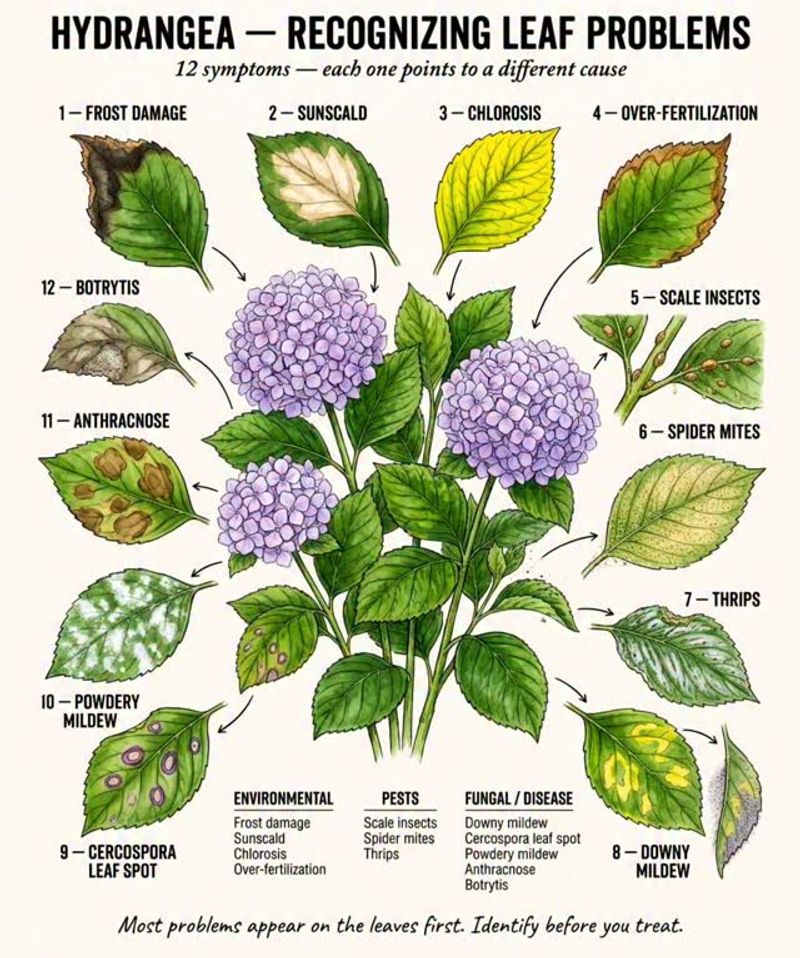
A reliable feeding decision starts with a short sequence of checks rather than a calendar date. First, identify your hydrangea type, because whether it blooms on old wood or new wood changes every other decision that follows.
Next, look at pruning records and inspect the stems for signs of winter or frost damage, since bud loss from either cause cannot be reversed with fertilizer this season.
After that, assess light and moisture. Confirm the plant receives enough sun for its type and that watering has been consistent and deep.
Consider how long the plant has been in the ground, since newly established shrubs may simply need more time before reliable flowering begins. Use a soil test when nutrient status is uncertain, as UConn Extension recommends, to distinguish a fertility gap from a pH issue and to avoid unnecessary applications.
If feeding fits your diagnosis or aligns with a local type-specific recommendation, choose a label-directed balanced or lower-nitrogen product and apply it in spring around active growth or at another locally advised time. Allow a light follow-up application only if your type and region support it, and stop well before late-season growth begins.
Never fertilize a drought-stressed plant. WSU Extension and Virginia Cooperative Extension both support the view that established shrubs in fertile soil may need little or no supplemental feeding.
Restraint, applied at the right moment, often does more for hydrangea flowers than the fertilizer itself.