
If Your Hydrangeas Struggle No Matter How You Fuss Over Them, Here’s The Spot Where They May Finally Thrive
Hydrangeas are one of the most beloved shrubs in American backyards, yet they also top the list of plants that leave gardeners feeling like they have done everything wrong. Wilting in the afternoon, skipping a bloom season, or turning brown at the leaf edges can make even an experienced gardener reach for the watering can, the fertilizer bag, or the pruning shears, sometimes making things worse.
Before you change your care routine again, consider that the problem may not be how you are caring for the plant, but where it is planted. A better-matched site will not fix every hydrangea issue, but for many struggling shrubs, it is the most useful place to start.
The planting spot may be asking too much of your hydrangea
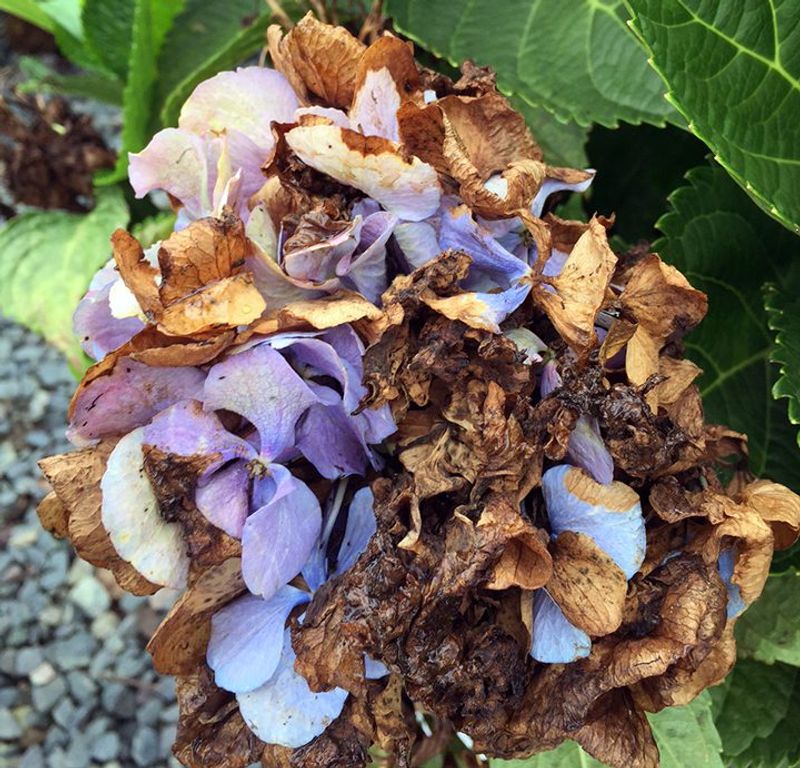
Repeated wilting, scorched leaves, and flower heads that brown before their time are frustrating symptoms, and most gardeners respond by watering more often, adding fertilizer, or pruning back hard. Those responses are understandable, but they can miss the real issue.
For many hydrangeas, the stressor is not a lack of care, it is a mismatch between the plant’s needs and what the planting spot actually delivers every day.
For a wide range of hydrangea types, including bigleaf, smooth, oakleaf, and mountain varieties, University of Maryland Extension guidance recommends a site with morning sun and afternoon shade or filtered light, consistently moist but well-drained soil, and enough open space for air to move through the plant. Intense afternoon sun increases the amount of water the plant loses through its leaves faster than the roots can replace it, which leads to the familiar midday collapse.
Heavy shade, on the other hand, can reduce flowering even when the plant looks otherwise healthy.
Soggy soil is equally problematic. Roots that sit in standing water cannot deliver oxygen or nutrients efficiently, and the plant shows stress symptoms that look a lot like drought.
Rapid drying, where soil goes from wet to bone-dry between waterings, creates a boom-and-bust cycle that keeps the plant from settling into steady growth.
Oregon State University Extension notes that hydrangeas generally perform best when moisture stays even rather than swinging between extremes. Location is a practical first diagnosis worth checking, not a guaranteed explanation for every symptom, but it is a low-cost starting point before you change anything else about your care routine.
Watch the site before changing the care routine
Spend a day or two watching the plant before you change a single thing. Observation costs nothing and can reveal what a quick look never will.
Note the time sunlight first hits the shrub in the morning, track when direct sun gives way to shade or filtered light, and pay attention to whether the harshest, most intense exposure comes in the afternoon, when air temperatures are already at their peak.
Next, push a finger or a wooden dowel several inches into the soil near the root zone. Surface soil can feel dry while the area around the roots is still adequately moist, and the opposite is also true in compacted or poorly draining beds.
Check for standing water after rain or irrigation, even a shallow puddle that sits for a few hours suggests drainage is not adequate for most hydrangeas.
Record whether wilting appears only during the hottest part of the afternoon and whether the plant looks noticeably better by evening. That pattern points toward heat stress rather than drought, and it changes what you should do next.
A plant that wilts at noon but recovers by dusk in soil that probes as moist does not need more water, it likely needs a different exposure.
According to University of Maryland Extension, a practical site audit includes checking light timing, identifying the harshest afternoon exposure, inspecting soil moisture at root depth, and looking for drainage problems. One more step belongs on that list before you make any decisions: identify which type of hydrangea you are growing.
Light needs vary meaningfully by species, and a placement that suits one type can stress another.
Which hydrangea do you have?
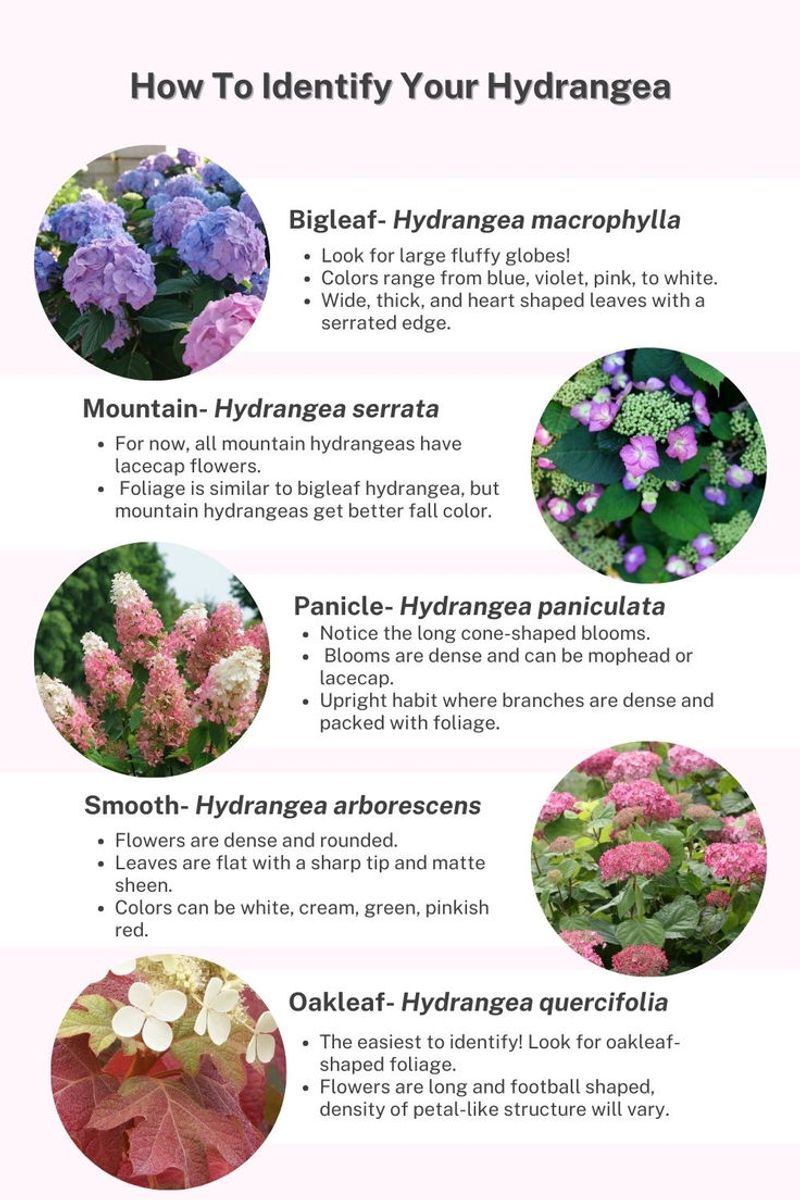
Plant identification is the decision point that changes everything else. A site recommendation that helps one hydrangea thrive can leave another struggling, so knowing your species matters before you move anything or adjust the bed.
Bigleaf hydrangeas (Hydrangea macrophylla) are the most common type in American backyards, recognizable by their large mophead or lacecap flower clusters in pink, blue, or purple. They generally prefer part sun to part shade with protection from intense afternoon heat.
Full afternoon sun increases water loss rapidly and can cause wilting and petal browning even when the soil is moist. University of Maryland Extension identifies this type as particularly sensitive to afternoon heat exposure, making site selection especially consequential.
Oakleaf hydrangeas (H. quercifolia) are named for their lobed, oak-shaped leaves and produce elongated white flower cones that age to parchment. They are generally more tolerant of heat and sun than bigleaf types and rank among the better choices for hotter garden conditions, though they still prefer consistent moisture.
University of Connecticut Extension notes that oakleaf hydrangeas handle a wider range of exposures than most other species.
Smooth hydrangeas (H. arborescens), which include popular cultivars like Annabelle, prefer moist, rich soil in partial sun or shade. They bloom on new wood, which changes the pruning rules entirely, but their site needs remain consistent: moisture and some protection from the harshest afternoon light.
Panicle hydrangeas (H. paniculata) are the outliers. They are substantially more sun-tolerant than bigleaf types and, according to University of Tennessee Extension, generally need at least six hours of sun to flower well.
Placing a panicle hydrangea in heavy shade in hopes of reducing stress will likely produce fewer blooms, not more.
Across all types, shade-loving does not mean full shade. Iowa State University Extension confirms that too little light can reduce flowering in smooth, oakleaf, bigleaf, and climbing hydrangeas.
The goal is appropriate light for the species, not simply less sun.
A wilted hydrangea is not always thirsty
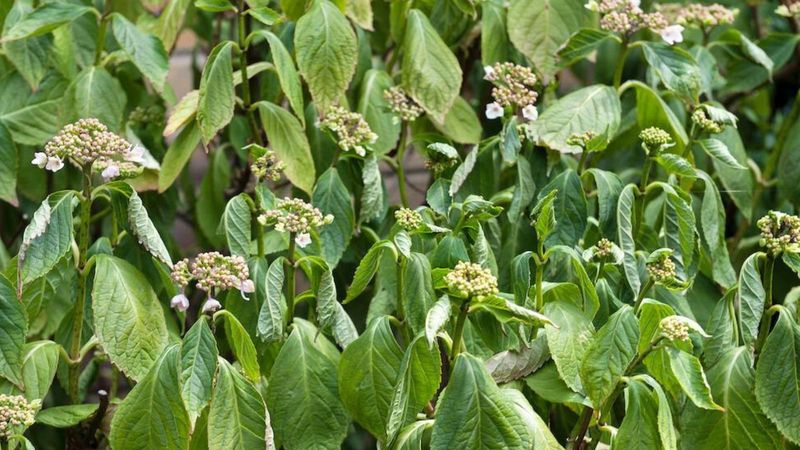
Few sights in the garden feel more urgent than a hydrangea flopped over in the afternoon heat. The instinct is to grab the hose immediately, but reaching for water before checking the soil can make the situation worse rather than better.
Bigleaf hydrangeas in particular can wilt dramatically during hot afternoons even when the root zone holds adequate moisture. The large leaves lose water through transpiration faster than the roots can deliver it during peak heat, so the plant temporarily droops as a protective response.
According to University of Maryland Extension, if the plant recovers on its own by evening and the soil at root depth is not dry, the problem is most likely heat stress rather than drought. Watering a plant that is already in moist soil adds excess water and can begin to compromise the root system over time.
The right diagnostic step is to check the soil before picking up the hose. Press a finger or a soil probe several inches down into the root zone.
If the soil feels moist at that depth, wait and observe whether the plant perks up as temperatures drop. If the soil is genuinely dry several inches down, then the plant needs water, and it needs it delivered slowly and deeply.
Oregon State University Extension guidance on heat-wave care recommends deep, slow irrigation using a soaker hose or drip system rather than a brief hand-watering session that wets only the top inch or two of soil. A quick surface watering may look thorough but often fails to reach the root zone where it matters.
Equally, do not water soil that is already wet or drains poorly, because waterlogged roots cannot supply the plant with what it needs and create a different kind of stress that mimics drought symptoms.
The best site stays moist without staying wet
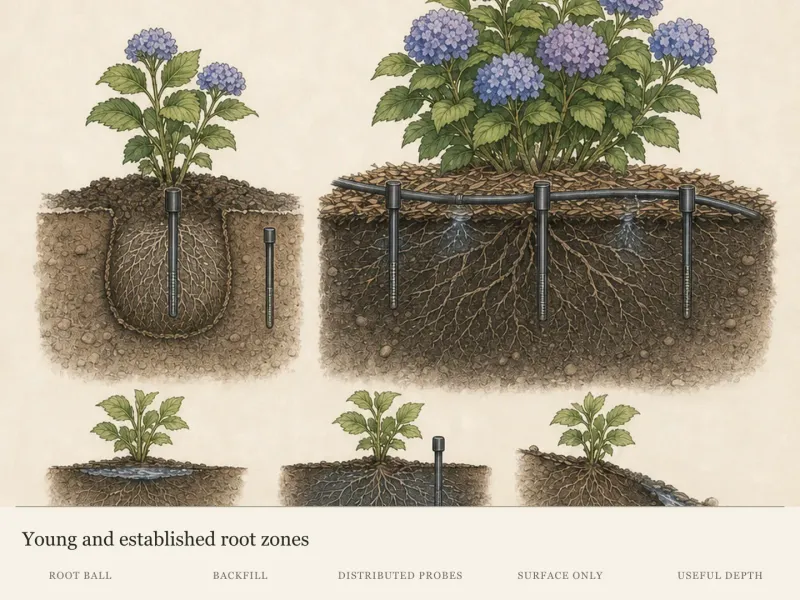
Once you understand what your hydrangea’s root zone actually needs, managing it becomes much more straightforward. The target is consistent moisture with good drainage, not alternating cycles of soggy soil and bone-dry earth.
Most hydrangeas do not want to sit in standing water, but they also cannot tolerate going completely dry between waterings, especially during hot or windy weather.
When the soil at root depth is dry and irrigation is warranted, slow and deep delivery works far better than a quick sprinkle. A soaker hose or drip line allows water to penetrate gradually, reaching the root zone rather than running off the surface or evaporating before it soaks in.
Oregon State University Extension recommends this approach for maintaining the even moisture hydrangeas prefer without creating waterlogged conditions.
A layer of organic mulch, roughly 2 to 3 inches deep, does a lot of the maintenance work for you. It slows evaporation, moderates soil temperature on hot days, and gradually improves soil structure as it breaks down.
Keep the mulch pulled back a few inches from the base of the stems to prevent moisture from sitting against the crown, which can encourage rot. Avoid gravel or black plastic in warm or hot sites, because both materials absorb and radiate heat, raising soil temperatures in exactly the spots where you want to keep things cooler.
Spacing and air circulation belong in the same conversation as moisture. University of Maryland Extension pruning guidance notes that selecting a cultivar sized for the location and leaving adequate room around the plant reduces the need for heavy pruning and supports air movement through the canopy.
A hydrangea crowded against a wall, fence, or neighboring shrub traps humidity around its foliage, raising the risk of fungal disease and reducing the air circulation that helps the plant manage heat. The best site is not just about light and water, it is also about room to breathe.
Check the non-location causes before blaming the bed
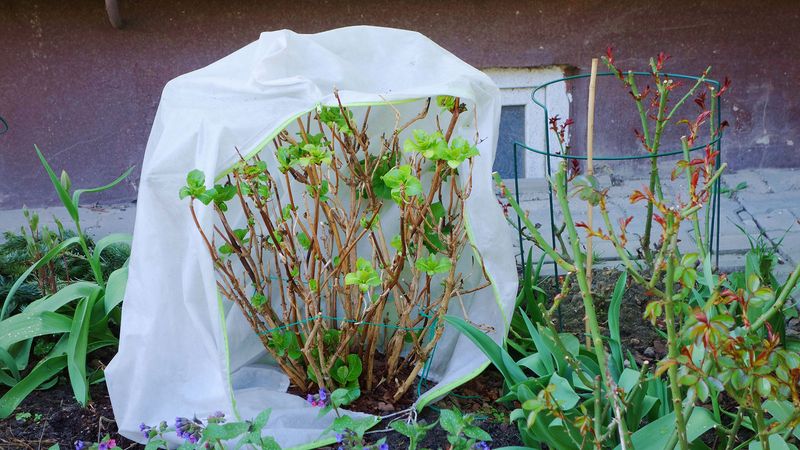
A bad planting site can explain a lot of hydrangea trouble, but it does not explain all of it. Before you dig up the shrub or redesign the bed, run through the other documented causes of poor performance, because several of them are just as common and easier to fix.
Incorrect pruning timing is one of the leading reasons hydrangeas fail to bloom, particularly for bigleaf, mountain, and oakleaf types, which set their flower buds on old wood from the previous season. If those stems are cut back in fall or late winter, the buds go with them, and the plant produces lush foliage but no flowers.
University of Maryland Extension pruning guidance is clear that old-wood bloomers should be pruned just after flowering, if pruning is necessary at all. Smooth and panicle hydrangeas bloom on new wood and can be pruned in late winter or early spring without sacrificing flowers.
Reblooming bigleaf cultivars can flower on both old and new wood, giving them more flexibility, but they are still not immune to pruning-related bloom loss.
Winter cold and late spring frosts can kill the flower buds on bigleaf hydrangeas even when the plant itself survives. Deer browsing can remove the same buds overnight without leaving obvious evidence beyond stripped stems.
Excessive nitrogen fertilizer, whether from a lawn program that drifts into the bed or from over-application, pushes the plant toward foliage production at the expense of flowers. None of these problems are solved by moving the shrub to a shadier spot.
Disease, poor drainage, and extended drought can also produce symptoms that look like a site problem. According to University of Maryland Extension, powdery mildew, leaf spot, and root problems from waterlogged soil all create visible stress that mirrors what you might see from too much heat or too little moisture.
Newly planted hydrangeas deserve a mention here as well. Iowa State University Extension notes that many hydrangeas, especially climbing types, need two or three years to establish before flowering consistently.
Patience during that period is not the same as ignoring a real problem, but it does mean that a young plant with no blooms is not automatically in the wrong spot. On flower color: soil pH affects the color of bigleaf and mountain hydrangea blooms, but changing pH does not fix a plant that is not growing well or not blooming.
It is a separate topic from plant health.
Move the shrub only when the pattern points to a site mismatch
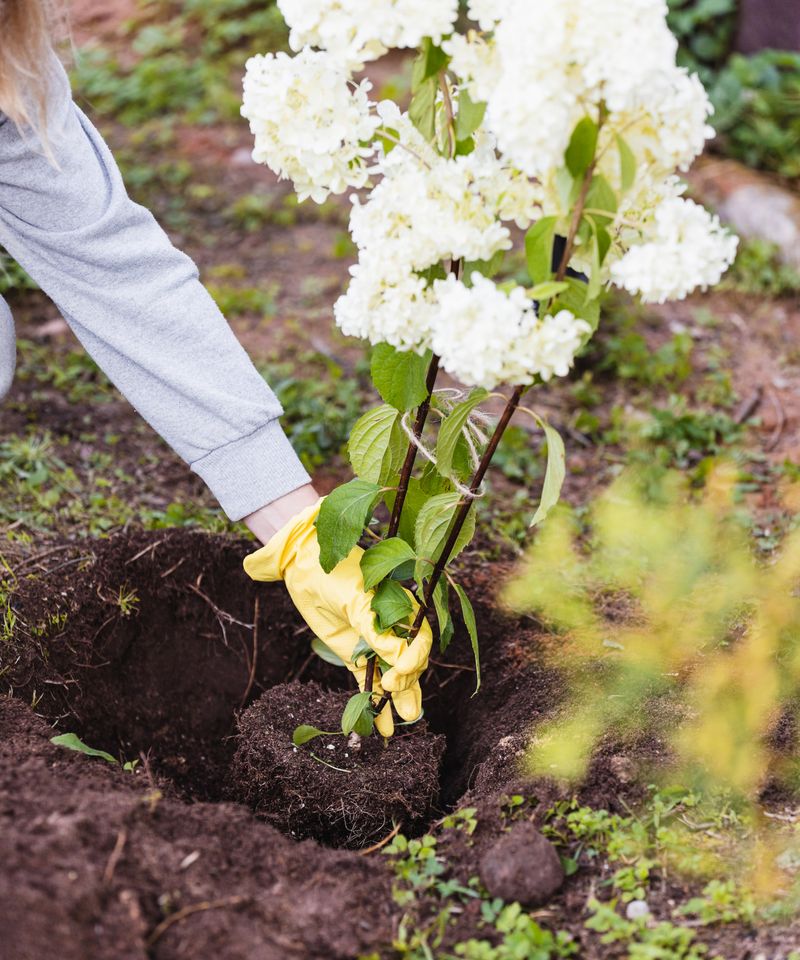
Relocation is a real option, but it works best when the observations you have collected consistently point to a site problem rather than a care or timing issue. Moving a hydrangea is disruptive for the plant and takes energy from you, so it makes sense to do it only when the evidence supports it.
Consider a move when your site audit shows that afternoon sun is intense and unavoidable, the soil dries out rapidly no matter how often you water, light is so limited that the plant barely grows, standing water persists after rain, or the plant is so tightly surrounded by structures or other plants that air cannot move through it. Confirm that the proposed new location actually suits the hydrangea type you have.
Moving a bigleaf hydrangea from harsh afternoon sun to deep shade trades one problem for another. The destination should offer the right balance of light, consistent moisture, good drainage, and mature spacing for that specific species.
Timing matters when you relocate an established shrub. Oregon State University Extension general hydrangea care guidance advises moving established shrubs in late winter, early spring, or, in some regions, fall rather than during extreme summer heat, when the plant is already working hard to manage water loss.
Summer transplanting is possible but adds significant stress and requires careful monitoring.
When you dig the plant, take as large a root ball as you can manage. University of Connecticut Extension and University of Maryland Extension both emphasize matching the plant’s requirements to the new site rather than simply moving it away from the current problem.
Water the new location deeply after planting and keep moisture consistent while the plant reestablishes. A better-matched site should require less reactive care over time, not more.
A better location should make care more predictable
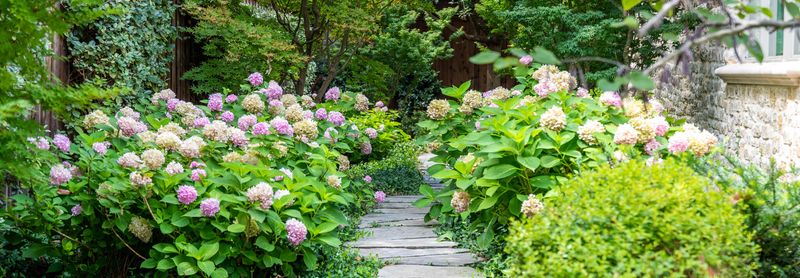
Before reaching for the watering can, fertilizer bag, or pruning shears, work through a short checklist. Identify the hydrangea type, observe when and how long direct sun hits the plant, probe the soil at root depth for moisture and drainage, assess whether afternoon heat or wind is creating stress, and check whether spacing allows air to move freely around the canopy.
If the site has a correctable problem, such as a nearby structure casting too much shade or mulch that needs refreshing, address that first. Relocate only when the pattern of observations consistently points to a mismatch that cannot be fixed in place, and choose the new site based on what the specific hydrangea type actually needs rather than a general rule.
According to University of Maryland Extension, avoiding automatic responses like extra watering or fertilizer is part of good diagnosis, since both can worsen conditions when applied without cause.
If problems persist after a site correction, revisit pruning timing with help from University of Maryland Extension pruning guidance, and check for weather damage, pests, disease, and whether the plant is still in its establishment window. A well-matched site will not guarantee perfect performance every season, but it gives the plant a foundation where it can manage routine stress on its own, and that makes your job considerably easier.