
If Your Hydrangeas Turn Muddy Purple Instead Of True Blue, Your Soil Is Missing One Thing
Growing hydrangeas and expecting clear blue blooms, only to get a murky purple instead, is one of the more frustrating surprises in the garden. The color shift is not random, but it is also not as simple as one missing nutrient. Understanding what actually drives flower color in these plants puts you in a much better position to fix the problem without making things worse.
Muddy purple blooms do not identify a single missing nutrient
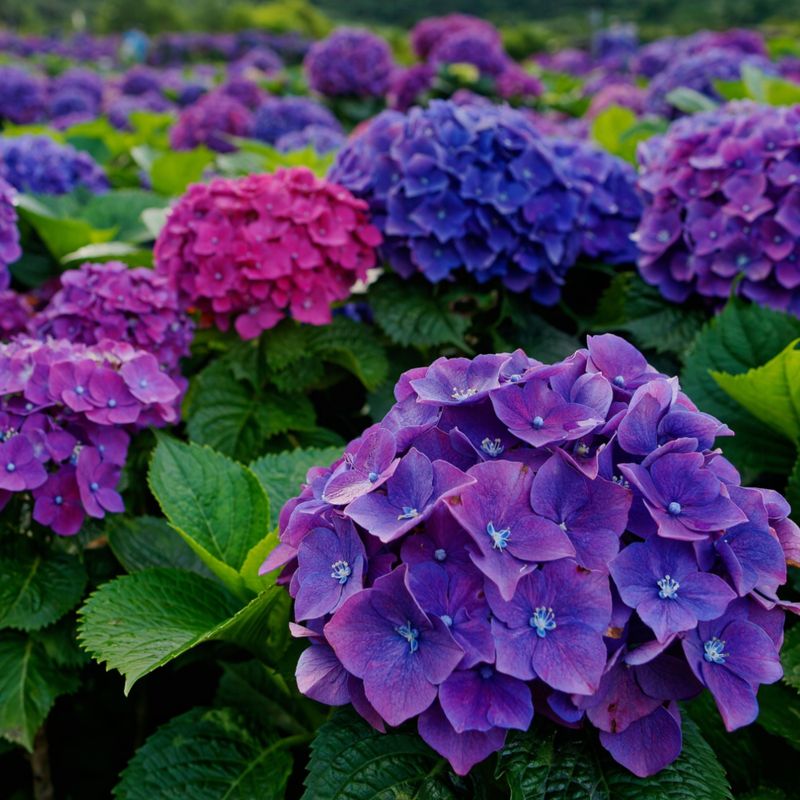
Seeing a muddy purple mophead instead of the clear blue you were hoping for is genuinely discouraging, especially when you have been reading that the fix is straightforward. The honest answer is that it is not quite that simple, and the idea that one specific soil nutrient is responsible for the color does not hold up well under closer examination.
Purple, lavender, or mixed blue-and-pink flowers on a color-changing hydrangea usually represent what plant scientists describe as an intermediate color response. According to UMass Extension’s hydrangea color guidance, blue develops in bigleaf and mountain hydrangeas when aluminum is available to the plant under sufficiently acidic conditions. When the soil pH sits in a middle range, roughly 5.5 to 6.5, aluminum availability becomes incomplete, and the result is often a purple or blended color rather than a true blue or a clear pink.
That means purple blooms are a signal worth paying attention to, but they cannot tell you by themselves exactly what is happening in your soil. The color could reflect a pH that is not quite acidic enough, too much phosphorus competing with aluminum uptake, cultivar genetics that limit how blue the plant can ever get, or flowers that are simply aging past their peak color. Jumping straight to adding an amendment based on color alone risks making the situation worse.
A much more reliable approach starts with identifying the plant, checking whether the blooms are fresh or aging, and testing the actual soil or container medium before touching anything. Clemson Cooperative Extension specifically recommends testing before applying any acidifier or lime, and that advice applies whether your plant is in a bed or a pot. Getting that information first keeps you from guessing, and guessing with soil amendments rarely ends well.
First confirm that the hydrangea can change color
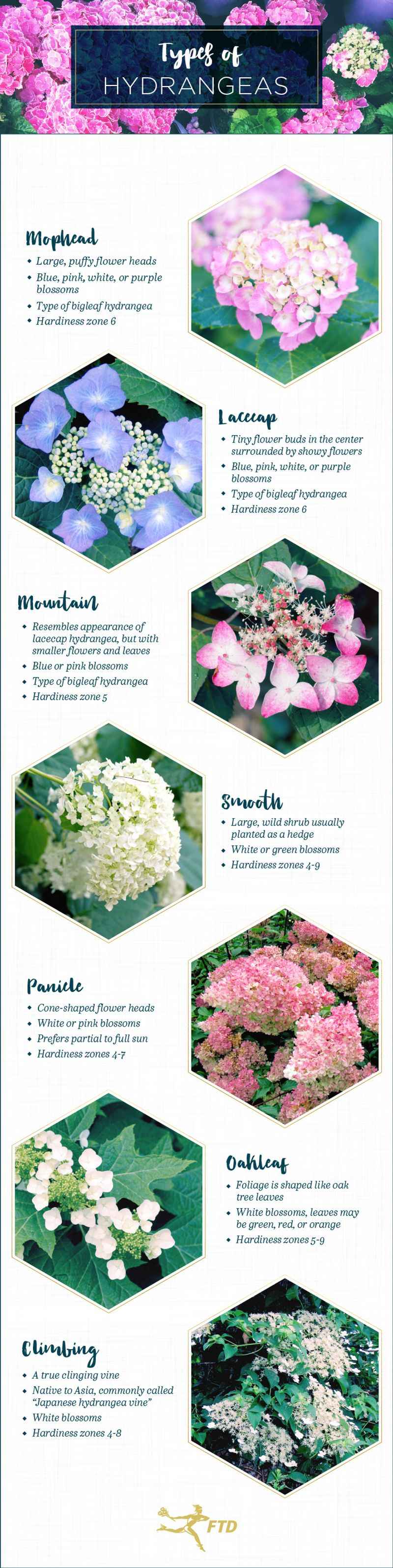
Before testing soil or buying any amendment, the single most useful thing you can do is figure out exactly which hydrangea you have. Not every hydrangea responds to soil chemistry the same way, and some simply cannot be turned blue no matter how carefully you adjust the pH.
Soil-driven blue-and-pink color changes apply mainly to bigleaf hydrangea (Hydrangea macrophylla) and mountain hydrangea (Hydrangea serrata). These are the mophead and lacecap types most people picture when they think of color-shifting hydrangeas. Panicle hydrangeas (Hydrangea paniculata), oakleaf hydrangeas (Hydrangea quercifolia), and smooth hydrangeas (Hydrangea arborescens) do not respond to soil pH in the same way. UMass Extension confirms that many white cultivars and genetically fixed varieties will not reliably become true blue through amendments regardless of what you do to the soil.
Even within bigleaf hydrangeas, cultivar genetics can put a ceiling on how blue the flowers will get. University of Tennessee production guidance notes that some cultivars do not produce blue flowers regardless of soil pH, and that certain varieties may even develop muddy red tones at very low pH rather than shifting toward blue. A cultivar bred to be pink or a specific shade of purple will stay close to that color even in perfectly acidic, aluminum-rich soil.
If you are unsure what you have, look up the cultivar name on the plant tag or check photos from the nursery. Knowing whether your plant is genetically capable of blue is the prerequisite for every other step in this process. Skipping this check and going straight to soil amendments is a bit like adjusting a recipe before knowing what dish you are making.
Blue flowers depend on available aluminum and acidic conditions
The chemistry behind hydrangea flower color is genuinely interesting once you see how the pieces connect. Blue sepals in bigleaf and mountain hydrangeas form when aluminum combines with the plant’s natural pigments, specifically anthocyanins and acylquinic-acid copigments, to create a stable blue complex inside the sepal cells. Research published in PubMed on the blue-complex in Hydrangea macrophylla has mapped this reaction directly in sepal tissue, confirming that aluminum is the key metallic component that shifts the pigment toward blue.
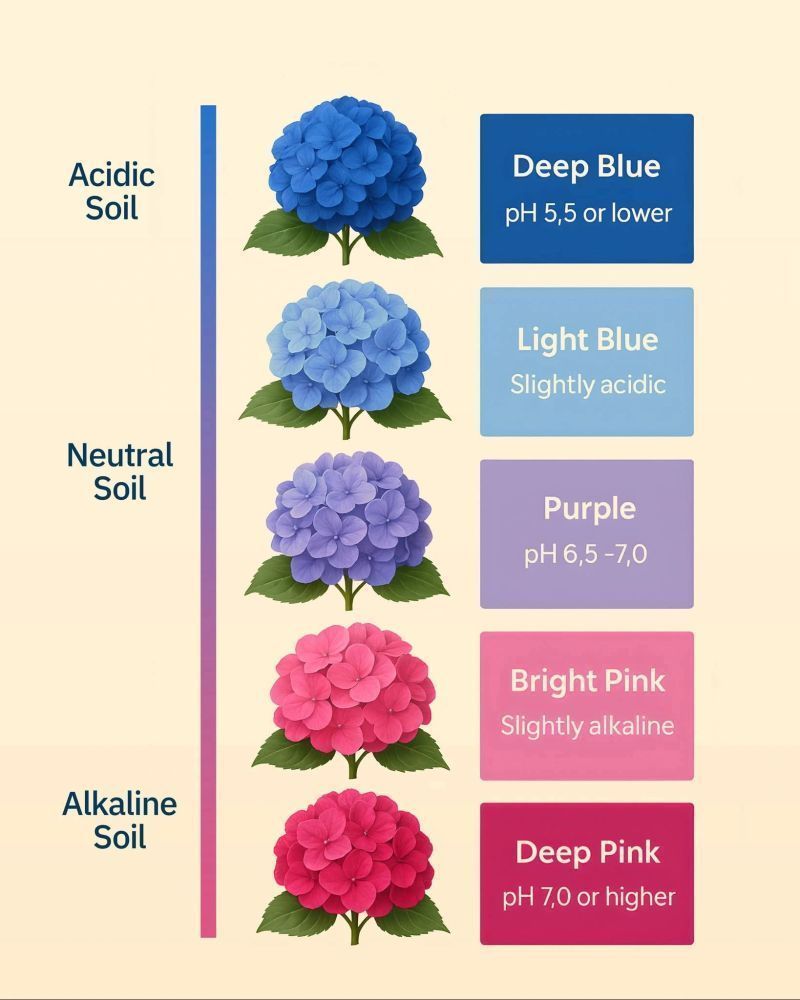
Soil pH is what controls whether the plant can actually access that aluminum. In acidic soil, aluminum naturally dissolves into a form the roots can absorb. As pH rises toward neutral and beyond, aluminum binds to soil particles and becomes much less available, even if the element is physically present in the ground. The practical result is a color pattern that roughly follows pH: conditions below about 5.5 tend to favor blue, the range from about 5.5 to 6.5 often produces purple or mixed colors, and pH above roughly 6.5 to 7 tends to push flowers toward pink.
These ranges are approximate and vary by cultivar and growing conditions, so treat them as a general guide rather than exact thresholds.
A common mistake is adding aluminum sulfate without addressing pH first. If your soil pH is sitting at 6.8, adding more aluminum will not reliably produce blue flowers because the plant still cannot take up what is there. The pH has to come down enough to unlock aluminum availability before the color can shift. UMass Extension makes this point clearly: both conditions need to be right together, not just one of them.
Phosphorus adds another layer of complexity. When phosphorus levels in the soil are high, it can bind with aluminum and reduce how much the plant absorbs, which can push colors toward purple or pink even in relatively acidic conditions. Getting the pH and the phosphorus situation sorted out together gives you a much better shot at clearer blue than chasing either variable alone.
Test the soil or growing medium before changing it
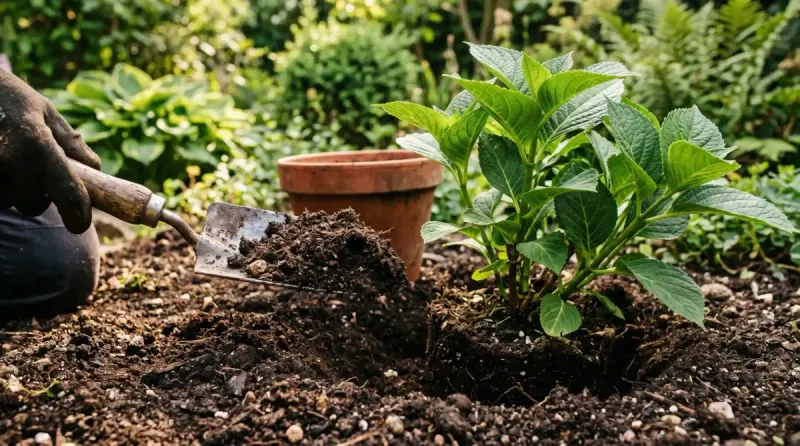
Knowing that pH and aluminum availability drive flower color is useful, but acting on that knowledge without actual data is where gardeners tend to go wrong. Flower color alone cannot tell you your soil’s pH, how much aluminum is present, what your phosphorus levels look like, or whether your soil has enough alkalinity to resist acidification. A soil test answers all of those questions at once.
Clemson Cooperative Extension specifically recommends testing before applying sulfur or lime, and that recommendation exists for good reason. Adding an acidifier to soil that is already at the right pH will push it too low, which can create conditions that stress the plant or cause nutrient imbalances. Adding lime to already-alkaline soil makes the problem worse. Testing first prevents both of those outcomes.
In-ground beds and containers are genuinely different situations that need to be treated separately. Garden soil has mineral particles, organic matter, and a buffering capacity that interacts with amendments in predictable ways. Potting mix is typically a soilless blend of materials like peat, bark, and perlite that behaves differently, buffers differently, and can shift pH more quickly or erratically when acidifiers are applied. Oregon State Extension’s guidance on acidifying soil for ornamentals notes that visual symptoms alone are not enough to decide whether acidification is needed or how much to apply.
For in-ground beds, a cooperative extension soil test is the most reliable option because it accounts for local soil types and gives you amendment rate recommendations calibrated to your region. For containers, check the potting mix label, contact the manufacturer, or reach out to your local extension office for product-specific guidance. The goal is to understand what you are starting with before you change anything.
Use a measured, site-appropriate approach to high pH
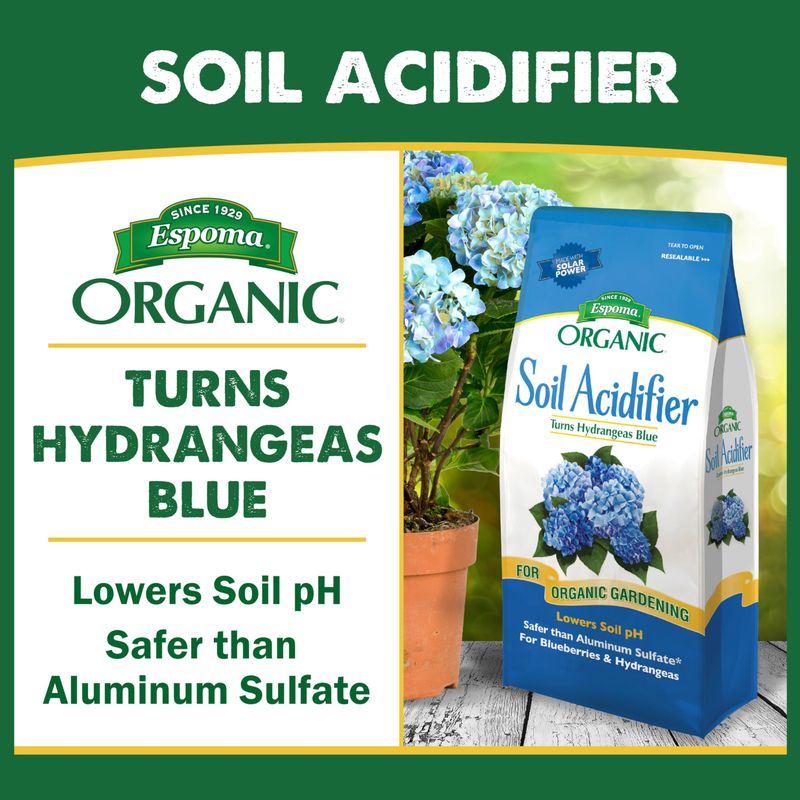
When a soil test confirms that your pH is too high for aluminum availability, you have options for bringing it down, but the choice of amendment and the rate you apply matter a great deal. Elemental sulfur is generally the more cautious route for home landscape use in in-ground beds. Soil bacteria convert it gradually to sulfuric acid, which lowers pH over weeks to months when the sulfur is properly mixed into the soil. Oregon State Extension’s publication on acidifying soil for ornamentals recommends elemental sulfur over aluminum sulfate for routine home use because excessive soluble aluminum can injure roots and reduce plant growth.
That Oregon State guidance is written for soils west of the Cascades in Oregon and Washington, which have specific characteristics. Application rates and effectiveness vary depending on your soil texture, organic matter content, existing pH, and alkalinity, so the specific numbers in that publication should not be transferred directly to every backyard across the country. Use it as a framework, then check with your own state’s cooperative extension for rates appropriate to your soil type and region.
UMass Extension advises following product label directions carefully and keeping amendments off foliage, since aluminum-containing solutions can damage leaves if splashed. That caution applies to any amendment you use, not just aluminum sulfate.
Container growers need a separate approach entirely. Do not take in-ground sulfur recommendations and apply them to potting mix. The chemistry is different, the buffering capacity is different, and potting media can shift pH much more sharply. Check your container medium with a test designed for soilless media, read the label of any acidifier carefully, and consult local extension guidance before applying anything.
Clemson Extension reinforces this by noting that pH targets and amendment approaches should account for whether the plant is in the ground or a container. A measured, test-informed approach protects both the plant and the investment you have made in your garden.
Avoid adding phosphorus when you are trying to preserve blue
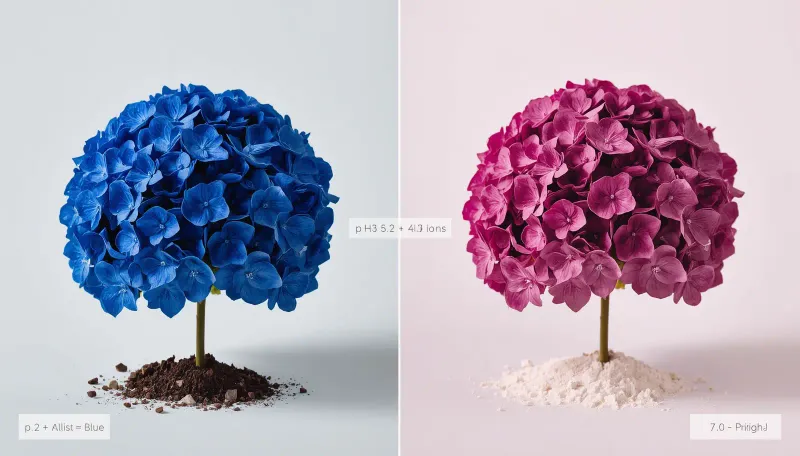
Fertilizer choices matter more than most gardeners realize when the goal is blue hydrangea flowers. Phosphorus is the element to watch carefully, and the reason comes back to aluminum chemistry. When phosphorus levels in the soil run high, phosphorus ions compete with aluminum for binding sites and can lock aluminum into forms the plant cannot absorb. Less available aluminum means less of the blue-forming complex can develop in the sepals, which pushes color toward purple or pink regardless of what the pH is doing.
UMass Extension recommends choosing a fertilizer with a lower middle N-P-K number when fertilizing a blue-target bigleaf hydrangea. The middle number on any fertilizer bag represents the phosphorus content, so a product labeled 10-5-10 has less phosphorus than one labeled 10-10-10. Selecting the lower-phosphorus option when your plant actually needs feeding is a practical way to avoid interfering with aluminum uptake.
A few important clarifications are worth stating plainly here. Purple flowers do not mean the plant has a phosphorus deficiency or needs more phosphorus added. The strategy is about avoiding excess, not correcting a shortage. Adding phosphorus to a plant that is already showing purple blooms could make the color situation worse, not better.
Fertilizer decisions should also stay subordinate to what the soil test tells you about existing nutrient levels. If the test shows adequate phosphorus already in the soil, adding more, even a low-phosphorus product, may not be necessary at all. Feed the plant when it genuinely needs it, use a low-phosphorus formula when you do, and let the soil test guide the whole decision.
Cultivar, container chemistry, and bloom age can preserve purple tones
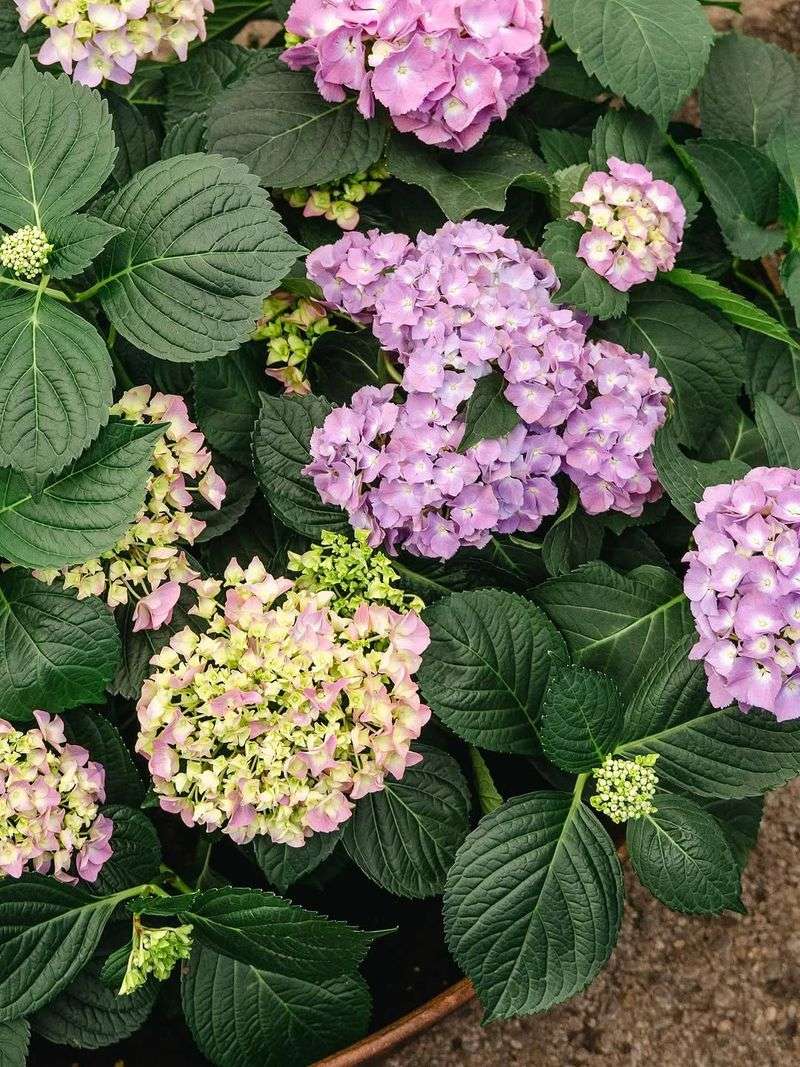
Even when you have done everything right, some hydrangeas will hold onto purple, lavender, or muddled tones, and that outcome does not always mean the soil still needs adjusting. Several factors unrelated to soil pH can produce or maintain purple flowers, and recognizing them prevents unnecessary amendments.
Genetics play a significant role. University of Tennessee’s production guidance for hydrangeas specifically notes that some bigleaf cultivars will not produce blue flowers regardless of soil conditions, and that certain varieties may develop muddy red rather than blue at low pH. UMass Extension similarly points out that cultivar genetics set limits on how far toward blue any individual plant can shift. If the cultivar was bred to be purple or a rosy lavender, acidic soil will not override that programming completely.
Containers can behave differently from in-ground soil in ways that complicate color predictions. Potting media often start with a higher pH than garden soil, may contain added lime, and can fluctuate more rapidly with watering and fertilization. A container plant sitting at a seemingly correct pH may still produce mixed colors if the medium’s aluminum availability or phosphorus content differs from what you expect.
Bloom age is another factor worth watching closely. University of Arkansas Cooperative Extension notes that hydrangea flowers naturally change color as they mature, often developing vintage purple, burgundy, green, or beige tones late in the season. University of Georgia Extension reinforces that amendments may take months or multiple bloom cycles to show results, so comparing fresh blooms at peak season with aged ones later in summer is not a fair test of whether your soil adjustment worked. Observe the color on newly opened flowers early in the bloom period before drawing any conclusions about what the soil needs next.
Follow a diagnosis-first plan before expecting bluer blooms
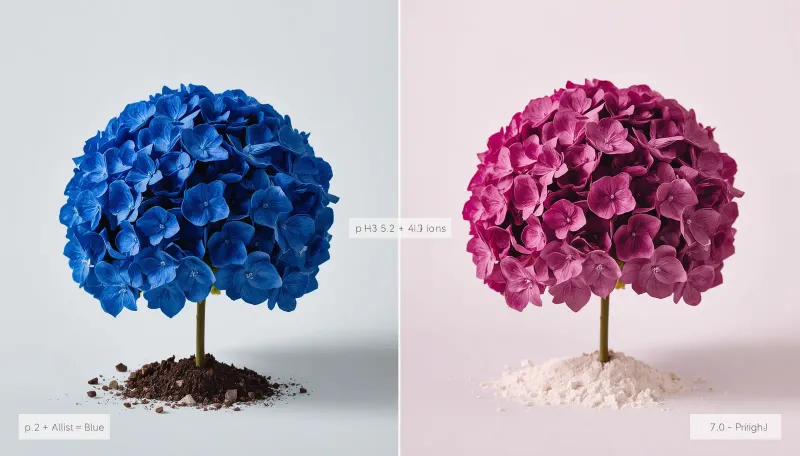
Pulling all of this together into a workable sequence makes the whole process less overwhelming. Start by identifying the species and cultivar. Confirm that you have a bigleaf or mountain hydrangea with the genetic capacity to shift toward blue, because no soil work will overcome a cultivar that is fixed at pink or purple.
Next, look at the flowers themselves and note when the color appears. Purple on fresh blooms at the start of the season is more likely to reflect soil or growing-medium conditions. Color changes that show up later on mature flower heads are more likely to be normal aging. That distinction shapes whether a soil adjustment even makes sense.
Then test. Clemson Extension and Oregon State Extension both emphasize that testing before amending is the responsible starting point, whether you are working in a bed or a container. If pH is too high, adjust it gradually using a method appropriate to your soil type and location, keep phosphorus levels from running high, and apply amendments carefully according to label directions and local guidance.
Finally, be patient. UGA Extension notes that established plants in ground beds may need multiple bloom cycles before you see the color shift. The practical goal throughout this process is better aluminum availability where conditions support it, not a search for one proven missing ingredient. A hydrangea that moves from muddy purple toward a cleaner periwinkle blue over two seasons is a genuine success worth waiting for.