
If Your Hydrangeas Wilt Even After You Water, The Real Problem Is Deeper Than The Surface
You watered your hydrangea, walked away satisfied, and came back to find it drooping anyway. That moment is frustrating, but it is also useful information if you know how to read it. Wilting after watering is not proof that the plant needs more water, and it is not proof of one specific hidden problem either. Learning to treat that droop as a starting point for diagnosis, rather than a signal to grab the hose again, can make the difference between a thriving shrub and one that slowly declines.
Wilt after watering is a warning, not a diagnosis
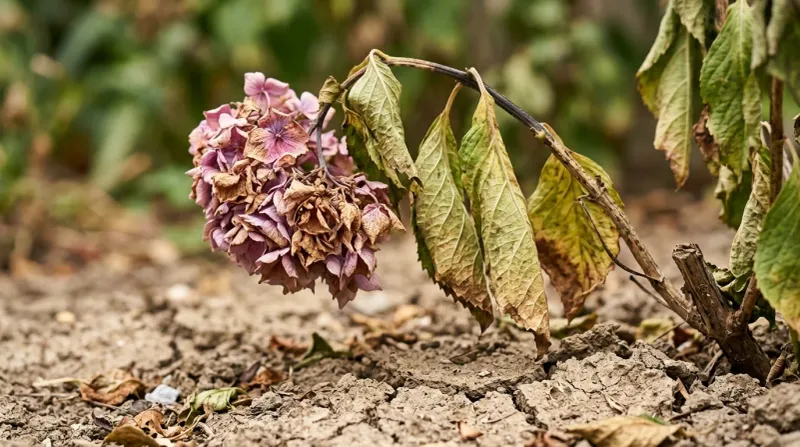
Seeing a hydrangea wilt right after you water it can make you feel like you missed something serious underground. That instinct is worth following, but only as a first step, not as a conclusion. University of Illinois Extension guidance on hydrangea problems notes that wilting can occur when the root zone is too dry, but it can also happen when roots have been damaged by waterlogged soil, poor drainage, compaction, or root restriction, leaving the plant unable to move water into its leaves even when moisture is nearby.
The same drooping leaves you see after a dry spell can also appear after a heat wave, a stretch of strong wind, a rough transplant, or physical damage to the stem. WSU Hortsense’s hydrangea fact sheet lists drought, excessive sun, wind, fertilizer or salt injury, pests, and several diseases as causes that can all produce symptoms that look nearly identical at first glance. Wilting is what plant scientists call a nonspecific symptom, meaning it tells you something is wrong but not exactly what.
Iowa State Extension’s explanation of wilting reinforces the point that the same visual symptom can reflect opposite moisture conditions. A plant can droop because the soil is bone dry, and it can also droop because overwatering killed enough roots that the remaining ones cannot supply the leaves. Reaching for the hose before checking conditions below the surface risks making either situation worse. Root-zone inspection is the most useful first move, and the sections below walk through exactly how to do that.
Probe the root zone before watering again
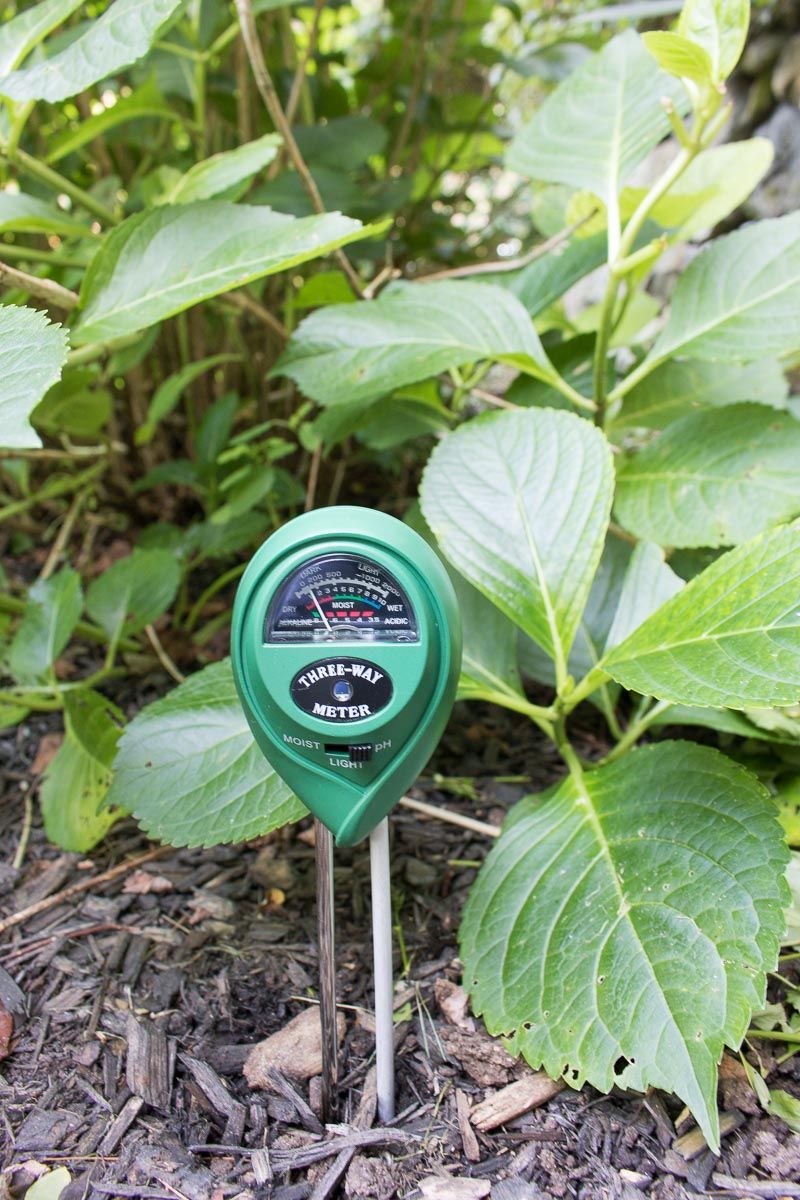
Before you add any more water, push a finger, a wooden dowel, or a narrow trowel about four to six inches into the soil near the outer edge of the plant’s canopy. That spot is roughly where the active roots are working. The surface can look dark and damp from a recent watering while the deeper root zone stays surprisingly dry, especially in clay-heavy soil or in soil that has dried out so completely that water runs off instead of soaking in.
University of Minnesota Extension guidance on watering established shrubs recommends probing or digging into the root zone rather than judging moisture by surface appearance alone, because surface conditions are not a reliable guide to what is happening at root depth. A wet surface does not confirm that roots are healthy, and a dry surface does not automatically mean the plant is thirsty all the way down.
When probing shows the root zone is genuinely dry, water slowly and deeply enough to wet that whole area. Oregon State University Extension’s hydrangea heat-wave guidance explains that a quick pass with the hose often wets only the top inch or two, particularly in clay or compacted soil, leaving the roots below untouched. Letting water run slowly from a soaker hose or a trickling garden hose for an extended period gives it time to move down through the profile and actually reach the roots.
How much water and how often will depend on your soil type, local rainfall, temperature, sun exposure, and whether the plant is young or well established. OSU’s general hydrangea care page describes their preference as consistent moisture in well-drained soil, not constantly wet conditions. Checking the root zone before each watering session, rather than following a fixed schedule, keeps you from both under- and over-supplying water across changing weather.
Saturated roots can make leaves wilt
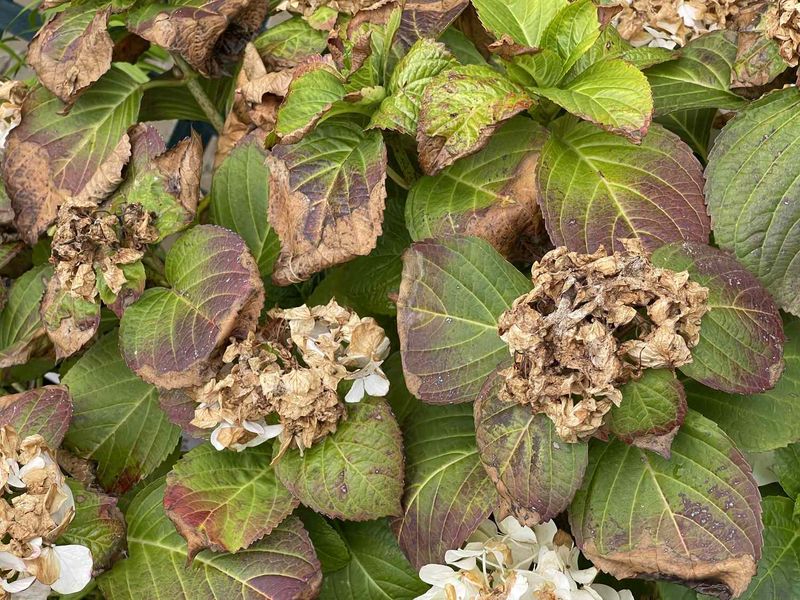
Most gardeners connect wilting with thirst, so it feels counterintuitive when a plant sitting in wet soil still droops. Roots need oxygen as much as they need water, and soil that stays saturated for extended periods squeezes out the air pockets that roots depend on to function. Illinois Extension’s guide to drowning and edema in plants explains that roots deprived of oxygen begin to die, and a plant with a reduced root system simply cannot move enough water up into its foliage, even when moisture surrounds it.
This is why adding more water to a plant that is already sitting in saturated soil can accelerate the problem rather than solve it. The soil does not need more moisture; it needs better drainage and time to dry enough for oxygen to return. Illinois Extension’s hydrangea question-and-answer resource notes that poor drainage and waterlogged conditions are among the situations that leave a plant with too few healthy roots to supply its leaves, producing wilt that looks exactly like drought stress from the outside.
Soil that feels squishy underfoot, smells sour or swampy, or stays visibly wet days after a rain is a sign that drainage is inadequate, not that watering should continue. Root damage from prolonged saturation can range from minor stress to outright root rot, depending on how long the problem has lasted and which organisms take advantage of the weakened tissue. Neither condition is a certainty based on wilt alone, but both are possibilities worth investigating before you reach for the hose again.
Hydrangeas prefer consistent moisture in well-drained soil. That phrase matters: well-drained is not a detail to skip over. A plant that gets plenty of water but cannot shed the excess will eventually behave as though it is not getting any water at all.
Find drainage problems in garden beds and containers
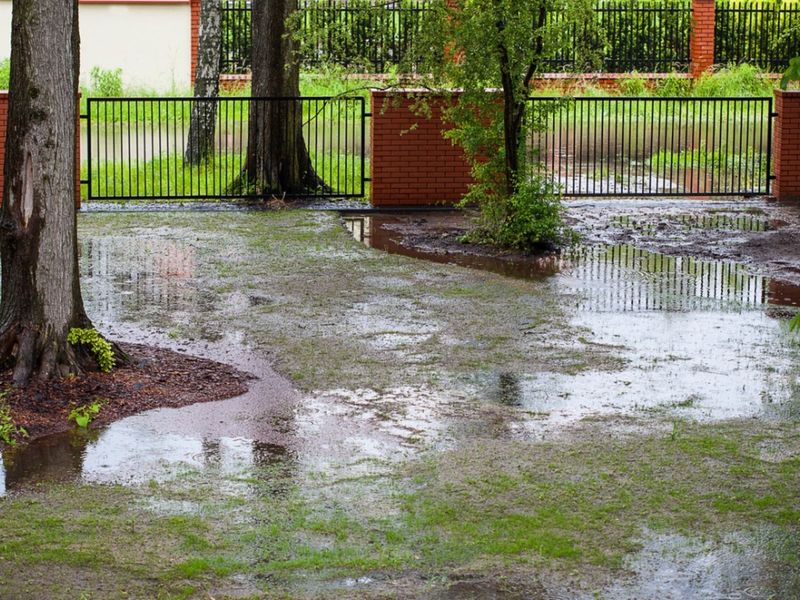
Drainage problems in garden beds and containers look similar on the surface but have different causes and different fixes. Treating them separately helps you find the actual source instead of guessing.
For plants growing in the ground, start by looking at the planting site itself. Heavy clay soil drains slowly and can hold water around roots for days after a rain. Low spots in the yard naturally collect runoff from surrounding areas. Compacted soil, whether from foot traffic, heavy equipment, or years of use, resists water movement both down and sideways.
UGA Cooperative Extension’s guide to common landscape diseases points to poor drainage and site conditions as key factors in the development of root problems in landscape plants. Downspouts, irrigation heads, and sloped hardscape can all direct unexpected volumes of water toward a planting bed that looks dry on a normal day. Correcting those site conditions, by improving soil structure, redirecting water sources, or raising the planting area, does more lasting good than simply adjusting the watering schedule.
Container-grown hydrangeas face a different set of drainage challenges. Illinois Extension’s container drainage guidance emphasizes that a functioning, open drainage hole is essential; a hole that is plugged with roots, debris, or a solid surface underneath cannot do its job. Pots sitting directly in a saucer or inside a decorative cache pot that holds water will keep the root zone wet long after you stop watering. The potting medium matters too: a dense or broken-down mix holds more water than fresh, porous potting soil, and can keep roots in saturated conditions even when the pot appears to drain.
For containers, the fix is usually straightforward: clear or enlarge the drainage hole, lift the pot off the saucer so water can escape freely, and refresh the potting mix if it has compacted over time. Illinois Extension’s drowning and edema resource reinforces that stagnant water around roots, whether in the ground or in a pot, creates the same oxygen-starved environment that leads to root decline.
Recovery by evening can point to heat stress
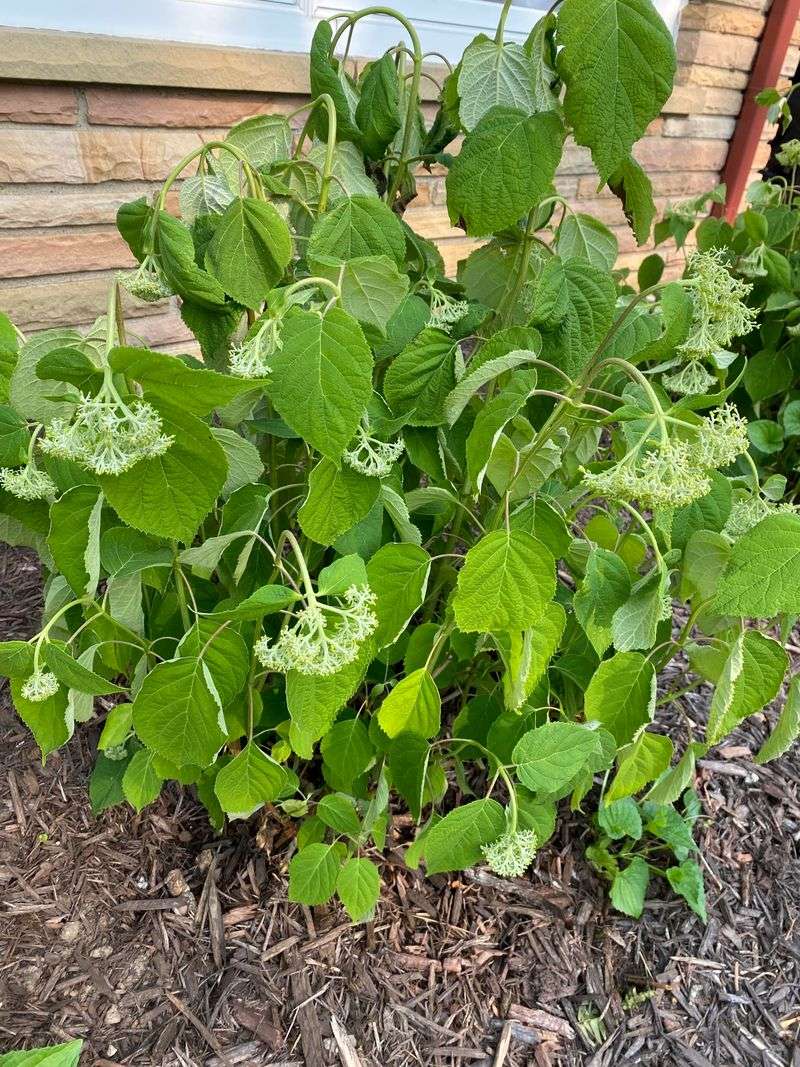
On a hot, sunny afternoon, a hydrangea can look completely defeated even when the soil is perfectly moist. Large-leaved varieties, especially bigleaf hydrangeas, have a lot of leaf surface area, and on a hot or windy day they can lose water through their leaves faster than the roots can pull it up from the soil. The result is midday or afternoon wilt that has nothing to do with how much you watered that morning.
OSU Extension’s guide to heat stress in garden plants describes this as a temporary imbalance between water loss and water uptake, not a sign of a damaged root system. The key clue is recovery: if the plant perks back up in the evening or looks normal again by the following morning, heat-related water loss is a more likely explanation than drought or root damage. That recovery does not prove heat stress definitively, but it is a meaningful data point that should make you pause before watering again.
OSU Extension’s hydrangea heat-wave publication notes that bigleaf hydrangeas are among the more water-demanding types and tend to show heat stress earlier than some other species. Panicle hydrangeas and certain smooth and oakleaf cultivars generally tolerate more sun and drier conditions, though cultivar selection and your local climate both influence how any individual plant responds. Knowing which type you are growing helps set realistic expectations for how it will behave during summer heat.
Temporary wilt during peak afternoon heat is worth monitoring rather than immediately treating with additional water. If the root zone probe shows adequate moisture and the plant recovers on its own by evening, holding off on extra watering is usually the right call until conditions cool down.
Persistent wilt warrants inspection beyond irrigation
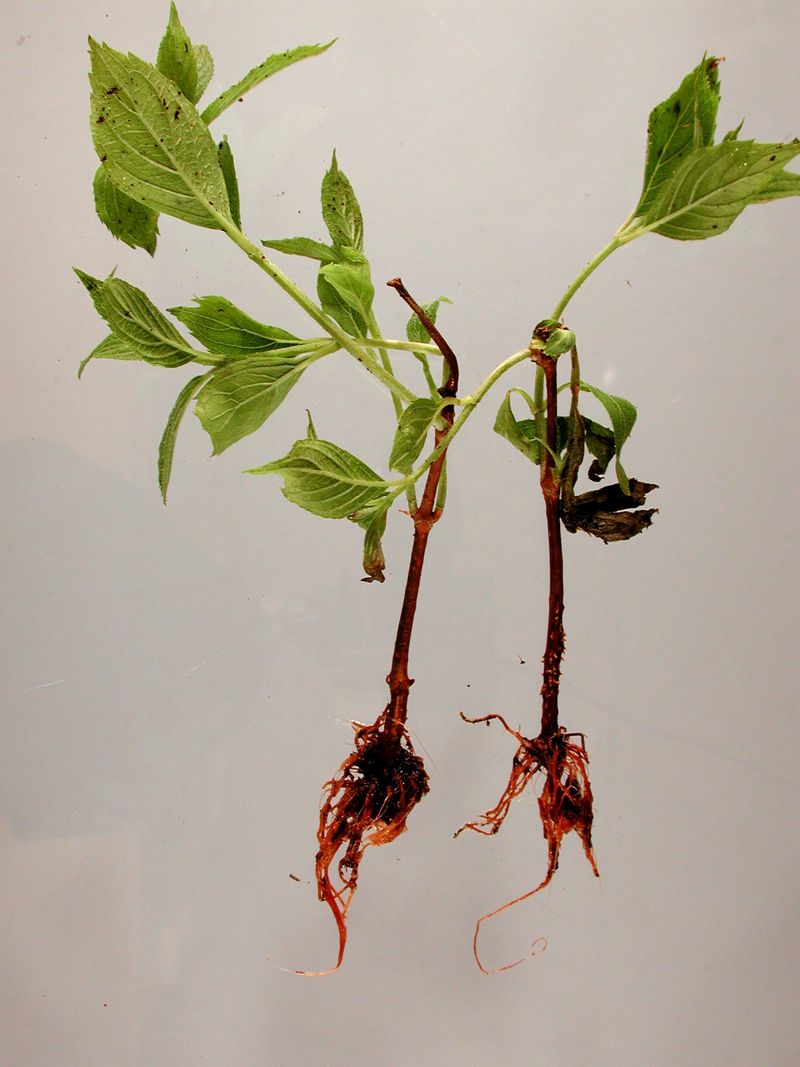
A plant that droops overnight and still looks limp the next morning, or one that stays wilted even though the root zone feels moist and temperatures have cooled, is telling you something that irrigation alone cannot fix. At that point, the investigation needs to move beyond the watering schedule and look at the plant itself.
Start with a physical inspection. Check the stems at and just below soil level for soft, discolored, or sunken tissue. Look at the foliage for unusual spotting, browning at the margins, or signs of pest activity such as stippling, webbing, or insect presence. Examine whether the planting depth looks correct, since a crown buried too deep can restrict the plant’s ability to move water and nutrients.
None of these checks requires special tools, and each one can point you toward or away from a root or disease problem before you start digging.
UConn Extension’s hydrangea diseases and pests factsheet notes that Armillaria root rot has a particular association with oakleaf hydrangea, while Phytophthora root rot tends to develop in poorly drained soils. Both can cause wilting that does not respond to watering, and both can be present without obvious above-ground symptoms in the early stages. The symptoms of these diseases overlap significantly with those of environmental stress and other disorders, which is why a confident diagnosis often requires more than a visual check.
Penn State Extension’s resource on Phytophthora root rot states plainly that no chemical treatment reliably cures an established infection; prevention through drainage correction and appropriate site selection is the real management tool. Penn State’s 2024 green industry update reinforces that a definitive diagnosis of soilborne disease may require laboratory testing, because symptoms of Phytophthora and similar pathogens can look identical to those caused by environmental stress.
Fertilizer is not a revival treatment for a wilting plant. WSU Hortsense includes fertilizer and salt injury among the stressors that can produce wilt and leaf damage in hydrangeas, so adding more fertilizer to a struggling plant risks compounding the problem rather than correcting it.
Match the remedy to the evidence
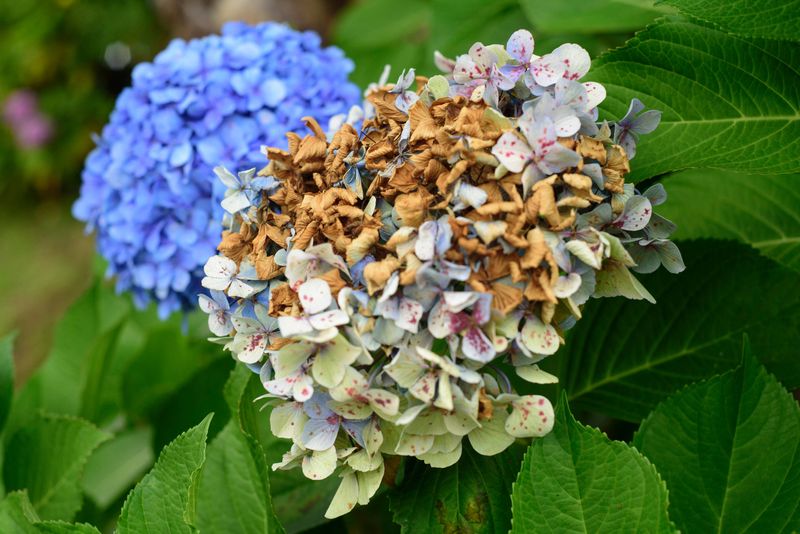
Every step in this process leads to the same practical point: the wilt you see does not tell you what to do next. Only what you find below the surface and in the surrounding conditions can guide the right response.
Probe the root zone before adding water. When it is dry four to six inches down, water slowly and deeply to wet the whole root area. When the soil feels squishy or the root zone is already saturated, stop adding water and focus on improving drainage instead, whether that means redirecting a downspout, amending compacted soil, clearing a blocked container drain, or lifting a pot out of standing water. OSU Extension’s hydrangea heat-wave guide recommends organic mulch over the root zone as a way to conserve moisture and moderate soil temperature once drainage is working correctly.
Keep the mulch layer a few inches away from the stem to avoid trapping moisture against the crown.
Watch for overnight recovery as a clue for heat stress, and reserve closer inspection of stems, roots, and site conditions for plants that stay wilted despite adequate soil moisture and cooler temperatures. OSU’s general hydrangea care guidance and Illinois Extension’s container drainage resource both circle back to the same foundation: consistent moisture in well-drained soil, whether in a bed or a pot, is what a hydrangea actually needs. A wilted plant is asking a question, and the answer depends entirely on what the evidence shows.