
If Your Kalanchoe Never Bloomed Again After The Store, Here’s The Fall Habit That May Help Bring Flowers Back
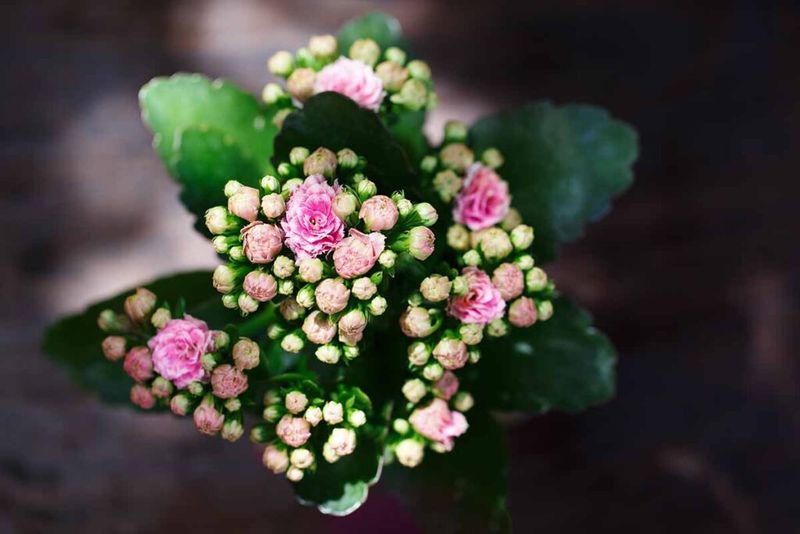
You brought home a kalanchoe covered in bright blooms, and now it’s just a pot of thick green leaves. Many gardeners hit this same wall, and it rarely means you did something wrong.
Kalanchoe flowers in response to the length of its nights, and fall is the perfect time to work with that. Here is a simple routine that may encourage flower buds to form again.
Why a store-bought kalanchoe may stop flowering
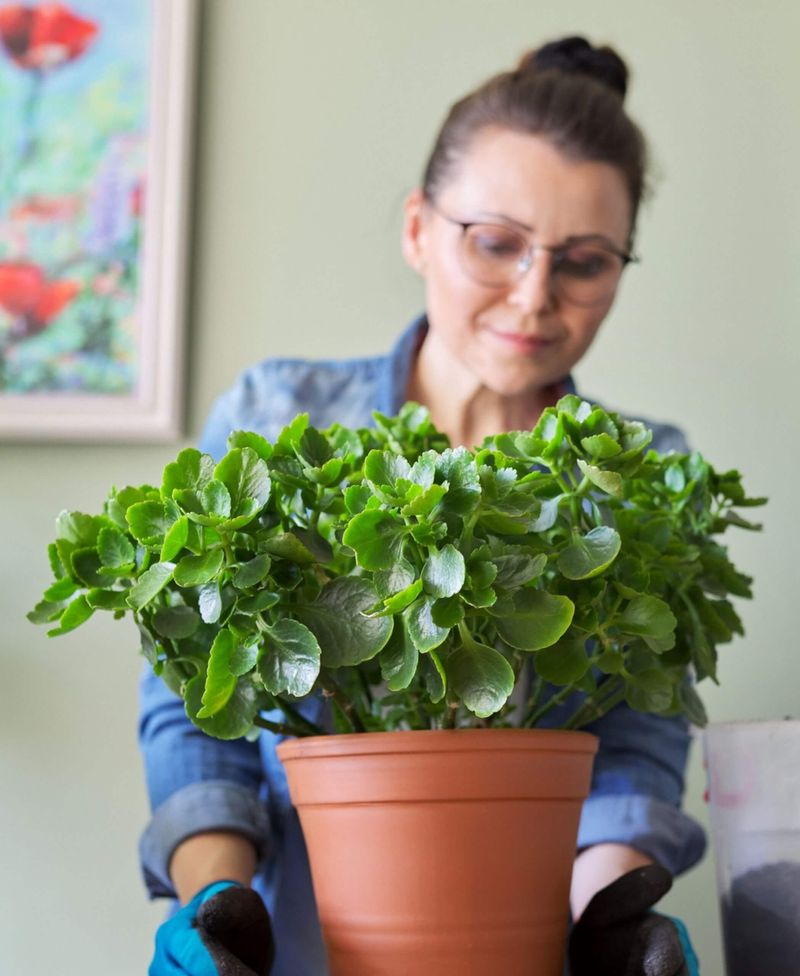
Staring at a leafy kalanchoe that once glowed with color is frustrating. The plant is not necessarily failing.
It is probably just doing what a healthy kalanchoe does when nothing is telling it to flower.
The plant you bought was likely grown in a greenhouse where growers control day length very carefully. That display bloom was timed for the store shelf, not for your living room.
A previous bloom does not prove the plant will readily repeat the show at home.
Extension sources are candid about this. Iowa State Extension says reblooming a kalanchoe can be difficult.
Virginia Cooperative Extension notes that some cultivars are hard to flower a second time. UNH Extension adds that rebloom is unreliable without controlled day length, and that a home-grown repeat bloom may not look as full as the greenhouse version.
So there is no single mistake to blame. Light, temperature, the particular variety, and the age of the plant all play a part.
Think of what follows as a way to encourage flowers, not a guaranteed fix.
The good news is that the most important step costs nothing. It simply involves managing the dark hours your plant gets each night during fall, and the next sections walk through exactly how that works.
Kalanchoe responds to long, uninterrupted nights
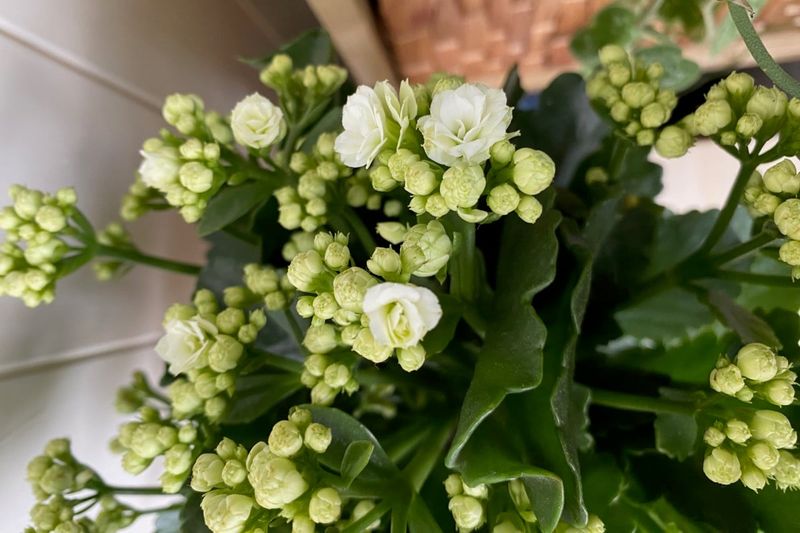
Gardeners call florist kalanchoe, usually Kalanchoe blossfeldiana, a short-day plant. That label is a little misleading.
The plant is not counting how short the daylight is. It is responding to how long its uninterrupted night lasts.
Christmas cactus follows a similar broad pattern, which is why the two get compared. The comparison only goes so far, though, because their care schedules are not the same.
In controlled research, a study of Kalanchoe blossfeldiana described it as a qualitative short-day plant. Flowering depended on an uninterrupted dark period.
The same experiment also found that cultivars differed in how they responded.
That last detail matters for your windowsill. Your plant may be a different variety than the one in a neighbor’s kitchen, so one home schedule cannot be promised to work the same way for every plant.
Here is what it means in plain terms. Fall brings longer nights outdoors, but indoor lamps, TVs, and hallway lights can chop those nights into shorter pieces for a plant sitting in your home.
If your kalanchoe lives in a room that is lit up every evening, it may never get the long, quiet dark stretch that signals it to make buds.
That is the gap this routine tries to close. You are not tricking the plant with anything fancy.
You are giving it the kind of night it would get in the right season.
Try a six-week fall darkness routine
Here is the core routine. Extension guidance commonly calls for about 14 hours of darkness each night for at least six weeks, with bright light during the day.
Iowa State and North Carolina State Extension both give that schedule. Treat it as common guidance, not a universal rule.
If you have a spare room or closet that stays dark at night, you can move the plant there in the evening. Bring it back to a bright window in the morning.
That is the simplest approach, and it works if nobody walks in and flips on a light.
If moving the pot is a hassle, cover it instead. A cardboard box, an opaque bag, or a thick dark cloth can work, as long as it blocks light fully and still lets the plant breathe.
Set it over the plant at night and take it off in the morning.
A sample day might look like this: cover the plant around 6 p.m., then uncover it around 8 a.m. That gives roughly 14 hours of dark and 10 hours of light, which matches the pattern Missouri Extension describes.
Mark the start date on a calendar and keep the routine steady. Skipping nights can undo your progress.
Remember what this routine does. It encourages flower buds to form.
It does not promise blooms on a set date, and some plants may not respond at all.
Protect the dark period without shutting out daytime light
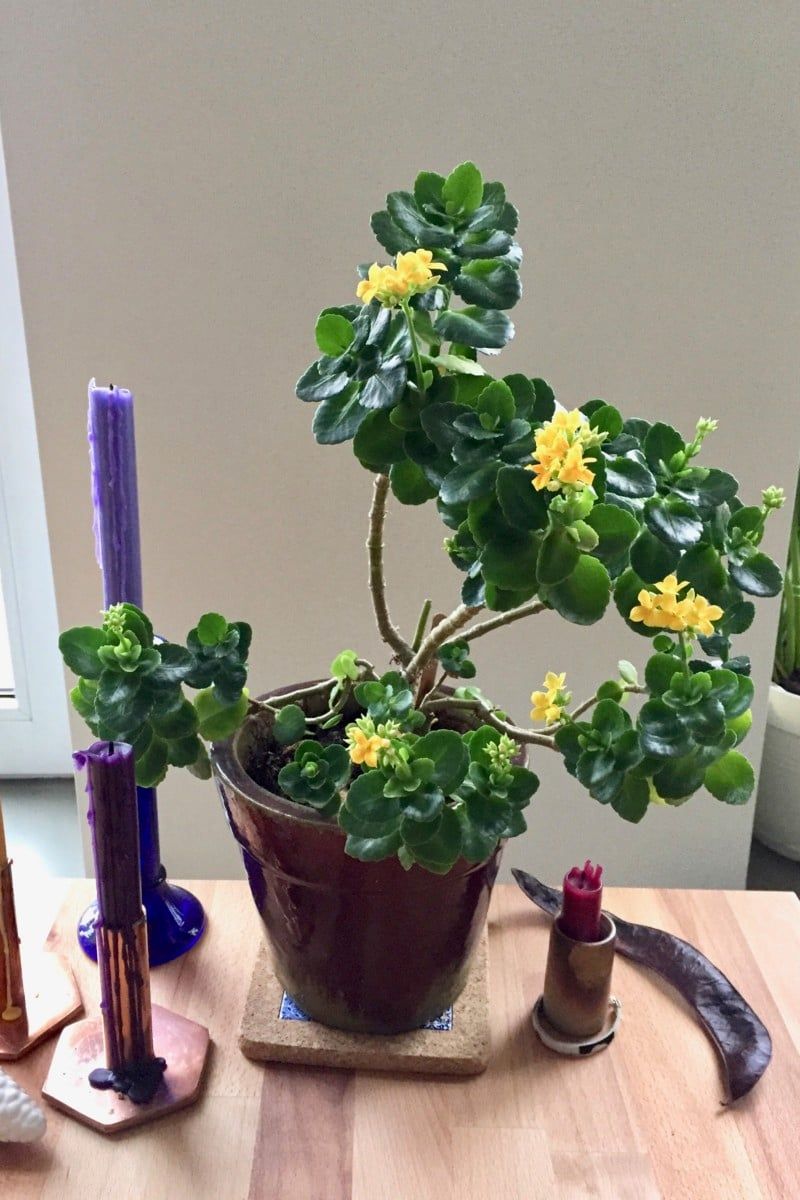
Light matters in two directions here. During the dark period, the plant needs real darkness.
During the day, it needs plenty of brightness. Missing either side weakens the plan.
Start with the night. Iowa State suggests a room where lights are not turned on at night, and Missouri Extension says not to allow light during the dark period.
Watch for sneaky sources like a lamp near a window, a hallway light, a phone charger glow, or a streetlight shining through thin curtains.
Does one quick flick of a light ruin everything? Probably not every time, and nobody can say for sure how one brief exposure will play out.
Still, steady nighttime lighting is the main thing to avoid, so keep the plant tucked away from it.
Now the day. Darkness around the clock is not the treatment.
The plant still needs bright light to stay healthy and build energy for flowers. Scattered dark hours spread through the day will not substitute for one long, unbroken night either.
A useful check: if you ever walk in at night and the plant is catching light, fix the setup right then. A small cardboard box with a lid is often easier than rearranging a whole room.
Support the plant while it forms buds
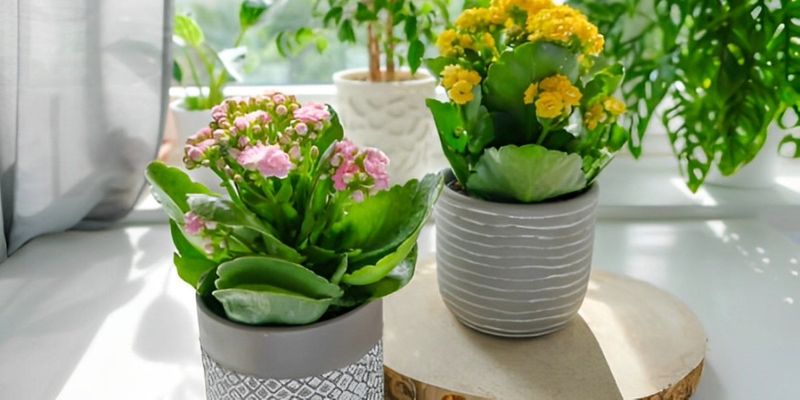
Long nights do the signaling, but a well-cared-for plant has the strength to answer. Think of everyday care as the support crew.
Give your kalanchoe bright light during the day. Water thoughtfully, too.
Iowa State advises letting the soil dry between waterings without letting the plant wilt. That is not the same as withholding water to force a bloom, which is a myth you can skip.
Use a pot with drainage holes and a well-drained mix. Soggy roots invite rot, and rot can sink a plant faster than any lighting mistake.
Empty the saucer after watering so the pot is not sitting in a puddle.
Aim for moderate temperatures. Sources differ on specifics.
Iowa State gives 65 to 70 degrees F by day and 60 to 65 at night, while Missouri Extension warns that temperatures above 75 degrees F can delay or reduce flowering. No single number is a proven cutoff, so just avoid hot spots like a spot above a heater.
If your plant spent summer outdoors, bring it in before cold or frost arrives. It is not frost tolerant, and NC State advises moving it indoors before temperatures fall below 45 degrees F.
One more tip: kalanchoe is listed as toxic to cats and dogs, so keep it out of reach of pets.
Allow time, and keep expectations realistic
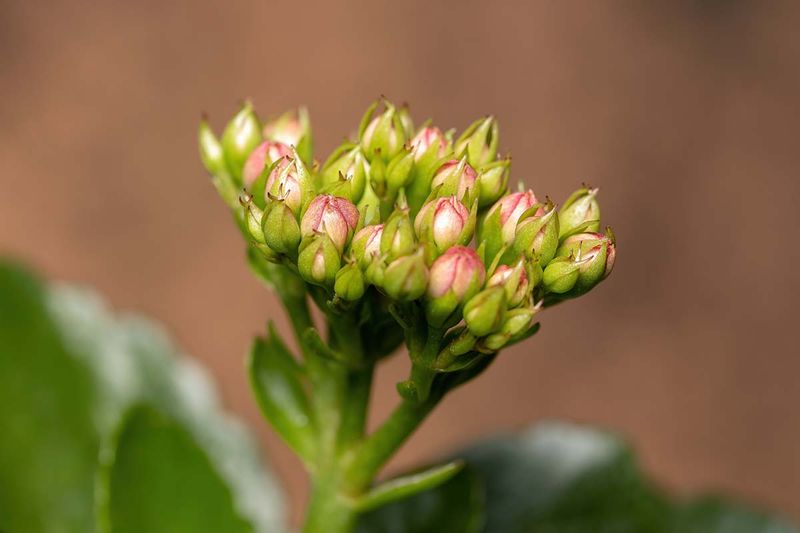
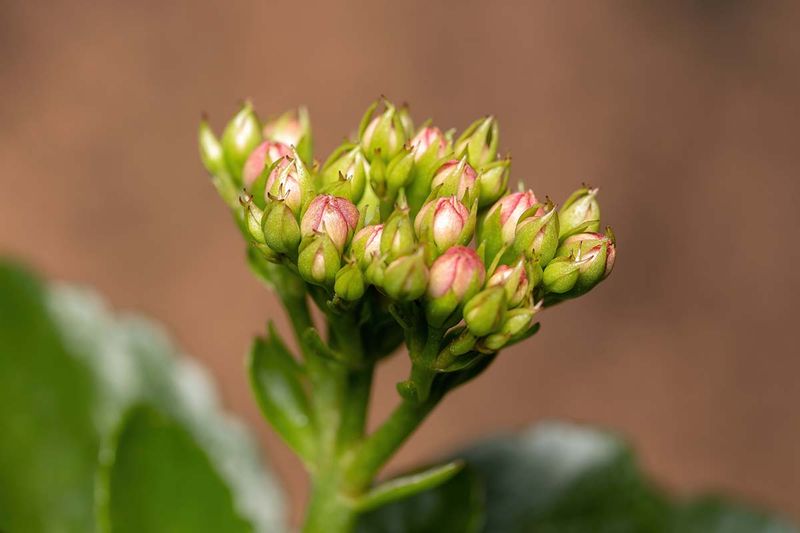
After six weeks of long nights, you probably will not see a pot full of flowers. What you may see are tiny bud clusters at the stem tips.
The routine is meant to start buds, and those take time to develop.
As one example, Clemson Extension says natural short days beginning in early October may produce flowers by January. Treat that as an example, not a schedule you should expect.
Your timing could be earlier, later, or may not happen.
Plenty of things shape the outcome. Research found cultivars respond differently, and your plant’s age, health, temperature, and light exposure all matter.
UNH Extension cautions that home blooms may not match greenhouse quality, and Iowa State says rebloom can be difficult.
If no buds show up, you have not failed. Keep the plant healthy, enjoy its thick leaves, and try again next fall.
A kalanchoe that never flowers again is still a tough, handsome plant, and one that does is a small reward for patience.