
If Your Peace Lily Droops Right After Watering, The Real Cause Is Hiding In The Roots
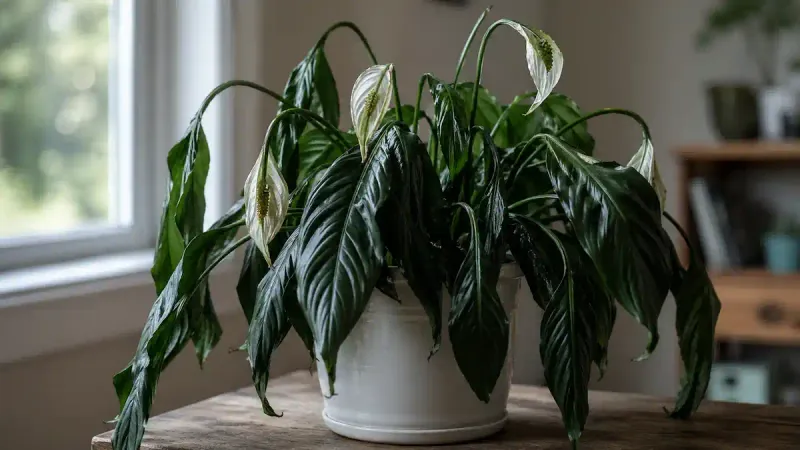
You water your peace lily, and within hours it looks worse than before you started. That kind of response feels like a mystery, but the explanation is usually somewhere below the soil line. The roots control how much water reaches the leaves, and when something is wrong down there, no amount of watering at the surface will fix it. Understanding what to look for, and in what order, can save you from repeating a fix that is not addressing the real problem.
Drooping After Watering Does Not Prove the Water Caused It
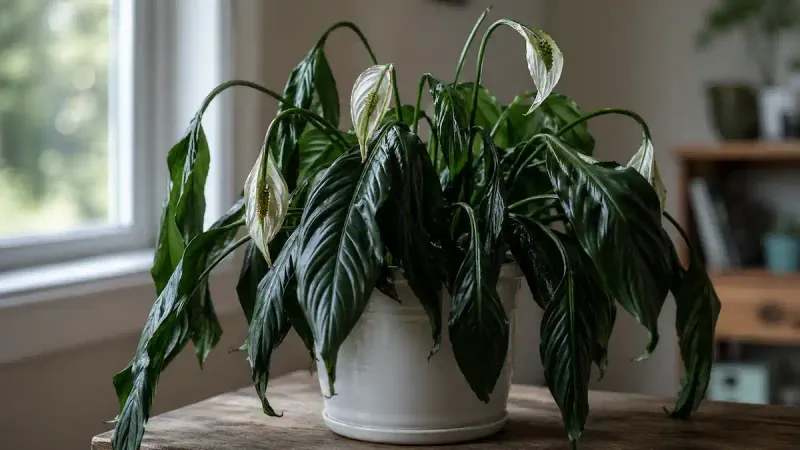
Wilting in a peace lily happens when the roots cannot move enough water up to the foliage, no matter how much moisture surrounds them. That single fact is the key to understanding why your plant might droop right after you water it. The water you added did not necessarily cause the problem, and the timing alone does not tell you what went wrong.
Roots fail to supply foliage for more than one reason. Iowa State University Extension guidance on houseplant wilting notes that both excess moisture and severe dryness can lead to the same drooping symptom, because either condition can compromise the root system’s ability to do its job. A saturated root zone starves roots of oxygen and can cause them to deteriorate. A dry, compacted, or tightly packed root ball may simply fail to absorb water evenly, leaving the plant functionally thirsty even after a full watering session.
The timing of the droop, right after watering, may mean that watering revealed or worsened an existing problem rather than created a new one. A struggling root system was already there; the water just made the situation visible. This is a plausible, evidence-based inference, not a rule that applies to every peace lily in every pot.
According to University of Florida IFAS Extension care guidance for Spathiphyllum, peace lilies should be kept moist but should never sit in standing water. That distinction between consistently moist and perpetually saturated is where many problems begin. Root inspection is one important step in figuring out what is happening, but it is not the only step, and the droop itself is not enough to name a cause.
Check the Soil Before You Add More Water
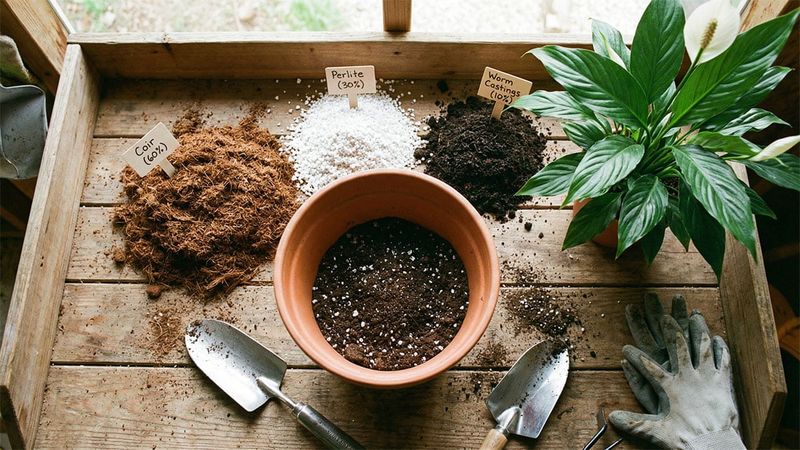
Before you do anything else, push your finger about one to two inches into the potting mix. What you feel there tells you far more than the surface does. Dry surface soil can look deceiving when the mix below is still quite wet, and a calendar-based watering schedule will not account for the differences in pot size, room temperature, humidity, or season that affect how quickly the mix actually dries out.
If the mix feels damp or wet at that depth and your peace lily is still drooping, do not add more water. Iowa State Extension’s wilting diagnostic guidance recommends checking soil moisture directly and waiting when the mix is already moist, rather than watering again. Adding water to a pot that is already saturated can make oxygen deprivation around the roots worse, which may accelerate any existing root damage.
Wet soil combined with persistent wilting is a signal to look further, specifically at drainage and the roots themselves. A pot sitting in water it cannot shed, or a drainage hole that is blocked, can keep the root zone saturated long after you have finished watering. Virginia Cooperative Extension’s container watering guidance supports thorough watering followed by complete drainage, not leaving plants to stand in water that collects below the pot.
If the mix feels genuinely dry an inch or two down, the plant may simply be thirsty and a thorough watering could be the right move. However, dry soil in a wilting plant sometimes points to a root ball that has become so dense or hydrophobic that water passes around it rather than soaking through it evenly. University of Illinois Extension advises emptying any water retained in saucers or decorative sleeves, since standing water beneath the pot can keep the bottom of the root zone wet even when the top feels dry. Either way, the soil check comes first.
Inspect Roots Without Treating Color as a Diagnosis
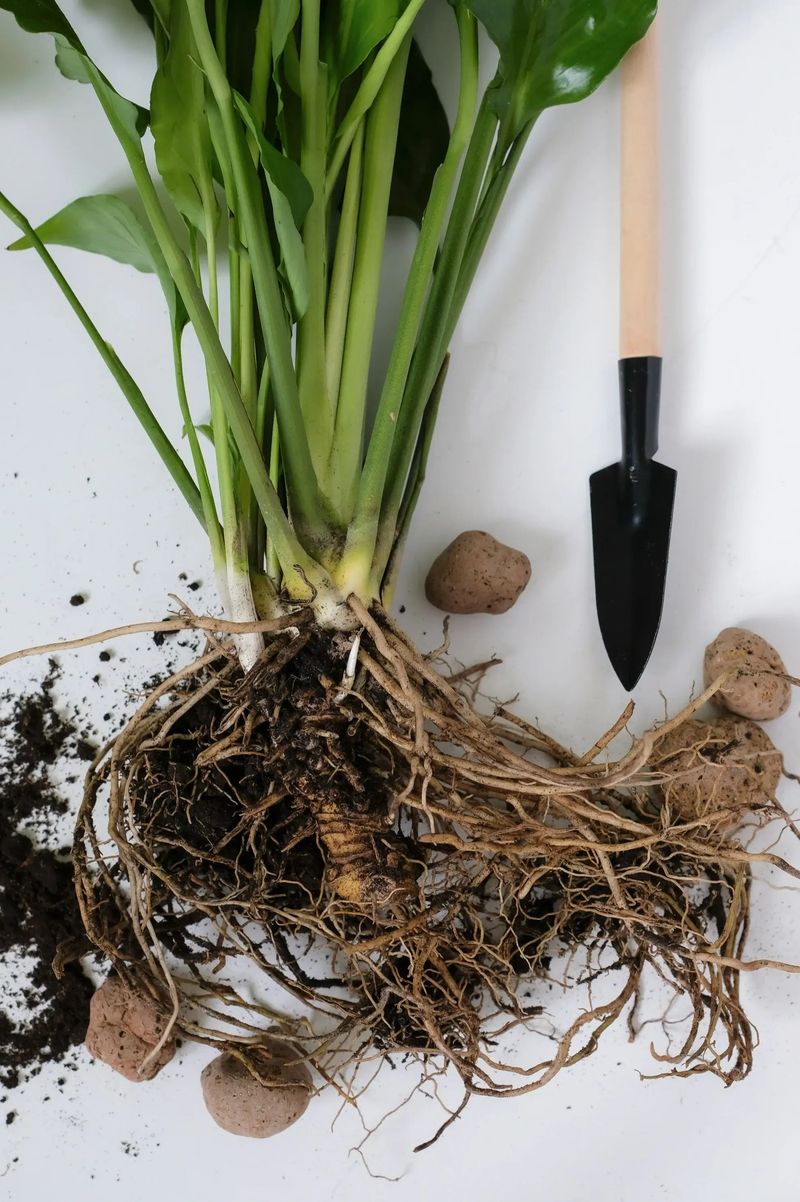
Pulling a peace lily gently from its container is the most direct way to understand what is happening below the soil line. The right moment to do this is when the mix stays wet but the plant continues to wilt, or when other signs, such as an odor coming from the pot or roots visible at the drainage hole, point to a root-zone issue. Sliding the plant out carefully while supporting the base of the stems avoids unnecessary damage to whatever healthy roots remain.
Healthy peace lily roots are generally firm to the touch and tend to be white or cream-colored. Roots that are brown to black, soft, mushy, fragile, or accompanied by a sour or unpleasant smell are warning signs worth taking seriously. Iowa State University Extension’s guide on root rots of houseplants describes this combination of color, texture, and odor as the cluster of signs associated with root rot, while noting that root appearance alone is not a perfect diagnosis for every plant species.
Color deserves a specific caution here. Some roots naturally darken with age or because of tannins in certain potting mixes, and not every brown root is a diseased one. What matters more is whether the root is firm and intact or whether it collapses, tears, or feels slippery when you gently press it. A root that holds its shape is in a different condition than one that disintegrates at a touch.
Extension guidance on wilting houseplants recommends removing the plant from the pot and examining the root ball when wet soil and persistent drooping are present together, treating this as a more reliable step than assuming the plant needs more water. Consider the full picture: soil moisture, root texture, odor, and how the plant as a whole looks and has been behaving. Virginia Cooperative Extension’s guidance on water stress in container plants reinforces that firmness, overall tissue condition, and the surrounding moisture environment should all factor into the assessment, not color alone.
Why Root Rot Can Make a Wet Pot Look Thirsty
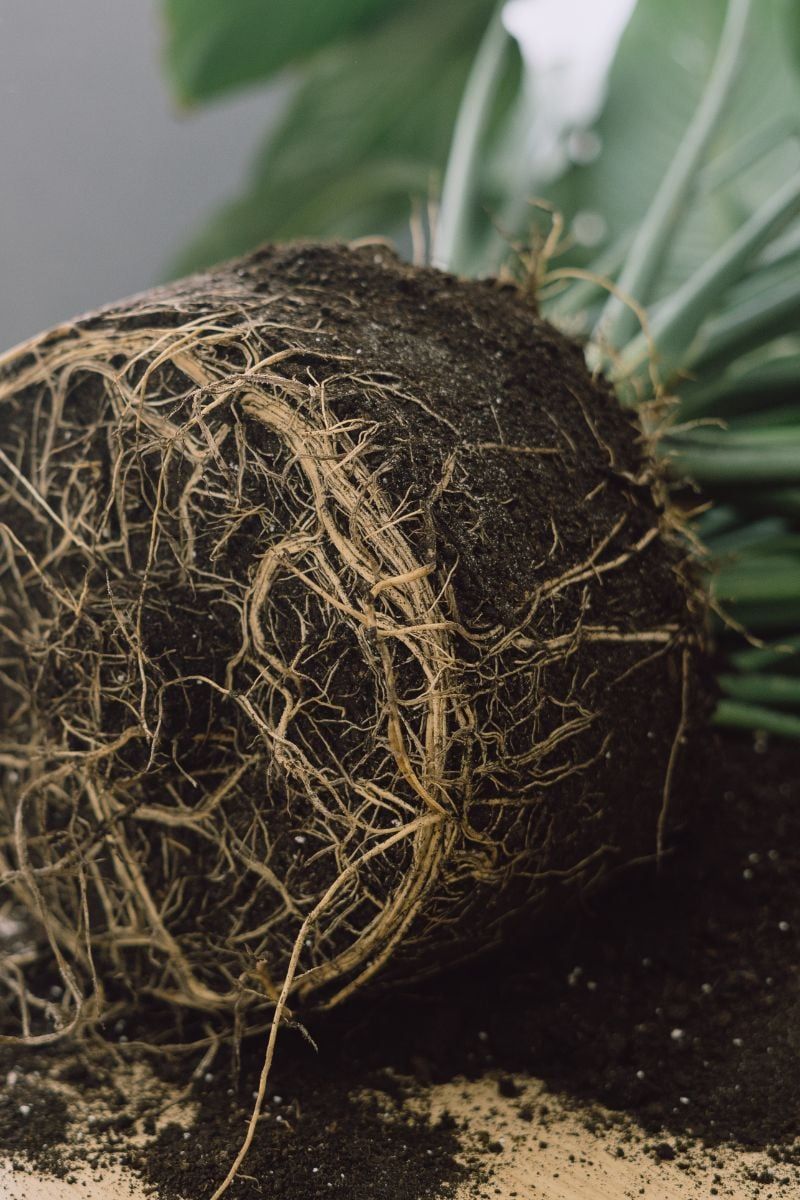
Root rot is one possible explanation when a peace lily stays wilted despite wet soil, but it is not a diagnosis you can make from symptoms alone. The mechanism behind it is straightforward: when potting mix stays saturated for too long, the spaces between soil particles fill with water and the oxygen those roots need to function gets squeezed out. Roots deprived of oxygen begin to deteriorate, and a deteriorating root system cannot move water to the leaves even when the mix around it is soaking wet. The plant looks thirsty because, in a functional sense, it is.
Virginia Cooperative Extension’s container watering guidance emphasizes that “overwatering” in the problematic sense means keeping the root zone saturated repeatedly over time, not simply applying a generous volume of water once to a pot that drains freely. A thorough single watering that drains completely is very different from a pot that never fully dries between sessions.
If your root inspection reveals mushy, fragile, or foul-smelling roots alongside wet soil, the corrective steps are practical and sequential. Remove the plant from the saturated or contaminated mix entirely. Trim clearly dead or mushy roots with clean scissors or pruners that have been wiped with rubbing alcohol between cuts. Iowa State Extension’s root rot guide supports removing affected tissue and repotting into fresh, well-drained potting mix in a clean container that has an open drainage hole.
Two points deserve emphasis before you start. First, plants with severe, widespread root rot may not recover even with the best intervention; the remaining healthy root tissue may simply be insufficient to support the foliage. Second, University of Wisconsin Extension notes that fungicides are generally not recommended for home gardeners dealing with houseplant root rot, because suitable products are limited, often costly, and not a substitute for correcting the underlying moisture and drainage conditions. After repotting, water the fresh mix thoroughly, allow it to drain completely, and then let the mix reach the appropriate level of dryness before watering again.
A Root-Bound Peace Lily Can Stay Dry After Watering
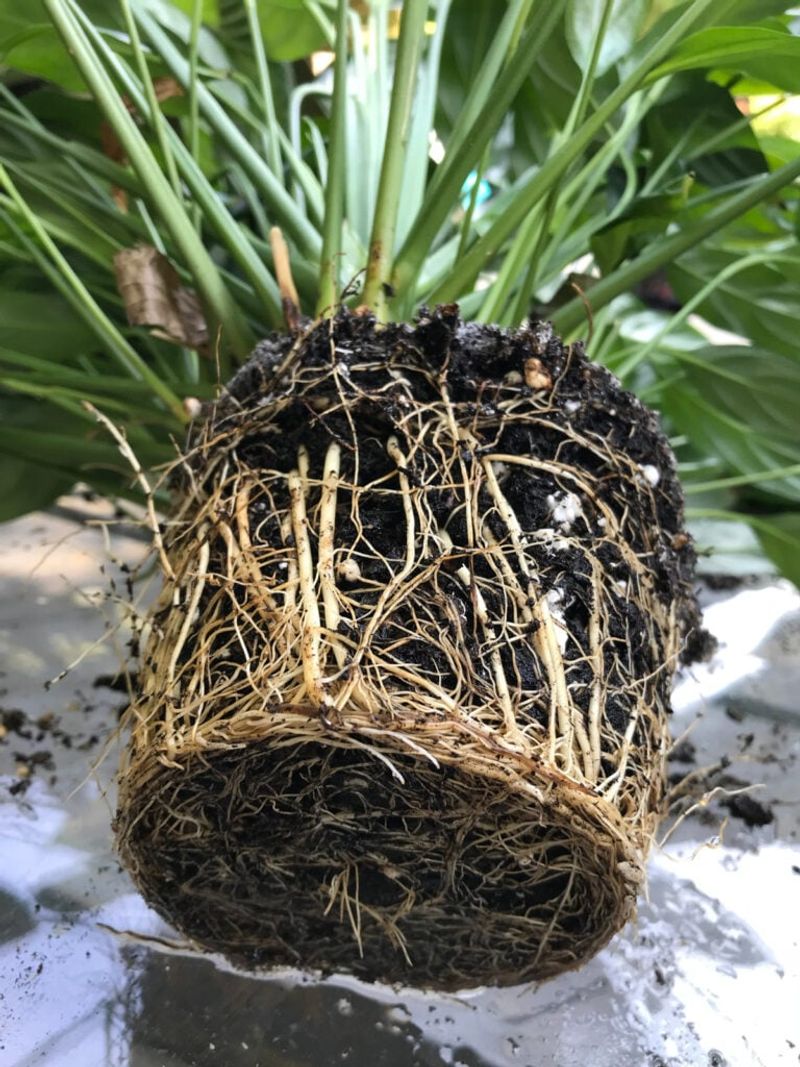
Root binding and root rot are two separate problems that call for different responses, and confusing them leads to the wrong fix. A root-bound plant has a dense, tightly circling mass of roots that has filled the container, while a root-rotted plant has deteriorating tissue that can no longer absorb water. A plant can, in some cases, have both conditions at once, but treating them as interchangeable will not help either situation.
Signs of a root-bound peace lily are visible without removing the plant from its pot. Roots circling the outside of the root ball, emerging from drainage holes, or pushing up through the soil surface all suggest the plant has outgrown its container. Clemson Cooperative Extension’s peace lily factsheet describes these as the indicators that repotting may be needed. When the root mass is dense enough, water applied at the surface can run down the sides of the root ball and out the drainage hole without ever penetrating the dry, compacted center, leaving the plant functionally unwatered despite a full session at the sink.
University of Maryland Extension’s guidance on pot-bound plants explains that a tightly packed root ball can become almost hydrophobic over time, shedding water rather than absorbing it. If you water thoroughly and the mix dries out again very quickly, or if the plant wilts between waterings more frequently than it used to, root binding is worth considering as a contributing factor.
When repotting a root-bound peace lily, choose a container only about one to two inches wider in diameter than the current pot. A much larger pot holds a greater volume of unused potting mix that stays wet long after the roots have taken up what they need, which can create new moisture problems. After repotting, water the fresh mix thoroughly and allow all excess water to drain completely before setting the plant back in place. University of Florida IFAS Extension recommends resuming normal watering only when the mix reaches the appropriate dryness for the plant, rather than keeping it constantly wet after the move.
Audit Drainage and the Plant’s Growing Conditions
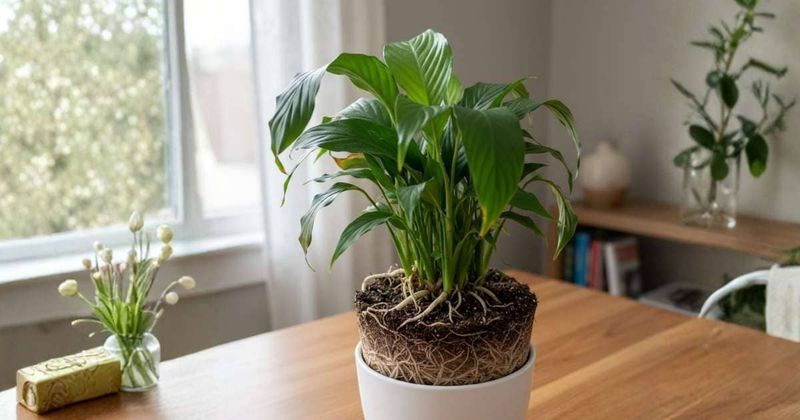
Drainage problems are easy to overlook because they happen out of sight. Turn the pot over and confirm that the drainage hole is open and unobstructed. A hole blocked by compacted roots or debris keeps water trapped in the bottom of the container even when you think the pot is draining normally. University of Illinois Extension advises emptying water that collects in saucers, decorative cachepots, or plastic sleeves after each watering session rather than allowing the plant to sit in it.
Environmental conditions can also contribute to wilting in ways that have nothing to do with roots or moisture. Clemson Cooperative Extension’s peace lily care guidance notes that peace lilies prefer bright, indirect light and should be kept away from cold drafts, heating vents, and spots where temperatures shift abruptly. Cold air from a window or a blast of dry heat from a vent can cause foliage to droop or develop damage that looks like a watering problem but is not. These are possible contributors worth checking, especially if the roots and soil moisture appear normal.
One common drainage myth deserves a clear correction. Placing a layer of gravel or pebbles at the bottom of a pot before adding potting mix does not improve drainage. University of Nevada, Reno Extension identifies this as a houseplant care myth: a coarse layer beneath fine potting mix creates a perched water zone where moisture accumulates just above the gravel rather than draining through it. The result is actually wetter conditions at the root level, not drier ones.
A properly sized pot with a clear drainage hole and an appropriate potting mix is the straightforward, effective alternative.
Match the Next Step to the Evidence
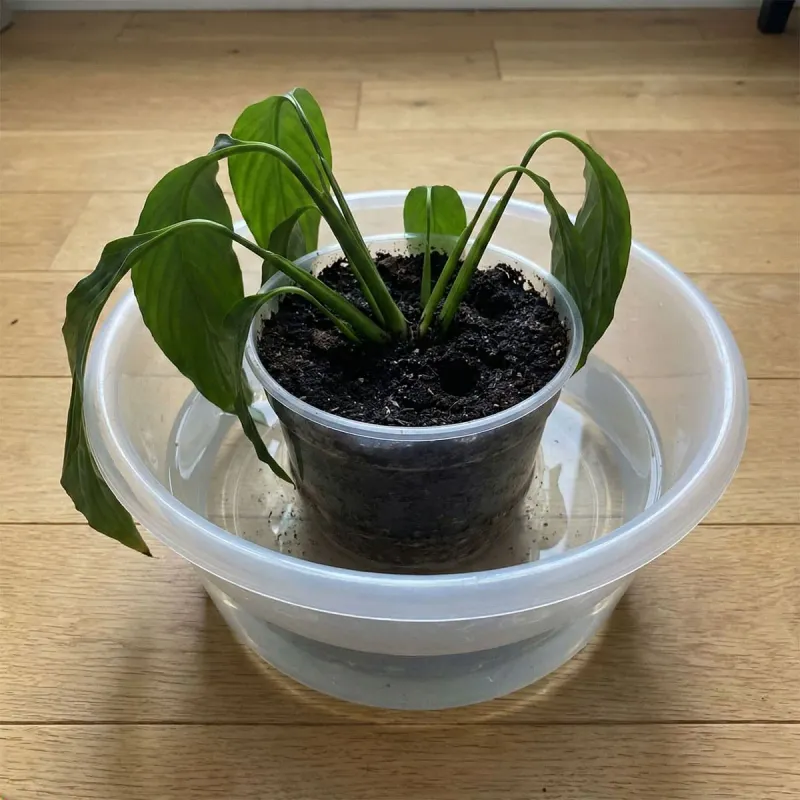
Working through the checks in order keeps you from applying the wrong fix. Start with the soil at one to two inches deep. Dry mix in a wilting plant is a reasonable signal to water thoroughly and let the excess drain completely before the pot goes back in its spot. Iowa State Extension’s wilting guidance and University of Florida IFAS Extension’s Spathiphyllum care sheet both support watering when the mix is appropriately dry, then allowing complete drainage rather than keeping the plant constantly wet.
Wet soil combined with mushy, fragile, or foul-smelling roots points toward possible root rot. In that case, the corrective path is removing damaged roots with clean tools and repotting into fresh, well-drained mix in a clean container with an open drainage hole. A dense, circling root mass with otherwise intact roots points toward root binding, where a slightly larger pot and fresh mix are the practical response.
If the roots look reasonably healthy and the soil moisture is appropriate, the cause may be elsewhere. Iowa State Extension’s broader houseplant diagnostic guide lists compacted or exhausted potting mix, excess fertilizer salts, low light, temperature stress, and pest activity as additional contributors to wilting that do not involve the roots directly. Persistent wilting that does not respond to any of the root or moisture fixes is a prompt to look at those factors next. A peace lily that gets the right light, stable temperatures, and well-draining mix in a properly sized container rarely stays a mystery for long.