
If Your Peace Lily Grows Glossy Leaves But Never A Single Bloom, One Care Habit Is Holding It Back
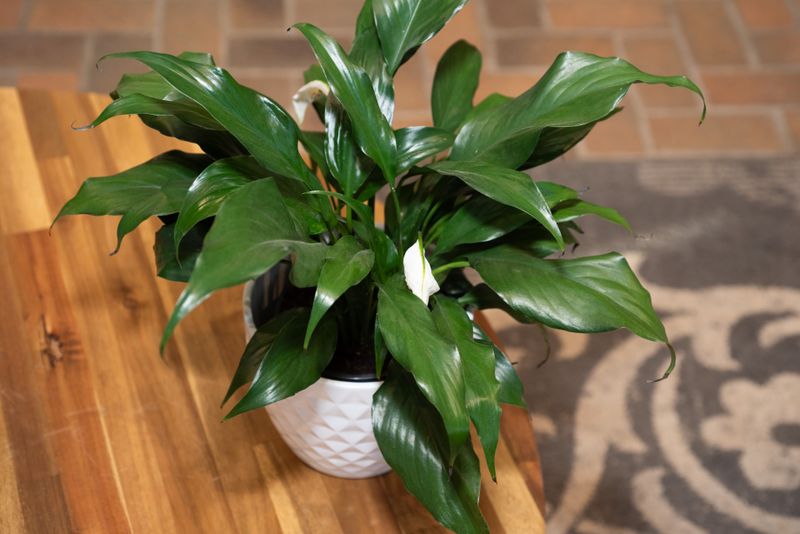
Your peace lily looks picture-perfect, with deep green, glossy leaves that catch every eye in the room, yet the plant has never produced a single white bloom. That gap between beautiful foliage and zero flowers is more common than most people realize, and it has a logical explanation. Insufficient light is usually the first care factor worth testing, though plant age, cultivar type, seasonal timing, and watering habits can all play a role too.
Healthy leaves can hide a flowering problem
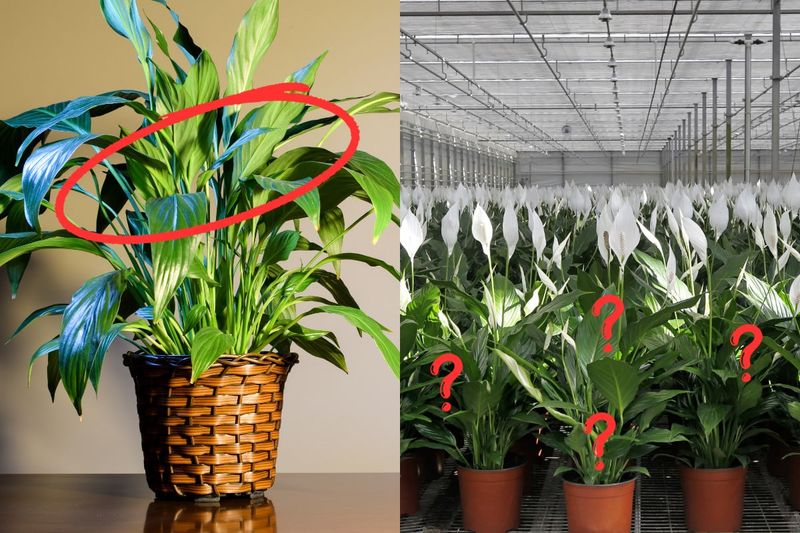
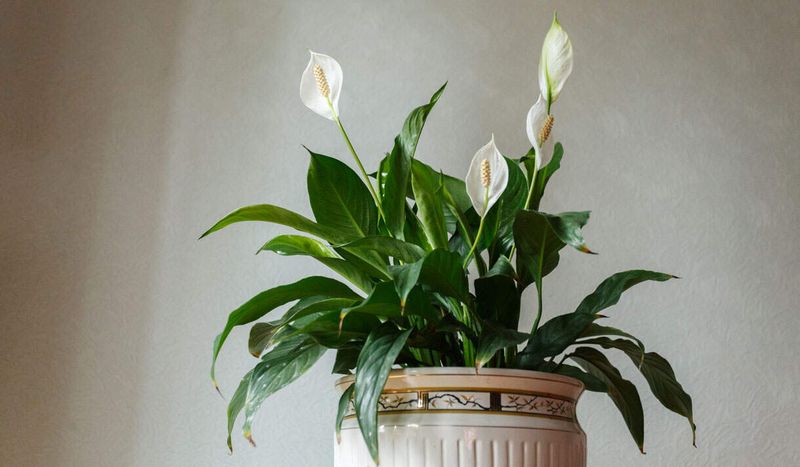
A peace lily can look genuinely impressive without ever producing a bloom. The leaves stay dark, smooth, and upright, which makes it easy to assume that everything the plant needs is already in place. The catch is that foliage maintenance and flowering readiness are two different thresholds, and a peace lily can clear the first one without coming close to the second.
To understand why, it helps to know what that white “flower” actually is. University of Florida IFAS cultural guidelines for Spathiphyllum describe the showy part as an inflorescence, not a single flower. A broad white or greenish bract called a spathe wraps around a central spike called a spadix, and the true flowers are the tiny structures clustered along that spadix. Producing that inflorescence takes more from the plant than simply maintaining its leaves.
Peace lilies are shade-tolerant by nature, which is a big part of why they are so popular as indoor plants. That tolerance, though, works against owners trying to diagnose a bloom problem. University of Minnesota Extension guidance on lighting for indoor plants notes that most plants grown for flowers require high-light conditions, while foliage plants can persist in much lower light. A peace lily sits in an interesting middle ground: it is sold and grown as a foliage plant, yet it is also capable of flowering when conditions support it.
Glossy leaves, then, are evidence that the plant is coping with its environment, not proof that every condition is optimal for blooming. The distinction matters because it points to where the investigation should start. Light is the first practical factor to test, but cultivar, plant age, seasonal timing, root health, and nutrition deserve a look too if a lighting change does not produce results.
Light is the first care factor to test
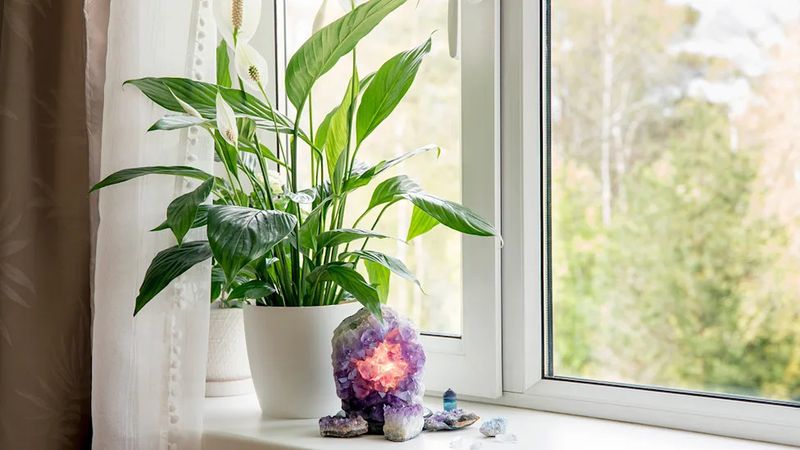
Peace lilies earned their reputation as low-light survivors, but “low light” and “enough light to flower” are not the same thing. A plant sitting in a dim corner or far from any window can hold its leaves together for months or even years, yet never generate the energy needed to push out an inflorescence. That gap is often the hidden reason a plant looks healthy on the surface while staying stubbornly flowerless.
The distinction between light intensity and light duration matters here, and research from a controlled greenhouse setting makes that clear. A 2026 Wageningen University trial on LED spectrum and Spathiphyllum found that higher light intensity increased flowering, while a 16-hour photoperiod actually delayed flowering compared with a 12-hour photoperiod under the study’s greenhouse conditions. That result is worth knowing, but it comes from a tightly controlled trial, not a home living room. Translating it into a rigid home schedule would overstate what the data can support.
What the research does reinforce is the practical priority: intensity matters, and more usable light per day is generally the direction to move first. University of Florida IFAS research on Spathiphyllum flowering confirms that flowering is influenced by light intensity, photoperiod, cultivar, plant age, temperature, irrigation, and nutrition, with foliage and flowering performance responding differently to the same interior conditions.
A plant parked in a hallway or interior room may be receiving light that registers as survivable but falls short of what flowering requires. Moving it closer to a light source, without jumping straight to harsh direct sun, is the most straightforward first test. If the light level improves and the plant still does not bloom after a reasonable observation period, the next step is checking the other factors covered in the sections ahead.
Give the plant a gradual brighter-light trial
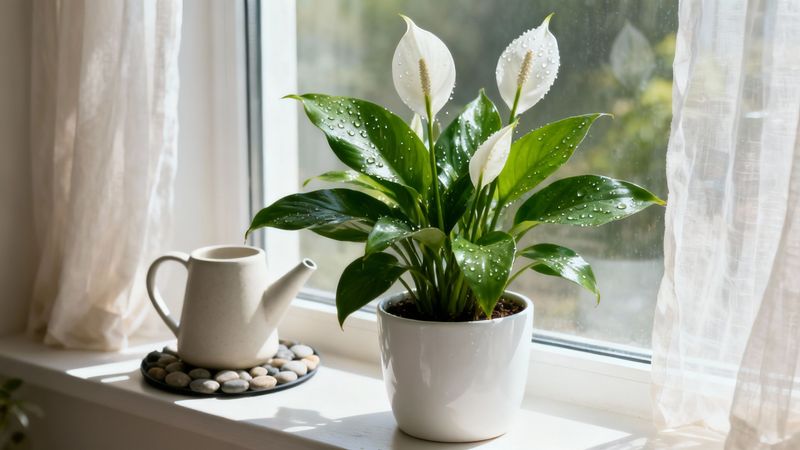
Moving a peace lily toward better light is straightforward in concept, but the transition itself needs to be handled carefully. A plant that has spent months in low light has leaves adapted to that environment, and placing it suddenly in a sunny spot can cause bleaching or scorching that damages the very foliage you are trying to help. University of Minnesota Extension spring houseplant care guidance recommends transitioning shade-tolerant plants gradually over one to two weeks, allowing the foliage to adjust without shock.
The practical target is brighter filtered or indirect light, not direct sun. A spot several feet from a window that receives good natural light, or a position beside an east-facing window where morning light comes through a sheer curtain, works well as a starting point. Keep in mind that indoor light is more variable than a window label suggests. Distance from the glass, the season, the presence of curtains or blinds, nearby trees or buildings, and your latitude all affect how much usable light actually reaches the plant.
Minnesota Extension lighting guidance also notes that light intensity drops significantly as you move farther from the source, so even a few extra feet can make a meaningful difference.
A grow light is a reasonable option if window light is limited. Choose a plant-rated white or balanced-spectrum light and follow the manufacturer’s recommended distance for the specific fixture. As a broad reference point, Minnesota Extension suggests roughly 6 to 12 inches as a general distance range for flowering houseplants, though that is a guideline for the category rather than a peace-lily-specific prescription. PPFD, a measure of the light energy actually available to the plant, is a more useful comparison metric than watts or lumens when evaluating grow lights.
One safety note worth adding: the ASPCA identifies peace lilies as toxic to cats and dogs due to insoluble calcium oxalates, which can cause oral irritation, drooling, vomiting, and difficulty swallowing if chewed. If moving the plant to a brighter spot puts it within reach of a curious pet, relocate to a shelf or surface that keeps the foliage out of reach. Also consider wiping dusty leaves with a damp cloth before or during the transition, since accumulated dust on large-leaved plants can reduce how efficiently they use available light.
Check maturity, cultivar, and season before blaming the light
Sometimes a lighting change produces no visible flowering response, and the temptation is to immediately add more light, more fertilizer, or some other intervention. Before stacking adjustments, consider whether the plant itself is developmentally ready to bloom. A young specimen that was recently purchased as a small starter plant, or one that was divided or propagated from a larger parent, may simply need more time to reach maturity before it can flower reliably.
University of Florida IFAS research on Spathiphyllum flowering identifies three broad flowering types among cultivars: age-dependent types that require substantial plant development before natural flowering begins, season-and-age-dependent types that need both maturity and the right seasonal conditions, and multi-seasonal types that can bloom across a wider range of conditions. A plant sitting in the first or second category may not respond to improved light until it has also reached a certain developmental stage, and no amount of repositioning will shortcut that process.
Seasonal timing adds another layer to the picture. The same University of Florida research notes that many cultivars naturally initiate flowers during shorter-day conditions and that flower bud initiation often does not occur during the long-day period from June through August. Moving a plant to better light in midsummer and then concluding after two months that light was not the problem may be premature. The plant might simply be waiting for day length to shift before it initiates buds.
Cultivar identity also matters more than many owners realize. Two peace lilies receiving identical care can have noticeably different flowering frequencies just because they belong to different cultivars with different developmental requirements. If the plant’s cultivar is unknown, which is common with grocery-store or big-box purchases, this uncertainty is worth keeping in mind.
One more scenario to consider: a peace lily bought already in bloom may have been treated commercially with gibberellic acid, a growth regulator used in production settings to trigger flowering. The University of Florida notes that flowers can appear roughly 70 to 110 days after such treatment in research conditions. A plant that bloomed beautifully at the store and then stopped is not necessarily unhealthy. Its in-store performance was likely the result of a commercial process that will not automatically repeat at home.
Applying gibberellic acid at home is not a practical or safe recommendation for general consumers.
Protect the roots with soil-based watering
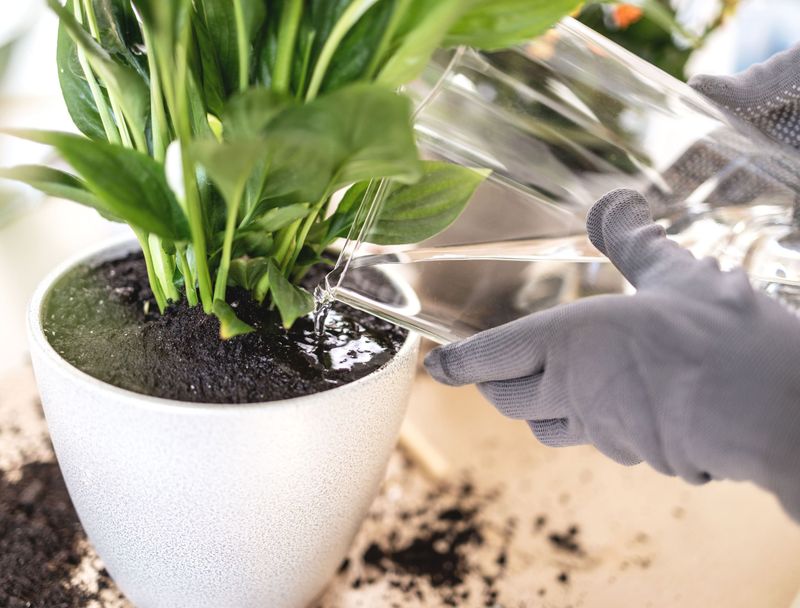
Once the light question is addressed, watering deserves a careful look. Overwatering is one of the most common mistakes with indoor houseplants, and peace lilies are not immune. University of Illinois Extension guidance on peace lily care advises letting the soil dry to the touch before watering again and avoiding standing water in the saucer beneath the pot. Constantly saturated soil creates conditions where roots can deteriorate, and root damage can interfere with the plant’s overall growth and its ability to flower.
The key shift is moving away from a calendar-based schedule and toward a soil-based one. How quickly a pot dries out depends on its size, the type of soil mix, the amount of light the plant receives, the ambient temperature, and whether the plant is in an active growth phase. University of Minnesota Extension spring houseplant care advice reinforces this approach, noting that watering needs shift with the season and that reading the soil is more reliable than following a fixed interval.
Wilting is the symptom most people associate with underwatering, but it can also signal root damage from overwatering. A plant whose roots have been compromised by saturated conditions may struggle to take up water even when moisture is present, which creates a confusing picture where the plant wilts despite wet soil. If the soil has been consistently soggy and the plant looks stressed, checking the root system for soft, dark, or mushy tissue is a worthwhile step before assuming the problem is something else.
Good drainage matters too. A pot without drainage holes, or one where the drainage hole is blocked, can hold water at the bottom even when the surface soil feels dry. Addressing drainage is a simple structural fix that supports root health over the long term, and healthier roots give the plant a better foundation for producing blooms when other conditions align.
Feed for steady growth, not guaranteed blooms
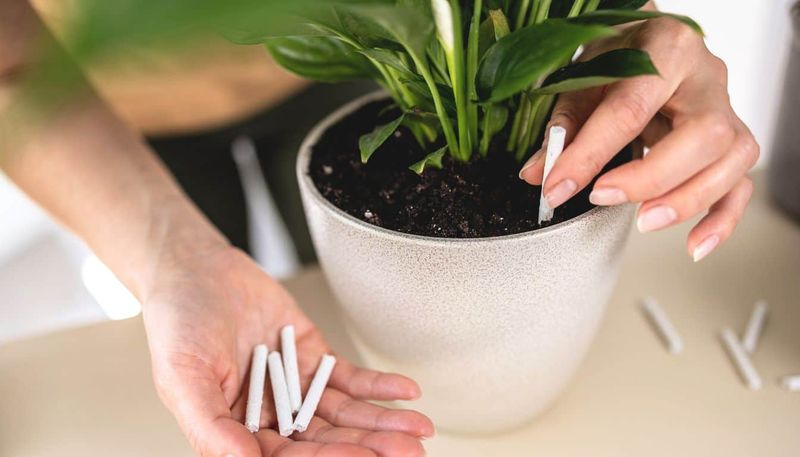
Fertilizer is often the first thing people reach for when a plant is not performing as expected, and the instinct makes some sense. Nutrients do support growth and flowering. The problem comes when fertilizer is treated as a cure rather than a supplement, or when feeding is ramped up in hopes of forcing blooms that other conditions are not yet supporting.
University of Minnesota Extension guidance on spring houseplant care recommends starting with a balanced houseplant fertilizer at half strength, applied every two to four weeks during active growth. That measured approach reflects a real concern: excess fertilizer can cause salt buildup in the soil, which can stress roots and produce weak or distorted growth rather than the flowering response you are hoping for. High-phosphorus bloom boosters, homemade amendments like banana water, coffee grounds, or eggshells, and other folk remedies are not supported by reliable evidence as bloom triggers for peace lilies and are best avoided.
Low-light plants generally need less feeding than those growing in bright conditions, because reduced light slows the metabolic processes that use nutrients. If the plant has recently been moved to a brighter spot, its needs may increase modestly as it adjusts, but that is still not a reason to overfeed. Staying within the half-strength, every-two-to-four-weeks range during active growth is a reasonable baseline for most home settings.
Leaf cleaning fits naturally alongside feeding as a secondary maintenance habit. Minnesota Extension notes that dust accumulation on large-leaved plants can block the light that reaches leaf surfaces, reducing photosynthetic efficiency. Wiping leaves gently with a damp cloth removes that barrier and helps the plant make better use of whatever light it receives. Clean leaves will not trigger flowering on their own, but they do support the light improvement you are already working toward.
Change one variable and reassess patiently
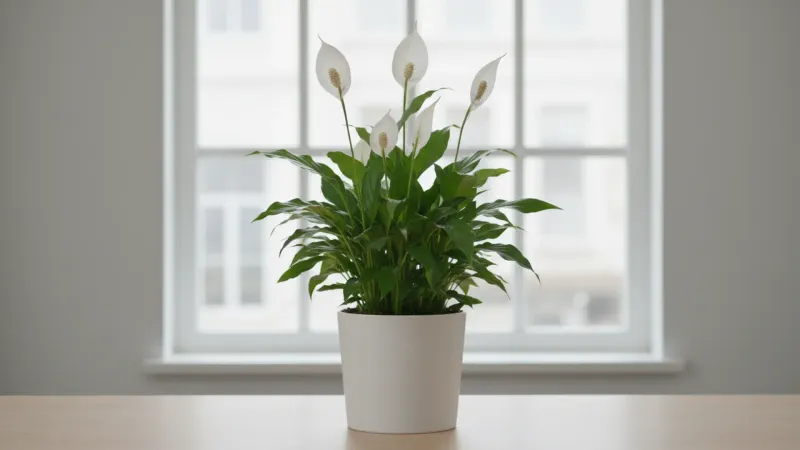
After reading through the factors above, the practical next move is simpler than it might seem: pick the most likely gap, address it, and give the plant time to respond before changing anything else. Stacking adjustments simultaneously makes it nearly impossible to know which change, if any, actually made a difference.
Start with light, since that is the most common gap between a foliage-only peace lily and one that flowers. Move the plant gradually to a brighter indirect position, keep watering soil-based rather than calendar-based, and maintain a modest balanced fertilizer routine during active growth. Then observe new growth over the coming weeks and months. University of Florida IFAS research on Spathiphyllum flowering makes clear that cultivar, developmental stage, and seasonal timing all affect when and whether a plant initiates buds, so patience is not passive: it is part of the diagnostic process.
If a full growing season passes with no flowering after a meaningful light improvement, revisit the maturity and cultivar questions. A plant that was recently divided, or one that belongs to an age-dependent cultivar type, may need another season of growth before it is developmentally ready. Seasonal timing matters too: many cultivars respond to shorter days, so a plant that receives better light in summer may not show a flowering response until fall conditions arrive.
Glossy, upright foliage is a sign that the plant is coping well with its current environment, and that is genuinely good news. Flowering requires that same coping capacity plus the right combination of light, developmental readiness, and seasonal conditions. A healthy plant in improving conditions is already closer to that combination than one that is struggling.