
If Your Peonies Flopped After Blooming, Here’s The One Post-Bloom Step Most People Skip
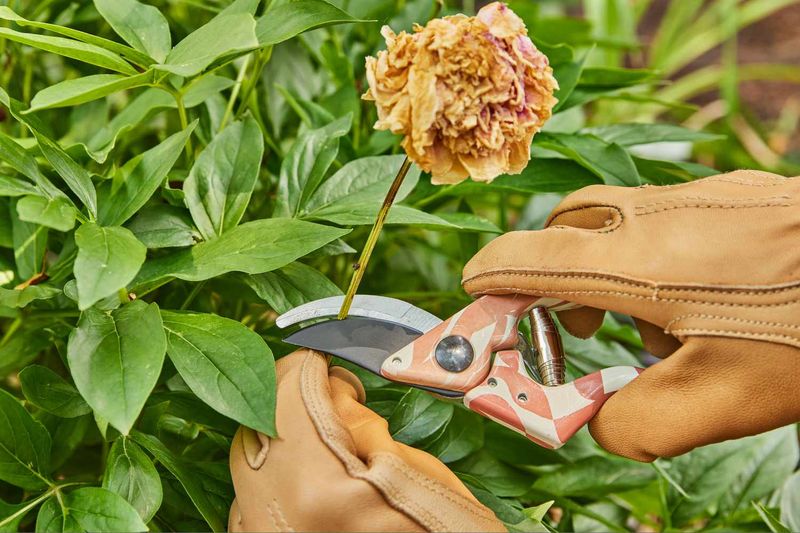
Peonies put on a spectacular show every spring, and then they leave you wondering what to do once the flowers fade. The single most useful task you can do right after bloom is deadheading, which means removing the spent flower and developing seed pod before the plant wastes energy on seeds it will never need.
But if your stems flopped under the weight of those gorgeous blooms, deadheading is not the fix for that problem. Understanding what each task actually does will help you care for your peonies with confidence rather than second-guessing every cut.
Deadhead faded peonies, but do not blame flopping on missed cleanup
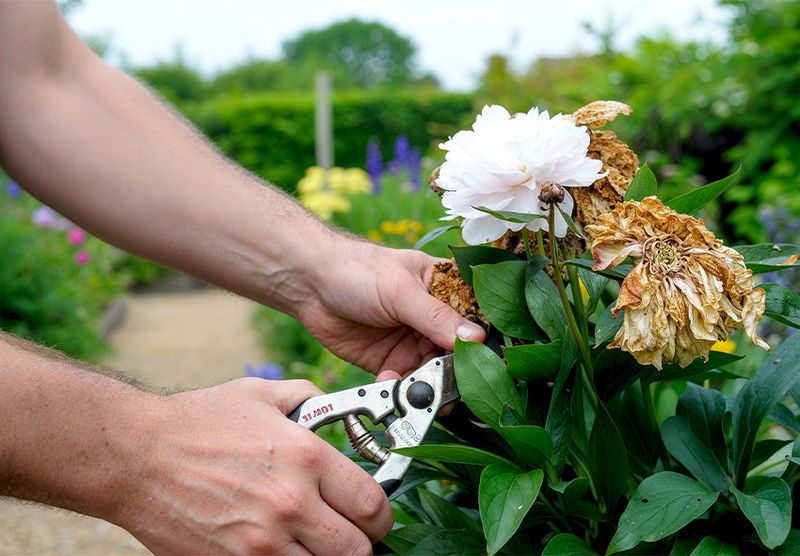
Deadheading spent peony flowers is the right post-bloom task to do now, and it is worth doing well. University of Connecticut extension guidance recommends removing faded flower heads and developing seed pods to improve the plant’s appearance, prevent seed formation, and help preserve resources for root and bud development.
That is a real and practical benefit, and the job takes only a few minutes per plant.
What the evidence does not support is the idea that skipping this step by itself ruins next year’s blooms or causes stems to collapse. Iowa State University Extension lists many reasons peonies fail to flower, including planting depth, sunlight, excessive nitrogen, drought, disease, and late freezes.
Missed deadheading does not appear at the top of that list as a standalone cause of poor flowering the following season.
A plant that flopped during bloom is a separate situation entirely. Heavy double and triple flower forms can simply outweigh their own stems, especially after a hard rain or a windy afternoon.
That is a structural problem, not a cleanup problem. Sections later in this article address support and growing conditions directly, because those are the checks that actually help a plant that bends under the weight of its own flowers.
Think of deadheading as a helpful seasonal routine rather than a make-or-break intervention. Getting it right matters, but worrying that you already ruined next year’s display by leaving a few spent blooms on the plant a day or two longer is not warranted by the available horticultural guidance.
Make the deadheading cut after flowers fade
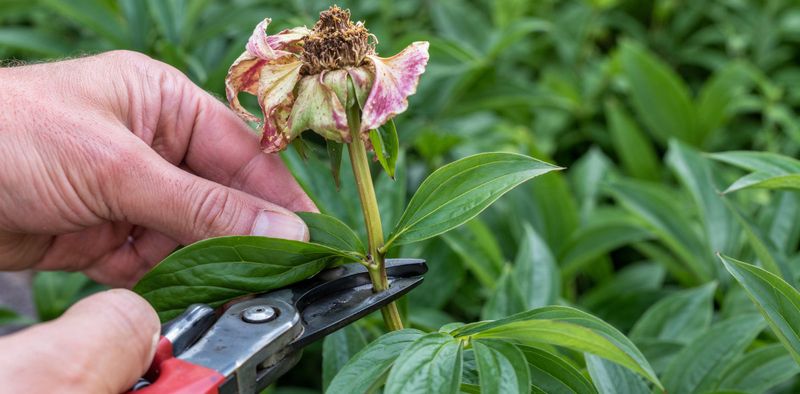
Once a peony flower has gone from full bloom to a drooping, papery mess, it is time to act. The goal is to remove the faded flower and the developing seed pod before the pod grows prominent and draws the plant’s attention toward seed production.
Catching it at this stage keeps the job simple and the cut clean.
Position your pruning shears or scissors just above a healthy set of leaves on the same stem. Cut there, not at the base of the plant, and not halfway up with a bare stalk left behind.
UConn’s peony factsheet specifically advises cutting the flower stem back into the plant and stopping above a healthy leaf set, so the remaining stem is concealed by surrounding foliage rather than sticking up like a marker flag.
A few practical details make the cut easier. Use clean, sharp blades to avoid tearing the stem or introducing disease.
If you are moving from plant to plant, a quick wipe with rubbing alcohol between cuts is a reasonable precaution during seasons when fungal problems have been active in your garden. Work through each stem individually rather than shearing the whole plant at once.
If you cut flowers for indoor arrangements during the bloom season, the same principle applies. Limit how much stem you remove from any one plant, and always leave a good portion of the foliage below the cut.
Removing too much stem along with the flower is essentially the same mistake as aggressive deadheading, and it reduces the leaf area the plant needs for the rest of the growing season. The spent flower is what you are after, not the green structure supporting it.
Leave the green foliage untouched
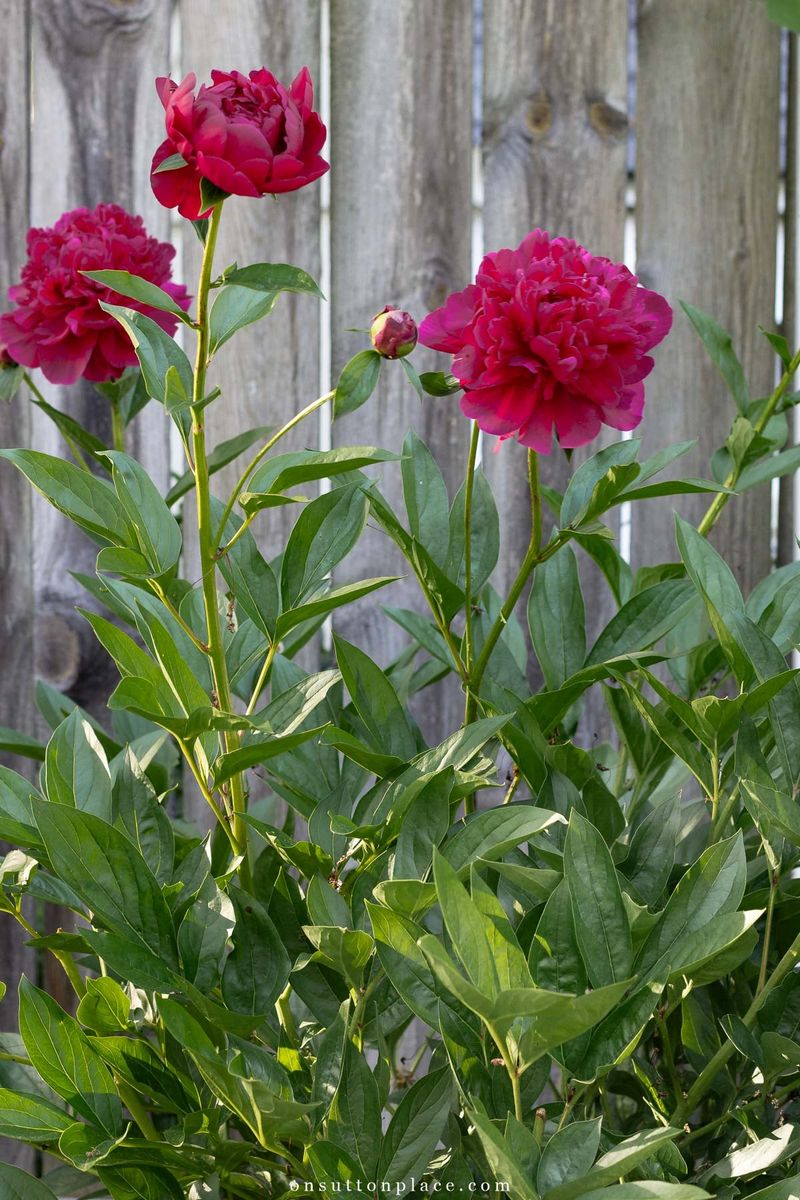
After deadheading, the temptation for some gardeners is to keep cutting until the plant looks tidy from top to bottom. Resist that impulse.
The green leaves left on the plant after flowering are doing active, essential work, and removing them prematurely is one of the more consequential mistakes a peony grower can make.
North Dakota State University Extension explains that peony foliage continues producing carbohydrates through photosynthesis well after the flowers are gone. Those carbohydrates move down into the roots and crown, building the energy reserves that support next spring’s buds.
Cut the leaves off in July or August and you interrupt that process at exactly the moment it matters most.
Iowa State Extension identifies premature foliage removal as a genuine reason peonies sometimes fail to bloom the following year. If your plant produced few flowers this spring and you removed the leaves shortly after last year’s bloom, that timing is worth reconsidering.
The right moment to cut back herbaceous peonies is after the foliage has been hit by a hard frost or has naturally yellowed and died back on its own in autumn. UConn extension guidance recommends cutting stems to roughly ground level at that point, though some sources suggest leaving a few inches.
Either approach is fine once the foliage has done its seasonal job. The key distinction is that fall cleanup and post-bloom deadheading are two separate tasks separated by several months, not two steps in the same process.
Know what deadheading can and cannot do
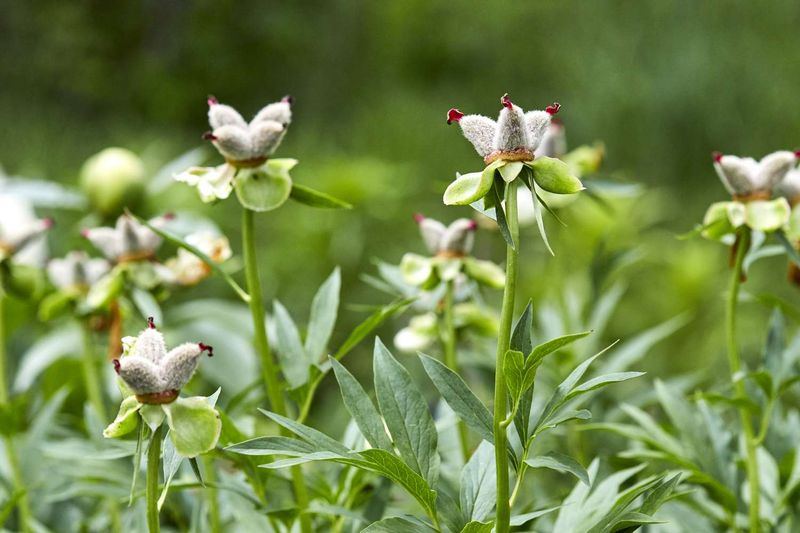
Deadheading does several things worth knowing about, and it is equally worth being clear about what it cannot do. On the positive side, removing spent flowers and seed pods keeps the plant looking neat, stops the plant from directing resources toward seed development, and may help those resources support root growth and bud formation for the following season.
It also removes some of the old flower tissue that can harbor fungal spores, which is a minor but real sanitation benefit.
University of New Hampshire Extension notes that deadheading perennials does not normally trigger a second flush of flowers in plants that bloom once per season. Standard herbaceous garden peonies bloom once in spring, and removing the spent flowers will not cause them to rebloom later in summer or fall.
If you have heard otherwise, that claim applies to some other perennials, not to ordinary garden peonies.
Deadheading also does not guarantee larger or more numerous blooms the following year. The phrase “energy goes back to the roots” is a useful shorthand for what happens when seed production is prevented, but bloom size and flower count depend on many additional factors: cultivar genetics, plant age, sunlight, planting depth, soil nutrition, moisture, and weather.
Iowa State’s breakdown of why peonies fail to bloom makes clear that no single post-bloom action controls the outcome on its own.
The practical takeaway is straightforward. Deadheading is a worthwhile seasonal habit that costs almost no time and has no meaningful downside when done correctly.
Expect tidiness, reduced seed pod development, and a modest contribution to the plant’s summer recovery. Do not expect a transformation in next year’s flower count based on this step alone.
Use support to prevent heavy blooms from flopping
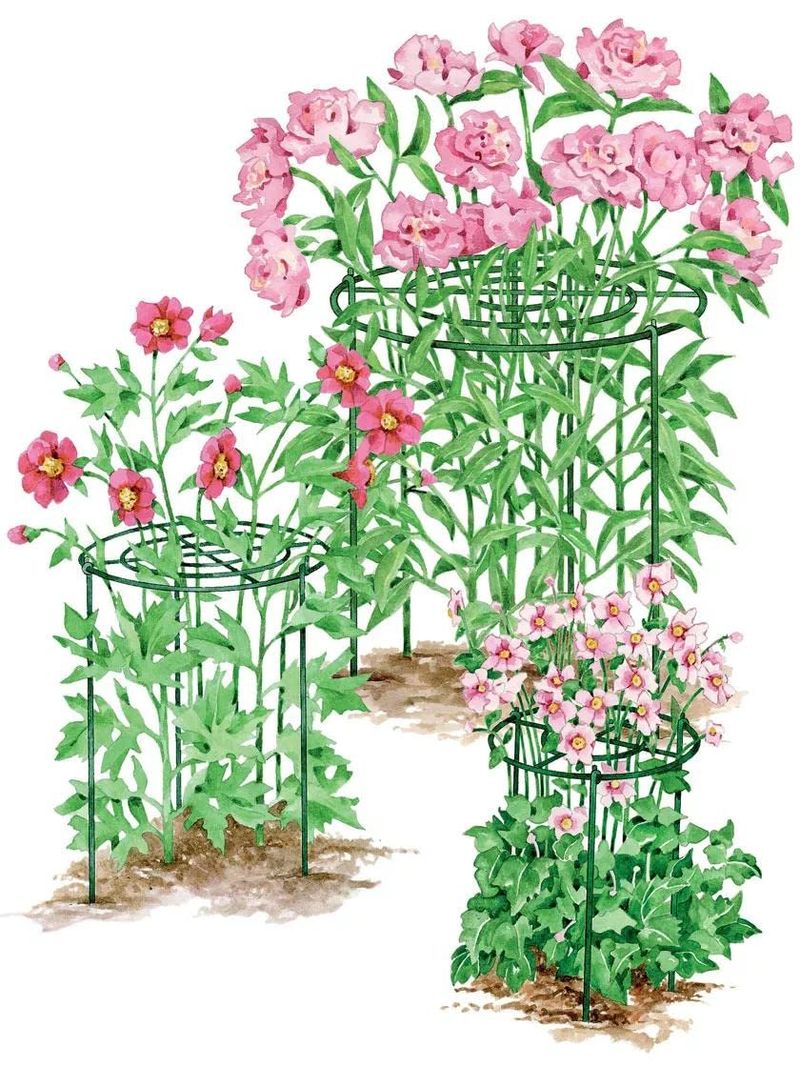
Heavy peony blooms falling over after a rainstorm or a gusty afternoon have nothing to do with whether you deadheaded last year. The real explanation is simpler: double and triple flower forms carry a lot of weight, and many peony stems were not built to hold them upright once the petals are fully open and waterlogged.
Iowa State University Extension recommends installing stakes, cages, or grow-through support rings while shoots are still emerging in spring or while buds are beginning to form. Putting support in place at that stage lets the stems grow up through the structure naturally, so the ring holds them from the inside rather than being lashed awkwardly to a collapsed plant after the damage is done.
Retrofitting support after a rain-soaked plant has already bent to the ground is far less effective and risks snapping or bruising stems in the process. If you tried to prop your peonies up this season after they flopped, you already know how unsatisfying that fix is.
The solution for next year is to mark your calendar for early spring and have the support ready before the first shoots are more than a few inches tall.
Several support options work well. A wire peony ring with legs that push into the soil is the most common choice.
Grow-through grid supports and simple bamboo stakes with soft ties also work for plants with fewer stems. The specific product matters less than the timing.
Getting any reasonable support in place before the buds develop is the step that actually prevents flopping, not any action taken after the flowers have already opened and bent.
Investigate growing conditions when flowers are scarce
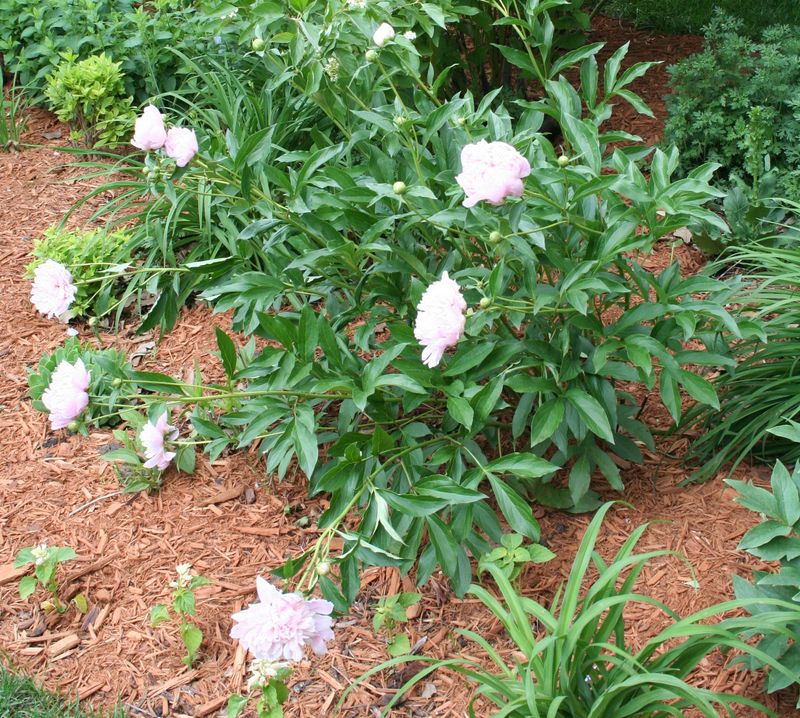
A peony covered in healthy green leaves but producing only a handful of flowers – or none at all – is a frustrating sight. Before assuming the problem is missed deadheading or any other single care mistake, run through the more common explanations that extension research consistently points to.
Sunlight is the first thing to check. Iowa State Extension identifies insufficient sunlight as one of the most frequent reasons peonies fail to bloom, recommending at least four to six hours of direct sun daily.
A spot that was sunny when the plant was young may now be shaded by a growing tree or shrub. Planting depth is the second major factor: the eyes, or pink growth buds at the crown, should sit no more than one to two inches below the soil surface.
Planted too deep, a peony may produce only foliage for years.
Fertilization habits also play a role. Excess nitrogen, particularly from lawn fertilizers that drift into garden beds, pushes plants toward leafy growth at the expense of flowers.
Moderate fertilization focused on phosphorus rather than nitrogen is a better approach for plants you want to bloom. The University of Michigan Matthaei Botanical Gardens peony care calendar emphasizes consistent moisture during dry periods alongside restrained feeding.
Other possibilities include transplant recovery, since a recently divided or moved peony may need two to three years to settle in before flowering reliably. Late spring freezes can kill emerging buds without killing the plant, leaving a full season with no flowers despite healthy foliage.
Disease, particularly botrytis blight in wet springs, can damage buds before they open. Working through this list systematically will identify the actual cause far more reliably than focusing on any one post-bloom task.
Apply the correct fall cleanup to each peony type
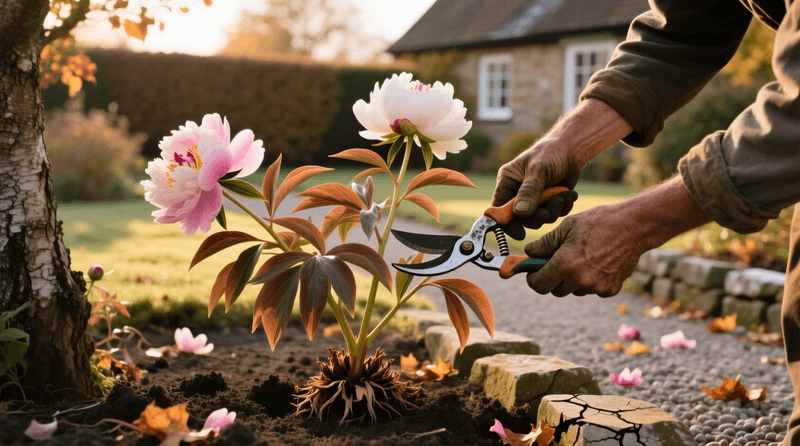
Fall cleanup is a separate seasonal job from post-bloom deadheading, and the two should not be confused. By the time autumn arrives, the foliage has already done its work for the season.
Removing fallen leaves and old plant debris at this stage helps reduce the amount of fungal material that can overwinter near the crown and re-infect the plant the following spring.
The University of Michigan Matthaei Botanical Gardens care calendar advises removing fallen foliage and spent stems in fall as part of routine sanitation. If your plant had visible signs of botrytis blight, leaf blotch, or other fungal problems during the season, do not add that material to your compost pile.
Bag it and dispose of it according to your local guidelines, since composting infected debris can spread the problem to other parts of the garden.
How far you cut back in fall depends on the type of peony you are growing, and getting this wrong can cause real harm. Herbaceous peonies, the familiar garden varieties that die back completely each year, can be cut to near ground level after a hard frost has killed the foliage or after the stems have naturally yellowed and collapsed.
Itoh peonies, which are hybrids between herbaceous and tree peonies, also die back to the ground and are handled the same way in fall.
UConn extension guidance is clear that tree peonies are handled differently. These plants develop woody above-ground stems that persist year-round, much like a shrub.
Cutting a tree peony to the ground in fall removes those stems permanently and can severely set back or kill the plant. Limit pruning on tree peonies to removing dead or damaged wood, and leave the healthy woody structure intact through winter.
Follow a simple after-bloom routine
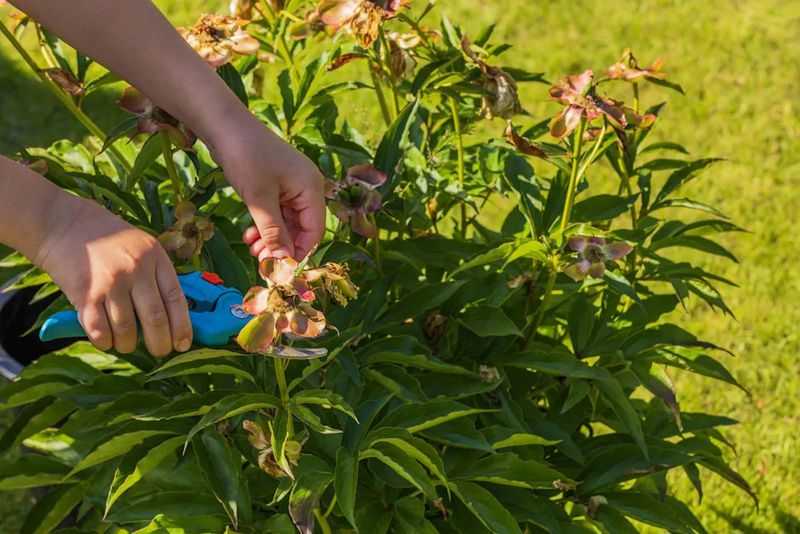
Putting this all together, the after-bloom routine for peonies is short and manageable. As each flower fades, cut the stem back just above a healthy set of leaves, removing the spent bloom and any developing seed pod.
Leave everything green below that cut completely alone until autumn.
When fall arrives and frost has finished off the foliage on herbaceous or Itoh peonies, cut the stems back and remove fallen leaves from the bed. UConn extension recommends discarding diseased material rather than composting it.
Tree peonies keep their woody stems, so skip the cutback and only remove what is clearly dead or damaged.
For next spring, mark a reminder to install support rings or cages before the first shoots are more than a few inches tall. Iowa State Extension confirms that early support is the reliable way to prevent heavy blooms from bending, while deadheading handles cleanup.
A peony that gets both is in good shape, and one that gets neither is not necessarily doomed – these plants are remarkably resilient, often thriving for decades with minimal intervention.