
If Your Petunias Turn Thin And Tired By Late Summer, Here Are 4 Care Mistakes Quietly Doing It
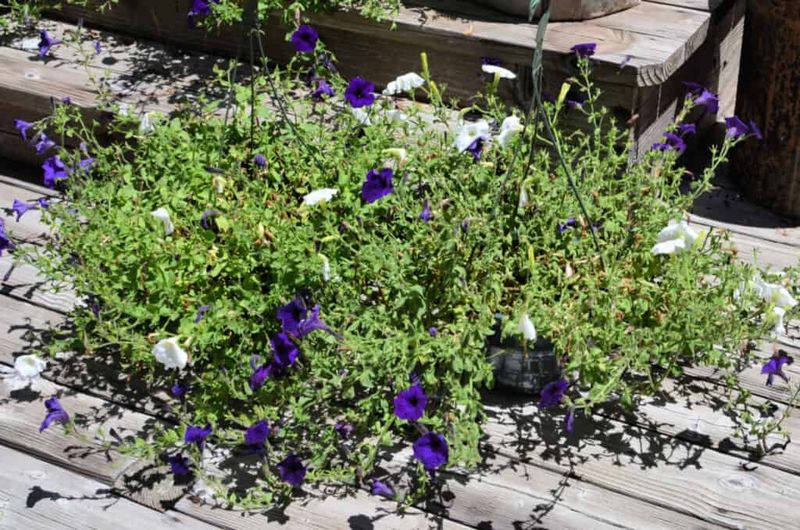
You planted your petunias in spring, and they looked amazing for weeks. Then late summer rolled around, and suddenly they look scraggly, thin, and just plain worn out.
The good news is that tired petunias usually aren’t dying, they’re just reacting to a few small habits you can fix fast. Let’s walk through the four sneaky care mistakes that quietly drain your plants, and exactly what to do about each one.
1. Skipping Regular Pruning and Deadheading
Here’s the thing about petunias: they bloom at the very tips of their stems. As those stems keep stretching through the season, the middle of the plant goes bare, leaving you with long, sad-looking strands and a hollow center.
Once the early flowers fade, your plant starts pouring its energy into making seeds instead of new blooms. That’s a big reason your petunias look tired by August.
They’re basically shutting down the flower factory to raise a family of seeds.
The fix is simple and a little satisfying. Cut leggy stems back by a third to a half, and for really overgrown plants, don’t be afraid to go two-thirds.
Snip just above a leaf node, and new side shoots will pop out, giving you a bushier plant.
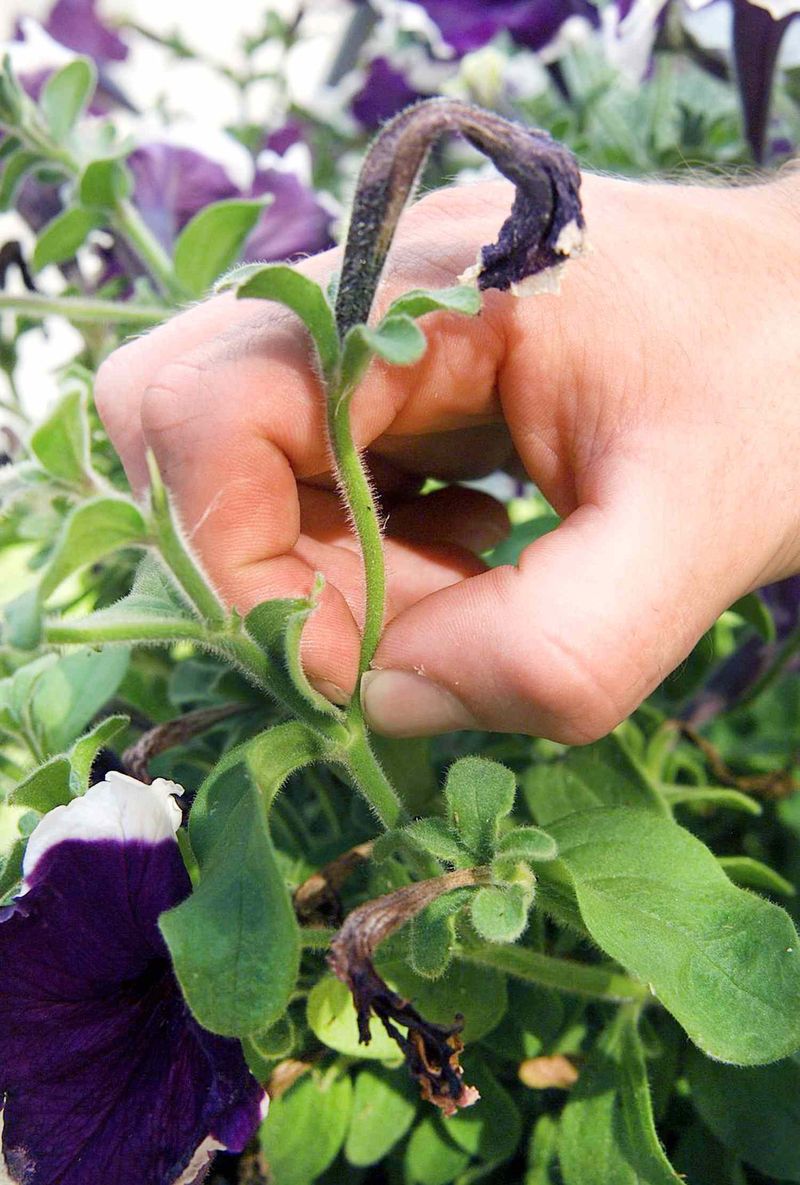
Deadheading matters too, but do it right. Pinch off the entire faded flower plus the little stalk behind it, not just the wilted petals.
That stops seed production and keeps fresh blooms coming. A few minutes every few days makes a huge difference.
2. Watering Inconsistently or Incorrectly
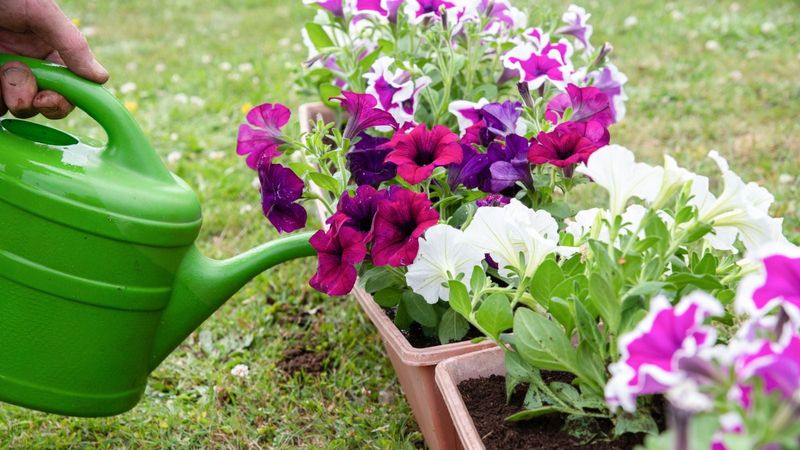
Petunias are thirsty plants, especially the ones tucked into containers and hanging baskets. Those pots dry out shockingly fast in summer heat, and one missed watering can leave your blooms shriveled and stressed.
But dumping on more water isn’t automatically the answer. Overwatering can cause root rot, where soggy roots slowly decay.
The confusing part is that a plant with root rot can look wilted even when the soil is wet, which tricks a lot of gardeners into watering even more.
Aim for evenly moist soil that never turns into mud. Poke your finger about an inch into the soil, and if it feels dry down there, it’s time to water.
If it’s still damp, wait.
Make sure every pot has drainage holes so extra water can escape. During heat waves, container petunias may genuinely need a drink every single day, so check them more often than you think you should.
3. Letting the Soil Run Out of Nutrients
Petunias eat like teenagers. They’re heavy feeders that burn through the nutrients in their soil quickly, and container plants run out even faster since there’s only so much dirt to draw from.
When the tank hits empty, you’ll see the signs: weak, floppy growth, fewer flowers, and yellowing leaves. That yellowing often points to a shortage of key nutrients like nitrogen or phosphorus, the very things petunias need to keep pumping out color.
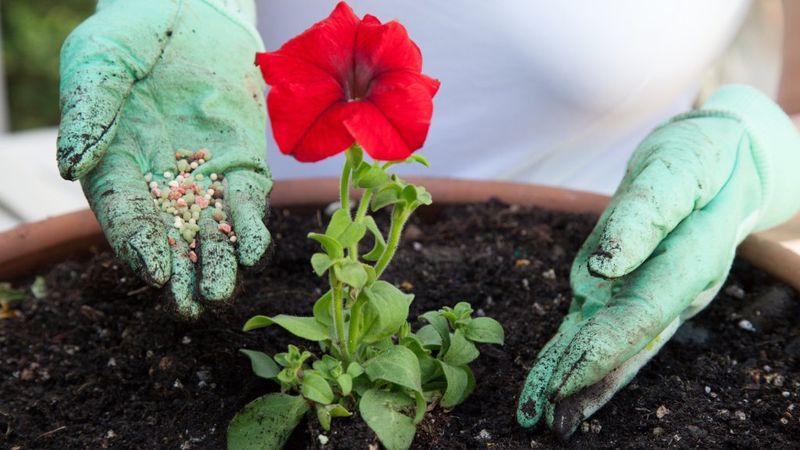
Set up a simple feeding routine and stick with it. A balanced, water-soluble fertilizer every one to two weeks works well for most petunias, though every two to three weeks is fine too.
Just follow the mixing directions on the label so you don’t overdo it.
Want an extra safety net? Mixing a slow-release granular fertilizer into the soil at planting time gives your plants a steady background supply.
Think of it as a slow drip of food between your regular feedings.
4. Too Little Sun or Too Much Heat Stress
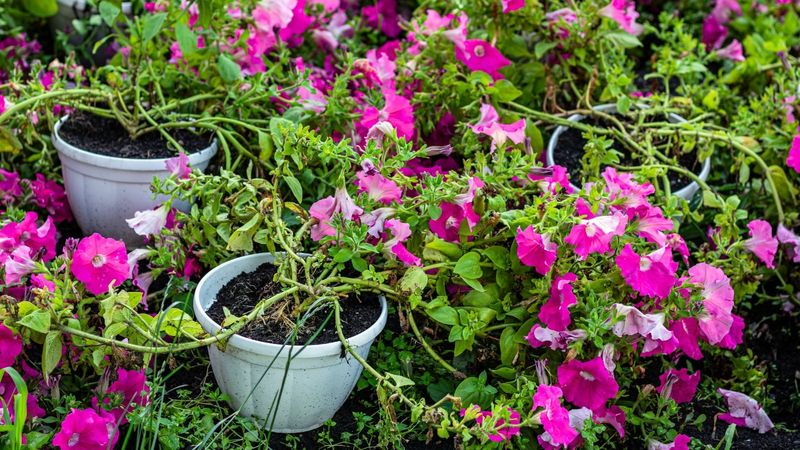
Petunias are sun worshippers, plain and simple. They want at least six to eight hours of direct sunlight a day, and without it, their stems stretch out thin and pale as they reach for more light.
Gardeners call this etiolation, and it’s a top reason petunias look spindly.
Fun twist: too much heat causes trouble too. When temperatures climb above 80 degrees Fahrenheit, petunias can get stressed, stretch quickly, and take on that droopy, worn-out look even when everything else is right.
Start by parking your petunias where they’ll catch full sun for most of the day. If potted plants are getting leggy in a shady corner, scoot them to a brighter spot and watch them perk up.
During brutal heat spells, a little afternoon shade can be a lifesaver, especially for plants in containers that heat up fast. A break from the harshest sun helps them recover and keep blooming into fall.