
If Your Tomato Plants Keep Wilting In The Afternoon Heat, Here’s Why A Morning Word And A Slow Drink Bring Them Right Back
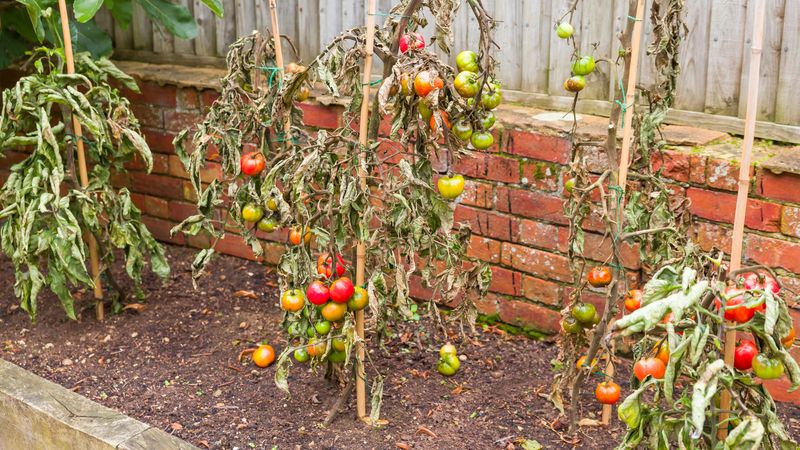
Walking out to find your tomato plants drooping in the afternoon sun is one of those sinking moments every backyard grower knows. The good news is that not every wilting tomato is in serious trouble, but not every one is fine, either.
Understanding what is actually happening, and what to check before you reach for the hose, can save your plant and your peace of mind.
Why Tomatoes Wilt in the Afternoon
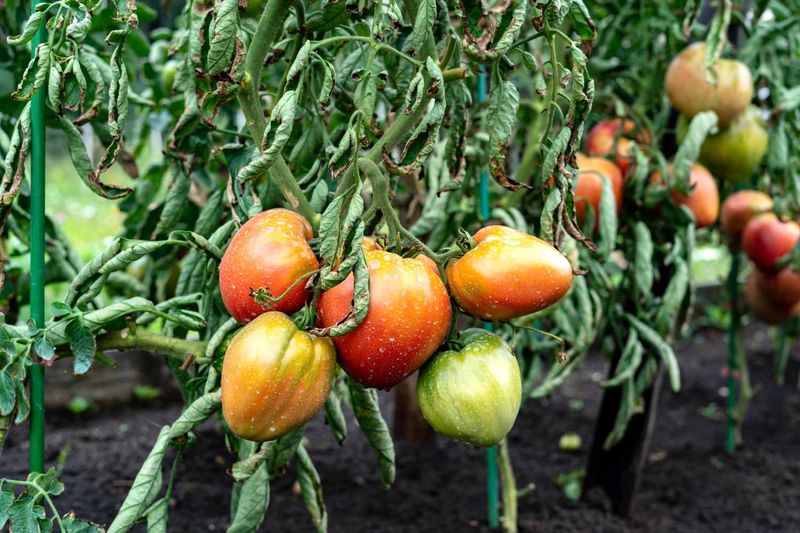
Hot afternoons can push a tomato plant to its limits in a way that looks alarming but may not signal a crisis. When air temperatures climb and humidity drops, leaves can lose water through transpiration faster than the root system can pull moisture up from the soil.
The result is a drooping, sometimes curled plant that looks desperate even when the soil below is not actually dry, as University of Wisconsin Extension’s overview of plant wilting explains.
Heat, wind, and low humidity are all capable of accelerating this water loss independently. A plant growing in a sunny, exposed spot with a steady afternoon breeze faces a steeper challenge than one tucked near a fence or shaded wall.
The leaves may droop or curl as a kind of self-protection, reducing the surface area exposed to drying conditions.
A pattern that fits temporary heat-related stress usually looks like this: foliage stays green rather than yellowing, the soil at the root zone is adequately moist when you check it, and the plant perks back up as evening temperatures fall. That pattern is reassuring, but it does not prove the plant only needs water, and it does not rule out disease picking up where heat stress left off.
Mild physiological leaf roll is a related response worth knowing. According to Washington State University Extension’s guide on physiological leaf roll, older lower leaves may curl upward or inward while remaining green and otherwise normal.
This can be triggered by heat, drought, excess moisture, severe pruning, or root disturbance, and mild cases often have little effect on yield. The key distinction is that physiological leaf roll is a specific, green-leaf curling response, not a diagnosis for every wilting or drooping symptom you notice.
As the University of Illinois Extension notes, rolled or wilted leaves can have several causes, and the surrounding context matters enormously when deciding what to do next.
Check the Root Zone Before You Water
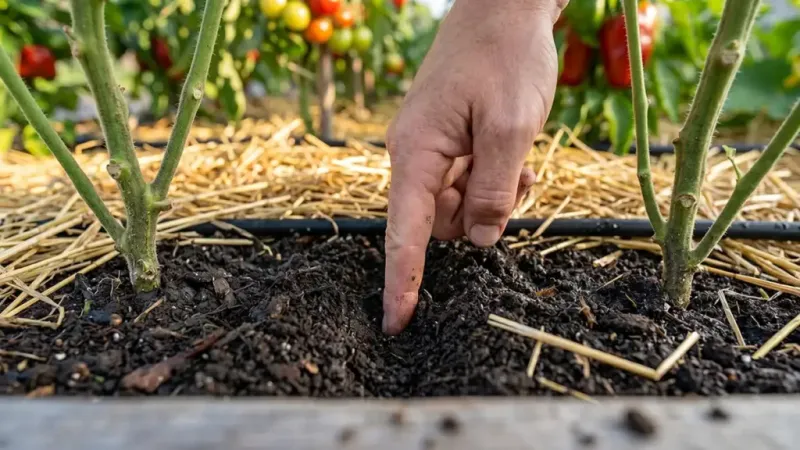
Reaching for the hose the moment you see a drooping tomato is a natural impulse, but the leaves alone cannot tell you whether the soil is dry, adequately moist, or already too wet. Before you water, push a finger or a narrow tool several inches into the soil near the root zone.
Oregon State University Extension’s watering basics guide recommends checking for moisture at least 2 inches below the surface, because the top layer can feel dry while the root zone below holds adequate water.
For established tomato transplants, the relevant moisture zone goes deeper still. Oregon State Extension’s transplant watering guidance describes ensuring moisture reaches roughly 6 inches into the root zone, which is where a healthy, well-established tomato system actively draws water.
Checking only the top inch gives you an incomplete picture.
What you find should change what you do next. Soil that feels dry several inches down is a clear signal that the plant may genuinely need water.
Soil that feels adequately moist suggests heat or wind is outpacing the roots’ ability to deliver water, not that the root zone is empty. Soggy, waterlogged soil points in a different direction entirely: the plant may be struggling because its roots are sitting in conditions that limit oxygen uptake.
Damaged or oxygen-starved roots can leave a plant wilted even when the surrounding soil is wet, a point reinforced by University of Wisconsin Extension’s wilting overview. Roots that have been flooded, compacted, disturbed during transplanting, or attacked by rot cannot move water effectively regardless of how much moisture surrounds them.
Adding more water to an already wet root zone in that situation makes the underlying problem worse, not better. The finger test takes about ten seconds and saves you from a response that could harm a plant you are trying to help.
Give a Dry Plant a Slow Drink
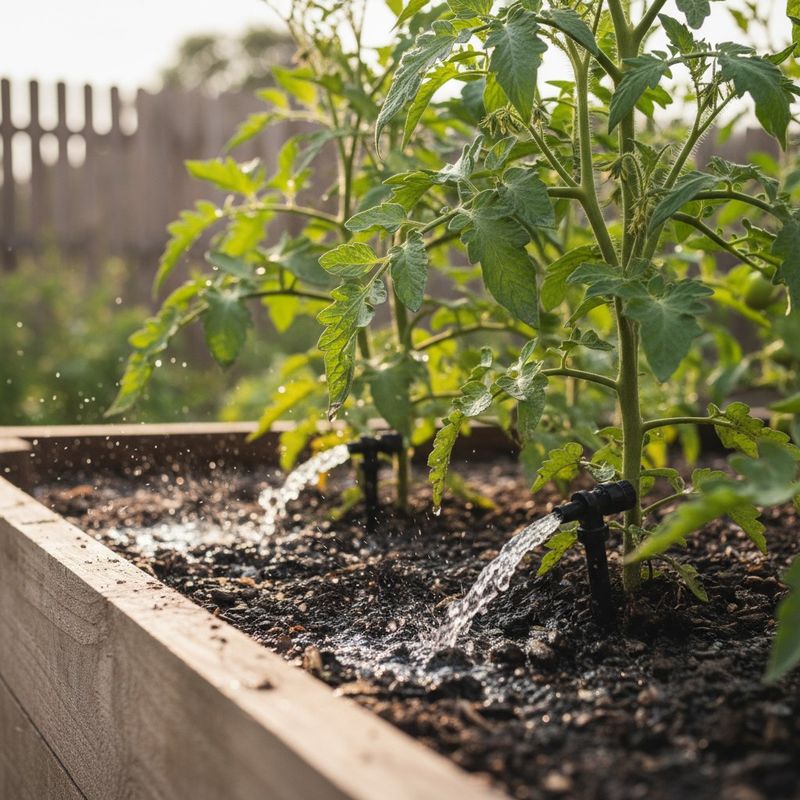
Once you confirm the root zone is genuinely dry, the goal is to move water down to where the roots live, not just wet the surface. Applying water slowly at the base of the plant, rather than splashing it across the foliage, gives the soil time to absorb moisture instead of letting it run off.
A drip system, a soaker hose, or a gentle stream from a hose held low all accomplish this. UC ANR’s tomato watering guidance specifically recommends watering at the base and avoiding overhead irrigation to reduce moisture on leaves and fruit.
Deep, infrequent watering generally serves tomatoes better than frequent shallow sips. When water only reaches the top few inches, roots tend to stay shallow, which makes the plant more vulnerable during hot, dry stretches.
Utah State University Extension’s tomato growing guide recommends deep, infrequent irrigation, with general weekly amounts often around 1 to 2 inches depending on soil type, weather, and plant size. That range is a starting point, not a fixed prescription.
Morning is widely preferred for watering because it gives roots time to absorb moisture before afternoon heat peaks and allows any water that splashes onto foliage to dry during the day. Oregon State Extension’s home vegetable garden guide supports morning as the preferred window for these reasons.
That said, morning timing is a preference, not an absolute rule. If the soil is dry and the plant is wilting during the afternoon, waiting until the following morning is not the right call.
Water when the plant needs it.
Sandy soil, raised beds, windy conditions, large plants, and containers all tend to dry faster than average and may need more frequent attention. Oregon State Extension’s watering basics also cautions against using a fixed schedule as a substitute for checking conditions.
Excessive watering can deprive roots of oxygen, promote root rot, and leave you with a wilting plant whose problem has nothing to do with thirst. The fix for overwatered roots is not more water.
Reduce Repeated Heat Stress
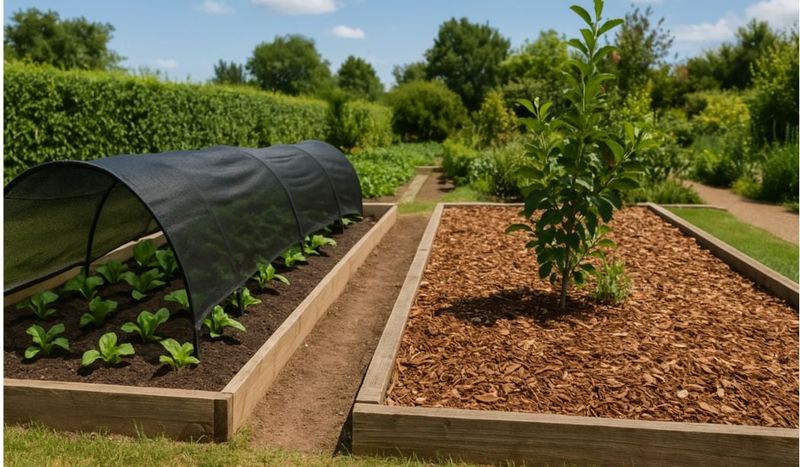
A single wilting episode can be addressed with a soil check and careful watering, but if your tomato droops every afternoon, the plant is working harder than it should be every day. Organic mulch is one of the most practical tools for reducing that repeated strain.
Spreading a few inches of straw, wood chips, or shredded leaves around the base of the plant slows evaporation from the soil surface and helps keep root-zone temperatures more stable. Colorado State University Extension’s tomato guide recommends mulching around plants, and the one consistent detail across extension sources is to keep mulch pulled back from direct contact with the stem to avoid moisture buildup against the plant.
Temporary shade during extreme afternoon heat can also reduce stress on a plant that is otherwise healthy. A piece of shade cloth, a propped board, or even a patio umbrella positioned to block the harshest afternoon sun can make a meaningful difference on days when temperatures spike.
UC Master Gardener guidance on protecting tomatoes during hot days supports this approach during heat events. The important qualifier is that shade should be temporary.
Tomatoes still need substantial direct light, and University of Minnesota Extension’s heat gardening guidance notes that prolonged excessive shade reduces productivity over time.
Container-grown tomatoes deserve separate attention here. Pots can dry out surprisingly fast during hot weather, sometimes needing a moisture check once or even twice a day.
UC Master Gardener container tomato guidance points out that containers need good drainage and should not remain constantly saturated, even though they dry faster than in-ground beds. More frequent checking is the answer, not constant watering.
Heat can also affect fruit production in a way that leaf appearance alone will not reveal. University of Minnesota Extension’s overview of heat effects on vegetables explains that sustained high temperatures can cause blossom abortion, poor pollination, and flower drop.
Reducing heat stress through mulch, shade, and appropriate watering can help, but even a plant with healthy-looking foliage may produce fewer fruit during an extended hot stretch. Improved leaves do not automatically guarantee a normal harvest.
Keep the Morning Word as a Ritual
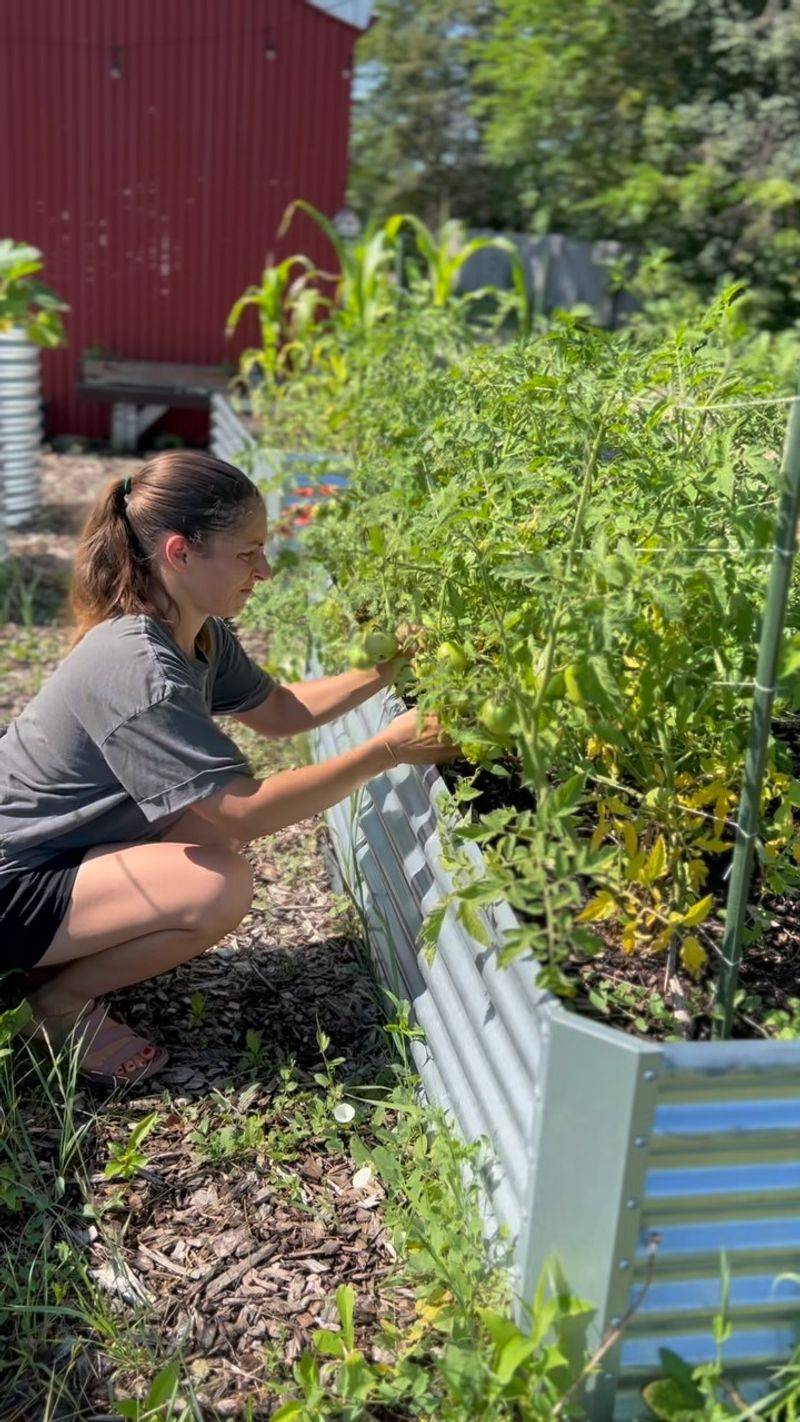
Many gardeners have a morning habit of stopping by their tomato plants, saying a few words, and taking a look before the day gets busy. That ritual is worth keeping, not because talking rescues a wilting plant, but because the act of showing up and paying attention is genuinely useful.
A morning walk-through is when you notice a new yellow leaf, a curled branch, a flower that dropped overnight, or soil that feels bone-dry before the afternoon heat arrives.
The honest answer about talking to plants is that ordinary conversation has not been established as a reliable treatment for wilted tomatoes. Penn State’s exploration of whether talking to plants helps them grow describes the question as genuinely complicated and the evidence as far from settled.
Some studies have looked at plant responses to sound or vibration under specific laboratory conditions, including a 2023 study published on PubMed examining acoustic effects on plant physiology, and a review in PMC examining sound and plant responses similarly found that effects depend heavily on frequency, intensity, and exposure conditions.
What none of that research supports is the idea that a friendly greeting through a screen door on a hot afternoon will reverse drooping leaves. The practical rescue comes from checking soil moisture, correcting a dry root zone with slow base watering, reducing repeated heat exposure with mulch or temporary shade, and watching for symptoms that suggest something more than weather stress is at play.
The morning word can stay. Think of it as the prompt that gets you outside early enough to spot a problem before it worsens, water before the heat peaks, and notice whether last night’s recovery was real or just a temporary reprieve.
The conversation is for you. The soil check is for the tomato.
Treat Evening Recovery as a Clue, Not a Diagnosis
Watching your tomato straighten back up as the sun drops is genuinely reassuring, and in many cases it does mean the plant weathered a tough afternoon and is recovering normally. Evening recovery after a hot day, combined with green foliage and adequately moist soil, fits the pattern of temporary heat stress.
But treating that recovery as a final answer can cause you to miss something more serious developing underneath.
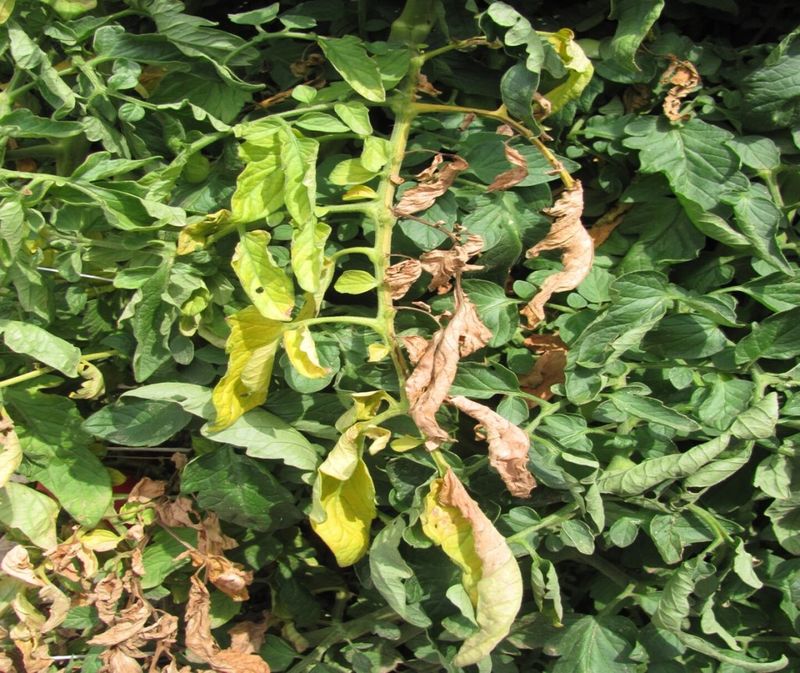
Fusarium wilt and Verticillium wilt are two soil-borne fungal diseases that can begin with exactly the same pattern: daytime wilting followed by apparent recovery in the evening or overnight. According to University of Minnesota Extension’s fusarium wilt overview, the disease progresses over time, and what starts as temporary daytime drooping eventually becomes permanent wilting as the fungus spreads through the plant’s vascular system.
Utah State University Extension’s guide on tomato wilts describes a similar progression for Verticillium, with early symptoms that can be easy to dismiss.
The warning signs to watch for are specific. University of Maryland Extension’s fusarium wilt resource and UC ANR’s fusarium wilt page both describe symptoms that distinguish vascular disease from heat stress: wilting that becomes persistent rather than improving overnight, symptoms confined to one side of the plant or a single branch, progressive yellowing or browning that starts on lower leaves and moves upward, and brown or tan discoloration inside the stem when cut lengthwise.
If you slice a stem and see dark vascular tissue, that is not a heat problem.
Sudden collapse of a plant that looked healthy the day before, especially with little yellowing, can be consistent with bacterial wilt, which moves faster than fungal diseases and does not respond to watering. Virginia Tech Extension’s guide on major tomato disease threats notes that bacterial wilt can cause rapid collapse that watering alone cannot correct.
When any of these warning signs appear, the right response is investigation, not simply more water or another day of waiting to see if the plant recovers on its own. University of Minnesota’s tomato wilt diagnostic tool can help you work through the possibilities systematically.
Use the Plant’s Evidence to Choose the Next Step
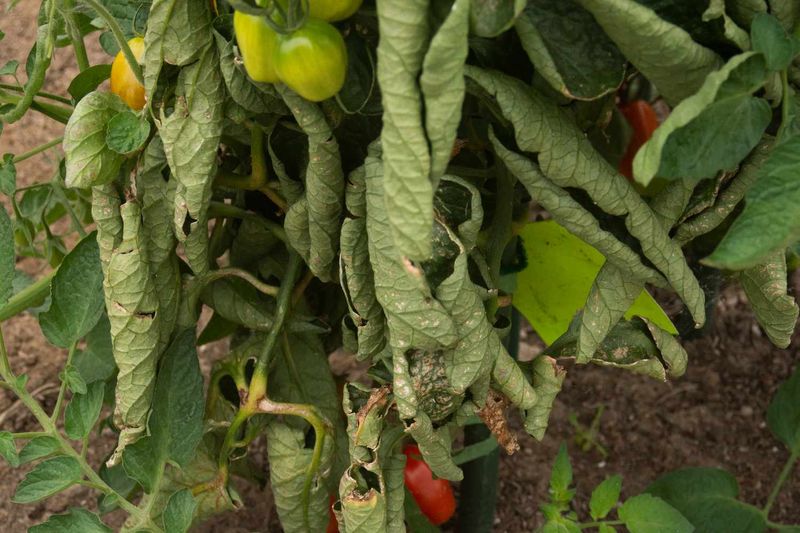
Every wilting tomato tells you something, but only if you read the right clues. Start by pressing fingers several inches into the soil near the root zone.
If it is dry, water slowly at the base until moisture reaches the root level, using a soaker hose, drip line, or a gentle low-held stream. Oregon State Extension’s watering basics consistently points back to this check-first approach before any other response.
If the soil is adequately moist and the plant is still drooping, shift focus to heat exposure. Add mulch if the root zone is bare, and consider temporary afternoon shade on extreme days.
Then watch what happens over the next several evenings. A plant that recovers each night but wilts again each afternoon in hot weather may simply be managing a tough season.
One that recovers less completely, shows new yellowing, or develops one-sided symptoms needs a closer look, as University of Wisconsin Extension’s wilting guide and University of Minnesota Extension’s fusarium wilt resource both emphasize.
The morning greeting can stay in the routine. It gets you outside early, helps you notice changes before they become crises, and costs nothing.
But moisture, heat exposure, and what the plant actually shows you over several days are what guide the next action. When warning signs persist despite correcting soil moisture and reducing heat stress, the path forward runs through disease diagnosis, not a deeper drink.
A tomato that recovers fully each evening and stays green is probably fine. One that keeps sliding is asking you to look harder.