
If Your Tomatoes Are Under Attack, Here’s The Silent Chemical Warning They Broadcast To Every Plant Nearby
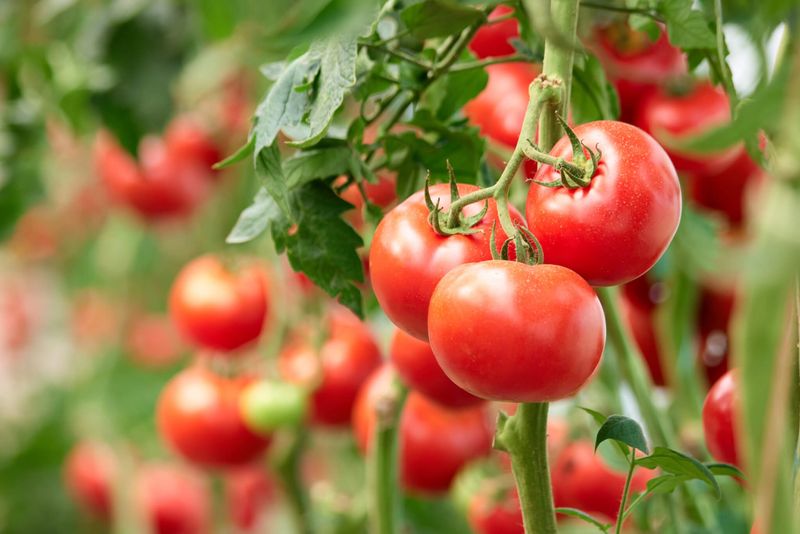
When a caterpillar starts chewing on your tomato plant, something invisible happens in the air around it. The damaged plant can release a mix of chemical compounds that neighboring plants may pick up and use to get ready for trouble.
Scientists have been studying this hidden chemistry for years, and the findings are genuinely surprising for anyone who grows tomatoes at home. Understanding what is actually happening, and what is not, can help you respond smarter when you spot the first ragged leaf of the season.
A Chewed Tomato Can Change the Air Around It
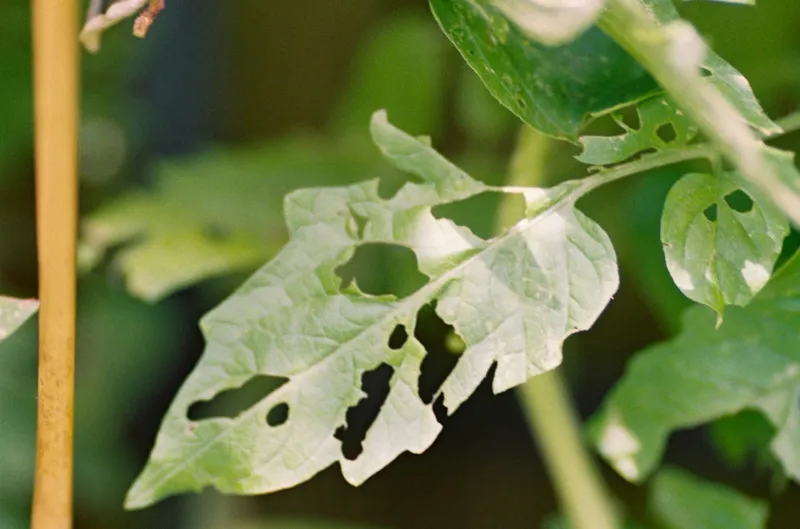
Chewing damage on a tomato leaf sets off a chain of chemical events that most gardeners never see. When an insect bites through leaf tissue, the plant begins releasing volatile organic compounds, often called VOCs, into the surrounding air.
These airborne molecules include green-leaf volatiles, a group of six-carbon compounds that carry the fresh, grassy scent many people associate with freshly cut plants.
The specific mix of compounds a tomato releases is not fixed. Research on herbivore-induced plant volatiles has shown that the quantity and composition of those emissions can shift depending on which herbivore is feeding, the tomato variety involved, the age of the plant, and the growing conditions at that moment.
A hornworm chewing on a young seedling in a hot, dry summer produces a different chemical picture than aphids feeding on a mature plant after a wet week.
More recent work on stress-induced volatile blends has confirmed that combined stresses, such as drought layered on top of insect feeding, can further alter what gets released. The result is a constantly shifting chemical fingerprint rather than a single fixed alarm.
What travels through the air from a chewed tomato leaf is better described as an altered chemical emission than a deliberate message. Plant scientists studying VOC signaling are careful to distinguish between a chemical cue, which simply changes the environment another plant detects, and a true signal, which implies an evolved, intentional exchange.
The tomato is not speaking. Its chemistry is changing, and nearby plants may or may not respond to what drifts their way.
What a Nearby Tomato May Detect
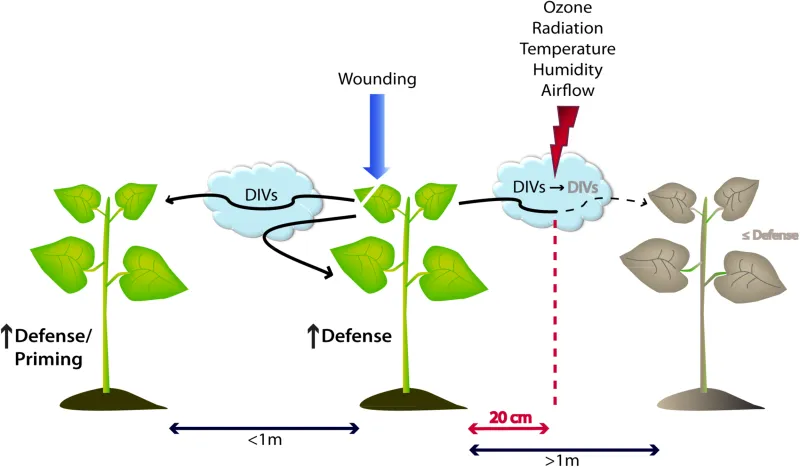
When airborne VOCs from a wounded tomato drift toward a healthy neighbor, something measurable can happen inside that second plant. Scientists have recorded changes in membrane potential and calcium signaling in receiver tomato plants exposed to volatiles from herbivore-wounded plants, according to experiments tracking electrophysiological responses in tomato tissue.
These are rapid, internal changes, the kind of cellular-level shift that can set the stage for a broader defense response later.
The concept that best describes what follows is defense priming. A primed plant has not yet activated its full defenses, but it is in a state where it may respond faster or more strongly if an herbivore attacks it later.
Think of it less like a shield going up and more like a runner settling into the starting blocks before the gun fires.
Studies examining herbivore-specific priming responses have found that receiver plants can show enhanced jasmonic acid production and boosted VOC output when they are attacked after VOC exposure, compared with plants that had no prior exposure. The primed state does not guarantee protection.
A primed plant can still be damaged, and the degree of any benefit varies considerably across experiments.
Calling this process immunity or pest prevention would be inaccurate. Researchers reviewing the plant communication literature consistently emphasize that priming is a conditional, probabilistic shift in readiness, not a switch that turns pest resistance on.
A backyard gardener watching two tomato plants grow side by side cannot see this chemistry happening, and cannot assume the healthy plant is protected simply because it shares air with a damaged one.
The Tomato Study Behind the Claim
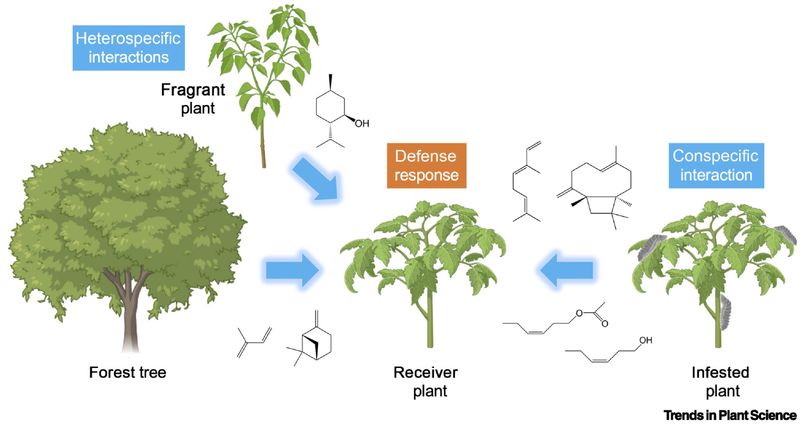
Much of the excitement around tomato chemical cues traces back to one particularly detailed experiment. Researchers exposed healthy tomato plants to airborne compounds released by tomato plants that were being fed on by common cutworms.
The undamaged receiver plants absorbed a green-leaf volatile called (Z)-3-hexenol from the air and then converted it into a glycoside compound called (Z)-3-hexenylvicianoside inside their own tissue.
That conversion matters because the glycoside form is biologically active in a way the original volatile is not. The research team tested the compound in artificial caterpillar diet and found that common cutworm larvae performed worse when the compound was present.
The receiver plants had, in effect, taken a chemical cue from the air and turned it into a defensive molecule of their own.
This is the strongest direct evidence that airborne VOC exposure can lead to a measurable defensive change in a tomato plant. The experiment was carefully controlled, with plants exposed under defined conditions and tested against a clear performance metric for the pest.
Those controls are exactly why the finding holds up as evidence.
What the study does not show is equally worth knowing. The plants were in a controlled setting, not a typical backyard with variable wind, multiple pest species, and tomatoes at different stages of growth.
The experiment demonstrated that the chemistry can happen, not that it reliably happens outdoors at a scale that protects an entire planting. A gardener reading about this research should treat it as proof of a real biological mechanism, not a blueprint for using plant proximity as a pest-control strategy.
The Cue Does Not Name Every Pest Precisely
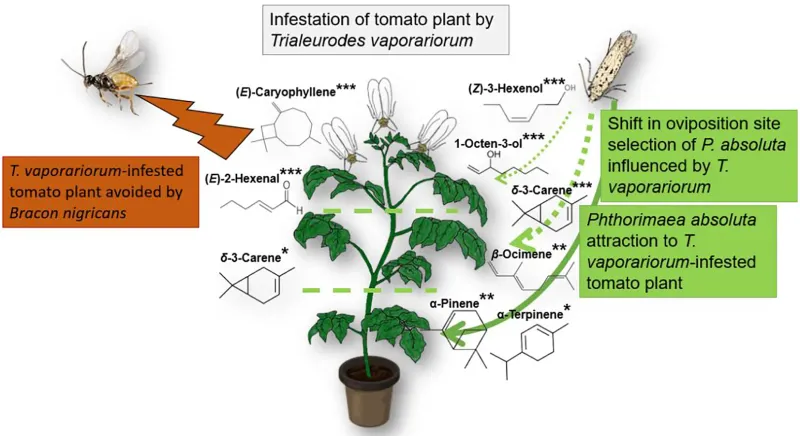
Herbivore feeding is just one of several things that can change a tomato’s VOC output. Mechanical wounding from pruning or hail, egg-laying by insects, pathogen infection, and drought stress can all shift the chemical blend a plant releases.
Work on stress-specific volatile signatures has shown that each type of damage can produce a somewhat different mixture, meaning the air around a tomato is not broadcasting a single, uniform message.
Some herbivore-specific volatile profiles do exist. Certain insects trigger chemical blends that differ from those produced by mechanical damage alone, and receiver plants can sometimes show responses that reflect those differences.
One study found that herbivore-specific volatiles increased jasmonic acid and VOC responses in receivers, but also concluded that the final defense mounted by the receiver depended more on which herbivore attacked the receiver plant than on the exact pest that had damaged the original emitter. The cue may set the stage, but the second act plays out on its own terms.
Research on combined and variable stress conditions further complicates the picture by showing that the receiver’s response is shaped by its own stress context, not just the emitter’s chemistry. A tomato already under drought stress may respond differently to incoming VOCs than a well-watered plant would.
Studies examining egg-laying induced volatiles add another layer: some insects trigger defensive changes before feeding even begins, through the act of depositing eggs. The upshot is that the chemistry is genuinely complex, and the idea that a chewed tomato sends a precisely coded pest-identification signal to its neighbors oversimplifies what the research actually shows.
Receiver plants may become primed in a general sense without receiving anything like a precise description of the threat.
Why Backyard Results Can Vary
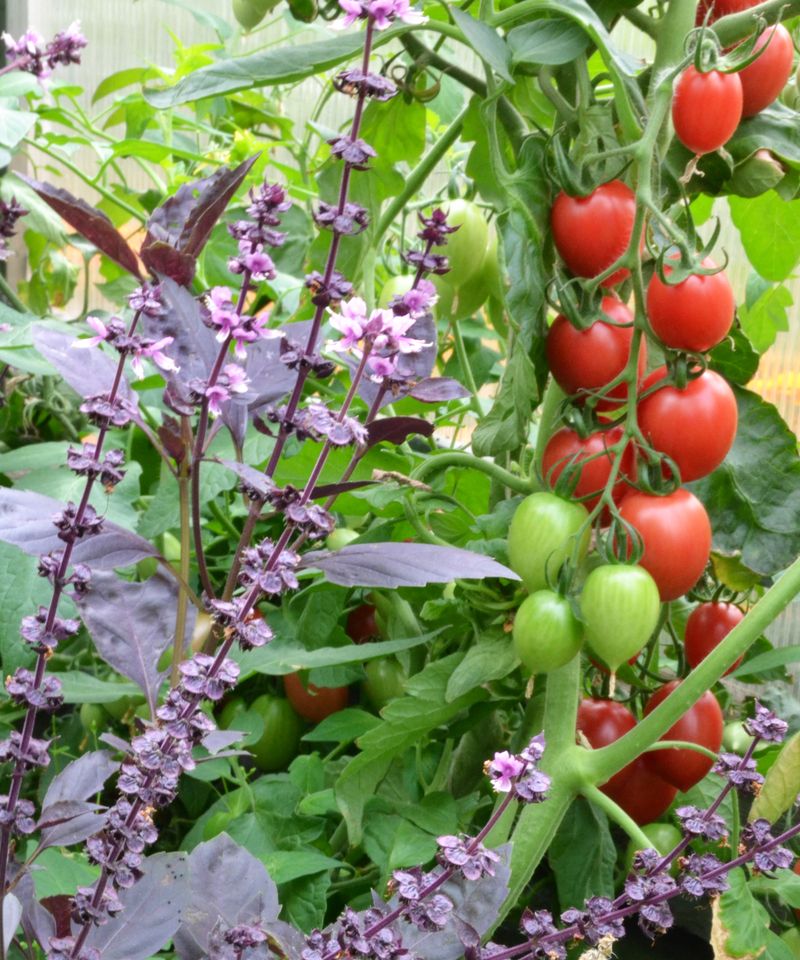
Laboratory and greenhouse studies give researchers tight control over temperature, airflow, plant spacing, and pest exposure. A backyard garden offers none of that.
Wind direction shifts, plants grow at different rates, soil conditions vary from one bed to the next, and dozens of pest and beneficial insects move through the space at once. All of these variables can weaken or redirect the chemical cues that travel so reliably in a controlled chamber.
Reviews of plant volatile communication have noted that effective VOC detection depends on species compatibility between emitter and receiver, the concentration of the volatile reaching the receiver, airflow patterns, and the genetic background of both plants. Outdoors, dilution alone can reduce concentrations below the threshold needed to trigger a measurable response in a neighboring plant.
Field-based research on airborne plant cues generally finds shorter effective ranges and weaker effects than the same mechanisms produce under controlled conditions.
A meta-analysis that pulled together evidence from multiple studies found overall support for the idea that plants near damaged neighbors can show increased resistance. That analysis also found that effects were consistently stronger in laboratory and greenhouse settings than in field studies, and that alternative explanations for the observed resistance were not always tested or ruled out.
The pattern is real, but the outdoor version is considerably less predictable than the controlled version.
Researchers reviewing the broader plant signaling literature are direct about the limits of translating lab findings to garden practice. Placing tomato plants near one another is not a reliable method for preventing pest damage.
The chemistry may be at work somewhere in your garden on any given day, but you cannot count on it, and you cannot engineer it by adjusting plant spacing.
Airborne Cues Can Help or Shift the Advantage
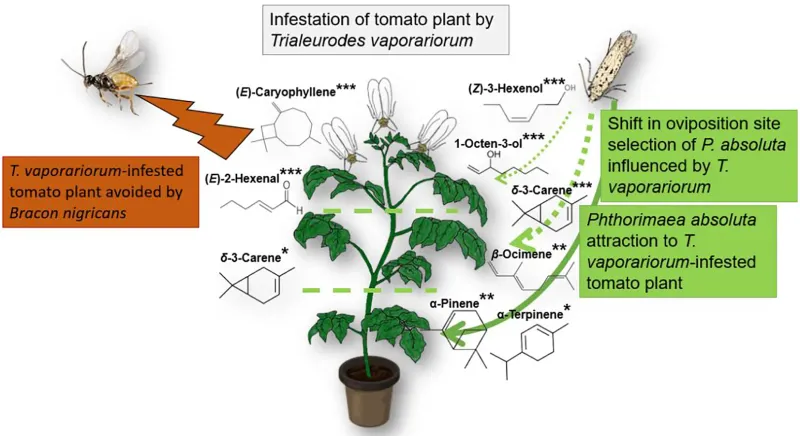
Airborne plant chemicals do not always move the balance in favor of the receiving plant. One well-documented benefit is indirect defense: herbivore-induced volatiles can attract predators and parasitoids that prey on or parasitize the attacking insect.
Research on herbivore-induced plant volatiles and natural enemy attraction has documented this effect across multiple crop species, with effectiveness varying by plant genotype, pest species, and which natural enemies happen to be present in the area.
Tomatoes specifically come with a caveat on this front. Studies comparing cultivated tomatoes with wild tomato relatives have found that domestication appears to have reduced the effectiveness of some volatile-based attraction of natural enemies.
Bred for yield, flavor, and uniformity, many commercial and garden tomato varieties may emit less of the compounds that draw in beneficial insects compared with their wild counterparts.
The cautionary example that most clearly shows how chemical cues can cut both ways involves whitefly-infested tomato plants. Research on whitefly-induced volatile emissions found that volatiles from infested tomatoes could prime pathogen defenses in neighboring plants while simultaneously suppressing some anti-herbivore defenses, potentially making those neighbors more suitable hosts for whitefly development.
The chemical shift that helped against one threat opened a door for another.
The practical point for gardeners is that airborne cues are not a one-way, always-beneficial system. They reflect the plant’s internal chemistry responding to specific conditions, and the outcome for neighboring plants depends on which cues are present, which receiver pathways get activated, and which pests show up next.
Treating VOC emissions as a pest-control strategy misreads what the biology is actually doing.
Inspect the Plant Instead of Engineering a Signal
Ragged holes in tomato leaves are a signal worth acting on, but the action should start with your eyes, not with any attempt to amplify what the plant is releasing into the air. Homemade sprays based on research compounds such as (Z)-3-hexenol, methyl salicylate, or methyl jasmonate are not proven backyard treatments, and applying untested chemical mixtures to your garden creates more uncertainty than it resolves.
The biology is interesting; the DIY application is not supported by evidence.
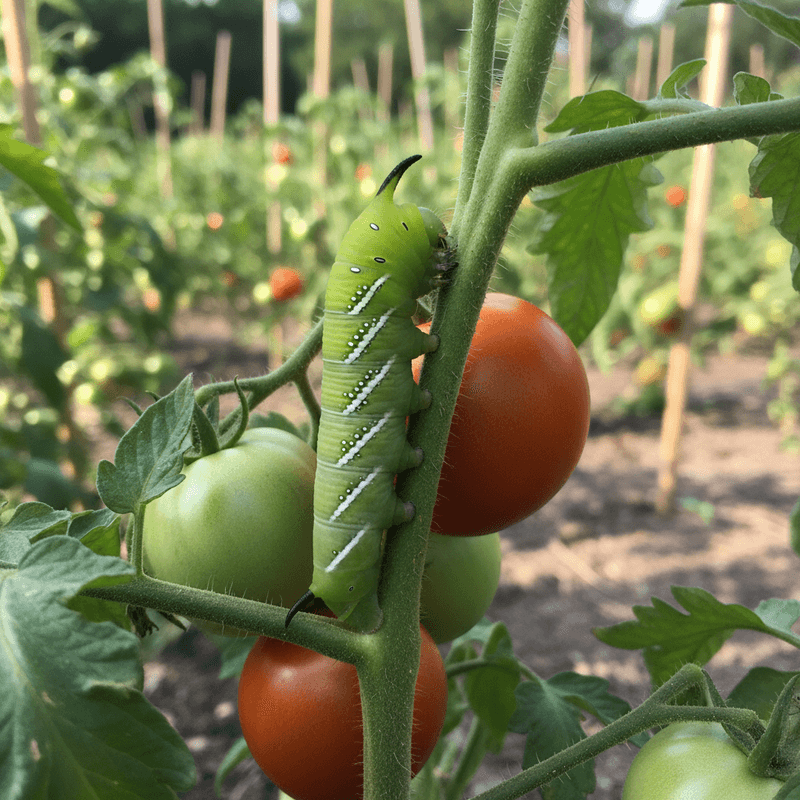
Start by checking the plant closely. Tomato hornworms, the large green caterpillars that cause some of the most dramatic overnight defoliation, are easier to find than many gardeners expect once you know where to look.
Check the undersides of leaves and along stems, especially near fresh damage. University of Minnesota Extension guidance on tomato hornworms recommends hand-picking as a practical first response when the population is manageable, and dropping caterpillars into soapy water finishes the job without any spray.
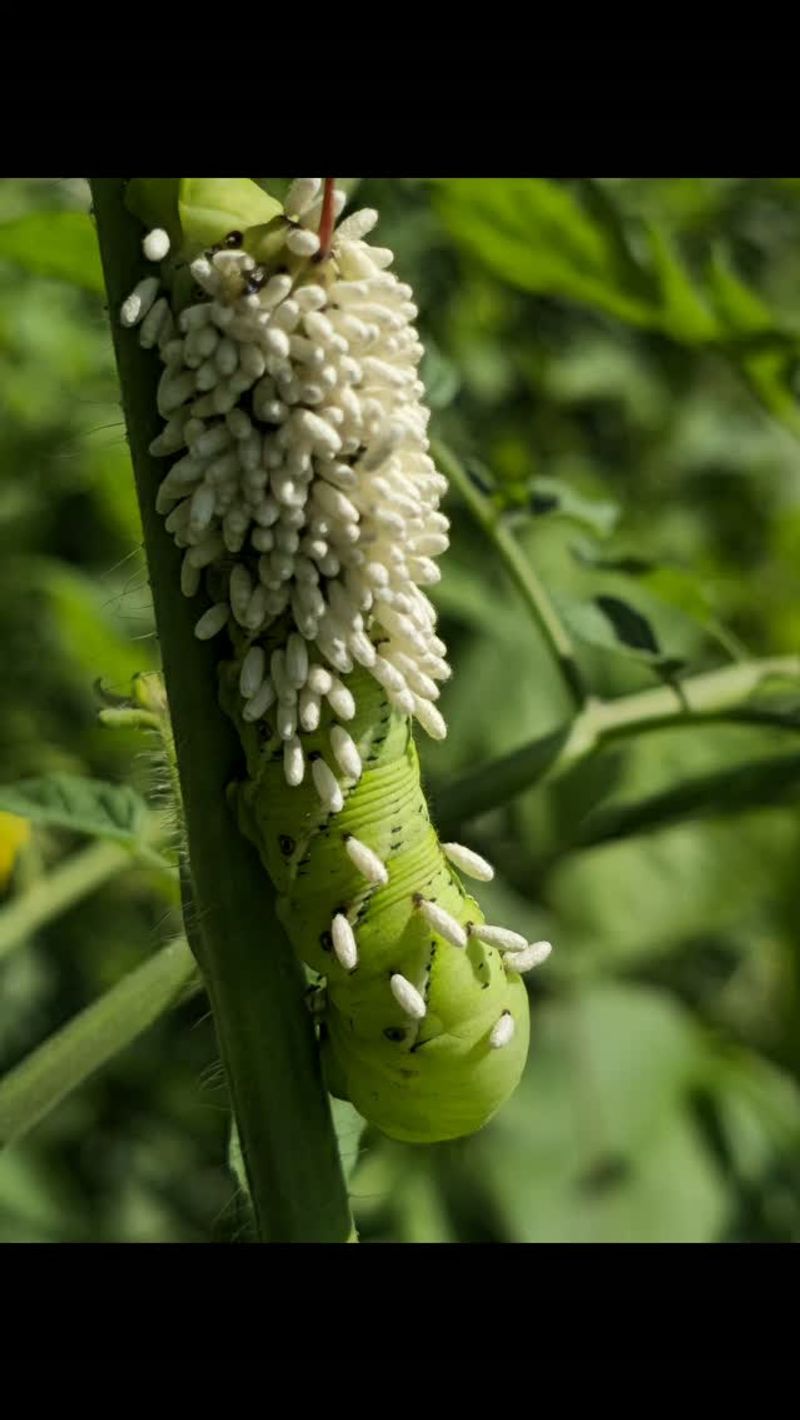
One important exception applies to hornworms covered with small white oval structures along their backs. Those are cocoons of braconid parasitoid wasps, and the larvae inside are already consuming the caterpillar from within.
Penn State Extension’s tomato pest guidance advises leaving these parasitized hornworms in place so the wasps can complete their development and emerge to attack more caterpillars in your garden.
When caterpillar damage is heavy and hand-picking is not keeping up, Bacillus thuringiensis var. kurstaki, commonly sold as Bt, is a targeted biological option. Bt works by producing proteins that are toxic to susceptible caterpillars when eaten, and EPA information on Bt safety confirms it has a narrow activity range that does not affect birds, mammals, or most beneficial insects.
Bt is most effective on young, actively feeding caterpillars. Always follow the product label directions for application timing, rate, and re-entry intervals, and match the treatment to the pest you have actually identified.
The Useful Takeaway for Tomato Growers
A damaged tomato plant can change the chemical composition of the air around it, and a neighboring tomato may detect those compounds and enter a state of defense priming, where it could respond faster or more strongly if attacked later. That finding is real, it is backed by controlled research, and it reflects genuinely fascinating plant biology.
What it does not reflect is intentional plant language, guaranteed pest protection, or a precise identification of the attacking insect. Scientists studying these chemical interactions are clear that the effect is conditional, variable, and far more reliable in a lab than in an open garden.
Even the most compelling tomato experiments show a mechanism at work under controlled conditions, not a backyard shield you can count on.
When you spot chewing damage on your tomatoes, the most useful response is to find the pest, identify it correctly, and manage it with methods that have a track record, starting with hands-on inspection and targeted control. The hidden chemistry happening in your garden is worth appreciating, but your eyes and a good look under the leaves will do more for your harvest than any signal the plants are sending on their own.