
If Your Wandering Jew Grows Long And Leggy Indoors, Here Are 5 Easy Tricks That Bring Back Its Full, Colorful Shape
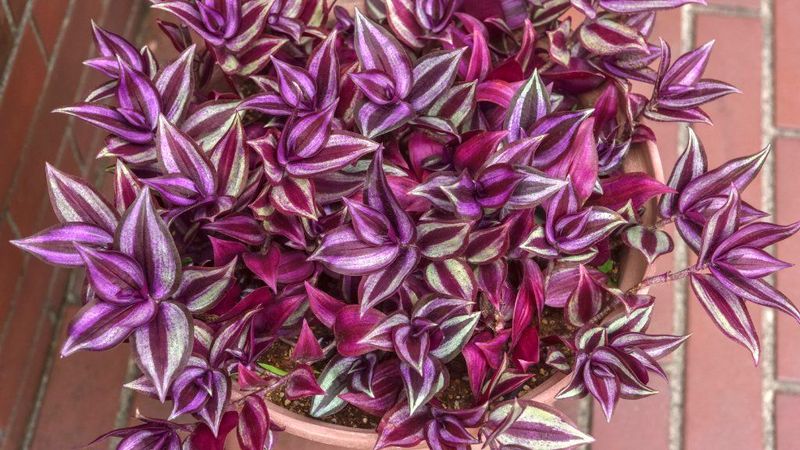
Your Wandering Jew plant used to spill over its pot in a colorful, bushy cloud, but now the stems are stretched out with bare gaps and dull leaves. That leggy look almost always means the plant is unhappy about something simple, and the good news is you can fix it fast.
These five easy tricks will pack your Tradescantia back into a full, vibrant shape without buying much or starting over. Let’s get your plant looking lush again.
1. Optimize Light Conditions
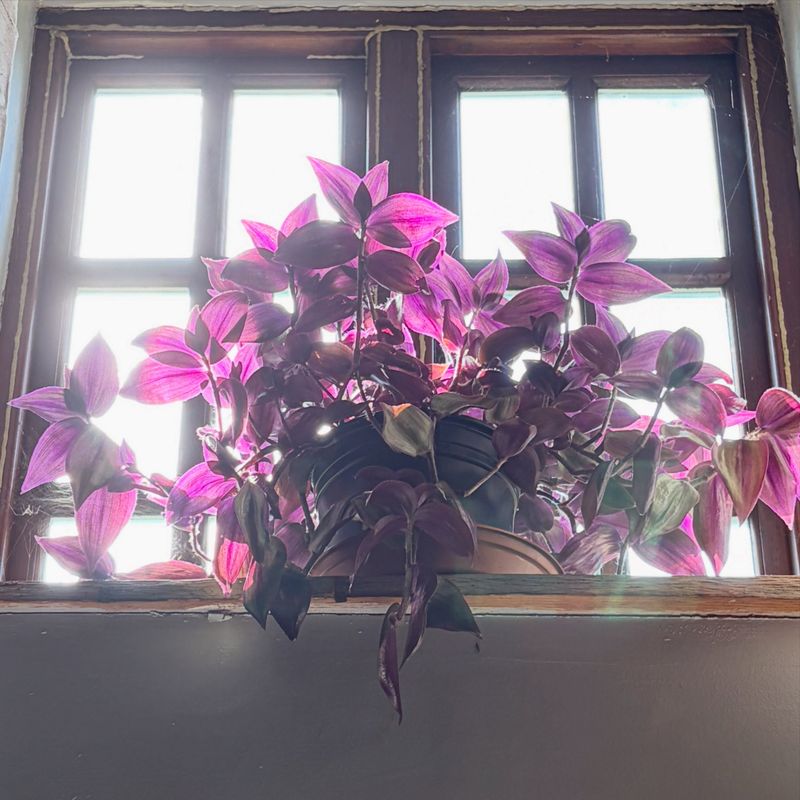
Long, reaching stems with big spaces between leaves are your plant practically shouting for more light. When a Wandering Jew doesn’t get enough brightness, it stretches toward the nearest window, and its once-vivid purples and greens start to fade to a washed-out look.
Move your plant to a spot near an east or west-facing window where it can soak up plenty of bright, indirect sun. Skip harsh, direct midday rays, which can scorch those thin leaves and leave crispy brown patches.
A sheer curtain works nicely to soften strong afternoon light.
If your home stays dim through the year, a simple full-spectrum grow light can do the heavy lifting. Just a few hours of extra light each day helps keep the colors rich and the growth tight instead of spindly.
Give it a week or two and you’ll notice new growth coming in more compact and colorful.
2. Prune Regularly for Bushier Growth
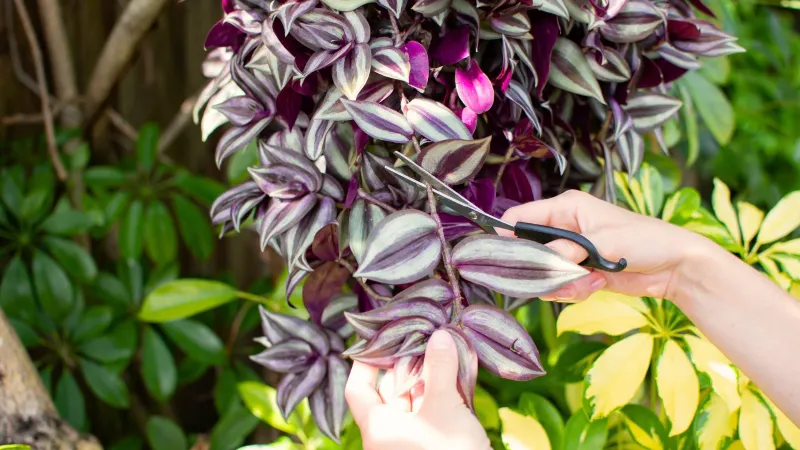
Here’s a trick that feels almost too easy: pinch, and your plant fills in. Every time you snip or pinch off a growing tip, the stem responds by pushing out two or more new shoots just below the cut.
Focus on the longest, barest stems first, cutting or pinching right above a leaf node. Within a couple of weeks, you’ll see fresh little branches sprouting, and those branches are what turn a stringy plant into a dense, rounded one.
Timing matters a bit. The best stretch for pruning is during the active growing season in spring and early summer, when the plant bounces back quickly.
Don’t be shy about it either, since a Wandering Jew is tough and grows back with enthusiasm. Regular light trims keep it from ever getting leggy in the first place.
3. Propagate Cuttings to Fill in Gaps
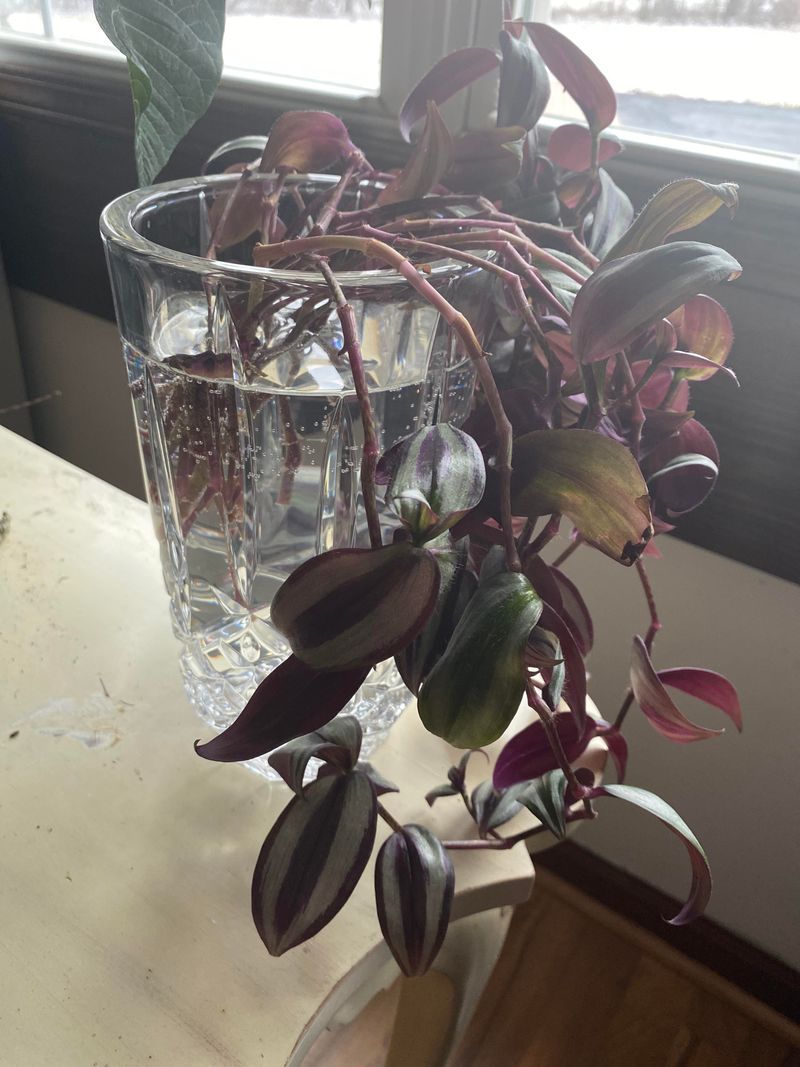
Don’t toss those trimmed stems, because they’re the secret to an instantly fuller plant. Cuttings from a Wandering Jew root almost effortlessly, and you can plant them right back into the same pot to fill every bare spot.
Take healthy stems about 4 to 6 inches long, cutting just below a leaf node. Strip the bottom leaves off, then either tuck the cuttings straight into the moist soil of the mother plant or set them in a glass of water first to root.
Roots usually show up within one to two weeks, which is fast as far as plant projects go. Tuck several cuttings together around the gaps, and suddenly your thin, leggy plant looks like a thick, overflowing one.
It’s free, quick, and honestly kind of magical to watch a bare pot transform.
4. Maintain Consistent Watering Practices
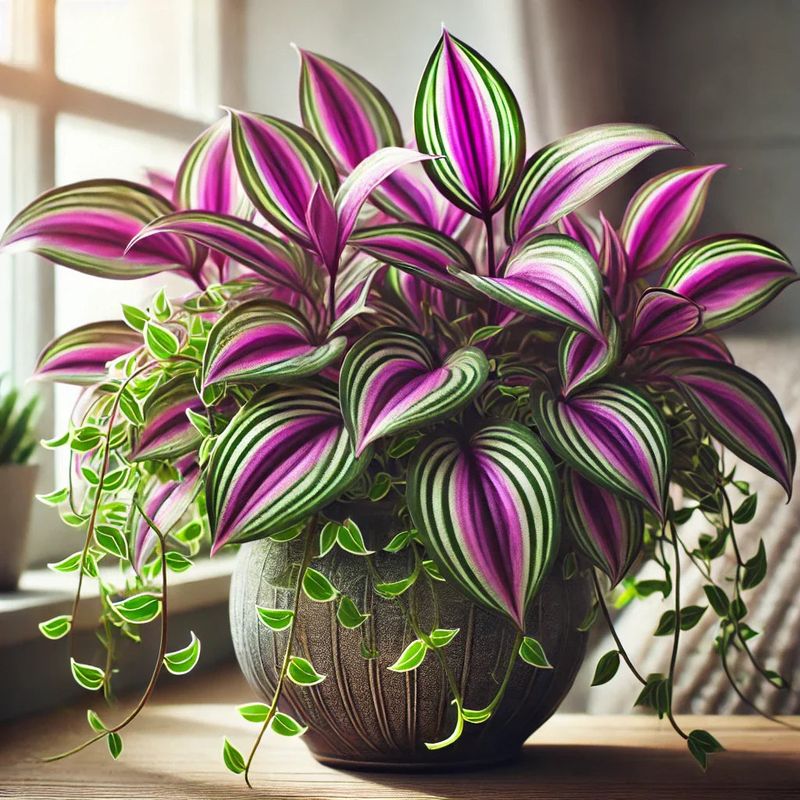
Watering won’t magically un-stretch a leggy stem, but it powers the healthy, vigorous growth that keeps your plant thick and colorful. A well-watered Wandering Jew simply has the energy to push out fuller foliage.
These plants like their soil consistently moist but never soggy. Let the top inch or two dry out before you water again, then give it a good drink until it runs from the drainage holes.
Watch the leaves for clues about your routine. Yellowing, mushy leaves usually mean you’re overdoing it and risking root rot, while curling or crispy edges point to a plant that’s too thirsty.
Once you find that steady middle ground, the whole plant looks perkier and its colors stay bold.
5. Fertilize During the Growing Season
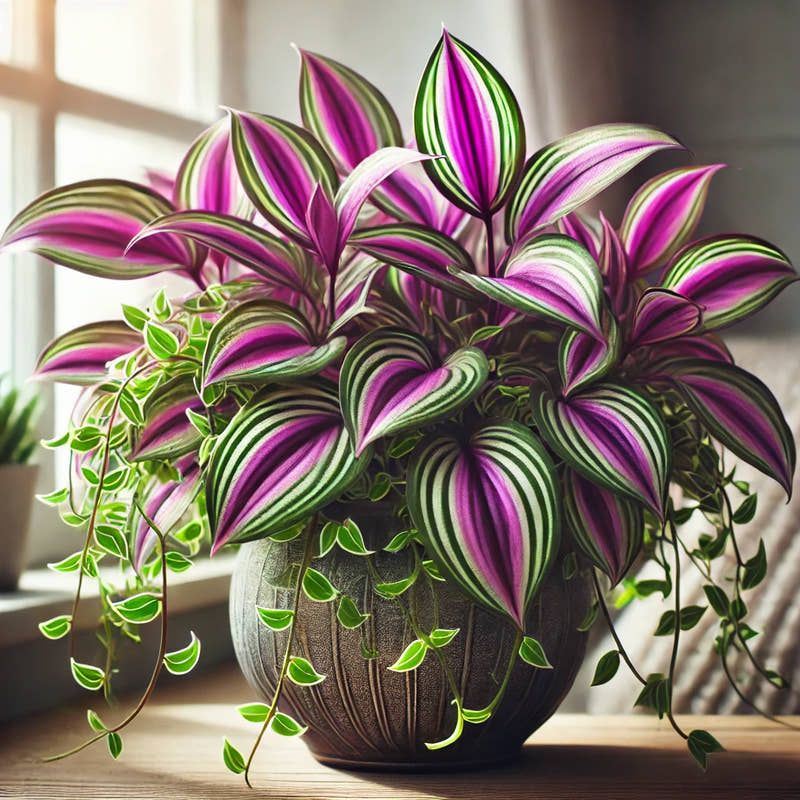
Faded, dull leaves sometimes come down to a plant that’s simply hungry. A little feeding during the right months can bring back those rich purples, silvers, and greens that make a Wandering Jew so eye-catching.
During the active growing season, roughly spring through summer, feed your plant about once a month. A diluted organic liquid fertilizer at half strength is plenty, since too much can burn the roots and do more harm than good.
Ease off completely in fall and winter, when growth naturally slows and the plant doesn’t need the extra push. Fun fact: skipping cold-weather feeding actually helps the plant rest, so it comes back stronger and more colorful once spring rolls around.
Pair steady feeding with good light, and your Tradescantia will reward you with its fullest, brightest look yet.