
Is That Silky Cocoon On Your North Carolina Shrub a Giant Silk Moth? How To Tell Before Fall Cleanup
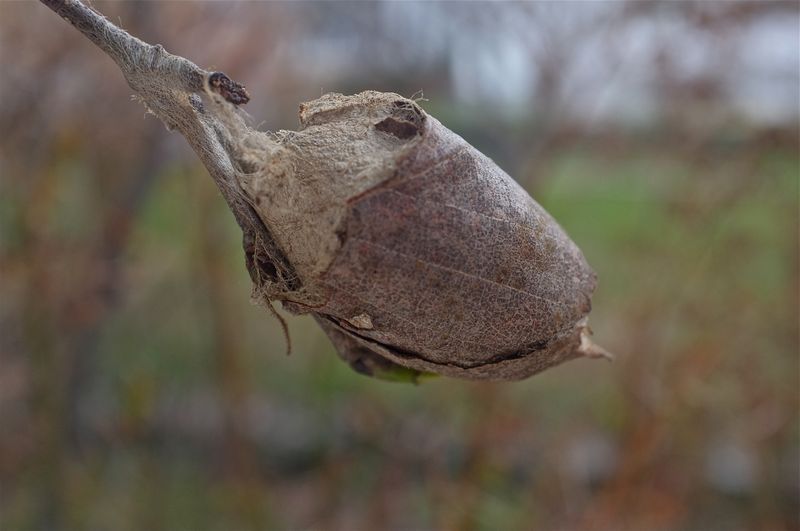
You spot a papery, silk-wrapped lump on a shrub and wonder what is inside. In North Carolina, it could be a giant silk moth cocoon, but it could also be a bagworm case or something else.
A little careful looking now can save a harmless resident or stop a shrub pest. Here is how to sort out what you found and what to do about it this winter.
What does a cocoon actually prove?
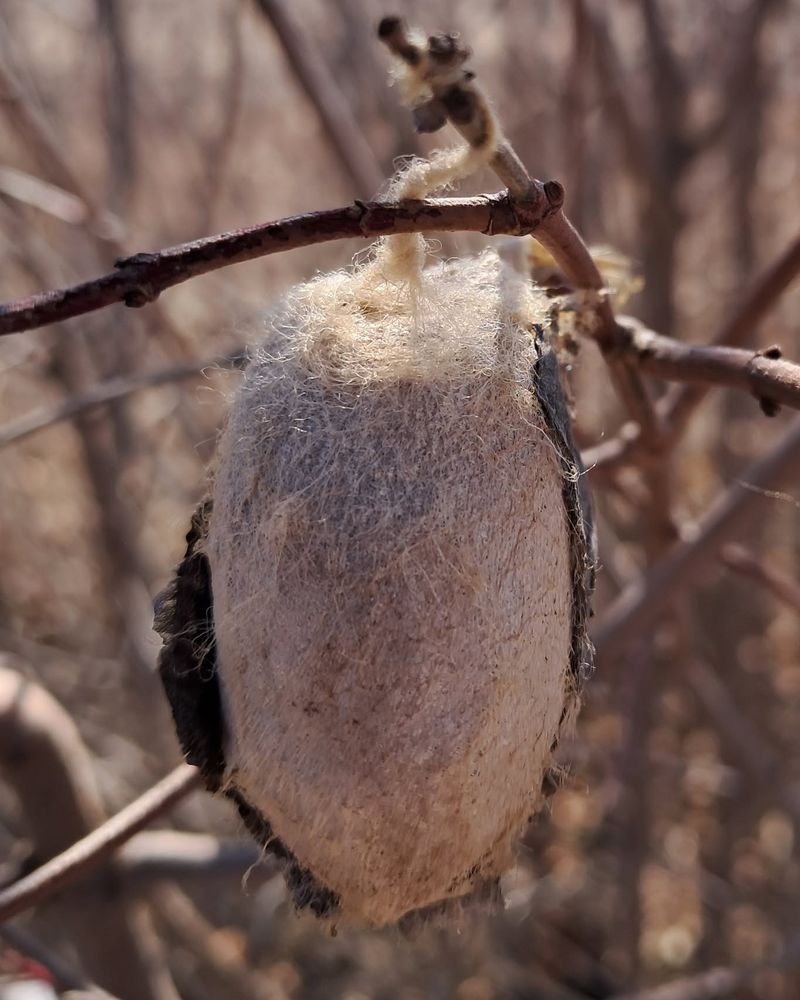
Say you have confirmed that the silky object is a real moth cocoon. That tells you a caterpillar finished eating, grew up, and reached the pupal stage, the resting phase when it transforms into an adult moth.
It is a neat wildlife clue, and it is worth a pause before you grab the pruners.
What it does not tell you is just as important. The spot where a cocoon hangs is not a record of where the caterpillar fed.
A cecropia caterpillar, for example, may attach its cocoon to a host plant or to a nearby plant, according to NC State Extension. The shrub holding the cocoon may simply have been a handy place to settle in for winter.
The same goes for Polyphemus moths. Moths of North Carolina notes that their cocoons are often attached to low trees or shrubs, but they also turn up on the ground.
So one cocoon cannot prove which plant fed the caterpillar, whether that plant was native, or even whether it grew in your yard.
Think of the find as a single page torn from a long story. It hints that a big, leaf-eating caterpillar was around this summer.
It cannot narrate the whole season, and it is kinder to the story, and to the insect, to leave the missing chapters as open questions.
Which giant silk moth fits a hanging cocoon?
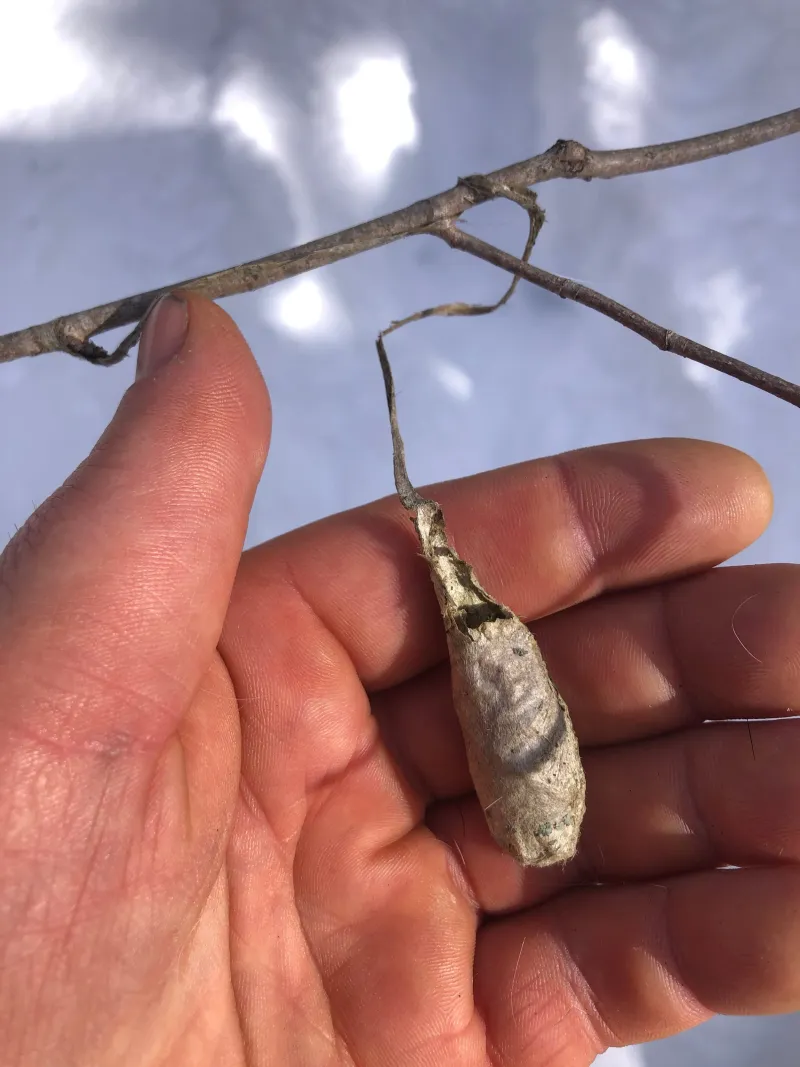
Placement offers hints, but never a final answer. A cocoon on a stem can lean toward one species, yet closer inspection is still needed before anyone should put a name on it.
Cecropia cocoons are attached along a stem or branch, and NC State Extension describes them as tough and twig-bound. Polyphemus cocoons have more variety.
According to Moths of North Carolina, they may be attached to shrubs, wrapped in leaves, or lying on the ground.
Luna is the odd one out. Its cocoon is usually spun among leaves that drop to the earth, as described by UF/IFAS Extension.
That makes a cocoon hanging in plain view on a shrub a poorer fit for luna, though it does not rule out every surprise. The state species account for luna moths is a good place to compare.
Treat these clues like a short list of suspects. Note the shape, whether it is fixed to the twig, and whether leaves are woven in.
If you are not sure, a local Extension office or a moth-identification group can help with a photo.
North Carolina host plants make the connection plausible, not certain
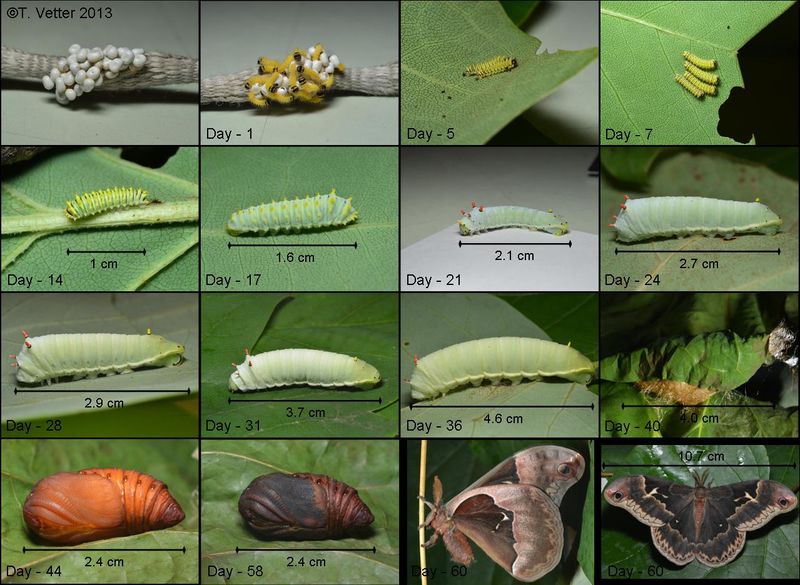
Our native trees and shrubs do feed these big caterpillars. Cecropia caterpillars feed primarily on birch, cherry, and maple, notes NC State Extension.
They are rarely abundant enough to cause noticeable damage.
Polyphemus caterpillars are less picky. North Carolina records include white oak, red maple, winged elm, hickory, and American hornbeam.
Luna records, per the state luna account, include sweetgum, American persimmon, hickory, and winged elm, with sweetgum appearing to be a primary Piedmont host.
Those lists show which plants these species are known to use across the state. They do not reveal what the caterpillar behind your cocoon ate.
It may have fed on a neighbor’s maple or a tree down the street, then wandered to your shrub to spin.
So if you have red maple or hickory nearby, you can say the setting is plausible. You cannot say a native plant in your yard raised this caterpillar.
Planting native hosts is still a fine choice for the yard, simply for the wildlife it can support in general.
Their winter habits are not interchangeable
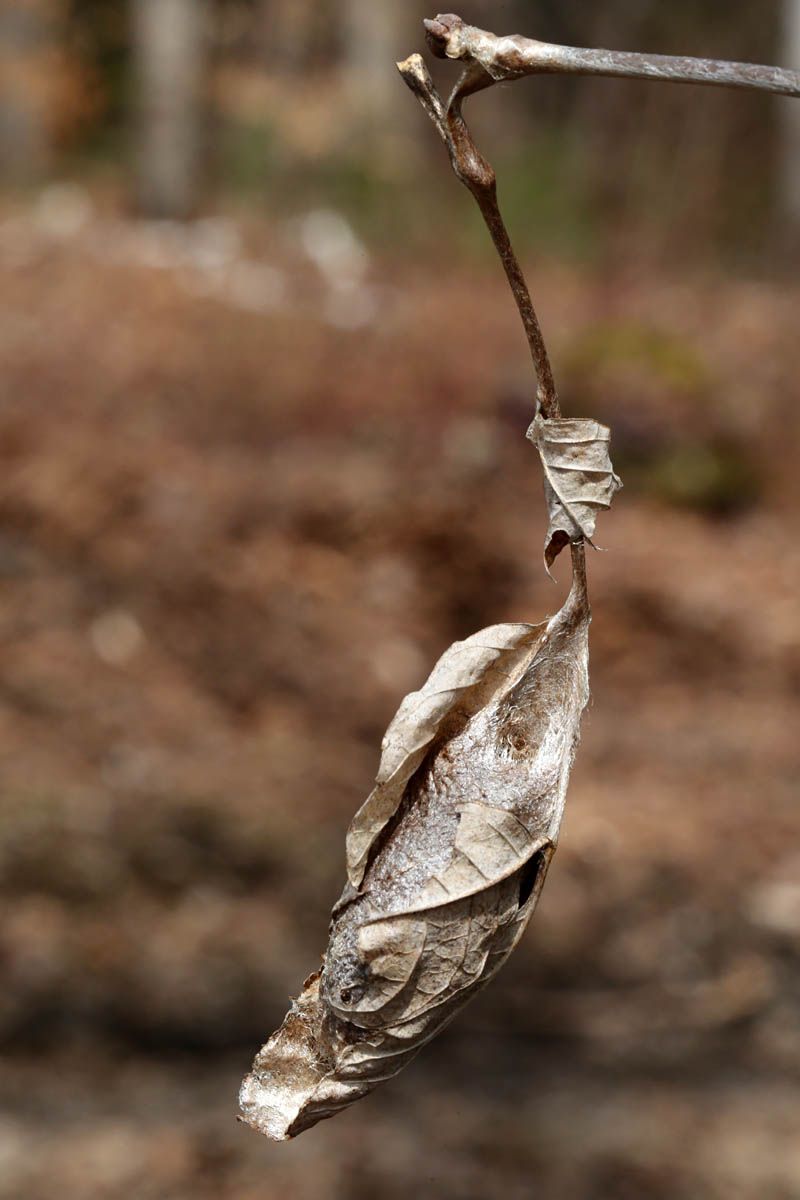
Not every cocoon you see in November will still be there in April. Each species handles winter in its own way, so one rule does not fit all.
Cecropia moths have one generation a year, and their pupae overwinter in tough cocoons attached to twigs, according to NC State Extension. That makes a firmly attached, twig-bound cocoon a reasonable thing to protect once you are confident of what it is.
Luna is different. UF/IFAS Extension explains that luna pupae can be diapausing or non-diapausing depending on day length, and their cocoons commonly fall with the leaves.
So not every luna pupa necessarily spends the winter in the same way.
Polyphemus cocoons vary too. A UF/IFAS Orange County post describes several attachment patterns, including cocoons that drop to the ground.
The practical lesson is to expect variety. A missing cocoon does not always mean something went wrong, and a present one is not a promise of spring emergence.
Could the silk case be a bagworm?
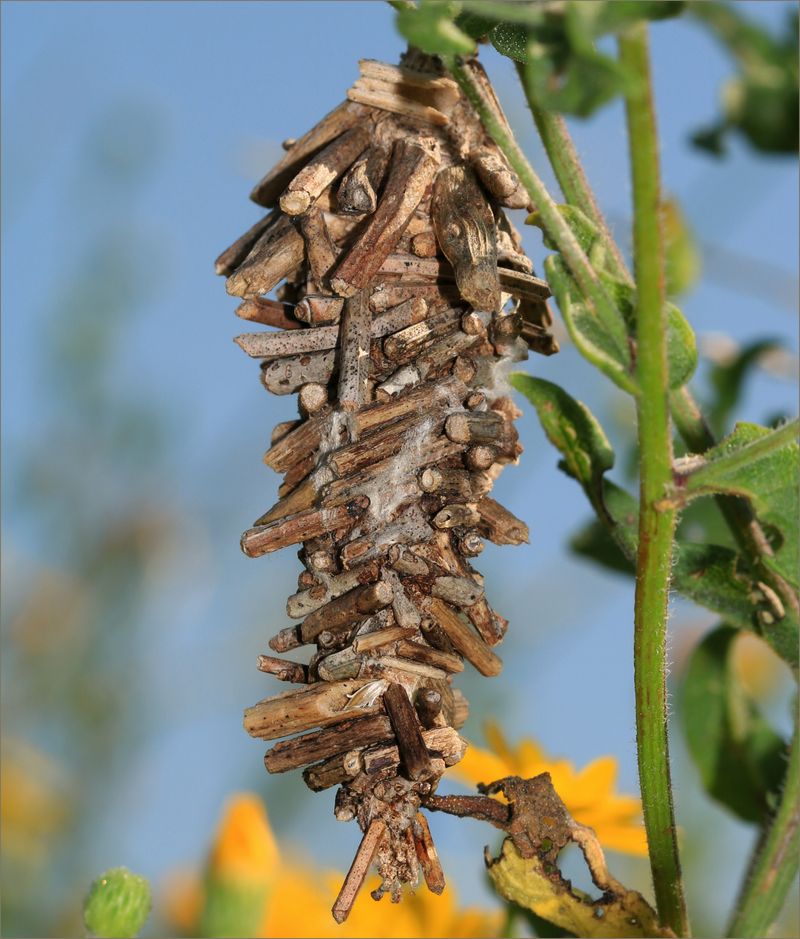
Before you promise protection to any silky thing, rule out the look-alike that gardeners know too well. Bagworms are moth larvae too, and they build attached, silk-based cases that can fool a hopeful observer.
The clue is in the construction. A bagworm case is a portable, often debris-covered bag, usually dotted with bits of leaf or twig from the host plant.
A giant silk moth cocoon is a fixed silk structure, as in the cecropia and Polyphemus examples above.
The stakes are real because NC State Extension explains that bagworms can damage shrubs, particularly conifers like arborvitae and juniper, when numerous. A shrub dotted with dozens of small hanging cases is a very different situation from a single cocoon on a twig.
So look closely first. Check the shape, the debris covering, and the number of cases on the plant.
If you find many bags, check the Extension guidance on bagworms rather than leaving them all alone. Only save a case once you are confident it is a giant silk moth cocoon, not every silken case.
Leave a confirmed cocoon and its twig undisturbed
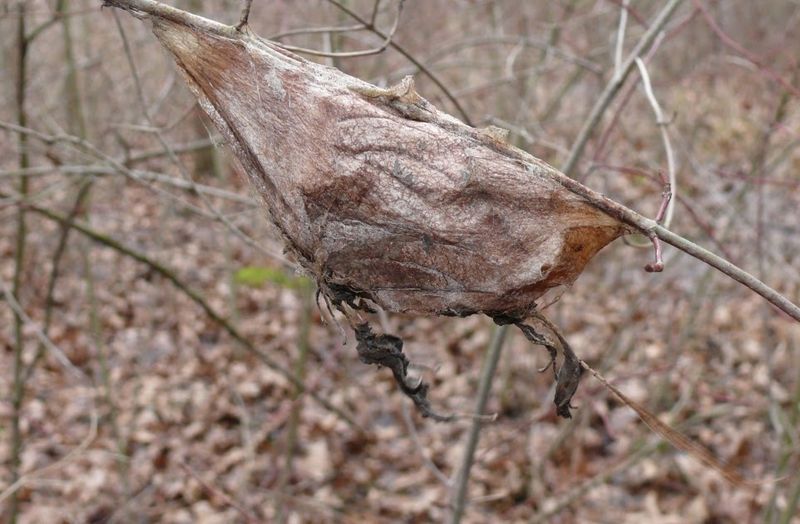
Once you are confident you have a giant silk moth cocoon, the safest move is a quiet one. Skip the pruners and sprays, and leave the cocoon where it is.
If trimming can wait, leave the supporting twig in place through winter too. This is a sensible precaution, not a guarantee that the moth will emerge.
For cecropia, NC State Extension notes the pupae overwinter in cocoons attached to twigs, which is why the twig matters. Cutting it off removes the cocoon’s anchor.
Leaves deserve a thought as well. Since some cocoons can fall to the ground, aggressive raking could bury or toss one without you knowing.
Rake lightly near the shrub, and consider leaving a leafy corner of the yard.
That second idea is general advice, separate from anything proven about these moths. UF/IFAS Gardening Solutions supports keeping leaves and plant material as wildlife habitat, but it is not specific to cocoons.
Treat it as a promising clue, not a full yard history
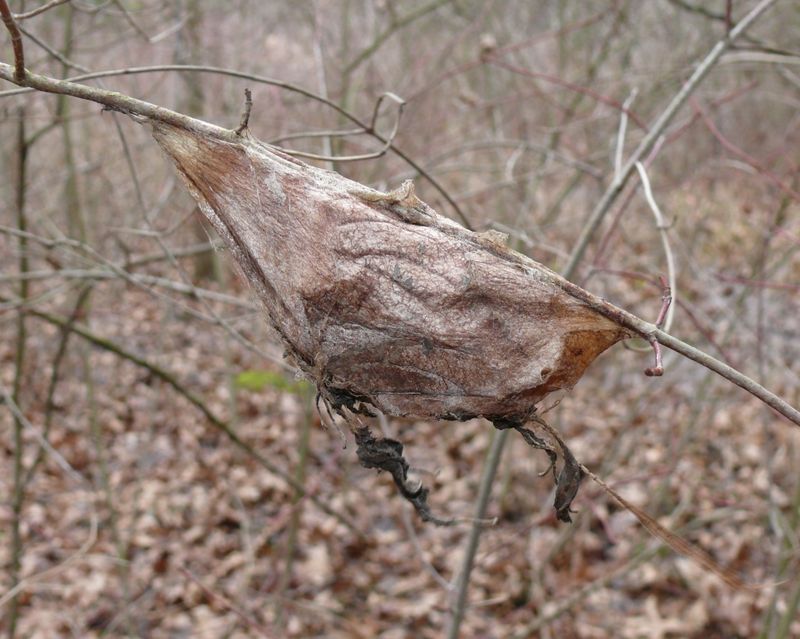
A confirmed cocoon is a good reason to slow down before fall cleanup, not proof that a moth fed in your yard. Check it against the bagworm look-alike described by NC State Extension, then choose the low-disturbance route if it holds up.
Leaving some plant material helps wildlife more broadly, as UF/IFAS suggests. Spring may or may not bring a moth, but a little patience costs you nothing.