
Is Your Snake Plant Drooping This Winter? Check the Soil and Drainage Before You Water
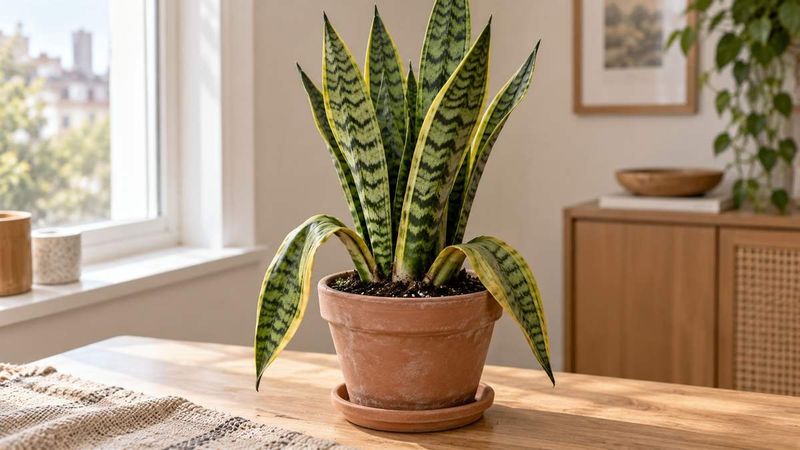
A snake plant is supposed to stand tall, so a leaning or floppy one can feel alarming. Many people reach for the watering can right away, but that is not always the right move.
Wet roots are one possible cause, and thirst or poor light can look similar. A few simple checks can tell you what your plant needs before you do anything drastic.
A Drooping Snake Plant Does Not Prove Its Roots Are Wet
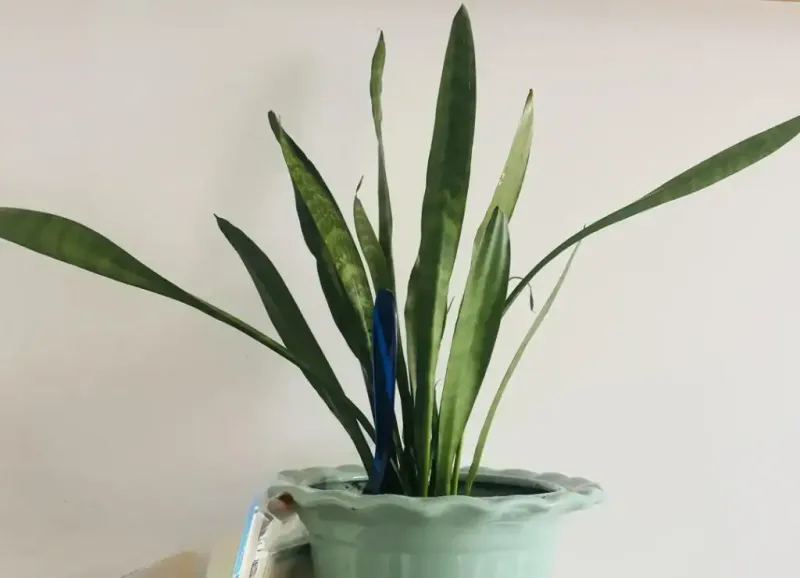
Seeing your snake plant flop over is stressful, and wanting to fix it fast makes sense. The tricky part is that drooping is a symptom, not a diagnosis.
Several different problems can cause the same sad look.
Soggy soil and poor drainage can lead to root decay, and damaged roots may struggle to move water up into the leaves. But UC IPM’s houseplant guidance lists underwatering and too much light as usual causes of wilting, while also noting that root decay tied to overwatering or poor drainage can be involved.
In other words, wet roots are a real possibility, but not the only one.
Too little water and too much water can look surprisingly alike, because either one can interrupt water delivery to the foliage. That overlap is why Extension experts answering a snake plant root rot question point toward checking the actual conditions instead of guessing.
Pouring in more water on a hunch could help a dry plant, but it could also add to a wet-root problem.
Light matters too. The New York Botanical Garden says snake plants grown in inadequate light can become lanky and unable to support themselves.
So a weak, floppy leaf does not automatically mean the roots are in trouble.
Treat the droop as a cue to investigate. Start with the soil and the drainage setup.
If the problem lingers or you spot signs of rot, a closer look at the roots comes next, and the sections ahead walk through each step.
Why Winter Calls for Careful Watering
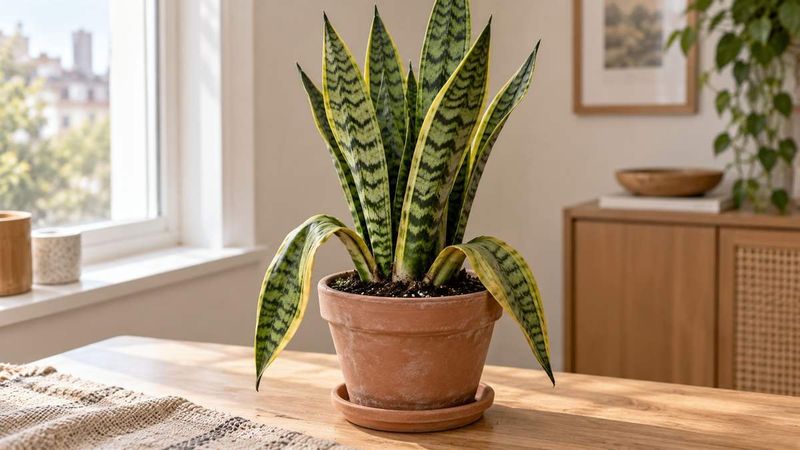
Cold months usually slow things down for houseplants. Snake plants often grow less in winter, which means they tend to use less water.
Soil that dried in a week during summer may hold moisture much longer now.
That is why the season calls for a closer look rather than a rule. Illinois Extension advises letting the soil dry completely between waterings, and in winter, watering only enough to keep the foliage from shriveling.
That describes a limit on how little water the plant can get, not a test to wait for.
No single calendar interval fits every home. How fast the mix dries depends on warmth, light, the pot, and the soil itself.
Virginia Tech Extension stresses that watering needs vary with these conditions, and the RHS growing guide notes that an especially warm spot can change a plant’s winter water needs.
Picture two snake plants: one in a chilly, dim corner in a thick plastic pot, another beside a sunny, heated room in a small clay pot. They will not thirst on the same schedule.
Your own plant’s surroundings set the pace.
None of this means you should stop watering altogether. It means checking first, then watering when the plant’s conditions say it is time.
Check the Soil Before You Water
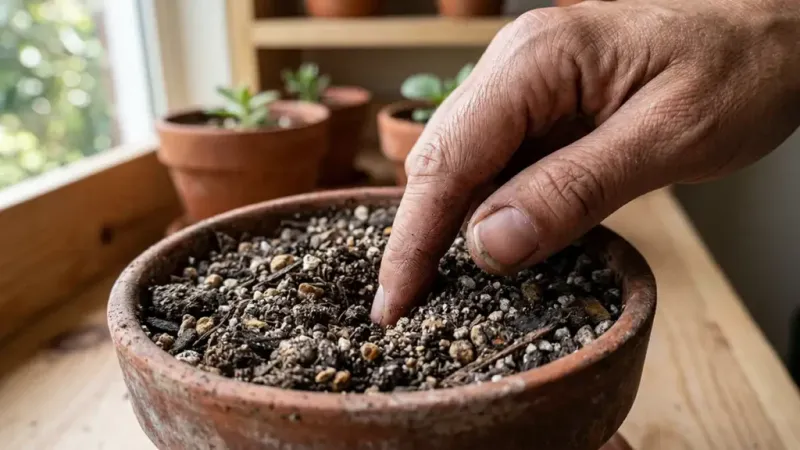
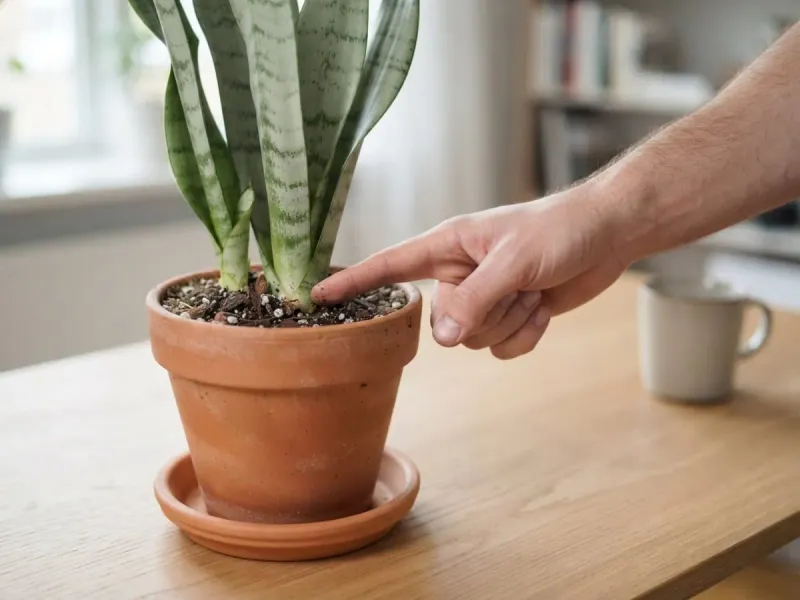
Your finger is the best tool you own for this job. Push it a couple of inches into the mix, near the pot’s edge and toward the middle.
If the soil feels damp or cool and clumps on your skin, the plant probably does not need water yet.
The RHS suggests checking the mix by hand instead of following a fixed schedule. If it feels dry deep down, water thoroughly.
If it still feels wet, wait and check again in a few days.
Let that check make the decision, not the droop and not the calendar. A leaning plant in dry soil may simply be thirsty.
A leaning plant in soggy soil is a sign to look at drainage rather than add more water.
Lifting the pot can help too. A pot that feels heavy usually still holds moisture, while a light one has often dried out.
Compare it right after a watering and again later to learn your plant’s pattern.
Always empty any water that collects in the saucer or decorative outer pot. Roots sitting in that pool stay wet far longer than you might expect.
One caution: do not wait for the leaves to shrivel as a routine signal. Illinois Extension’s wording about shriveling describes the minimum winter water, not a thirst test.
Soil that is dry all the way through is the better cue.
Check the Pot and Drainage Setup
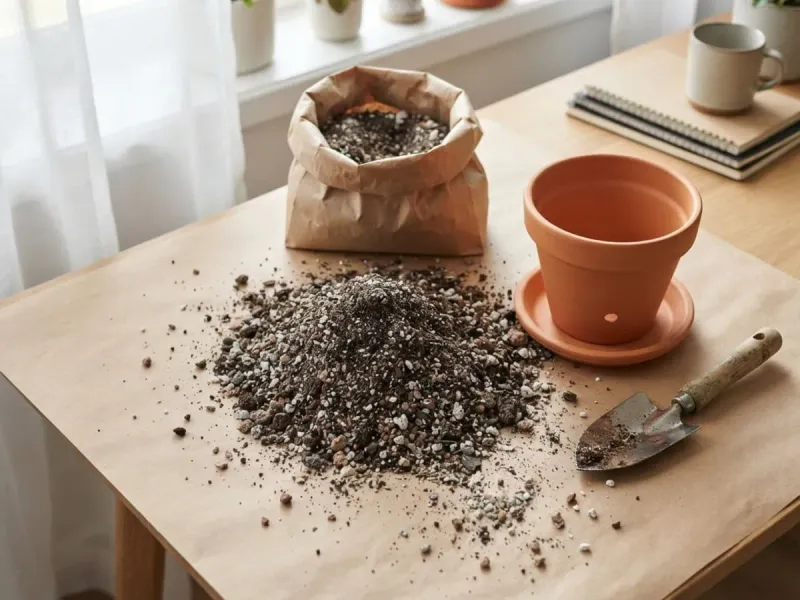
Sometimes the soil stays wet not because you watered too much, but because the container holds water in. Flip your pot over and look for open drainage holes.
If there are none, or if they are clogged, extra water has nowhere to go.
The New York Botanical Garden’s snake plant rot answer recommends a pot with drainage holes and a free-draining mix, and it advises against leaving the pot standing in drained water. A decorative cover pot without holes can quietly trap a puddle at the bottom.
Next, feel the mix itself. A dense, peaty soil can stay soggy for ages, while a gritty, fast-draining blend lets water pass through.
If yours feels heavy and muddy days after watering, the mix may be part of the story.
Pot size matters as well. Virginia Tech Extension notes that a pot much larger than the root mass can leave extra wet mix around the roots.
A small plant in a big pot has a lot of soil with no roots to drink from it.
Tie this back to your finger test. If the mix stays wet for a long time, look at the setup before simply stretching out your watering interval.
Fixing holes, mix, or pot size addresses the cause instead of working around it.
When to Inspect the Roots
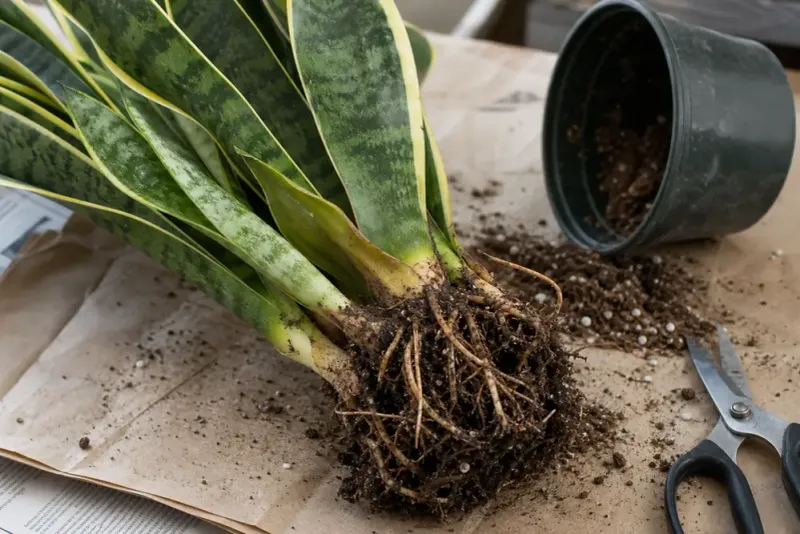
Not every droopy plant needs to be unpotted. If the soil was dry and the plant perks up after a good drink, you have your answer.
Taking it out of the pot at the first sign of a lean can stress it for no reason.
Root inspection makes sense when symptoms keep going despite your checks, or when you notice signs of rot. Those signs might include soil that stays wet for a long time, a sour or musty smell, or leaf bases that feel soft.
UC IPM recommends inspecting the roots when wilting occurs, since decay from overwatering or poor drainage is one of the possible causes.
If you do look, slide the plant out gently and shake off loose soil. The New York Botanical Garden describes slimy, mushy, or smelly roots as concerning.
Healthy roots, by comparison, tend to look firm rather than collapsed.
Keep the meaning of these clues clear. Mushy or smelly roots are worrying observations, but a droop on its own never proves rot.
What you find in the pot, not what you see in the leaves, tells you which way to go.
If the roots look firm and healthy, return the plant to a well-draining pot and revisit light, temperature, and watering habits.
Match the Rescue to the Root Damage
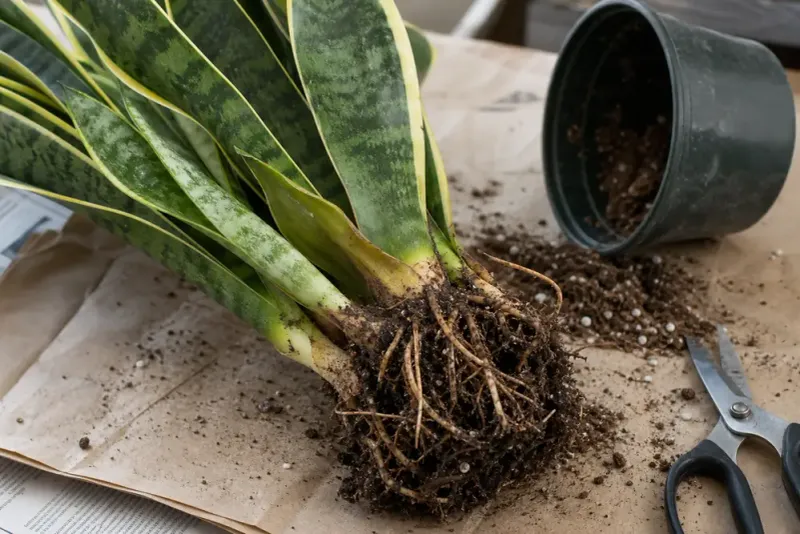
Once you can see the roots, let them guide what you do. If only a limited portion looks damaged, the plant may have a fair shot at recovering.
Rescue should follow the inspection, not the drooping alone.
The New York Botanical Garden’s guidance on saving a snake plant with root rot suggests cutting above the damaged section with a sterilized knife. Wipe the blade with rubbing alcohol before and between cuts so you do not spread problems to healthy tissue.
Then repot into a sanitized pot of an appropriate size, with drainage holes, using fresh, fast-draining succulent mix. Avoid reusing the old soil.
Choose a pot that fits the remaining roots snugly rather than a roomy one that holds extra wet mix.
After repotting, hold off on heavy watering and go back to the finger test. Check the plant over the following weeks rather than expecting a quick change, since snake plants recover slowly.
Be realistic about the outcome. If the damage is extensive, or the base of the plant (the crown) is soft and rotting, recovery may be unlikely.
In that case, you may be able to save a few healthy-looking leaves, but there is no promise of a cure.
Acting in proportion to what you found keeps you from over-treating a mild issue or hoping too hard on a severe one.
Keep Conditions Steady and Recheck the Light
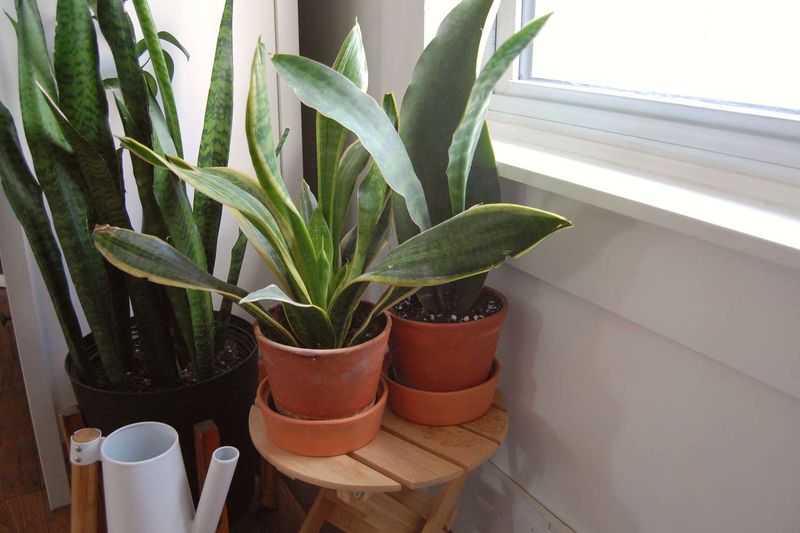
After a rescue or a simple adjustment, steady surroundings help your snake plant settle. Aim for ordinary room temperatures and keep it away from cold drafts, such as leaky windows or doors that open to the outdoors.
The RHS growing guide supports these steady conditions for sansevierias.
Light deserves a second look. Bright, indirect light can support sturdier growth, and winter sun is weaker and shorter than summer sun.
A spot that worked in July may be dim by January.
This matters because floppy leaves are not always a water story. The New York Botanical Garden explains that snake plants in inadequate light can grow lanky and unable to hold themselves up.
If new leaves come in long and weak while the soil and roots check out fine, try moving the plant closer to a bright window.
Make changes gradually, and give the plant a few weeks to respond before judging.
For watering from here on, keep relying on what you can observe. Check how dry the mix is, consider how warm and bright the spot is, and water when the soil says so.
A fixed winter calendar cannot account for your plant’s real conditions.
Let the Checks Guide Your Next Step
Start with the soil and drainage, then water only if the mix is dry. If the droop sticks around or rot signs appear, look at the roots and match your rescue to the damage.
The RHS and UC IPM both point toward observation over assumptions.
Winter means looking closer, not banning the watering can. A leaning leaf is a question your plant is asking, and the soil usually holds the answer.