
Kudzu Bugs on Your North Carolina Siding: Reduce Indoor Entry and Watch Your Beans
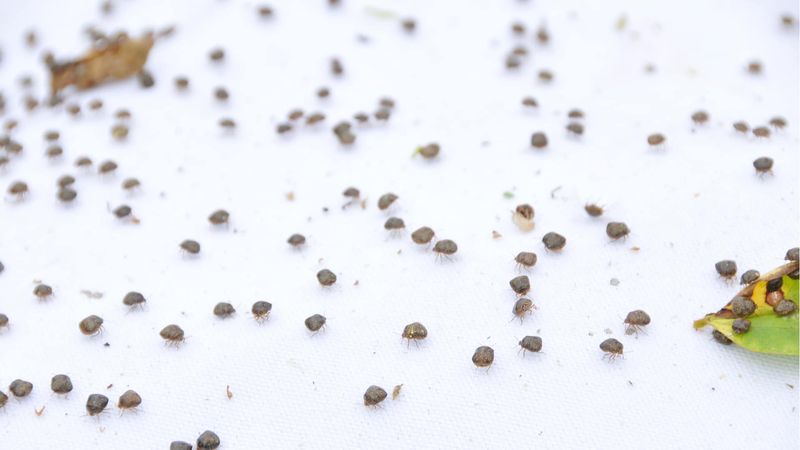
Warm fall afternoons can turn the sunny side of a North Carolina house into a gathering spot for small, olive-brown kudzu bugs. Some of them find their way inside, and that is a problem you can partly fix with caulk and screen repair.
Your bean and pea beds are a different story, with their own questions and their own plan. Here is how to handle each one without mixing them up.
Why kudzu bugs gather on siding in fall
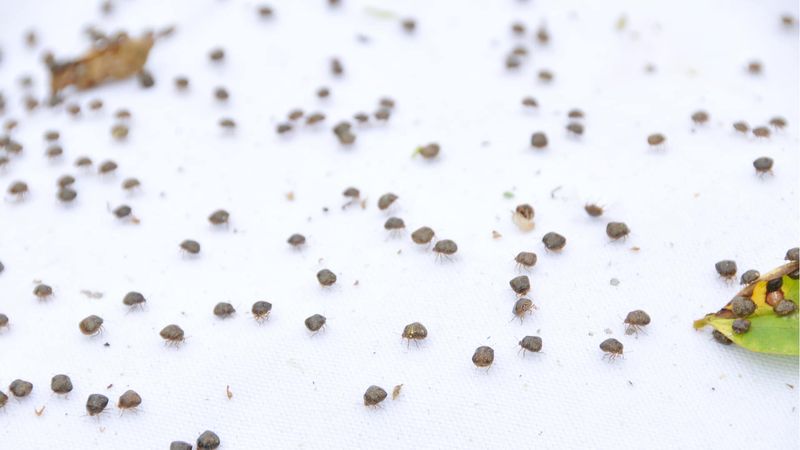
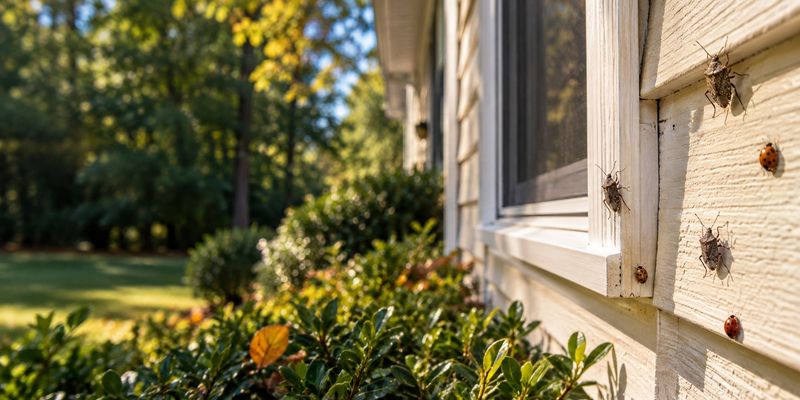
Take a walk around your house on a sunny October afternoon and you may spot them: little olive-brown bugs, about the size of a ladybug, crowding onto the warm wall. Kudzu bugs tend to gather on light-colored siding in fall, and some of them find gaps and slip into homes.
NC State Extension describes this fall behavior as a nuisance problem for homeowners.
A crowd on the outside wall does not always mean a crowd inside. Bugs seen on siding may simply be resting or aggregating on the exterior, soaking up the sun.
Only the ones that locate an opening actually end up in your living space.
Siding is also not their only choice of winter shelter. Kudzu bugs use other outdoor spots too, so a wall full of bugs tells you about one gathering place, not about the whole population in your yard.
You may also see eggs on siding. NC State reports that egg-laying can happen there, though Virginia Tech describes eggs as usually laid on kudzu or soybean leaves.
Nothing in the sources reviewed shows that eggs on a wall turn into bugs that later bother a garden, so there is no reason to read a garden forecast into what you see on your house.
Treat the wall as a clue about timing. When bugs are clustering, it is a good moment to check how well your home is closed up.
Seal gaps to reduce indoor entry
Grab a flashlight, a tube of exterior caulk, and a free afternoon. A short inspection can cut down on how many bugs get inside, and NC State Extension points to sealing unintended openings and repairing screens as the main home steps.
Start with doors and windows. Look for cracks in the trim, worn weatherstripping, and gaps under thresholds.
Then check the places where pipes, cables, and vents pass through the wall, since those utility penetrations often leave small openings.
Next, look at the screens. Window screens should fit snugly without tears.
Soffit vents and peak vents also need intact screening, because a small hole there is an easy doorway for a tiny bug.
Be realistic about what this does. Sealing and screening can reduce the number of bugs entering your home.
It will not stop them from gathering on the outside walls, and it cannot promise a bug-free house. A few may still find a way in.
Skip the idea of spraying the whole exterior. NC State says home exterior treatments are unlikely to give reliable control and may need repeated applications.
Caulk and screen mesh are slower to pay off, but they work on the actual entry points.
Fall is the right season for this job, since the bugs are looking for shelter now. Finish it before cold weather sets in.
Outdoor overwintering makes garden risk a separate issue
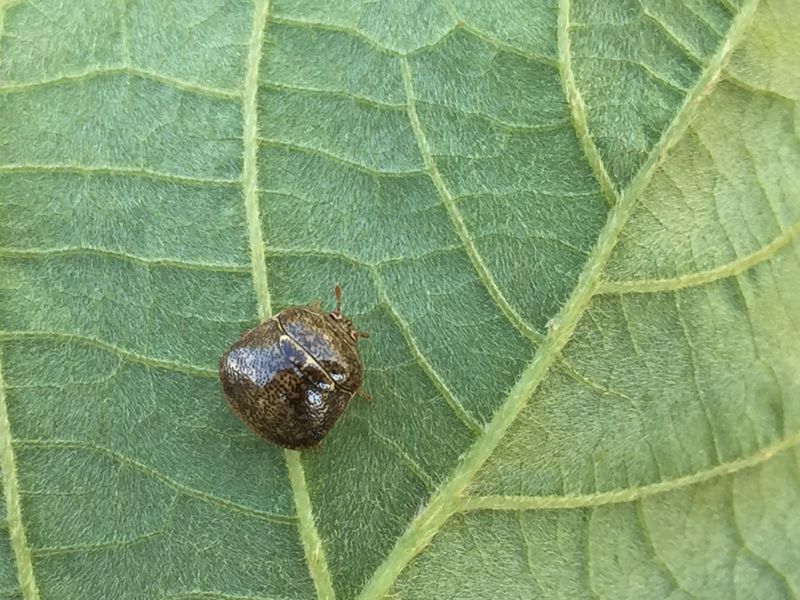
The idea that bugs tucked under your siding will wreck your spring beans sounds logical, but the evidence does not establish it. Nothing in the sources reviewed ties siding overwintering to damage in a nearby bean bed.
Treat that claim as unproven.
What is known is that kudzu bugs can overwinter outdoors. NC State Extension notes they shelter in places like leaf litter and under bark, and they can fly to host plants in spring.
Homes near kudzu patches or soybean fields may see more activity, but bugs can arrive from other overwintering sites too.
One North Carolina overwintering study found a strong preference for leaf litter over tree bark at its study sites. That is a finding about where bugs were found, not a recipe for your yard.
It does not show that raking up every leaf would keep them from visiting your garden, and a bare yard also loses habitat that helps other wildlife, so broad clearing is not a reliable fix.
Here is the practical meaning. Caulking your home keeps some bugs out of the house.
It does nothing to stop bugs already sheltering in the woods, the hedgerow, or a neighbor’s yard from flying to your legumes in spring.
So keep two lists. One covers the house and ends once the gaps are sealed.
The other covers the garden and begins when your plants are growing.
Beans can host kudzu bugs, but backyard damage is uncertain
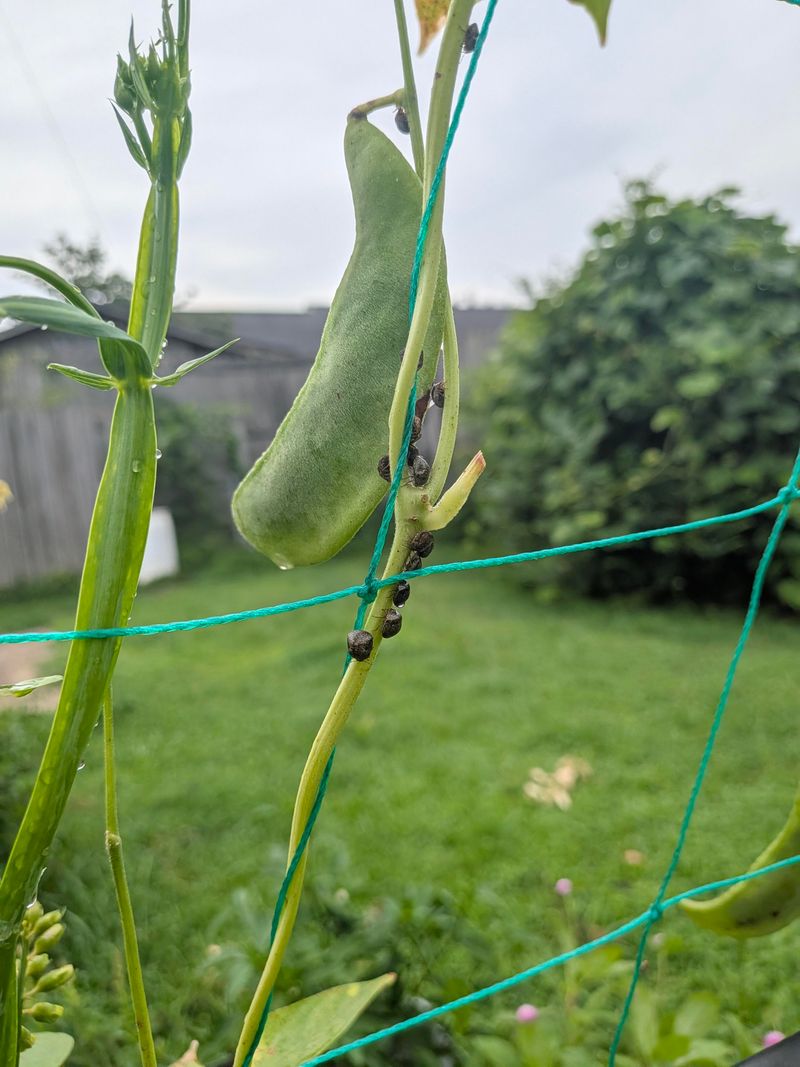
Kudzu bugs are legume feeders. NC State Extension lists kudzu, wisteria, soybeans, and beans among their hosts, and it names beans as a crop concern.
They feed by sucking sap from the plant.
Peas need more careful wording. N.C.
Cooperative Extension has identified field peas, along with green beans and butter beans, as possible hosts. A greenhouse study in the Journal of Economic Entomology tested black-eyed peas, which are a type of cowpea, along with other legumes.
Neither source shows that every kind of garden pea faces the same risk, so do not assume your sugar snaps are in the same boat as field peas.
Then there is the question of size. The strongest damage numbers come from soybeans in big fields.
Those loss figures do not carry over to a backyard row of green beans. NC State also admits uncertainty about hosts and potential damage in North Carolina, and Cooperative Extension has said home-garden impacts were uncertain.
That uncertainty cuts both ways. Your beans might see little activity, or they might attract some bugs.
A swarm or a yield loss is not guaranteed, and no one can predict your exact outcome.
The sensible response is attention rather than alarm. Know which legumes you grow, learn what the bug looks like, and check your plants through the season.
Scout your legumes before taking action
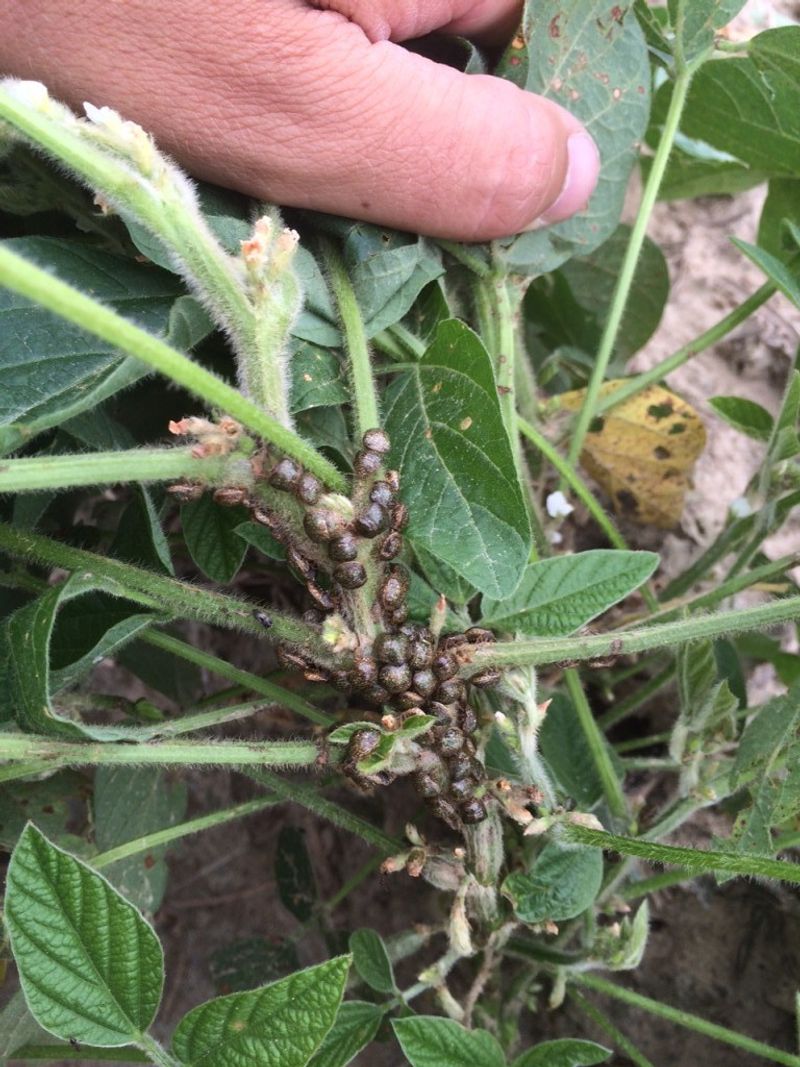
Before you reach for any treatment, take a slow look at your plants. Check the stems, the undersides of leaves, and the spots where leaves meet stems.
Kudzu bugs often sit in groups, so a cluster on a stem is easier to spot than a single bug.
Confirm what you are seeing. Plenty of insects visit a bean patch, and many are harmless or even helpful.
NC State’s vegetable pest guidance stresses identifying the pest first, and it says small home gardens can often rely on nonchemical methods.
Know what heavy feeding can look like. NC State reports that large numbers of kudzu bugs sucking sap can lead to stunting, wilting, and flower or pod drop.
Those are possible results of heavy feeding, not things every bean grower will see. Wilting can also come from dry soil or other pests, so look for the bugs themselves before blaming them.
Build a simple habit. Look over your beans and peas every few days from the time they emerge.
A quick walk with a cup of coffee is enough, and early notice makes any small response easier.
If you find a few bugs and the plants look fine, keep watching. If you find clusters, a nonchemical response is a reasonable first move in a home garden, and the next section covers one.
Remove small clusters without crushing the bugs
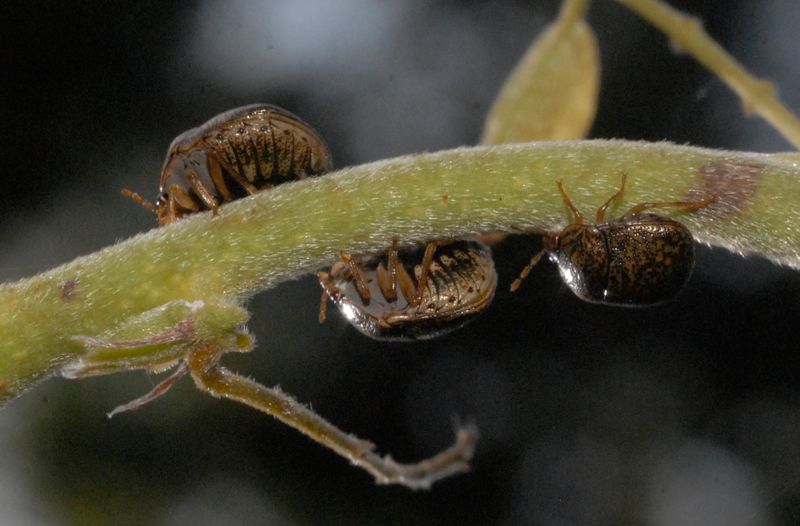
For a small infestation, a bucket of soapy water and a soft brush can handle a lot. NC State Extension advises brushing clustered bugs into soapy water.
Hold the bucket right under the stem so the bugs drop in rather than flying off.
Wear gloves and do not squeeze, crush, or pick the bugs up with bare hands. Their defensive secretion can stain skin and may cause welts or inflammation.
It also smells bad, which is reason enough to keep your distance.
Indoors, use a vacuum instead of a shoe or a tissue. Crushing a bug on a wall or windowsill releases the secretion and leaves a mark.
Be aware that a conventional vacuum may retain the odor, so empty the bag or canister outside soon after you finish.
This hands-on method suits a small bed. It targets the bugs you can see without spraying anything near the plants you plan to eat.
It will not wipe out every bug in the neighborhood, and new ones may arrive later, so repeat it only when you actually see clusters.
Kids and pets are worth a thought as well. Keep them away from the bucket and from any bugs on the ground or on walls, since the secretion is the same whether the bug is in the garden or in the living room.
Keep house exclusion and garden monitoring separate
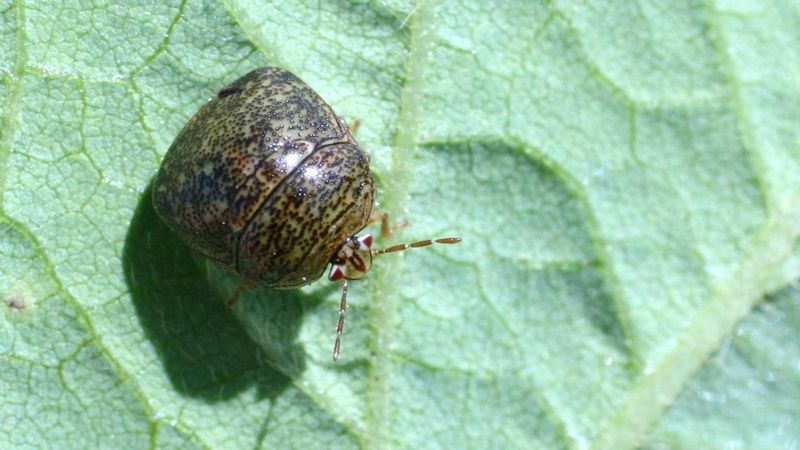
Think of this as two jobs on two calendars. In fall, seal gaps and repair screens to reduce kudzu bugs entering the house.
In spring, check your legumes on their own schedule.
If bugs show up on your plants, act in a targeted way, and if you consider a pesticide, follow the current label and use it only on the sites and plants it permits. A sealed house cannot guarantee your beans or peas will avoid these bugs.
Caulk the house for your comfort, then watch the garden with your own eyes.