
Late November Can Still Be a Good Time to Plant Tulips and Daffodils in Parts of North Carolina
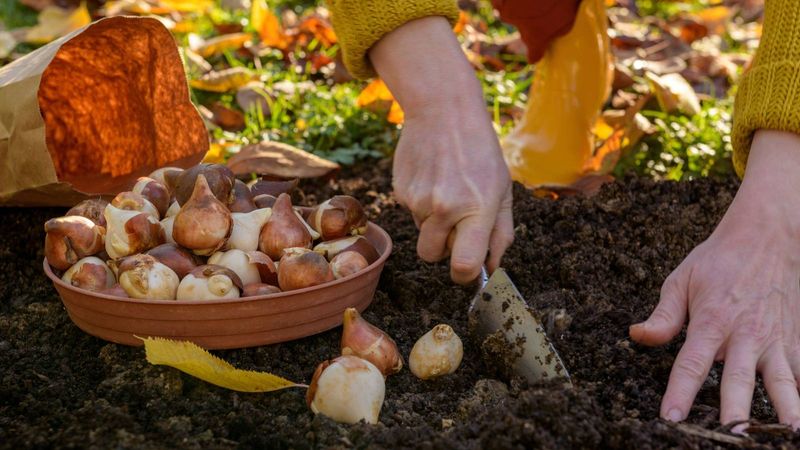
Maybe your tulip and daffodil bulbs are still sitting in their bag on the garage shelf. Before you feel bad about it, know that late November can still work in some parts of North Carolina.
The trick is knowing whether your yard fits that window. A few simple checks on soil, bulb type, and drainage can help you plant with confidence.
Late November fits some North Carolina gardens, not all
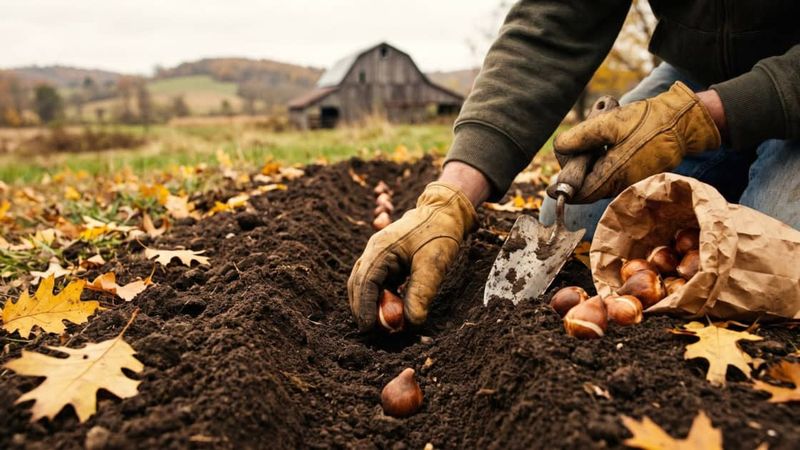
North Carolina stretches from the Outer Banks to the mountains, so one planting date cannot fit every yard. NC State Extension’s gardener handbook suggests planting spring bulbs once the soil at planting depth has cooled below 60°F.
It names October as the best month for Zone 6, which includes some higher mountain areas, and November or early December for Zones 7 and 8.
That means a late-November planter in much of the Piedmont or Coastal Plain may be right on schedule. A gardener in a colder mountain yard, though, may already be past the ideal window.
Your zone, your elevation, and the weather this fall all matter more than a date on the calendar.
The coast offers a clear example. Dare County Cooperative Extension guidance says Outer Banks gardeners can plant bulbs from late November to early December, about two to three weeks before the ground freezes.
Mild coastal winters make that timing sensible there.
So if you are just getting started, relax. Late November is a suitable window in some North Carolina locations, and it is not a statewide advantage or a secret trick.
Think of it as an acceptable time that works when your local conditions line up, rather than a reason to hold bulbs back on purpose.
A quick way to check is to push a soil thermometer down to the depth where the bulbs will sit, usually several inches. If the reading is under 60°F and the ground is workable, you are in good shape to plant.
Does waiting make spring flowers taller?
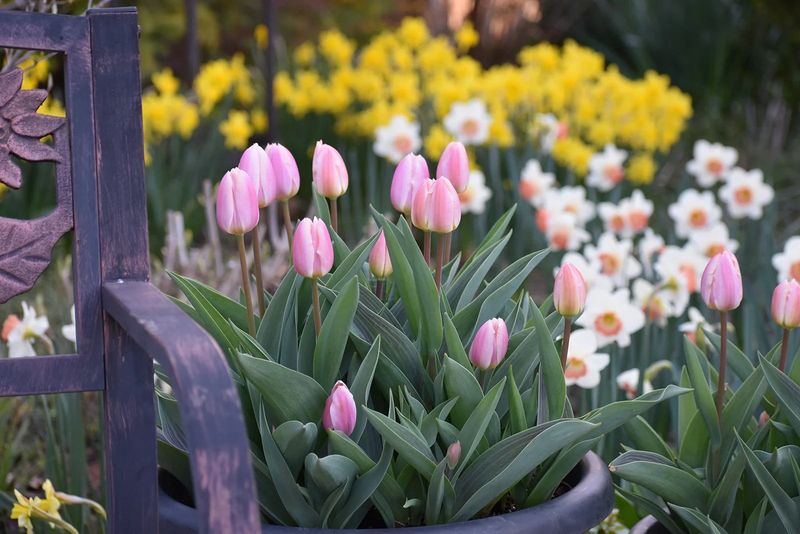
Here is the plain answer: holding bulbs back until late November does not make the flowers taller or fuller. No extension guidance shows that delaying planting improves blooms once the soil is cool enough.
What does help is giving bulbs the conditions they need, and sometimes that happens to land in November.
Bulbs spend the fall growing roots in cooling soil. According to the NC State handbook, they also need a cold period that runs anywhere from six to 20 weeks depending on the species or cultivar.
Planting too early into warm soil can work against that, which is why the 60°F target exists.
The cold period matters for the stems. A Wayne County Extension article explains that bulbs without enough chilling can produce short stems, with flowers sitting close to the ground.
Short stems come from too little cold, not from planting on the wrong day.
Notice the difference between meeting a bulb’s needs and putting off the job. Waiting for the soil to cool is sensible.
Waiting past that point, hoping for extra height, only shortens the time roots have to settle in before the ground freezes.
If your soil is already cool, plant. If it is still warm, a short wait makes sense, and then you can get to work.
Tulips and daffodils call for different expectations
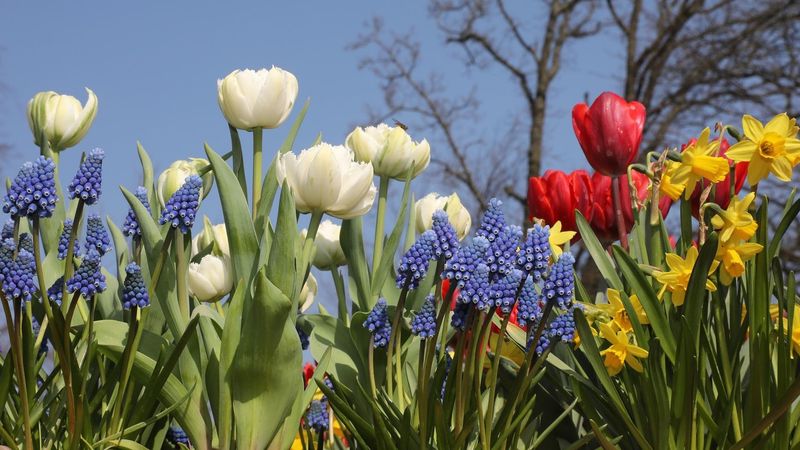
Daffodils and tulips often get lumped together in one bag of fall bulbs, but they behave differently. Cold needs are not the same for every bulb.
NC State gives a broad range of six to 20 weeks of chilling, depending on the species or cultivar, so check the label on what you bought.
Daffodils are the tougher of the pair. The NC State handbook calls them hardier and says they usually return year after year, and the Plant Toolbox entry for daffodils lines up with that.
In eastern North Carolina, Beaufort County Extension notes that daffodils there do not need chilling or pretreatment.
Tulips are pickier. The NC State Plant Toolbox page for tulips says their performance often drops sharply after the first year, and many gardeners treat hybrids as annuals.
Eastern North Carolina’s mild winters can make them harder still.
Tulips are also non-native garden ornamentals, with roots in southern Europe and central Asia. That is fine for a flower bed, but do not count on them as a wildlife plant.
For your own yard, plan on daffodils as the long-term backbone. Treat tulips as a seasonal treat that you may need to replant, especially if you garden in the east.
Choose sound bulbs and plant them for visual impact
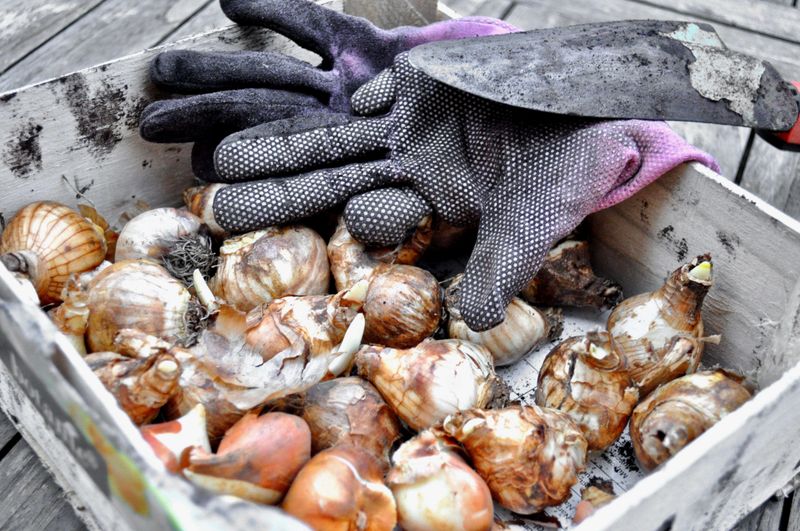
If you want a spring display that looks full, start in the bulb bin, not on the calendar. Give each bulb a gentle squeeze.
Plump, firm ones are what you want, and anything mushy, moldy, or shriveled should go back.
Size counts too. The NC State handbook says larger bulbs generally produce better flowers.
A few extra cents per bulb is usually money well spent.
Fullness comes from design. Forsyth County Extension recommends planting bulbs in drifts for more impact.
Instead of lining them up like soldiers, scatter a dozen or more in one irregular patch and plant them where they land.
A clump of 15 daffodils near your mailbox will look bolder than 15 bulbs spaced one by one around the yard. This works whether you plant in October or late November, because grouping changes how the flowers look, not how tall they grow or when they open.
Skip the urge to toss in bone meal or extra phosphorus as a cure-all. NC State advises basing fertilizer and lime on a soil test, which your county Extension office can help you with.
Give bulbs a well-drained planting site
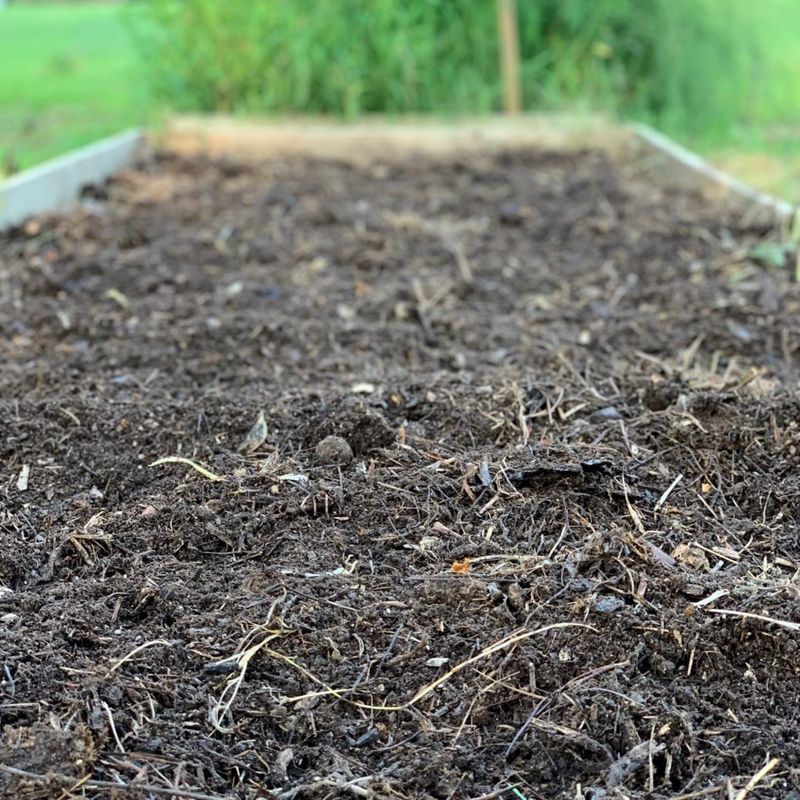
Drainage is an important part of bulb success. NC State’s handbook warns that tulips and many other bulbs struggle in poorly drained soil, where they can rot.
Here is a simple test. After a good rain, look at the spot you picked.
If puddles linger for hours, it is not a great home for bulbs, and heavy red clay in the Piedmont is a common culprit.
You have a few options. Pick a better-drained site, such as a gentle slope or an open bed.
You can also improve the drainage where you are, or build a raised bed if water tends to hang around.
Watering after planting is still a good idea because it settles soil around the bulb. But watering does not turn a soggy spot into a suitable one.
The NC State Plant Toolbox page for tulips points to well-drained soil for good reason.
One soaking is plenty, and then let the weather take over. Cool-season rain usually covers the rest.
If your bulbs are still waiting, check local conditions and plant promptly
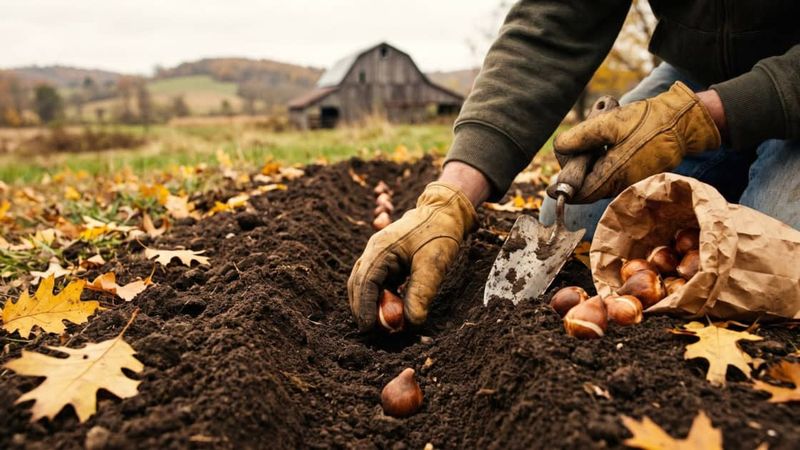
Got bulbs in the garage and a few weekends left? Start by checking your soil thermometer at planting depth.
NC State’s general target, described in its handbook, is soil below 60°F, with timing that varies by zone and bulb.
If the ground is workable and cool, plant soon. Coastal gardeners can follow the Dare County window of late November to early December, a couple of weeks before the ground freezes.
Mountain gardeners may need to move fast, or plant on the next mild day.
Spring is not the only choice left, either. Iowa State Extension says tulips can go in as late as December if the soil is not frozen.
That is general advice, not a North Carolina guarantee, so lean on local conditions.
Late November suits some North Carolina yards, but it is no reason to wait longer for taller or fuller blooms. Bulbs left in a bag do nothing for you, while bulbs in the ground get to work.