
Leafy Fig Tree With No Fruit? Check Nitrogen First, Then These Other Causes
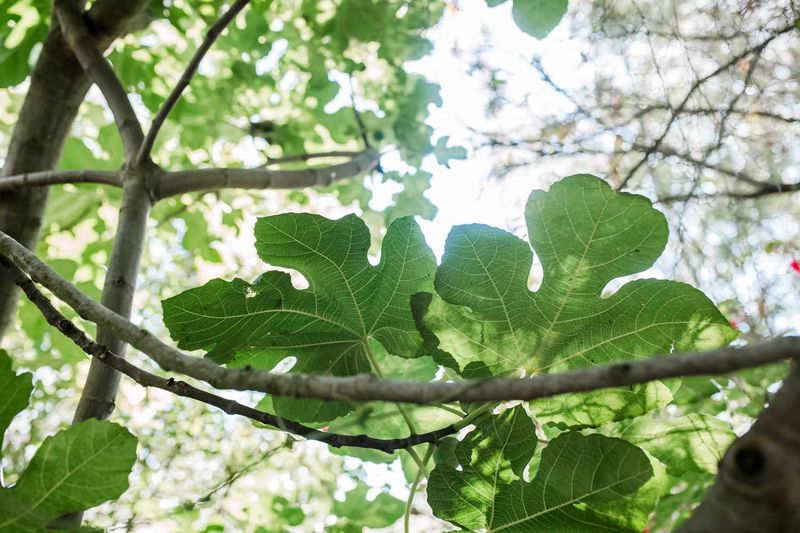
A fig tree that is packed with big green leaves but gives you no figs can feel like a slap in the face. The cause is not always the same, but one thing is worth checking first if your tree is growing like crazy.
Sorting out what your tree is really telling you can save you from guessing and from making things worse. Here is how to work through it, one clue at a time.
Excess nitrogen is the first thing to check on a vigorous fig
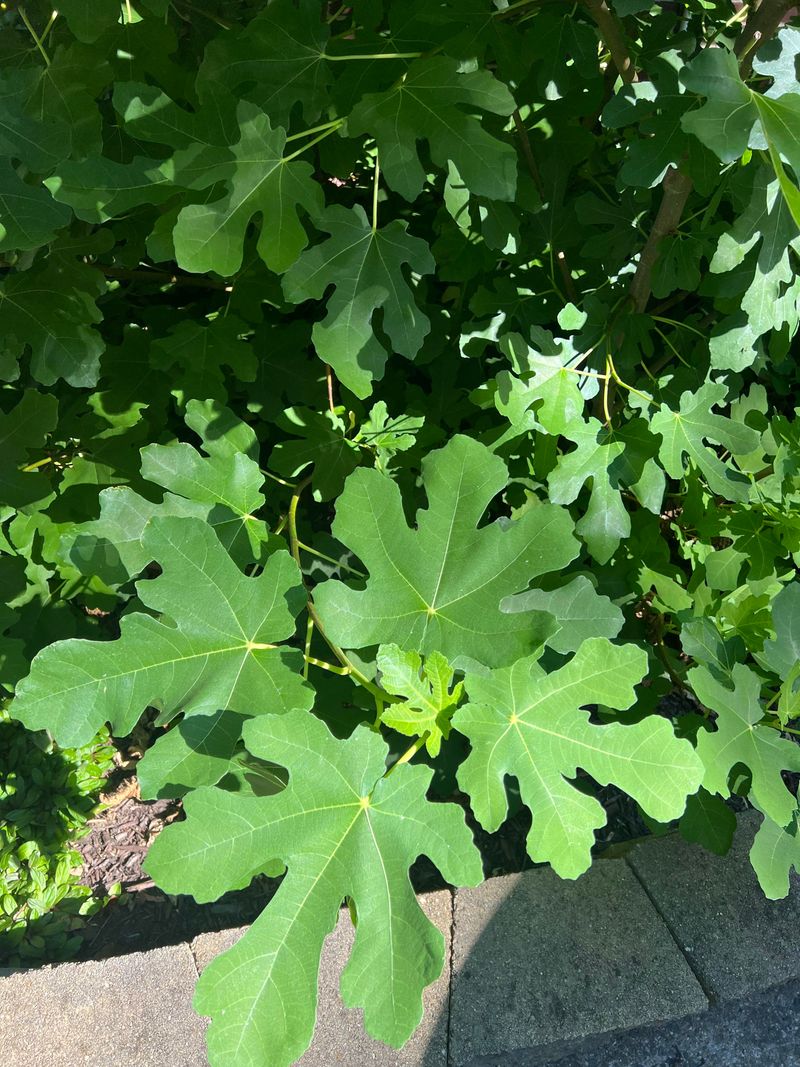
Picture a fig that shoots out long, rubbery branches every summer and wears leaves like a rainforest plant, yet hardly any figs. When growth is that unusually vigorous, extra nitrogen is a sensible first suspect.
UC IPM guidance notes that too much nitrogen can push a fig toward leaves and shoots, which can cut fruit production or delay ripening.
Before you add anything, look back at what the tree has been getting. Think about fertilizer, but also rich compost, manure, or a lawn feeding that sits close to the roots.
Lawn fertilizer often reaches fig roots, since they spread wide.
Measuring new growth can help. Rutgers Cooperative Extension suggests reducing or eliminating nitrogen when a mature tree puts on more than 1 to 2 feet of new growth a year.
Georgia guidance, in a University of Georgia publication, points to leaf nodes spaced more than 3 inches apart on shoots as a possible sign of excess vigor. Treat these numbers as regional examples, not a nationwide test.
Lots of leaves alone does not prove nitrogen is the problem. A fig can look lush for other reasons, and a healthy tree may simply be young.
If your growth is not excessive, adding fertilizer is not the fix, and skipping it is fine. The next sections walk through the other checks.
Does your tree have no figs, or figs that do not mature?
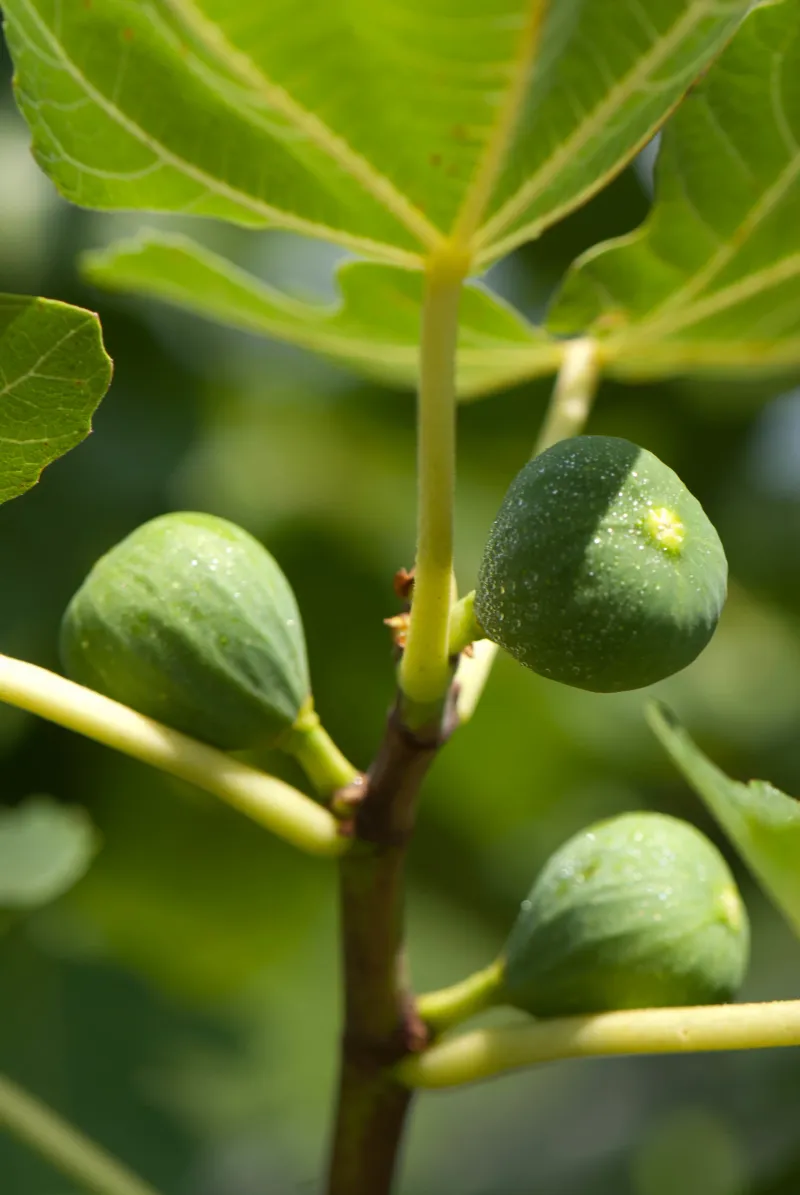
Walk out to the tree and look closely at the branches, then at the ground. What you find changes the whole diagnosis.
There are three common situations: the tree never formed figs, it formed figs that dropped, or the figs are still hanging there, hard and green.
If you see no tiny figs at the leaf joints at all, the issue is with fruit set. Think about age, light, vigor, or winter damage.
If you spot small figs on the ground, the problem is fruit drop. UC IPM lists water stress as one factor that can lead to drop, and both too little and too much water can play a part.
Fruit that stays on the tree but never softens is a third problem. Figs take weeks to ripen, so patience matters.
Clemson Extension explains that ripening takes time, so do not mistake slow figs for absent ones.
Where summers are short or cool, late figs may simply run out of heat. Rutgers notes that late-season figs can fail to mature when the season lacks enough warmth.
Cold damage can add to this.
This is why reaching for fertilizer or a pruning saw right away can backfire. Name the problem first, then match the response.
A tree with dropped figs needs a different look than one with no figs at all.
Give the tree enough sun and steady, well-drained moisture
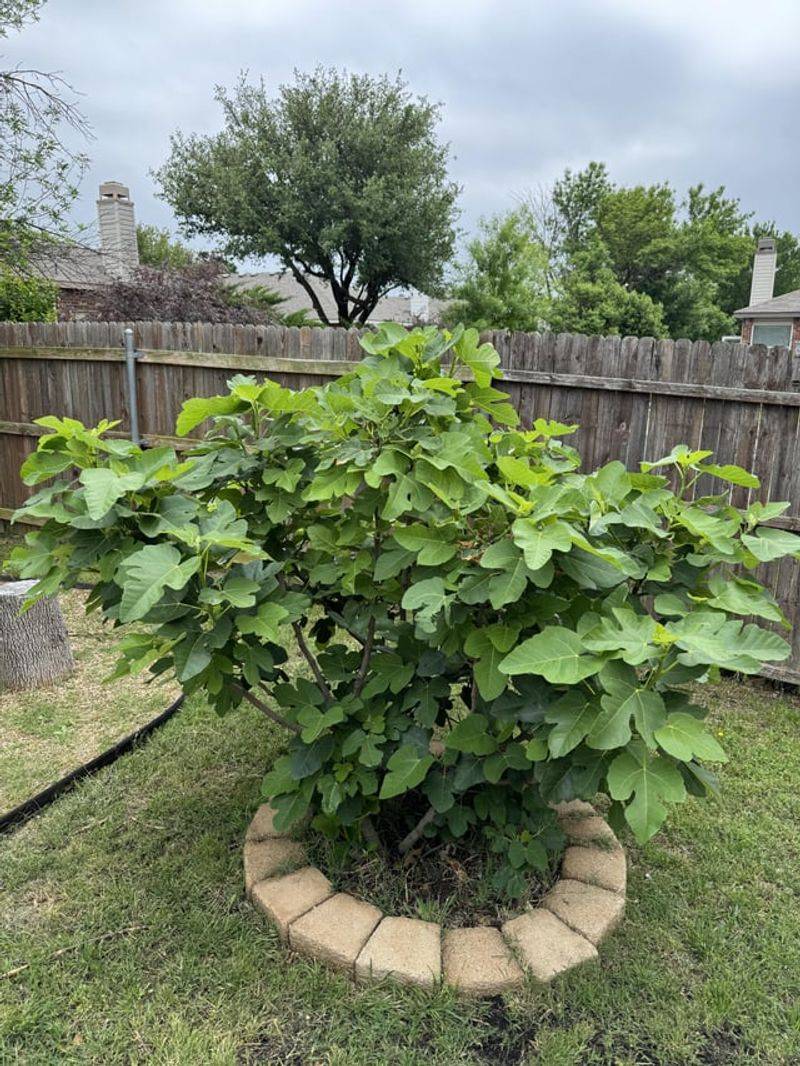
Sunlight is a simple thing to check and costs nothing. UC IPM recommends full sun for figs, and University of Georgia guidance calls for at least 8 hours of sun during the growing season.
Notice whether a neighbor’s fence, a new shed, or your own growing shade trees now block the light that once reached your fig.
Water is the other piece. UC IPM points out that both too little and too much water can contribute to poor fruiting or fruit drop.
So the goal is steady moisture, not a soggy root zone and not a dried-out one.
A layer of mulch can smooth out swings in soil moisture, as Rutgers describes. Keep it a little back from the trunk so the bark stays dry.
Dig down a few inches after rain or a deep watering and see how the soil feels.
Drainage matters too. Alabama Extension stresses well-drained soil for figs.
If water pools around the roots after a storm, that spot may be causing trouble.
Treat these as checks for your particular conditions. A shady tree in a dry corner has different needs than a sunny one in heavy clay.
None of these changes is a guaranteed fix, but each removes a possible obstacle.
Is the tree old enough and suited to your growing season?
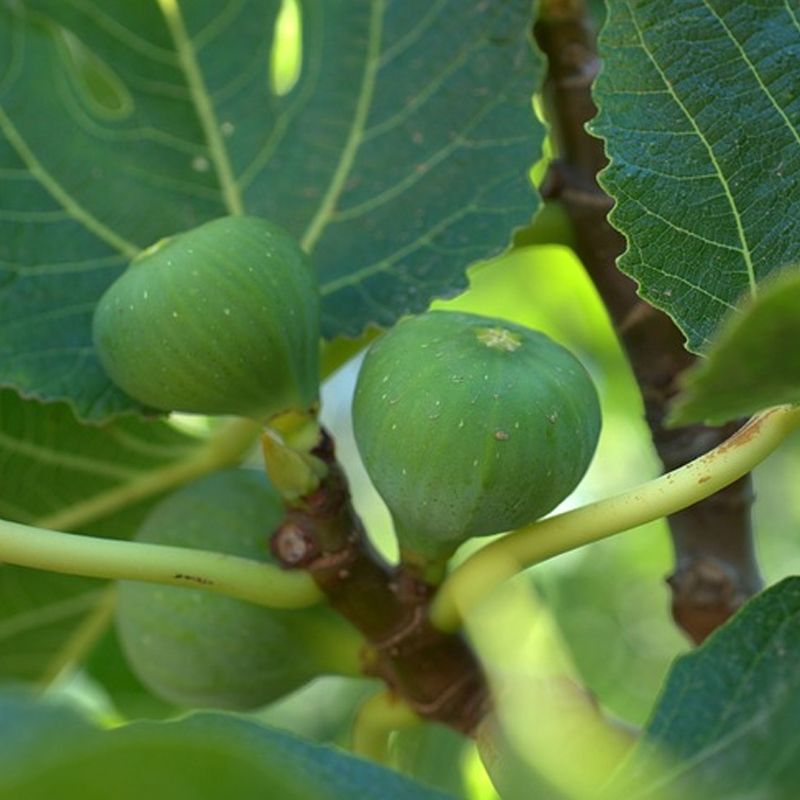
Some fig trees simply have not reached bearing age. Sources give a wide range, from at least 2 years to as long as 6, depending on the tree and its conditions.
UC IPM mentions that young trees may take time to produce, so a leafy three-year-old may be right on schedule.
Cultivar and climate matter just as much. A fig bred for a long, hot season may struggle where summers are short, and its figs may not finish ripening before fall.
Clemson’s ripening advice and Rutgers both tie ripening to local season length and heat.
What about pollination? Many common figs grown in North American home gardens set fruit without it, according to North Carolina State Extension.
Some other fig types do need it, so you should not assume your tree is lacking a partner or a wasp.
Find your cultivar name on the plant tag or purchase record. Then compare it with Georgia’s home garden fig guidance or your own state Extension list.
Knowing what you grow keeps your expectations realistic and your next step sensible.
Prune selectively so you do not remove a possible crop
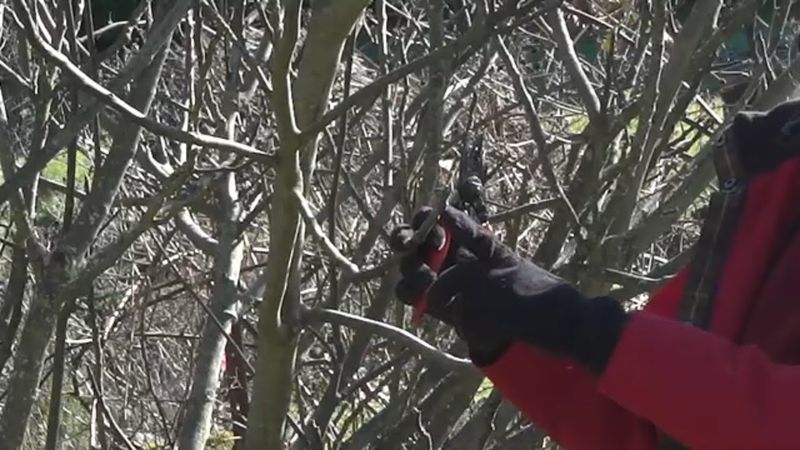
Cutting a fig back hard can feel like a way to reset a runaway tree. It can also snip away next season’s figs.
Figs come in two crop types: the main crop forms on current-season growth, while some cultivars also make an earlier breba crop on last year’s wood.
Heavy pruning can remove that older wood and its potential breba figs. Florida guidance from UF/IFAS Gardening Solutions warns that heavy winter pruning can remove the next crop.
So decide which crop you want before you cut.
Timing depends on where you live. University of Maryland Extension recommends removing dead, crowded, low-growing, and weak growth in March or April in its region.
Rutgers describes dormant-season pruning. Your local Extension office can tell you what suits your climate.
A light hand usually works best. Take out dead wood, crossing branches, and weak shoots, and open the canopy so sun can reach the inside.
Wear gloves, especially if fig sap irritates your skin, as Maryland Extension advises.
What should you do before winter?
Fall is when many gardeners get the urge to feed the tree one last time. Hold off.
Alabama Extension warns that late fertilizer can spur growth that does not harden before winter, leaving soft shoots exposed to cold.
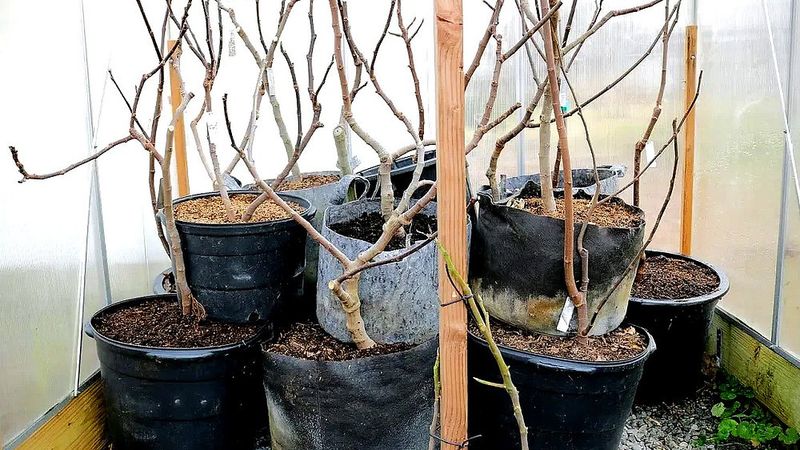
Cold protection depends on your region. University of Maryland Extension describes insulating stems and moving container figs to a protected spot.
In milder areas, none of that may be needed.
Why bother? Cold-damaged stems can delay a crop, according to the same Maryland guidance.
A little protection where winters are harsh may save wood that would otherwise die back.
Here is a simple checklist. Skip late fertilizer, keep soil from staying waterlogged, check your local Extension office for winter protection and pruning timing, and bring potted figs into shelter if your winters call for it.
No winter task can guarantee figs next year, but each one can reduce avoidable setbacks.
Start with the cause your tree actually shows
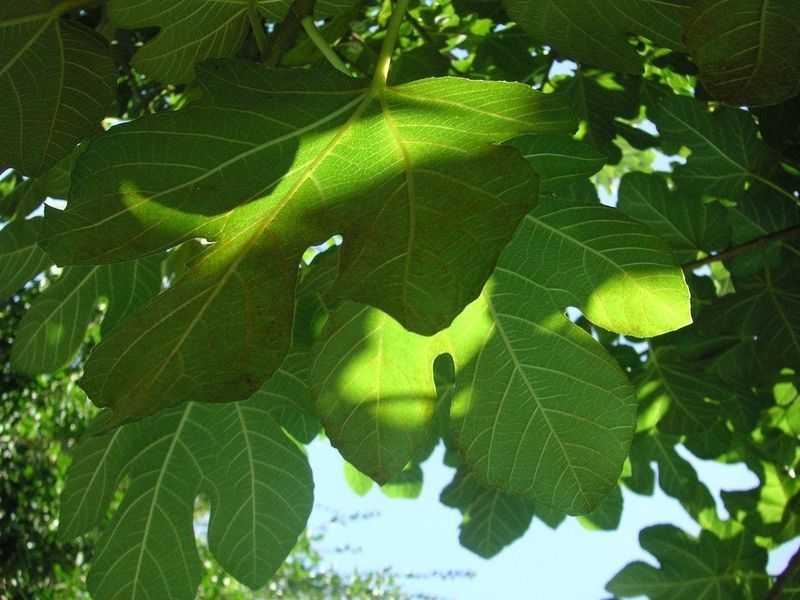
Begin with growth. If your fig is exceptionally vigorous, check nitrogen first, as UC IPM suggests.
Then work out whether figs are absent, dropping, or just slow to ripen.
After that, look at light, moisture, age, cultivar, pruning history, and your local season, and lean on advice like Maryland Extension’s or your own state’s. No single change is a guaranteed cure.
A fig that is only leaves today is often just telling you which question to ask next.