
North Carolina Counties Are Quietly Banning These Plants And You May Already Have One
Take a slow walk around your North Carolina yard and you might spot a plant that local officials are working to phase out. Towns like Cary, Greensboro, and Hillsborough have quietly added certain invasive species to prohibited or discouraged lists because they crowd out native plants and harm the wildlife we love.
The good news is that swapping these troublemakers for NC natives helps box turtles, birds, and pollinators thrive right in your backyard. Here are seven plants worth checking for, and the native replacements that do more good.
1. Bradford (Callery) Pear
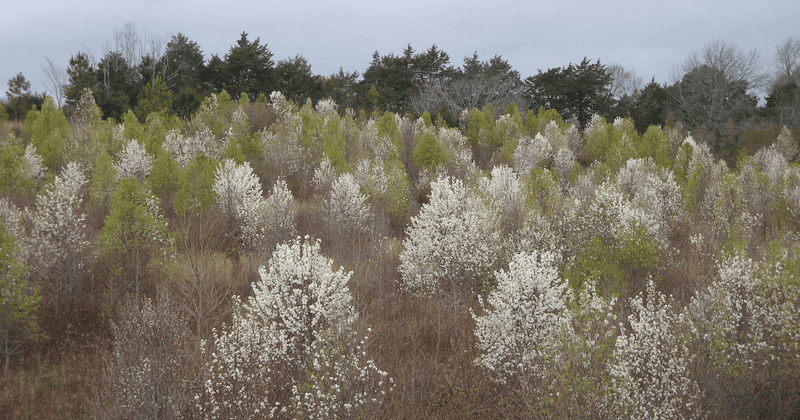
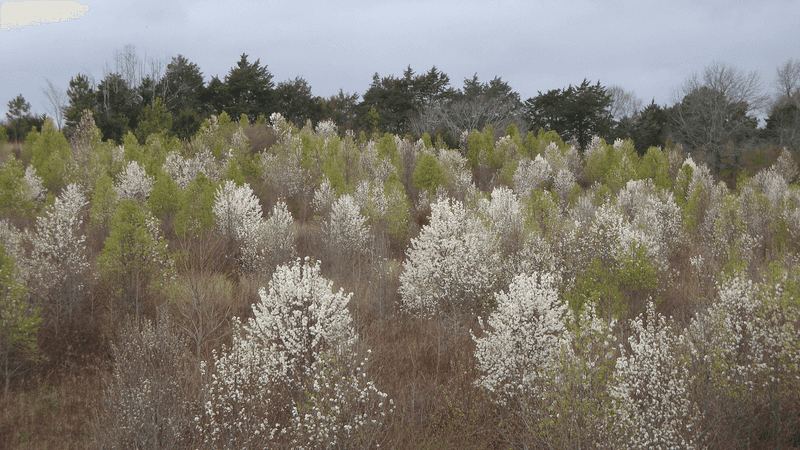
Once the darling of new subdivisions, the Bradford pear has fallen hard from grace. Its clouds of white spring flowers look pretty from the driveway, but the smell is famously unpleasant and the wood splits apart in the first serious storm.
The bigger problem is what happens beyond your fence. Callery pears escape yards, cross-pollinate, and form dense thorny thickets that shove out native seedlings the local wildlife counts on for food and cover.
Cary now includes Bradford and other Callery pears on its prohibited planting list.
If you want that same early-season color, plant an Eastern Redbud (Cercis canadensis) instead. Its rosy-purple blooms feed early native pollinators when little else is flowering.
Keep an eye out for NC State Extension’s Bradford Pear Bounty events, where you can trade a cut-down pear for a free native tree.
2. Nandina (Heavenly Bamboo)
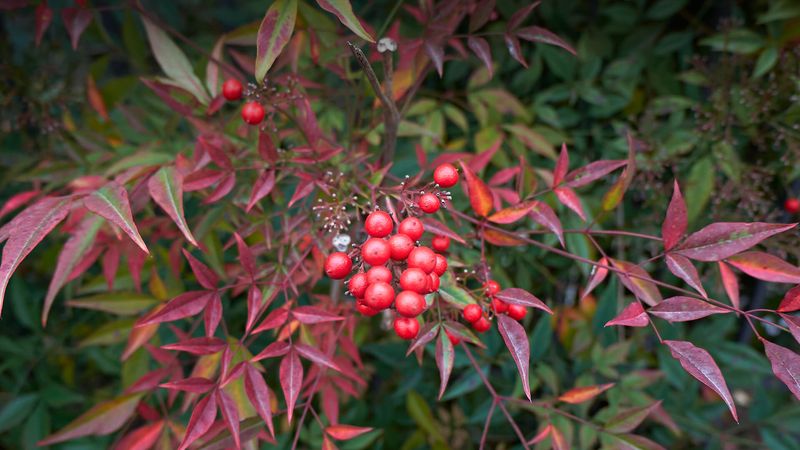
Heavenly bamboo sounds harmless enough, but those cheerful red berries carry a hidden danger. They contain cyanide compounds, and Cedar Waxwings have been found dead after gorging on them in winter, when other food runs scarce.
Beyond the berry problem, Nandina spreads by both seed and root, marching out of tidy beds and into natural areas. Cary lists it among its banned landscaping plants, and native plant groups regularly urge homeowners to pull it.
For that same structured, evergreen shape without the toxic payload, try Florida-hobblebush (Agarista populifolia) or strawberrybush (Euonymus americanus). Both give your beds year-round form while keeping the birds in your yard safe.
Your winter goldfinches and waxwings will thank you.
3. English Ivy
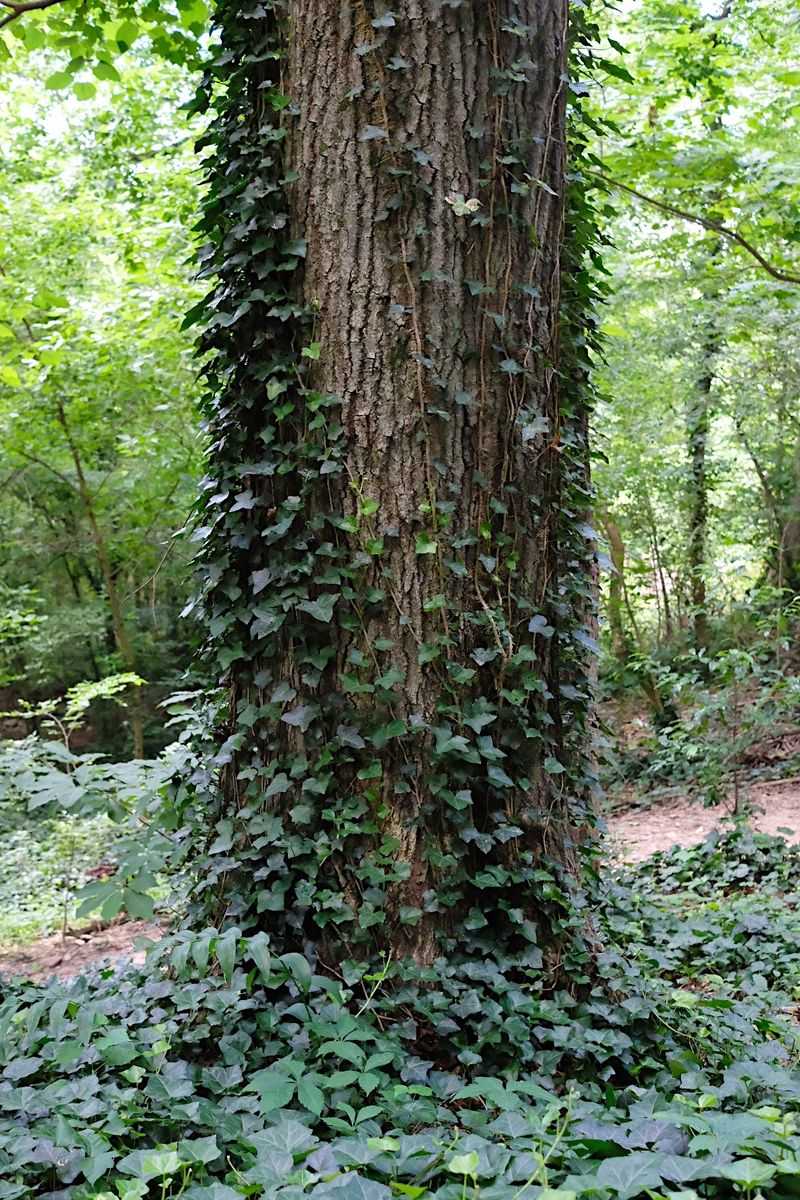
Nothing looks quite as storybook as ivy climbing an old tree, until you realize what it’s doing up there. English ivy scrambles up trunks, adds weight that catches wind in storms, and competes for the very roots that keep the tree alive.
On the ground it forms a dense mat that smothers native wildflowers and the spring ephemerals that feed early insects. Over time it can weaken and even kill mature trees, one of the reasons so many NC communities discourage it.
Pull it off your trees first, cutting a wide band around each trunk so the upper vines die back. Then replace the groundcover with native options like Christmas fern (Polystichum acrostichoides) or common blue violet (Viola sororia), which shelter pollinators instead of erasing them.
4. Periwinkle (Vinca major)
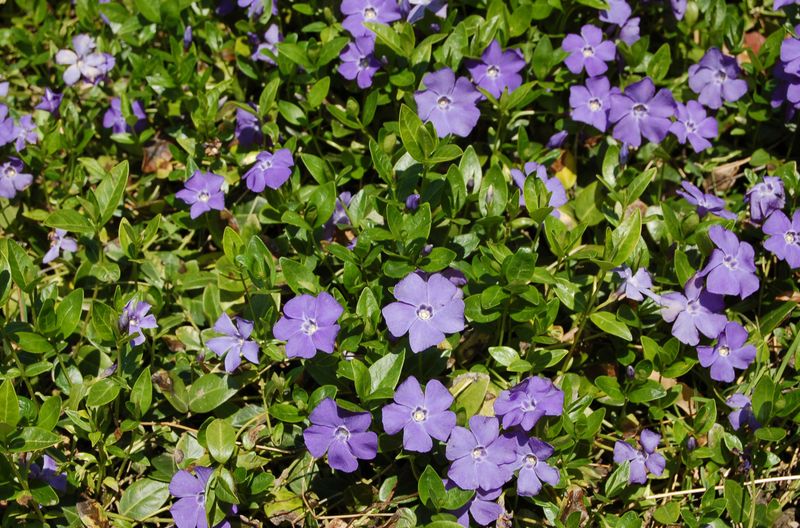
Vinca major charms people with its glossy leaves and little purple pinwheel flowers, and that’s exactly how it takes over. Every place a stem touches the soil, it roots, weaving a solid carpet that leaves no room for anything else.
That carpet is bad news for the native spring wildflowers and the insects that depend on them. Cary put periwinkle on its prohibited planting list for good reason, since it slips out of gardens and into woodlands with ease.
Want a shady groundcover that actually helps? Reach for crested dwarf iris (Iris cristata), spotted wintergreen (Chimaphila maculata), or the reliable Christmas fern.
These natives fill the same space while feeding NC’s pollinators rather than starving them out.
5. Burning Bush
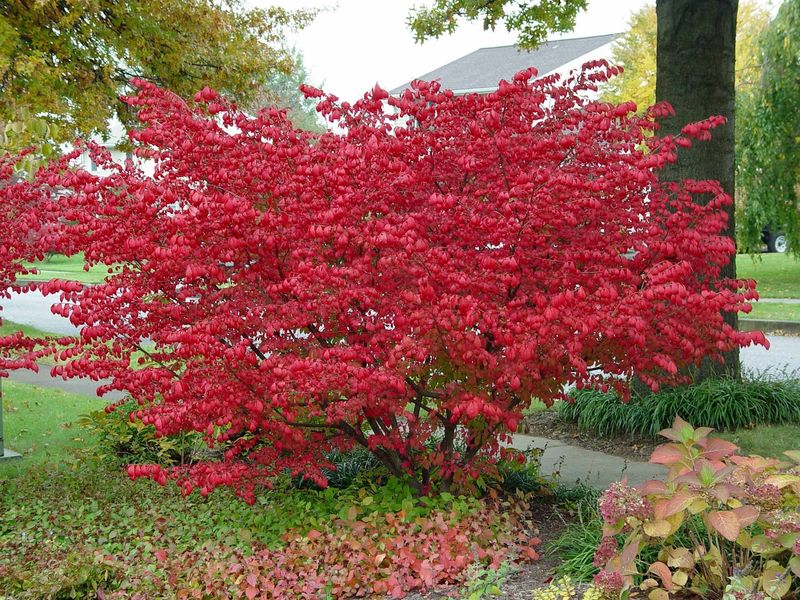
Come October, few plants put on a redder show than burning bush, and that fiery color is exactly why it landed in so many yards. The trouble starts when birds carry its seeds into nearby woods.
Once established in a natural area, it forms thick stands that block sunlight and displace the native shrubs local wildlife relies on. What looks like a single tidy shrub in your bed can become a wall of unwanted growth in the forest next door.
For that knockout fall color, plant native alternatives such as red chokeberry (Aronia arbutifolia) or Virginia sweetspire (Itea virginica). You’ll get the seasonal fireworks and give birds real berries and cover in the bargain.
6. Chinese and Japanese Privet
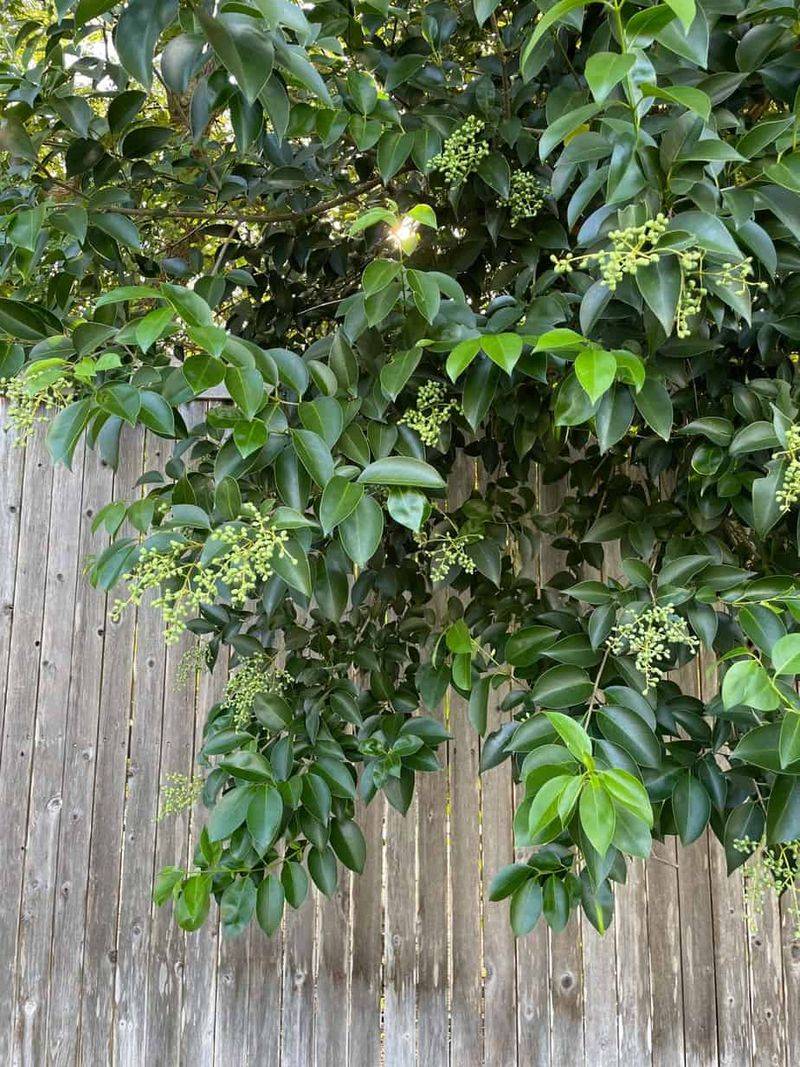
Privet has been quietly building empires in Southern hedgerows for generations. What starts as a neat clipped border grows into a shadowy thicket that few native plants can survive under.
Both Chinese and Japanese privet (Ligustrum sinense and Ligustrum japonicum) produce loads of berries that birds scatter far and wide. The result is a steady loss of biodiversity as privet outcompetes the plants that once fed and sheltered local creatures.
Cutting it back and treating the stumps keeps it from resprouting. In its place, consider native inkberry holly (Ilex glabra) or wax myrtle (Morella cerifera) for that evergreen screen, both of which support NC birds and insects while giving you privacy.
7. Kudzu
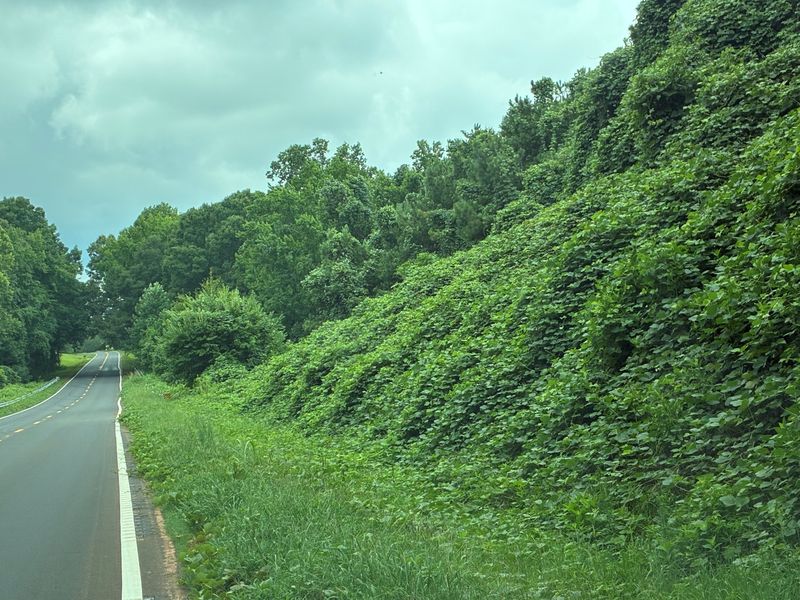
Ask anyone in the South and they’ll have a kudzu story. Nicknamed the vine that ate the South, it can grow up to a foot a day in the heat of summer, swallowing trees, sheds, and anything else that stands still long enough.
Kudzu earned a spot on North Carolina’s official noxious-weeds list, and counties like Cleveland actively target it. Left alone, it smothers entire hillsides of native habitat and takes serious, repeated effort to knock back for good.
Once you’ve cleared it, don’t leave the ground bare. Reclaim the space with native climbers like trumpet honeysuckle (Lonicera sempervirens) or crossvine (Bignonia capreolata), which bring hummingbirds and pollinators without the takeover.
Did you know? Kudzu was once promoted for erosion control before anyone realized how fast it would spread.