
North Carolina Fall Squash Not Setting Fruit? Pollination Is Your First Fix This Morning
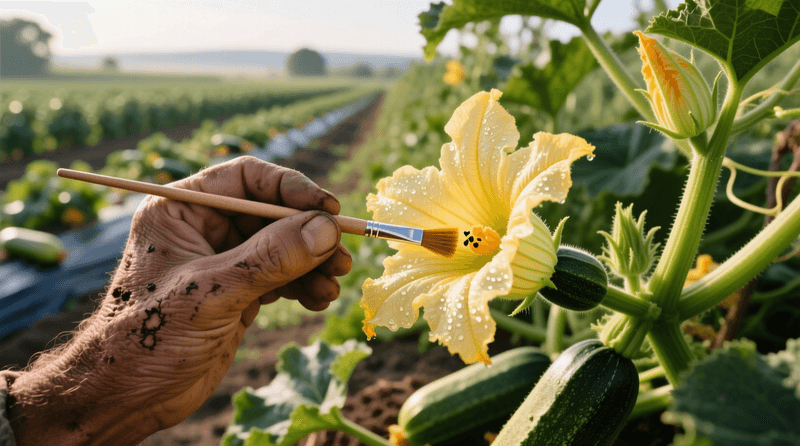
Your squash plant is covered in flowers, but the tiny fruits keep shriveling before they grow. For North Carolina gardeners watching this happen in September, the most likely culprit is a pollination gap, and the window to fix it opens every morning when the flowers do.
Understanding what your plant actually needs, and what is genuinely limiting it, can make the difference between a real harvest and a vine full of dropped blooms. This guide walks you through the checks and actions that matter most right now.
Check the flowers during the next morning bloom
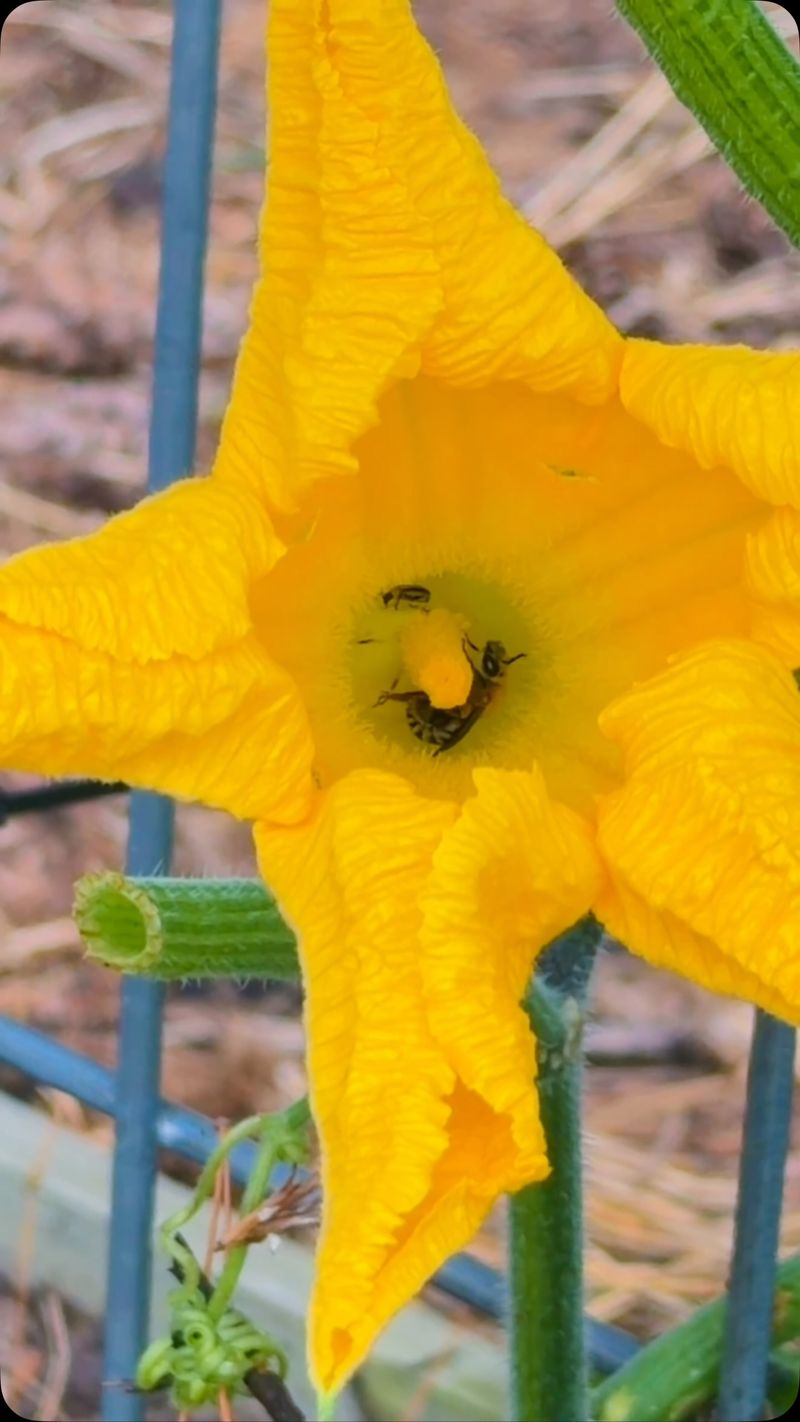
Tomorrow morning, before the heat of the day sets in, head out to your squash bed and take a close look at the flowers. Squash blossoms open early and stay receptive for only a few hours, so morning is your best and often only chance to catch what is really happening at the plant level.
NC State Extension’s guide to squash bees notes that these native pollinators are active very early in the morning, often before most gardeners are outside, which means the whole pollination event can pass unnoticed.
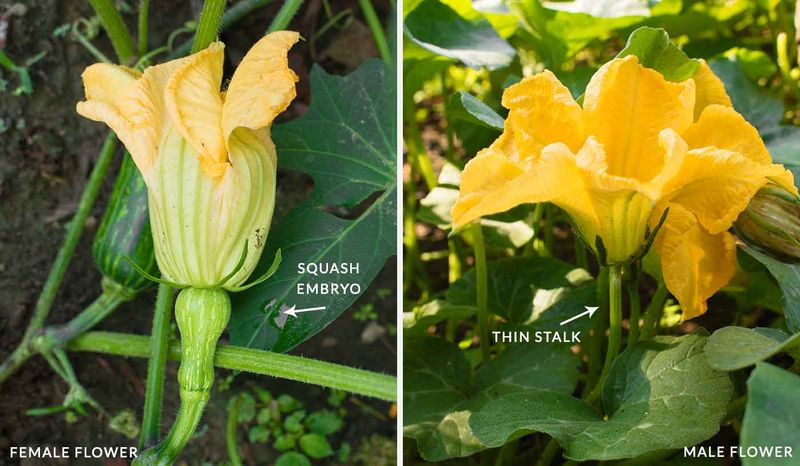
What you are looking for first is whether any female flowers are open. A female flower has a small, swollen bump at its base that looks like a miniature version of the fruit you are trying to grow.
If you only see flowers on thin, straight stems with no bump, those are male flowers, and the plant may simply not have produced female blooms yet. That situation is frustrating but not a crisis.
While you are out there, watch for bee activity around the open blossoms. Penn State Extension’s overview of pollination in cucurbits explains that squash flowers close within hours of opening, making that early morning window critical for pollen transfer.
If you see bees moving between flowers, natural pollination may be working fine. If the flowers are open but quiet, with no insects visiting, that gap is worth addressing before the blossoms close for the day.
This single morning check turns vague worry about a failing crop into a specific observation you can actually act on.
Successful fruit set starts with pollen reaching a female flower
Squash plants do not produce fruit the way a tomato does, where each flower contains both male and female parts. Instead, squash grows separate male and female flowers on the same vine, and pollen has to travel from one to the other.
According to University of Minnesota Extension’s pollination requirements guidance, this cross-flower transfer depends almost entirely on insects, which makes bee activity genuinely essential rather than just a nice bonus.
Telling the two flower types apart is straightforward once you know what to look for. The female flower sits atop a small, rounded base that is already shaped like a tiny squash or pumpkin.
That miniature fruit will grow into your harvest if the flower is successfully pollinated. The male flower, by contrast, grows on a slender, straight stem with no swelling at the base.
Inside it you will find the anther, a small structure coated in yellow pollen. University of Minnesota Extension’s summer squash guide describes this structure clearly and explains that pollen must move from the male anther to the female stigma for a fruit to develop.
A common source of confusion is that the first wave of flowers on a young plant is often mostly male. Iowa State University Extension notes that abundant blooms without immediate fruit are normal early on, because female flowers typically appear a little later.
If your plant has been flowering for a week or two and you are still seeing only male blooms, give it a few more days before drawing conclusions.
One thing worth saying plainly: adding fertilizer or calcium is not an established fix for poor fruit set. Unless you have a soil test showing a specific deficiency, or clear signs of a nutrient problem, neither product addresses the core issue.
Pollen transfer is the requirement, and that is where your attention belongs.
Hand-pollinate each new female flower when bee visits are scarce
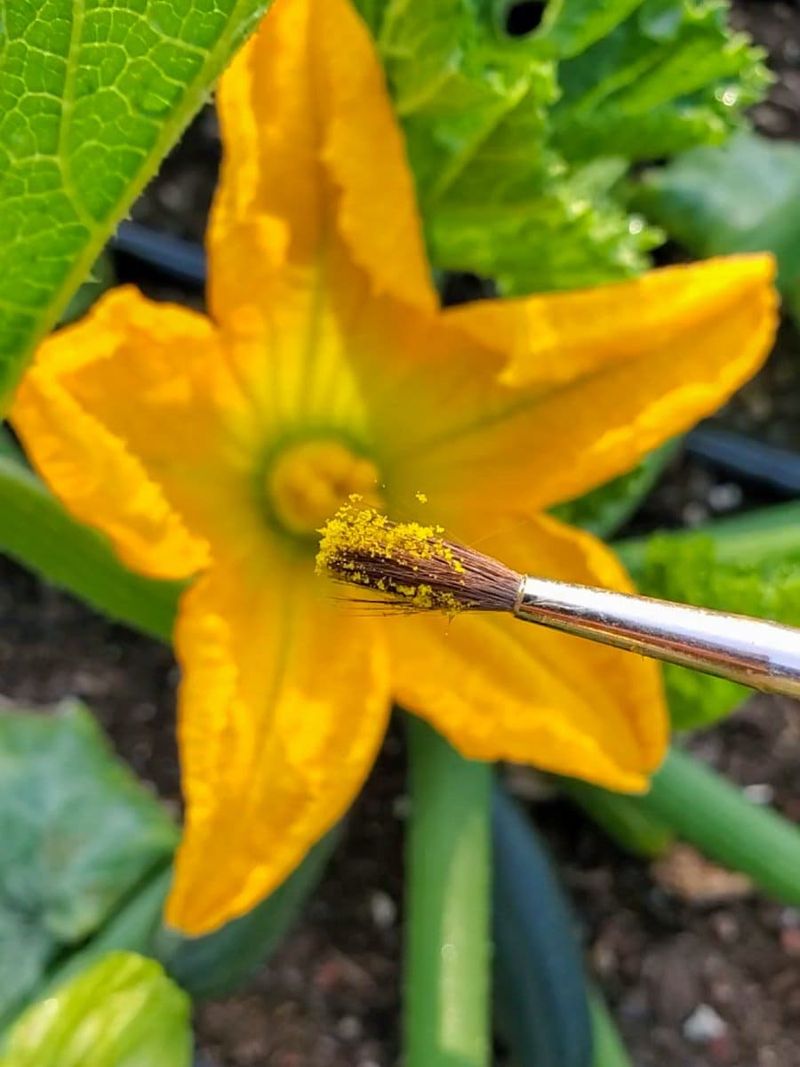
When bee activity at your squash flowers is low, hand-pollination is the most direct backup available. The job is straightforward, takes only a minute or two per flower, and should happen in the morning while both male and female flowers are still open.
Waiting until afternoon usually means the blossoms have already closed, making the effort pointless.
Start by finding a freshly opened male flower. It should look bright and fully open, with a visible anther inside dusted in yellow pollen.
You can use the male flower itself as an applicator by peeling back its petals to expose the anther and then pressing it gently against the stigma inside the female flower. Alternatively, a small, clean, dry paintbrush works well for collecting pollen from the anther and transferring it to the female.
UC Agriculture and Natural Resources’ cucurbit pollination guide recommends making contact between the pollen source and the stigma thoroughly, since poor contact can result in misshapen or partially developed fruit even when some pollen is transferred.
The stigma is the central structure inside the female flower, often slightly sticky to the touch. Brush or press the pollen-coated anther against it with light, even pressure.
Ask Extension’s hand-pollination guidance suggests using a separate male flower for each female when possible, since pollen viability drops quickly once a flower is picked. One male flower can typically pollinate more than one female if you work quickly.
Repeat this process every morning that new female flowers appear and bee traffic stays sparse. University of Minnesota Extension’s fruit set and abortion article is direct about this: hand-pollination improves the odds of fruit development when pollination is the limiting factor, but it cannot rescue a plant dealing with severe heat stress, waterlogged or bone-dry soil, active disease, significant pest damage, or a root system that is already failing.
Treat it as a supplement to healthy growing conditions, not a substitute for them.
If a baby squash starts to develop after hand-pollination and then shrivels anyway, something beyond pollination is likely limiting the plant. That is worth investigating rather than simply repeating the hand-pollination routine.
Protect the bees that normally pollinate squash
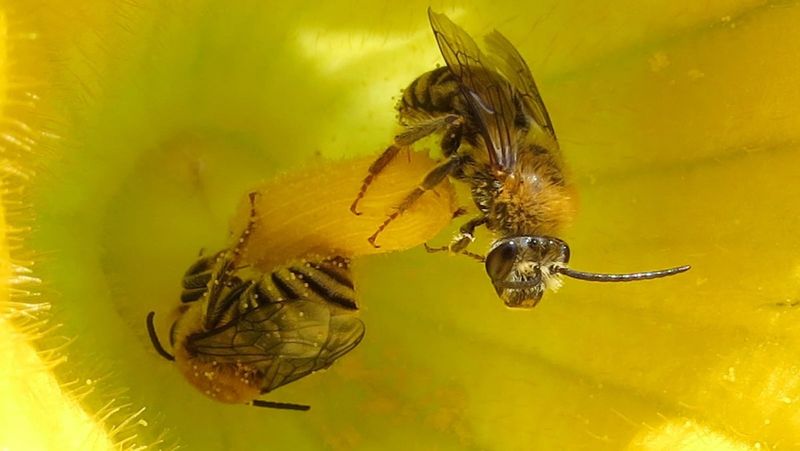
Hand-pollination is a useful backup, but the real goal is keeping the natural system working. Several bee species visit squash flowers regularly, and each one plays a different role in the garden.
Squash bees are among the most important native pollinators for cucurbits in North Carolina. NC State Extension’s squash bee resource explains that these bees are specialists: they are active very early in the morning, often before honeybees arrive, and they are so closely tied to squash and related plants that their populations tend to follow wherever cucurbits are grown.
Squash bees nest in the ground, often directly beneath or very near the squash plants they visit. That means tilling aggressively around your squash bed, especially in late summer and fall when new nest cells are being provisioned, can destroy nesting sites without any obvious sign that you have done so.
Leaving a patch of undisturbed, bare or lightly mulched soil near the planting gives these bees a better chance of surviving and returning. Bumblebees and various other wild bees also contribute to cucurbit pollination, and Penn State Extension’s wild bee guide for cucurbits notes that diverse bee communities tend to produce more consistent pollination across variable weather conditions than any single species alone.
The most direct threat to all of these pollinators in the home garden is insecticide use on or near flowering plants. NC State Extension is explicit on this point: applying insecticides to flowering squash can kill squash bees and other beneficial insects.
Systemic products applied to the soil before flowering may also move into pollen, where they can harm bees that visit later. Avoid spraying flowering squash whenever you have any alternative.
If a pest problem is severe enough that you feel treatment is necessary, read the product label fully, follow all pollinator precaution language, and apply only in the evening after flowers have closed for the day, when bee exposure is lowest.
Protecting these pollinators is not just good ecological practice. For a residential garden in September, when bee populations may already be shifting, keeping the bees you have working is often more effective than any amount of hand-pollination.
Check moisture, heat, disease, and pests before blaming the bees
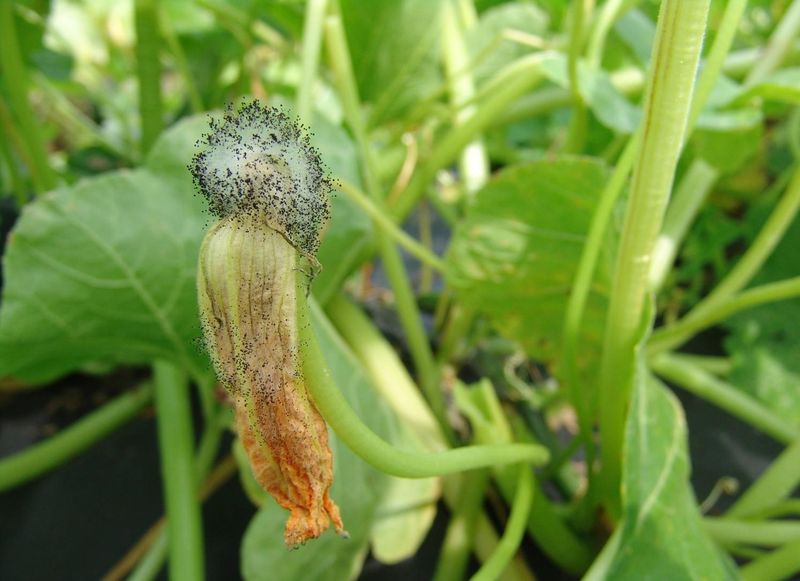
A shriveling baby squash does not always mean the bees failed. Several other problems produce nearly identical symptoms, and treating the wrong cause wastes time while the real issue continues.
Before you spend another morning hand-pollinating, take ten minutes to look at the whole plant.
Heat is one of the most common hidden culprits. University of Minnesota Extension’s fruit set and abortion article reports that daytime temperatures in the 90s or nighttime temperatures in the 70s can independently cause flower drop and small-fruit abortion in cucurbits, even when pollination is successful.
A squash plant under sustained heat stress may drop developing fruits as a physiological response, and no amount of hand-pollination changes that equation until temperatures moderate.
Water management matters too, though the relationship is more nuanced than a single number suggests. Summer squash and related cucurbits generally need roughly 1 inch of water per week as a starting guideline, but University of Minnesota Extension’s vegetable irrigation guidance makes clear that actual needs shift with soil type, heat, rainfall, and growth stage.
Sandy Coastal Plain soils drain faster than Piedmont clay and may need more frequent watering. A plant setting fruit in hot, dry weather needs more water than one growing in cool, cloudy conditions.
Water at the soil surface using drip irrigation or a soaker hose rather than overhead sprinklers. Wet foliage invites fungal disease, and University of Minnesota Extension’s squash growing guide recommends base watering as standard practice for this reason.
While you are inspecting the plant, look for signs of pest and disease pressure. NC State Extension’s cucurbit pest guide covers squash vine borers, cucumber beetles, and squash bugs, all of which can weaken or kill vines in late summer.
Check the base of the stem for frass or entry holes from vine borers, and look under leaves for squash bug egg clusters. NC State’s powdery mildew resource describes the white, powdery coating that appears on leaves when that fungal disease takes hold, reducing photosynthesis and plant vigor over time.
Choanephora rot, a fungal problem that causes blossoms and young fruits to collapse into a wet, hairy mass, can be mistaken for pollination failure but requires a different response entirely.
For summer squash specifically, leaving oversized fruit on the vine is a quiet production killer. A zucchini that has grown too large signals the plant to slow or stop setting new fruit.
Harvest promptly and consistently to keep the plant in active production mode.
Judge September prospects by crop, region, and frost risk
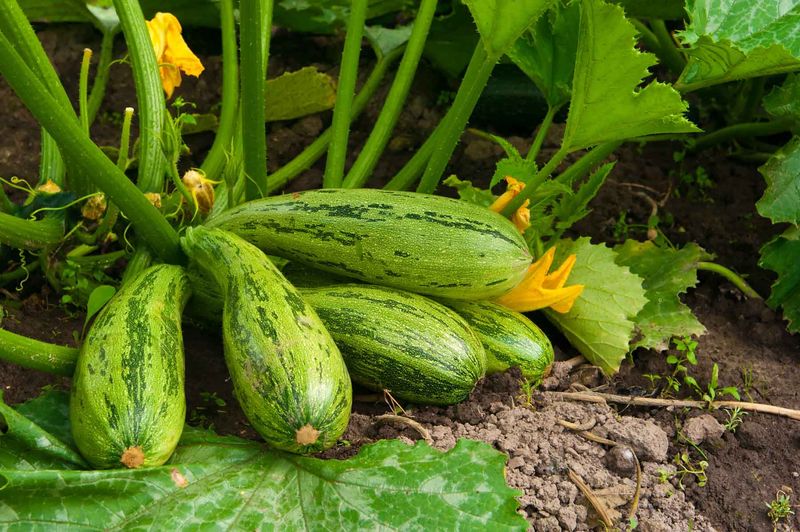
September looks very different depending on where you garden in North Carolina and what you planted. A gardener in the mountains near Asheville may already be watching nighttime temperatures drop toward frost territory, while someone in the Coastal Plain near Wilmington still has weeks of warm growing weather ahead.
Treating September as a universal deadline for all North Carolina squash ignores that reality entirely.
The crop itself matters just as much as the calendar. Summer squash and zucchini reach harvestable size in as few as 45 to 55 days from transplant and can continue producing as long as the plant stays healthy and temperatures cooperate.
A pumpkin or large winter squash variety may need 90 to 110 days or more from transplant to full maturity, which means a fruit that sets in early September in the Piedmont may or may not have time to mature before frost, depending on the cultivar and local conditions. NC State Extension’s central North Carolina planting calendar, the eastern NC calendar, and the western NC calendar all reflect these regional differences and are worth consulting for your specific area.
For gardeners who started a new fall planting in late July or August, the math may still work out well. NC State Extension’s vegetable gardening handbook advises adjusting planting dates based on local frost dates, cultivar maturity, and available season-extension tools.
Row covers can protect plants from a light frost and buy additional time, particularly in the Piedmont and mountains where early frosts are more likely. The National Weather Service’s frost and freeze maps for the Raleigh region provide a practical starting point for estimating your local frost risk.
The honest takeaway is that no authoritative source supports a single North Carolina date when all squash stop setting fruit. What matters is your crop, your cultivar’s days to maturity, your planting date, your region’s frost timeline, and whether you have protection available.
Pollinate each open female flower now, then use those variables to decide realistically whether a newly set fruit has time to mature.
Use a morning routine instead of a statewide deadline
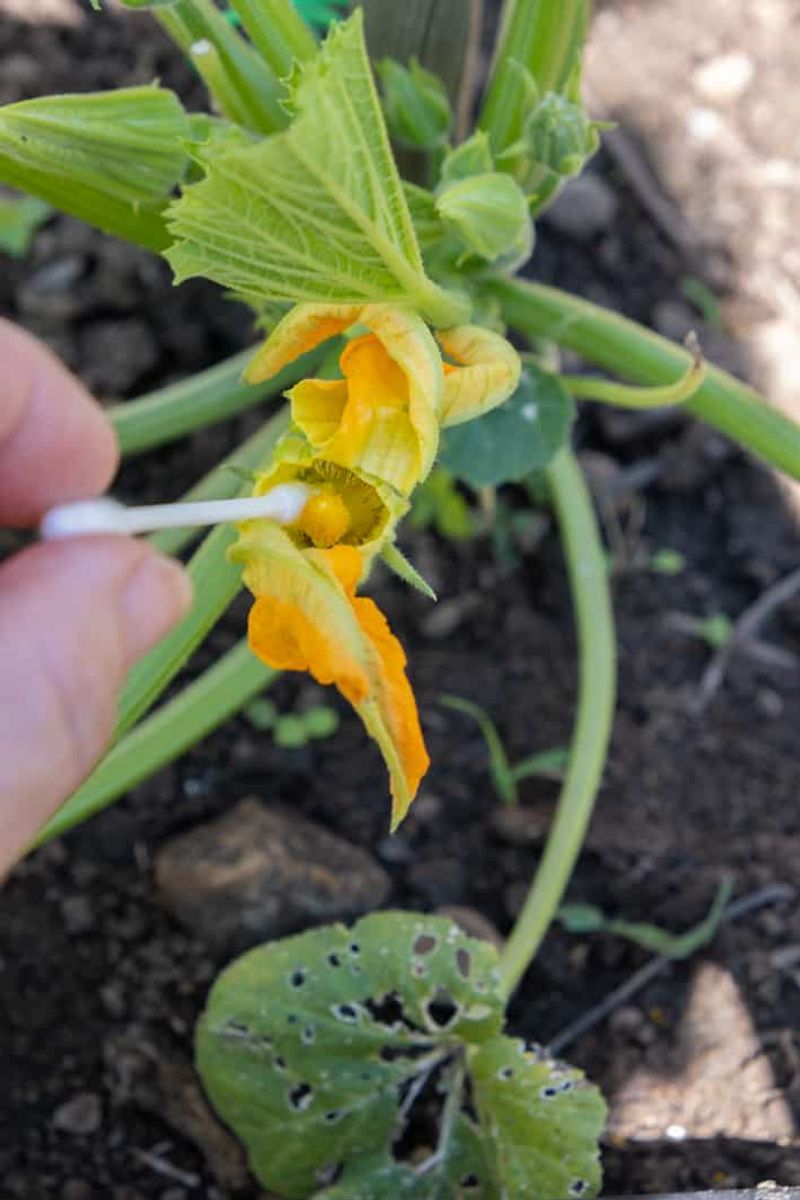
The most useful thing you can do for your fall squash right now is build a simple morning habit around the flowering window. Go out early, before the heat rises and the blossoms close.
Look for open female flowers, watch for bee activity, and hand-pollinate any female flower that is not receiving visits from squash bees or other pollinators. NC State Extension reminds gardeners that squash bees work very early, so arriving at the garden shortly after sunrise gives you the clearest picture of what is actually happening.
While you are there, check the soil moisture and note whether the plant looks vigorous or stressed. Consistent, appropriate moisture supports the plant’s ability to carry developing fruits through to harvest.
Scan the stems and leaves for pest damage or disease. If baby fruits continue to shrivel after successful hand-pollination, fruit abortion research points toward heat, water extremes, disease, or pest stress as the more likely explanation, and those require their own diagnosis.
Hand-pollination gives each female flower its best chance, but it is an improvement in the odds, not a guarantee. The gardeners who get the most out of September are the ones who show up at sunrise, work with the plant’s own timing, and stay honest about what the rest of the season can realistically deliver.