
Pine Needles Piling Up Under Your Trees Can Be a Free Winter Mulch for Your Strawberry Bed
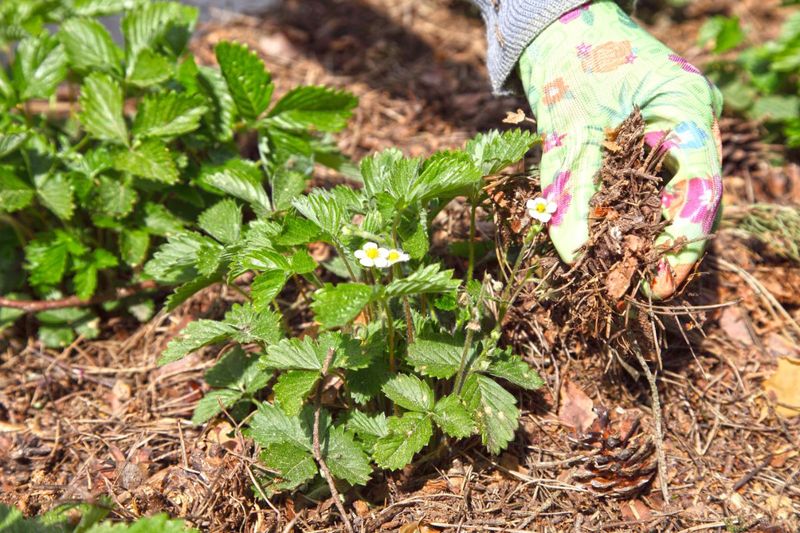
Every fall, pine trees drop a carpet of needles that most of us rake into a bag and haul away. If you grow strawberries in the ground, that pile might be a free way to cover your plants for winter.
Many gardeners worry that needles will make their soil too sour for berries. Here is what Extension experts actually say, and how to use needles wisely.
Pine needles are a possible alternative, not the proven best mulch
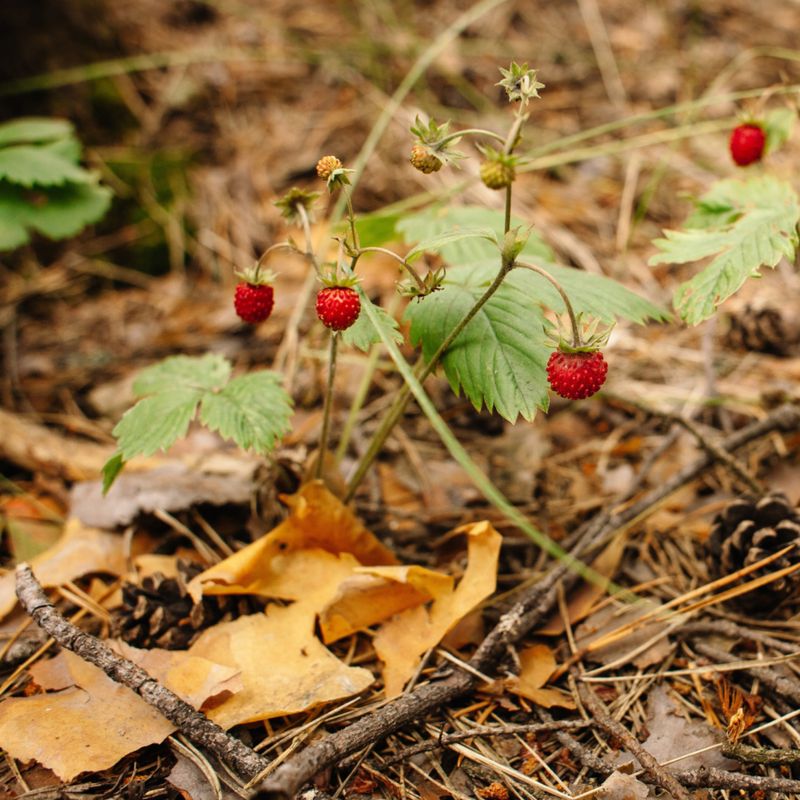
Those needles under your pines can be a free option for covering an in-ground strawberry bed, if your local winter calls for cover. That is a smaller claim than calling them the best mulch, and it is the honest one.
Purdue plant pathologists name clean wheat straw as the best strawberry mulch. Straw is the standard that other materials get measured against.
Other Extension programs are more flexible. Nebraska Extension lists pine straw among suitable loose mulches, and UConn names pine needles as another material that can be used.
Here is the catch. None of these sources tested loose needles raked from your yard against straw.
Pine straw, the baled product sold in some regions, is also not exactly the same thing as whatever landed under your tree. So needles are a reasonable stand-in, not a proven winner.
Not every bed needs a blanket, either. Whether you mulch at all depends on your winters and your planting setting.
The sections ahead cover whether the soil will turn sour, when to spread needles, how deep to go, when to pull them back in spring, and when to skip them. No mulch can promise your plants will survive winter or that you will get a crop, but a smart cover can improve the odds where cold is a real threat.
Winter mulch can protect strawberry plants where local conditions call for it
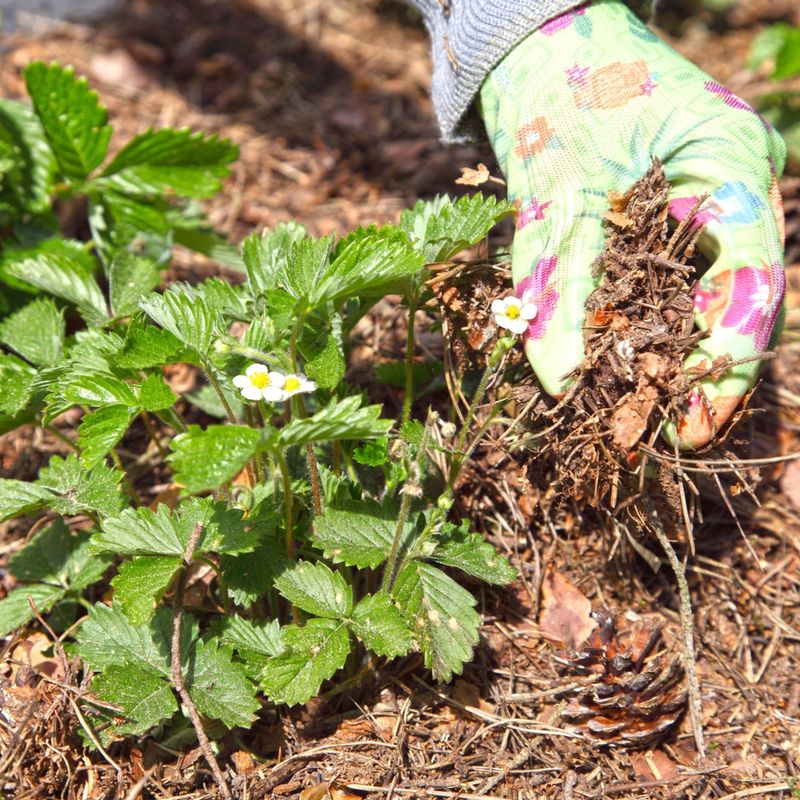
Strawberry crowns, the short stem at the base of each plant, are where next year’s leaves and flowers come from. Hard cold, swings between freezing and thawing, and drying winter wind can all injure them.
A layer of loose mulch can soften those hits.
Purdue describes winter mulch as a way to protect plants through the cold months, and University of Minnesota Extension gives similar advice for northern gardens. Those are cold-climate recommendations, though.
If you live somewhere with mild winters, the same advice may not apply to you. Check with your local Extension office about whether strawberries in your area need cover, and keep in mind that exposure matters.
A windy, open bed may need more help than a sheltered one.
Think of mulch as insurance, not a guarantee. Nebraska Extension treats it as part of a seasonal care routine, and even a well-covered bed can have losses in a brutal winter.
Mulch cannot guarantee that plants will survive or that you will pick a big harvest.
If your winters are cold enough to worry you, free needles can fill that insurance role. Details on timing and depth come next.
Will pine needles sour the strawberry bed?
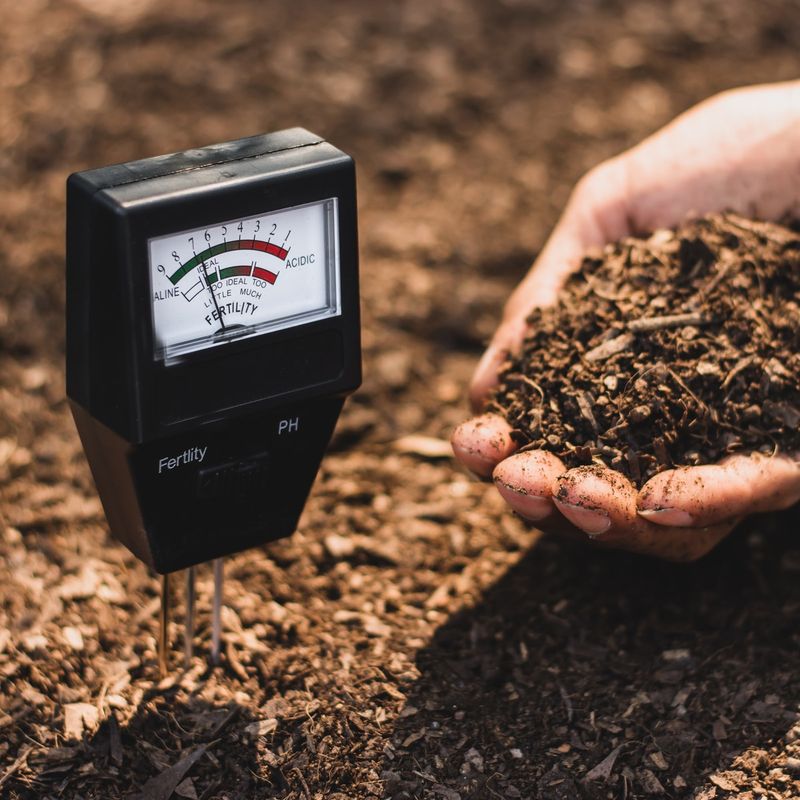
Plenty of gardeners hold back because they have heard that pine needles make soil acidic. It sounds logical, since fresh needles are themselves acidic.
University of New Hampshire Extension separates two ideas. The needles may be acidic on their own, but when they sit on top of the soil as mulch, they do not appreciably lower soil pH.
Even a 2 to 3 inch layer will not shift pH enough to measure, according to that guidance.
So the worry about ruining your strawberry bed is not backed up by this source. That is a narrow claim, and it is worth keeping it narrow.
It does not say needles can never touch pH under any condition.
It also means you should not count on needles to acidify soil. If you want to change your soil pH, whether up or down, start with a soil test.
The results will tell you whether you need an amendment and how much to use, which beats guessing.
Strawberries generally do best in slightly acidic soil, so a test every few years is a good habit anyway. For the mulch itself, you can stop worrying about souring the bed.
Let dormancy and local cold cues guide timing
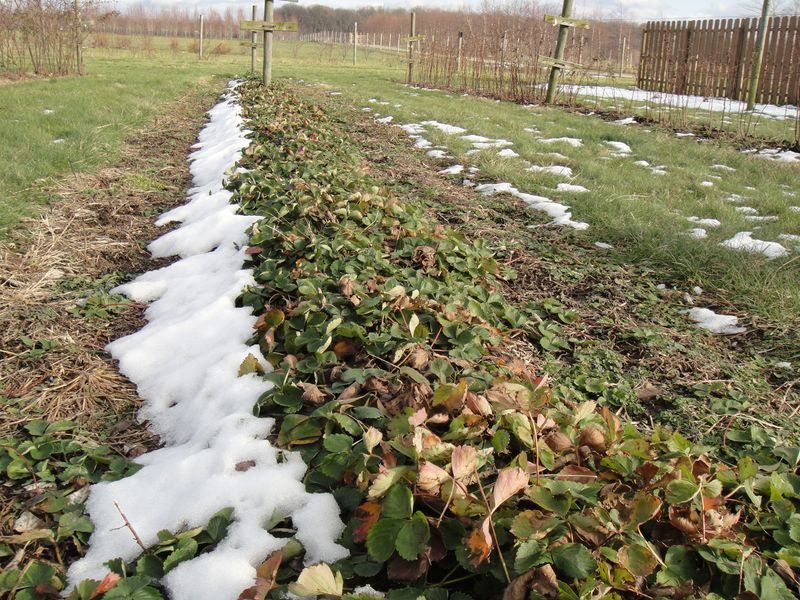
There is no single date that works for the whole country. The better rule is to wait until your strawberry plants are dormant and your local weather says winter is settling in.
Extension programs describe that moment in different ways, and each cue is an example, not a rule for everyone. University of Minnesota Extension says to mulch after dormancy, when temperatures are staying below 40°F.
Purdue describes waiting until dormancy, typically after several nights around 20°F. Nebraska Extension suggests waiting until the soil has frozen about half an inch, or until daytime temperatures have stayed in the 20s.
Why not just cover them early to be safe? Mulch applied too soon can leave plants still growing under the cover.
It can also interfere with the plant’s natural hardening off, the slow process of getting ready for cold.
A practical approach is to watch your own bed. When growth has stopped and your local cold stretch has arrived, spread the needles.
If you are unsure which cue fits your area, call your county Extension office and ask what they use for strawberries.
Treat mulch depths as regional guidance, not a universal rule
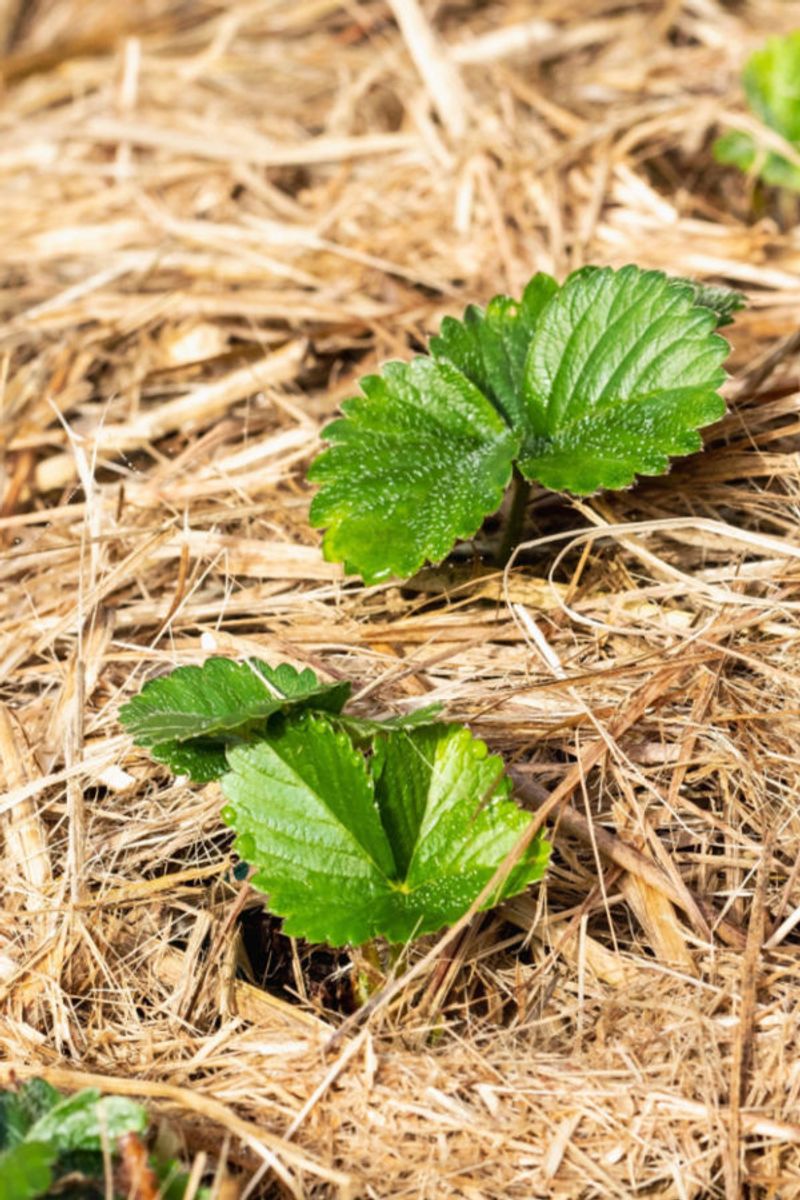
Ask five Extension sources how deep to mulch and you will get a few different answers. Many of those numbers were written for straw, not for loose needles from your yard.
University of Minnesota Extension recommends 4 to 6 inches of straw, and Purdue gives a similar range for straw. Nebraska Extension lists about 4 inches for loose mulch, including pine straw.
UConn says other materials, including pine needles, can be used and that a 3-inch layer is sufficient.
Those figures differ because climates, beds, and materials differ. None of them is a guaranteed depth for loose yard-collected needles in every garden.
A colder, windier site may call for more, and a milder one for less.
A sensible starting point is to look at the range for your region and aim for a layer that fully covers the crowns without becoming a dense mat. Needles tend to lock together and shed water, so fluff them as you spread.
Purdue prefers clean, dry, weed-free straw and warns that wet, moldy material can smother plants or contribute to crown decay. That warning is about keeping mulch clean and airy.
It does not show that needles are unsuitable. Use dry needles, and skip any that have gone soggy or moldy.
Rake winter cover back as spring growth resumes
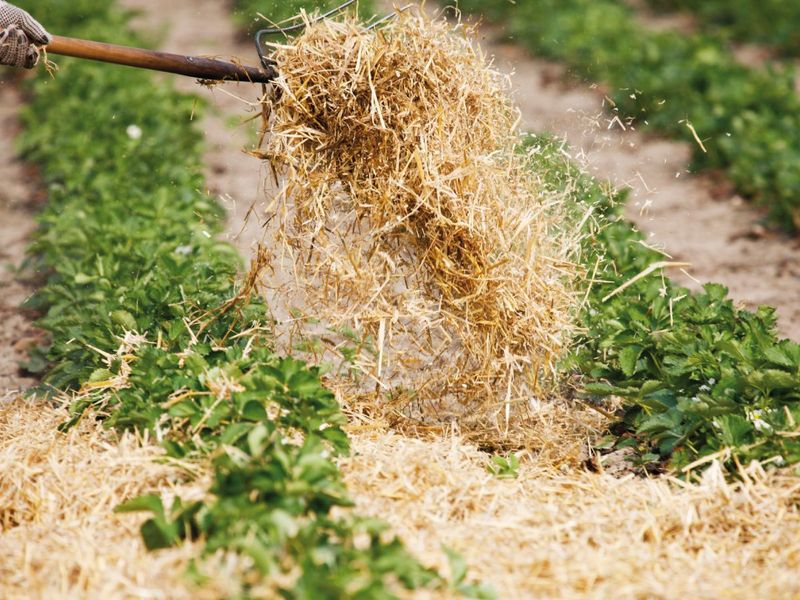
Winter cover is a seasonal job, not a permanent setup. Once spring wakes the plants, the mulch needs to move.
University of Minnesota Extension advises removing winter straw after snow and ice melt, or when growth begins. Nebraska Extension says to remove enough to expose the leaves, and warns that leaving cover on too long can reduce yield.
Look for pale, yellowish new leaves poking up through the needles. That is your cue to start raking back.
You do not have to strip the bed bare in one day, so work gradually if cold snaps are still possible.
Pull the needles off the crowns and into the walkways between rows. Keep a bit of the material close at hand in case a hard freeze threatens open blossoms.
You can leave some needles between plants as summer mulch, which helps keep the soil from splashing onto the fruit and slows weeds. Just keep them off the crowns.
Too much cover for too long is the mistake to avoid, since smothered plants grow slowly and may produce less.
Consider the bed and fire-safety setting before reusing needles
Needles suit in-ground beds best. Raised containers and strawberry pyramids are another story, since Nebraska Extension says they face greater winter exposure and need extra protection.
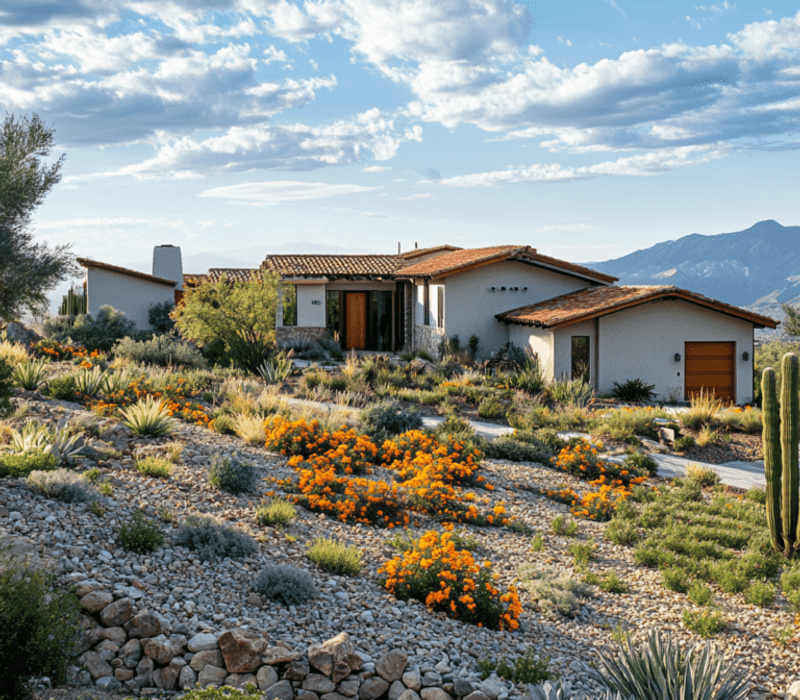
Fire safety matters too. A UC Master Gardener guide warns that pine needles are flammable and should not be kept within 30 feet of a house, in its fire-safety context.
That is most relevant if you live in a wildfire-prone area, and it is guidance, not a universal legal rule. If your strawberry bed sits close to the house in such a setting, use another cover or keep needles farther away.
Where winters are cold and fire risk is low, needles can be a free alternative to straw. They are not a universal or proven-superior choice.
Your rake has been collecting a decent winter blanket all along.