
Plant Moss Rose And Watch It Open Around Late Morning On Bright, Warm Days
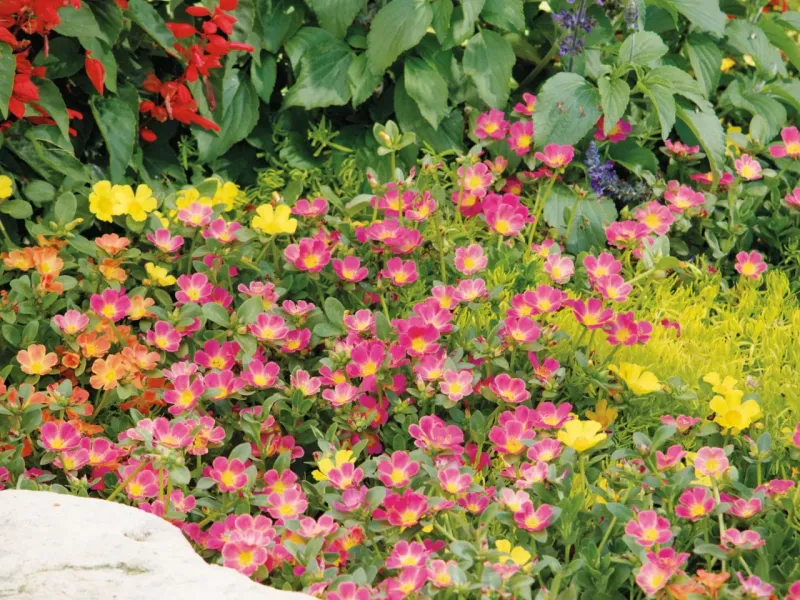
Somewhere along the way, gardeners started calling moss rose the “ten o’clock flower,” and the name stuck because it captures something genuinely fun to watch: a little plant that tends to unfurl its blooms right around mid-morning on a sunny day. The plant behind that nickname is Portulaca grandiflora, a tough, cheerful annual that thrives in hot, dry spots where other flowers struggle.
Growing it is straightforward, but the timing story is more interesting than a simple clock comparison, and knowing what actually drives those blooms will help you get the best show from your garden.
The ten-o’clock flower usually means moss rose
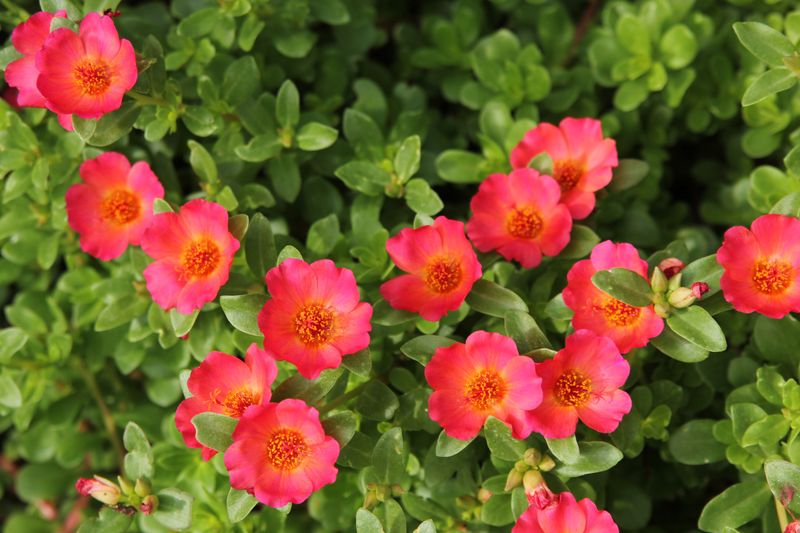
Moss rose goes by several names depending on where you shop or who taught you to garden. You might see it labeled as rose moss, sun plant, or the ten-o’clock flower, but the scientific name that ties all those tags together is Portulaca grandiflora.
Kew Science’s Plants of the World Online identifies it as a low-growing annual native to parts of South America, now widely grown across warm regions for its showy, tissue-paper-thin flowers.
The ten-o’clock label is a common name, not a botanical promise. Common names are informal, regional, and sometimes applied to more than one plant, so checking the scientific name on a seed packet or plant tag is always the safest way to confirm you have the right species.
If you pick up a plant simply labeled “ten o’clock flower” without a Latin name, ask or look it up before assuming it will behave exactly the way you expect.
What the name does capture accurately is a real pattern. Missouri Botanical Garden’s plant profile describes Portulaca grandiflora as a mat-forming annual that spreads low across the ground and produces abundant flowers in warm, sunny conditions.
Those flowers do tend to open during the morning on bright days, which is where the time-based nickname comes from. Treat the name as a charming clue about what to watch for, not as a guarantee that every blossom will appear at a precise hour.
Why moss rose opens in the morning
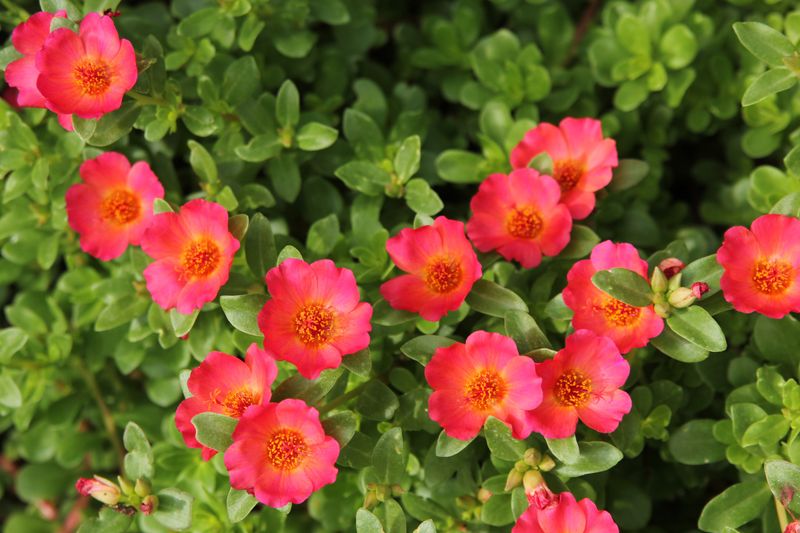
Several forces work together to push a moss rose flower open, and none of them is a built-in clock reading a specific hour. Research published in the Annals of Botany on environmental factors controlling flower opening in a Portulaca hybrid found that rising temperature is a key driver of rapid petal movement, while light strengthens and reinforces that response.
Take away either factor and the opening slows or stalls.
An internal rhythm also plays a role. The plant has a biological cycle that primes it to respond to morning conditions, which is why the display tends to happen around the same part of the day rather than at random.
Think of it less like a programmed alarm and more like a combination lock: the right temperature, enough light, and an internal readiness all have to line up before the petals swing open quickly.
That combination explains why bright, warming mornings offer the best viewing window. Early in the day, light intensity is climbing and air temperature is rising, which gives the plant exactly the cues it responds to most strongly.
A study on Portulaca grandiflora flower movement, published in the Journal of Plant Research, found that flowers could begin opening at roughly similar times but closed at varying times depending on conditions and whether pollination had occurred. So even when opening is consistent, the rest of the flower’s daily journey is not.
Calling the plant a natural clock is a fun shorthand, but it undersells how much the environment shapes each day’s display. A cooler morning, a passing cloud, or a stretch of overcast weather can shift or suppress the whole show, which is why the name “ten o’clock flower” describes a tendency rather than a timetable.
Give moss rose the sunniest, driest place
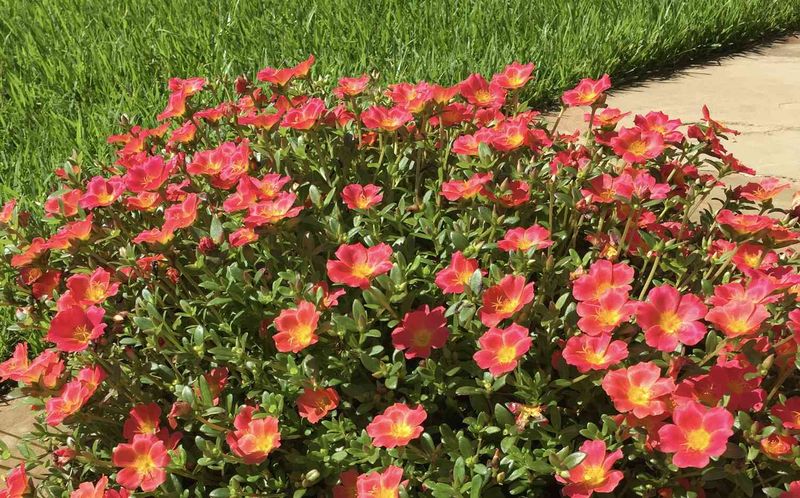
Site selection is the single biggest decision you make for this plant, and the rule is simple: give it the spot in your yard that gets the most direct sun. NC State Extension’s plant profile for sun plant recommends at least six hours of direct sunlight daily, and more is better.
A location that bakes in full afternoon sun, the kind of spot where many other annuals wilt and sulk, is exactly where moss rose thrives.
Soil quality matters less here than drainage. Missouri Botanical Garden notes that Portulaca grandiflora handles poor, sandy, rocky, and dry soils far better than heavy or persistently wet ground.
If your yard has a patch of compacted clay that holds water after rain, that is the one place to avoid. Loose, fast-draining soil lets the roots breathe and keeps the crown from sitting in moisture that invites rot.
Containers, hanging baskets, and rock gardens are excellent placements because they naturally provide the drainage moss rose prefers. A terracotta pot on a sunny porch, a raised bed along a south-facing wall, or a sloped border where water runs off quickly all create conditions the plant finds comfortable.
If you are planting directly in the ground, mixing in a little coarse sand or fine gravel can help open up heavier soil without a major amendment project.
Exposed, sunny spots that other gardeners might consider problem areas, a gravel strip along a driveway, a south-facing slope that dries out fast, a hot corner between pavement and a fence, are often where moss rose puts on its best display. Match the plant to the place and it rewards you with minimal fuss.
Plant after frost and handle seedlings carefully
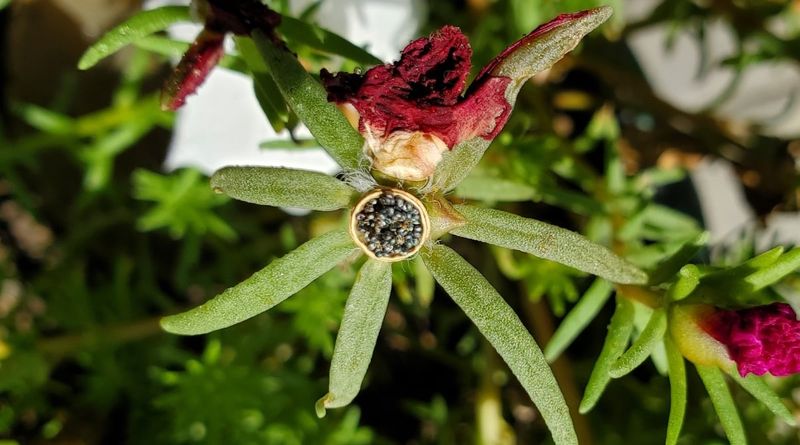
Moss rose is a warm-season annual that needs settled, frost-free conditions before it goes in the ground. The safest approach for most US gardeners is to direct sow seeds outdoors after your local last-frost date has passed and the soil has warmed.
Missouri Botanical Garden recommends direct sowing after the last frost or starting seeds indoors six to eight weeks earlier if you want a head start on the season.
Starting indoors can give you transplants ready to go out right when conditions are right, but handle those seedlings with extra care. Portulaca grandiflora does not transplant especially well compared to many other annuals.
The roots are sensitive to disturbance, so use individual cells or small pots rather than a flat you plan to divide later, and disturb the root ball as little as possible when moving plants outside. Hardening off, gradually exposing indoor-started seedlings to outdoor conditions over a week or so before planting, reduces shock significantly.
Because the right planting time varies widely across the United States, from early spring in the Deep South to late May or even June in northern states, there is no single national date that works for everyone. Check your local extension service or a frost-date tool for your zip code to find the window that applies to your garden.
Getting the timing right matters more than almost any other step, because a plant set out too early in cold soil will stall and struggle rather than establishing quickly and flowering freely.
Once you have warm soil and settled weather, moss rose moves fast. Seeds germinate quickly in warmth, and plants that get off to a good start in the right conditions tend to begin flowering within a few weeks.
Water for drainage, not for a scheduled bloom
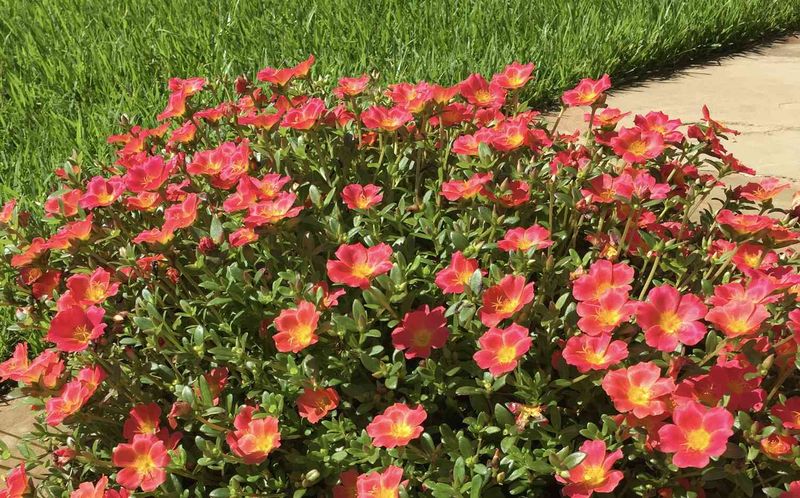
One watering myth worth clearing up right away: there is no technique where irrigating at a specific hour will trigger moss rose to open on cue. The flower’s morning display responds to light and rising temperature, not to moisture arriving at a set time.
Watering at 10 a.m. will not produce a 10 a.m. bloom, and building a schedule around that idea can actually work against the plant.
Established moss rose is genuinely drought tolerant. Missouri Botanical Garden’s care guidance is clear that this plant should not sit in constantly wet soil.
Once it has rooted in and settled into its spot, it can handle dry stretches that would stress many other garden plants. That makes it a practical choice for gardeners who travel, forget to water, or simply want a lower-maintenance bed.
The bigger risk with moss rose is overwatering, not underwatering. Poor drainage and excessive moisture can contribute to crown rot and root rot, which are far more damaging than a few dry days.
If you notice stems turning mushy near the soil line or the plant collapsing despite looking otherwise healthy, poor drainage is often the culprit rather than pests or disease.
A reasonable approach is to water newly planted seeds or seedlings consistently while they establish, then back off as the plant matures and roots deepen. After that, water during extended dry spells or when the soil is completely dry several inches down, and let the soil dry between sessions.
Skip rigid daily watering schedules entirely. Moss rose does its best work when you treat it like the dry-country plant it is.
Clouds, rain, and cool air can change the show
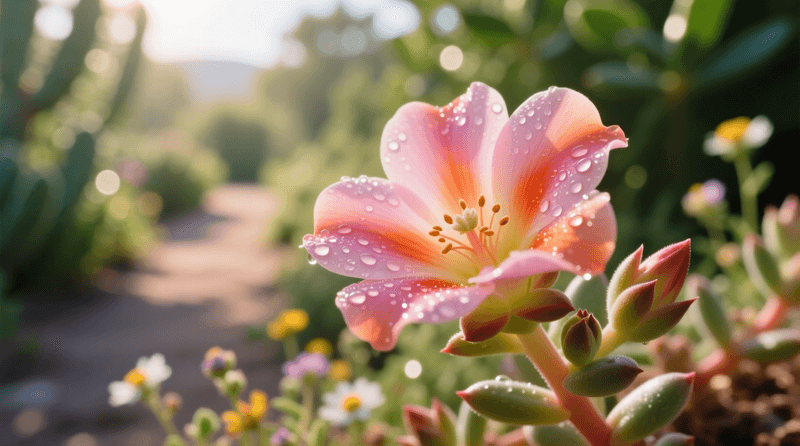
Planting moss rose correctly is no guarantee of a daily flower show. Even a healthy, well-established plant may keep its blooms closed on a cloudy morning, and a stretch of rainy weather can suppress the display for days at a time.
NC State Extension notes that flowers generally close from sundown to sunrise and may also stay closed in cloudy or rainy conditions. That is not a sign that something is wrong; it is the plant responding normally to the absence of its main opening triggers.
Temperature adds another layer of variability on top of light. Research in the Annals of Botany on Portulaca flower opening and closing found that light alone did not reliably produce rapid or complete opening at cooler temperatures.
A bright but chilly morning, the kind that sometimes arrives in early summer or during a cool snap, may not deliver the warming effect the plant needs to open fully or quickly. So even when the sky is clear, a cool start to the day can delay or reduce what you see.
Cultivar differences add yet another variable. Some newer hybrid series are specifically selected and marketed to stay open longer than standard Portulaca grandiflora, which gives gardeners more viewing time on a given day but also means the ten-o’clock behavior may look different from one plant to the next.
Missouri Botanical Garden’s annuals-for-sun guide highlights several Portulaca varieties suited to sunny spots, and they do not all behave identically in the garden.
Before assuming a plant is underperforming, check the conditions first. A few cloudy days, a cool week, or a variety bred for extended opening can all shift what you observe without indicating any problem with your planting or care.
Expect variation across the season rather than a perfectly repeatable display each morning.
Watch several flowers before judging the plant
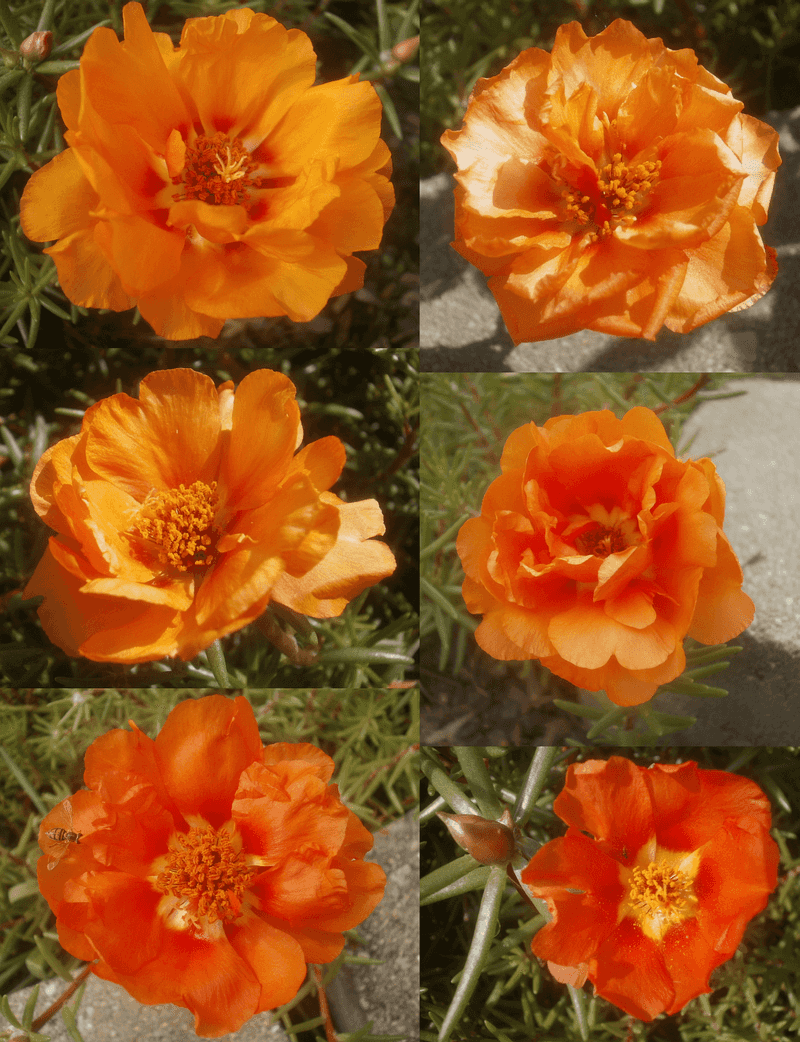
A single observation on one morning tells you almost nothing useful about how your plant is performing. Moss rose produces many flowers across a long season, and the individual blooms on a single plant can behave differently from each other even under the same conditions.
Research published in the Journal of Plant Research on Portulaca grandiflora flower movement found that while flowers tended to begin opening at roughly similar times, they closed at different times, and closure was also connected to whether pollination had already occurred. A flower that has been pollinated may close earlier than one that has not, which means two blooms sitting side by side can look like they are on completely different schedules.
Turn that finding into a simple observation experiment. Pick three or four bright, warm mornings in a row and check the plant at the same time each visit.
Note which flowers are open, which are still closed, and whether the overall number of open blooms changes from day to day. You will likely see a pattern emerge over several mornings that a single check would have missed entirely.
Resist the urge to judge the plant from one bloom or one exact moment. If you step outside at 9:45 and nothing is open yet, that is not a failure.
If you look again at 10:30 and find a cluster of flowers fully spread, the pattern is working as expected. The goal is to catch the plant on its best mornings and appreciate the rhythm rather than measuring it against a fixed time.
Variation between individual flowers is part of the plant’s biology, not a sign of a planting mistake. Once you start watching with that in mind, the small differences between blooms become an interesting part of the display rather than a source of frustration.
Expect a morning rhythm, not a perfect appointment
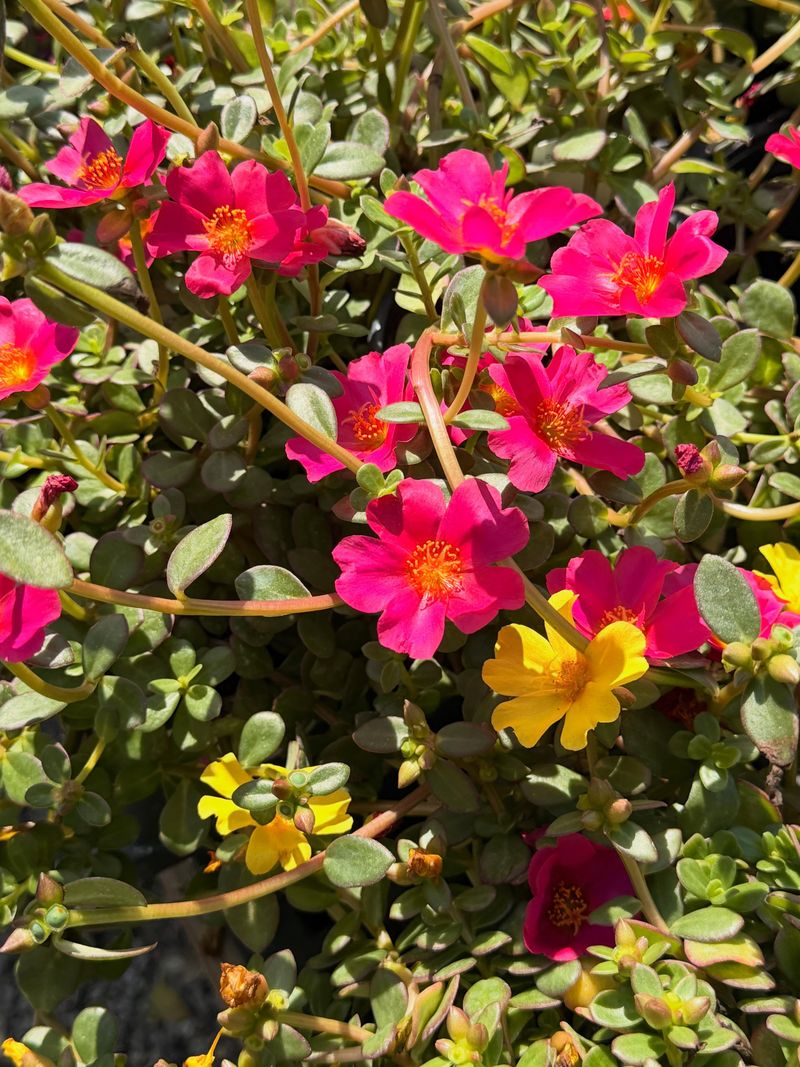
The ten-o’clock name is a genuinely charming piece of garden lore, and the pattern it describes is real enough to be worth growing the plant for. Missouri Botanical Garden’s profile confirms that Portulaca grandifloraPortulaca produces abundant flowers in warm, sunny conditions, and the research on flower opening supports a consistent morning pattern driven by rising temperature and light.
Plant it in full sun, keep it in well-drained soil, and let it establish without overwatering, and you will have a plant ready to deliver that late-morning display on bright, warm days throughout summer.
What you should not expect is a stopwatch-level performance. The name points to a tendency, and a delightful one, but weather, temperature, cultivar, and the state of individual flowers all shape what you actually see on any given morning.
Some days will be spectacular; others will be quiet. That variability is not a flaw in the plant or in your gardening.
It is simply what a living thing does in a real garden under real skies.
Moss rose rewards the kind of gardener who checks in regularly and pays attention to small changes. The morning it finally opens wide on a warm June day, with a dozen blooms spread out across a sunny patch, is one of those low-key garden moments that earns its keep.