
Planting Garlic in North Carolina This Fall: Match Your Region’s Window for a Possible May or June Harvest
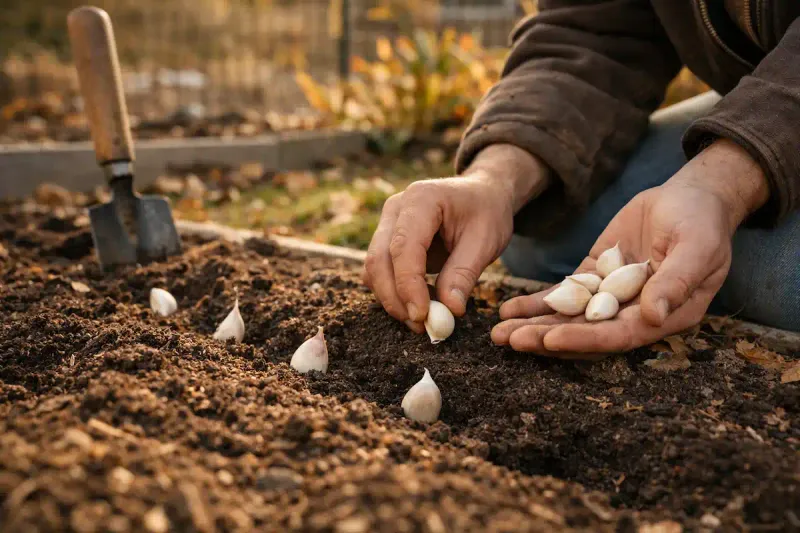
Garlic is one of the few crops you plant once in fall and then mostly leave alone while winter does its work. In North Carolina, that early start can lead to a harvest in May or June, but the right planting window depends on where your yard sits.
The mountains, Piedmont, and coast all get slightly different advice. Here is how to check your own timing and plant with realistic expectations.
Which fall window fits your part of NC?
No single date works for every North Carolina yard. An NC State Extension planting calendar for the Piedmont lists September 15 to November 1.
For eastern North Carolina, the 2024 Southeastern Vegetable Crop Handbook lists September 15 to November 10.
The mountains are where advice gets messy. That same handbook lists August 15 to October 15 for NC West, while Burke County Extension guidance recommends mid-October to November.
Neither range should be treated as right for every western garden, since the handbook is written with production growers in mind.
The statewide NC State Plant Toolbox gives a broader late October to November window, sometimes stretching into December in warmer areas. Notice what is missing: a firm Thanksgiving cutoff.
Thanksgiving can fall inside some windows and well past others.
What matters most is giving cloves time to grow roots before the ground freezes. Beaufort County Extension says cloves need at least 4 to 6 weeks to establish.
If you are unsure which range fits your county, call your local Extension office before you plant.
Choose planting cloves for their potential
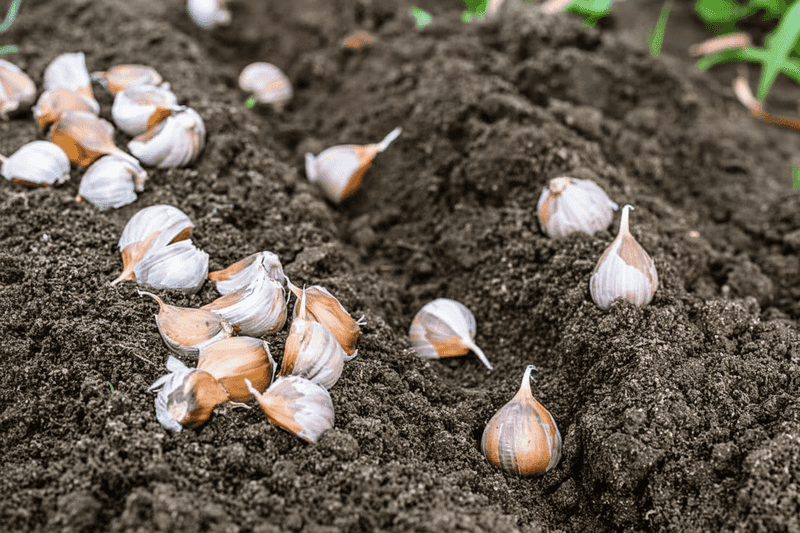
Each clove you plant becomes one bulb, so the clove is your starting capital. The Southeastern handbook says final bulb size is directly related to the size of the planted clove.
Bigger, healthy cloves give you a better shot at bigger bulbs, though nothing guarantees a particular size.
Pick plump, firm cloves and leave the papery skins on. When you plant, point the narrow end up.
What about that bulb from the grocery store? It may grow.
Still, garlic sold for planting from a reputable source lets you choose varieties suited to your region, and it may lower the chance of bringing in disease. University of Maryland Extension warns that grocery garlic can carry white rot, a soil disease.
NC Cooperative Extension describes hardneck garlic as generally better for colder climates and softneck as generally better for warmer ones. The handbook lists Italian softneck types and New York White Neck as options for the region.
Treat those as starting points, since no one type suits every yard.
A sunny, well-drained bed sets the stage
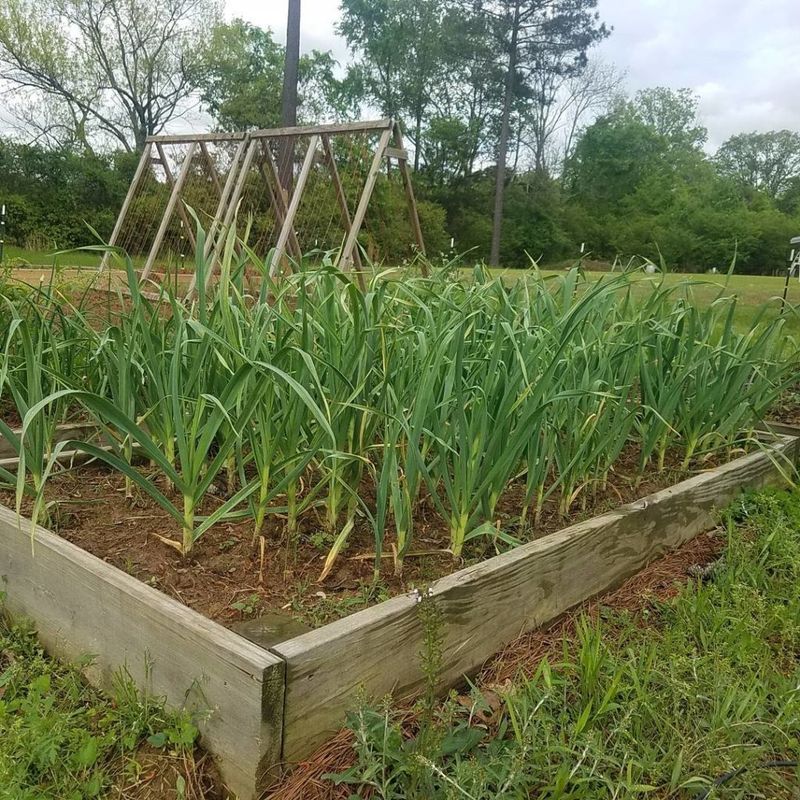
Before a single clove goes in the ground, spend a few minutes walking your yard. Garlic wants a sunny spot, and the NC State Plant Toolbox calls for loose, fertile, well-drained soil.
Drainage is the part that trips people up. Soggy ground can cause bulb rot, according to Beaufort County Extension.
Many North Carolina yards have heavy clay, so a spot that stays wet is worth ruling out early.
A simple check helps. After a good rain, go look at your candidate bed a day or two later.
If puddles are still sitting there, pick a different corner of the yard.
Notice the light too. Watch the spot through a sunny afternoon and make sure shade from a house, fence, or tree is not covering it for most of the day.
Soil that crumbles in your hand rather than forming a slick, sticky ball is a good sign.
Choosing the site is the job at this stage. Once you have a sunny, drained, loose bed, you are ready to plant.
Plant cloves for a head start before winter
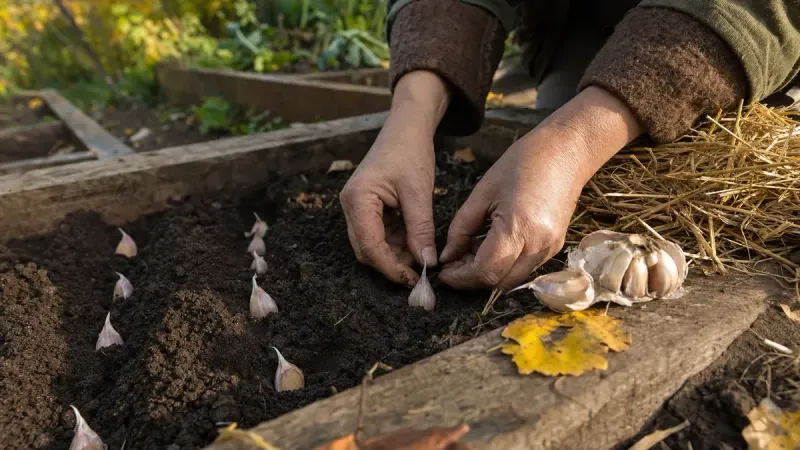
Planting day is simple. Break the bulb into separate cloves, keep the papery skins on, and set each clove with its pointed end up in your prepared bed.
For depth and spacing, the NC State Plant Toolbox backyard recommendation is 2 to 3 inches deep and 6 to 8 inches apart. That is one source’s advice for home gardens, not a universal rule.
The Southeastern handbook suggests covering clove tops with 1 to 1.5 inches of soil and uses closer spacing, which fits production growing.
Pick one recommendation and stick with it across the whole bed so your rows stay consistent. For a backyard, the Plant Toolbox numbers are a natural fit.
Why plant now rather than in spring? Fall planting lets cloves grow roots before winter and gives garlic the cool weather it needs for good bulb development, as Beaufort County Extension explains.
That head start is what sets up a possible spring harvest.
Let the leaves—not the calendar—signal harvest
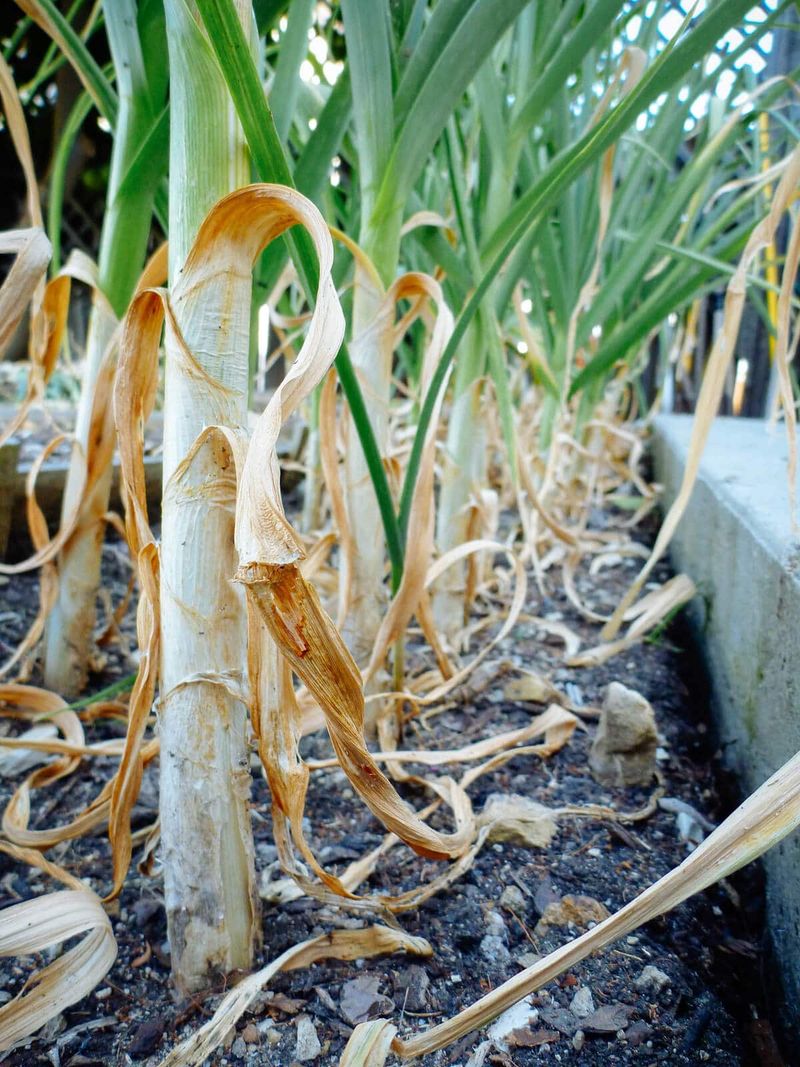
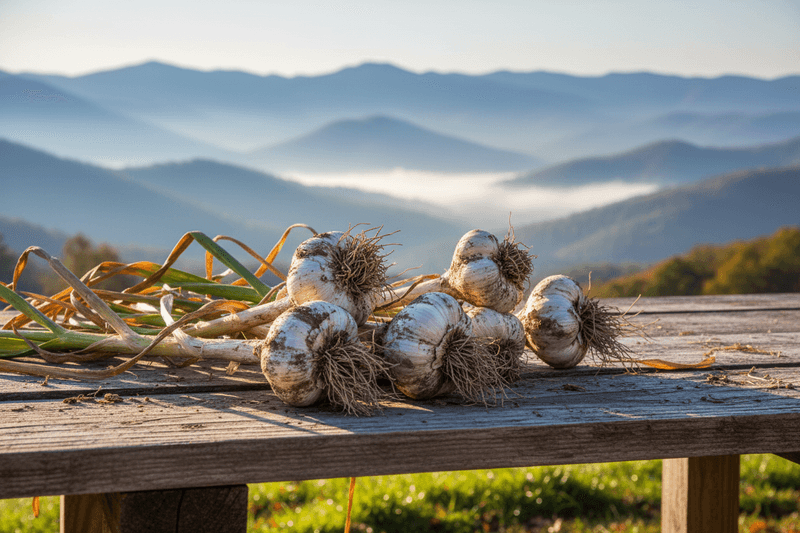
Come late spring, your garlic will tell you when it is ready. In North Carolina, harvest often lands in May or June, and the Southeastern handbook gives mid-May to mid-June.
Those are broad expectations, not a date to circle.
The two NC State sources give different foliage cues. The Plant Toolbox advises harvesting when about half the leaves have started turning brown.
The handbook says to harvest when about 30 percent of the foliage starts yellowing.
Those are two separate thresholds, not the same one. Both point to the same habit: walk out to the bed every few days once the leaves begin to change, and note how much of each plant has yellowed or browned.
A cool spring or a warm one can shift your timing from a neighbor’s, and planting date plays a part too. Judge by your own plants.
As for size, bulbs will vary, and nothing here promises any particular result.
Make the planting decision locally
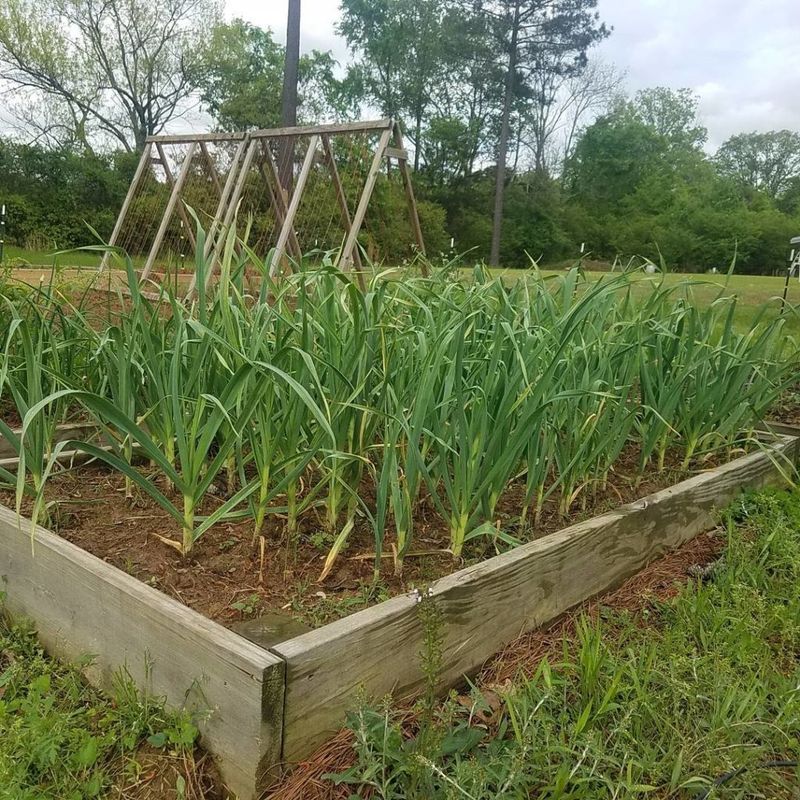
Start with a call or visit to your county Extension office, then choose good planting cloves and set them in a sunny, well-drained bed if local timing says go. Keep the Plant Toolbox handy as a baseline.
May or June is a reasonable hope, not a promise, and the leaves will tell you when it is time to dig.
Garlic asks for one good afternoon in fall, then rewards your patience months later.