
Pruning Wisteria for More Blooms: A Locally Timed Step That May Improve Flowering
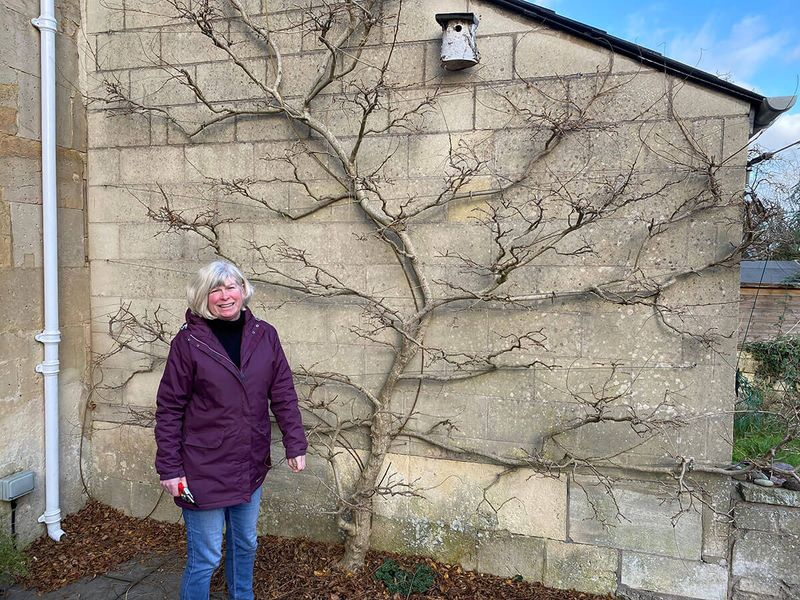
A wisteria that sends out yard after yard of green growth but hardly any flowers can make you feel like you did something wrong. Pruning is one tool that may help, because it keeps flower-bearing wood close to the main vine.
It works best as a yearly habit, not a single cut, and the right timing depends on where you live. Here is how to shorten the right shoots without cutting away your future flowers.
A leafy wisteria can fail to bloom for several reasons
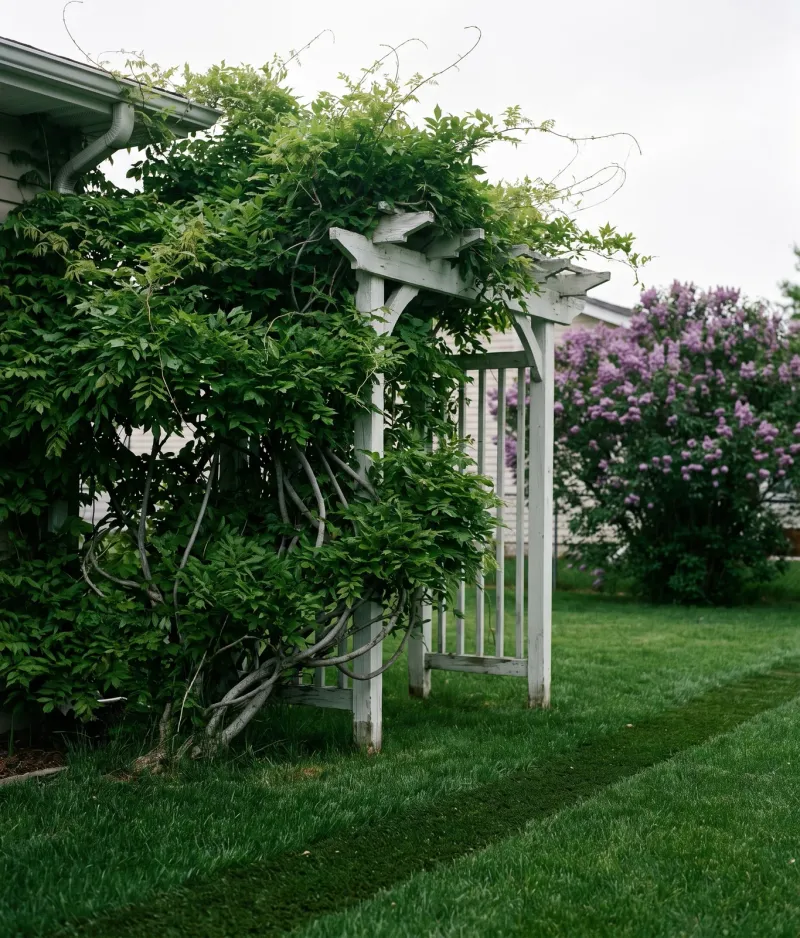
Few things are more annoying than a wisteria that grows like crazy and never flowers. You feed it, you wait, and spring brings nothing but leaves.
Take heart, because a leafy vine is not a lost cause.
Pruning can help you manage the growth that carries flowers, and Oregon State Extension guidance treats it as a regular job that keeps the vine in bounds and encourages its spring show. Still, no pruning cut can promise blooms next spring.
Flower color also depends on the cultivar, so your vine may not be purple at all.
It helps to sort your vine into one of two groups. An established plant with lots of growth may simply need management.
A young plant may just not be old enough yet, and Utah State Extension notes that wisteria grown from seed can take many years to flower.
Other possible causes include too little sun, too much nitrogen, winter damage to flower buds, and earlier pruning that removed flowering wood. Leafiness alone cannot tell you which one applies to your plant, so think of these as clues to check, not a diagnosis.
We will cover each in turn.
Short spurs keep selected side growth close to the framework
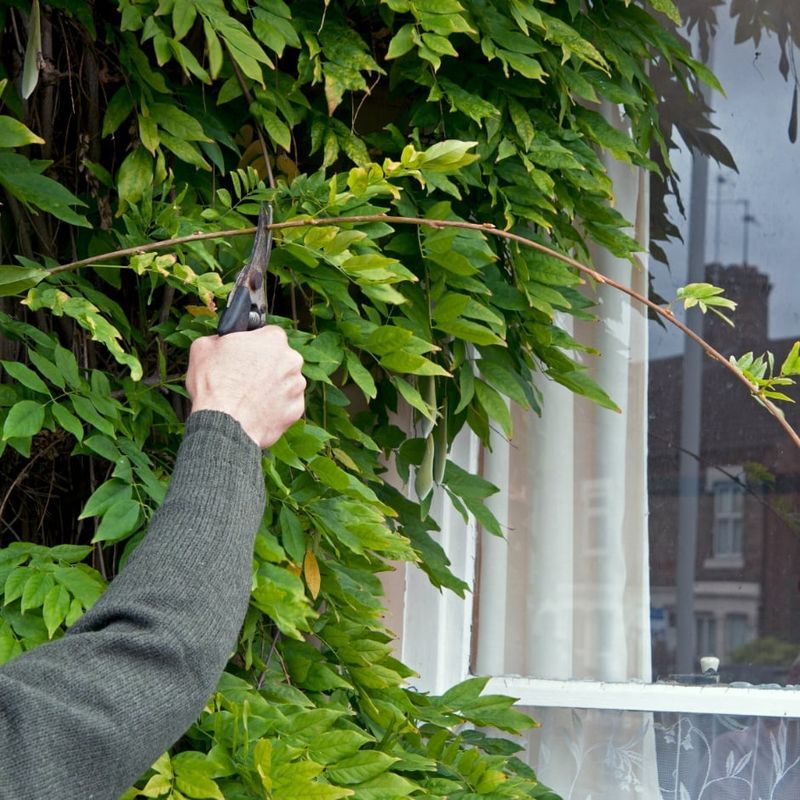
Wisteria has long, whippy side shoots that race away from the main vine. Left alone, they produce a tangle of leaves far from the center of the plant.
Shortening selected ones keeps growth in check and holds potential flowering spurs close to the main structure.
Picture the vine as a frame with branches. The frame is the trunk and main arms that you trained on the support.
Spurs are the short stubs along that frame where flower buds can form.
The key word is selected. Shearing the whole vine like a hedge, or cutting everything back hard, can strip away the very wood that carries blooms.
Utah State Extension points out that wisteria flowers on wood from the previous growing season, so taking too much can remove flowering wood.
That is why you keep the framework and leave enough flowering wood in place. Oregon State guidance describes pruning as a way to keep the vine in bounds and encourage flowers, not a trick that creates them by itself.
Think of pruning as tidying and directing, not forcing.
Also remember that a mature wisteria gets heavy. Make sure the support is strong, and keep the seeds and pods away from children and pets, since they are toxic if swallowed.
Follow local pruning timing instead of a fixed fall date
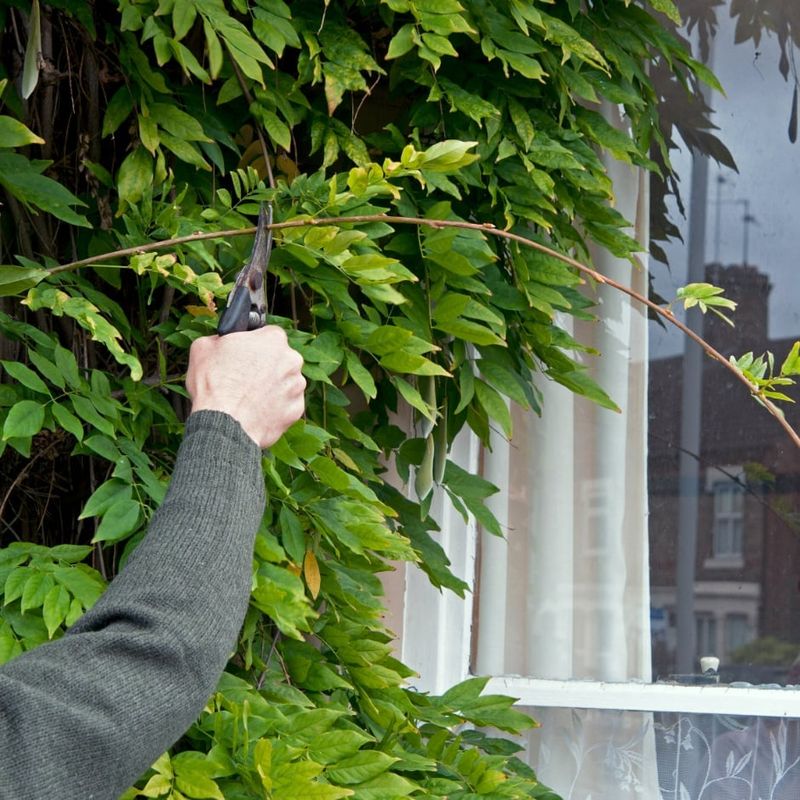
Gardeners often hear that you should prune the moment the leaves drop. Published advice does not agree on that.
Timing depends on your climate and your plant, so a fixed fall date is not a safe rule for the whole country.
Oregon State Extension describes both winter and summer pruning. Utah State Extension recommends pruning before spring leaf-out and again after flowering.
The Royal Horticultural Society gives a January to February winter schedule, but that one is written for the UK.
Arkansas Extension adds another twist. Its guidance notes that wisteria there has already set flower buds by dormancy, so it advises pruning after flowering.
A cut in the wrong season could remove buds you were hoping to see open.
So what should you do? Look up advice from your own state extension office, and match it to your local weather and your vine’s condition.
Dormant-season pruning can help manage established shoots in many places, but your local guidance has the final say.
Leaf drop is a handy reminder that it is time to check the calendar. It is not a nationwide signal to start cutting.
Shorten selected side shoots without stripping flowering wood
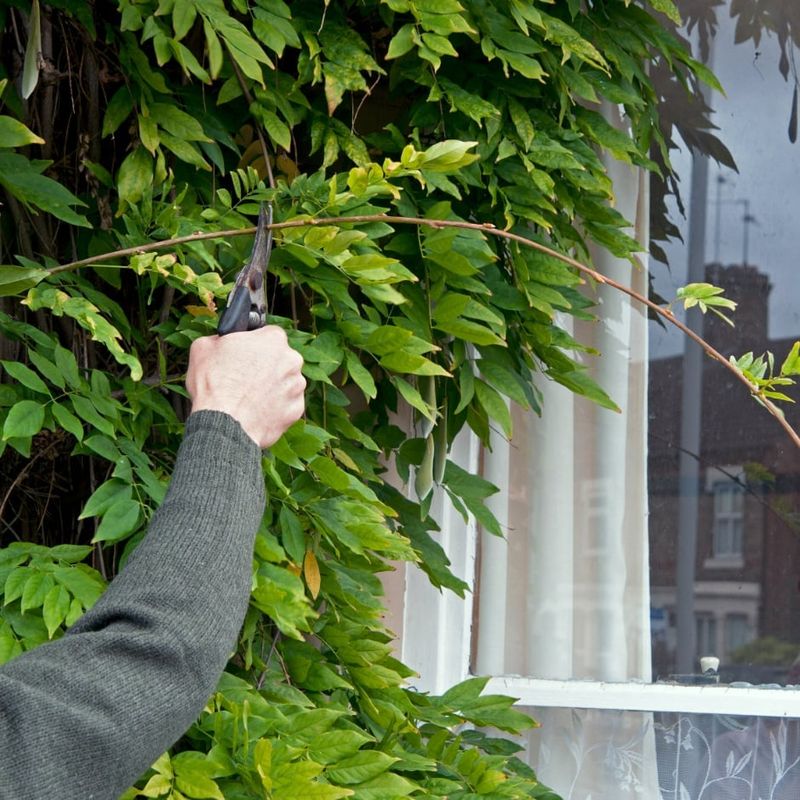
Start by looking at the whole vine from a few steps back. Find the main framework, the thick stems you want to keep.
Then spot the unwanted runners, which are the long shoots that wander off and wrap around nearby things.
Remove those runners where they are not needed. Next, choose the side shoots you want to shorten.
Skip the ones that fill a gap in your framework or that carry older flowering wood.
For the selected shoots, Oregon State Extension suggests cutting back to a few buds. A rough target is two or three buds, and you should cut just above a bud.
That count is a guide, not one inch measurement that fits every vine.
The RHS pruning guide follows a similar spur idea, though its schedule is for the UK. Utah State Extension cautions against removing all of the previous season’s wood, since that is where flowers can form.
Work slowly and step back often. If you are unsure, cut less this round.
You can always trim more later, but you cannot glue wood back on.
Use clean, sharp pruners, and wear gloves. Check your local extension office for the best timing in your area.
Check the vine’s age and growing conditions if flowers remain scarce
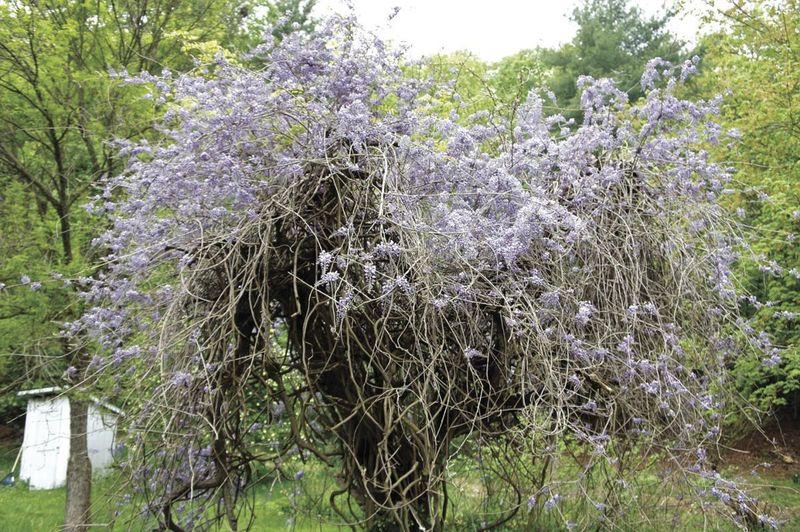
Sometimes the answer is patience. A young vine, or one grown from seed, may need years to settle in.
Utah State Extension says seed-grown wisteria can take up to 15 years to flower, so pruning is not a quick cure.
Next, think about light. Wisteria tends to bloom best in a sunny spot, and a shaded vine may put its energy into leaves.
Watch how many hours of direct sun your vine actually gets.
Fertilizer is another suspect. Extra nitrogen can favor leafy growth over flowers, so do not add it hoping to force blooms.
If your vine is already lush, skip the high-nitrogen feed.
Winter can play a part too. A hard freeze may injure flower buds, so a vine can look healthy yet bloom poorly after a rough winter.
Past pruning matters as well, because cutting away the previous season’s wood can remove flowers before they open, as Oregon State Extension notes in its pruning advice.
Treat these as possibilities to check, not a diagnosis. Several can overlap on a single vine.
Work through them one at a time, and give each fix a full season before judging it.
Treat pruning as one step in a longer flowering plan
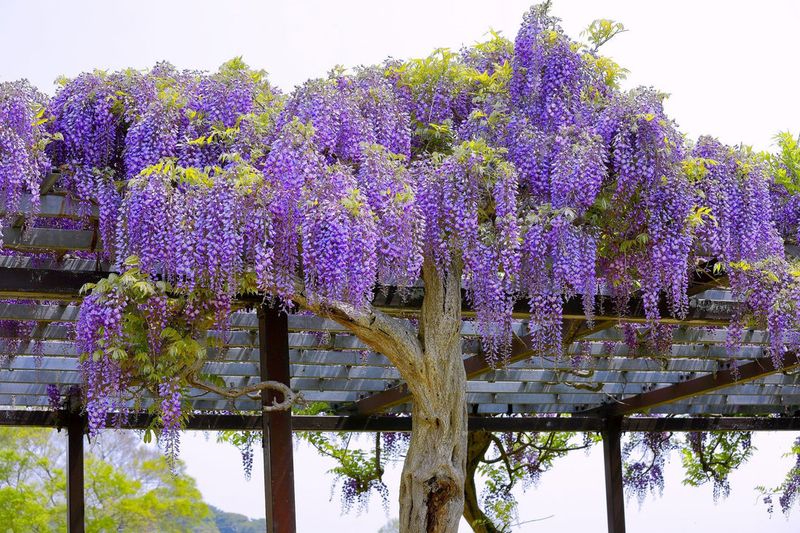
Here is a simple plan. Prune selected side shoots on the schedule your local extension recommends, and keep the main framework and enough flowering wood.
Then check sun, feeding, vine age, and winter damage if the flowers stay away.
Repeat the routine each year, since Oregon State Extension treats pruning as ongoing upkeep. Some seasons will bring more flowers than others.
A wisteria rewards patience more than speed.