
Pruning Your Fig Tree Can Reduce or Remove Breba Figs, So Cut With a Plan
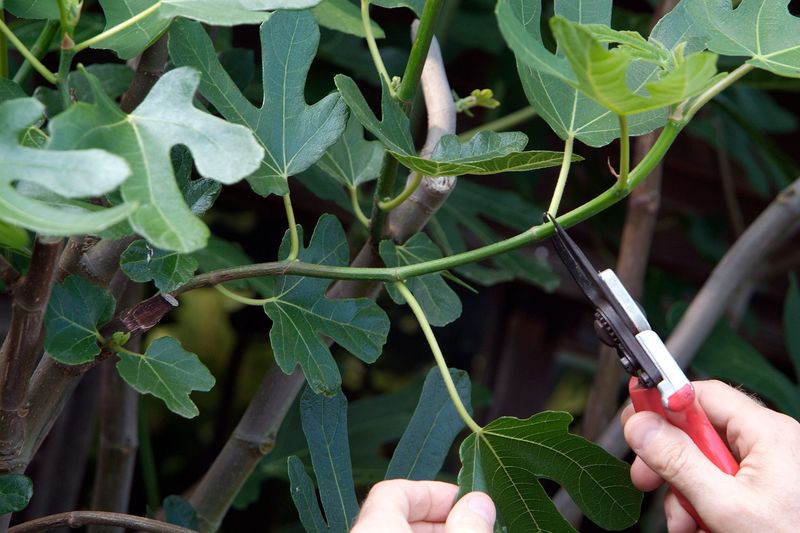
You walk up to your fig tree with the shears and suddenly freeze. What if one wrong cut costs you the fruit you have waited all year to taste?
The good news is that the real risk is smaller and more specific than the scary rumors suggest. Knowing which figs grow on which wood will help you make cuts you feel good about.
Pruning can cost you breba figs without wiping out every crop
Many gardeners hear that a bad cut will erase next summer’s figs. That claim is too absolute.
What you can lose is a particular crop, and which one depends on where the fruit grows.
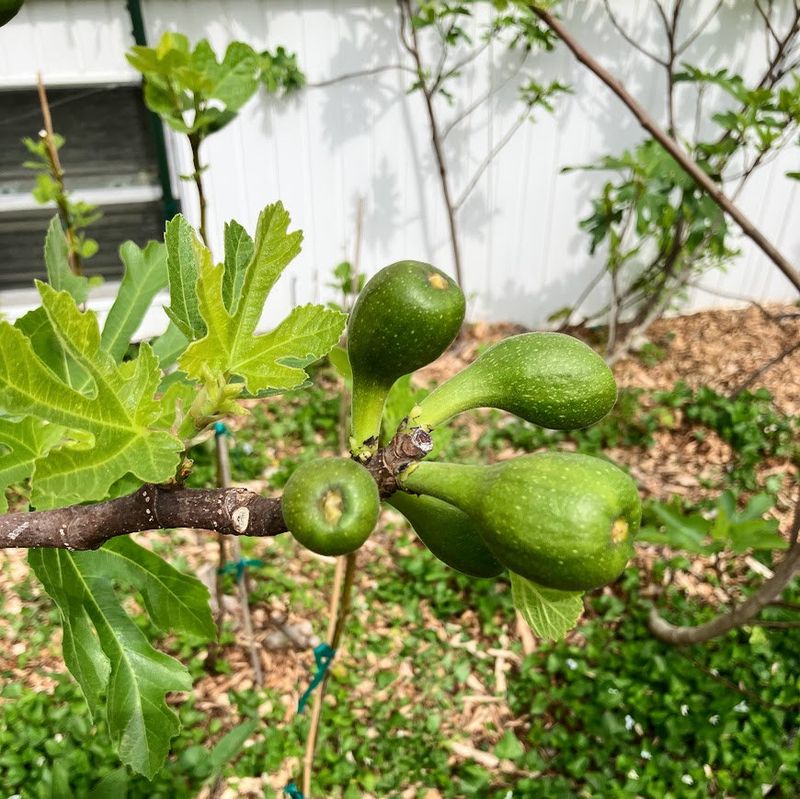
Common figs may produce one or two crops a year. Breba figs, when a cultivar makes them, form on last year’s wood.
They are the early, often larger figs that ripen first. The main crop generally forms on the current season’s growth, at least on many common figs, according to University of Maryland Extension.
That difference matters when you hold the shears. Cutting back old wood most directly threatens breba fruit.
It does not automatically remove every fig the tree could make later, because new shoots can still carry the main crop.
Cultivars and climates differ, too. Some trees rarely set breba figs at all, and some gardens do not get a reliable second crop.
If your tree gives you just one harvest each year, you may care far less about old wood than a neighbor whose tree produces both.
So the first question is not whether you are cutting at the right time. Ask which crop you want most.
Once you know that, every later choice about timing, size, and how much to remove gets easier.
There is no single pruning date for every fig tree
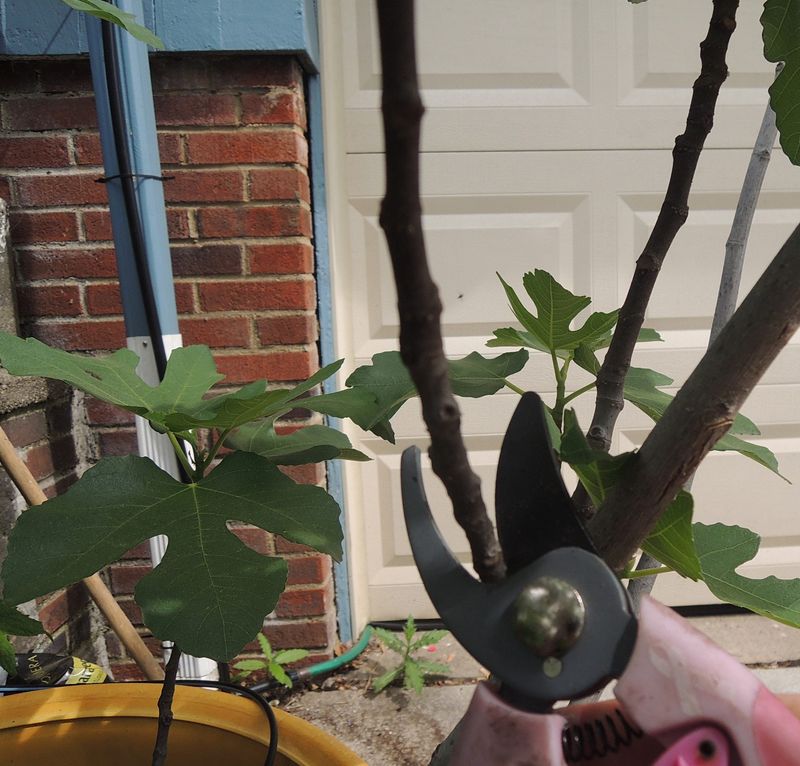
If you search for the perfect pruning month, you will find advice that seems to clash. It does not really clash.
The advice comes from different regions with different goals.
Oregon State Extension advises early-spring pruning to remove dead or damaged wood and to manage the canopy. That fits a place where winter injury is a real concern and gardeners want to see what survived before cutting.
Regional guidance from UF/IFAS leans toward pruning after harvest in late summer. It also warns that heavy winter pruning can eliminate the following crop.
Both statements can be right for their own climates.
Notice the word heavy. Light maintenance, such as snipping a dead twig or a weak branch, is a very different job from cutting a tree back hard.
Light cuts remove little fruiting wood. Heavy cuts can take a lot of it.
So a rule like never prune in winter is too broad to trust. Instead, look up advice from your own state or regional extension office.
Match it to the kind of cut you plan to make.
If you cannot tell which timing suits you, make only small, necessary cuts and wait on any bigger project. A tree forgives patience far more easily than it forgives a drastic cut.
Start with the reason for the cut
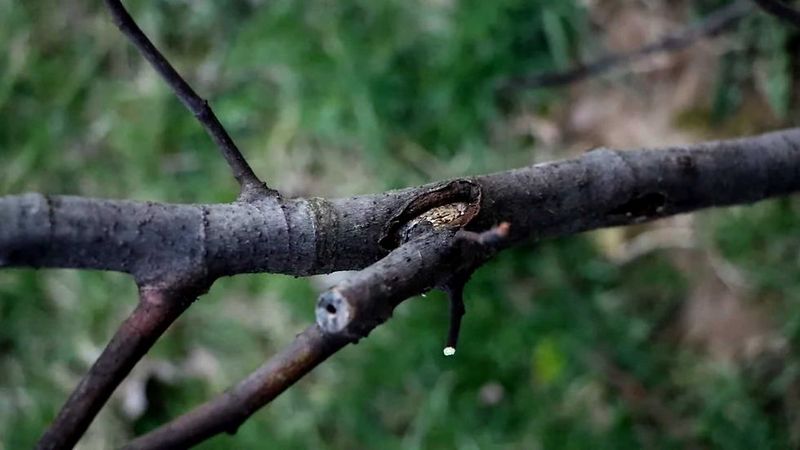
Before you pick up the shears, pause and ask why. A fig tree can look big and still be perfectly healthy and productive.
Size alone is not a good reason to cut.
According to UF/IFAS, pruning is mainly used to manage form and size or to remove damaged growth. It is not required for a fig tree to be productive.
Many trees fruit well with very little pruning.
Walk around the tree and look for a specific need. Is there a dead or broken branch?
Are limbs crossing and crowding the center? Are some branches hanging so low that fruit sits in the dirt or the lawn mower hits them?
Are there weak, spindly shoots or suckers coming up from the base?
Each of those is a clear job. Dead, crowded, low, and weak growth are the kinds of problems that University of Maryland Extension lists for routine maintenance.
Write down what you find, even if it is just a quick note on your phone. If you cannot name a reason for a cut, skip that cut for now.
It also helps to decide whether you need a smaller tree for a tight space or simply a tidier one. Those goals call for different amounts of cutting, and settling on one first keeps you from removing more than you meant to.
Make selective cuts to open the canopy
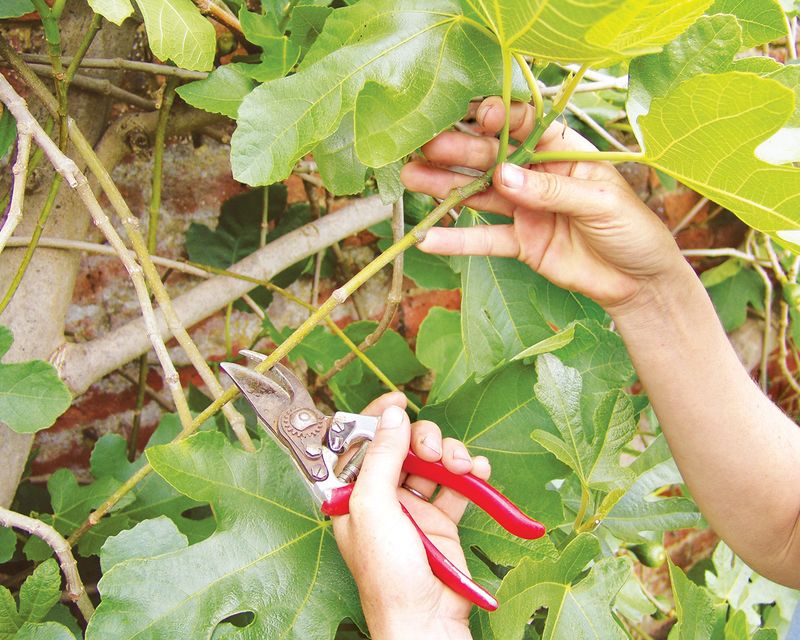
Once you have a reason, keep the job small and planned. Think of it as editing rather than rewriting.
You are removing particular problem pieces, not stripping the tree of growth.
For routine care, University of Maryland Extension recommends removing suckers, dead wood, crowded branches, low-growing limbs, and weak wood. The goal is an open canopy at a size you can manage.
Light and air moving through the tree make picking easier, too.
Start with the obvious. Cut out anything dead or broken back to healthy wood.
Then take out suckers that crowd the base, followed by branches that rub or cross. Step back often and look at the whole shape before the next cut.
Stop sooner than you think you should. You can always remove another branch next season, but you cannot glue one back on.
Spreading small cuts over more than one year is gentler on a tree than one big haircut.
Maryland’s recommendation is to do this work in March or April. Treat that as regional guidance, not a national schedule.
Gardeners in other climates may be told something different, so check with your local extension office for the timing that fits your area.
Use clean, sharp tools and make tidy cuts. Neat wounds close better than ragged ones.
Preserve last year’s wood if breba fruit matters
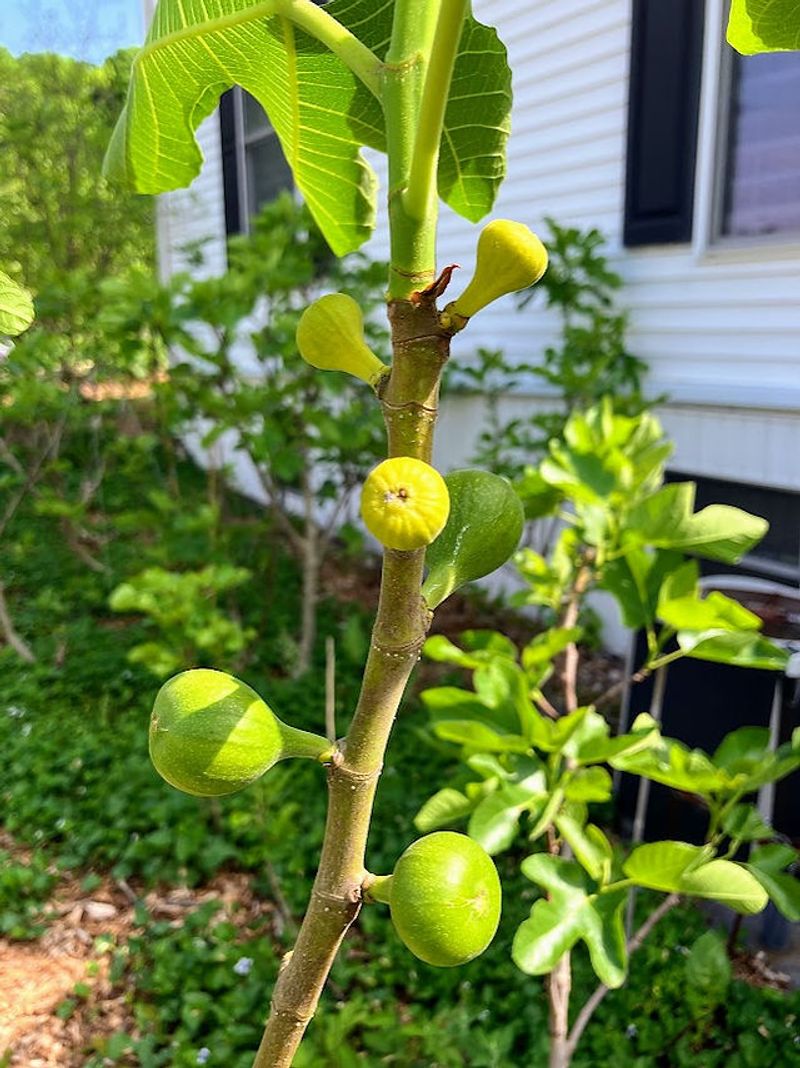
Here is the real tradeoff. If you love those early breba figs, the wood that grew last year is your crop for the first harvest.
Cutting much of it away takes the fruit with it.
UC Cooperative Extension notes that severe pruning may greatly reduce or eliminate breba figs. So if breba fruit matters to you, avoid heavy cuts into the previous year’s growth.
There is a second cost to think about. An Extension response for Houston says that substantial pruning of a mature tree typically reduces the following summer’s production.
It recommends moderate pruning rather than waiting until a severe size reduction is needed.
That points to a simple habit. Trim a little each year to hold your tree at a size you like, instead of letting it overgrow and then chopping it hard.
Small, regular cuts spare more fruiting wood.
This does not mean every old branch must stay. Dead, damaged, or crowded wood can still go.
Cold can also kill old wood, and a tree that regrows from its roots may still bear later fruit on new shoots, depending on the cultivar and the season, as Maryland Extension describes.
No pruning approach can promise a harvest. It simply keeps more of your options open.
Fig sap makes skin protection part of pruning
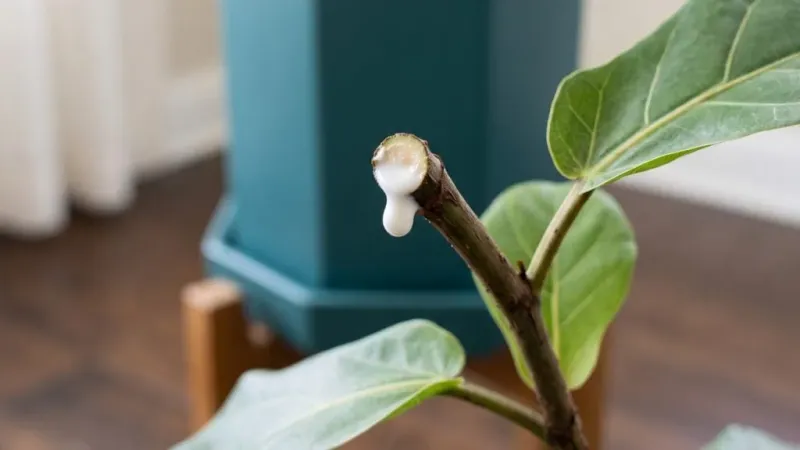
Pruning a fig has a hidden hazard that has nothing to do with fruit. The milky sap that oozes from cuts can irritate skin.
It is easy to brush against it without noticing.
The risk goes up with sunshine. Sap on skin followed by ultraviolet light can cause a severe, sunburn-like reaction.
A published case report on fig sap documents serious blistering after exposure in direct sun.
Plan for it before you start. Maryland Extension recommends wearing gloves.
Add long sleeves and long pants so your arms and legs are covered, and do not prune bare-armed in bright sun.
Keep an eye out for drips and smears. If sap lands on your skin, wash it off promptly with soap and water instead of waiting until you finish the job.
Wash your tools and gloves afterward, too.
Treat any sap contact as something to deal with, not something to ignore. If your skin reacts strongly, it is sensible to ask a health professional about it rather than guess.
A few minutes of preparation keeps a simple garden task from turning into a painful one.
Keep the next cut modest and locally timed
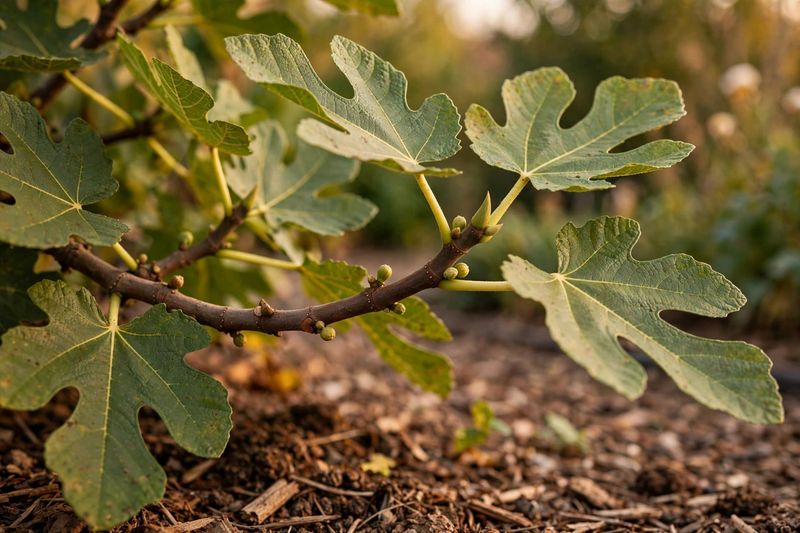
Before the next cut, settle three things: whether breba fruit matters to you, what specific job the cut will do, and what your region recommends. Keep the cut moderate, and check timing with sources like Maryland Extension or Oregon State Extension, then compare them with your own local office.
Pruning can shrink a crop, especially breba figs, without necessarily erasing everything next summer. A fig tree usually rewards the gardener who cuts a little and waits.