
Salamanders Turning Up Under Your North Carolina Logs And Leaf Litter Signal A Yard That’s Thriving
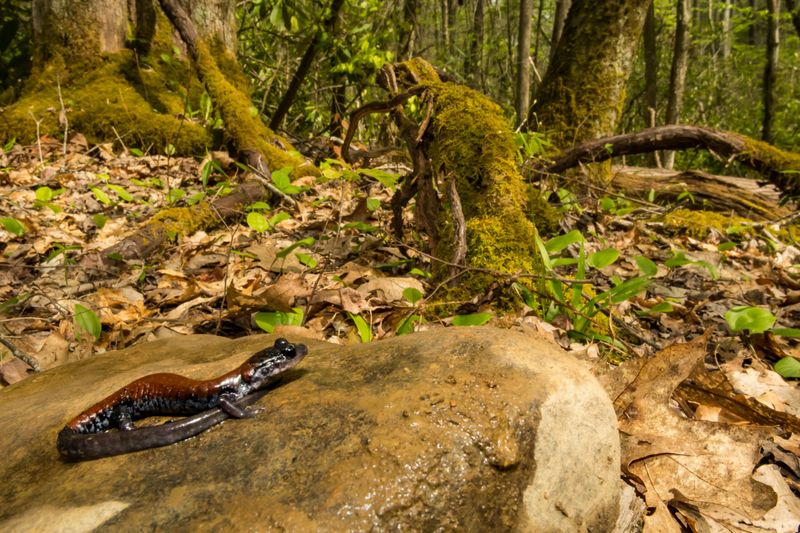
Lift a rotting log in a shady corner of your North Carolina yard and you might find a small, smooth-skinned salamander blinking back at you. That moment is genuinely exciting, and it does tell you something real about that particular spot.
What it tells you, though, is more specific and more interesting than a simple verdict that your whole yard is thriving. Understanding what the sighting actually means will help you protect the right things without overclaiming what one small animal can prove.
What a salamander sighting actually tells you
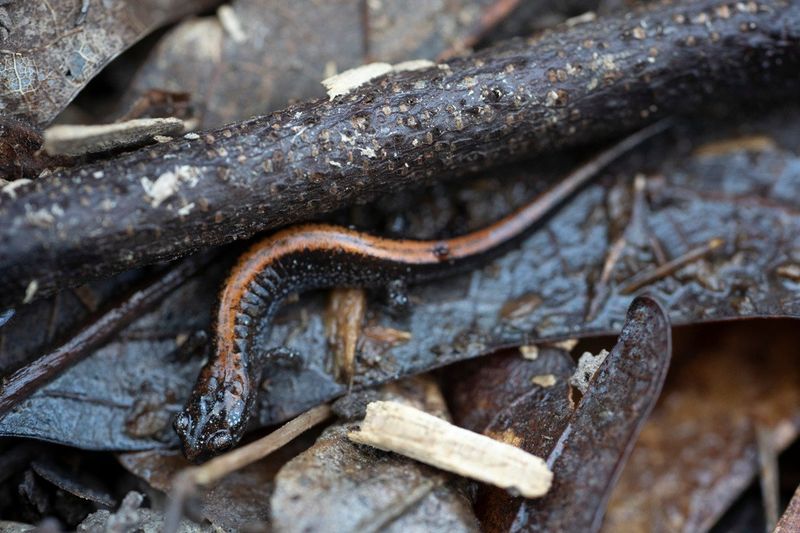
Finding a salamander beneath a log or nestled in leaf litter is a localized habitat clue, not a report card for your entire property. The animal chose that particular spot because it offered the right combination of moisture, shade, cool temperature, and protective cover at that moment.
Those are the conditions the animal needed to avoid drying out, stay safe from predators, and rest or forage. The sighting tells you that one refuge in your yard was working well enough for one animal on one occasion.
The North Carolina Wildlife Action Plan identifies logs, tree falls, and woody debris as important amphibian shelter because they reduce heat and dehydration stress. Research on southern Appalachian salamanders similarly connects occurrence with soil moisture, leaf-litter depth, cooler soil temperatures, canopy cover, and proximity to streams.
The sighting fits that pattern: the log or leaf pile created a small pocket of conditions the animal could use.
Prey is sometimes part of that picture. Suitable cover can also give some species access to small invertebrates living in the same moist zone.
One unidentified animal under one log, however, does not tell you how many invertebrates your yard contains or what this particular species eats.
The broader claim, that the entire yard is thriving, goes further than the observation supports. Research on salamanders as ecosystem indicators notes that such conclusions are only sound when the species, habitat type, survey method, and environmental question are clearly defined.
A single presence observation under a backyard log meets none of those conditions. What you have is an encouraging sign that one spot in your yard offers favorable microhabitat, and that is genuinely worth protecting.
Why logs and leaf litter provide useful refuge
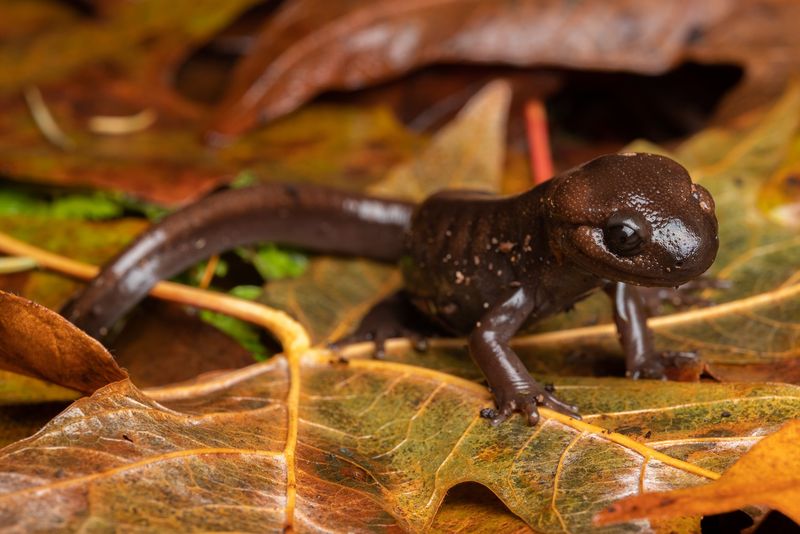
Salamander skin is permeable, meaning water moves through it in both directions. That trait supports cutaneous respiration, a process by which many salamanders absorb oxygen directly through the skin.
The trade-off is that the same permeability makes them extremely vulnerable to drying out. A salamander left in direct sun on a dry surface can lose water fast enough to become incapacitated or die within minutes.
Cover objects that hold moisture and shade the ground are not a convenience for these animals; they are a physiological necessity.
USGS research on cover-object survey methods confirms that terrestrial salamanders strongly associate with objects that maintain moist, cool conditions at ground level. Logs are particularly effective because they absorb and hold rainwater, slow evaporation from the soil beneath them, and buffer against temperature swings that would otherwise push ground-surface conditions past a salamander’s tolerance range.
A thick layer of leaf litter works by a similar mechanism, trapping humidity and keeping soil temperatures lower than bare ground nearby.
Dead wood and leaf litter also support the broader food web that some salamanders tap into. Penn State Extension notes that decaying wood provides shelter and foraging habitat for the invertebrates that form part of a salamander’s potential diet.
Beetles, millipedes, earthworms, and springtails all concentrate in decomposing organic matter. Leaf litter functions similarly, creating a layered microhabitat that can support insects and other small organisms.
None of that means one sighting proves that invertebrates are abundant across your yard. It means the log or leaf pile created conditions where both the animal and its potential food sources could coexist in that one place.
Penn State’s wildlife-habitat guidance frames this well: structural features of the landscape, such as dead wood and organic litter layers, shape which species can use a given patch. Your log was doing that job for at least one visitor.
Does one salamander prove your soil is healthy?
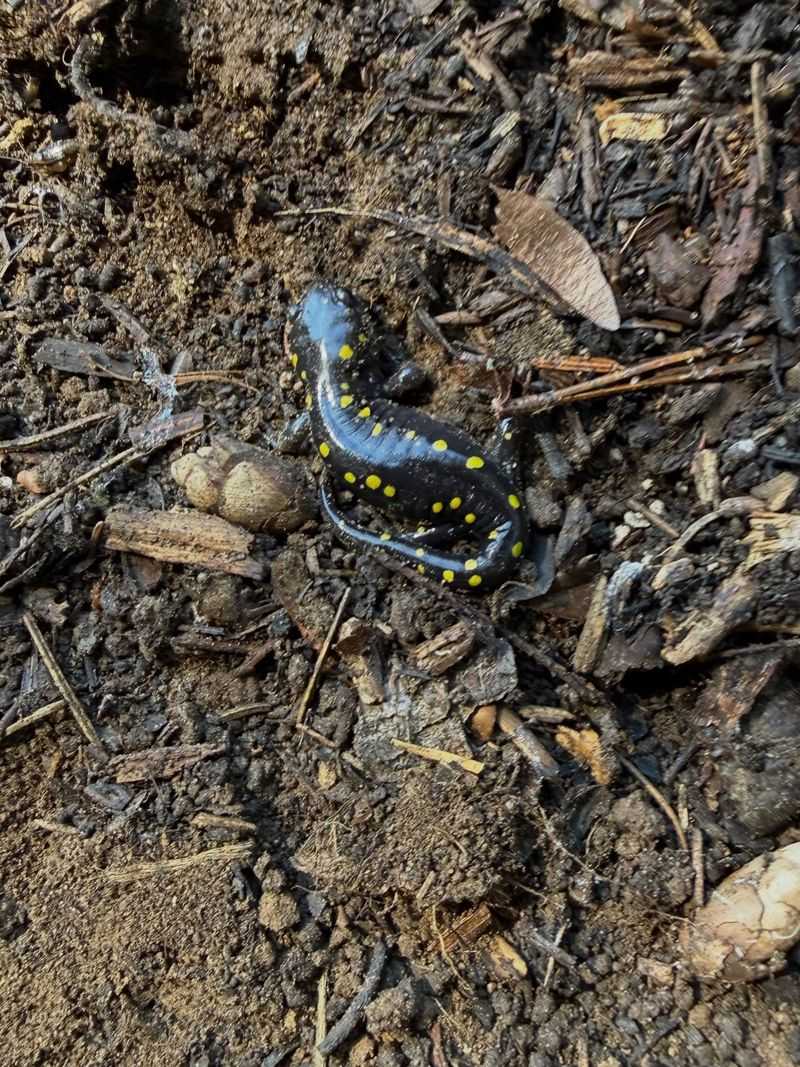
Moist soil and healthy soil are not the same thing. Salamanders respond to physical conditions: moisture at ground level, shade, cool temperature, and the presence of cover that holds those conditions stable.
They are not responding to soil pH, nutrient content, drainage capacity, microbial activity, or the absence of chemical contaminants. Those are separate measurements that require separate tests.
A soil that is waterlogged, compacted, acidic, or laced with legacy pesticides can still feel moist and cool beneath a log, and a salamander may still rest there.
The distinction matters because the headline’s implied promise, that a salamander signals a thriving yard, can lead homeowners to skip soil testing or assume that no intervention is needed. Research on salamanders as habitat indicators is careful to separate what the animals actually respond to from broader inferences about ecosystem condition.
Presence under a log supports a microhabitat inference, not a full yard assessment.
The animal’s residency status adds another layer of uncertainty. Some salamanders move among terrestrial cover, streams, seeps, wetlands, and seasonal breeding pools depending on the time of year and their life stage.
Penn State Extension’s overview of seasonal wildlife habitats explains that amphibians often shift between habitat types as their reproductive and physiological needs change. The salamander under your log may have been passing through rather than living permanently in your yard.
Its presence is a presence observation, not evidence of a resident population or a stable year-round habitat.
The NC Wildlife Action Plan underscores that amphibian occurrence is shaped by recent rain, seasonal temperature patterns, cover availability, and landscape context. What the sighting tells you is that one spot provided the right physical refuge at the right time.
That is a meaningful clue about microhabitat quality, and it is worth acting on selectively, but it does not substitute for a soil test or a full yard evaluation.
North Carolina’s salamanders need different kinds of habitat
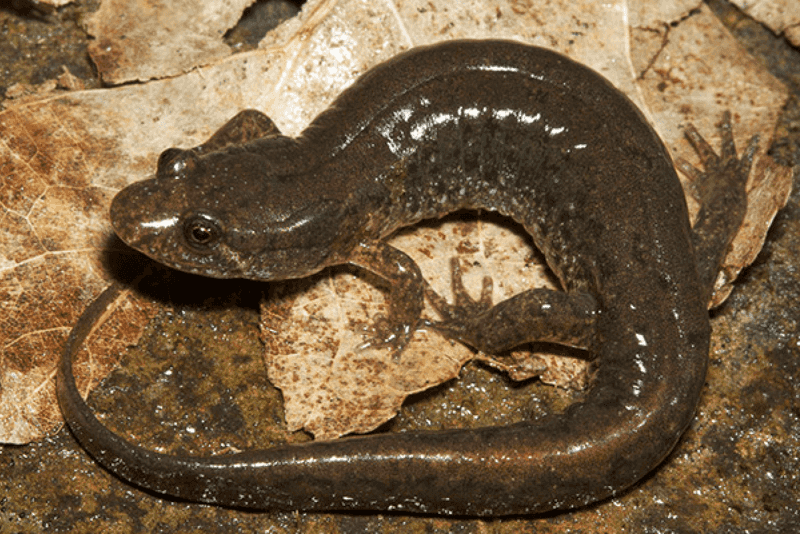
North Carolina is home to more than 60 salamander species, a number that reflects the state’s remarkable range of elevation, geology, and moisture regimes. Mountain streams in the Blue Ridge hold species that breathe almost entirely through their skin and never develop lungs.
Flat, sandy soils of the Coastal Plain shelter burrowing species that spend most of their lives underground. The Piedmont holds a mix of terrestrial and stream-associated animals that shift between cover types as conditions change.
The animal under your log could belong to any number of these groups, and its location alone does not identify it.
Without a reliable species identification, you cannot determine the animal’s conservation status, its typical habitat needs, or whether it is a permanent resident or a temporary visitor. The NC Wildlife Action Plan lists several North Carolina salamander species as species of greatest conservation need, meaning they face documented population pressures.
Assuming the animal is a common, wide-ranging species when it might be something rarer is a real risk in a state with this much salamander diversity.
Stream salamanders have been used in scientific studies to distinguish relatively intact from degraded stream systems, and USGS research on stream salamanders as indicators of stream quality in Maryland shows how that method works in a riparian and aquatic context. That evidence concerns stream and riparian conditions, not an isolated residential flower bed or lawn.
A yard sighting does not carry the same inferential weight as a structured stream survey.
Detection itself is unreliable. USGS leaf-litter bag research found that even specialized survey methods may not reliably represent total salamander abundance.
Rainfall, temperature, season, cover-object type, and how long you searched all affect whether you find an animal. One sighting is a presence observation.
It confirms the species can use that spot under those conditions. It does not tell you how many are present, whether they breed there, or what the population trend looks like.
How to preserve the refuge without neglecting the yard
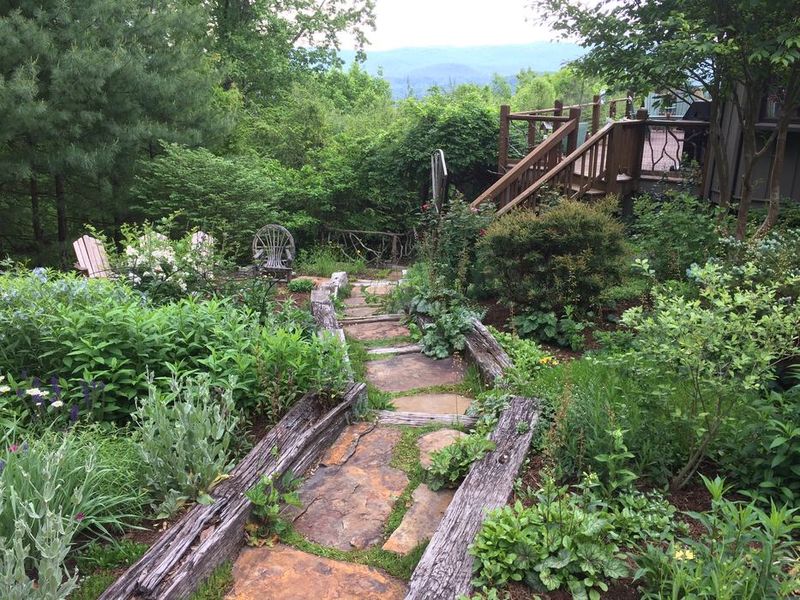
Selective retention is the key phrase here. The goal is not to turn your yard into an untouched wilderness or to stop all maintenance.
A few well-placed logs, a layer of leaf litter in garden beds or woodland edges, and some naturally decaying stumps can offer real refuge for salamanders without creating hazards or making the yard unpleasant to use.
Penn State Extension’s guidance on dead wood for wildlife recommends retaining naturally decaying logs, branches, and stumps where they do not create a safety or fire hazard. That qualifier matters.
Wood that leans against a structure, blocks an egress path, or sits in a fire-safety zone should be cleared. Wood in a shaded garden bed away from the house, or along a woodland edge, can stay.
The distinction is site-specific, and you are the best judge of your own yard’s layout.
Leaf litter follows the same logic. Penn State’s wetland management guidance supports leaving some leaf litter in appropriate areas because it creates cover and a more stable ground-level microclimate.
Raking every leaf from every bed removes that buffer. Leaving a few inches in a shaded bed or at the base of a tree costs nothing and keeps the microhabitat functional.
When you lift a log or rock to look underneath, replace it carefully in its original position. Foundation for the Conservation of Salamanders field guidance emphasizes that returning cover objects preserves the moisture-retaining refuge the animal depends on.
Rolling the log away and leaving it displaced can expose the animal and destroy the microhabitat in one motion.
Pesticide use is the other practical lever. EPA research on pesticide effects on amphibians identifies amphibians as potential non-target organisms and notes that pesticides can reach wildlife through runoff, drift, contaminated soil, water, and prey.
Reducing routine applications near salamander cover and following every product label are straightforward steps that limit that exposure pathway without requiring you to eliminate pest management entirely.
Observe, protect, and leave the salamander where it is
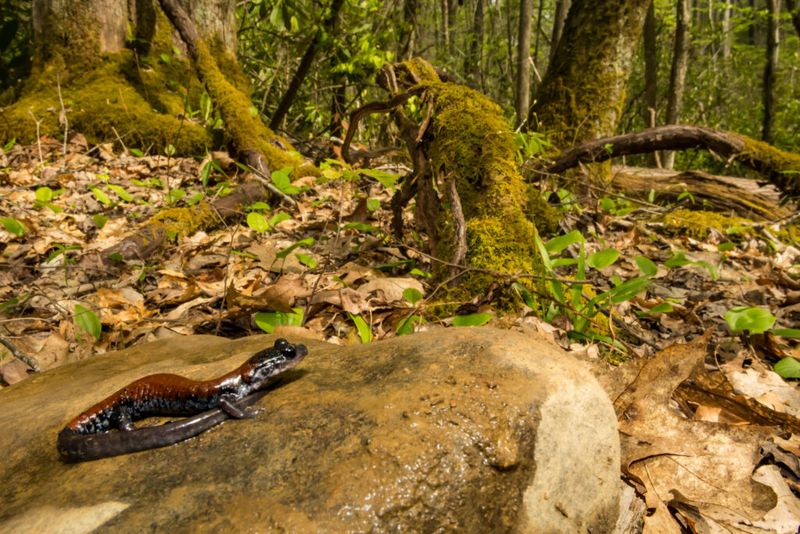
The best thing you can do when you find a salamander is take a photo and put the log back. Photographing the animal in place gives you a record you can share with a local herpetologist, naturalist group, or wildlife authority for identification without disturbing the animal or its habitat.
Handling the animal adds stress, can transfer skin oils or pathogens, and creates legal exposure if the species turns out to be protected.
North Carolina restricts the taking and possession of state-listed endangered, threatened, and special-concern wildlife, and live possession of many nongame species generally requires authorization. NC Wildlife Resources Commission nongame possession rules and collection regulations cover these restrictions in detail.
Because a backyard sighting rarely comes with a confirmed species identification, collecting an animal carries real legal risk even when the intent is benign.
Moving or releasing salamanders creates a different set of problems. Relocating an animal to a new site can spread fungal pathogens or parasites, introduce a species to an area where it does not belong, or place the animal in habitat that does not meet its needs.
U.S. Fish and Wildlife Service guidance on Bsal, a salamander-killing fungal pathogen, specifically flags the movement of amphibians as a disease-transmission pathway.
USGS surveillance for Bsal found no detections in more than 11,000 samples from a major 2016-2017 effort, and ongoing Bsal monitoring continues across North America. That is reassuring, but it does not mean the pathogen is absent.
If you encounter an unusual cluster of sick or dead salamanders, do not handle or move them. Report the observation to your state wildlife agency or USGS wildlife health contacts so professionals can investigate.
CDC guidance on reptiles and amphibians notes that salamanders can carry Salmonella even when they appear healthy. If any contact occurs, wash your hands thoroughly with soap and running water.
Children, elderly individuals, and anyone with a compromised immune system should take extra care to avoid handling amphibians.
The best verdict is encouraging but limited
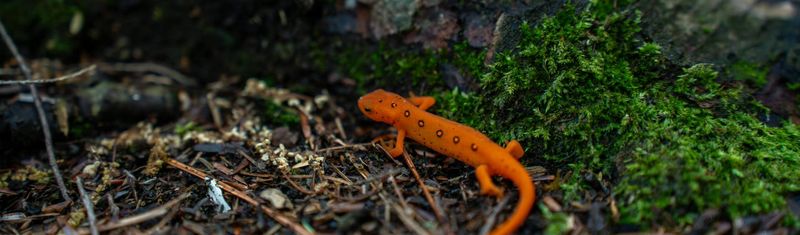
A salamander under a North Carolina log or in leaf litter tells you that one spot in your yard offered the right moisture, shade, coolness, and cover for one animal at one point in time. That is a genuinely encouraging observation.
It means something you are doing, or not doing, allowed that microhabitat to stay intact enough to be usable.
The southern Appalachian research connecting salamander occurrence to soil moisture, leaf-litter depth, and canopy cover reinforces why that kind of localized habitat quality matters. Protecting it does not require a complete yard overhaul.
It requires selective decisions: keep some decaying wood and leaf litter where they are safe and practical, reduce unnecessary pesticide applications, and replace cover objects carefully after a look.
What the sighting does not prove is worth keeping equally clear. One salamander does not confirm that your soil is fertile, that insects are abundant, that contamination is absent, or that your yard qualifies as a complete or thriving ecosystem.
The research on salamanders as indicators is explicit that those conclusions require species-level identification, defined survey methods, and clearly framed environmental questions. A backyard glance provides none of those.
The practical response is straightforward: disturb less, retain suitable cover safely, limit unnecessary pesticide exposure, and let the animal remain wild. A yard that makes room for one small, moisture-dependent creature is already doing something right in that corner, and that is a reasonable place to start.