
Shallow Dips in Your Lawn Can Be Leveled Gradually With Thin Topdressing When Grass Is Growing
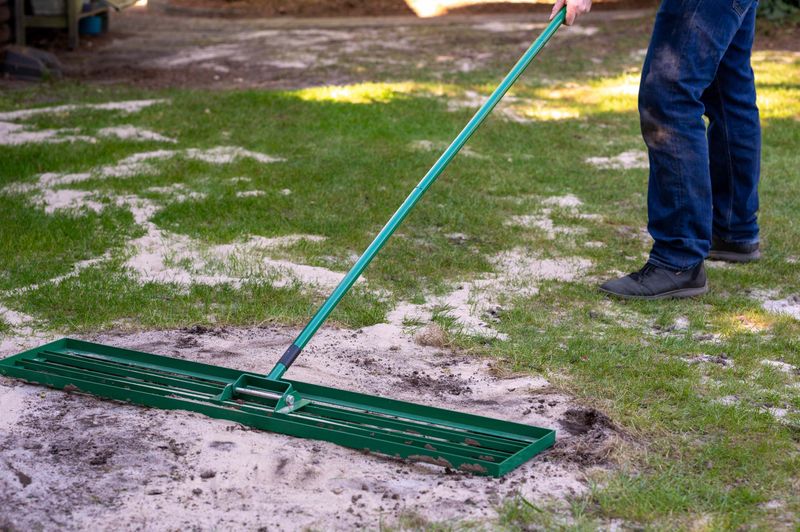
Your mower rolls right over every dip and bump in the lawn, and the ride only gets rougher each season. Cutting the grass does nothing to the soil underneath, so those spots stay put.
For small, shallow low spots, a thin layer of the right material can slowly bring the surface up. Before you grab a shovel, though, it pays to learn which kind of bump you really have.
What kind of bump are you looking at?
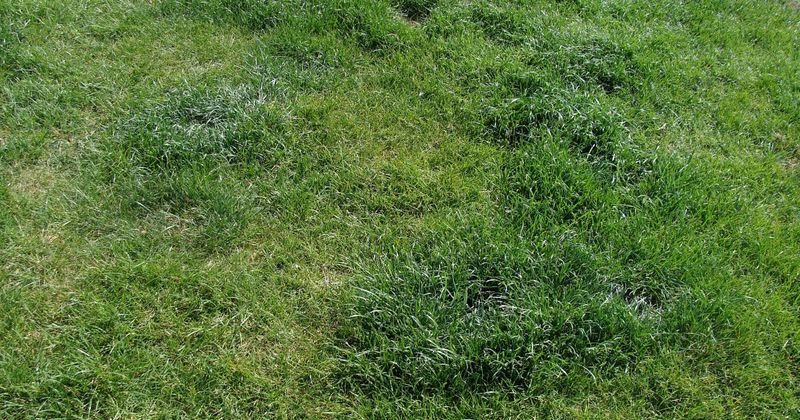
Before any soil goes down, figure out whether the problem is a dip or a lump. A shallow depression sits lower than the grass around it.
A raised mound, a ridge, or a generally rough surface is a different problem, and covering it with more soil will not touch the cause.
University of Minnesota Extension lists several possible causes of uneven turf, including mole ridges and mounds, vole trails, nightcrawler bumps, and ant mounds. Moles push up raised soil.
Vole trails may only look like ridges in the grass. Ants build small mounds.
Looks can hint at the culprit, but they do not always confirm it, so check for signs of activity before you decide.
Earthworm castings are a special case. Earthworms are good for soil, but their castings can make a lawn feel lumpy.
Colorado State University Extension does not recommend soil or sand topdressing to smooth an earthworm-bumpy surface, because layers of different soil can get in the way of water, air, and roots. It notes that compost may smooth the surface for a while.
It also does not recommend insecticides to get rid of earthworms.
So walk the lawn first. Note which spots are truly low and which are raised, and treat only the low ones with soil.
Mowing cannot level soil, and rolling is not a universal fix
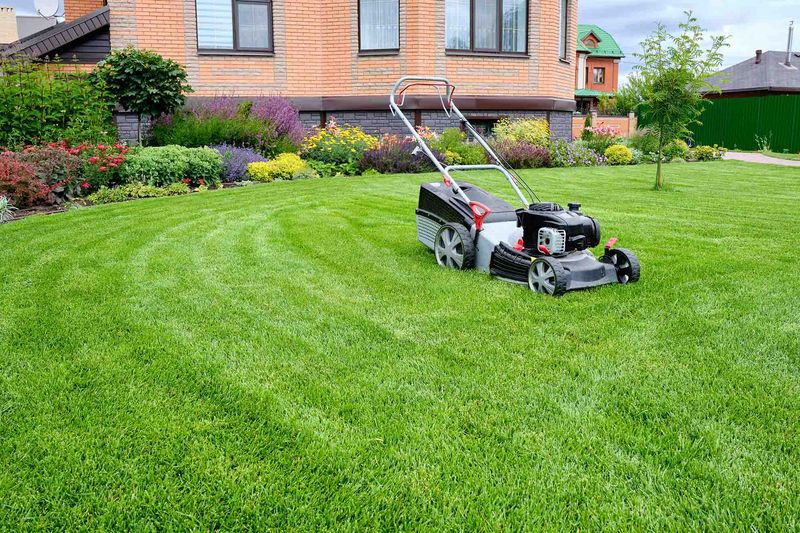
A mower trims grass blades and that is all. It never moves soil, so a dip stays a dip no matter how many weekends you mow.
High spots can even get worse, because the deck can scalp them and leave bare, stressed patches.
Rolling looks like an easy answer, but it is not a cure-all. University of Missouri Extension says rolling is not desirable for uneven lawns and warns that rolling moist soil can cause compaction.
Compacted soil is harder for roots, water, and air to move through.
That does not mean every roller is harmful. Utah State University Extension allows that a light roller may help with bumpiness caused by earthworms.
Heavy rollers, though, can compact soil. Treat the light roller as a narrow exception for that one situation, not a general plan for dips.
If you have a low spot and no earthworm bumps, skip the rental roller. A bucket, a shovel, and a rake are the better match for the job.
Topdressing can fill shallow depressions gradually
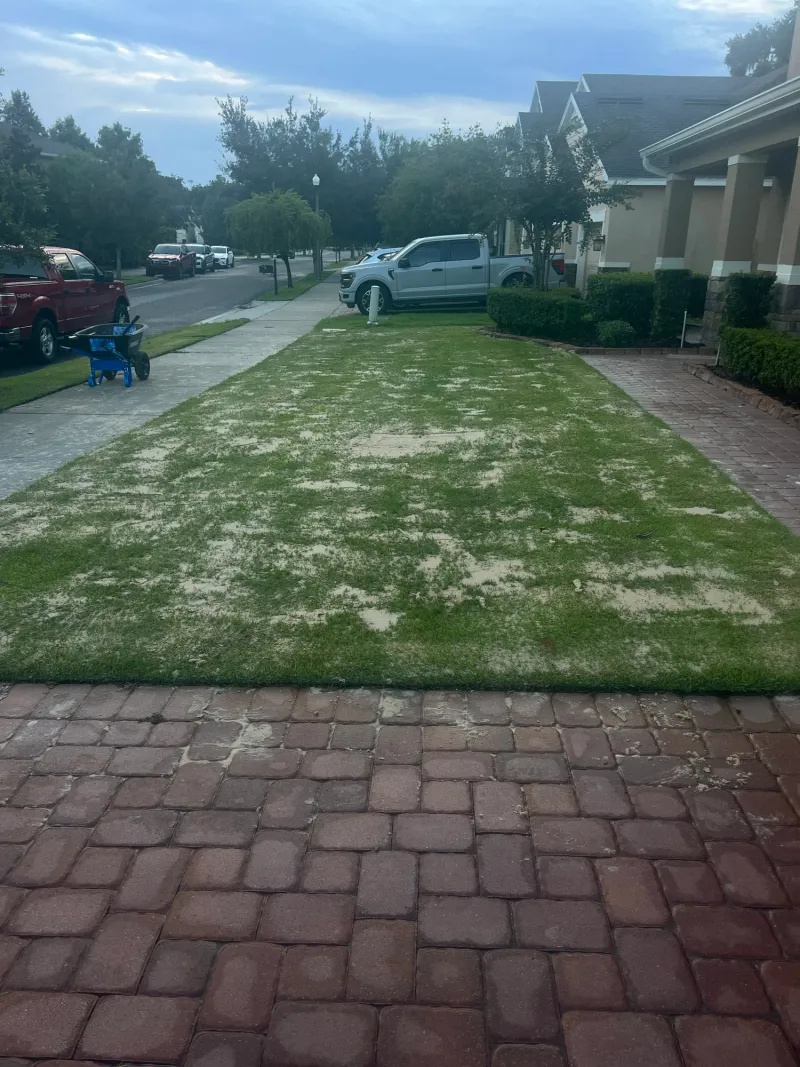
Topdressing means spreading a thin layer of material over turf. On a small, shallow low spot in growing grass, it can slowly raise the surface.
The key word is slowly, because this is a build-up method and not a one-pass patch.
University of Missouri Extension recommends about ¼ to ½ inch at a time, raked down between the grass blades. Shallow depressions can be leveled gradually this way.
Clemson Cooperative Extension likewise describes using a shovel and rake on small areas.
A deep hole is a different story. Piling on a thick layer can smother the grass, so a deep dip needs several thin rounds over time, and some may need other repair.
Expect to repeat the process as the grass grows up through each layer.
Keep the goal clear. Topdressing fills a depression.
It does not fix whatever created a raised mound, a trail, or a patch of castings, so those spots still need a proper diagnosis.
Choose material that suits the soil you already have
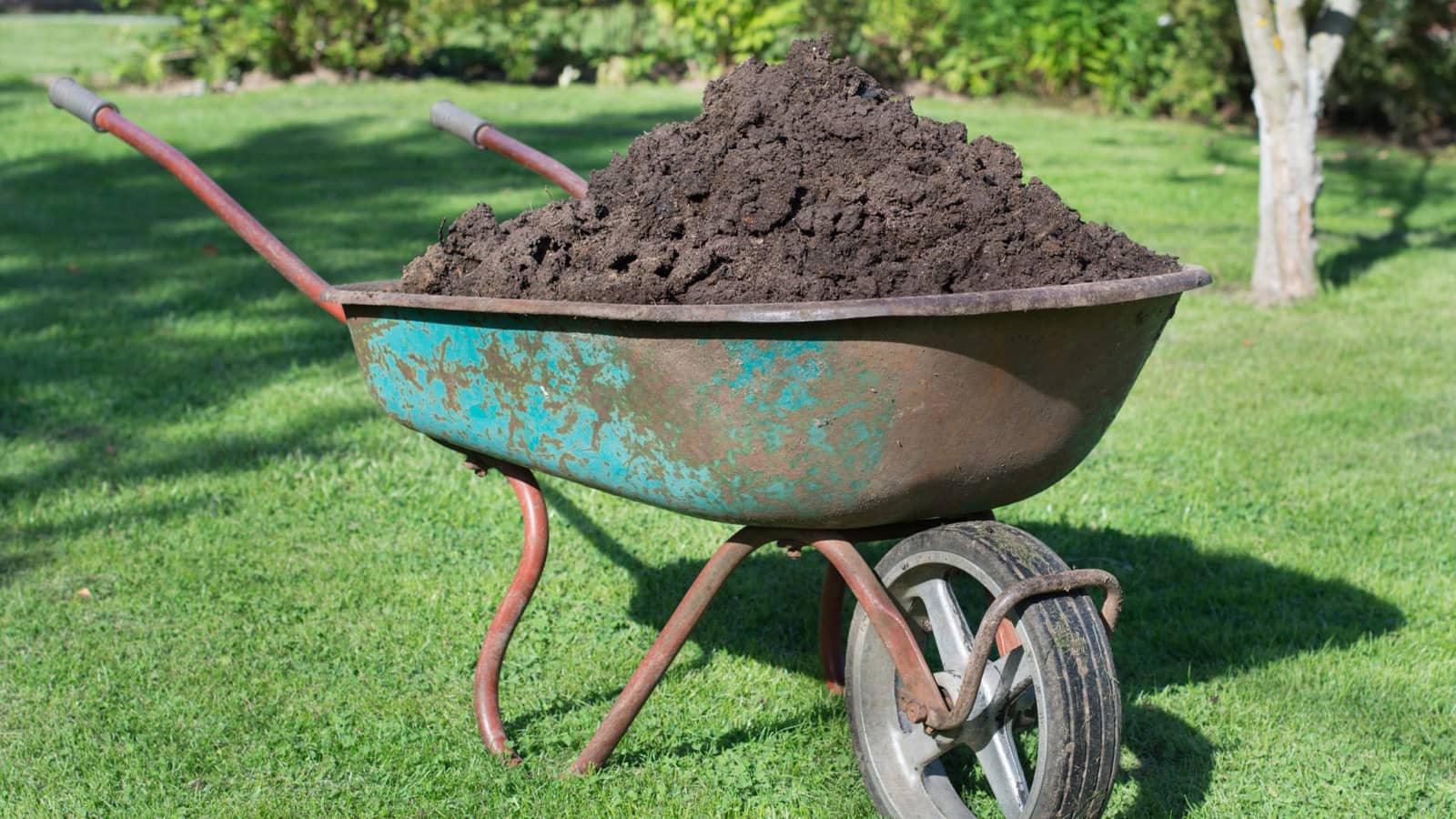
No single mix works for every yard. The safest rule comes from University of Missouri Extension: use topdressing soil with a texture similar to, or coarser than, the soil already in your lawn.
A fine, different material layered over your native soil can cause drainage trouble.
Clemson Cooperative Extension separates the options. Topsoil is its pick for leveling.
Sand is reserved for lawns that already have sandy native soil, so it is not a default choice. Compost can be used on different soil types.
There is a catch with topsoil and sand. Clemson warns that either one may bring in weed seeds, so a bag labeled clean or screened is worth looking for.
Compost can also be handy where your lawn has earthworm castings, though only as a temporary smoother.
If you are unsure what soil you have, grab a handful from the lawn and compare. Sandy soil feels gritty and falls apart.
Clay feels sticky and holds a shape. Matching that feel keeps the repair blending in rather than sitting on top as a separate layer.
Use the grass’s growth period, not the calendar alone
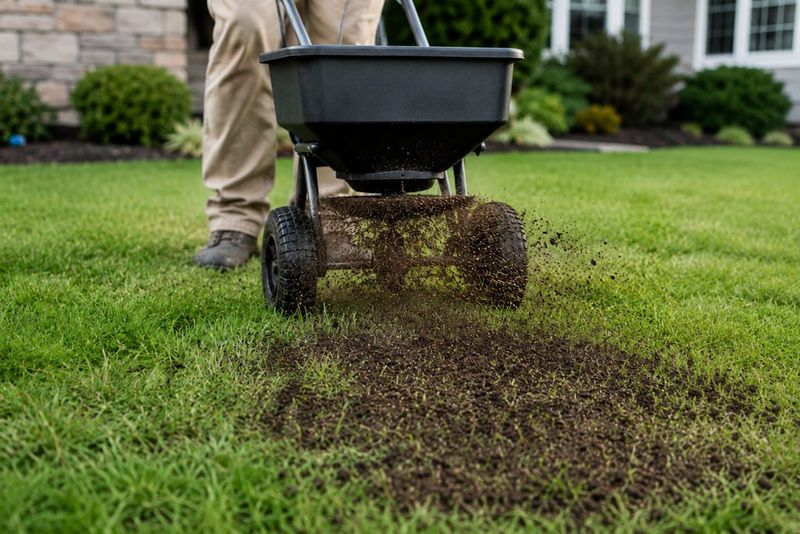
Grass can only grow up through new soil when it is actively growing. For that reason, Clemson Cooperative Extension advises topdressing during active growth and not in summer heat.
A stressed, slow lawn struggles to recover from a covering.
Fall can be a good window for some lawns, but it is not a deadline for every yard. University of Missouri Extension places topdressing in fall as needed in its calendar for cool-season grasses, with timing that is approximate for central Missouri.
A lawn in another region or with a different grass type will run on a different schedule.
For a seasonal comparison, Iowa State University Extension names late summer to early fall as a favorable time for renovation and overseeding of cool-season lawns. That backs up the idea of a fall window for those grasses, nothing more.
So watch the lawn instead of the date. If it is green, growing, and mowed regularly, it is likely ready.
If it is baking or slowing down, wait for better conditions where you live.
Spread a thin layer by hand, then reassess
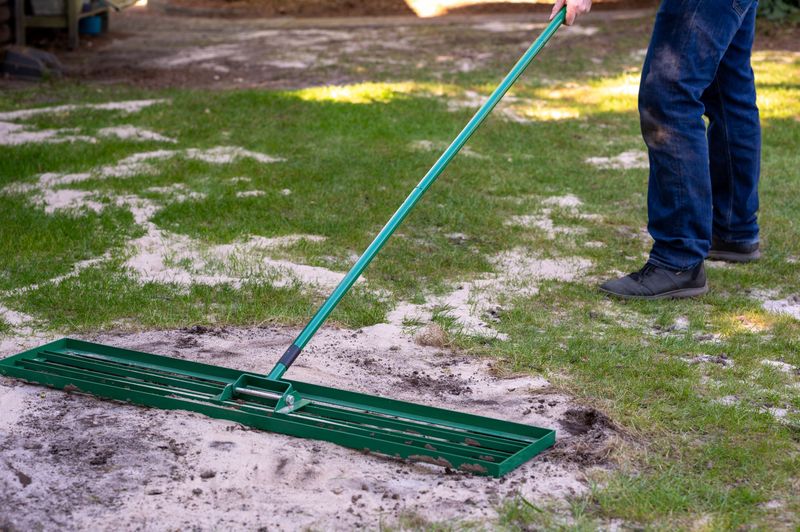
For a small area, you do not need machines. Scoop material from a bucket with a shovel or your hands, scatter it over the low spot, and use the back of a rake to work it down between the grass blades.
Clemson Cooperative Extension describes this shovel-and-light-rake approach for small areas and sets a limit of no more than ½ inch at a time.
Grass needs light to recover. University of Missouri Extension says at least three-fourths of the grass plant should stay exposed after you finish.
If the blades look buried, rake off some material and spread it thinner.
Then wait. Water lightly if the weather is dry, mow as usual once the grass pushes through, and look at the spot again after a few weeks of growth.
If it is still low, add another thin layer.
Nobody can promise that one bucket will cover your lawn, because dips vary in size and depth. Plan on a few rounds and keep your supplies handy.
Aeration is not a required first step. Clemson says it is unnecessary before topdressing when compaction is not a concern.
Slow and thin wins, and the grass does the final leveling for you.