
Snipping The Runners Off Your Strawberry Patch Now Means Bigger, Sweeter Berries Next June
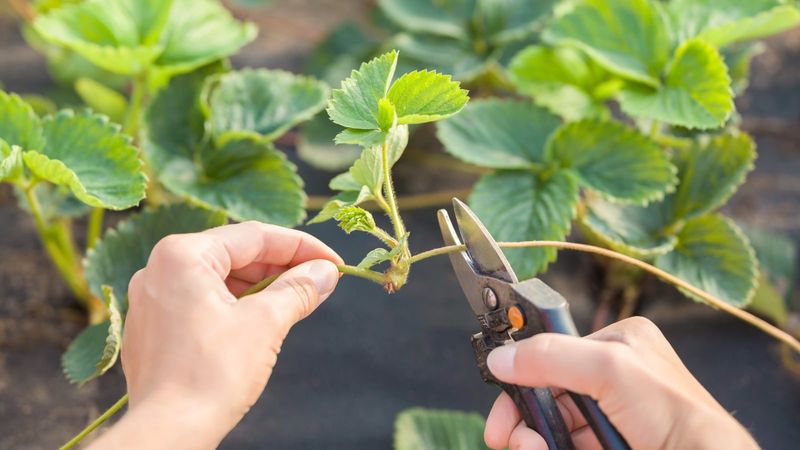
Those long, skinny strawberry runners snaking across your bed in late fall can make you wonder if you should grab the shears. Cut the wrong thing, and you could hurt the plants you want to harvest from next summer.
The truth is more careful than a quick promise of bigger, sweeter berries. A smart fall cleanup depends on your strawberry type, your bed style, and your local winter.
Identify how your strawberry bed is meant to grow
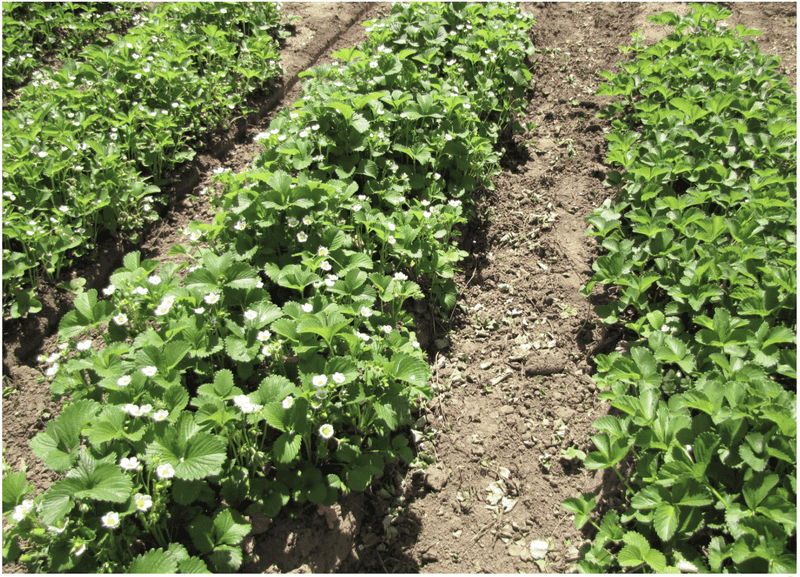
Before you touch a single runner, figure out what kind of bed you have. The same snip that helps one patch can thin out another.
June-bearing strawberries are usually grown in a matted row. In that system, the mother plants send out runners, and selected daughter plants root nearby to fill and renew the row, as described in University of Minnesota Extension home garden guidance.
Runners that wander into the aisles or crowd the row can be removed or redirected, but the daughters you need should stay.
Hill-style beds work differently. Each plant is kept as a single clump, so most runners are removed to keep the plants spaced out.
Many day-neutral strawberries are also managed by removing runners, though advice varies by system, as noted in Illinois Extension strawberry guidance.
If you are not sure which type you planted, look at the bed. A solid band of plants about a foot or two wide suggests a matted row.
Evenly spaced single plants with bare soil between them suggest a hill system. Old plant tags, purchase records, or a photo sent to your local extension office can help confirm the variety.
Remember that the calendar alone does not decide what to cut. Your bed’s intended structure does, and winter timing differs a lot across the country, as Oregon State University Extension makes clear in its own regional advice.
Runner control can help some beds, but it is not a universal fix
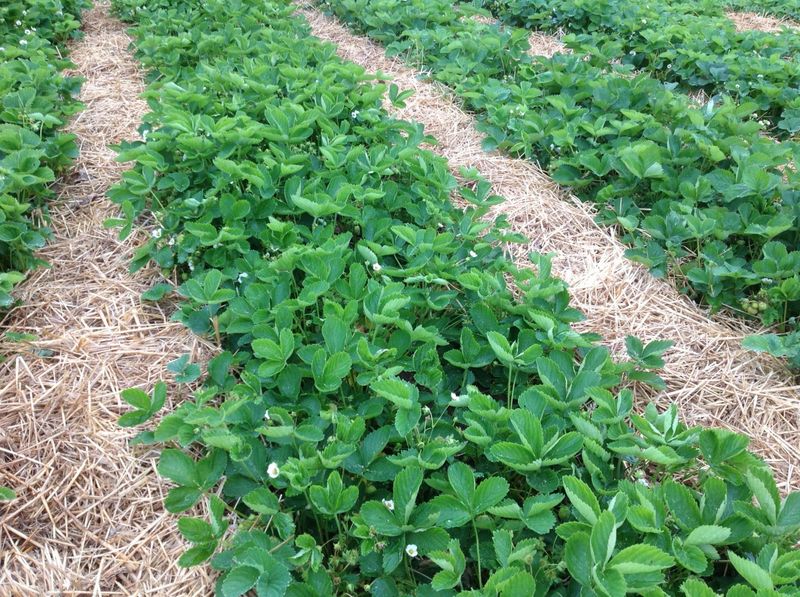
Gardeners remove late runners for a sensible reason. Runners pull energy and space, and a crowded bed can leave plants shaded and stressed.
UConn’s home garden factsheet recommends removing fall runners to encourage bud and branch-crown development.
That advice has limits. Guidance from NC State Extension covers newly transplanted commercial plants, and it says to wait three to four weeks after transplanting before the first runner removal.
That is a specific, tested practice for one setting, not a rule that any runner cut in November will boost next summer’s crop.
Research shows the same pattern. A 2024 study in the Journal of Extension found higher yield after stolon removal for one day-neutral cultivar, Cabrillo, grown outdoors in a soilless tabletop system.
Few backyards look like that.
Meanwhile, a tunnel study of everbearing Favori plants found that runner removal did not significantly change yield during the first fruit flush. Different plants, different setup, different result.
Neither study tested whether trimming makes berries sweeter. So treat runner control as a tidy-up that may keep some beds from getting overcrowded, not as a promise of bigger fruit.
Cut unwanted runners without damaging the crown
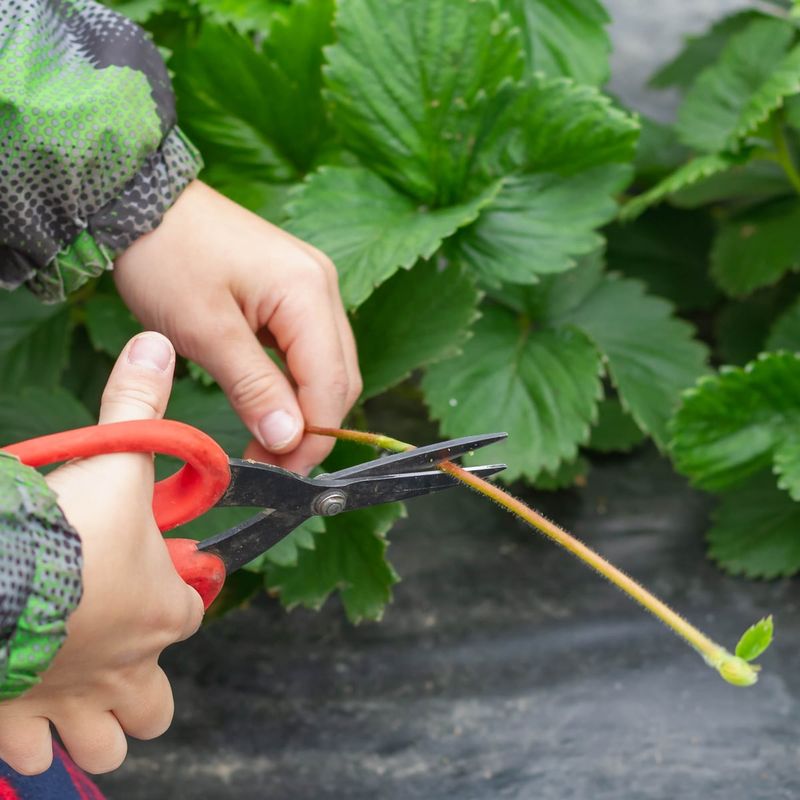
Worried about hurting your plants? Slow down and use the right tool.
Hand shears or small scissors give you the control you need to snip a runner cleanly.
The crown is the short, central stem at the base of the plant where new leaves and flower buds start. Damage there can reduce yield, which is why NC State Extension points to careful hand work.
Skip the mower and the string trimmer, and never cut down low into the middle of the plant.
Follow each runner back toward the mother plant and cut it a little way out, leaving the crown alone. Pull aside leaves so you can see exactly where the cut lands.
If a runner has already rooted, lift the baby plant with a hand trowel or snip the connecting line.
Now sort what you find. Runners reaching into walkways or crowding a hill-style planting are good candidates for removal.
In a June-bearing matted row, leave the daughter plants you need to keep the row filled, a point supported by both University of Minnesota Extension and Oregon State University Extension.
A good rule of thumb is to keep it selective. You are editing the bed, not clearing it.
Keep healthy leaves and skip late-season renovation
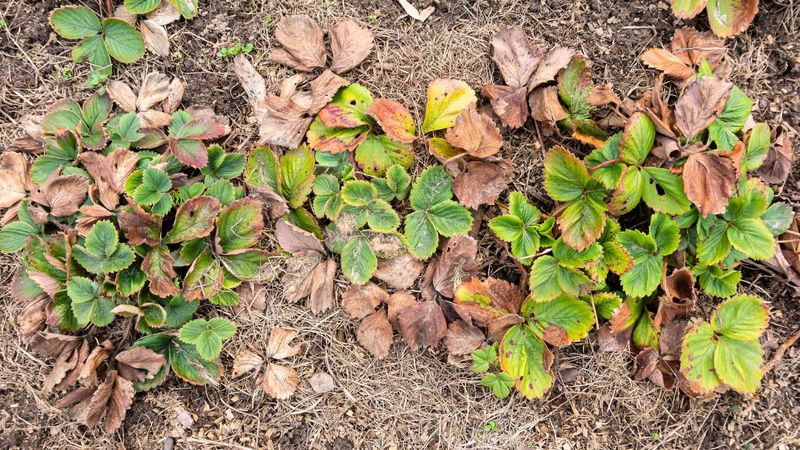
Tidy does not mean scalped. Trimming a few runners is very different from cutting back the whole plant, and mixing the two up is where gardeners get into trouble.
Healthy fall leaves still do useful work. According to Oregon State University Extension, even dead leaves offer some crown protection in winter, so there is no need to rush them off.
Renovation, the mowing or thinning that refreshes a June-bearing bed, belongs shortly after harvest. UConn Extension’s renovation guide places it in the weeks after picking, when plants have time to regrow.
Doing it in late fall can damage the flower buds that formed for next year.
Here is a simple boundary to remember. If you are holding shears and aiming at a thin runner, you are on safe ground.
If you are reaching for the leaves, the crown, or a mower, stop.
One exception is worth knowing about. Leaves that are clearly diseased or moldy can be picked off and thrown away, since they are not helping the plant.
Healthy green or reddish leaves should stay on through winter.
Use winter straw only when local conditions call for it
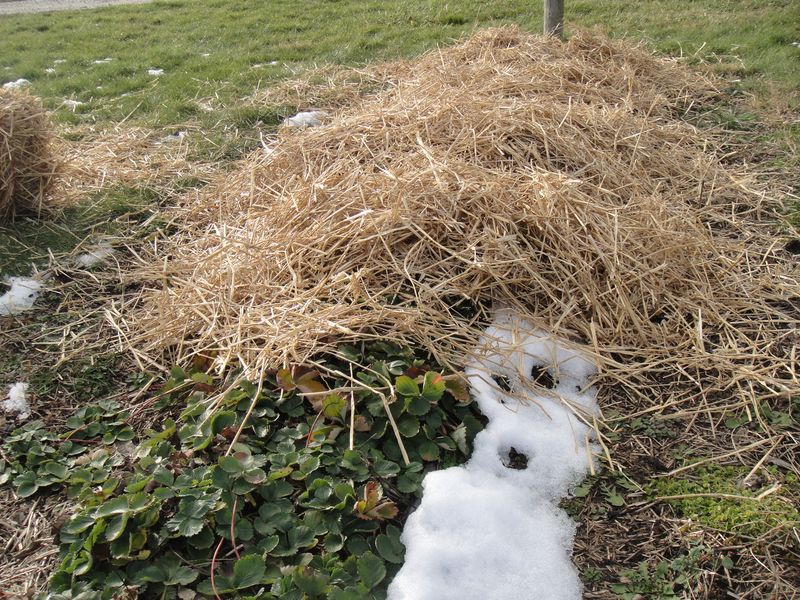
Straw is a blanket for dormant strawberries, but not every garden needs one. In cold-winter areas it insulates the crowns and smooths out swings between freezing and thawing.
Minnesota gives a clear example of regional guidance. University of Minnesota Extension advises waiting until soil temperatures stay at or below 40 degrees F for three days in a row.
Its home garden page suggests a 4 to 6 inch layer after hardening frosts. Those numbers fit Minnesota winters, not every yard in the country.
Wet winters change the answer. Oregon State University Extension warns that winter straw can promote rot in western Oregon and other places with heavy winter rain.
If your plants sit in soggy ground most of the season, a thick cover could do more harm than good.
So watch your own conditions. Are plants dormant?
Have hard frosts arrived? Does your soil stay wet for weeks?
Your answers matter more than the date on the calendar.
It also helps to separate two uses of straw. Winter cover protects dormant crowns.
Straw tucked between plants later in the season suppresses weeds, holds moisture, and keeps berries off the soil.
Rake winter straw back as spring growth resumes
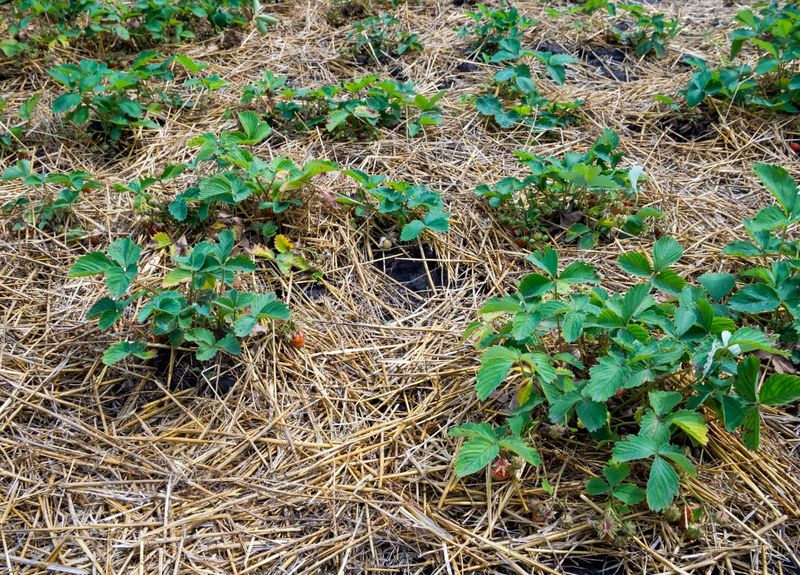
Spring is the second half of the straw story. Once plants wake up, the blanket needs to come off the crowns, but not on a fixed schedule.
Timing matters in both directions. University of Minnesota Extension explains that leaving straw on too long can delay harvest, while pulling it too early can expose plants to frost.
Check your plants every few days as the weather warms. Peek under the straw for pale yellow new growth, which is a sign that it is time to start raking.
Keep an eye on the forecast too, and keep extra straw handy to pull back over plants if a hard frost is coming.
You do not need to remove every strand. Rake the straw off the crowns and into the spaces between plants, where it can suppress weeds, conserve moisture, and keep fruit cleaner, as described on the University of Minnesota home garden page.
No national date works here. A garden in a mild climate may see growth in late winter, while a northern bed may wait until well into spring.
Let the plants and the weather set your schedule.
Small berries can have several causes
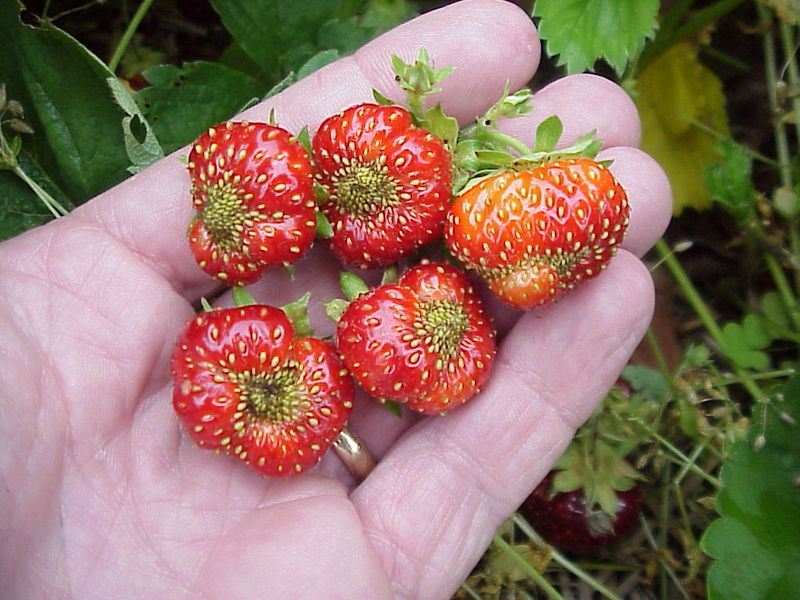
Here is the honest bottom line. Cutting runners and covering plants in winter can support a healthy bed, but neither one guarantees bigger or sweeter fruit next year.
If berries come up small, look wider. University of Minnesota Extension lists poor pollination, frost, overcrowding, weeds, old beds, nutrient problems, dry soil, pests, and disease as possible causes.
Misshapen fruit often points to pollination trouble, since more pollinated seeds support larger berries.
Ask a few practical questions. Did a late frost hit the blooms?
Was the soil dry while fruit swelled? Are the plants several years old or packed together?
Are weeds crowding the roots?
Variety matters too. Penn State Extension describes cultivars that differ in flavor and fruit size.
Harvest timing also varies by place. Minnesota’s June-bearing crop arrives from mid-June to early July, according to the home garden guide, and yours may differ.
So manage the bed for its system and your local winter, then judge any fruit problem in context. A good fall cleanup protects the plant.
The berries answer to the whole season.