
Some Leaf Litter Under Your North Carolina Oaks Can Support Insects and May Help Feed Your Spring Birds
Raking every leaf off the yard feels tidy, but it may cost the small creatures that spend winter tucked underneath. A new study looked at what happens to insects when homeowners remove their fall leaves.
The results are useful for anyone who loves hearing wrens and chickadees in spring. The full story is more careful than a simple slogan, and that makes it more helpful.
What the leaf-removal study shows—and what it does not
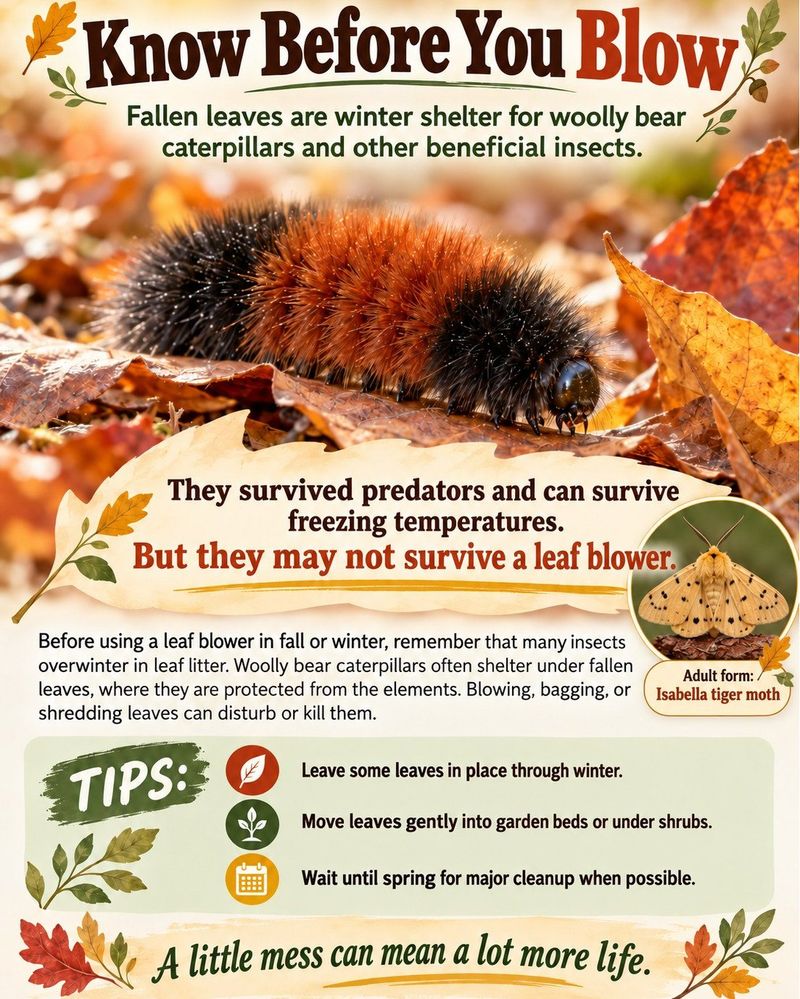
Here is the strongest evidence we have. A 2025 experiment tested what happens when homeowners rake away autumn leaves, working in pesticide-free residential yards in Maryland.
According to the published study, removing leaves reduced the spring emergence of arthropods overall by 17%.
Moths and butterflies took a bigger hit. Their emergence dropped by 45%, and their diversity fell by about 40%.
Those are separate results, so the 17% figure covers all arthropods together, while the larger numbers apply only to moths and butterflies.
Notice where this work happened. The yards were in Maryland, not North Carolina, though our Piedmont, Coastal Plain, and mountain yards share many leaf-litter habitats and plenty of overwintering insects.
It makes sense to treat the findings as a strong hint for our own backyards rather than a guarantee.
Also notice what the researchers measured. They counted arthropods emerging in spring.
They did not track what birds ate, how fast nestlings grew, whether nests succeeded, or how many songbirds lived in the area.
So the study backs a clear, modest claim: some retained leaves help overwintering insects, and clearing every leaf has a real ecological cost. It does not prove that the leaves under your oak lead to more fledglings.
That bigger chain is plausible, but nobody has tested it here.
Some insects use leaf litter, but not every oak leaf is a nursery
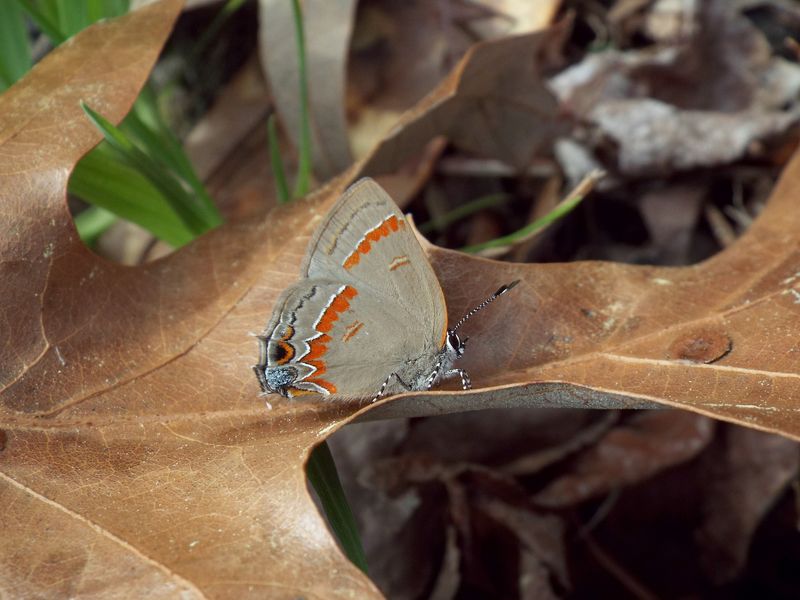
Picture a red-banded hairstreak, a small North Carolina butterfly with a rusty stripe across its wings. NC State Extension says it lays eggs on fallen leaves, and the tiny caterpillars that hatch use those leaves as food.
UF/IFAS adds that the larvae feed on dead leaves and detritus in the litter.
That is a concrete case of leaves feeding and sheltering an insect. It is just one species, though.
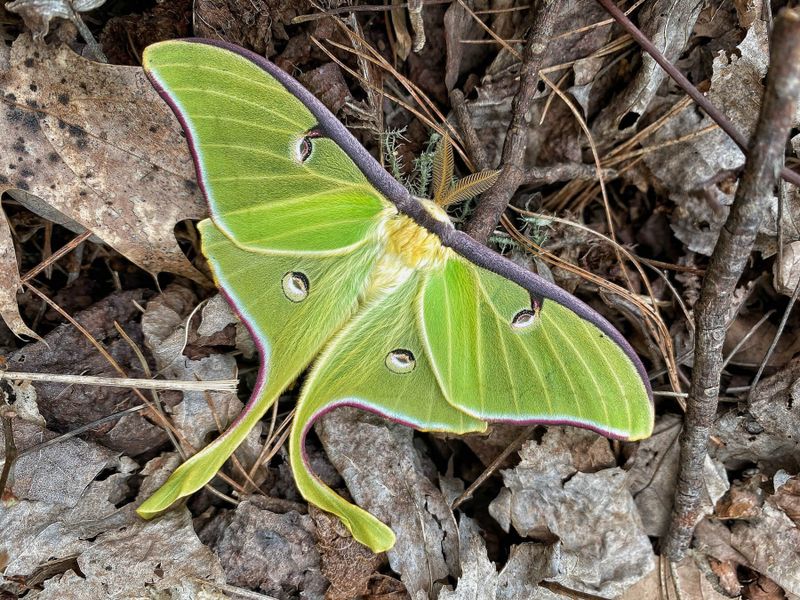
Plenty of other insects pass the winter as eggs, larvae, pupae, or adults, and some choose stems, bark, wood, or soil instead of leaves. Luna moth cocoons, for example, may drop into litter, but that does not make every leaf pile a storehouse of pupae.
Living oaks play a different role. NC State’s butterfly guide lists oaks as host plants for several butterfly species, meaning caterpillars chew the living foliage in spring and summer.
That is a separate benefit from the dead leaves on the ground.
Keep the two ideas apart. A caterpillar hiding in your litter did not necessarily grow up on the oak above it, and fallen oak leaves are not the food for every creature living there.
Leaf litter is one useful habitat among several, so a patch of it adds to your yard without being a nursery in every leaf.
Birds connect to this habitat through a wider food web
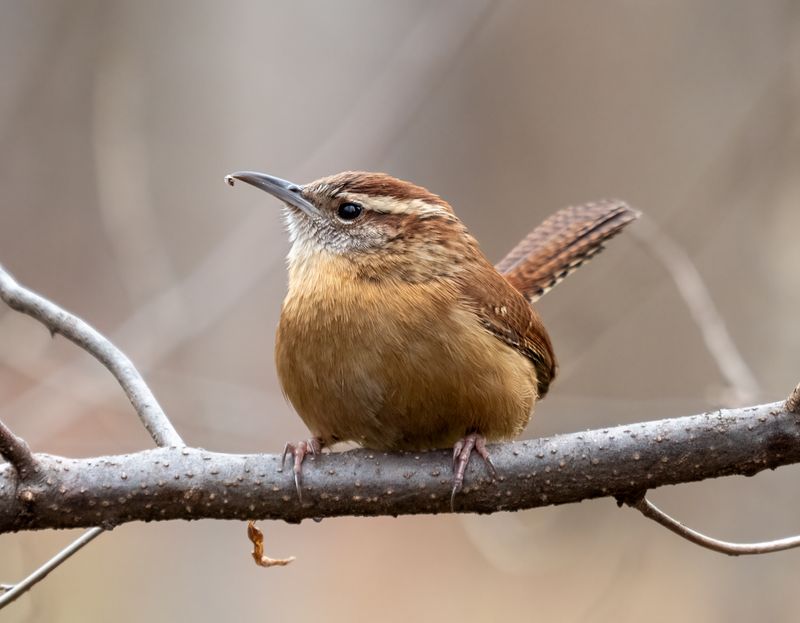
Songbirds do not read the leaf-litter study, but they do eat insects, and that is where the possible link lives. The Cornell Lab’s Carolina wren profile describes a bird that eats caterpillars and other insects and forages on or near the ground, including in leaf litter.
If you have ever watched a wren flip leaves along a bed edge, you have seen it at work.
Chickadees are a different story. According to the Carolina chickadee life history, they eat mostly insects and spiders outside winter, but they glean them mainly from foliage and tree bark.
Their hunting grounds sit higher up, so they are a weaker example of a litter feeder.
Here is the honest picture. Both birds eat insect prey, and a yard with more insects overall may offer a richer food web.
Nothing cited here shows that either bird depends on insects emerging from leaf litter, or that a leaf patch improves nest success.
Think of it as a plausible, indirect benefit. A wren may find more to eat near litter, and chickadees may gain from the wider insect community that healthy habitat supports.
It is a reasonable reason to keep some leaves, but it is not a promise.
Keep a leaf patch where your yard can use it
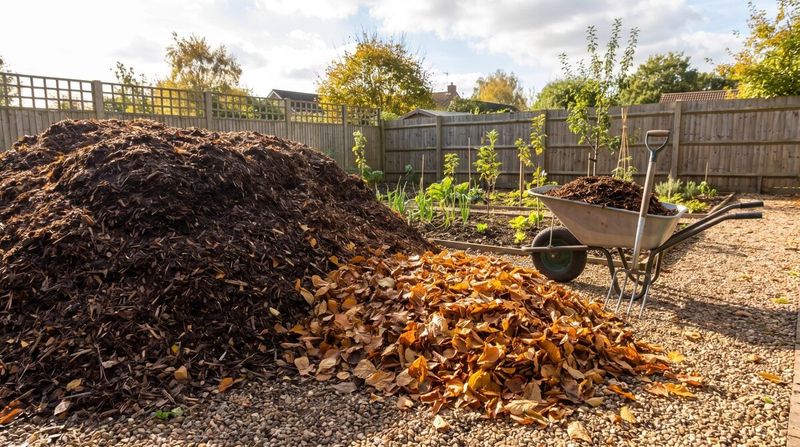
You do not have to choose between a spotless yard and a wild one. Try keeping leaves in garden beds, around tree bases, or in a low-traffic corner where nobody walks or plays.
A patch under a native shrub or along a back fence is a good start.
Lawns need different treatment. The City of Raleigh suggests leaving leaves in place where cleanup is unnecessary or moving them into beds, and it advises against thick layers on grass.
A heavy blanket of whole leaves can smother turf over winter.
So move some leaves off the lawn this weekend. Rake them into bed edges, pile a modest layer around the base of your oak, or tuck them behind the shed.
NC State Extension also recommends moving some leaves from lawns to beds or tree bases, and mentions shredding or mulching as another option where it fits.
Shredded leaves can stay on the lawn in a thin layer, and they break down faster. Whole leaves in beds give insects more shelter.
Mix the two approaches across your property instead of treating every square foot the same.
Leaf retention is not risk-free, and it works best as selective habitat. A few well-placed patches do more good than a thick layer everywhere.
Set boundaries around paths, play areas, drains, and structures
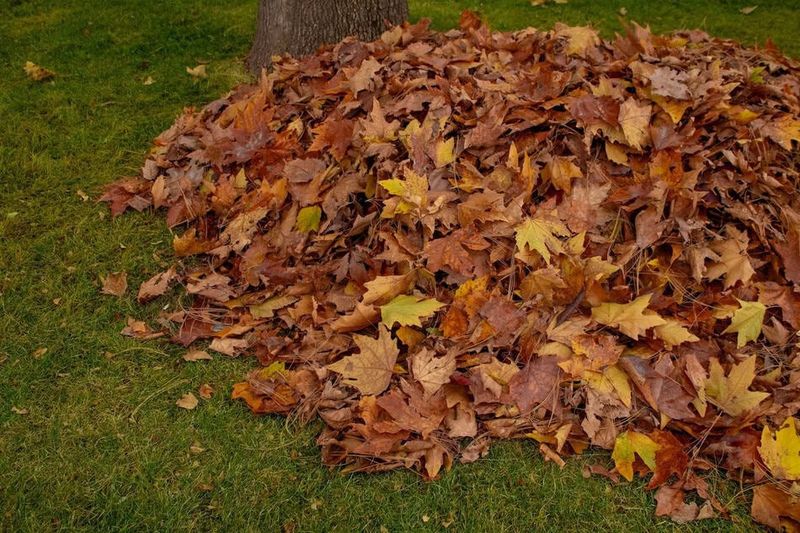
Ticks are a real worry for North Carolina families, and damp, shaded leaf litter can favor them. Henderson County Public Health recommends clearing litter and brush around houses and at lawn edges, and using a dry wood-chip or gravel barrier between play or lawn areas and woods.
Put that advice to work by clearing leaves near doors, paths, play spaces, and the lawn edges your family uses. Then keep your leaf habitat farther away, in back corners and beds, where feasible.
A buffer strip of chips or gravel gives you a clear line between the two.
Streets and storm drains need attention too. Raleigh notes on its leaf guidance page that leaf-clogged drains can contribute to street flooding.
Sweep leaves from the curb and gutter so they stay in your yard instead of washing into the road.
If you live in a wooded or wildfire-prone setting, dry leaves are combustible. Check NC State’s fire-resistant landscaping guidance and talk with your local fire officials before deciding how much litter to keep near buildings.
There is no single safe distance or amount that fits every property, so local advice matters here.
Choose a useful patch, not an all-or-nothing rule
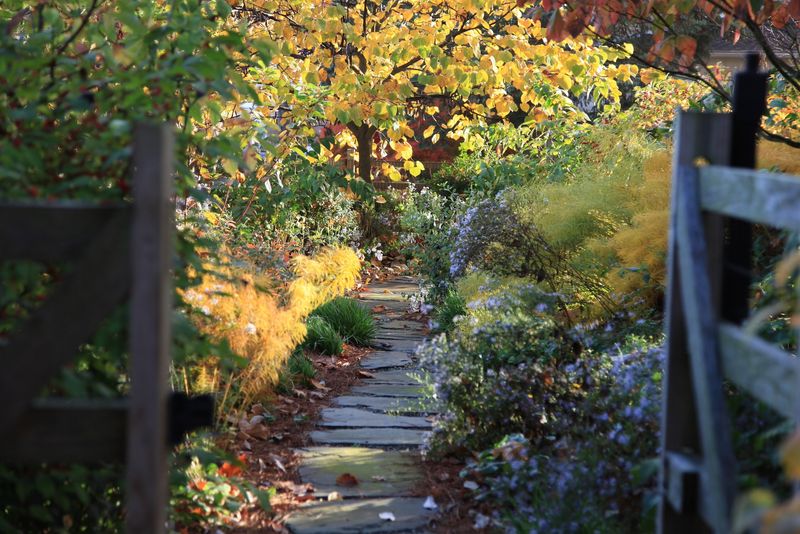
Keep leaves where they suit your yard, and clear them where people, turf, drainage, or fire guidance say otherwise. A leaf patch can shelter insects and feed a wider food web, though it cannot promise that a certain leaf will feed a certain bird.
Even so, a small patch is a kind gesture to the quiet life underfoot. Rake with a purpose, and let the wrens do the rest.