
That Wolf Spider Sprinting Across Your Kitchen Floor Is Eating Hundreds Of Pests You Never See
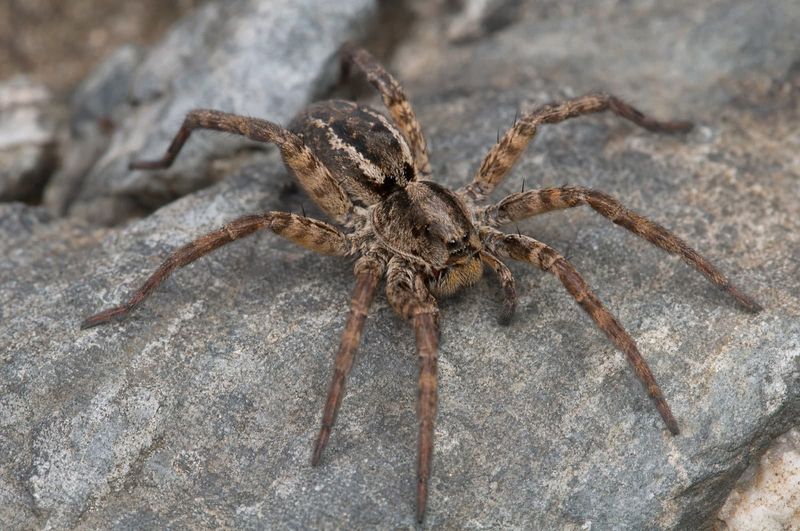
Spotting a large, fast spider racing across your kitchen floor is enough to make anyone jump. Many people assume it must be a wolf spider, and then wonder whether it is quietly taking care of a hidden roach problem.
The truth is more nuanced than the popular story suggests, and understanding it helps you make a calm, informed decision about what to do next.
A fast spider is not automatically a wolf spider
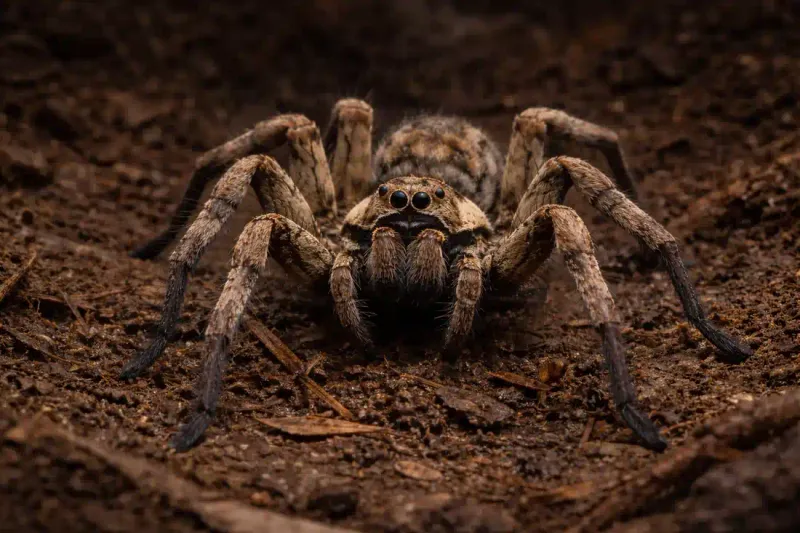
Speed catches the eye, but it does not settle an identification. Several spider families produce fast-moving, ground-dwelling hunters, and a brief glimpse of something brown and quick crossing your kitchen floor leaves a lot of room for error.
Rushing to a label based on movement alone can send you in the wrong direction before you have looked closely at the spider at all.
Wolf spiders belong to the family Lycosidae and are genuine roaming hunters. Rather than spinning a sticky capture web and waiting, they chase prey on foot across open ground.
Oregon State University Extension notes that wolf spiders are generally shy and that some individuals do wander indoors, particularly in fall when outdoor temperatures drop. They tend to stay low, hug walls or baseboards, and move in short, rapid bursts rather than in a straight line.
What actually separates a wolf spider from a look-alike is physical detail, not pace. Wolf spiders have a distinctive eye arrangement: eight eyes set in three rows, with a large middle row that gives them relatively good vision for a spider.
Body coloring is usually brown, tan, or gray with darker stripes or mottling along the back. Size varies widely by species, from about half an inch to well over an inch in body length.
Without getting a steady look at those features, calling any fast spider a wolf spider is a guess. Other species, including certain sac spiders and ground spiders, can look similar at a glance.
If a confident ID matters to you, a clear photo reviewed by a local cooperative extension service is a more reliable route than speed alone.
Wolf spiders can eat cockroaches—but that is not the same as control
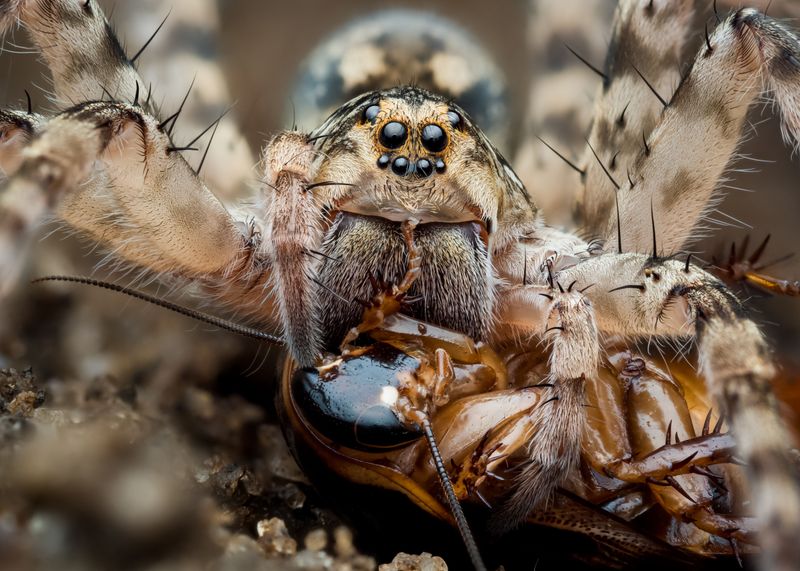
Cockroaches are genuinely on the menu for wolf spiders. UF/IFAS Extension lists roaches among the insects wolf spiders typically eat, which makes sense given that wolf spiders hunt on the ground at night, the same time and space cockroaches prefer.
An encounter between the two is plausible, and a wolf spider that finds a roach will very likely try to take it.
Plausible, though, is not the same as reliable. For a spider to meaningfully reduce a cockroach population, it would need to encounter roaches often enough, catch enough of them, and do so faster than the roaches reproduce.
Cockroaches can produce dozens of offspring per egg case, and a single female German cockroach can generate hundreds of descendants in a year under favorable conditions. One spider hunting along a baseboard at night is not operating at that scale.
There is also a practical gap between laboratory conditions and a real home. In a controlled setting, you can put a spider and a roach together and observe what happens.
In a kitchen, the spider has to find the roach first, which depends on the layout of the space, how many hiding spots are available, and how many roaches are actually present. None of those variables favor the spider in a home with an established infestation.
Thinking of a wolf spider as a useful opportunist is fair. Thinking of it as a pest-control strategy is a stretch the evidence does not support.
The spider may catch an occasional roach, and that is worth knowing, but it is not a reason to count on the spider or to delay addressing a real cockroach concern.
Field studies cannot count the pests your kitchen spider eats
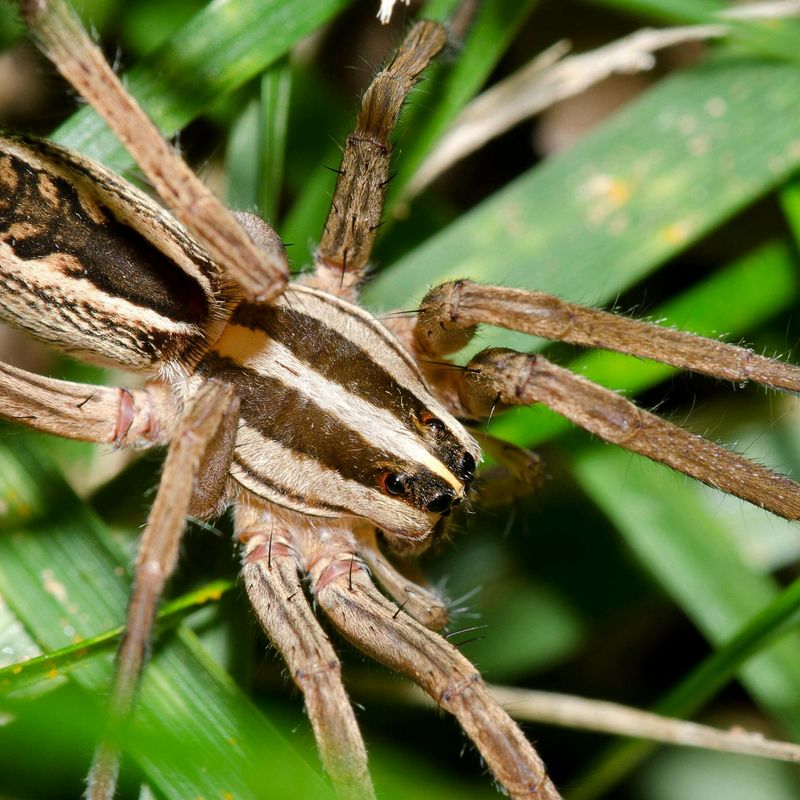
A claim that one kitchen spider eats hundreds of pests sounds precise, but it does not come from kitchen research. The numbers most often cited trace back to European agricultural studies conducted in crop fields, not homes, and translating those figures to a U.S. household spider stretches them well past what the original researchers were measuring.
A 1988 study by Nyffeler and Benz examined wolf spiders of the genus Pardosa living in Swiss winter wheat fields. By analyzing gut contents and observing feeding behavior, the researchers estimated that certain adult female spiders caught roughly one prey item per day during peak activity periods, while other adults caught fewer.
The prey they identified most often were small flies, springtails, and aphids, which are abundant in crop fields. Cockroaches were not a notable part of what those field spiders were eating.
A separate meadow study by Nyffeler found low observed feeding frequency and specifically cautioned against using laboratory feeding rates to project how much a wild spider eats in the field. The real-world numbers were considerably more modest than what controlled experiments might suggest.
Both studies were designed to understand agricultural predator communities, not household pest dynamics. The spiders were living in open fields with dense populations of small insects, a very different environment from a kitchen with occasional roach activity.
Prey availability, spider density, temperature, season, and habitat all shaped those results in ways that simply do not transfer to a single spider in your home.
Feeding rates from a Swiss wheat field in 1988 cannot tell you how many pests the spider under your refrigerator ate last night. The honest answer is that nobody has measured that, and the field data that exists does not fill the gap.
What does one spider sighting tell you about roaches?
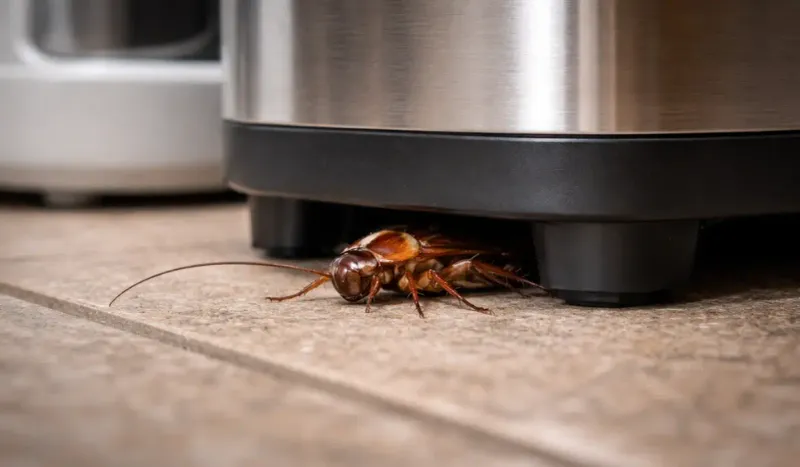
Seeing a spider cross your kitchen floor does not tell you much about roaches one way or the other. A wolf spider may have wandered in from outside through a gap around a pipe or door frame, and it may be hunting whatever small insects happen to be present, which could include roaches or could just as easily be beetles, silverfish, or other common household insects.
Treating a spider sighting as either proof of a roach problem or proof that roaches are being handled lets one observation carry more weight than it can reasonably hold. If you have a genuine concern about cockroaches, the right move is to look for actual cockroach signs: droppings that resemble dark pepper grains or small cylinders depending on the species, egg cases tucked behind appliances, a musty odor in enclosed spaces, or live roaches seen at night near food or water sources.
EPA guidance on integrated pest management starts with identifying and monitoring the specific pest before taking action. Knowing whether you actually have cockroaches, which species, and how many gives you the information needed to respond proportionately.
Acting on a spider sighting alone skips that step entirely.
If monitoring turns up no cockroach evidence, there may be nothing to address beyond the spider itself. If it does turn up evidence, you have a clearer picture of what you are dealing with and can move forward with steps that are actually targeted at the problem.
You can move the spider outside without handling it
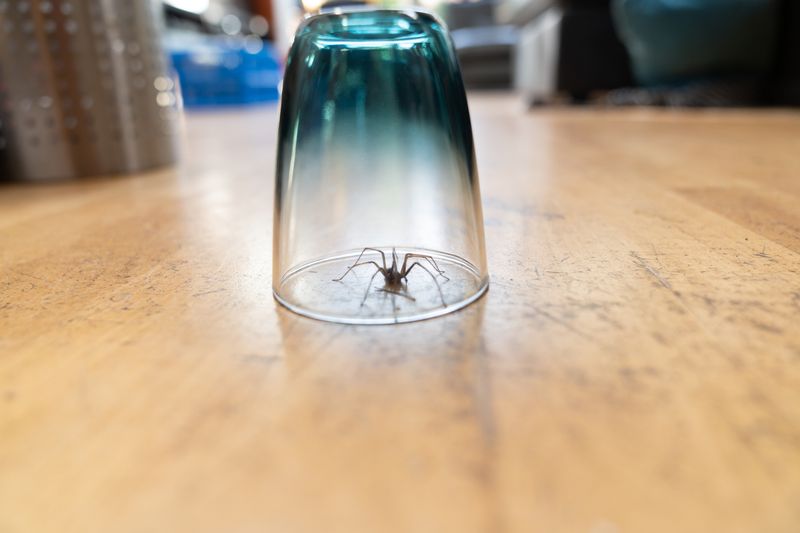
Relocating a spider is straightforward and does not require touching it. UC IPM recommends placing a jar or sturdy cup over the spider, then sliding a stiff piece of paper or cardboard underneath to create a sealed bottom.
Hold the paper firmly against the rim, carry the jar to an outdoor area away from your entry points, and tip it to release the spider into a garden bed or along a fence line.
The method works because it keeps your hands away from the spider entirely. Direct handling is worth avoiding for any spider species.
Wolf spiders can bite if they feel cornered or are pressed against skin, such as when someone reaches into a shoe or grabs clothing off the floor without shaking it first. Colorado State University Extension describes wolf spiders as shy and not aggressive toward people, but shyness does not mean incapable of biting under the right circumstances.
Bites from wolf spiders are generally not considered medically significant for healthy adults. Clinical documentation of wolf spider bites typically describes localized pain, redness, and mild swelling that resolves without treatment.
That said, individual reactions vary, and anyone experiencing severe pain, spreading redness, nausea, or symptoms that seem out of proportion to a minor bite should contact a medical provider. Wolf spiders do produce venom, so describing them as nonvenomous would be inaccurate; the more useful point is that their bites rarely cause serious effects.
Releasing the spider outside is a reasonable choice that takes about thirty seconds and puts the spider back in its preferred habitat.
Cockroach prevention starts with the conditions that attract them
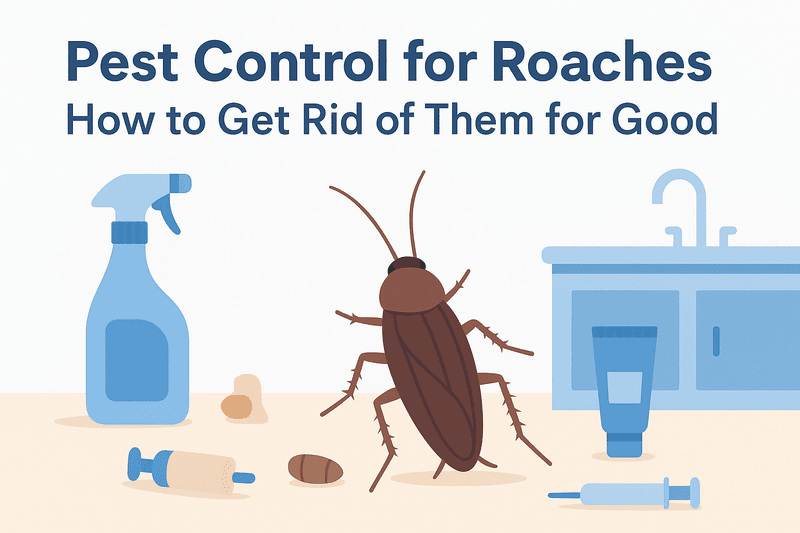
Cockroaches need three things to establish themselves in a home: food, water, and shelter. Removing or reducing those conditions is the most durable first step, and it works regardless of whether a spider is present.
Start by storing food in sealed containers, wiping up crumbs and spills promptly, and keeping pet food dishes empty overnight. Fix any dripping pipes or faucets under sinks, since moisture attracts roaches as reliably as food does.
Sealing entry points comes next. Cockroaches enter through gaps around plumbing, cracks along baseboards, and spaces under doors that do not have proper door sweeps.
Caulk, weatherstripping, and steel wool in larger gaps are inexpensive and reduce the number of ways roaches can get inside in the first place. Clutter in cabinets and along walls gives roaches places to hide and reproduce, so reducing it removes shelter without any chemical involvement at all.
EPA integrated pest management principles place these preventive steps before any chemical response. If prevention alone does not resolve the problem, cockroach baits are one option that EPA pest control guidance describes as a possible first chemical-defense tool.
Baits work by attracting roaches to a slow-acting poison they carry back to the nest. Always read and follow the product label, and place baits in locations where children and pets cannot reach them.
None of this relies on a spider being present or absent. A wolf spider may occasionally catch a roach that wanders past, but a roach population responds to conditions, not to one predator patrolling a kitchen floor.
Fixing the conditions is what actually changes the outcome.