
The Most Underrated Herb North Carolina Gardeners Plant In Late Summer That Pays Off Before The First Cool Night
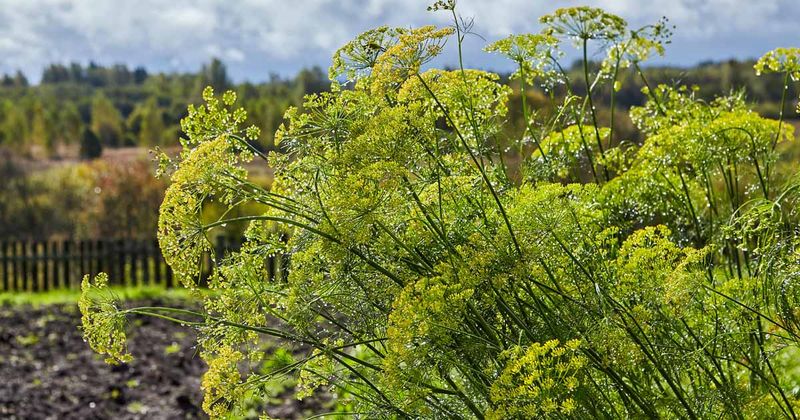
Late summer in North Carolina still holds plenty of growing days, and dill is one herb that makes good use of them. Anethum graveolens germinates quickly, reaches harvest in weeks rather than months under the right conditions, and can offer something extra when a few plants are allowed to flower.
Whether you garden in the Piedmont, the Coastal Plain, or the mountains, the timing math is what decides whether a late-August sowing pays off for you.
Dill is one strong late-summer option, not a statewide winner
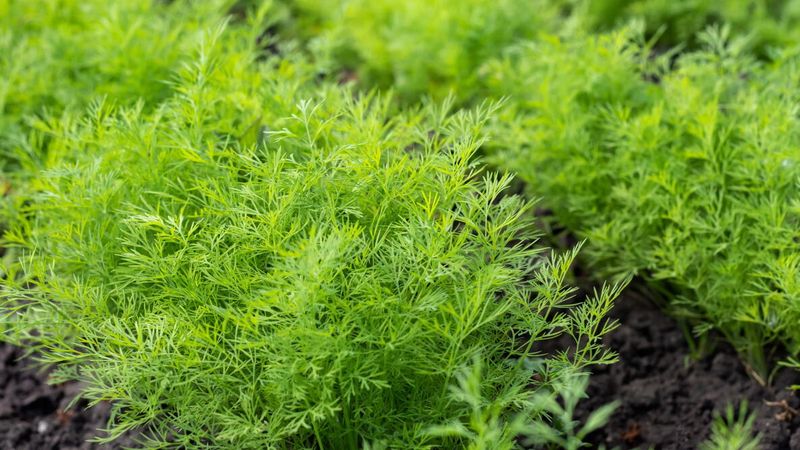
Calling any single herb the best choice for every North Carolina garden sets up a promise that geography will eventually break. Dill, Anethum graveolens, earns serious consideration as a late-summer edible planting, but its strongest timing evidence applies to the Piedmont and parts of eastern North Carolina rather than the whole state.
That distinction matters before you buy a seed packet.
The NC State central North Carolina planting calendar lists dill as a direct-sown herb with a 40 to 55 day harvest window and a sowing period that covers late August and early September. A Piedmont gardener who sows in the last days of August could reasonably target a leaf harvest in early or mid-October, before most Piedmont gardens experience their first fall freeze, as long as germination goes smoothly and the weather cooperates.
That benchmark is useful, but it is not a guarantee, and it does not transfer automatically to other parts of the state.
Mountain gardeners face a shorter fall season and earlier frost dates, which can tighten the margin considerably. Eastern North Carolina has its own planting guide with a different harvest estimate, covered in the next section.
Treating either of those regions as interchangeable with the Piedmont calendar would give readers the wrong picture.
Beyond the kitchen, dill offers a second potential payoff when some plants are allowed to flower. NC State’s plant profile for dill notes that the flowers attract bees, wasps, hoverflies, butterflies, and other beneficial insects, and that the plant serves as a larval host for black swallowtail butterflies.
Whether a late-summer planting reaches full flower before the first frost depends on local timing and conditions, so that benefit should be understood as conditional rather than certain. Still, for a modest patch that takes up little space, the combination of edible leaves and potential flower resources makes dill a well-supported choice worth considering.
Let local timing and harvest goals decide whether to sow now
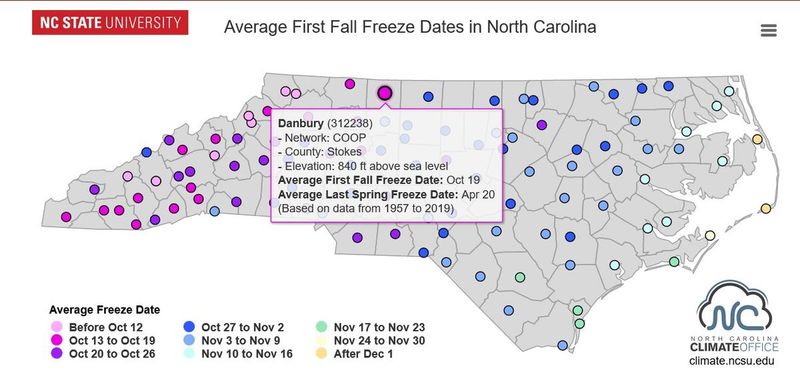
“Before the first cool night” sounds like a clear deadline, but a cool night in the low 50s is not the same thing as a frost or freeze, and that difference changes how you think about your planting window. A frost can occur at plant level even when the thermometer at standard measurement height reads a few degrees above freezing, while a hard freeze at 28 degrees or lower is a different event entirely.
Sorting out those distinctions before you sow helps you set realistic expectations.
The practical starting point is your local frost window, not a statewide average. The NC State Climate Office Freeze Date Explorer lets you look up the historical probability of a freeze at 32 degrees or lower for your specific location.
That probability, combined with your seed packet’s days-to-harvest estimate, tells you whether a late-summer sowing has enough time. The frost window helps determine whether planting makes sense, but germination speed, summer heat, soil moisture, and the harvest stage you want all factor in too.
Regional variation across North Carolina is significant. The central North Carolina calendar gives a 40 to 55 day harvest benchmark for dill.
The eastern North Carolina vegetable planting guide lists an August 1 through September 15 direct-seeding window for dill but shows 85 to 105 days in its harvest column. Those two figures are not the same, and the gap likely reflects different harvest stages, different table methods, or both.
Eastern readers should not try to reconcile the two into one universal number. Instead, read your seed packet carefully, consider what harvest stage you are aiming for, and check local frost history before deciding.
Mountain gardeners face a different calculation. NC State’s vegetable gardening handbook notes that western locations can reach seasonal milestones earlier than the coast, meaning a late-August sowing in the Blue Ridge may leave a narrower harvest margin than the same sowing date in the Piedmont.
If you garden at higher elevation, use a location-specific calendar and your local frost history rather than the central-calendar benchmark.
Direct-sow a modest patch in full sun and well-drained soil
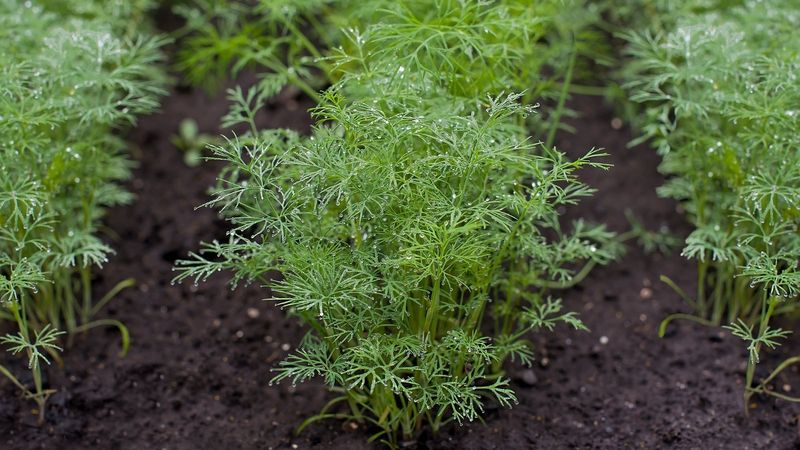
Dill is not a plant that likes to be moved. NC State’s dill plant profile explains that the herb develops a long taproot, which makes it a poor candidate for transplanting in most circumstances.
Starting seeds directly in the ground where you want them to grow avoids disturbing that root and gives the plant the best chance of establishing quickly. Buy labeled dill seed from a reputable source rather than collecting unidentified seed from a neighbor’s yard or a wild plant.
Sowing depth and spacing are straightforward. Press seeds about a quarter inch into the soil and plan for roughly two to four inches between plants, a spacing consistent with the central North Carolina planting calendar.
Germination typically takes around 10 to 14 days under good conditions. You do not need a large bed to get a useful harvest.
A short single row, a container at least 12 inches deep, or several small clusters scattered in an existing bed all work for a residential planting.
Site selection makes a real difference. Dill performs best in full sun with well-drained soil that does not stay waterlogged after rain.
Keep the seedbed consistently moist during germination and the first week or two after seedlings emerge, but ease off once plants are established. Late summer in North Carolina can bring stretches of dry heat, so check soil moisture regularly rather than watering on a fixed schedule.
Strong wind is another factor: dill can grow tall and floppy, so a spot with some shelter from prevailing winds, or a short stake for taller plants, helps prevent stems from snapping before you get a harvest.
No special soil amendments are required to get started. If your bed already supports other vegetables or herbs, it is likely adequate for dill.
Avoid heavy clay that drains poorly, and skip areas where standing water collects after a summer storm.
Plan the patch around leaves, flowers, or seed
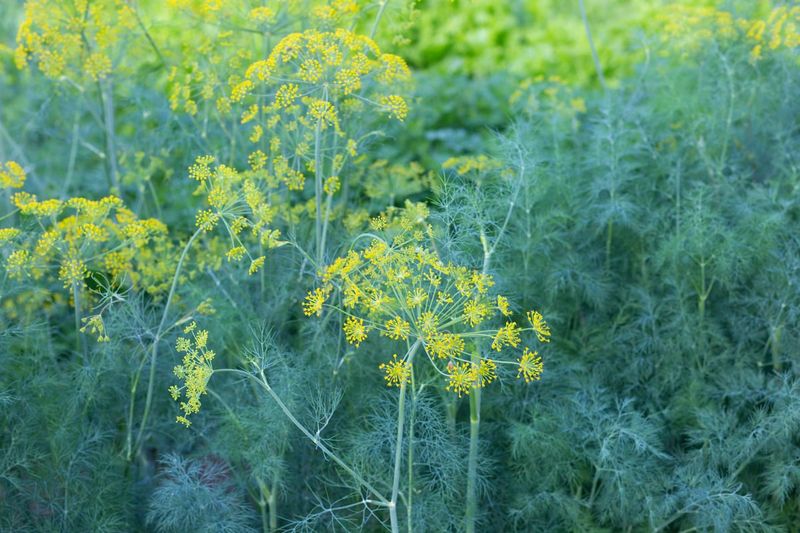
What you want from your dill planting shapes every management decision from day one. Tender dill weed, the feathery young leaves used in salads, fish dishes, and pickling, tastes best before the plant sends up a flower stalk.
Once flowering begins, the foliage becomes more sparse and the flavor shifts. If fresh leaves are your primary goal, plan to harvest regularly and cut plants before they bolt.
The 40 to 55 day figure from the central North Carolina calendar is a useful benchmark, not a fixed promise. Actual timing depends on germination speed, soil temperature, available moisture, and the variety you plant.
Some compact or slow-bolting varieties stay leafy longer than standard types. Read the seed packet for the specific variety you choose and use that estimate alongside the central calendar figure rather than treating either as absolute.
When you want mature foliage, flowers, or seed, the timeline extends further, and that extension matters for late-summer plantings with a limited frost window.
A practical split works well for a small residential patch. Harvest leaves from roughly half your plants while they are young and leafy.
Allow the remaining plants to develop flower heads if the season permits. That way you get fresh dill weed for the kitchen and, when timing allows, flower resources for beneficial insects.
NC State notes that dill is a self-seeding annual, so plants that flower and set seed can produce volunteers the following season, which is either a bonus or a management task depending on your preference.
Successive sowings, made roughly every two to four weeks while temperatures remain warm enough for germination, can extend the leafy harvest period. That strategy works only while conditions stay suitable.
As late September approaches in the Piedmont, and earlier in the mountains, soil temperatures drop and germination slows, so a second or third sowing should be timed with that limit in mind rather than assumed to work through October.
Flowering dill adds limited but useful wildlife value
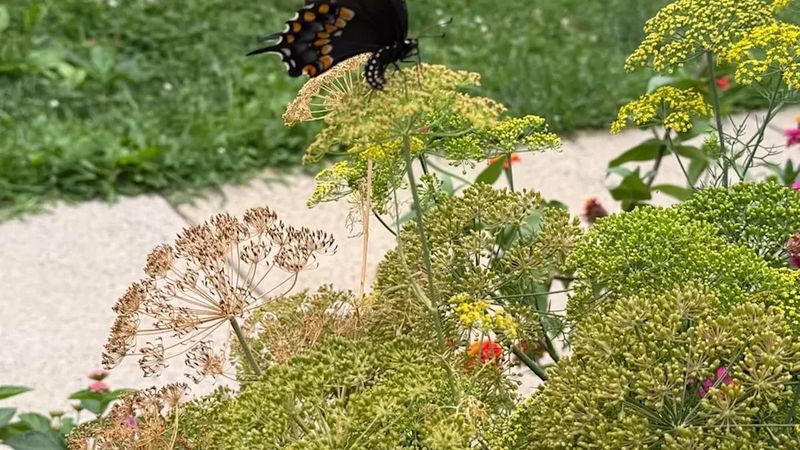
Letting a few dill plants go to flower opens up a secondary benefit that goes beyond the kitchen. NC State’s dill-oil plant profile identifies the flat-topped yellow flower clusters, called umbels, as a nectar and pollen source for bees, wasps, hoverflies, butterflies, and other beneficial insects.
The plant also serves as a larval host for black swallowtail butterflies, whose caterpillars feed on the foliage. For a backyard gardener who wants to support local insects, that combination has real value.
The scope of that value deserves honest framing. Dill is native to the Mediterranean region, not to North Carolina, and one small patch cannot replace the habitat functions that native plants provide.
Box turtles, bats, goldfinches, fireflies, and most native pollinators depend on a much broader set of conditions: appropriate native host plants, shelter, water sources, nesting sites, and reduced pesticide exposure throughout the yard. Dill is a useful addition to a wildlife-friendly garden, but presenting it as a complete pollinator habitat would overstate its role.
The tradeoff between leaves and flowers is worth thinking through before you let every plant bolt. NC State’s plant profile confirms that flowering reduces the period of peak leafy harvest.
Once a plant shifts energy to producing a flower stalk, the tender foliage becomes less abundant and the window for harvesting fresh dill weed narrows. Reserving some plants for flowers while harvesting others for leaves gives you both options without sacrificing one entirely.
Whether a late-summer planting reaches flowering before the first frost depends on your region, your sowing date, and the season’s weather. In the Piedmont, a late-August sowing that germinates quickly and grows in warm conditions might flower in October.
In the mountains or during a cooler-than-average fall, the same sowing might not reach that stage. Treat the wildlife benefit as a conditional outcome worth aiming for, not a guaranteed result of every planting.
Do not turn dill into a tick barrier or pesticide target
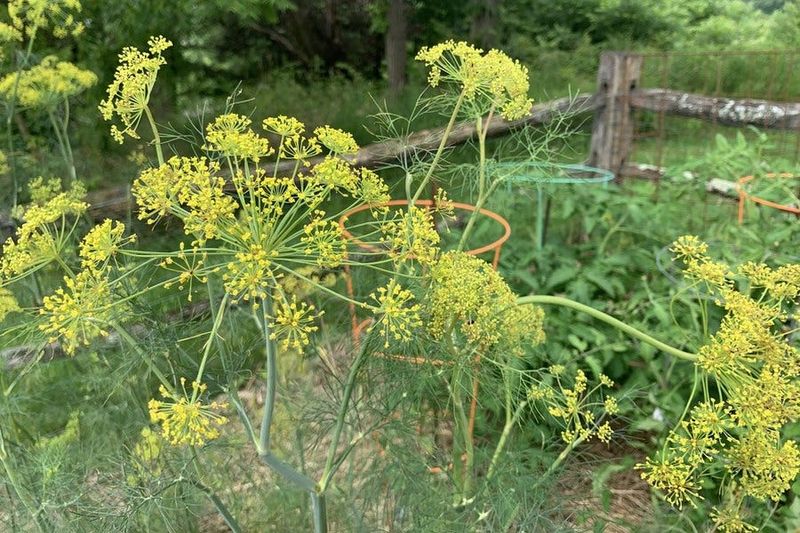
Dill has a reputation in some gardening circles as a pest-repelling plant, and one specific claim keeps circulating online: that planting it creates a tick-free border. Extension experts have addressed this directly, noting that no scientific studies support the idea that specific plant species effectively repel ticks.
Dill should not be presented as tick control, and it should not substitute for tick checks after outdoor time, habitat management around the yard’s edges, or registered repellents when you need them.
Dill’s relationship with other insects is more nuanced and more accurately described as conditional. Penn State Extension’s companion-planting guidance notes that herbs like dill may attract predatory and parasitic insects that can help suppress some pest populations, but the effect depends on the surrounding plant community, the pest species present, the timing, and the overall habitat quality.
That is meaningfully different from saying dill eliminates aphids, caterpillars, or other garden pests. It does not, and claiming otherwise sets up a disappointment.
When insect damage does appear on your dill or nearby plants, the right first step is identification. Figure out what pest you are actually dealing with and how much damage it is causing before reaching for any product.
Penn State’s beneficial insect guidance emphasizes monitoring first and treating only when necessary, a practice that protects the same pollinators and predatory insects that make flowering dill worth growing.
Routine insecticide applications to flowering dill are a particular problem. Blooming plants attract the bees, wasps, and hoverflies that the flower resources are meant to support, and spraying during bloom can harm those visitors.
If treatment genuinely becomes necessary on an edible herb, EPA label guidance requires that any pesticide be specifically labeled for use on the crop in question and applied exactly according to its directions, including timing relative to harvest and re-entry intervals. Skipping that step puts both the harvest and beneficial insects at risk.
Manage volunteers and identify every plant before eating it
Dill self-seeds readily when plants are allowed to flower and set seed. NC State describes dill as an aromatic, self-seeding annual, which means a patch that flowers in fall may produce volunteer seedlings the following spring.
For some gardeners that is a welcome surprise. For others, especially those who want to control where dill grows or who rotate crops, volunteers become an unplanned management task.
Removing spent seedheads before they fully dry and drop is the simplest way to limit self-seeding if you prefer not to deal with volunteers.
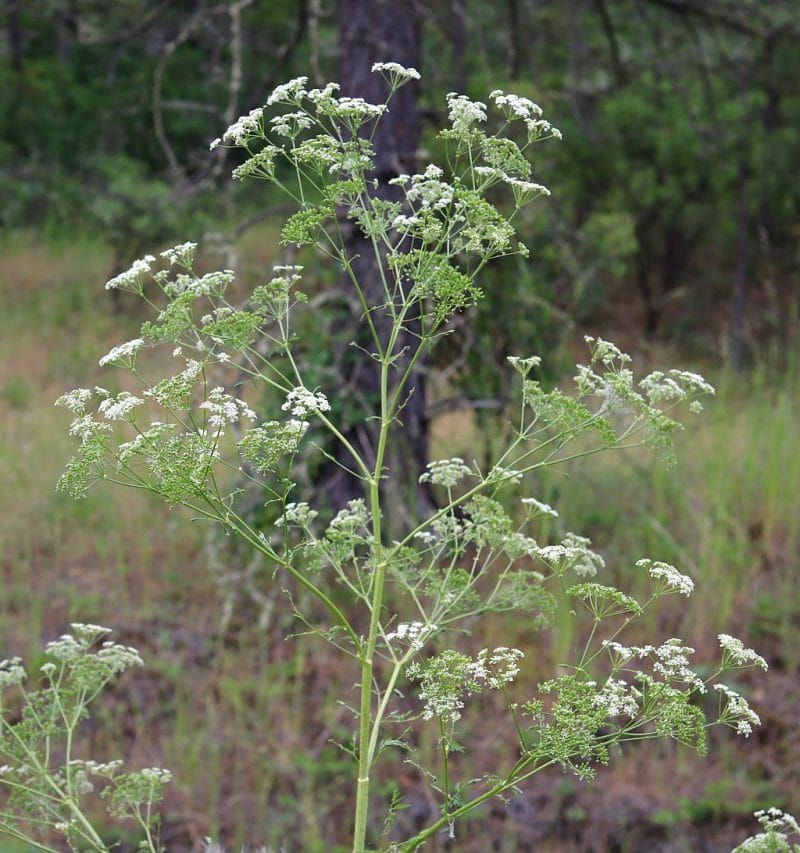
The more serious issue is identification. Dill belongs to the Apiaceae family, a group that includes a number of plants with similar feathery leaves and flat-topped white or yellow flower clusters.
Some of those relatives are dangerous. Poison Control confirms that poison hemlock can be fatal, and it can resemble edible carrot-family plants closely enough that casual visual identification is not safe.
Wild carrot, also called Queen Anne’s lace, and other look-alikes add to the confusion.
The rule here is simple and non-negotiable: never eat an unidentified plant that looks like dill or parsley. NC State’s profile for poison hemlock documents its presence in North Carolina and notes that all parts of the plant are toxic.
Taste, smell, and appearance are not reliable ways to tell it apart from edible species. Buy labeled seed from a reputable source, grow your dill in a known location, and treat any volunteer or wild plant that merely resembles dill as unidentified until you have a reliable, source-backed identification.
When in doubt, pull it out and discard it without tasting.
Sow dill when your local calendar leaves enough time
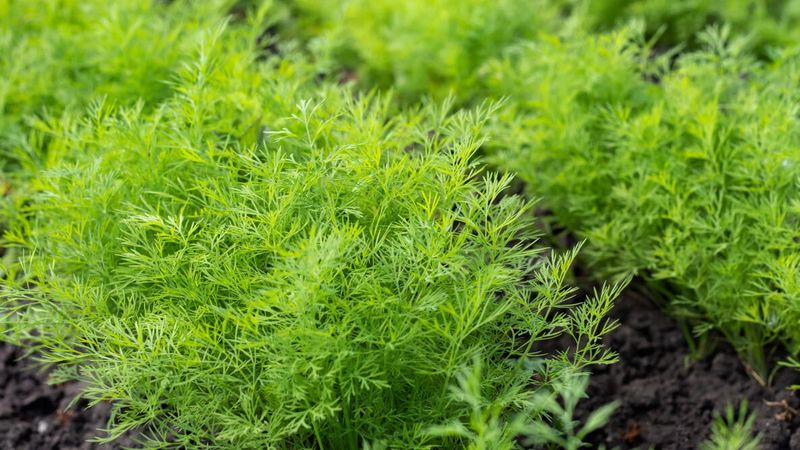
Piedmont gardeners and many eastern North Carolina gardeners who check their local frost history and find adequate time before a likely freeze have good reason to consider a modest late-August or early-September dill sowing. The central North Carolina planting calendar supports that window, and the 40 to 55 day benchmark gives a reasonable target for a leaf harvest in early to mid-October when conditions cooperate.
Mountain and other short-season gardeners should lean on their local calendar and frost history rather than forcing a statewide premise. NC State’s vegetable gardening handbook notes that western locations reach seasonal milestones earlier, so the Piedmont benchmark may not apply.
Use the NC State Freeze Date Explorer to check your specific location, then compare that window against your seed packet’s estimate before committing to a sowing.
When local timing does allow it, dill can deliver two returns from a small patch: fresh leaves for the kitchen and, from plants allowed to flower, nectar, pollen, and host habitat for black swallowtail larvae. Both benefits depend on local conditions.
The most practical approach is to harvest some plants for leaves while leaving others to flower when the season permits. A small, well-timed patch of dill rewards attention to local detail more than any statewide promise ever could.