
The Most Underrated North Carolina Native Shrub That Fills Your Fall Garden When Everything Else Fades
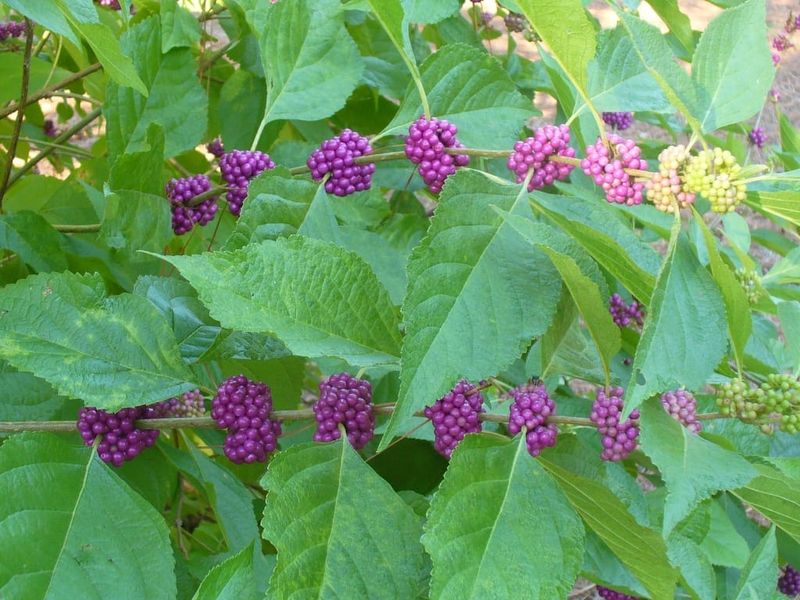
Most North Carolina gardeners walk right past American beautyberry at the nursery without a second glance. That oversight costs them one of the best late-season displays a native shrub can offer: clusters of vivid purple berries that appear just as many summer plants start winding down.
This overlooked deciduous shrub is native across the Coastal Plain, Piedmont, and Mountains, and fall is a great time to get one in the ground.
American beautyberry adds fall color as summer interest declines
Plenty of North Carolina yards look tired by late August. Coneflowers have finished, summer annuals are fading, and the garden needs something to carry the season forward.
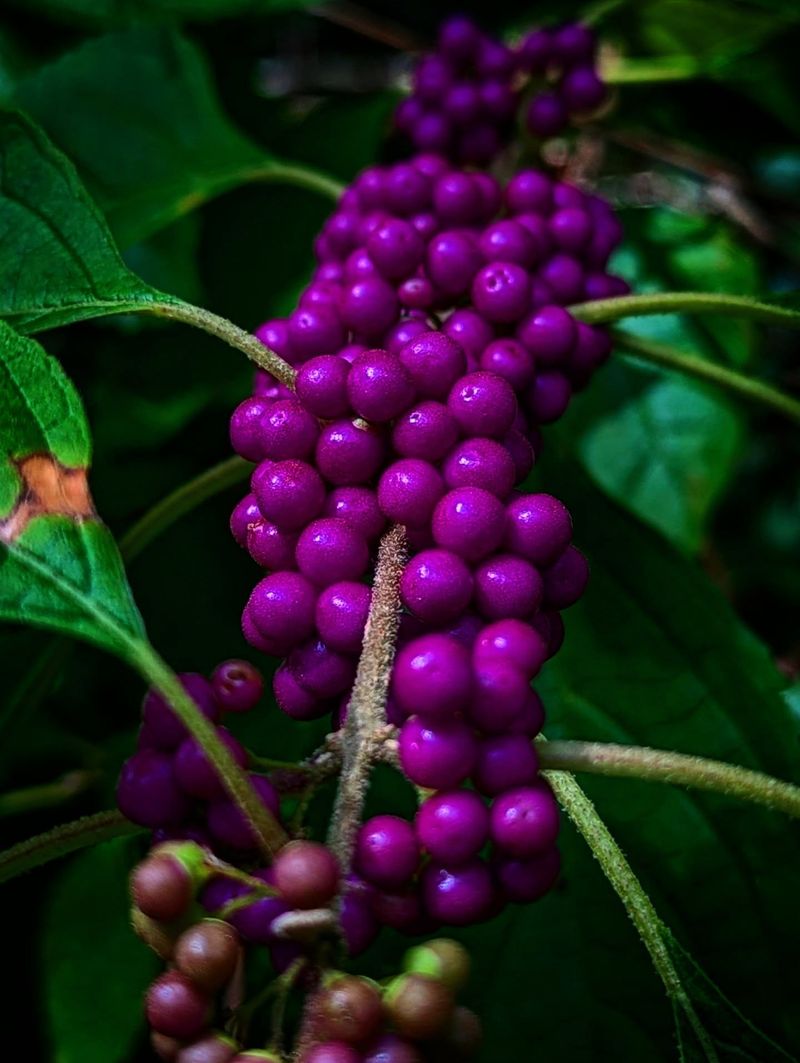
American beautyberry (Callicarpa americana) is a native deciduous shrub that steps in right at that moment, not because every other plant disappears, but because its own display is genuinely hard to miss.
What sets it apart is the fruit. Dense clusters of purple to bluish-purple berries wrap around the stems in tight rings, creating a look unlike almost anything else growing in a Carolina yard in September or October.
The berries follow modest pink flowers that bloom in spring and early summer, so the shrub spends most of the warm season blending quietly into the background before putting on its show.
NC State Extension’s Plant Toolbox lists American beautyberry as native to the Coastal Plain, Piedmont, and Mountains of North Carolina, making it a legitimate local option rather than a regional import. Its long, arching stems and informal habit give it a relaxed, naturalistic character that suits a wildlife-friendly yard well.
Calling beautyberry the single best native shrub available would be editorial overreach. What the evidence does support is describing it as an underused option, one that many gardeners skip simply because it looks unremarkable during the growing season.
That is precisely the wrong time to judge it. The shrub earns its place in the fall planting conversation because of a late-season payoff, purple fruit and visible branching structure, that arrives when gardeners need it most and that few other native shrubs can replicate at the same moment.
Its berries—not its leaves—carry the fall display
Understanding what beautyberry actually does in fall matters before you plant one. The sequence goes like this: small, pale pink flowers appear from late spring into early summer, largely unnoticed.
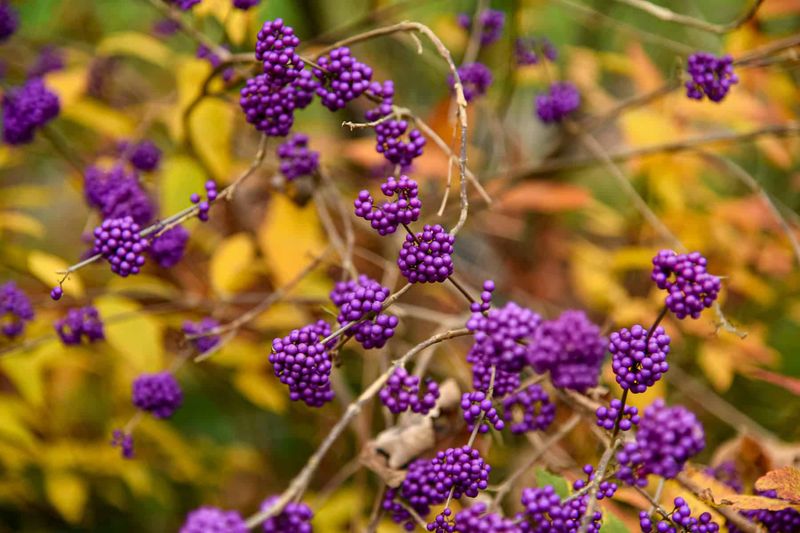
By August, dense clusters of berries begin forming in tight rings around the stems at every leaf node. Those clusters, ranging from bright purple to bluish-purple depending on the individual plant and site conditions, are the reason gardeners grow this shrub.
The leaves are not the attraction. As temperatures drop, the foliage turns a pale yellow-green and drops relatively quickly.
What remains are those berry clusters clinging to bare, arching stems, and that combination of vivid fruit against visible branch structure is the shrub’s principal late-season feature. NC State Extension gives a general fruiting period of August through October, with fruit sometimes persisting into early winter under favorable conditions.
Anyone expecting spectacular fall foliage comparable to a red maple or a fothergilla will be disappointed. Beautyberry is not that plant.
Its strength is the fruit display, and that display is striking precisely because the color is so unexpected, a saturated, almost electric purple that reads clearly from across the yard.
How long the berries last depends on several factors outside a gardener’s control. Birds and mammals find them attractive and can strip a shrub quickly, especially in a yard with active wildlife traffic.
Drought during the growing season can reduce the size and density of the clusters. Local weather patterns, the amount of sun the shrub receives, and browsing pressure from deer all influence how long the display holds.
Think of August through October as a realistic general window, not a guarantee, and treat any persistence into November or December as a welcome bonus rather than a promise.
Virginia Cooperative Extension describes the fall fruit display as beautyberry’s primary ornamental attribute and recommends treating the plant as an informal landscape shrub rather than a four-season performer. That framing is honest and useful: plant it for what it does well, and it will not let you down.
Give its loose form the right place to spread
Location shapes how well beautyberry performs and how good it looks once it settles in. Full sun to part shade suits the shrub well, and more direct sun generally translates to stronger flowering and a heavier fruit set.
Deep shade is a poor choice if a reliable berry display is the goal; a shrub growing under heavy tree canopy may produce sparse clusters or skip fruiting in lean years.
A spot that gets morning sun with some afternoon shade, common along the east or northeast side of a house or under a high canopy, often works well in the Piedmont and Coastal Plain. Mountain gardeners have more natural shade to work with, but protecting the shrub from the harshest north-facing exposures at higher elevations is worth considering.
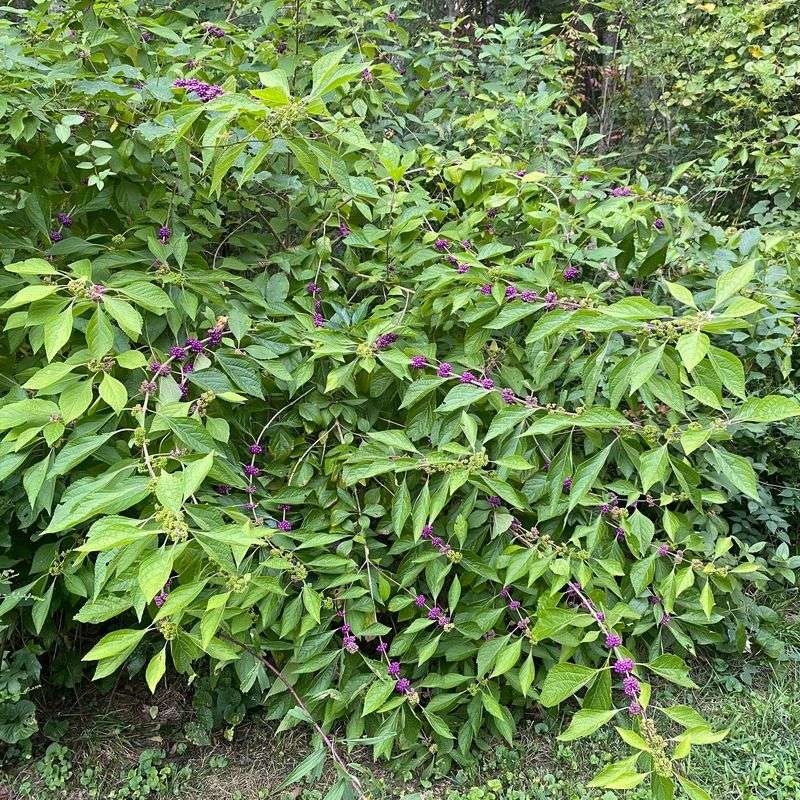
NC State Extension lists the typical mature size as roughly 3 to 8 feet tall and 3 to 6 feet wide, though plants in ideal conditions with good moisture and sun can push toward the larger end of that range. The stems arch outward rather than growing straight up, giving the plant an open, relaxed silhouette.
That habit looks natural in a woodland edge or informal border but can appear unkempt in a tight foundation bed next to clipped evergreens.
Soil adaptability is one of beautyberry’s genuine strengths. It tolerates clay, sandy loam, and soils that are periodically dry or briefly wet, provided drainage is reasonable.
Consistently waterlogged roots are a problem, but the shrub handles the variable moisture conditions common to many North Carolina yards without complaint once established.
UF/IFAS Extension recommends a general spacing of approximately 36 to 60 inches between plants. A single specimen works as an informal accent near a patio or at the edge of a lawn, but the arching form tends to look most intentional when two or three plants are grouped together.
Massing them lets the berry clusters create a connected sweep of color rather than an isolated dot. Virginia Cooperative Extension notes that beautyberry works best as an informal landscape shrub, and grouping reinforces that character rather than fighting it.
Use the fall window carefully across North Carolina
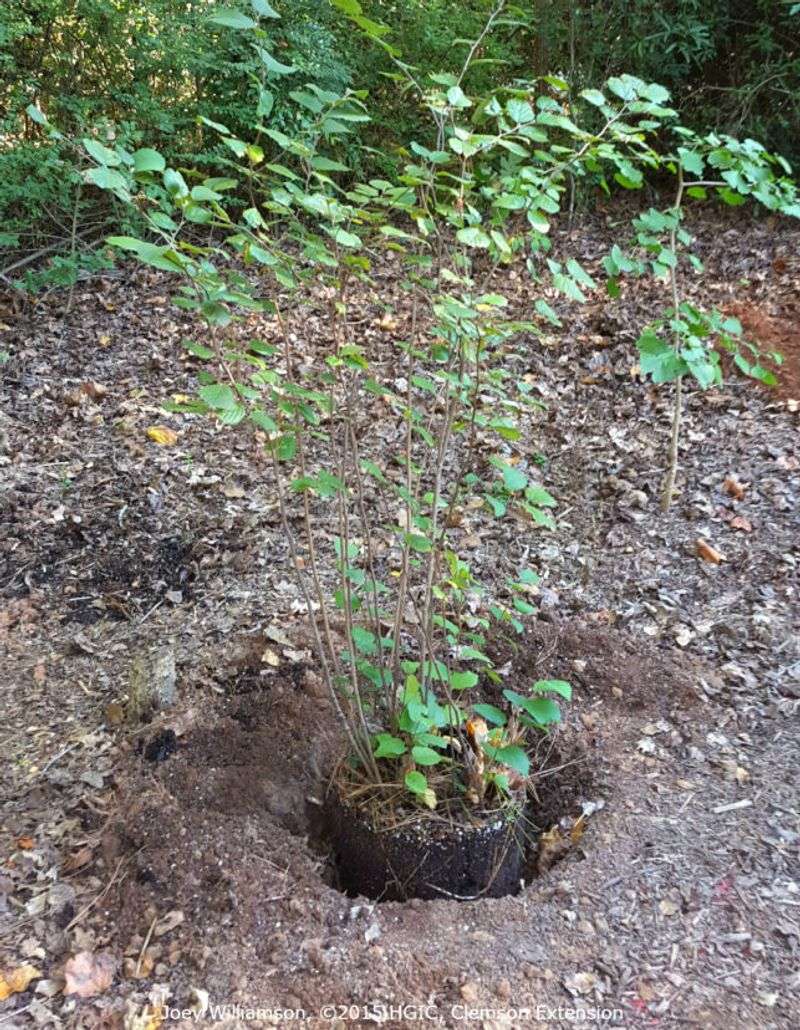
Fall is generally a good time to plant native shrubs in North Carolina, and beautyberry is no exception. Cooler air temperatures reduce stress on the top of the plant while the soil stays warm enough for roots to keep growing.
That combination gives a newly planted shrub several weeks to push roots into surrounding soil before hard freezes arrive, which helps it handle its first summer with less supplemental watering.
NC State Extension notes that fall planting is generally advantageous for native plants in North Carolina’s warm climate because roots can establish while top growth is under lower heat stress. That guidance applies broadly across the Coastal Plain and Piedmont, where fall soil temperatures remain workable well into November.
Mountain gardeners need to read that advice with some adjustment. At higher elevations or on colder north-facing sites, a shrub planted in late October or November may not have enough time to establish roots before the ground hardens.
If you garden above roughly 3,500 feet or in a location known for early hard freezes, plant early in the fall window, consult your local Cooperative Extension office or a nearby native-plant nursery about timing, and treat early spring as a sound alternative when late-fall conditions are not suitable.
The planting method itself is straightforward for a container-grown shrub. NC State’s woody ornamentals guidance recommends digging a hole no deeper than the root ball and several times wider, which gives roots room to spread horizontally into loosened soil.
Set the shrub so its root flare sits at or slightly above the surrounding grade, not buried below it. Backfill with the native soil you removed, water thoroughly until water pools and drains away, and apply a 2- to 3-inch layer of wood chip or bark mulch in a ring around the plant, keeping mulch several inches away from the stem to prevent rot.
Consistent watering during establishment is non-negotiable regardless of the season you choose. A newly planted beautyberry needs regular moisture for at least the first growing season, even though the species tolerates dry conditions once its roots are well settled.
Check soil moisture weekly and water whenever the top inch or two feels dry, particularly during any dry spells that arrive in late fall or early spring.
The fruit helps wildlife, but one shrub is not a habitat
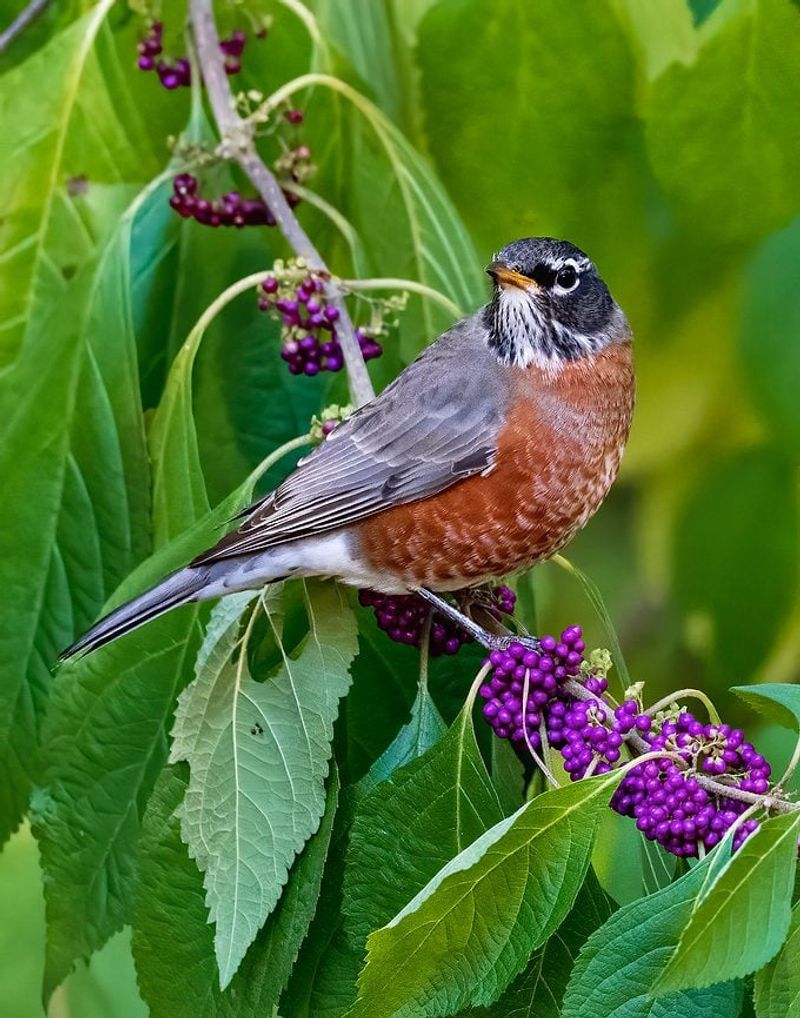
The berry clusters that make beautyberry visually striking also make it useful to the wildlife many North Carolina homeowners want to support. American robins, brown thrashers, purple finches, and eastern towhees are among the songbirds that eat the fruit, and small mammals, including white-footed mice and raccoons, take advantage of it as well.
Watching a thrasher work through a loaded beautyberry stem in October is one of those yard moments that makes the planting feel worthwhile.
NC State Extension confirms that the fruit supports songbirds and small mammals, which aligns with what most NC gardeners observe when they grow the shrub near a window or a sitting area. The timing matters too: late summer and fall fruit is valuable to birds preparing for migration or building fat reserves for winter, so the August-to-October window lines up with genuine ecological need.
Keeping the wildlife claim proportionate is important, though. A single beautyberry supplies fruit and some seasonal pollinator value from its spring flowers, but it cannot function as complete habitat on its own.
Birds need cover, nesting sites, water, and food across all four seasons, not just one shrub’s two-month berry window.
NC State Extension recommends layering native shrubs and other plants to provide flowers, cover, and food across multiple seasons for meaningful wildlife support. Pairing beautyberry with native shrubs that bloom earlier, such as buttonbush or native viburnums, and with plants that offer seed or structure in winter builds a yard that supports wildlife year-round rather than just for a few autumn weeks.
One other note: the berries are edible but described by NC State as insipid on their own, and they are sometimes made into jelly. The shrub’s value in a residential yard is primarily ornamental and ecological rather than culinary, and the wildlife claim is the stronger, better-documented reason to grow it.
Prune for new growth and an informal shape
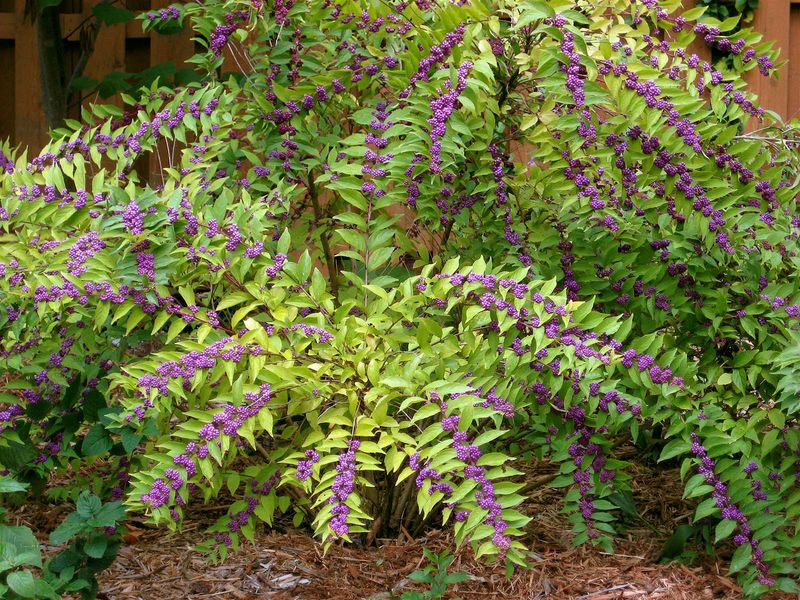
Beautyberry flowers and fruits on new growth produced in the current growing season. That single fact determines the entire pruning strategy: cut the shrub back hard in late winter or very early spring, before new growth begins, and you get vigorous fresh stems that will carry the heaviest berry clusters in fall.
Skip pruning for several years and the shrub becomes a tangle of older wood with progressively smaller fruit clusters on the outer tips.
Virginia Cooperative Extension recommends heavy late-winter or early-spring pruning to keep the shrub compact and to stimulate vigorous fruiting shoots. Cutting stems back to within a foot or so of the ground is not unusual and does not harm the plant.
It responds with strong new growth that reaches several feet by midsummer and sets fruit by late summer.
Timing the cut matters. Once new growth has pushed out in spring, pruning removes the shoots that would have carried this year’s berries.
If you miss the late-winter window, the practical choice is to wait until the following late winter and accept a lighter display in the intervening fall. Pruning in summer or early fall to tidy the shape will cost you most of that season’s fruit.
UF/IFAS Extension describes beautyberry as comparatively low-maintenance in terms of pest and disease pressure, and that tracks with what most NC gardeners report. Serious insect or fungal problems are uncommon, which means most of the maintenance attention goes toward size control and shape rather than spraying or treating.
Self-seeding is worth monitoring. Beautyberry can drop seeds that germinate nearby, and while a few volunteer plants are easy to pull or transplant, an unmanaged plant in a fertile spot can produce more seedlings than expected.
Checking the area around the shrub in spring and removing unwanted seedlings early keeps the situation manageable without much effort.
Forcing beautyberry into a tight, clipped hedge shape is a losing battle. Its open, arching character is the point, not a flaw to be corrected.
Work with that habit by pruning for renewal rather than rigid form, and the shrub will reward you with a better berry display and a more natural, stewardship-minded look in the yard.
Source a beautyberry suited to your site
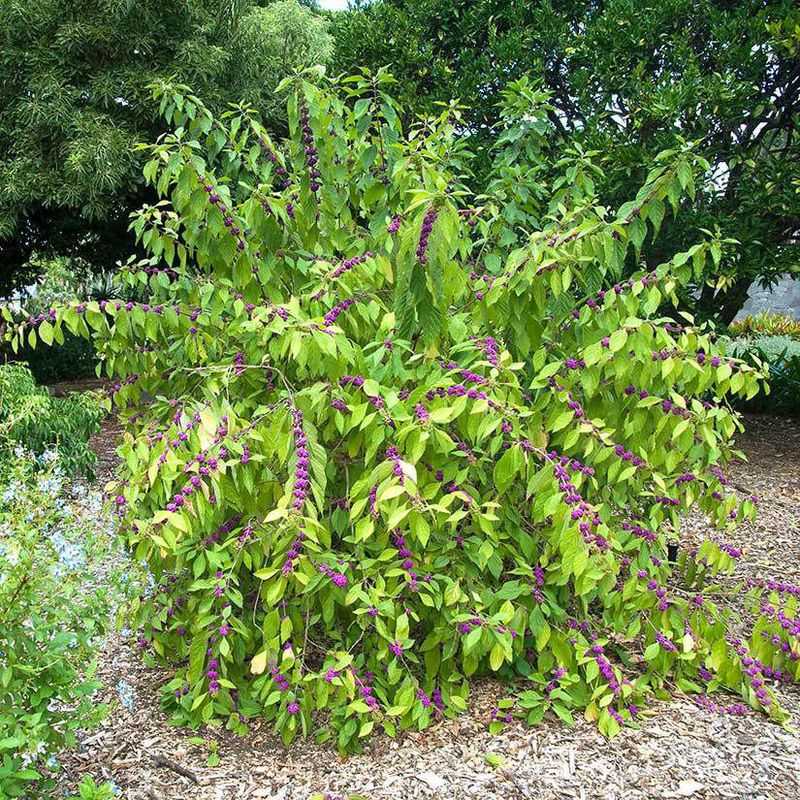
Where you buy your beautyberry matters almost as much as where you plant it. Wild collection harms natural populations and often produces plants that struggle in transplant, so the right approach is to purchase nursery-propagated stock from a reputable source.
The North Carolina Native Plant Society maintains a nursery directory that lists growers across the state, and it is the most practical starting point for finding plants grown from local or regional seed sources.
Local ecotypes matter more than gardeners often realize. A beautyberry grown from seed collected in the NC Piedmont is already adapted to that region’s soils, rainfall patterns, and temperature swings.
It is likely to establish faster and perform more reliably than a plant propagated from stock originating in Florida or Texas, even if the two look identical at the nursery. Ask the grower where their plants originate when you can; reputable native-plant nurseries usually know and are happy to share that information.
Cultivar selection deserves a moment of thought. White-fruited forms such as ‘Lactea’ and pink-fruited selections are available and can be attractive, but UF/IFAS Extension notes that cultivars selected for altered fruit color may not offer identical wildlife value compared to the straight purple-fruited species.
If supporting birds and small mammals is part of the reason you are planting, the straight species or a cultivar known to retain strong wildlife use is the safer choice. If ornamental variety is the priority, the white and pink forms are worth considering alongside the standard purple.
Mountain gardeners, particularly those at higher or colder sites, should confirm local performance before committing to a planting. NC State lists American beautyberry across all three broad NC regions, but performance at the colder or higher end of the mountain zone can vary.
A quick conversation with a local native-plant nursery will tell you more than any general guide.
Beautyberry rewards gardeners who match it to the right site, plant it in an appropriate window, and accept its deciduous, informal character for what it is: a shrub that brings genuine purple-fruit drama to the yard as many summer plants step back, and asks very little in return.