
The Most Underrated North Carolina Native Tree For Small Yards That Puts On A Show From Spring Through Fall
Most North Carolina homeowners reach for dogwoods or redbuds when they want a small flowering tree, and those are fine choices. But there is one native tree that quietly outpaces both in total seasonal value, and it rarely gets the credit it deserves.
Downy serviceberry, Amelanchier arborea, opens with fragrant white flowers before the dogwoods even wake up, follows with fruit that draws birds and other wildlife, and closes the year with honest fall color. Once you know what it offers across three seasons, it is hard to keep passing it by at the nursery.
Downy serviceberry is an overlooked native with room to grow
Few native trees earn less attention relative to what they actually deliver than downy serviceberry. Sold under names including serviceberry, shadbush, shadblow, and juneberry, this plant is native to eastern North America and documented throughout all three regions of North Carolina.
According to NC State Extension’s downy serviceberry profile, it tolerates full sun to partial shade and grows across the mountains, Piedmont, and Coastal Plain, making it broadly applicable to residential yards across the state.
Calling it “overlooked” or “underused” is editorial opinion, not a measured statewide ranking. More familiar small natives like flowering dogwood and eastern redbud get most of the attention at garden centers, and serviceberry tends to get passed over without a second look.
That gap between its actual performance and its public profile is what makes the case for giving it a closer look.
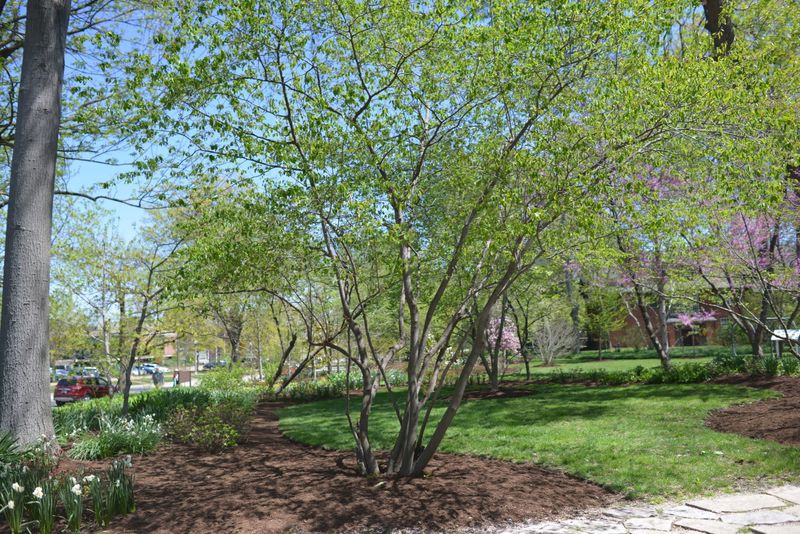
Before getting into what it offers seasonally, the size picture needs to be clear. NC State’s Amelanchier arborea plant record lists a typical mature height of 15 to 25 feet, though specimens in favorable conditions can reach around 40 feet.
That puts it firmly in the small-tree or large-shrub category, not the dwarf-tree range. Its natural form is narrow to rounded and usually multistemmed.
If suckers are left in place over time, the plant can develop a more open, shrub-like habit rather than a single-leader tree shape.
For a small residential yard, that form can actually be an asset rather than a liability. It reads as a graceful, layered presence rather than a heavy canopy.
NC State’s three-season serviceberry feature frames this plant as a landscape tree with genuine ornamental depth, and the seasonal sequence it describes is what sets downy serviceberry apart from trees that give you one good week and then blend into the background.
Its seasonal show comes in a sequence, not all at once
One of the most important things to understand about downy serviceberry is that its appeal is spread across the calendar rather than concentrated in a single burst. The tree does not bloom continuously from spring through fall, and summer is not a time of intense color.
What it offers is a reliable three-part sequence: early spring flowers, followed by developing fruit and active foliage through summer, and then fall color to close out the growing season.
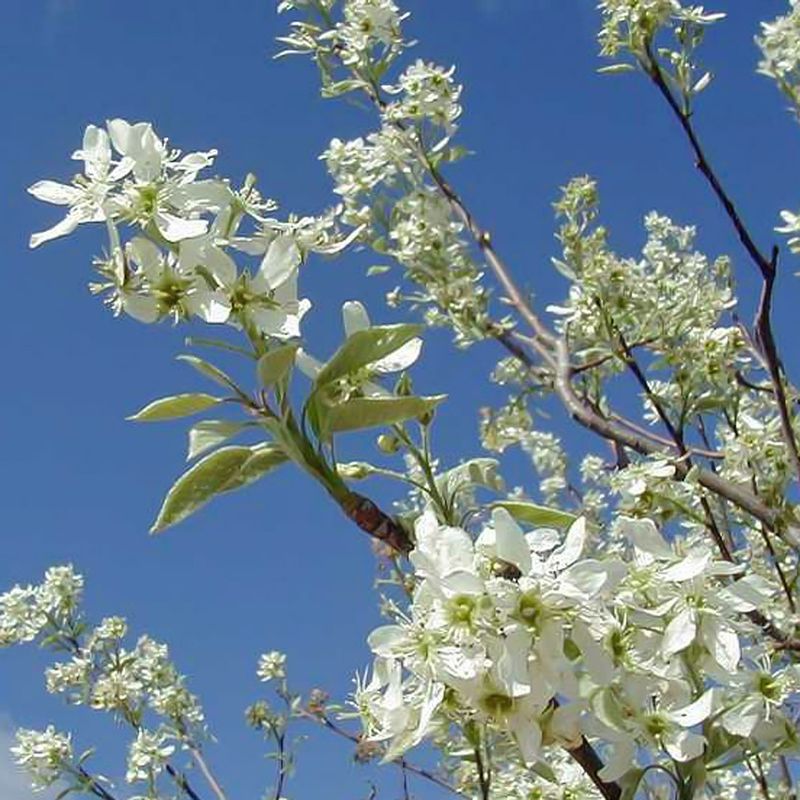
Spring is the strongest act. Fragrant, five-petaled white flowers emerge early in the season, often around or slightly before leaf-out.
NC State’s Extension Gardener serviceberry feature notes that in the North Carolina Piedmont, Amelanchier arborea tends to bloom earlier than dogwoods and redbuds. That timing matters because it fills a gap when most flowering trees are still dormant, and it gives pollinators an early nectar source when few other options exist.
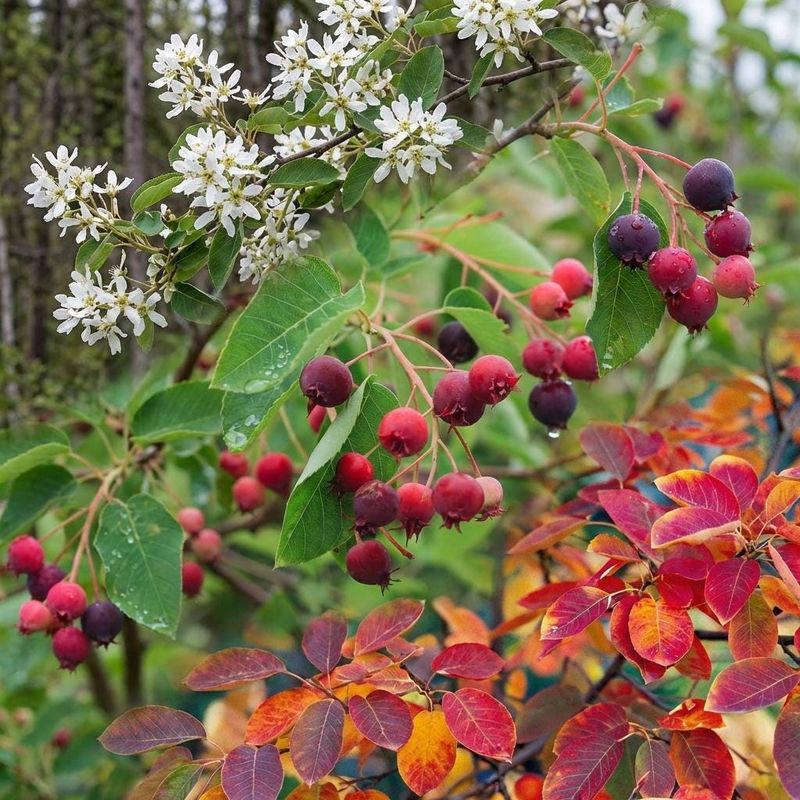
Summer shifts the focus from flowers to foliage and developing fruit. The tree holds its green canopy through the warm months while small berry-like fruit transitions from red toward purple as it matures.
NC State’s downy serviceberry profile describes the fruit as resembling blueberries, and it is edible, though fruit timing and availability can vary. Summer is also when wildlife activity around the tree tends to pick up, particularly as fruit ripens toward late summer or early fall.
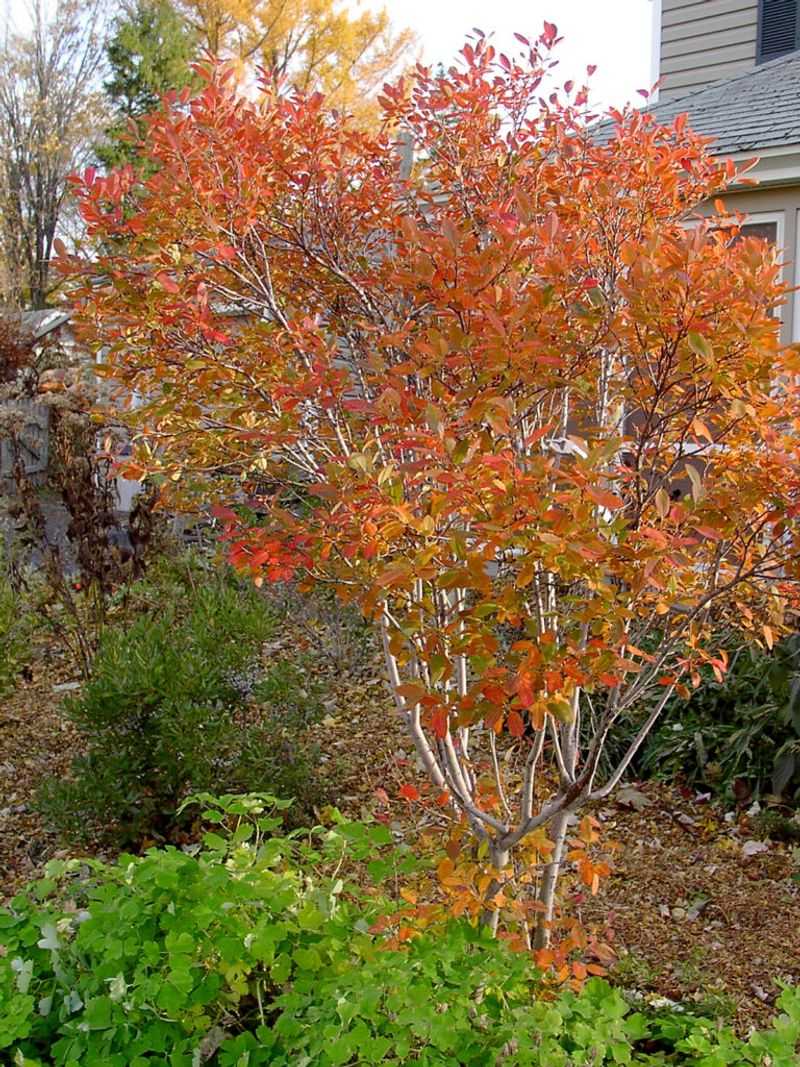
Fall brings the final chapter. Foliage can turn yellow, orange, or red depending on the individual plant and site conditions.
NC State’s Amelanchier arborea record lists red-to-purple fall color as a feature, while the Extension Gardener feature describes the fall color of most species and cultivars as good. The range of outcomes means expectations should stay realistic, but a well-sited tree in the Piedmont or mountains can deliver genuine autumn color.
Even in winter, the smooth gray bark and branching structure add quiet visual interest, though the tree’s main ornamental promise runs from spring through fall.
Flowers, fruit, and foliage also support backyard wildlife
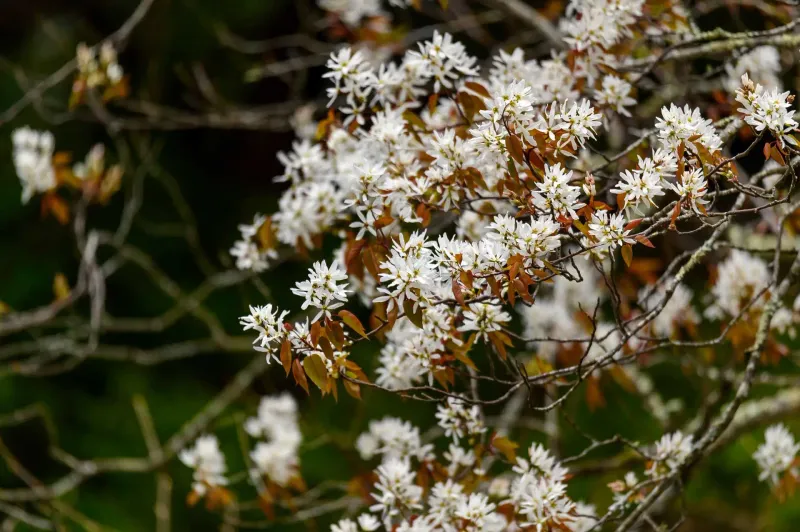
A serviceberry’s ornamental value and its wildlife value run on the same schedule. The early spring flowers are not just pretty; they arrive when bees and other pollinators are actively searching for nectar and pollen after winter.
Penn State Extension’s native plant wildlife spotlight identifies serviceberry flowers as an early-season resource for native bees and other pollinating insects, which is especially significant in North Carolina yards where few other trees are blooming at the same time.
The foliage supports a different kind of wildlife. Downy serviceberry is a documented host plant for caterpillars, including larvae of the viceroy and red-spotted purple butterflies.
NC State’s butterflies-in-your-backyard resource confirms the importance of native host plants for supporting butterfly populations through their larval stages, and serviceberry contributes to that function through the growing season.
Fruit is where the wildlife activity becomes most visible. U.S.
Forest Service species data for Amelanchier arborea reports that at least 40 bird species and several dozen mammal species consume fruit from the Amelanchier genus. Audubon’s native plant profile for downy serviceberry associates the fruit with cardinals, cedar waxwings, tanagers, grosbeaks, vireos, robins, and other birds, though which species actually visit a specific yard will depend on local habitat, season, and region.
The practical framing matters here. A single serviceberry can contribute food sources, caterpillar host resources, and seasonal structure to a wildlife-friendly yard.
It does not guarantee a particular species will appear, and one tree does not create a complete habitat by itself. Pairing it with other native plants, shrubs, and groundcovers will do more for resident and migratory wildlife than any single tree can accomplish on its own.
That said, few small trees pack this range of ecological function into 15 to 25 feet of canopy.
Choose a site that can handle the mature tree
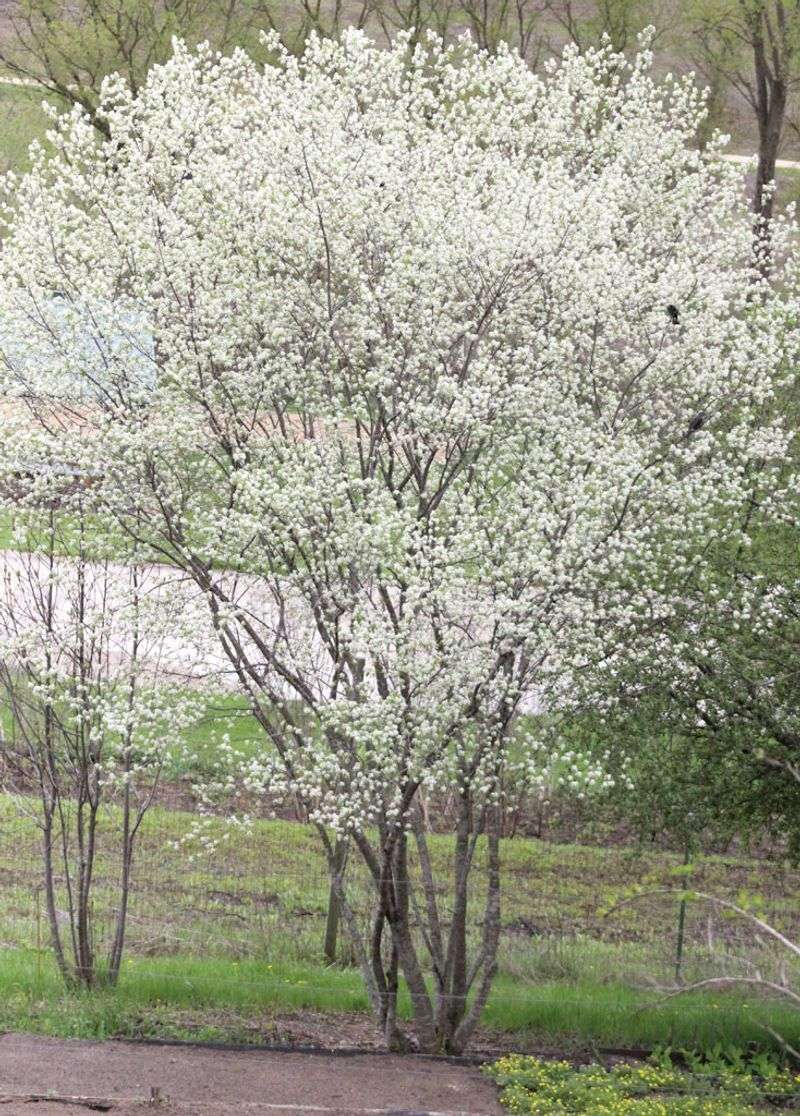
Getting the site right before planting is the single most important decision with downy serviceberry. The tree looks compact at the nursery, but NC State’s Amelanchier arborea record puts mature height at 15 to 25 feet with a canopy spread that warrants planning for roughly 12 to 24 feet of available planting space.
Choosing a location based on nursery-container size rather than mature dimensions is how trees end up too close to rooflines, power lines, or property fences.
The multistemmed form adds another layer to siting decisions. NC State’s downy serviceberry profile notes that if suckers are allowed to remain, the plant can develop a broader, more shrub-like habit over time.
Near a path or structure where clean sight lines matter, regular sucker removal will keep the form more tree-like. In a naturalized corner or woodland edge, letting the plant spread slightly may be perfectly fine.
Either approach works, but the choice should be made deliberately before planting rather than managed reactively later.
Soil and light preferences are fairly forgiving across North Carolina’s varied regions. Downy serviceberry performs in full sun to partial shade and prefers moist, well-drained, acidic-to-neutral soil.
It does not thrive in poorly drained or permanently wet ground, where root problems are more likely. If your yard has a low-lying spot that stays soggy after rain, that is not the right location for this species.
For consistently wetter sites, a different Amelanchier may be a better fit. NC State’s profile for Amelanchier canadensis, shadblow serviceberry, describes a species more associated with coastal and Piedmont habitats that can handle wetter conditions and tends toward a more suckering, shrub-like habit.
Matching the species to the actual site, rather than treating all serviceberries as interchangeable, is what separates a tree that thrives from one that merely survives.
Planting and watering determine how well it establishes
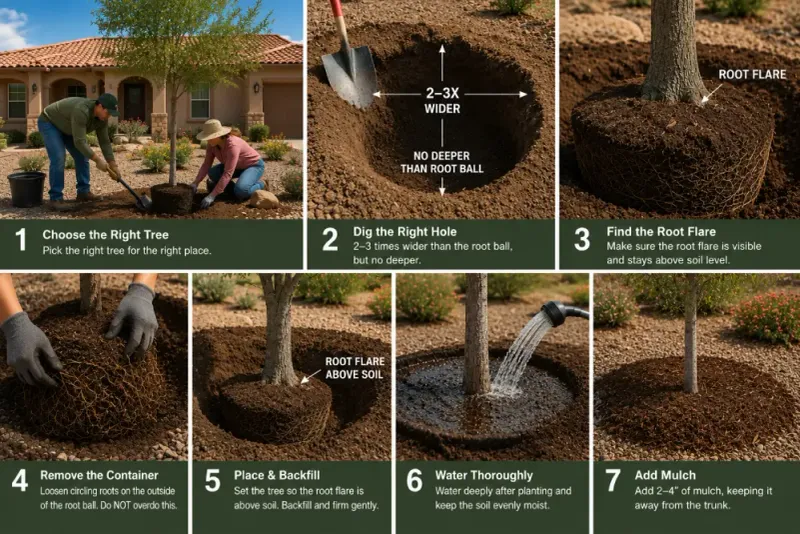
Timing the planting correctly gives downy serviceberry its best start. NC State’s tree fruit and nuts handbook recommends late fall or early winter as the preferred planting window for trees in North Carolina, when cooler temperatures reduce transplant stress and allow root establishment before summer heat arrives.
Spring is a workable secondary option if fall planting is not possible, but trees planted in spring have less time to establish before their first hot season.
Hole preparation follows a straightforward principle: wider is better, deeper is not. NC State’s woody ornamentals handbook recommends digging a hole about twice as wide as the root system but no deeper than the root ball.
Setting the tree too deep is a common mistake that can restrict oxygen to the roots and invite rot. The trunk flare, where the base of the trunk widens just above the root system, should remain visible at or slightly above grade after planting.
NC State’s fruit tree planting guidance reinforces this point: burying the root flare is one of the most reliable ways to shorten a tree’s life.
Mulch applied in a broad, shallow ring around the base helps retain moisture and moderate soil temperature, but it should never touch the trunk. NC State guidance for woody ornamentals generally recommends about 2 to 3 inches of organic mulch, kept at least 6 inches back from the bark.
A mulch volcano piled against the trunk creates a moist environment that encourages rot and pest problems.
Watering consistently during establishment is non-negotiable, regardless of how drought-tolerant the species becomes once it matures. The NC State woody ornamentals handbook offers a general reference of 3 to 5 gallons twice weekly for small containerized plants when rain is absent during the first establishment period, roughly three to four weeks.
That is general tree guidance rather than a serviceberry-specific prescription, and actual needs will vary with soil type, weather, and plant size. NC State’s serviceberry drought-tolerance feature is clear that drought tolerance applies to established plants, not newly planted ones.
Hold off on fertilizer unless a soil test or visible nutrient deficiency points to a specific need, since excess nitrogen can make the tree more susceptible to fire blight.
Read the nursery label before you buy
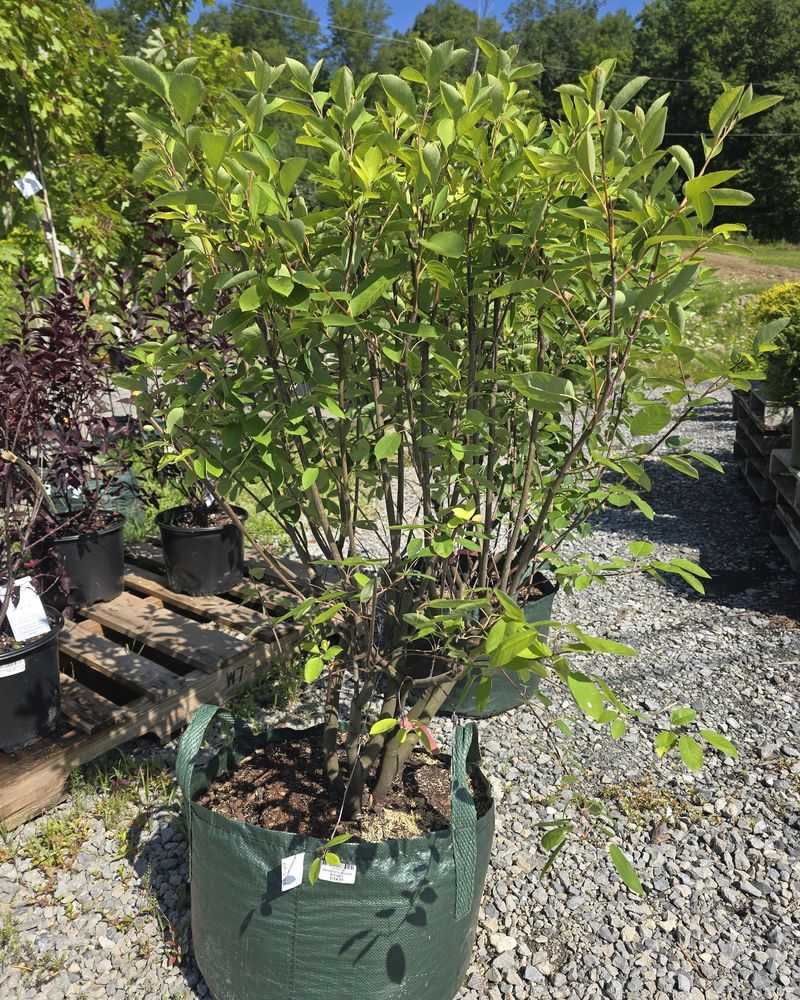
Buying a serviceberry sounds simple until you are standing in front of a row of plants labeled simply “serviceberry” with no botanical name in sight. The common name covers multiple species and hybrids that can differ meaningfully in size, habit, and site preference.
NC State’s serviceberry drought-tolerance feature specifically flags that Amelanchier arborea is sometimes incorrectly sold as Amelanchier canadensis, two species with different growth habits and preferred conditions. Asking for the scientific name before purchasing is not fussy; it is the only reliable way to know what you are actually bringing home.
Named hybrids and cultivars are a separate category worth understanding. ‘Autumn Brilliance’ is a widely sold hybrid that offers consistent flowering and fall color, and it can be a good choice for certain yards. But a cultivated hybrid is not the same as a locally native species, and the two should not be described interchangeably.
NC State’s hybrid serviceberry profile and the related Amelanchier x lamarckii record list hybrids separately from native species, and the differences in origin, habit, and ecological function can matter if local wildlife support is part of the goal.
Fruit expectations also deserve a realistic preview before purchase. Penn State Extension’s serviceberry kitchen guide confirms that the species is self-fruitful, so one tree can produce fruit without a pollinator partner nearby.
However, birds often reach the fruit before people do, and disease or poor weather can reduce both the quantity and quality of the crop. Do not expect a reliable harvest comparable to a cultivated blueberry or apple planting.
Disease risk is manageable but real, and it is better to know this going in. Penn State Extension’s Amelanchier disease guide documents rust, leaf spot, fire blight, and powdery mildew as known concerns.
Cedar-apple and related rusts can involve serviceberry when eastern red cedars or junipers are growing nearby. The tree is also described as deer resistant rather than deer proof by NC State’s Amelanchier arborea record, meaning browsing pressure in high-deer areas may require protective measures, especially for young plants.
Aggressive pruning to control size is not a good maintenance strategy; the better approach is to choose a species and cultivar sized appropriately for the site from the start, then limit pruning to sucker removal, damaged wood, and structural training as needed.
Matching the right Amelanchier species to your specific site conditions, verifying the botanical name, and going in with grounded expectations about fruit, disease, and deer pressure will do more for long-term satisfaction than any single planting technique.
Serviceberry earns its space when expectations match the site
Downy serviceberry makes a strong case for more North Carolina yards, but the case rests on a clear match between what the tree does and what the site can accommodate. As NC State’s three-season serviceberry feature frames it, the ornamental sequence of spring flowers, developing fruit, and fall foliage gives this tree a longer window of interest than most small natives typically deliver.
That sequence also translates into a longer window of wildlife activity, from early pollinators in spring to fruit-eating birds and mammals through late summer and fall.
The tree suits homeowners who have room for a 15 to 25-foot multistemmed plant in moist, well-drained soil with full sun or partial shade. NC State’s downy serviceberry profile documents its range across all three North Carolina regions, which means it is broadly available as a regionally appropriate choice rather than a specialty plant.
It is not the right fit for a narrow foundation bed, a patio container, or a yard where a tiny ornamental tree is the goal.
The practical decision comes down to three steps: confirm the botanical name Amelanchier arborea with the nursery, plan honestly for mature size before choosing a location, and commit to consistent watering through the first growing season. NC State’s drought-tolerance serviceberry guidance puts it plainly: the tree rewards a good start.
A serviceberry planted in the right spot and given adequate water during establishment tends to settle in and deliver on its seasonal promise for decades, which is a better return on a single planting decision than most small yard trees can offer.