
The North Carolina Native Border Plants That Shrug Off Clay, Humidity, And Summer Storms Every Year
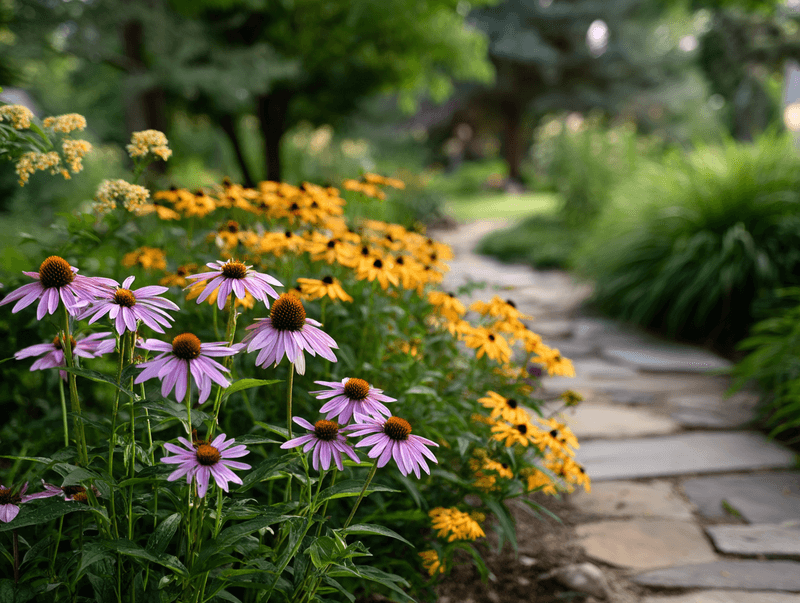
North Carolina yards throw a lot at a plant: sticky clay soil, muggy summer air, and thunderstorms that dump water in minutes. The good news is that plenty of native plants were built for exactly these conditions, and they will do it year after year without fussing.
Better yet, these same tough plants feed goldfinches, shelter box turtles, and give fireflies a place to grow up. Here are eight native border plants that hold their ground and turn your yard into a wildlife-friendly stronghold.
1. Wax Myrtle (Morella cerifera)
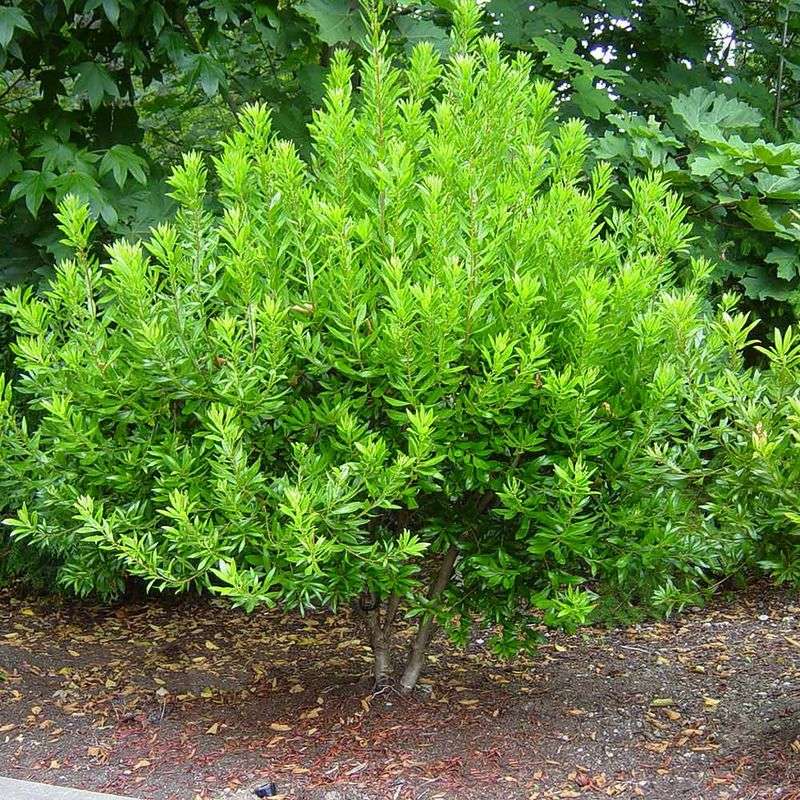
Salt spray, soggy swales, dry sandy slopes, wax myrtle takes it all and barely blinks. That toughness makes it a workhorse for a border that has to survive whatever a Carolina summer throws at it.
Evergreen and fast-growing, it forms a thick living wall that shields the edge of your yard. That dense cover is exactly the kind of perimeter habitat that keeps wildlife activity out along the fence line, giving you a cleaner, less tick-friendly zone closer to the house when you mow between them.
Its waxy berries are a big deal for birds. More than 40 species nibble them from fall through late winter, so a hungry flock has a reason to visit your yard when little else is fruiting.
If you have been eyeing invasive privet for a screen, plant wax myrtle instead. It gives you the same fullness without escaping into the woods and crowding out natives.
2. Summersweet (Clethra alnifolia)
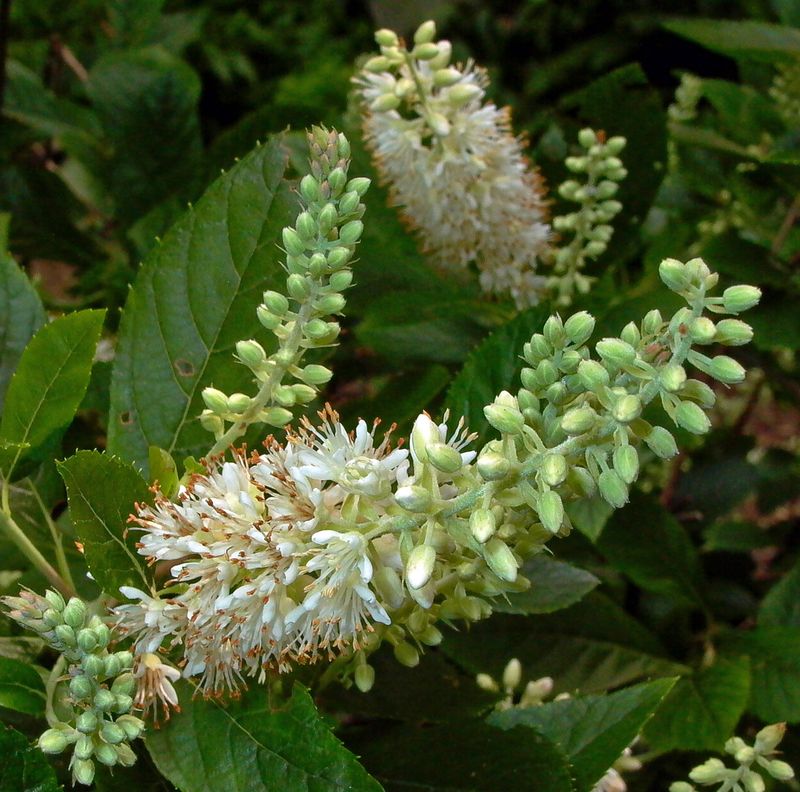
Walk past a blooming summersweet on a July evening and the scent stops you cold. Those white flower spikes perfume the whole corner of the yard in the muggiest part of the year, right when most shrubs have quit.
Bumblebees, sweat bees, and hummingbird moths crowd the blossoms all day. The buzzing is proof your border is doing real work for native pollinators.
Wet feet do not bother it one bit. Summersweet loves the damp, part-shaded low spots where clay holds water, and that same moist ground is prime real estate for firefly larvae to develop.
Come autumn it hands you a bonus of golden fall foliage. Fragrance, pollinators, and color from one easygoing shrub is a hard deal to beat.
3. Oakleaf Hydrangea (Hydrangea quercifolia)
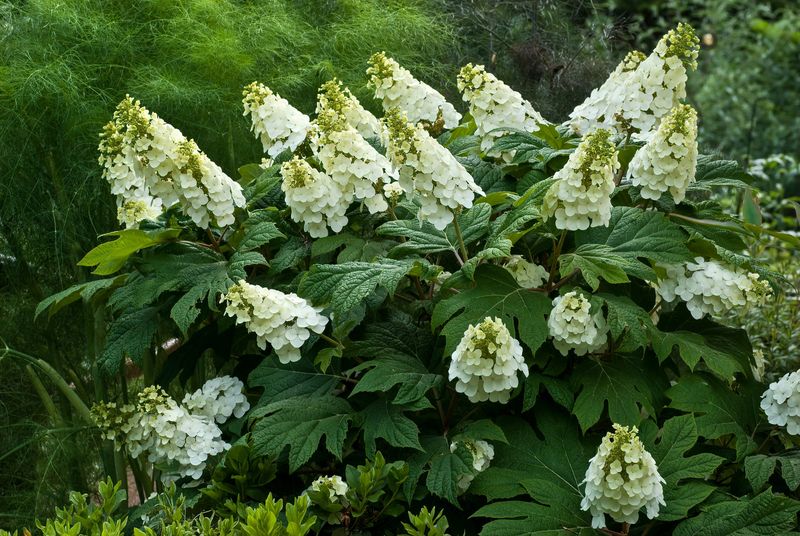
Big, bold, and unbothered, oakleaf hydrangea brings drama to a shady border without demanding much in return. Those cone-shaped white flower clusters show up in late spring, then slowly blush to pink and tan as the weeks roll on.
The leaves are the real signature. Shaped like giant oak leaves, they give texture all season and burn deep burgundy in fall, and even the peeling cinnamon bark keeps things interesting through winter.
It asks for partial shade and moist, well-drained soil, which fits the dappled edges of a lot of Piedmont yards. Songbirds work the shrub for cover and insects, so it earns its keep beyond good looks.
A fun bit of trivia: this one is a true southeastern native, so planting it is a little slice of the region’s wild woods brought right up to your patio.
4. American Beautyberry (Callicarpa americana)
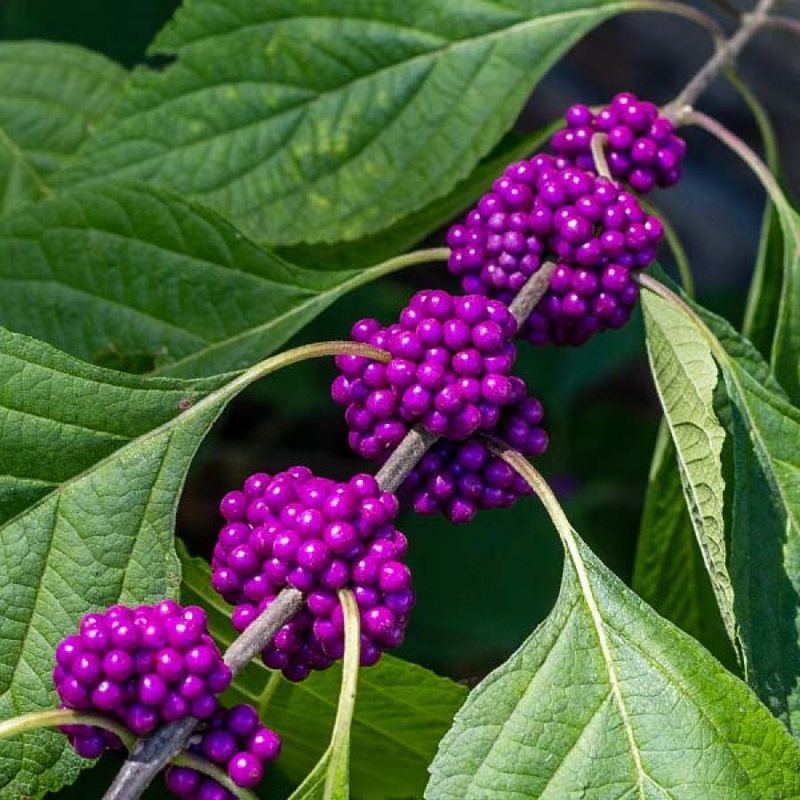
Nothing else in the fall garden glows quite like beautyberry. Those clusters of electric purple berries wrap the stems so tightly they look almost fake, and they hang on well into winter.
The color is a magnet for hungry wildlife. Eastern towhees, American robins, and purple finches pick at the berries, and foxes, squirrels, raccoons, and opossums come around for a share too.
Give it full sun to partial shade and it settles right in, shrugging off heat and humidity like it was designed for a Carolina August, which it basically was. It is loose and arching in habit, so it reads more casual than a clipped hedge.
Old-timers used to crush the leaves and rub them on skin as a bug deterrent. Whether or not that helps, the plant is a standout for anyone who wants a border that feeds the neighborhood critters all fall.
5. Buttonbush (Cephalanthus occidentalis)
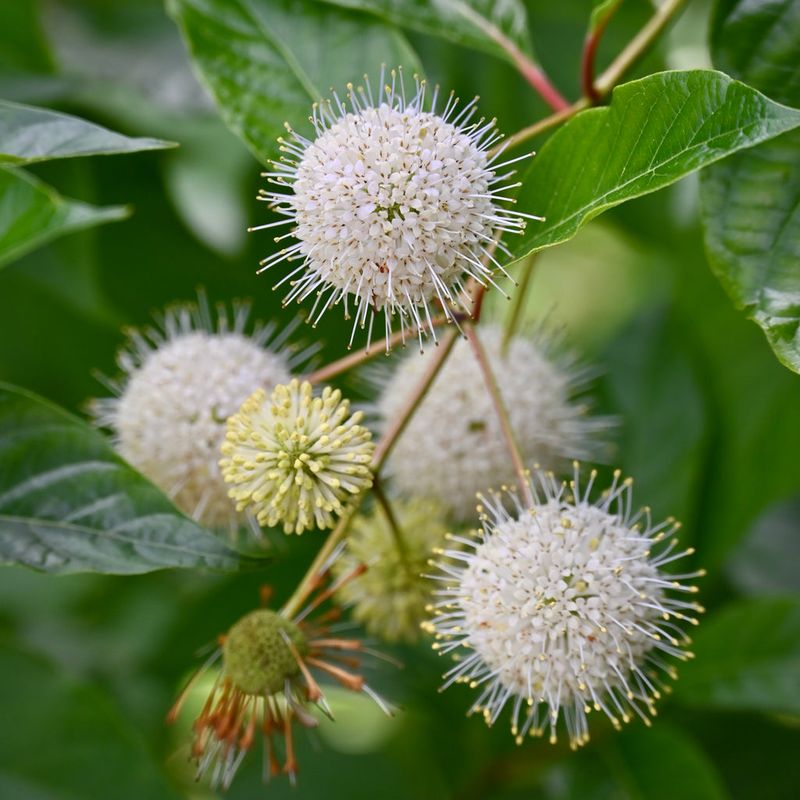
Those flowers look like little white pincushions floating over the leaves, and pollinators cannot stay away. Buttonbush blooms all summer with these round, spiky globes that butterflies and bees mob from morning to dusk.
It is a plant for the spots where nothing else wants to grow. Pond edges, ditch banks, the boggy corner that never quite dries out, that is buttonbush’s happy place.
Keeping that ground damp does double duty. The moist soil buttonbush thrives in is exactly the habitat firefly larvae need to overwinter, so a wet-edge planting can quietly boost your July light show.
Instead of fighting a soggy low spot in your border, hand it over to this shrub and let it turn a problem into a pollinator hub.
6. Black-eyed Susan (Rudbeckia hirta)
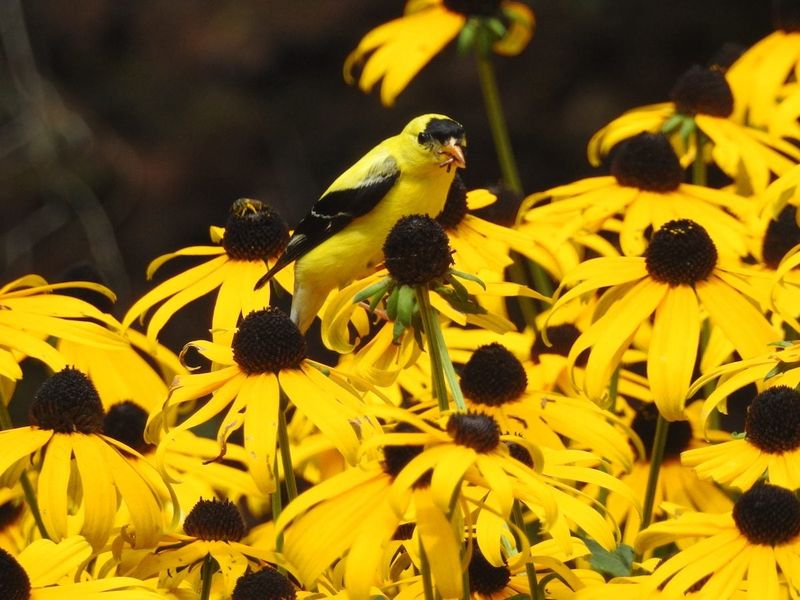
Cheerful to the point of being contagious, black-eyed Susan splashes gold across a border through the hottest, stickiest stretch of the year. Those dark-centered yellow daisies keep coming even when the humidity feels like soup.
Soggy soil? Fine.
Baking sun? Also fine.
This one tolerates the wet, heavy clay that drowns fussier flowers and still puts on a full show, which makes it a forgiving pick for new gardeners.
Let the flowers fade and go to seed instead of deadheading everything. Goldfinches perch right on the spent heads and pull the seeds, giving you front-row seats to a flash of yellow feathers against yellow petals.
Butterflies work the fresh blooms while the finches wait for the seed. Few perennials pack this much wildlife value into such a low-maintenance package.
7. Golden Ragwort (Packera aurea)
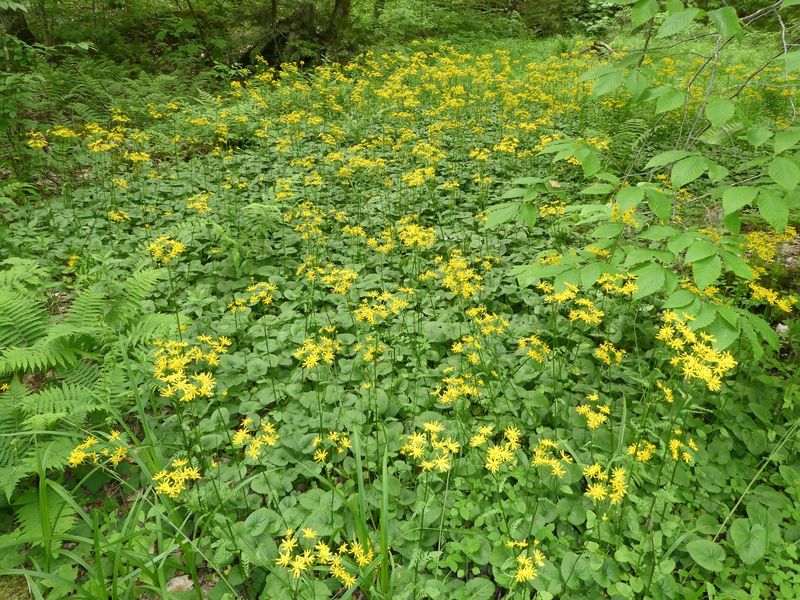
Down low where the shade pools and the ground stays cool, golden ragwort spreads into a soft green carpet that asks almost nothing of you. In spring it lifts up cheery yellow blooms that feed the earliest pollinators when few other flowers are open.
The real magic is what happens at ground level. That cool, moist mat of leaves holds humidity and gives box turtles a shady place to tuck in and beat the summer heat.
Box turtles are North Carolina’s state reptile, and they need exactly this kind of leafy, low-growing shelter to survive a hot yard. A quick reminder while we are here: if you spot one, never relocate it.
Box turtles know their home range and moving them can be a death sentence.
As a shady groundcover, ragwort also stands in nicely for invasive vinca or English ivy, so you can rip out the troublemakers and put something native in their place.
8. Yaupon Holly (Ilex vomitoria)
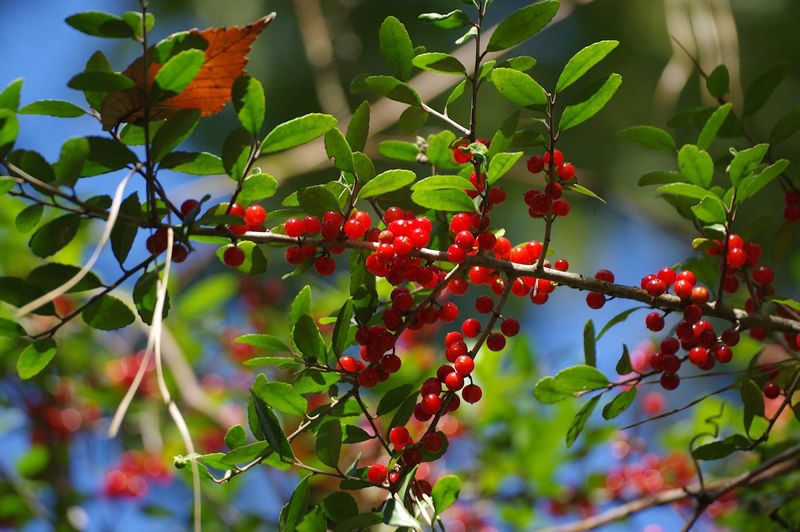
If you want one plant that just refuses to quit, yaupon holly is your candidate. It grows fast, handles almost any soil, and takes both drought and the occasional flood in stride, which is a rare combination in a Carolina yard.
Female plants load up with glossy red berries that feed birds and small mammals through the lean months. The leaves feed butterfly larvae, and the small fragrant white flowers draw in pollinators come spring, so it works overtime across the seasons.
As an evergreen, it makes a dense, year-round screen along a property line. Pair a mowed strip beside it and you have a tidy, defined border edge that keeps the brushy tick habitat out toward the fence and away from where you actually sit.
Reaching for a Bradford pear or invasive privet for a hedge? Skip them.
Yaupon gives you the same evergreen structure while staying a good citizen in the local ecosystem.