
The North Carolina Native Vines That Turn A Bare Wooden Privacy Fence Into A Hummingbird Magnet
A plain wooden privacy fence gives you shade and quiet, but it does very little for the wildlife in your yard. Plant the right North Carolina native vine along it, and that same fence can feed Ruby-throated Hummingbirds from early spring into fall.
Native vines also help you skip the invasive plants that choke out our woods, like Japanese honeysuckle and Chinese wisteria. Here are seven vines that can turn those boards into a buzzing, blooming hummingbird highway.
1. Coral Honeysuckle (Lonicera sempervirens)
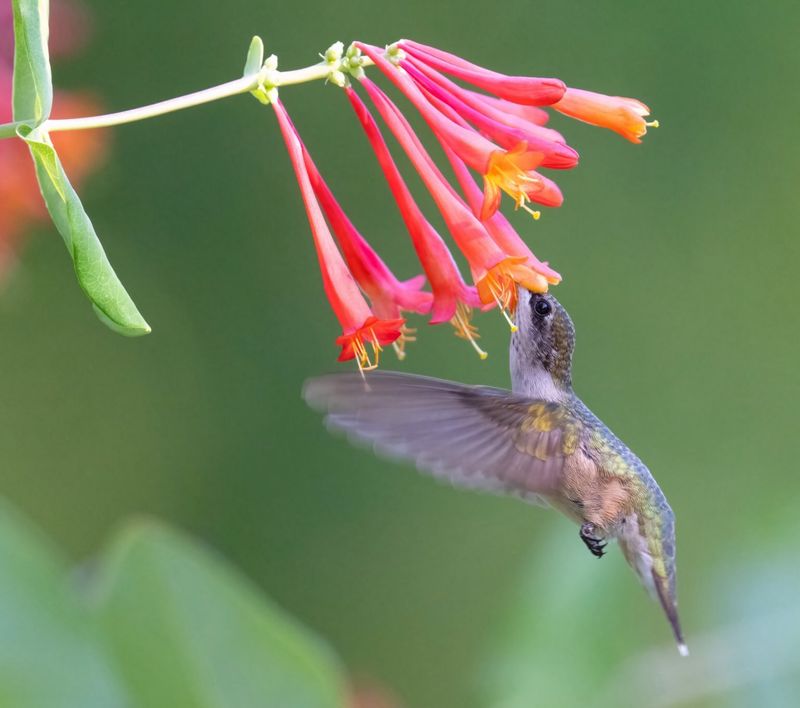
Ask any North Carolina bird lover to name one vine for hummingbirds, and coral honeysuckle usually wins before you finish the question. Its slender red trumpets seem made for a hummingbird’s bill.
In many yards, blooms show up in March and keep coming into July, with scattered flowers sometimes appearing as late as November.
Better yet, it grows naturally in all three of our regions, from the Outer Banks to the Blue Ridge. The vine twines 10 to 20 feet, which is plenty to cover a standard six-foot fence with room to wander along the top rail.
It handles clay and loam alike and blooms heaviest in full sun, though it tolerates part shade.
Here is the swap that matters most: pull out invasive Japanese honeysuckle and put this one in its place. The native version stays polite, does not smother nearby shrubs, and offers red berries that songbirds eat in late summer.
Run a few galvanized wires or a simple trellis panel across the boards so the stems have something to wrap around.
2. Crossvine (Bignonia capreolata)
Picture the first hummingbird of spring zipping into your yard, tired and hungry after a long flight north. Crossvine is often the plant waiting for it.
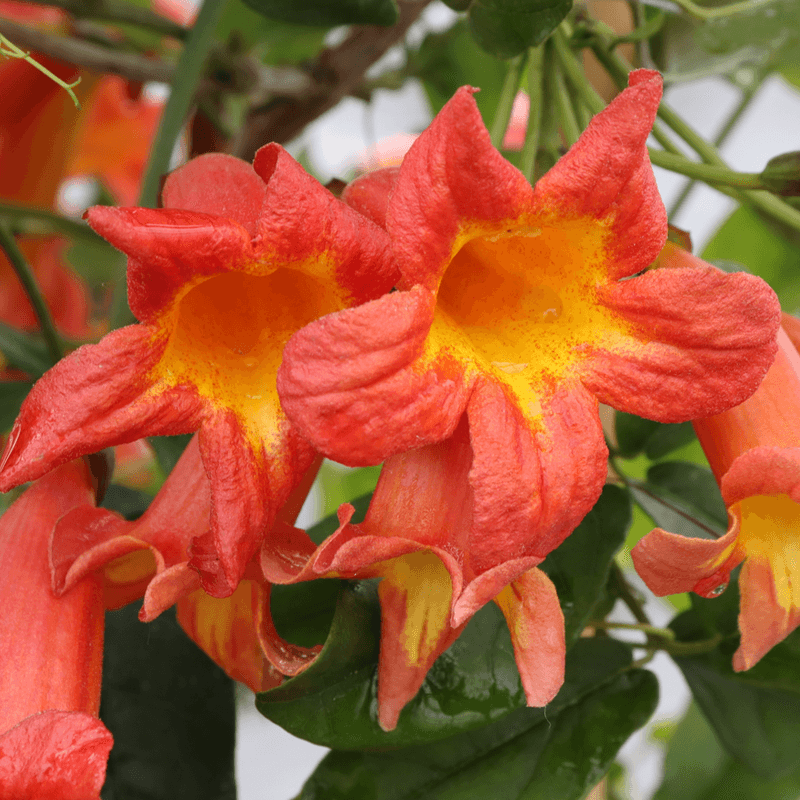
Its orange-red trumpets open early, making it one of the most valuable fuel stops a returning bird can find.
What sets crossvine apart is how it climbs. Claw-tipped tendrils grab onto wood on their own, so you can skip the wires and let it scale the fence without help.
That makes it a low-fuss pick for busy homeowners.
It also shrugs off tough spots. Full shade, full sun, and everything between work, although you will get far more flowers in a sunny location.
In fall, many leaves blush purple and hang on through winter, keeping some privacy after other plants go bare.
One caution for safety-minded gardeners: some sources rate crossvine as highly flammable. Keep it on fences farther from the house rather than the stretch right beside your deck or siding.
3. Carolina Jessamine (Gelsemium sempervirens)
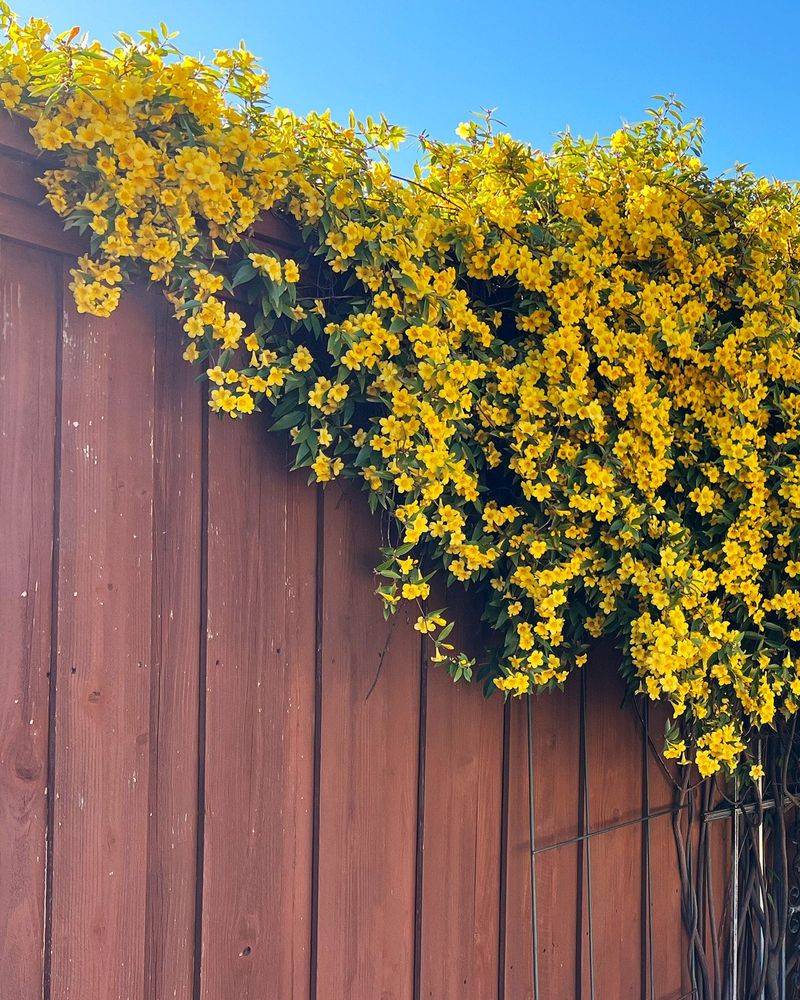
February in North Carolina can feel gray and endless, and then Carolina jessamine lights up the fence like someone flipped on a lamp. Those sunny yellow, sweet-smelling blooms arrive when almost nothing else is flowering.
That timing makes them a lifeline for early pollinators.
Hummingbirds are not the main visitors this early, since most arrive later in spring, but the vine gives native bees an early meal and sets the stage for the season. Pair it with coral honeysuckle and your fence covers the calendar from late winter onward.
Coastal Plain gardeners will love how well it handles sandy soil and dry spells once roots settle in. It also grows happily in the Piedmont.
Give it sun or part shade and a little guidance along the rails.
A quick heads-up for families: all parts of the plant are poisonous if eaten, so keep kids and pets from nibbling. Watching the flowers is the only way to enjoy this one.
4. Passionflower (Passiflora incarnata)
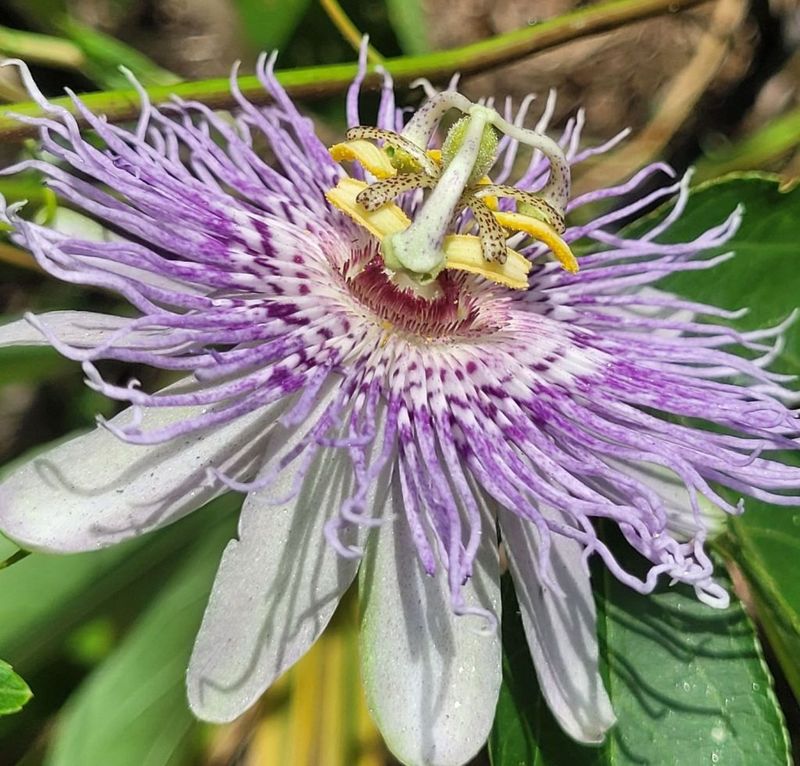
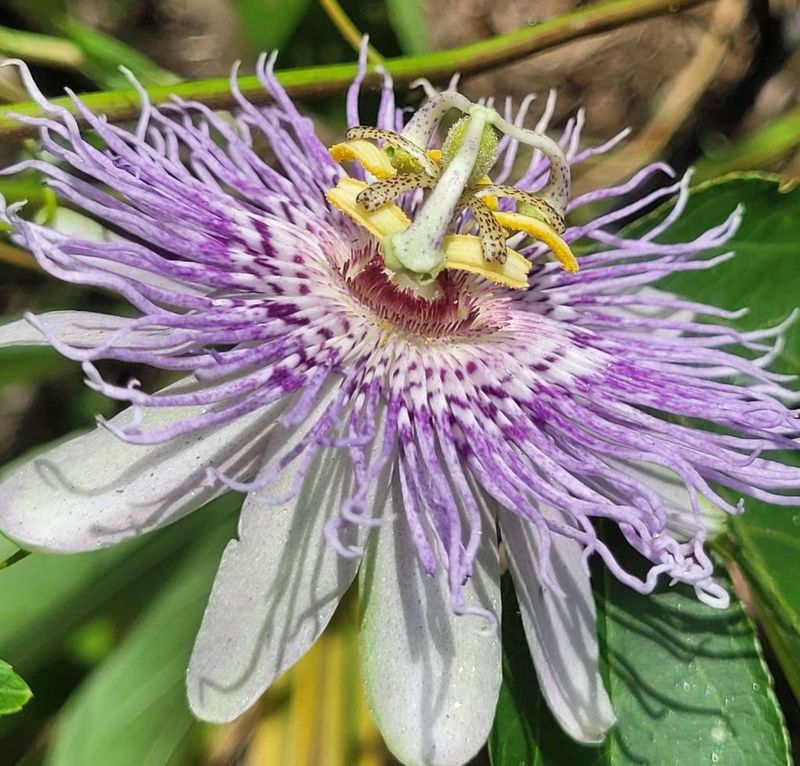
Fringed, purple, and almost alien-looking, maypop flowers stop visitors in their tracks. People often ask if it is some tropical plant, but it grows wild along North Carolina roadsides and field edges.
Unlike woody vines on this list, passionflower dies back to the ground in winter. Do not panic when the fence looks empty in April.
New shoots usually pop up around May and race up the boards by midsummer.
Its real bonus is butterflies. Gulf fritillaries and variegated fritillaries lay eggs on the leaves, and their caterpillars feed there, so expect some chewed foliage.
That damage means your fence is raising the next generation of pollinators.
Hummingbirds may stop by the fragrant blooms, and the egg-shaped fruits that follow are edible when ripe. Plant it where roots can spread a bit, since it sends up new shoots nearby.
5. American Wisteria (Wisteria frutescens ‘Amethyst Falls’)
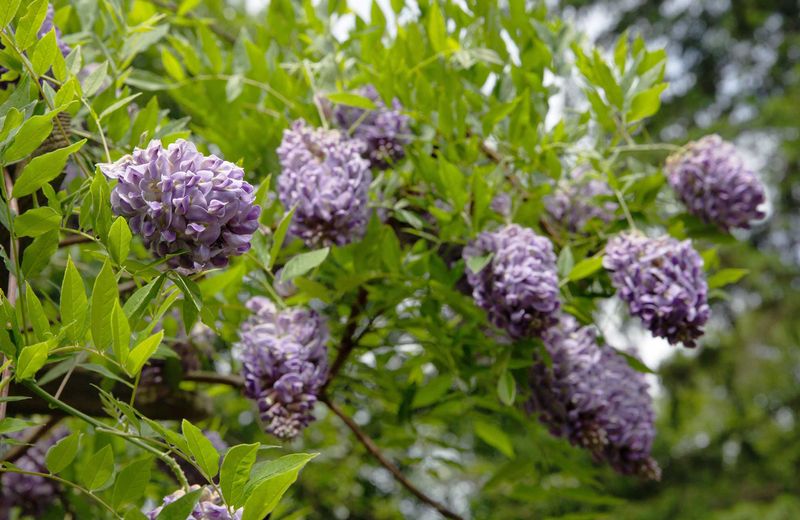
Chinese and Japanese wisteria have swallowed whole tree lines across North Carolina, and pulling them out is a brutal job. American wisteria gives you the same dreamy purple clusters without the takeover.
The ‘Amethyst Falls’ variety blooms in spring with shorter, tidy flower clusters, and it often reblooms lightly in summer. It grows more slowly than its invasive cousins, which makes pruning far less of a chore.
Still, a mature vine gets heavy. Make sure your fence posts are solid, and consider adding a sturdy trellis or reinforcing a section before planting.
When buying, check the tag for Wisteria frutescens. Many garden centers still sell the Asian types under just the name wisteria, and a mix-up could plant an invasive right on your property line.
6. Trumpet Creeper (Campsis radicans)
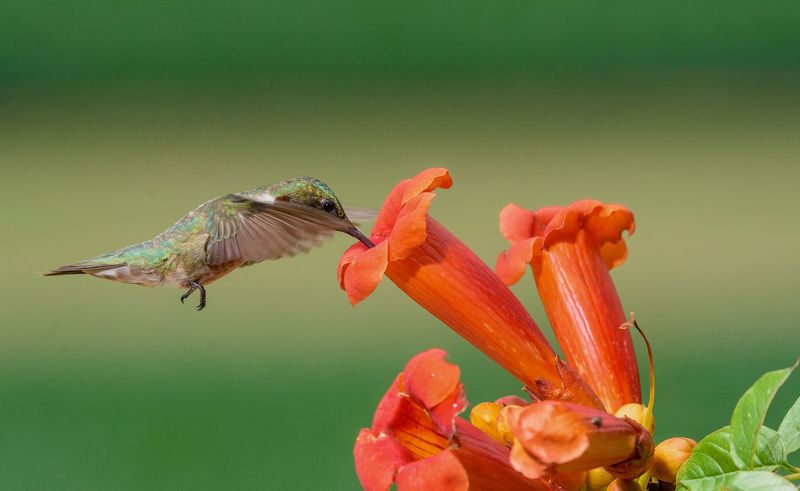
Hummingbird fans sometimes call trumpet creeper the vine that feeds the neighborhood. Its big orange trumpets open in the heat of summer, just when coral honeysuckle starts slowing down.
Fair warning, though. This native is a powerhouse that climbs with aerial rootlets and can send up suckers several feet away.
It belongs on a long, sturdy fence in a sunny corner where you can mow around it, not near the house or gutters.
Prune hard in late winter to keep it in check, since blooms form on new growth. Some people also get a mild skin rash from handling the leaves, so wear gloves.
Treated with respect, it rewards you with nonstop July and August action as young hummingbirds fatten up before migrating.
7. Virgin’s Bower (Clematis virginiana)
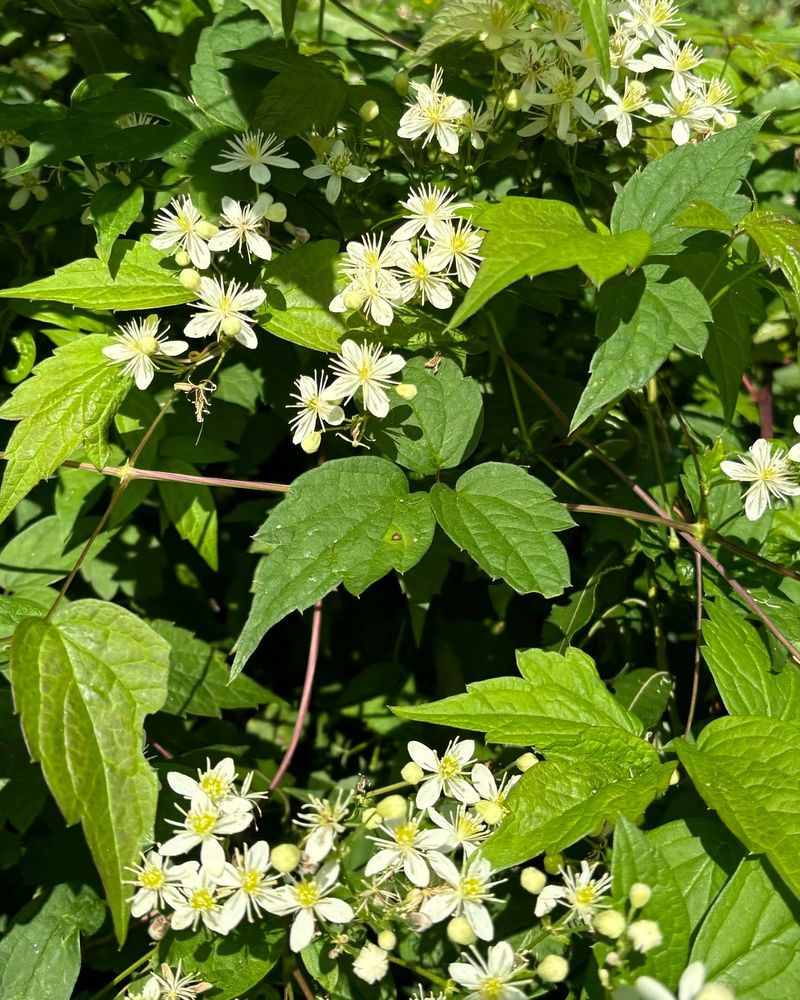
Not every fence plant has to shout in red. Virgin’s bower drapes the boards in clouds of small white flowers in late summer, then turns into silvery, feathery seed heads in fall.
Hummingbirds are not its main customers, and that is the point. The blooms pull in native bees, wasps, and tiny insects, which hummingbirds eat to feed their young.
Protein matters as much as nectar.
It grows in moist spots across the state, including shady mountain yards where showier vines struggle. Mix it with coral honeysuckle or trumpet creeper for a fence that serves both nectar and bugs.
Skip sweet autumn clematis, the invasive lookalike sold everywhere. Virgin’s bower has toothed leaflets in groups of three, which helps you tell it apart.